Categories
Blu-ray film review

Videodrome (Dir. David Cronenberg, 1983)

videodrome-1

Arrow Video’s new restoration of David Cronenberg’s Videodrome (1983) follows in the footsteps of Rabid (1977) and Shivers (1975) also restored and re-released on dual format this year. Each film with its disc-filled extras is clearly a labour of love.

Just preceding the Video Nasties Act of 1984, Videodrome, I’m sure would have gotten Mary Whitehouse’s knickers in a twist with the film’s provocative, paranoiac and altogether pleasure-seeking premise. The narrative centres on Civic TV executive Max Renn (James Woods) and his quest to find the next ‘big thing’ in sensationalist programming. His station is responsible for “soft core pornography and hard core violence” which Renn unapologetically justifies as a result of economics. Moral questions arise surrounding the over-stimulation of the consumer following exposure to dehumanising images via the media. These questions are depicted through metaphor, potential Freudian imagery and the former protégé of Dick Smith, multi-Oscar winning make-up effects Wizard Rick Baker (Smith famously created the exploding head in Scanners). Fellow Canadian, composer Howard Shore, yet again, provides the score (Shore and Cronenberg have worked together on all but The Dead Zone) and employs the use of a Synclavier II synthesiser alongside an orchestra. This electronic sound adds a dark, ominous, even metallic, tone to the film and aids with the 80s nostalgia along with the coiffed hair, shoulder pads and leather ties.

Renn stumbles upon Videodrome – a pirate television station which depicts the torture, brutality and eventual death of its subjects. Becoming obsessive to continually transgress social boundaries, Renn shows the footage to his girlfriend Nicki Brand (a hypnotic Deborah Harry) who, by her own admission, is the perfect over-stimulated test audience. She is sexually free (connoted by her costume, both cut and colour) and is immediately enamoured at the premise of the snuff sequences. Her enthusiasm for all things dark and painful grows and she even disappears to audition in Pittsburgh upon hearing the show is filmed there. Left alone, Max begins to suffer hallucinations; disturbing, intriguing visions which only seek to feed his need to consume the morally ambivalent visual media and further blur the line between fantasy and reality. His interactions with the Marshall McLuhan-inspired Brian O’Blivion (velvet-voiced Jack Creley, only ever visible via a television screen) increase the bizarre especially when we learn O’Blivion’s history to Videodrome. It is an aesthetically pleasurable film; body parts are fetishised, Betamax tapes pulsate and television undulate and literally swallow the flesh.

Anybody familiar with the articulately intense septuagenarian director will immediately recognise the body consciousness which is prevalent in a large percentage of his oeuvre.  The man, who has cited Bergman, Fellini and Kurosawa as main inspirations, presents the limitations of the human body within his own artistic nihilism. Ideologies are often invasive and monstrous, the embodied becomes disembodied whilst sex and violence surrounds, causes, or indeed invades the diegesis. There can be contradictory readings of Cronenberg’s films; does he fight for the patriarchal pleasures he depicts and stray dangerously close to misogyny or destroy said pleasures while reinforcing the fragility of the physical body and mind? While the male consciousness is seen in crisis and at odds with the social world around him, it is the female body which appears abject and the site of disgust. In Videodrome, the male mind becomes more abhorrent through feminine imagery; Renn’s torso is repeatedly violated via the vagina-like opening. Or perhaps, it is like the man himself stated a few years ago; he plugs into the zeitgeist, examines and plays around with it. In simple terms Cronenberg’s films are about life and death yet he cleverly uses the horror and prosthetics as a distancing tactic. He questions who or what we are and presents, albeit through social paranoia and viscera, the evolutionary limitations of the human body and the emotional terror of the waking nightmare.

videodrome_04

Videodrome has never been more relevant in the face of the current media and image appropriation. It is disorientating, visually audacious and presents an ideology which is fascinating, wholly original but is, perhaps, one of the more convoluted Cronenbergs. That said, as a first time viewer (yes, I know…) the experience of it was exhilarating.

Blu-ray Extras

Never one to scrimp on material, Arrow has collected an array of goodies and following the film, there are numerous options for the viewer to take, although do yourself a favour and hit them all.  

Cinema of the Extreme – The 1997 BBC documentary featuring Repo Man director, Alex Cox, David Cronenberg and George A. Romero  briefly discuss cinema extremes. These verbal tidbits are intercut with clips of Shivers, Dawn of the Dead (1978) Videodrome  and Crash (1996). It is a slight, fairly insignificant documentary which never goes into great detail but Cronenberg’s thoughts on censorship are always worth a listen (Cox’s on Seven, not so much). 

Forging the New Flesh – Visual Effects artist Michael Lennick narrates (and stars) in the first of his four contributions to these extras and discusses the techniques used in the making of the film. This, unfortunately, short but fascinating featurette contains behind-the-scenes footage and interviews Rick Baker, Bill Sturgeon, David Cronenberg and star James Woods. 

Fear on Film – One of the highlights of the disc extras is a roundtable discussion originally aired in 1982; presented by Mick Garris and featuring David Cronenberg, John Carpenter and John Landis in tweed, flared jeans and big hair respectively.  The conversation centres around the horror genre, what scares the filmmakers, films, as well as their individual takes on censorship and ratings. Although, less than 30 mins long, it is a highly entertaining and lively chat and well worth watching.

Samurai Dreams – The complete and uncensored Japanese series Samurai Dreams with optional commentary by Michael Lennick who is still revelling in the Videodrome/Samurai Dreams experience some 32 years later. 

Helmet Camera Test / Why Betamax? – Bite-sized early test footage showing Max Renn’s virtual hallucination chamber head-gear and a second segment which very briefly details why Betamax was the format of choice.

Promotional Featurette – This is an extension of Forging the New Flesh documentary although written and directed by Mick Garris and features behind-the-scenes footage and the making of Videodrome. Interviews include: Cronenberg, Harry and Woods As with the previous featurettes, these are brief but still interesting. 

Audio Commentary is provided by author Tim Lucas (Videodrome: Studies in the Horror Film).

Cronenberg: Early Works Blu-ray 

Transfer of the Future – The ever entertaining and jovial Kim Newman discusses, examines and critiques Cronenberg’s early career and labels him a child of Romero and genre auteur along with fellow underground directors Brian De Palma and Tobe Hooper. 

The Early Works – Restored by the Toronto Film Festival, Criterion Collection and Arrow Films respectively, these films show the progression of Cronenberg as an art student and his shorts through to the first feature film which was made some five years before Shivers

  • Transfer (1966) 
  • From the Drain (1967)
  • Stereo (1969)
  • Crimes of the Future (1970)

In Transfer, shot on a snowy Canadian landscape, an analyst (Mort Ritts) and his patient Ralph (Rafe McPherson) thrash out their doctor/patient relationship via farce and Freudian speak; while in From the Drain, two men (Mort Ritts and Stephen Nosko), seemingly war veterans sit clothed in a bathtub awaiting something ominous which may or may not come out of the drain. Stereo was the first short feature film shot on 35mm and has an establishing shot reminiscent of Fellini’s La Dolce Vita (1960) and appears to be heavily influenced by Bergman. It stars Ronald Mlodzik (later seen in Shivers and Rabid) whose costume looks deliciously Hammer-House-of-Horror-like. This is the best of the bunch, definitely my favourite; shot in black-and-white, silent save for a voiceover, the canted camera angles add to the general creepiness and sterility of the sanatorium set amidst the Ontario north woods. Subjects are placed in isolation and operated on, telepathic ability and extra sensory perception is monitored through sexual interaction. Finally, the last feature is Crimes of the Future a potential follow-up to the preceding film. Restored exclusively by Arrow Films from a new 4k scan of the original 35mm negative, again starring Mlodzik (as Adrian Tripod), and again silent but for the added commentary, only this time in colour. In the House of Skin all women are extinct and Tripod is in search of the enigmatically named Antoine Rouge. 

It is fascinating to see the early attempts of an artist, to witness how he develops and to note his visual interests and motifs even back then. There’s the Freudian terminology (which all eventually came to a head in A Dangerous Method [2012]), themes of consciousness, sexual experimentation, telepathy and the oddly monikered characters which have all been seen over the  Cronenberg oeuvre at one time or another. They may not, necessarily, be to everybody’s taste but they are revelatory in their style, content and deserve to be seen in all of their restored loveliness. All-in-all, Arrow has produced a beautiful box set which cannot be recommend highly enough.

Categories
Blu-ray film review

Les Combattants (Dir. Thomas Cailley, 2014)


Somebody once sang that love was a battlefield (okay, it was Pat Benatar in 1983) and it immediately sprung to mind when watching Thomas Cailley’s feature debut survivalist melodrama Les Combattants, as it has moments in which it is quite literally the case. This multi César award winning film is a surprising delight and one surely to feature on many a film-fan’s end of year list.  The film opens in a small French coastal town with brothers Manu (Antoine Laurent) and Arnaud (Kévin Azaïs) incredulously arguing with an undertaker about the inferior grade of wood used and extortionate price of their father’s coffin. Although Manu is older, he looks to his younger sibling for help and at times guidance but it would appear that Arnaud is just as lost; unsure what his future holds but happy to help out in the family carpentry business over the summer. Apparently, in France following the recession the second largest recruiter (after McDonald’s™) is the Army. Cue stoic men in fatigues setting up their mobile office and offering anyone who will listen to their drafting spiel, an inflatable lilo and tips on focus and self-defence. During these beach combat sessions, Arnaud is pitted against Madeleine (Adèle Haenel) whom he initially refuses to fight because she’s a girl. He needn’t worry for she can handle herself.

A chance shed-building leads Arnaud to the Beaulieu’s home and their daughter… Madeleine is an only child; an avid swimmer who drinks raw mackerel smoothies for breakfast and is determined to join the army. Her view of the world and its eventual destruction is rational and profound but labels her ‘weird’ and yet her preoccupation with survival attracts Arnaud and in true romantic fashion, he attempts to impress her by impulsively signing up to the Army training camp she is enlisted on. If Madeleine is impressed she makes it impossible to tell with her increasing deadpan expression. There is something incredibly convincing about both characterisations but it is Madeleine who produces the laughs, much like a 30s film dame only quirkier. Sensitive, nature-loving, amiable Arnaud and sullen, sporty, survivalist Madeleine make a strong team. The camp comes as a surprise to both of them and their capabilities.

Cailley’s film is an unusual one in the sense that it doesn’t quite fit a genre; to call it a romantic-comedy is to do it a disservice. Nothing is forced. It is slight, wry and a little odd but wholly persuasive in not only its gender roles but resounding in its depiction of a country coming out of a recession, heading for ruin and a race of people to (eventual) extinction. The cinematography provided by David Cailley (brother of Thomas) is beautifully simple and while he manages to depict so much physical gorgeousness, there is always a sense of foreboding present, an atmosphere which pays off strikingly pre-denouement. Its electro soundtrack by Hit ‘n’ Run keeps things relatively upbeat amidst the threat of melancholia and existential crisis.

Visually, it has a very simplistic palette; mostly greens, greys and muted blues which is complimentary to not only the camouflage colours of the army uniform but also the organic elements of nature which are so often shot – water, sky and foliage with occasional sunshine yellow warmth. Cailley’s direction, his brother’s cinematography and Lilian Corbeille’s almost carefree editing serves the narrative well; natural lighting gives way to gloomy grey by the end. Given the integral use of colour, a Blu-ray release of the film would serve it greatly especially enhancing the already picturesque mise-en-scéne. Sadly, there are no extras on the disc either.

Les Combattants makes for an intelligent, sweet-natured, amusing film. Figuratively speaking, Madeleine and Arnaud could be the last two humans on earth (or indeed animals), passing the time without thinking, engaging in aggression and affection of equal measure and above all surviving but when you’re in the early throes of love, isn’t that how it’s supposed to be?

*sings* Heartache to heartache we stand…

Categories
Article

Open Letter to DC

WW by Darwyn Cooke '08

In case anybody missed it, I adore Wonder Woman. I love what she stands for and let’s face it female superheroes are pretty rare not least because they tend not to get a shot at the big screen. Times be a’changing with the pencilled-in film releases of WW, Captain Marvel, and Supergirl on the small screen. I wrote to DC (in one of those attention-seeking, open letter type things) outlining why Wonder Woman is integral to DC but also, more importantly, why the film needs to be done right…

Dear DC,

It is only logical (and fair) that the third major player in the League and indeed the DC Universe gets their standalone origin film. I am, of course, referring to Wonder Woman and now, it appears I am getting my wish albeit in the most bizarre order imaginably. It has been 74 years without so much as an attempt and yet we have had a substantial tally of Superman (6) and Batman (7) films. So, forgive me for being somewhat pessimistic. A Wonder Woman genesis film has been expected nay deserved for a very long time but she gets described as “controversial” and “complicated”. And? Show me a woman who is not.

Created in 1941 (following appearances by Superman in ’38 and Batman in ’39) by William Moulton Marston; I know, I know A MAN but a progressive feminist who created the character as “psychological propaganda for the new type of woman”. A woman who he believed should rule the world. He saw a great deal of potential in the women’s movement, surrounded himself with strong, intelligent women, hell, he even believed that by 2037 the world would be governed by a Matriarchy. He reckoned that while the feminine archetype lacked “force, strength and power” girls wouldn’t want to be girls or submissive. “The obvious remedy [was] to create a feminine character with the strength of Superman plus all the allure of a good and beautiful woman.” (WMM, 1943)

One can argue that the man was wrong, although it is 2015 and do we not have the same issues surrounding gender on film? I could argue that he had a slight preoccupation with bondage (he was also a huge fan of the truth too). This was an academic who shared his marital home and life with a MA graduate wife and PhD educated mistress, transgressive sexuality pervaded his personal life, why not his work? Patriarchy is the oppressor to which Wonder Woman is enslaved after leaving Themyscira and is often bound – sometimes figuratively – nearly always literally, forced into passivity by the ties/rope/chain that binds before breaking loose and reciprocating with her lasso. Yes, Moulton Marston’s idealistic feminism is problematic, he believed in domination and sexual enslavement but I digress, I’m sure you’re not even considering *that* type of storyline…

Word on the grapevine is that a big action film is not on the cards, you want a more character-driven piece and the search for a male lead/love interest is currently taking place. Rumours have it that you don’t want a strong feminist message…erm, an Amazonian woman-of-steel born from clay outside of the restrictive realms of patriarchy who lived, for most of her life, on a Utopian island devoid of men. You don’t see this as problematic? Hold on. Forgive me. I forget, you are using the New 52 storyline so her origins have been revised so she is now the daughter of Zeus (ugh). I remember that time when Superman and Batman’s origin story was revised and changed. Oh no wait…

I often get asked why. Why do I idolise her, why her above the others? For the record, I love all those other guys too but there will always be a special place in my heart for Wonder Woman. I like what she stands for: strength, intelligence, capability, kindness, wisdom, confidence, courage, sisterhood. Plus, her costume’s really cool; dressed in the red, white and blue standard of freedom and democracy. Batman isn’t the only one with an arsenal of goodies, she wears a tiara which is razor-sharp and can be hurled like a boomerang, the bracelets at the wrist can deflect bullets and serve as a reminder of the shackles once worn when the Amazons were the prisoners of Ares. She carries Hestia’s golden Lasso of Truth; tiny chain-links with limitless length, indestructibility and of course, anybody bound in it are compelled to tell the truth. The lady has the ability to fly (although not soar high), can spin at blurring speed – usually to shed her civvies – is able to communicate with most animals and beasts and has numerous vehicles at her disposal, all invisible.

Not to mention that fact that she is just as physically strong and special as Supes. Their similarities are actually hard to ignore. They are both on Earth separated from their familial roots both have an alias to protect and while they don’t fully comprehend the planet they inhabit they wish to shield and, wherever possible, protect the humans living on it. Yet still she has not been immortalised on the big screen but Superman’s genesis gets regurgitated every decade or so. Why am I telling you all of this when you gave her a home in 1941? Because I don’t want you to forget that there is more to her than just a pretty face.

She will, as it has been made very apparent, make an appearance in Dawn of Justice in the form of Fast and Furious alum Gal Gadot (I’m still in denial about that) before FINALLY getting her own film. The pre-production of which has been hmm, interesting to say the least; female director, no script, creative differences, new female director, six scripts…Why does it need a female director? Well, why not? And hey, DC, if you’re struggling with the script, why not ask Dr. George Miller, he could teach all of you a thing or two about writing a woman. Just don’t fall into the trap Marvel did with Elektra. Good grief that film sucked.

We all know female heroes (some super, some not) are not quite as scarce as they once were; however, they still get a raw-deal. The Age of Ultron / Black Widow storyline furore will attest to this or the severe lack of female-led merchandise which fails to adorn toyshop shelves and don’t get me started on the slut-shaming or name-calling on/offscreen. Supergirl’s even getting in on the (TV) action albeit in a seemingly cutesy way. I get it. I do. Too many females transgressing the boundaries of the norm have and will continue to cause issues for some. It will encourage women wanting to be women and expecting the world, just as Gloria Steinem said, to change for them.

Perhaps, a decent depiction of the Amazonian attesting to the strength and influence of the feminine archetype will be a huge commercial success? Or perhaps, in spite of Joss Whedon’s utter condemnation of the notion that (some) men aren’t interested in the exploits of female she-roes, there is actually some truth in it? No, that can’t be right, not given the popularity of the likes of BuffyAlien and Terminator franchises and HAVE YOU SEEN Max Mad: Fury Road? Furiosa (Charlize Theron) proves that she can fight toe-to-toe with any man and still be hard, vulnerable and feminine.

Anyway, back to the subject at hand. As you will know Wonder Woman’s current filmic/televisual legacy is largely fan-made. There is that animated film from 2009 which is really rather good and the (now) kitsch and fabulously camp television series made in the 70s which ran for three seasons and saw former Miss USA, Lynda Carter, don the girdle and fight for our rights in satin tights. She was wonderful in it; strong, fearless, savvy, intelligent and beautiful, a Goddess on Earth instilling hope and convincing the world of compassion, humility and generosity – all the while kicking ass. Carter is 63 now and will forever be a wonder woman but it’s time for a change, the character needs to be brought into the twenty-first century while still retaining her roots. David E. Kelley did attempt it in 2011 with Adrianne Palicki in the titular role. Elizabeth Hurley was the villain along with a supporting cast that included Cary Elwes and Tracie Thoms. His pilot was never optioned probably due to the hideous SFX, tacky PVC-costume, or the fact that he portrayed the peace-loving princess as a sexually frustrated spinster who curls up in front of The Notebook and obsesses over her Facebook profile when she’s not ripping out people’s throats. As soon as Diana pulls out the merchandise and dolls at a board meeting, it all gets a little too meta.

I think the point I’m trying to make is I really love Wonder Woman. I have seen a billionaire playboy take to the sky dressed as a giant bat, I’ve witnessed a super alien male don a red cape and protect a city and now I want to see an Amazonian, wearing a tiara attempting to educate mankind. It is time for her to have a go at saving the world.

Please DC, don’t eff it up.

Yours,

A Fan

Categories
film review

Starry Eyes (Dir. Kevin Krolsch and Dennis Widmyer, 2014)

starry_a

Sarah (Alex Essoe) resides in LA, the sunshiny place of dreams and superficiality and is an actress, or at least wants to be one; is resolute to be one yet throughout Starry Eyes the line between determination, desperation and ultimate destruction is crossed, blurred, eventually rubbed out – and bloodied – altogether. Sarah tirelessly auditions for role after role in between working at fast-food restaurant Big Taters for sleazy, loser-ly manager Carl (a moustachioed Pat Healy). She has friends, none of whom are particularly close except maybe her roommate Tracy (Amanda Fuller). There is Danny (Noah Segan) who lives out of his mini-van and is ‘determined’ to make it as a director and Erin (Fabianne Therese) a wannabe actress who has had minor success and relishes in being well, a bit of a “bitch”.

starry-eyes-5224

Gamine in appearance, Sarah has ‘issues’, she suffers from nightmares, self-harms and is extremely body-conscious. She teeters on the precipice of insanity, is emotionally raw and literally tears her hair out at the roots to ease her anxiety. Her vulnerability does not necessarily make her weak but her hunger to be somebody does, it is easy to empathise with her – that yearning; she could be your sister, or daughter. Hell, she could even be you. Desires, primal or otherwise, push people in all kinds of directions. Then comes the call-back from a successful, if odd, audition for an Astraeus feature (the company taking its name from the Titan God of dusk, creator of winds and wandering stars) and the casting directors’ insistence that she lose her inhibitions has surprising results on the leading lady – “If you can’t ever let go, how can you fully transform into something else?”

starry-eyes

Starry Eyes is Faustian in nature, a satirical, abject, allegory about the grim underbelly of Hollywood and the true price of fame (there is even a sly swipe at Scientology too). It is emotive in its execution and (bloody) ambition. An almost melodramatic beginning gives way to a glorious and stomach-churning body horror; Matt Falletta and Hugo Villasenor’s practical make-up effects are visceral, disturbing and quite disgusting, in the best possible way, and displayed amid a synth-heavy musical score which sets the mood perfectly. Alexandra Essoe is astonishing as Sarah, she even at the most grim and a gruesome moment, manages to humanise the character and create a filmic-female that breaks the boundaries of the horror genre’s ‘monstrous feminine’.

There is a moment when ‘The Producer’ (Louis Dezeran) refers to the film industry as a plague; a festering pestilence: “hollow be thy name, shallow be thy name.” – Thankfully, Kevin Krolsch and Dennis Widmyer’s unsettling cautionary tale is anything but.

Categories
Essay film review TV

I Am Woman Hear Me Roar: Gender Representation in Sex and the City

satc

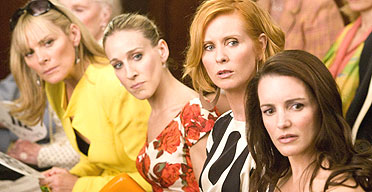
Sex and the City (SATC) came to our small screens in 1997, based upon the novel of the same name by ex-New York Observer columnist Candace Bushnell. This television series and its depiction and ‘celebration’ of women not only appealed to a mass female audience but attempted to dispel the so-called – thanks to Betty Friedan -“feminine mystique” by dismissing repressive female stereotypes which had seemingly dogged popular culture in the years before. These were (white) women talking, writing about, and more importantly, having sex (as they maintained from the very first episode) “like men”[1]. At the heart of this series was the feminist ideology that all women have a right to sexual pleasure and live in a place of complete independence where women have ownership of the, albeit narcissistic, ‘gaze’ and men are the sex objects.

Quite simply, without second wave feminism, a show like Sex and the City would fail to exist and creator Bushnell describes the Foucaultian confessional as depicting “female choice, not female rejection […] women viewers get the naughty thrill of seeing their gender portrayed for once as sane, sentient, and decent.”[2] With this sweeping statement there is an implication that all television and/or film texts gone before had negatively depicted women and that by seeing this positive, even verisimilar portrayal, the female population are engaging in illicit activity. Bushnell never considers the representation of women within the text or the fact that the characters have been rewritten by a man. An audience requires more than gender in order to negotiate identification and, unfortunately, for the female viewer there is little to identify with. SATC depicts women as over-consumers and seems to believe its own propaganda; that in order to be liberated and successful, a woman has to be white, heterosexual, rich, thin, and self-obsessed. Is this really what modern womanhood has been reduced to? The representation of women and the evolution of these characters have enforced further limitations and new stereotypes that women are measured against. The motion pictures which were born from the success of the series have taken the ‘sane, sentient and decent women’ with choice and replaced them with four dolls bridging the gap between feminine and sexy, artificial and empowered. It utilises the Beauty Myth[3] and defines a woman’s sexuality against the clothes (and shoes) she wears to create a Serious/Sexual dichotomy[4] in which liberation and promiscuity merge. A woman’s voice has now been replaced with a body, however, because these women choose sexual freedom and choose to “act like men”, we find ourselves in a culture which appears to resurrect stereotypes of female sexuality that feminism endeavoured to banish.[5]

satc3

In a term coined by Feona Attwood (2009) Sex and the City ‘mainstreamed’ sex and used it ‘as a source of self-definition and a means of self-expression’[6]. They were, in accordance to Rosalind Gill, sexually confident and autonomous – “knowing, active and desiring subjects”[7] but as the series progressed the women chose their respective Mr. Rights over their independence and sexual freedom and this has, since, been repeated within the narratives of the first and second film[8]. Despite, second wave feminism informing women that Prince Charming is a patriarchal fiction designed to render them passive and in need of rescue. It went on to furthermore state that they did not need him to define their happiness or create the so-called “happily-ever-after”. Sex and the City chose to perpetrate the myth and reinforce, as David Greven argues, “the ideology that heterosexual sex is forever [while homosexual] sex is transitory, fleeting, [and] intangible.”[9] The filmmakers response to this was to take the two male homosexual characters and marry them off. To each other. With Liza Minnelli officiating! So, if the whole purpose of Sex and the City was to make these women sexually independent and to break stereotypes, why then do we see three out the four characters re-enforcing patriarchal ideology by getting hitched?

Samantha-Jones

The last beacon of hope is Samantha Jones (Kim Cattrall), who, on the surface, appears to be the exception to the ‘Mr Right’ rule, preferring to settle for ‘Mr Right-Now’ (conveniently, she is potentially too old to procreate). Her views on marriage, monogamy and sex transgress the heteronormative ideologies, she truly believes she can do anything a man can do, even experimenting with Viagra[10]. Like most transgressive women before her she is ‘punished’ with the discovery of breast cancer.[11] There has even been a suggestion by some critics that she transgresses the female gender altogether given that she is encoded as a homosexual, Greven writes,

[…] Samantha, most explicitly of all the women, acts, speaks and cavorts like a stereotypical gay man, her femaleness a safeguard against both homophobic retaliation and an explicit admission of a gay agenda, to use this cruelly overused phrase only to suggest that the show about sex in Manhattan has to use female characters as a cover […][12]

If a woman is sexually confident, even aggressive, successful, ambitious, and appears to not require a man ‘she’ of course must be a ‘he’! Once again, female sexuality is defined by patriarchy. Interestingly, Candace Bushnell, in 2001 agreed with Greven and declared that Samantha is, in fact, a gay man[13]. So, are women getting the ‘naughty thrill’ from seeing their gender portrayed as ‘sane’ or as a gay man?

Sex and the City: The Movie saw Carrie – the woman without the bride gene[14] – agreeing to marry ‘Big’, now known as the less phallically aggressive John. The proposal of marriage is a business transaction to ensure that, should their relationship fail, Carrie will not be left with nothing. Charlotte has the ‘; perfect’ marriage to Harry and in addition to their adopted daughter she finds herself defying medical odds and falling pregnant. Miranda is coping with Steve’s infidelity and Samantha finds she is rapidly falling out of love with Los Angeles and being in a relationship with a man whose name she says more times a day than her own.[15] John, then jilts* Carrie on their wedding day and the girls accompany her on the honeymoon to Mexico; a suite she booked in the names of Mr and Mrs Preston – a thrill which made her forget her ‘true self’.[16]

The Beauty Myth informs is that there is ‘no right way to look’[17], however, SATC (a programme that Wolf endorses as “funny, clever and thinks women are important[18]) portrays a uniformity in women, they may have different hair-styles but essentially all the attributes they own, situations they find themselves in, men they deem attractive can be applied to just one woman; in fact one could argue that Miranda, Carrie, Charlotte and Samantha are the four (patriarchal and ideologically enforced, of course) facets of one woman; the cynic, the optimist, the Madonna and the whore. This uniformity is ever more prevalent in the racial make-up of the cast.

sex_and_the_city07
jennifer-hudson-sex-and-the-city

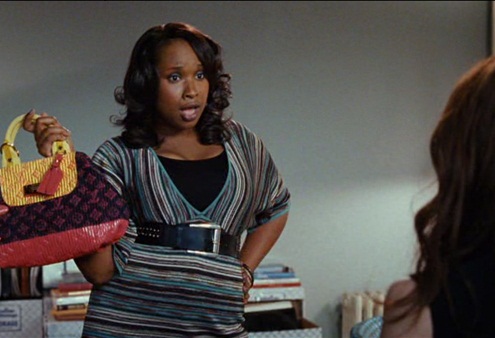
Carrie hires an assistant to help her ‘come back to life’ (because obviously, losing a man brings serious health risks, one is suddenly are unable to open mail, unpack, etc.) after the ‘devastation’ and ‘humiliation’ of being jilted. Louise (Jennifer Hudson) is a curvaceous black woman from St. Louis who is never legitimised with a surname, and only in her depiction as the single African-American character does the viewer realise the full extent of Sex and the City’s whiteness.[19] She is immediately encoded as the social minority because she is a St. Louis native and subverts the whiteness/virtuousness ideology[20] because Louise is the innocent, naïve in her pursuit of love, even crossing state lines to seek out the love of her life.

jennifer-hudson

Louise starts out, albeit tenuously, with similarities to Donald Bogle’s ‘Mammy’ character; “she is sweet, jolly and good tempered”[21] and serves Carrie, helping her complete the most basic tasks – answering letters and e-mails, replacing a mobile phone and unpacking boxes and boxes of clothes. She does, however, evolve from the stereotype – although one could argue she becomes the “Magical Negress” bringing Carrie back to life and all – and gains some autonomy just in time for her ex-boyfriend to propose marriage. She begins to show more flesh, specifically cleavage, her clothes become tighter and more streamline, slimming her down; the voice is replaced by the body. Although, her screen-time is not sufficient enough to explore the character in depth, it is hinted at that her change in physicality does have the desired effect on men (coincidentally, Hudson herself lost a substantial amount of weight and married and gave birth following her role in SATC). Louise’s curly natural hair is straightened and coloured a lighter brown, and it can be argued that she, essentially, is white(r) when she leaves New York, complete with a diamond engagement ring and Louis Vuitton handbag hanging from her wrist. Using Dyer’s model she becomes colonised; from St. Louis to Manhattan – black to white(r). Dyer writes that, “white women are [after all] constructed as the apotheosis of desirability, all that a man could want, yet nothing that can be had, nor anything that a woman can be [an] everything-and-nothing quality.”[22]

Sex-and-the-City-2

Racial difference is also explored in the sequel, its release date in 2010 to coincide with the football World Cup – another occasion in which there is a divide the sexes; all women HATE football, obviously. Samantha is invited to a Sheik’s private hotel in Abu Dhabi on a PR trip and extends the invitation to her three friends. This trip is used as a distraction from the womens’ respective problems at home. Carrie and ‘Big’ are married (following a vomit-inducing Cinderella-alluding proposal at the end of the last film) and ‘making their own rules’ but according to Carrie, their relationship is getting ‘too Mr-and-Mrs-Married’. Charlotte is felling oppressed by the demands of motherhood and is beginning to obsessively believe that Harry is having an affair with their twenty–something Irish nanny, Erin (the girl doesn’t wear a bra so of course, she must be sleeping with her boss). Miranda, having no inclination to confront her sexist boss, quits her position at the law firm, an action which is completely inexplicable and out-of-character.

Throughout the scenes shot in Morocco (doubling for Abu Dhabi), the Americans, understandably, never fully assimilate into Middle Eastern society; their ignorance seemingly the main problem. Miranda is constantly berating Samantha for leaving her shoulders or legs bare and on display. Even after her arrest she falls foul of a group of Muslim men on their way to prayer. Her bag then bursts during an altercation and condoms are scattered at the men’s feet and then, as this is Samantha, the prophylactics are waved in the crowds’ faces and thus as Lindy West so eloquently writes in her scathing review:

Traditional Middle Eastern sexual mores are upended and sexism is stoned to death in the town square. At sexism’s funeral (which takes place in a mysterious, incense-shrouded chamber of international sisterhood), the women of Abu Dhabi remove their black [burkas] and [niqabs] to reveal – this is not a joke – the same hideous, disposable, criminally expensive shreds of cloth and feathers that hang from Carrie et al’s emaciated goblin shoulders. Muslim women, under those craaaaaaaa-zy robes, they’re just as vapid and obsessed with physical beauty and meaningless marital concerns! Feminism! Fuck yeah![23]

Sex-and-the-City-2-001

West is a Seattle-based film critic who despised the movie with every fibre of her being, it would seem. She describes SATC2 as “tak[ing] everything I hold dear as a woman and as a human […] and rapes it to death with a stiletto that costs more than my car.”[24] A horribly violent, almost anti-feminist metaphor but she really hated it…

Georgina Isbister, on the other hand, writes, that the reason that SATC resonates with an audience is that “its narratives are dominated by the challenges faced by protagonists in achieving their ideals and the subsequent anxieties surrounding them […] trying to conform to an expectation that women can have it all.[25] This is not so much an expectation as patriarchy rearing its ugly head again. Women are lead to believe that they can have liberation and everything that men are entitled to as long as they revert back to the patriarchal ideal of ‘wifedom’ and motherhood. SATC not only highlights the anxieties and challenges but exacerbates them.

Sex and the City has shamed women into believing that acquisition is the pathway to freedom. While the post-modern feminist text contains heroines who are much more active than the bygone eras of the 70s and 80s and, as Rosalind suggests,

[they] value autonomy and bodily integrity and the freedom to make individual choices […] [Yet] they seem compelled to use their empowered positions to make decisions that would be regarded by many feminists as problematic located as they are in normative notions of femininity.[26]

Carrie chooses marriage with the man who treated her badly for ten years. She and Miranda changed who they were for men, the latter hell-bent on a career kept her hair short and dressed in power-suits in order to make it in a ‘man’s world’ only to fall pregnant, marry and throw her career away for a family-life. Charlotte also gave up a career and her single independence for a husband and children while Samantha maintained she had sex like a man, believing that behaving as a man provided liberation and empowerment whereas sex as a woman does not. For her trouble, she is described as channelling as ‘homosexual man’. These successful women have, over the last decade, communicated that a career, financial security, looks and ostensibly, intelligence are nothing compared to doing anything to get (and keep) a man, including compromising the essence of who you are in order to secure the man you love.

There is little doubt that SATC made a cultural impact; yet at no point is there an attempt at a realistic portrayal of a modern-day woman. She has been thwarted by product placement and shoe iconography and manipulated into thinking that because she is privileged over the male(s) in the diegesis she has been gifted with choice. The film texts, in particular, are responsible for repackaging the patriarchal ideology of normative femininity in shinier, more expensive wrapping, marketed to the richest, skinniest and whitest women; content to allow Capitalism’s oppression keep them content and submissive.[27]

girls

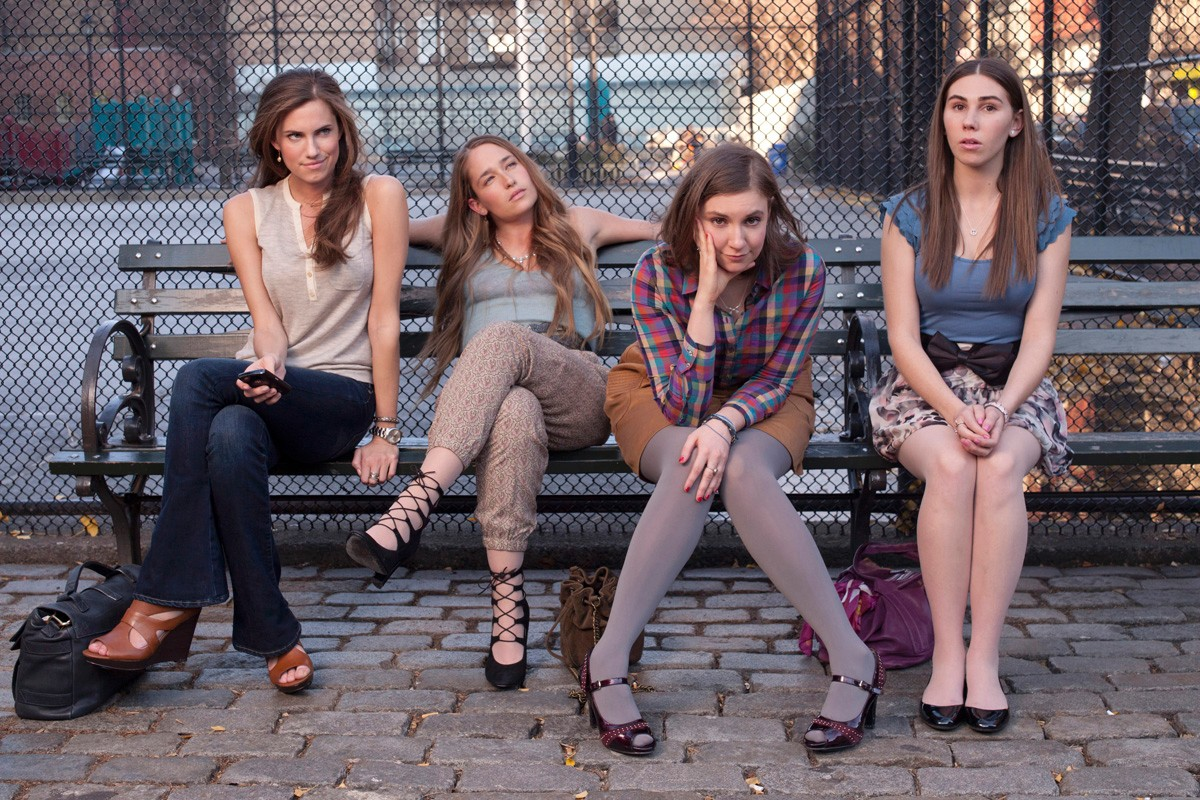
In an attempt to implore sexual freedom the text(s) reaffirms the male – female divide and this apparently gives the cast and writers’ license to incite sexism, misogyny and female chauvinism[28]. Sex and the City appears to return to a repressed state – it is still men who rule their world. Mr. Big allows Carrie to believe that they are creating their own rules and sharing the relationship power, when, in fact, she always compromises herself and comes around to his way of thinking, in the end, even without realising it. This may be somebody’s reality but please do not attempt to use it as a form of celebrating the twenty-first century woman. She is, one would like to think, less-consumer obsessed and vacuous. Her right is not only to shoes but to a voice, freedom, power and to transgress male notions of femininity. Within the media forum would seem like the ideal vehicle for such a premier, however, given the complexities and humanity of the female gender would anybody be up to the task. Lena Dunham has taken up the mantle with Girls[29], a series not unlike SATC which deals with four friends and their quest for all the things that the former programme initially set out to do – a survivable place in the world. She has full creative control, stars, writes, produces, directs and while Ms. Dunham has given a voice to the younger woman, one who is not preoccupied with becoming a wife, mother or trying to ‘take over’ from men, these ladies are still white and privileged.

[1] SATC Season 1: Episode 1 ‘Sex and the City’ Samantha insists the girls try “Hav[ing] sex like men, you know, without feeling.” HBO, 1997-2003.

[2] Candace Bushnell cited in Leupold, Julie “Sex and the City Screw with Feminism” (2003). http://journalism.nyu.edu/publishing/archives/portfolio/leupold/Sex_and_the_City.html

[3] Wolf, Naomi, The Beauty Myth: How Images of Beauty Are Used Against Women (Vintage Books, [1992] 2007).

[4] Ibid. 1992, p273.

[5] Levy, Ariel, Female Chauvinist Pigs: Women and the Rise of Rauch Culture (Pocket Books, 2005) pp4-5. Levy suggests that not all women of this generation are imbued with the feminist agenda and “if this bawdy world of boobs and gams we have resurrected reflects how far we’ve come, or how far we have left to go.”

[6] Attwood, Feona, Mainstreaming Sex: The Sexualisation of Western Culture (I B Tauris, 2009).

[7] Gill, Rosalind, Gender and the Media (Polity Press, 2006) pg103.

[8] Samantha finally chooses herself over a man at the end of film one.

[9] Greven, D “The Museum of Unnatural History: Male Freaks and Sex and the City in Akass, Kim. & McCabe, Janet. (eds) Reading Sex and the City (I B Tauris, 2003) p42.

[10] SATC Season 3: Episode 7, ‘Drama Queens’.

[11] SATC Season 5 Episode 15 Catch 38.

[12] Greven, D (2003) p44

[13] Declared during an interview in The Independent, 5 February 2001.

[14] SATC Season 4: Episode 15 ‘Change of a Dress’.

[15] SATC: The Movie. Samantha ends her relationship with Smith by telling him that although she loves him, “I love me more, I’ve been in a relationship with myself for 52 years and that’s the one I need to work on.”

[16] Ibid. “If I met myself ten years ago, I wouldn’t know me.”

[17] Wolf (1993), p275

[18] Naomi Wolf cited in Wignall, Alice “Can a Feminist Really Love Sex and the City” (2008)http://www.guardian.co.uk/lifeandstyle2008/apr/16/women.film

[19] Dyer, R. The Matter of Images: Essays of Representation (London: Routledge [1993] (2002) p128.

[20] Ibid. Dyer examines silent star Lillian Gish and her screen whiteness to argue his case for superiority on screen for white stars.

[21] Bogle, D. Toms, Coons, Mulattoes, Mammies and Bucks: An Interpretative History of Blacks in American Films, Continuum (1991) p9.

[22] Dyer [1993] (2002) p146.

[23] West, Lindy “Burkas and Birkins” (2010) http://www.thestranger.com/seattle/burkas-and=burkas/Content?oid=4132715

[24] Ibid.

[25] Isbister, Georgina, “ Sex and the City: A Post-Feminist Fairy Tale” http://www.unisa.edu.au/cil/minisites/csaa/files/Isbister_edited_version.pdf p11

[26] Gill, R (2006) p269

[27] As suggested by Eliza Tozzi in her article “Sex and the City: Feminism and Mass Culture (Empowerment & Consumerism) “[SATC] suggests that empowerment is attainable through consumption” p64

[28] A term used by Ariel Levy and described as “women who make sex objects of other women and [them]selves” 2006, p4.

[29] Girls premiered on HBO in 2012 and is now on its fourth season.