Categories
Blu-ray film review

Marshland (Dir. Alberto Rodriguez, 2015)

marshland_51

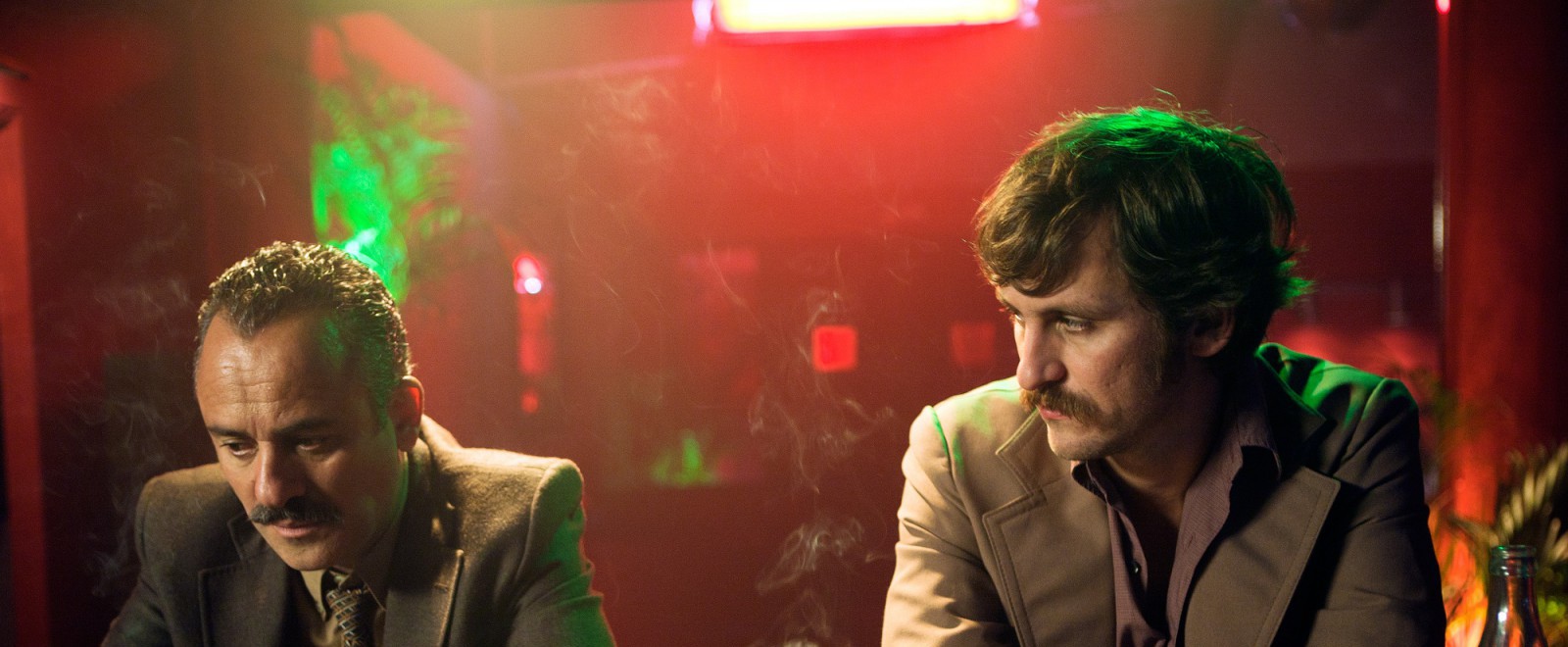
Alberto Rodríguez’s Marshland [La isla minima] opens in 1980 Andalucía. Times are a-changing as the fascist regime has come to an end and a democratic genesis is taking baby-steps in moving the country out of political turmoil. Detectives Juan (Javier Gutiérrez) and Pedro (Raúl Arévalo) are called in from Madrid to investigate the disappearance of sisters Estrella and Carmen. Both men are out of their comfort zone in Guadalquivir marshland and aside from their employment and respective facial hair, they appear to have little in common and each personifies the changes of the political climate (and not always in the ways one would think). This personality clash adds to the tension, especially when the girls are eventually found, sexually assaulted, tortured; their mutilated bodies left in a ditch, and so begins the ambiguous crossing of lines between cop and hunted. Both determined to catch a murderer and prevent more killings by any means necessary.
marshland-bird

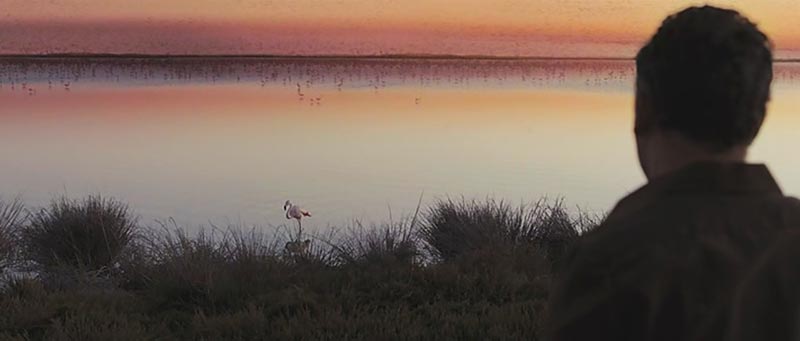
Visually, this Southern Spanish Gothic-cum-neo-noir is stunning, beautifully shot with some breath-taking views courtesy of Alex Catalan’s cinematography. The drone-captured aerial shots, while not a particularly new technique of late, are fantastic; the opening montage resembling both brain and ocular cavity, as if the land itself is an additional character. The use of colour is wonderful, the flamingo scene stunning. Rural Andalucía brings to mind South Korea’s Memories of Murder, Argentina’s Everybody Has a Plan, and even the US’ The Texas Killing Fields and certainly the tone and colour – as well as subject matter – does lend itself to these films and builds an atmosphere which becomes specifically gripping during the final sequence. There is even a supernatural element which aids the noirish and gothic feel to the whole insular, albeit, conventional plot. Misogyny and machismo are at odds just as democracy and the Franco era which still lurks in the background. 

The male leads are outstanding, even Goya-winning in the case of Gutiérrez, they are not necessarily complex but at least they have activity to see them through the plot, which sadly, cannot be said for most of the females in the diegesis. There is a severe lack of characters beyond victims, not all are named and almost all either cry or die. Yes, this is an eighties set film and, as previously stated, there is an authenticity to it but a little character development would not have gone amiss, although given the parallels of the 80s and the world today (economic crisis, social tension, inherent sexism), perhaps, it is purposefully done. The slightest of niggles aside; it really is an enthralling watch which unfolds amid beautiful aesthetics.
Categories
Film Festival film review

The Witch (Dir. Robert Eggers, 2015)

LFF 2015

the-witch_trailer_2015

Robert Eggers’ feature debut, The VVitch is a supremely confident and impressive piece of work. It knows exactly what it wants to be (is exactly what this viewer was hoping for) and after five years in the making why expect anything less. The research and production value is astounding given its low budget but then, Eggers is an ex-production and costume designer. There is a specificity and authenticity to his film – which recently won the Sutherland Award (Best First Feature) at the London Film Festival – and this verisimilitude lends itself well to the genre. Although obviously belonging to horror, at the heart of The VVitch is a psychological family drama. 

It is 1630 and Puritan William (Ralph Ineson), his wife Katherine (Kate Dickie) and their children Thomasin (Anya Taylor-Joy), Caleb (Harvey Scrimshaw) and twins Mercy (Ellie Grainger) and Jonas (Lucas Dawson) are banished from their settlement seemingly, one would assume, for religious fanaticism. They make a home in New England, on the edge of a wood and begin to tend the land, grow corn, keep goats and even welcome a new addition in the form of baby Samuel. Life can hardly be described as good but they have their God, faith, and each other. That is until the day Thomasin is playing peek-a-boo with her baby brother, moments later he disappears and the home descends into hysteria.

The film evokes resounding performances from children and adults alike. Ineson and Dickie are consistently outstanding but the family dynamic they purportedly created in pre-production is effecting and wholly convincing on-screen; making several scenes gut-wrenching as palpable tension rises and the isolated house – seemingly without sin (hubris, deceit, guilt, etc. do not appear to countナ) – loses its inhabitants one-by-one. It is a folkloric dream with its attention to detail and there are even references to a red cloak and poisoned apple long before they were recorded in any Grimm fairy tale.

witch2


While this is Eggers’ baby, he owes his composer Mark Korvan, his cinematographer Jarin Blaschke and editor Louise Ford a debt. Collectively; they earn your fear. Everything is stark, long shots for outdoor scenes, natural lighting wherever possible; close-ups and sharp editing as the audience intrudes upon the family’s dwelling. As a side note, how nobody has approached Ineson before for a horror film is a mystery with that resonating, cacophonous Northern growl he has.

maxresdefault

The VVitch conjures on all counts with thematic, visual aesthetic, an actual witch (!) and Black Phillip making up for a slight plot. Non-Brits may struggle with the dialect but it is well worth the skirmish. It is gorgeous, grim and, by ‘eck, bewitching.

Categories
Blu-ray film review

Dead of Winter (Dir. Arthur Penn, 1987)

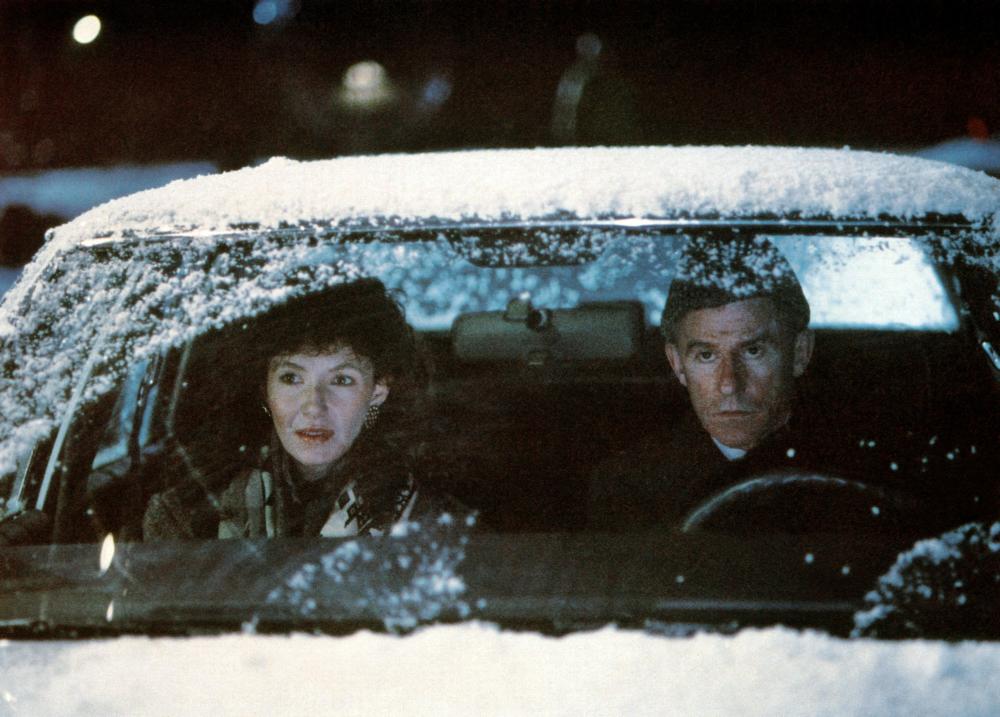
On a snowy, freezing cold night, a woman walks into St. Clair Avenue station and heads towards the line of lockers on the far wall. She walks past twin girls in blue, opens up locker 214 and a grabs a brown leather bag full of money. The audience never sees the woman’s face but her clothing – wide-brimmed hat, mackintosh – all with a splash of red hint at noir while the score screams giallo. Dead of Winter is one of those films that is hard to categorise; part drama, part slasher with a pinch of psychological thriller thrown. Wherever it lies one can, at the very least, argue that it is Arthur Penn’s (yes, that one) attempt at gothic horror.

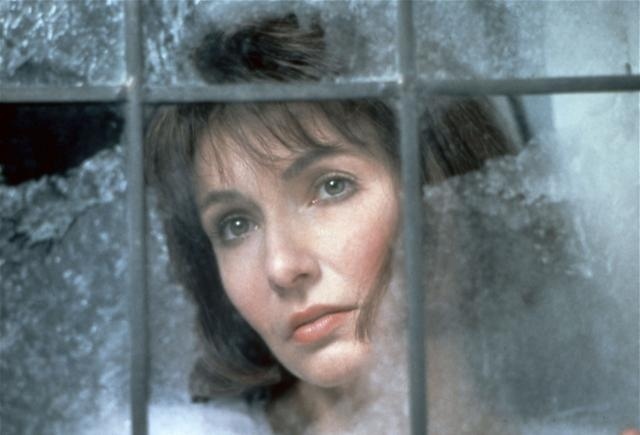
Loosely based on the Joseph H. Lewis’ noir My Name is Julia Ross (1943), even using the director’s name for Jan Rubes’ character. It is a Freudian’s dream given the numerous nods; from the uncanny, doppelgänger, castrated man, psychologist – everything is to be read and is all, well, very obvious. Rubes’ performance is fairly monotonous, McDowell is a little over-the-top and mediocre; only Steenburgen has work to do and is fairly convincing as three different characters. She conveys a real fragility as Kate McGovern, the actress holed up in a mansion with the two men for a screen test.

There is some suspense to the film, however – while it is well-made – it is a largely televisual affair (even some curse-word dubbing still prevalent in this cut) with some real inexplicable moments which definitely throws up questions. An audience will never guess the outcome in a month of Sundays but by the time it wraps up it has bordered on the absurd and the payoff is not actually worth it.

dead_of_winter_1986_

The music, sound, and red motif are nice touches and certainly enhances Penn’s mise-en-scène, and the wintery backdrop serves the film well but it has a misjudged feel about the whole thing, like Penn has thrown everything cliché, motif and dodgy middling histrionic at it.

Categories
DVD film review

Bait (Dir. Dominic Brunt, 2015)

bait-2015-630

Dominic Brunt’s second feature Bait premiered at FrightFest* 2015 (following his debut Before Dawn in 2012), the tag line for which screams “Hell Hath No Fury”. However, within the first ten/twenty minutes it becomes apparent that there is a lot more going on than just a woman scorned – try a punch square in the face from a shovel-sized fist for starters.

Set in an unnamed Northern town amid financial ruin, poverty lurks on every corner and for single mother Dawn (Joanne Mitchell) and best friend Bex (Victoria Smurfit) life is hard. Their market-based coffee and cake stall needs to survive (and expand) and the only way that will happen is a loan; something the bank and building society are reluctant to accommodate. Enter camel-coated Jeremy (Jonathan Slinger) who is amiable, generous and determined to help the girls out… Yep, you have guessed it, the worm turns and there is more to Jezza than meets the eye, namely psychopathy and the need to bleed trusting, hardworking people dry and then to just, well, make them bleed.

bait-still

Bait is an ambitious, twisted little tale; quintessentially British, highly topical and its subject matter will, no doubt, strike a chord with most. What is particularly interesting is the way in which fear effects people, their decision making and ability to perpetuate violence skewed from terror. The female characters are mostly well-written, although Bex feels a little one-dimensional as the token ‘gobby’ one, which is a real shame as Smurfit tends to be excellent in everything else. Mitchell is great and certainly delivers a credible performance, there is a real vulnerability to Dawn. Slinger, however, is the standout. His Jeremy is a fantastic incarnation, a sociopath prone to snapping, his lack of empathy renders him inhuman and his general sneering nature means he practically slithers off screen and yet remains wholly believable.

The girls’ retribution is slow in coming (although we know it will, given the opening moments of the film), however, when it does, oh boy, it is brutal. Everything is throw in, including the bathroom sink and for such a low-budget the make-up FX are suitably gruesome and gory. The angry spurts of violence throughout the film is somewhat ageless and genderless, often depicted through vignettes and shows the consequences of dealings with the loan shark and his hired muscle (Adam Fogerty) but by the end vengeance is grotesque, bloody and a tad indulgent; it stretches the credulity of even the most committed horror fan. Paul Blondell’s script is taut and Brunt has directed a nasty little monster movie albeit in a social-realist setting but this viewer grows a little weary of bloodied bra-clad women in jeopardy.

bait

*FrightFest = the greatest horror film festival London has to offer. 

Categories
Blu-ray film review

Eyes Without a Face (Dir. Georges Franju, 1960)

Eyes-without-a-face

Georges Franju has a thing for masks. Both figurative ones and literal ones are dotted throughout his work, most notably in Thérèse Desqueroux (1962), Judex (1963) and Nuits rouges (1974). However, it is in his 1960 work Eyes Without a Face (Les yeux sans visage) that the literal mask plays a more prevalent role.

eyes4

The BFI has lovingly restored the film and crafted a plethora of extras to release it on Blu-ray for the first time in the UK and it doesn’t disappoint. Picture quality is outstanding and the sound perfect. The film opens with Maurice Jarre’s carnivalesque, jaunty yet haunting score as a female (The Third Man’s Alida Valli) manoeuvres her car down dark winding country roads at night; the tension building as a person in a mackintosh and hat sits in the backseat. Something is not quite right and all unease is confirmed when the driver hoists the body from the backseat and dumps it into the local river. Louise works for Docteur Génessier (Pierre Brasseur) a prominent scientist and researcher in facial reconstruction, the viability of living tissue grafts and necrosis – the operation scenes of which are horrific thanks to Georges Klein’s make-up and Charles-Henri Assola’s special effects. The police have their suspicions about the good doctor but fail to act before the film’s climatic denouement.

doc

Inside the Doctor’s home, silence is juxtaposed with the tweeting of birds and barking of dogs. It is eerie and foreboding, shot with low camera angles and a static camera is interspersed with the odd tracking shot. The use of chiaroscuro is stunning and shadows add to the atmosphere of the allegorical fairy tale. Darkness gives way to light the higher the stairs climbed until the bedroom of Christiane (Edith Scob) is reached. The camera work and lighting design is a real testament to Eugen Schüfftan’s cinematography. Director of Photography Schüfftan had previously worked with Lang, Siodmak, Ophüls and Pabst and had a three dimensional way of lighting a scene, alternating each first and third shot which is great for adding atmosphere, angst and anticipation.

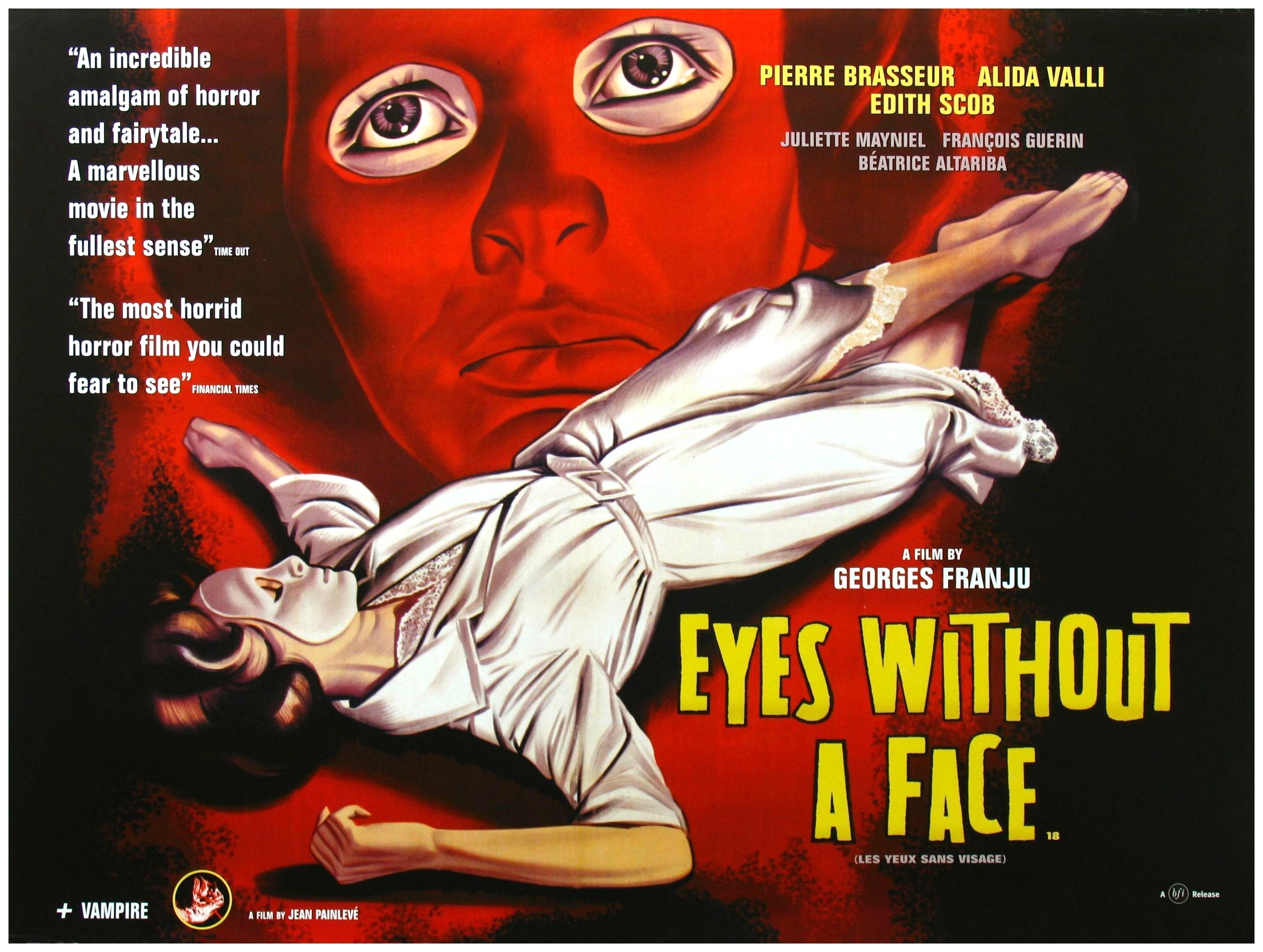
Christiane appears to be a young girl in her white room but the deep velvety tones of a woman amid the caged doves cooing is a real surprise; an adult prisoner being harder to subdue. Two mandolins hang above her bed arranged like a butterfly; she is in a chrysalis awaiting transformation after a car accident causes facial disfigurement. Forever incarcerated in the old dark house of creaking doors and balustrades of the staircase casting bar-like shadows on the wall, all mirrors are covered and Christiane is forced to wear a mask. A mask of brilliant white frozen beauty that only allows the eyes to be visible and they are the windows to a tortured lonely soul. After a while we forget it’s a mask, it’s gentle and soothing, the fact that Scob glides within each scene makes her appear as if an apparition or marionette doll. She is the caged dove, the constant reminder of her father’s guilt and the feeder of his hubris.

Eyes Without a Face is Franju’s masterpiece, an austere and elegant horror-based fairy tale. It deals with scientific ethics, solitude and loneliness; never has human torture been so romanticised, so cruel, tender and lyrical. Edith Scob, perhaps it is fair to say one-time muse of director Franju having worked with him on five pictures, is the star. She provides such a nuanced almost delicate (yet powerful) performance, her Christiane is as beautiful as she is strange, objectified beyond expression. Well, almost…

eyes_without_face_poster_03

Notoriously incongruous, Franju is quoted as saying he subscribed to images and “my images are my fleurs maladives [evil flowers]”. Eyes Without a Face is one evil flower that all must see, at least once in their lifetime.