Categories
Blu-ray film review

George A. Romero: Between Night and Dawn

When George Romero sadly passed away in July of 2017, it is fair to say the news left film fans in mourning and specifically horror fiends. Famous for his flesh-eating and satirical Dead trilogy – which would eventually become a six-film anthology by 2009, he was a filmmaker who refused to be pigeon-holed (as the films in this set will attest). Before Dawn of the Dead (1978) and Martin (1978) he completed three other features. It is these  – There’s Always Vanilla (1971), Season of the Witch (1972) and The Crazies (1973) which were lovingly restored and presented in a box set by the wonderful folks at Arrow Films and their Video label.

There’s Always Vanilla AKA The Affair was the first film made by the team behind Night of the Living Dead (1968) and was fraught with problems from the start of its troubled production. It is not so much a film directed by Romero – his style is barely recognisable – than superbly edited making the most of a flimsy plot. The film centres around a love story during the 70s in which sexuality was liberated and countercultural, clearly inspired by Mike Nichol’s The Graduate (1968) and Larry Peerce’s Goodbye, Columbus (1969) which had been released a few years before. Chris (Raymond Laine) loves Lynn (Judith Ridley) and she loves him until… they don’t, she’s a commercial actress and he’s struggling to find a niche following time served in the army.
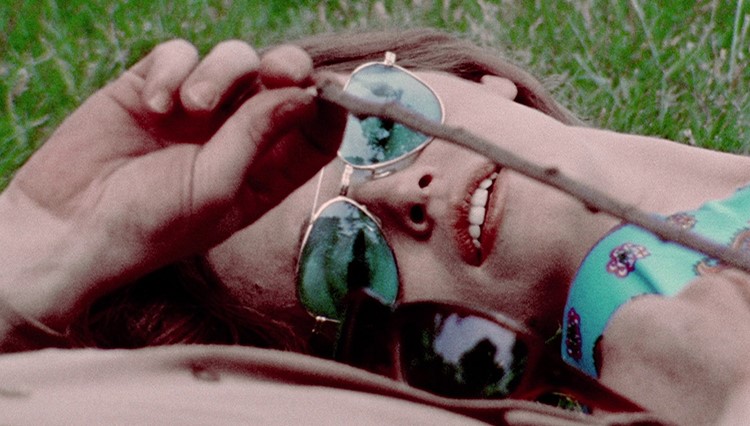
The film was carved from a short showreel meant for Laine (a dead-ringer for a young Russell Crowe) and while the crosscutting and juxtapositions are rather heavy-handed, – and the first half feels somewhat aimless and laboured – Vanilla‘s an interesting look at the experimental cinematic mood – it captures an essence of the era. Granted, with some horrendously dated gender labels and stereotypes. There is a hint of the director during the sinister and sleazy abortion scenes in which canted camera angles and filters are employed and an ominous soundtrack plays.

There’s Always Vanilla, so named for the lead character’s father’s analogy for life – the more exotic flavours tend to be discontinued or hard to locate, you see but there’s always… well, you get the drift. The pretty metaphor within the ending which we also see at the film’s opening brings it full circle and attempts to convey the alleged freedom and liberty of the decade, or perhaps it’s also a state of mind; you’re only free if you believe you are – deeply philosophical questions for a film that started life as a showreel. While the film is dated and technically flawed, it really captures a mood and authenticity of a period and the beginnings of a filmmaker and his team at the genesis of their craft.

Season of the Witch AKA Hungry Wives (awful) or Jack’s Wife (working title) fares better. Made in 1972 and revolving around housewife Joan Mitchell (Jan White) and her eventual dabbling in the occult, courtesy of a few tarot card readings, before accepting her place in a coven. What strikes most with this film is the level of sophistication in comparison to …Vanilla. Still prevalent are some technical flaws however, from the Buñuelian and atmospheric opening to the depiction of female disillusionment within the narrative, this film is fascinating.

It isn’t necessarily about magic but rather how a woman – who wants more beyond marriage and motherhood – wishes to embrace her independence and sexual prime, and take back some power through witchcraft (almost depicted here as a completion of womanhood). One can see its distinct influence on Anna Biller’s fabulously feminist The Love Witch (2016). Using themes of oppression and transgression, it is no accident that this film’s existence stems from the period of women’s lib – patriarchy manifested as a demon-masked man on the prowl, personifying Joan’s fears, albeit within a recurring dream sequence – while fragile and toxic masculinity personified through the characters of Jack Mitchell (Bill Thunhurst) and Greg (Raymond Laine).

Season of the Witch is a gem of a film, from its avant-garde opening to the interesting depiction of gender roles coupled with the enigmatic and nuanced performance of Jan White. It feels like a primer for Martin with its political progression, religious motifs and the use of the colour red (although to differing effects).

This use of chromatic is also prominently used in The Crazies, a science-fiction-horror-thriller in which a small American town is quarantined following the accidental release of a biological weapon. The Army have “everything under control”, at least they certainly want everyone to believe they do – reinforced by a non-diegetic military drumroll punctuated sporadically throughout. We, along with the townspeople are on a need-to-know basis as all hell breaks loose and national security becomes a real concern.

We’re subjected to horrifying images as people are dragged from their sanctuary of Church or a small group of individuals are backed into a stand-off, threatened by gunfire. Then, there’s the scientist who makes a breakthrough with an antidote (the soldiers have all been inoculated first with what little antibiotics they have) only to be murdered, his vials of life-saving serum (red again) smashed around him. David (W.G. McMillan) and Judy’s (Lane Carroll) arc pulls at the heartstrings and, a few pacing issues aside, it is them we root for.

Watching the films in this boxset in chronological order shows a distinct progression in the New York native/Carnegie Mellon alum’s filmmaking. The man who made films (whether writing, directing or editing or a combination of all three) instinctively, was politically progressive, possessed a sense of humour and rarely wrote characters that weren’t multi-faceted. He depicted a rare equality within male and female characterisations and did not exploit or resort to sex.

Mr. Romero, George, you are sorely missed.

This box set of his early works between Night of the Living Dead and Dawn of the Dead – see what they did there? is replete with extras and special features and is a must-buy for any fan. He was still developing his style and craft and the films may not strike as much of a chord as the ones that followed*, however, there’s still much to enjoy and appreciate. Season of the Witch, and the Guillermo del Toro interview with George – which is a wonderful and joyous watch – are worth the purchase alone. Alternatively, all three are now available individually via Arrow.

*”My stuff is my stuff. Sometimes, it’s not as successful as my other stuff but it’s my stuff.” (G.A.R, 2011)

 
Categories
film review

Tranny Fag (Dir. Kiko Goifman and Claudia Priscilla, 2018)

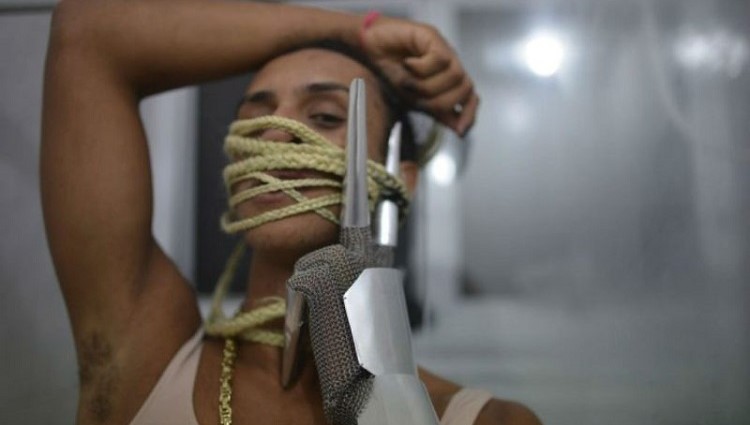
In the traditional Portuguese Tranny Fag translates as Bixa Travesty, a little less confrontational than the English but that’s just not the style of the documentary’s subject Linn da Quebrada – the self proclaimed “tranny fag”. Residing on the outskirts of São Paulo, she is marginalised economically before even considering the fact that she’s black and transgender, struggling to exist amid poverty and in a world that, for the most part, doesn’t comprehend her.

Rather than shy away from the public eye, Quebrada is taking the Brazilian funk scene by storm, alongside her partner-in-crime Jup do Bairro. Their songs – (performed throughout) providing a back story of sorts for the 27-year-old – contain abrasive coarse lyrics which pull no punches and berate society and the expectations it places on women, what it means to be a woman like her, and dismantling the patriarchy one bridge and chorus at a time. Her words are a weapon intent on holding the world accountable and paving a way of acceptance and understanding without inciting hatred.

As a subject, the singer-songwriter and spoken word artist is fascinating and inspiring. She’s pre-op and has yet to start hormones, consider breast implants or remove her facial hair because as far as she’s concerned she’d be pandering to society’s ideal of womanhood. Quebrada – who also co-wrote the script with directors Claudia Priscilla and Kiko Goifman – is a “black fag doll. Neither man or woman” embraces nudity, here and in her stage shows as an attempt to undermine, even recondition the collective mindset associating gender with genitalia and highlighting the façade of gender performance.

A real turning point in the documentary which jumps from talking head to music gig almost exclusively is the footage made during Quebrada’s treatment for testicular cancer, the physical effects and the profundity it had on the way she controlled her body. The scene which shows her literally pulling the lustrous locks of hair from her head, chemotherapy having ravaged her immune system is particularly powerful and in keeping with her persona, completely transgressive. This and the scenes with her mother offer a rare intimacy which is needed in an otherwise repetitive and prosaic documentary. The static camera and simplistic editing coupled with the pulsating combative stage performances start to feel isolating.

Tranny Fag is a LGBTQIA+ positive, important and transgressive, if slight, profile of a bold and beautiful artist who is unapologetically her confident self. She espouses her ideas and beliefs provocatively, is always interesting, and determined to not only stand out but belong in an accepting world.

Categories
film review

Whitney: Can I Be Me (Dir. Nick Broomfield, 2017)

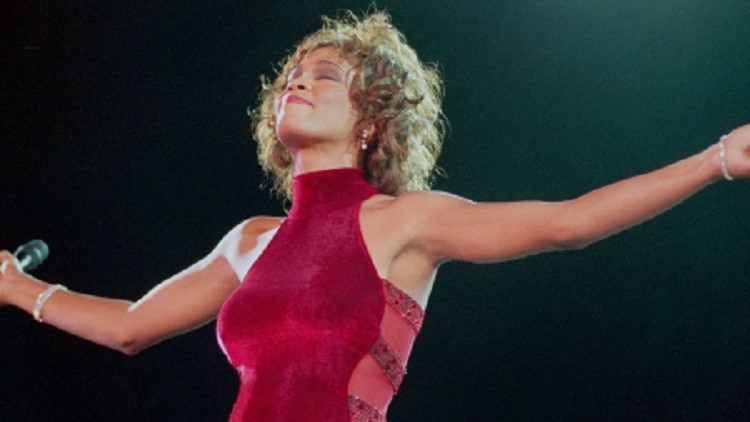
Can I Be Me‘s opening scenes take place on February 11th 2012 and we can hear the 911 dispatch call which was recorded on the night Whitney Houston, known as ‘Nippy’ to her family and friends, died alone aged 48. While there were dangerous levels of drugs found in her system, one of Whitney’s back-up singers tells us plainly, “She died of a broken heart.”

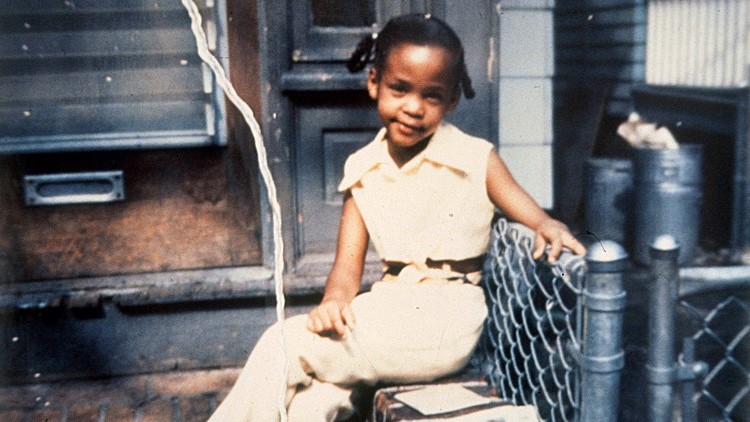
Whitney Elizabeth Houston was born in New Jersey on August 9th, 1963. Daughter of John and Cissy, and younger sister of Gary and Michael. Cissy would guide her, John would influence her and her brothers would provide the company when they did drugs together. Clive Davis would take her under his wing at 19 and create a pop icon – the best-selling black female vocalist since Aretha and Dionne (Warwick, who also happened to be a relative), and one who, according to Davis, would translate to a white audience.

Her debut album Whitney Houston sold 25 million copies. By 1988, the African American community felt she had sold out, her music had been ‘whitened’ and she was booed at the Soul Train Music Awards that same year (and the year after). Some say she never quite recovered from the rejection and she began seeing the “bad boy of R’n’B” Bobby Brown as, some have suggested, retaliation. They would later marry and the rest, as they say, is history. Well, not quite.

Footage takes us back to 1999 and the world tour Houston struggled to complete. The tour which would change the course of her career and, ultimately, her life. Combining home videos, archival footage and audio interviews,  Nick Broomfield and Rudi Dolezal’s documentary is revealing without disrespect or exploitative intent; a frank portrait of a beloved and troubled artist. Nor does it shy away from the drug consumption, from teenage recreation, through the accidental overdoses, to the day it claimed her. This in itself addresses the level of apportioned blame aimed at Brown by the media.

Their relationship was tumultuous to say the least, however, home videos depict a happy, loving couple with a similar goofy sense of humour while reality suggests there were three people in they marriage; Bobby, Whitney and Robyn Crawford. Crawford was Houston’s best friend and rumoured lover – Brown confirmed his wife’s bisexuality in his memoir – and from the footage depicted in this documentary, Brown and Crawford loathed each other. He appeared to be emasculated by her while she watched their competitive marriage hinge itself on drugs and alcohol; and yet both vied for Whitney’s love and attention. The real tragedy would be Bobby Kristina (March 4th 1993 – July 26th 2015), and this film is scathing in her parents’ neglect. Poor kid.

The situation reached breaking point when Houston’s bodyguard David Roberts compiled several reports on the singer’s habits and addictions, and his fears. He asked for help; an intervention but these pleas fell largely on deaf ears. How can you save somebody who doesn’t want to be saved? He maintains that all are responsible for Houston’s premature death. There are so many what-ifs offered up: if she had grown up in a less fiercely religious household… had she never touched drugs in the first place… had her father not claimed she owed him and sued her for $100 million. The biggest caveat of all is had she been able to live and love Robyn as she wanted, would she still be alive? Bobby Brown seems to think so but we are only offered this quote via an intertitle. He, Cissy, and Robyn are never interviewed by the filmmakers and thus it, along with Houston’s bisexuality, remains conjecture. 

Can I Be Me is a candid, fascinating and heart-breaking documentary detailing – albeit within a very small window of time – the true toxic tragedy of fame and the toll of addiction, as is often the case of the truly gifted. Perhaps all of those around Whitney were in some way complicit in her destructive downfall but she was an addict, trapped within a brilliant, beautiful and troubled singer who only ever wanted to be herself, and sing. ‘Nippy’ changed the music industry and while some may have made their disapproval known once upon a time, she paved the way for the Mariahs, Beyoncés, Rihannas, and Leonas of this world, and a whole host of artists besides.

Where do broken hearts go – can they find their way home? In the case of this one, let’s hope so.

Categories
Blu-ray film review

Grey Gardens (Dir. Albert and David Maysles, Ellen Hovde and Muffie Meyer, 1976)

The mother/daughter relationship is a profound one and not often placed under the microscope. In 1976, two filmmaker brothers Albert and David Maysles (co-directed by Ellen Hovde and Muffie Meyer) chose to do just that with their documentary, Grey Gardens, which the Criterion Collection restored a few years back, and released on Blu-ray for the first time in the UK.

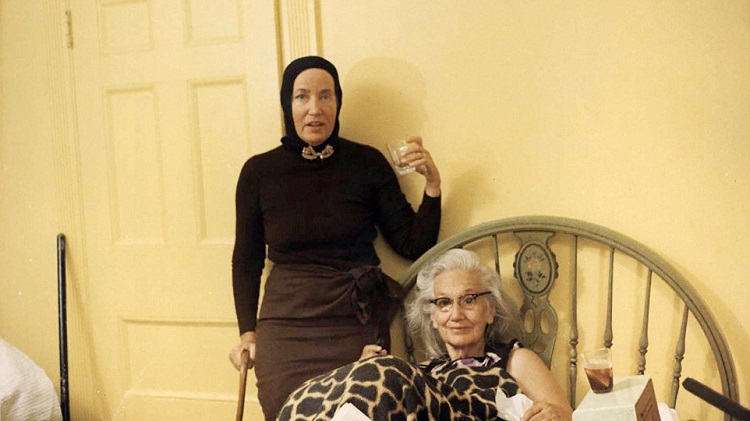
The Grey Gardens of the title is a 14-room house in the Georgica Pond neighbourhood of East Hampton, owned by Edith Ewing Bouvier Beale and her then-husband Phelan. Upon divorce, Phelan provided his wife, Big Edie and their daughter Little Edie with living costs. Once those funds had dried up, the house fell into disrepair and in ’72 the Suffolk County attempted to evict the two women and demolish the property. The press’ interest lay in whom the Beale’s were related to, one-time First Lady, Jacqueline Bouvier Kennedy.

Like with all documentaries, there is a level of manipulation, almost certainly, voyeurism and a vested interest in the subjects viewed. This is one of the few that appears to have no ulterior motive other than depicting Big Edie and Little Edie just as they are/were. It is a wonderfully weird piece of work; a character study of almost morbid fascination about privilege, crumbling Patriotism, and those two extraordinary women who thrived amongst reclusive squalor and the crumbling detritus of their lives.

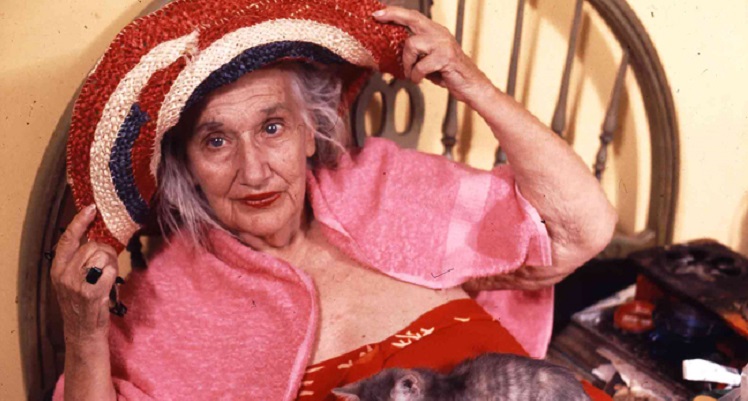
There is a home-video quality to Grey Gardens which although beautifully restored still contains a graininess which adds to its authenticity and intimacy. Often filmed outside, the natural lighting means that colours within the frame are stunning as Little Edie takes centre stage in her colourful ensembles and jewellery adorned headscarves. At times, it is hard to avert one’s eyes from what is onscreen, their eccentricities are, initially, hard to comprehend but both women have such warmth and veracity that the audience is soon taken in. One of the most beautiful aspects of the film is the lack of narrative time – the only indication is the dilapidated wall within the large expanse of foyer in the house and the noticeable hole in the wall gets bigger as the raccoon they share the house with (along with some 52 feral cats) makes itself a home.

Observing these two amazing women are the Maysles brothers who strike up such a seemingly genuine rapport with our main ‘characters’ that it is truly a joy to experience. In one of the disc extras, within the confines of the
scrapbook, it is stated that: “A few years ago, two brothers fell in love with a mother and her daughter.” Thanks to Criterion’s 4K restoration of the original negative we get to experience this visually beautiful love story first hand, sound quality is sublime and the mono track reproduces Little Edie and her mater’s dulcet singing voice to perfection.

Grey Gardens shows us a tender, loving and, at times argumentative, mother-daughter relationship; full of ups and downs and yet their commitment to each other and their way of life never faltered. Both are unapologetically wonderful and weird in equal measure. We should all embrace a Little Edie.

Categories
film review

Thelma (Dir. Joachim Trier, 2016)

Thelma opens with a picturesque long shot as a young girl and, presumably, her father walk across an ice-covered lake to the deep blanket of – audibly underfoot crunching – snow where father and daughter head into the woods to go hunting. The man stops and lifts his rifle, taking aim at an approaching deer only to turn it onto the back of the head of the small child dressed in red. It immediately calls to mind Snow White and her trip with the Huntsman and even a little Red Riding Hood.

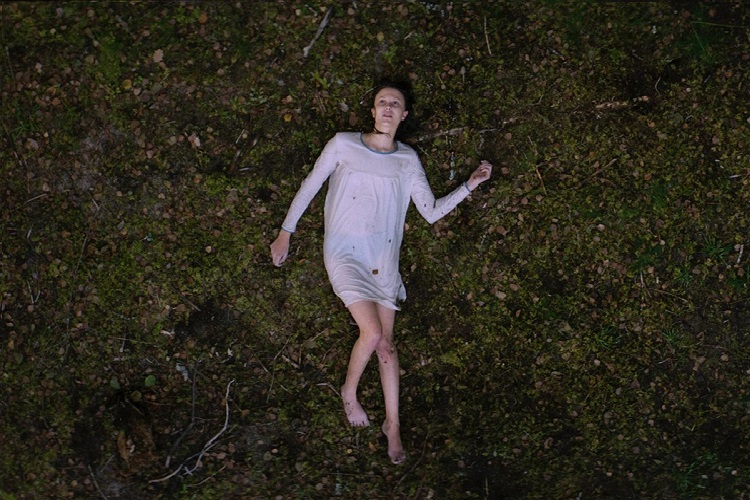
Fade to black – signifying a time lapse – and an aerial shot slowly zooms in and follows a young woman (also wearing a red tone) as she walks across campus and into a biology lecture. So sets the scene of Joachim Trier’s fourth feature. Once again he partners with screenwriter Eskil Vogt to bring something a little different yet equally as beautiful and resonant as Reprise, and Oslo, August 31st, if far more supernatural and allegorical in tone.

Thelma (Eili Harboe) is a shy loner, has stiflingly over-protective and controlling parents (Blind’s Ellen Dorrit Peterson and Henrik Rafaelsen) and begins to experience seizures, seemingly triggered by her meeting Anya (Kaya Wilkins). Slowly, she begins to integrate herself into a social circle, her Christian upbringing a source of fascination for some of her new friends. Torn between fulfilling her parents’ expectations, self-acceptance and suppressing everything else – including her attraction to Any – Thelma’s psychogenic seizures begin to debilitate until she seeks medical help and the truth about her condition is revealed.

While a coming-of-age with supernatural elements is nothing new, Trier’s evocative, moody and visually arresting love story manages to sustain its mystery for the 116-minute runtime. Some may be reminded of Carrie but this has more in common with Let the Right One in (2009) and When Animals Dream (2014) riffing on the Female Gothic, Nordic-style, via horror tropes/themes offering a melancholic and deliberately paced affecting drama. True to Trier form, there is the signature neutral colour palette of greys, blues and muted tones punctuated with the occasional burst of colour, the slightly voyeuristic camera courtesy of Jakob Ihre’s cinematography, along with the jarring soundtrack (that occasionally diminishes into deafening silence) by composer Ola Fløttum.

Okay, so the Freudian/religious imagery is a little on the nose but for a modern day gothic fairy tale-come-teen-drama, Thelma deals beautifully with the ambiguity of growing-up, trauma, and the end of oppressive patriarchal control, as well as the need for autonomy, self-love and acceptance.