Categories
film review

First Cow (Dir. Kelly Reichardt, 2019)

First Cow surprisingly – for anyone who has seen the trailer – opens in the present day as a woman (Alia Shawkat) and her dog unearth human remains. Visually, it is reminiscent of Kelly Reichardt’s 2008 film, Wendy and Lucy. The sky is blue, birds are chirping and the low camera angle makes our eyeline at one with the earth, along with the bones. The camera pans to the river and a freighter moves languidly across the water. In the blink of the eye, it has transitioned to a tugboat and, just like that, we have travelled back in time.

Cookie Figowitz (John Magaro) is foraging amidst the greenery for mushrooms. They are his first choice but he searches for anything edible to feed the party of fur trappers he cooks for, as he tries to stretch their diminishing supplies. Among the leaves, brush and overgrowth he stumbles across a naked Chinese man (“not Indian”) and within moments Cookie has given calligrapher King-Lu (Orion Lee) food, something to wash it down with, a coat and a ride on his way.

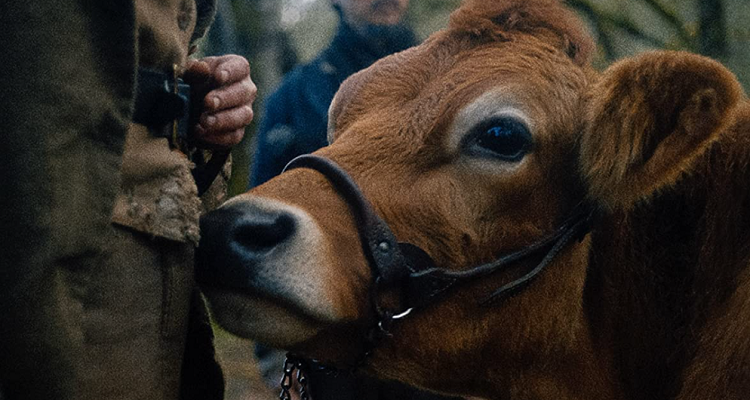
They won’t meet again for a number of days, weeks even, but when they do King-Lu will return the favour, giving Cookie shelter and a place to stay. The two become fast friends and set about making some money: “To get started, you need capital” declares King-Lu to which Cookie retorts without missing a beat: “You need leverage.” That leverage comes in the form of Chief Factor’s (Toby Jones) honey-coloured cow (Evie). You’ve heard the expression, why buy the cow when you can milk it for free? With her produce, the two budding entrepreneurs can make oily cakes. They drizzle them in honey and grated cinnamon, and make a killing selling them to the men mining and panning for gold.

As with the majority of Reichardt’s oeuvre, in terms of plot-points there aren’t many, but what is slowly revealed is an absolute pleasure to watch. She has the immense skill to relay so much with so very little and allows an audience to see but never instructs it where to look, often by her own sleight of hand in the editing suite. From the subtle timeline change to the use of light on the colour palette of yellows, earth tones and greens. It’s a quiet unassuming film, discerning, as it excavates American history and wrestles with the past and present – summed up during an exchange between Cookie and Lloyd (Ewen Bremner) in which one suggests that where they are isn’t the place for cows… “This isn’t the place for white men either.”

Based on Jon Raymond’s first novel The Half Life (2004), First Cow is the author’s fifth collaboration with Reichardt – their sixth Showing Up was released on Blu-ray by A24 earlier this month – and can be viewed as a companion piece to Meek’s Cutoff (or even Certain Women, also starring Michelle Williams), certainly a historical pre-cursor of early life in nineteenth century Oregon, America. Thematically, it acknowledges the ambiguities of (male) friendship. Those formed under the most unlikely circumstances and the power, grace, pleasure and heartaches that bind us together, marking human frailty and endeavour in such a profound, moving, and meditative way. The cast is led majestically but Magaro and Lee, who both give such delicate and beguiling performances, made only more poignant by William Tyler’s score – often only the plucked strings of an acoustic guitar.

First Cow is a moving and quiet fable about kinship and an America of the past and present, overflowing with the milk of human kindness.

First Cow is currently showing on MUBI.

Categories
film review

Tale of Tales (Dir. Matteo Garrone, 2015)

T0T1

Long, long ago there lived a Queen (Salma Hayek); a desperate, seemingly infertile Queen who wished for a child more than anything. Her husband, the King (John C. Reilly) would (and does) do anything to make his love happy and provide her with the child she so yearns, and so begins Matteo Garrone’s (Reality, Gomorrah) first English language feature Tale of Tales. The tone of which is set from the very beginning as the King of Longtrellis wades into water to slay the sea monster and pluck out its heart thus providing his beloved with the bloody, and delicious, means to conception and the shortest gestation period ever. His untimely demise brings the neighbouring Kings; sex-crazed libertine Strongcliff (Vincent Cassel) and sweet melancholic Highhills (Toby Jones) to the funeral procession, and all three kingdoms merge, intersect and ultimately influence the other as the triptych of tales unfurl, some sixteen years later.

Queenie is now mother to a teenage albino Elias (Christian Lees) – taking on the colouring of the sea beast – and who is spending a lot more time with his identical twin brother from another mother, Jonah (Jonah Lees). The Royal mother is overcome with envy as the two boys; one princely, one a pauper make adventures of their own.

ToT7

Strongcliff is a skin-crawling, somewhat beastly Don Juan-type whom women seem to grow tired of very quickly. Looking for another distraction, he hears a beautiful singing voice and follows it, mistaking an old crone (played respectively by Hayley Carmichael and Stacy Martin) for a beautiful Princess and so begins an obsessive courtship, of sorts, (through a door) chaperoned by her equally wrinkled sister Imma (Shirley Henderson).

ToT4

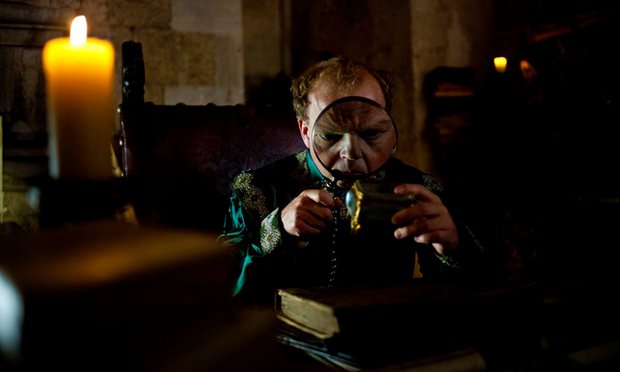
Highhills is a widower who as his only daughter Violet (Bebe Cave) matures becomes more attached to a flea than the fruit of his loins, and when said pet passes on (respiratory issues) provides a fun guessing game, the prize of which is the hand of Violet. Step forward the Ogre (Guillaume Delaunay) and the poor Princess is whisked away, under duress, to what essentially is a hole in a mountain.

While the majority of audiences – whether filmic and/or literary – will recognise the conventions, motifs, metaphors, plots and characters of the traditional fairy tale, they may even attribute to the Brothers Grimm. However, without putting too finer point on it; the Italians came first. Straparola inspired Giambattista Basile, upon whose tales –The Enchanted Doe, The Flea, and The Old Woman Who Was Skinned– this film is loosely based. In his work, Basile, deployed the loquacious gifts of female storytellers while Garrone adapts to forefront the role of women in his carnivalesque cinematic tale for they all can be read as rebellious females manipulating their surroundings and fashioning their own fates.

ToT3

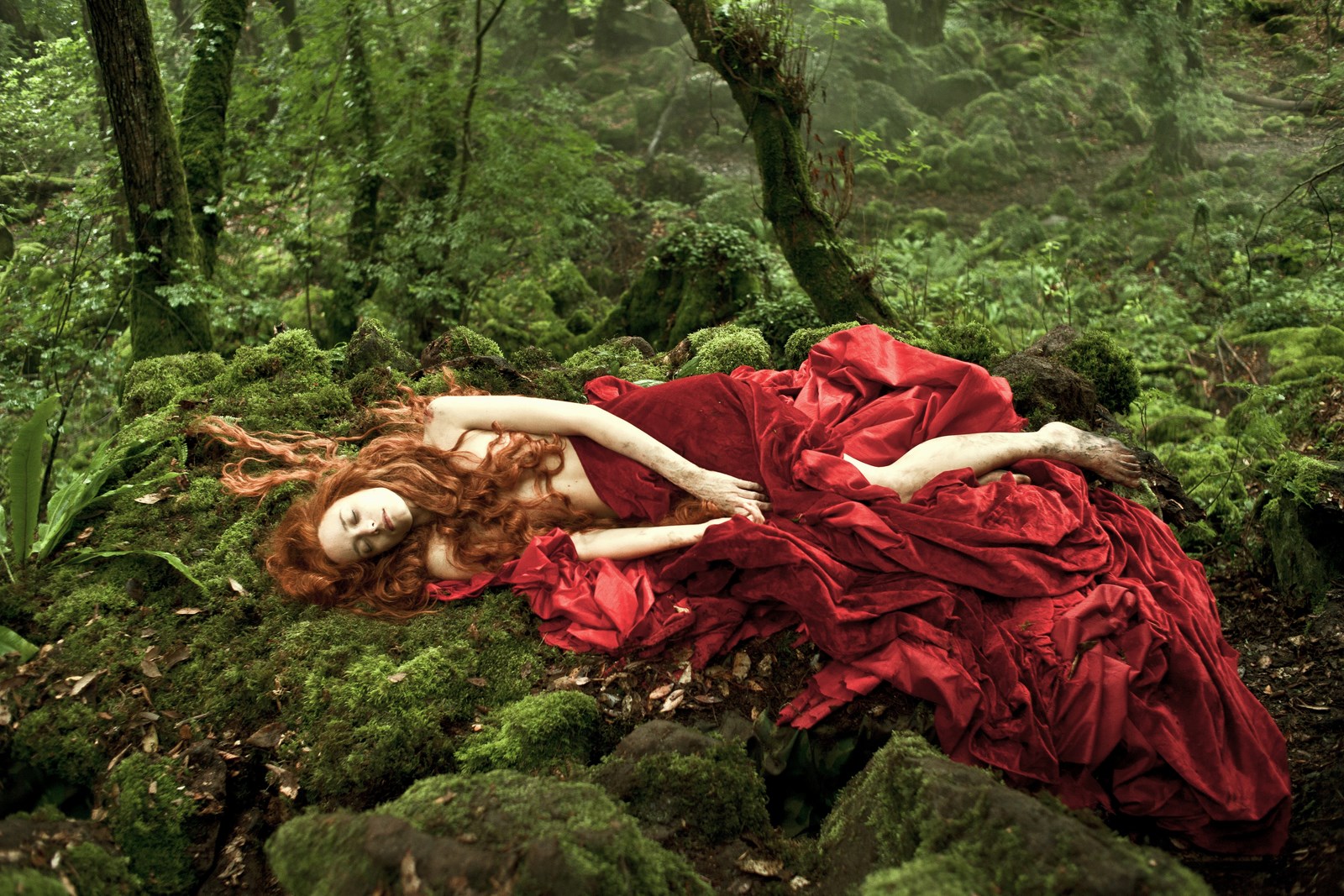
The film is a real feast for the eyes combining the Italian setting with baroque beauty, brimming with flamboyant metaphors which render Tale of Tales as sitting somewhere between repulsive and hilarious. Garrone clearly appreciates the richness, diversity and complexity of the fairy tale, especially those from his motherland. It intrigues, has much to say on the power of civility and transformation and is completely wicked and highly pleasurable. Not least due to its direction but the special visual effects (practical, digital art, props) and ageing prosthetics, provided by mAKINARIUm are outstanding, as is Massimo Cantini Parrini’s gorgeous and sumptuous costuming; fit for any Royal. Alexandre Desplat delivers a dreamy score, expressive in tone and timbre which really lifts and enhances those darker moments.

ToT5

Tale of Tales is a charming curio – dark, gruesome and mirthful; a transgressive grotesquery, thematically rich, irreverent and unctuous. Those fiabe that we hold dear as children are just as important to us as adults, and when they are as wonderfully made as this, even better.

And they all lived happily ever after…yeah right.