Categories
Film Festival film review

Bring Them Down (Dir. Christopher Andrews, 2024)

Christopher Andrews’ directorial debut begins in the confines of a car as it races down a country lane at breakneck speed, a young woman Caroline (Grace Daly) is in the back and an older woman Peggy O’Shea (Susan Lynch) sits in the passenger seat. She’s had enough has Peggy, determined to leave the man who “terrifies” her, imploring ‘Mikey’ to “slow down”. This just ensures that the young driver, Michael, puts his foot down even more forcing the car out of his control.

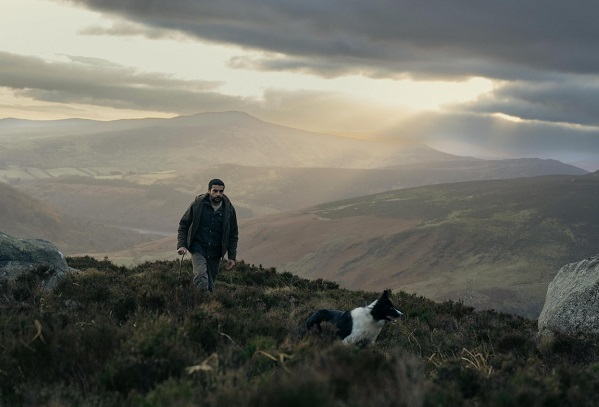
Flash-forward twenty years as daylight gives way to darkness. Storm Noah is on its way, and Michael (Christopher Abbott) returns from tending his sheep to find his gate destroyed. His hands are crimson, fingers tinged blue from the cold weather as he and his dog Mac make their way inside. A phone call from the man they share a hill with, Gary Keeley (Paul Ready), causes Michael’s Ray (Colm Meaney) to fume and spew vitriol, as we are swiftly realise he is wan to do. Two of the O’Shea’s rams are dead on Keeley land and have to be destroyed. Rustlers are maiming sheep across the county, cutting the legs off livestock, destroying livelihoods and outsiders like “Poles or one of that shower…” are blamed for it. Little does Michael know the culprits are far closer to home and two rams is nothing compared with what is to come.

Andrews uses the farming crisis, boundary disputes and tourism-led gentrification in Ireland as a backdrop for his film (he also wrote the screenplay). Gary is in huge financial debt due to an investment of holiday homes, the building of which has stalled due to a large piece of farmland in the vicinity; the owners of which refuse to be displaced. Characters are at emotional and economic odds, the animosity historical. It goes way beyond land borders and boundaries for these two particular families – Caroline (Nora-Jane Noone) permanently scarred from the car accident seen in the prologue is now married to Gary and mother of Jack (Barry Keoghan) – with the two main protagonist sons in the middle of a tense situation neither asked for.

Filmed in Wicklow (the gorgeous pastoral landscapes do for Ireland what God’s Own Country did for Yorkshire), Bring Them Down unfolds like a neo-western but is steeped in Irish tragedy, as two sons reconcile family loyalty with the men that rule their respective roosts destroying the other at whatever cost. There are two very different patriarchs in Gary and Ray. One is a couple of decades older than the other and yet similarly unwise – probably bearing the brunt of their own fathers before them – breathtakingly noxious and incapable of breaking the cycle of bruising generational trauma and misguided vengeance. The film straddles the notion of tradition and modernity which is most impactful in how the two families communicate. The O’Sheas largely speak Gaelic to one another, the Keeleys English, which is turn signifies a larger territorial implication.
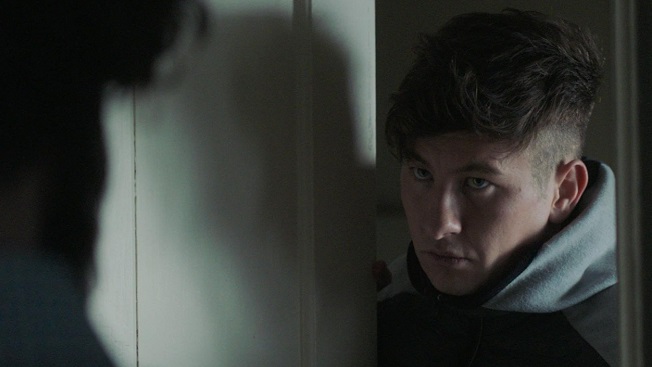
The film is split into two acts and the shifting of perspectives works brilliantly adding some nuance to a provocative and compelling drama which is relentlessly grim. Erratic camerawork that can be often out-of-focus only adds to the brutality onscreen, at times nausea-inducing, backed musically by a bass heavy soundtrack and the semi-persistent pound of a Gaelic drum. The performances are, for the most part, excellent. Meaney is as his name suggests and in the short amount of time he is on camera manages to convey the fear Ray instilled in his wife and child once upon a time. Noone provides fine support as one more underestimated, if somewhat reductive, woman looking to flee a marriage.

I am still not overly fond of Keoghan and his acting style, the twitching oddity and/or sociopathic man-child feels overdone at this point. For me, it is Abbott and Ready who carry this film. Their performances are as multi-layered as their Arran jumpers, padded gilets and waxed jackets. Brit Ready (hapless Kevin in Motherland) is a revelation as unpredictable Keeley who can blow a gasket just as easily as he’s wracked with sobs. Which leaves American Abbott – one of the best actors of his generation (see James White or any number of his supporting roles if you don’t believe me) – his accent is flawless, dipping in and out of Gaelic with an ease which belies his Connecticut upbringing. His complicated and stoic Michael internalises everything portraying a multitude with a silent stare, slump of the shoulders or sniff of the nose. This is a man constantly battling to do the right thing grappling to remain composed.

Bring Them Down is a suffocating and stressful watch depicting internal strife and the harsh, brutal and violent realities of a small rural community within which toxic masculinity breeds in all its contemptible shame.

The film is released in UK cinemas on Friday 7th February courtesy of MUBI.
Categories
Blu-ray film review

Marshland (Dir. Alberto Rodriguez, 2015)

marshland_51

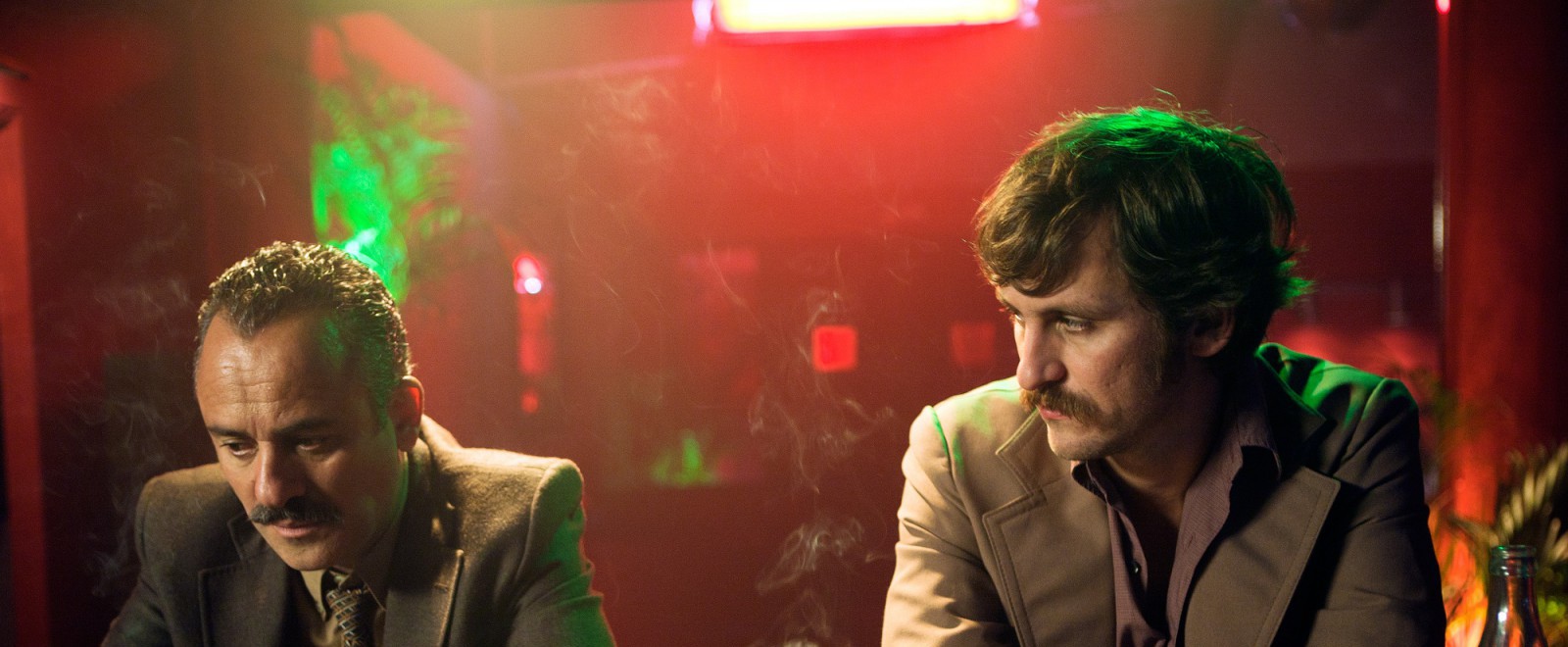
Alberto Rodríguez’s Marshland [La isla minima] opens in 1980 Andalucía. Times are a-changing as the fascist regime has come to an end and a democratic genesis is taking baby-steps in moving the country out of political turmoil. Detectives Juan (Javier Gutiérrez) and Pedro (Raúl Arévalo) are called in from Madrid to investigate the disappearance of sisters Estrella and Carmen. Both men are out of their comfort zone in Guadalquivir marshland and aside from their employment and respective facial hair, they appear to have little in common and each personifies the changes of the political climate (and not always in the ways one would think). This personality clash adds to the tension, especially when the girls are eventually found, sexually assaulted, tortured; their mutilated bodies left in a ditch, and so begins the ambiguous crossing of lines between cop and hunted. Both determined to catch a murderer and prevent more killings by any means necessary.

marshland-bird

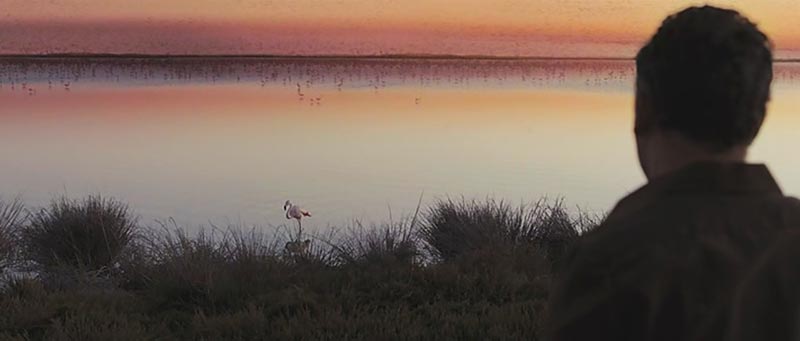
Visually, this Southern Spanish Gothic-cum-neo-noir is stunning, beautifully shot with some breath-taking views courtesy of Alex Catalan’s cinematography. The drone-captured aerial shots, while not a particularly new technique of late, are fantastic; the opening montage resembling both brain and ocular cavity, as if the land itself is an additional character. The use of colour is wonderful, the flamingo scene stunning. Rural Andalucía brings to mind South Korea’s Memories of Murder, Argentina’s Everybody Has a Plan, and even the US’ The Texas Killing Fields and certainly the tone and colour – as well as subject matter – does lend itself to these films and builds an atmosphere which becomes specifically gripping during the final sequence. There is even a supernatural element which aids the noirish and gothic feel to the whole insular, albeit, conventional plot. Misogyny and machismo are at odds just as democracy and the Franco era which still lurks in the background. 

The male leads are outstanding, even Goya-winning in the case of Gutiérrez, they are not necessarily complex but at least they have activity to see them through the plot, which sadly, cannot be said for most of the females in the diegesis. There is a severe lack of characters beyond victims, not all are named and almost all either cry or die. Yes, this is an eighties set film and, as previously stated, there is an authenticity to it but a little character development would not have gone amiss, although given the parallels of the 80s and the world today (economic crisis, social tension, inherent sexism), perhaps, it is purposefully done. The slightest of niggles aside; it really is an enthralling watch which unfolds amid beautiful aesthetics.

Categories
film review

Enemy (Dir. Denis Villeneuve, 2013)

enemy-movie

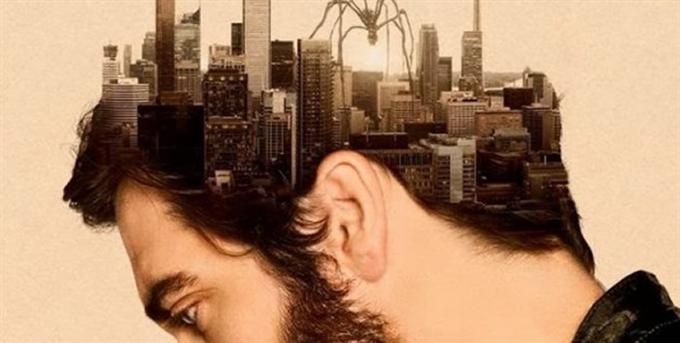
Enemy sees French-Canadian director, Denis Villeneuve and the ubiquitous Jake Gyllenhaal re-team for their second filmic outing after Prisoners. Based upon Jose Saramago’s Nobel Prize-winning novel O Homem Duplicado (literal translation: The Duplicated Man), the film opens with a group of seemingly voyeuristic men in a Gentlemen’s Club. It looks exclusive as naked women parade around; cries of distress follow with a close up of a scuttling spider. Cut to University lecturer Adam Bell delivering a lecture amid words like ‘censorship’ ‘dictatorship’ ‘oppression’ and scrawled in chalk on the board behind him the phrase ‘chaos is order un-deciphered’.

Enemy-4

That is the pleasurable thing about Enemy, trying to decipher the film long after viewing. It is an elliptical puzzle that fascinates from beginning to end. Bell is stuck, it seems, in his own Groundhog Day, destined to repeat the same daily mundanity of lecturing, marking coursework, engaging in passionless sex with his girlfriend Mary (Mélanie Laurent), who promptly dresses and departs when they have finished. Then a colleague recommends a film, something he is loath to try but does anyway; something to break the cycle. He then notices that the Bell Boy, onscreen, looks oddly familiar, identical even… and that is when he seeks out Anthony St. Claire.

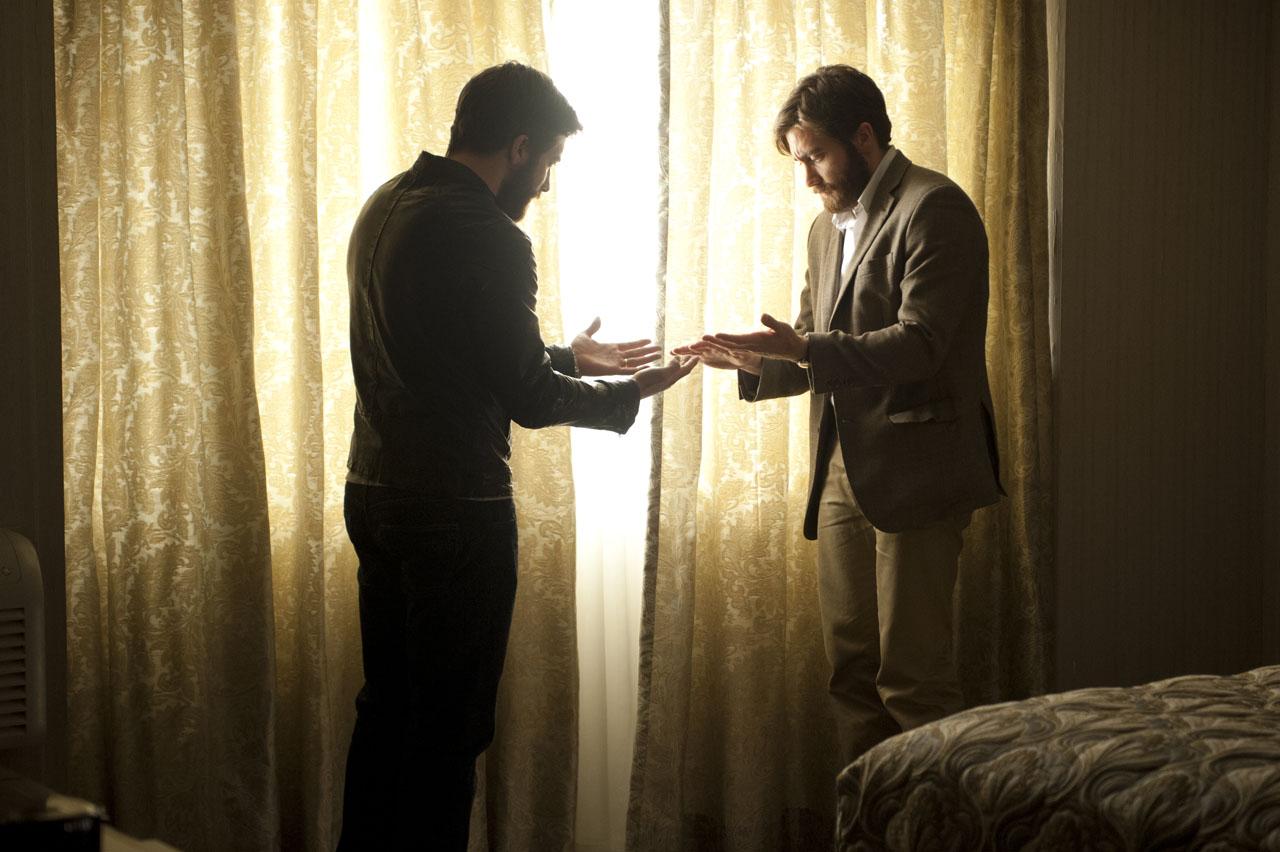
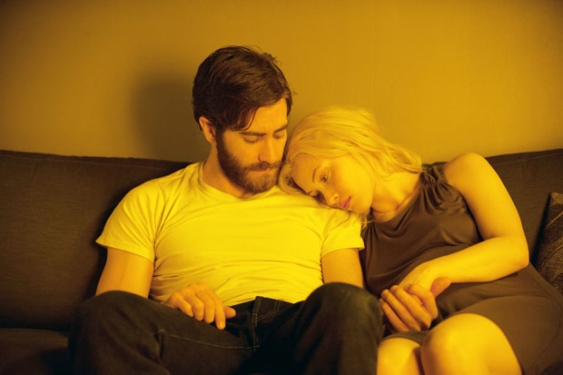
Enemy is weird, mysterious, and highly entertaining. Scenes are cast in a yellow hue which makes the world seem jaundiced, Adam’s visions – if that is what they are – are unwieldy and steeped in symbolism, is it reality or is he losing his mind? Anthony is the steady hand to Adam’s nervous wreck, leather wearing to tweed, straight-standing to stooped, lover of blueberries while Adam deplores them. However, they are not entirely different. Villeneuve likes the concept of duality – see his previous two films, the afore-mentioned Prisoners and Incendies – mirroring, mother-figures and the uncanny; the familiar and unfamiliar often meet and collide. Here it takes the form of the doppelgänger; two Jakes (or is there only one?), the seemingly alternative worlds they inhabit and the pretty blondes they each love, Laurent and Sarah Gradon who plays Anthony’s wife Helen are also visually strikingly similar. There are recurring motifs dotted throughout and the religious aspect of the characters’ names is intriguing.

enemy-poster

Personally, I applied Freud to my reading to Enemy and this added coherence; as the male subconscious is exposed, questions of mothers, fear of fatherhood and existential crisis surround the contempt of the inner self but hey, that’s me. The film is complex (and entertaining) enough to withstand any reading and still be profound, and that ending will leave you astounded long after the credits roll. The only minor criticism is the vapid representation of the female characters especially the two main women, neither is explored fully and both tend to blend into the waxy yellow surroundings. Isabella Rossellini makes an impressionable cameo and then is gone all too fleetingly but then, perhaps they are meant to, and really one is not supposed to understand any of it…chaos un-deciphered.

At one point Adam turns to Anthony and asks “What’s happening?” To which Anthony replies, “I think you know…” Nope, haven’t got the foggiest but that is all part of the fun.

Categories
Blu-ray film review

Keeping Rosy (Dir. Steve Reeves, 2014)

Keeping-Rosy

Charlotte (Maxine Peake) is having a bad day. Not only has she been passed over for partner in her job but then she returns home to find her cleaner smoking and potentially stealing from her; an altercation ensues and triggers a catastrophic turn of events which has things going from bad to so much worse and in real time too.

British thriller, Keeping Rosy is a highly televisual affair and would work well as an ITV drama due to its episodic editing, this is not necessarily a bad thing; it just lacks a certain filmic quality. Peake is a fantastic actress and her performance really gives pause for thought, her Charlotte begins the film as a brittle, uptight career woman with a pinched face who physically flinches at the prospect of holding a colleague’s new baby. Yes! That gendered caricature; however, she makes the very best of the material at her disposal and is extremely engaging, even making the character more likeable as desperation takes hold. That said, as her controlling workaholic unravels it does make it impossible not to notice plot-holes and makes it increasingly difficult to reconcile character motivations. Throw in an annoying younger sister Sarah (Christine Bottomley) and a quite inexplicable performance by Blake Harrison (The Inbetweeners) as security guard, Roger and it is easy for interest to be all but diminished by the third act.

Keeping-Rosy_Maxine_

Roger Pratt’s cinematography is grimly effective – especially the shots within Charlotte’s sterile, open-plan apartment which overlooks a building site – in its depiction of London; the City divides and rules, and this is reinforced by the inclusion of some rather crass stereotyping ; Northerners, Southerners, Poles, they are all expendable it would seem albeit by a really implausible denouement.

By the end, the audience is left unsure as to what the film is trying to say specifically in relation to gender politics, class, crime and punishment. There are hints but it never fully commits.

Categories
Book Review

Studying The Bourne Ultimatum

Studying The Bourne Ultimatum

The term “Blockbuster” is, at times, considered a dirty word in the realm of academia, thanks largely to the images the generic term conjures up: ridiculous budgets, explosions, fast editing, little or no script; all-in-all a passive experience which rarely evokes the old grey matter. The original Bourne trilogy, and specifically Bourne Ultimatum, changed the perception of the Blockbuster. Jason Bourne was younger, fitter, angrier, and wholly more likeable and realistic than the other “J.B” – the 007 one. What is more, women in the Bourne franchise appear to be a big deal and not lost amid misogynistic overtone and clothes-shedding; they are reactive to the active and not hindered by scopophilia. The Craig-starring Bond films try (and fail) to emulate the Bourne action-packed, political seriousness and succeed only in producing a diet-Bourne which never really satisfies.

In his Studying The Bourne Ultimatum, Neil Archer seeks to define the Blockbuster and questions why audiences’ expectations are somewhat pandered by the generic label and challenges the misrepresentative attributes the “Blockbuster” label can produce. The Bourne Ultimatum (2007) is what Archer calls a “serious Blockbuster”; one that critics can like and one which changed the action genre by splitting the entertainment/thought-provoking narrative. He presents a rigorously and meticulously researched critique of a movie which, at its heart, reflects post 9/11 and 7/7 anxieties. Archer’s writing style is highly accessible and does not patronise or attempt to overwhelm with a wordy, dry exposition like some film theorists whose main goal, it would seem, is to alienate and distance the reader completely from the film text. He invites the reader to consider his polemically engaging thesis and, with a summary and question section at the end of each chapter, actively respond to his findings. This is an intellectual and intimate experience which offers insightful acknowledgement and exploration of the political subtexts present in the film(s) not least through Paul Greengrass’ idiosyncratic documentary style of direction.

Despite its thin volume, this book not only manages to combine a full filmic critique but also includes enough of the first two film outings (…Identity, 2002) and (…Supremacy, 2004) in the franchise to help navigate any reader unfamiliar with the Bourne world. A whole chapter is dedicated to its visual style: cinematography, editing, frenetic pacing and the mimetic quality to the visuals which increases viewer exhilaration and enjoyment – “If Bond is golf, Bourne is ice-hockey: pass or get crashed, shoot or be slammed” (p39). Archer takes the reader on a journey and argues for the hybridity of the action thriller/political drama and the success of aligning action with narrative, while offering really fascinating viewpoints of mythology via Oedipus and Frankenstein and a Dickensian comparative amid the representation of American Militarism.

This is a substantial, thought-provoking book for all film-fans, students and laypeople alike; one that celebrates the importance and innovation of The Bourne Ultimatum but also offers up a sound, enriching thesis as to its significance and impact. I did two things after reading this book: firstly, I re-watched …Ultimatum and secondly, I visited Auteur Publishing.