Categories
film review

Boy (Dir. Taika Waititi, 2015)

The year is 1984, and 11-year-old Boy (James Rolleston) welcomes us into his “interesting world” as he stands before his classmates and recounts who he is, what he likes (Michael Jackson), and who he shares his life with. There’s Nan (Mavis Paenga), cousins Miria, Kiko, Che, Hucks and Kelly, Aunty Gracey (Rachel House) who’s a tennis coach, the “mailman”, school bus driver and manager of the local shop; a pet goat named Leaf and a six-year-old brother Rocky (Te Aho Eketone-Whitu). Rocky thinks he has superpowers. Bless him, he doesn’t.
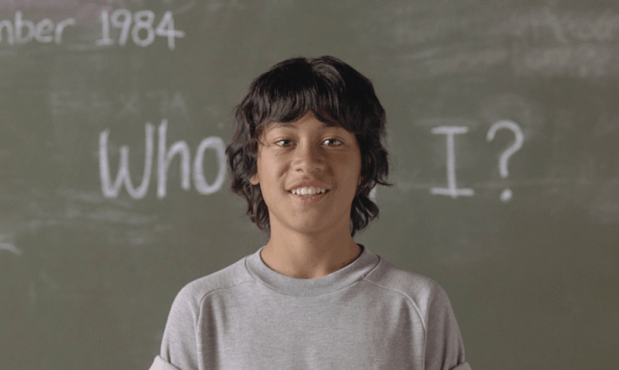
Boy’s interests include art (cue desk graffiti), social studies (getting picked on by older boys) and Michael Jackson. His other idol is his father, Alamein (Taika Waititi), a master carver, deep sea treasure diver, captain of the rugby team and holder of the record for punching people out with a single fist. The reality couldn’t be further from the truth but in Boy’s world, reality isn’t really the mainstay, he is a kid after all.

After Nan leaves to attend a funeral, he’s the man of the house and so he ensures all the younger children wash, eat and generally thrive, until Alamein Sr returns to Waihau Bay, fresh out of prison, seeking a “treasure” he buried in the field opposite the house. It gives him the perfect opportunity to reconnect with his estranged sons as long as they stop calling him Dad… it’s “weird”. Boy, initially thrilled by his father’s return, soon comes to the painful realisation that his father isn’t the hero he imagined. In complete contrast, Rocky’s reluctance to accept the man he has never known comes full circle and his doubt and suspicion turns to respect. The moment all three boys reach the point of transformation is a deeply moving and beautiful thing, and harks back to that opening quote perfectly – “You could be happy here… we could grow up together” (E.T., 1982). 

Boy is a thematically rich film and one which comments upon rurality, poverty, childhood, adulthood and grief while using magical realism, animation, mythology and a free-spirited style which also incorporates intertextuality and 80s popular culture to bring Waititi’s approach to identity and masculinity to the screen. That very specific form and unique Aotearoa voice has been so prevalent since those couple of Taika-written and directed episodes of Flight of the Conchords.

While including visuals of the sublime landscape, hostile terrain and open roads that have long been associated with New Zealand cinema, Waititi also gives us a Māori film rich in culture and beautiful hues of colour via a nostalgic trip to the eighties. The absentee father within a Māori family is just one of the thematic links Boy has to Once Were Warriors (1994) and Whale Rider (2002), however, here the comedy and pathos, drama and fantasy is – as one has come to expect following Eagle vs. Shark (2007), What We Do in the Shadows (2014) and Hunt for the Wilderpeople (2016) – charmingly measured.

Rolleston is wonderful in the titular role, however, one can’t help but fall in love with the largely mute and thoughtful, cape-wearing Rocky as both boys shine in this endearing and magical coming-of-age drama. Waititi is equally adorable as the misunderstood big boy of the trio, Alamein, a man who has yet to truly face his responsibilities or fully embrace adulthood but whose little men will help him pull his socks up. Boy is a big-hearted film – possibly even Waititi’s finest – poignant, funny, an effortless joy. Oh, and that Haka hybrid is genius.

Categories
film review

A Man Called Ove (Dir. Hannes Holm, 2015)

Time is a curious thing. Ove Lindahl (played respectively by Viktor Baagøe, Filip Berg and, of course, Rolf Lassgård) is a particularly cantankerous curmudgeon. Everybody is an idiot whose existences only serve to inconvenience him and his. He has worked the same job for 43 years, until two babyfaced executives take away his livelihood and present him with a gardening shovel as a token of service. Ove makes his rounds following his enforced retirement – he’s the worst (best) kind of neighbourhood watch in which he keeps his small Swedish community safe with his often impolite reinforcement of the block association rules. After his short walk, he puts on his best blue suit, empties the fridge, cancels his phone contract and attempts to hang himself in his living room, only to be interrupted by a crash outside his window. New neighbours: heavily-pregnant Parvaneh (Bahar Pars), Patrick (Tobias Almborg) and their girls, Sepideh (Nelly Jamarani) and Nasanin (Zozan Akgün) have moved in and they’re far from quiet. And so, Ove is coaxed back to giving life another go (until his next attempt) by the delightfully feisty Parvaneh, her family and his neighbours who – despite the grump’s failure to notice – actually like having him around.

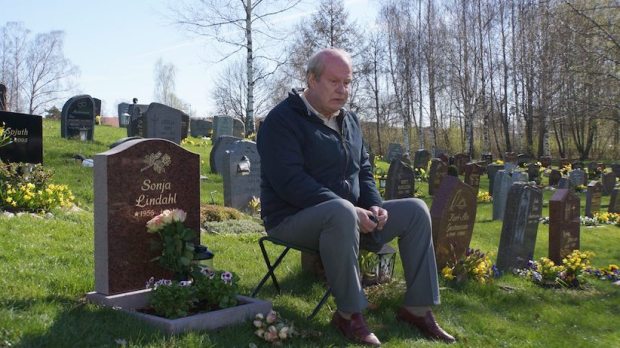
Grief is a strange thing. Putting one foot in front of the other until your time is up and you can see your loved ones again (if you believe in that kind of thing). For Ove, living for those six months following his wife’s Sonja’s (Ida Engvøll) death is intolerable. It’s the one aspect which immediately warms the viewer to the largely unsympathetic moaning git. We can relate and as we get to know Ove through a series of flashbacks over the 120 plus minutes, there’s a very human reason for the doom, gloom, and defensive booming voice, and that’s testament to Rolf Lassgård’s performance. The one-time Wallander and veteran of Swedish film and TV brings a gentility and resolute grace to the character albeit in a slightly bad-tempered way. Despite being the same age as Ove at the time of filming, he underwent a bit of a physical transformation via prosthetics which age him greatly. This adds an additional layer of melancholy; this is a man who has had a hard life. Yet, he has such an old fashioned clarity of belief and a sense of morals, duty and unnerving conviction about how the world should be that one can’t help but admire him.

Love is a strange thing. It often takes you by surprise, and family comes in many forms and guises. A Man Called Ove is a heart-warming meditation on love, loss, family and life, and learning to follow and then disregard the rules. It reminds us the importance of community and the inclusion of the aged, experiencing joy alongside tragedy amid the blue, grey and beige phases of life. Oh, and that friendships can be forged and broken upon the type of car you drive. Hannes Holm’s adaptation of Fredrik’s Backman’s bestselling novel is warm, touching and moving. It treads a measured line between humour and sorrow and does so extremely well given how maudlin a film containing failed suicide attempts could’ve been. Instead, its regal music including triumphant strings does a really lovely job at elevating its purpose, and making a colourful, sweet and life-affirming film.

Categories
Blu-ray film review

Hiroshima, mon amour (Dir. Alain Resnais, 1959)

To my knowledge; I have never seen an Alain Resnais film – a filmmaker who has a weighty reputation within the French New Wave. I suppose I have to start somewhere, so beginning with his first feature, Hiroshima mon amour (1959), seems conducive.

The film opens with a close-up of entwined limbs, disembodied voices accompany the body parts which glisten with perspiration then are covered with atomic ash and glitter. It’s an evocative image which serves as a haunting reminder of the bomb. The score (composed by Georges Delerue and Giovanni Fusco) is affecting, particularly the inclusion of a flute but then the addition of a piano accompaniment adds a jauntiness which is at odds with the next slew of images: petrified rocks, specimens of skin, hair, footage recollecting the devastation; people writhing in pain and bloodied. It seems almost inexplicable to set a love story against this desolate and damaging backdrop, and yet when dealt with the passage of time and evocation of memory, it makes perfect sense. Like a Phoenix rising from flames, life and hope must continue and the ‘new’ Hiroshima is slowly being rebuilt and appears thriving as the Architect (Eiji Okada) and the Actress (Emmanuelle Riva) fall in love.

The passage of time and power of memory are strong themes throughout Marguerite Duras’ oblique script and the juxtaposition of her poetic dialogue alongside the images of horror is highly emotive. The non-linear narrative with its use of flashbacks, ellipses, and jump cuts must have been particularly original in ’59 and clearly influential as they continue to be used today. The repetition of history and the atrocity of genocide with the emphatic nuances of love in Riva’s performance are quite stunning; personal pain, public humiliation and the beautiful mesmeric shots of Sacha Vierny’s cinematography make for a quietly devastating film about the human condition and lost love. Having viewed it at a time when it would be appreciated, the melancholic beauty of Hiroshima mon amour leaves a lasting impression.

Note to self: must make the rest of the Resnais oeuvre a priority.

Categories
film review

Enemy (Dir. Denis Villeneuve, 2013)

enemy-movie

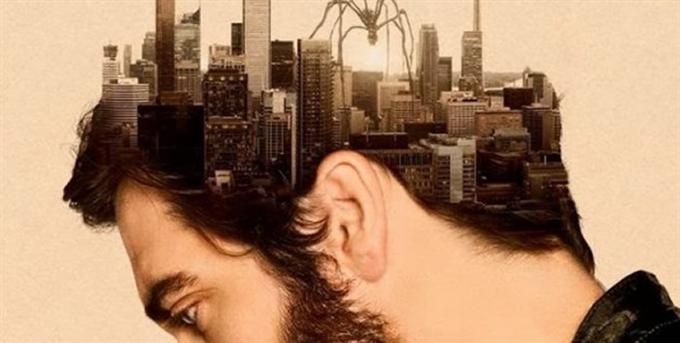
Enemy sees French-Canadian director, Denis Villeneuve and the ubiquitous Jake Gyllenhaal re-team for their second filmic outing after Prisoners. Based upon Jose Saramago’s Nobel Prize-winning novel O Homem Duplicado (literal translation: The Duplicated Man), the film opens with a group of seemingly voyeuristic men in a Gentlemen’s Club. It looks exclusive as naked women parade around; cries of distress follow with a close up of a scuttling spider. Cut to University lecturer Adam Bell delivering a lecture amid words like ‘censorship’ ‘dictatorship’ ‘oppression’ and scrawled in chalk on the board behind him the phrase ‘chaos is order un-deciphered’.

Enemy-4

That is the pleasurable thing about Enemy, trying to decipher the film long after viewing. It is an elliptical puzzle that fascinates from beginning to end. Bell is stuck, it seems, in his own Groundhog Day, destined to repeat the same daily mundanity of lecturing, marking coursework, engaging in passionless sex with his girlfriend Mary (Mélanie Laurent), who promptly dresses and departs when they have finished. Then a colleague recommends a film, something he is loath to try but does anyway; something to break the cycle. He then notices that the Bell Boy, onscreen, looks oddly familiar, identical even… and that is when he seeks out Anthony St. Claire.

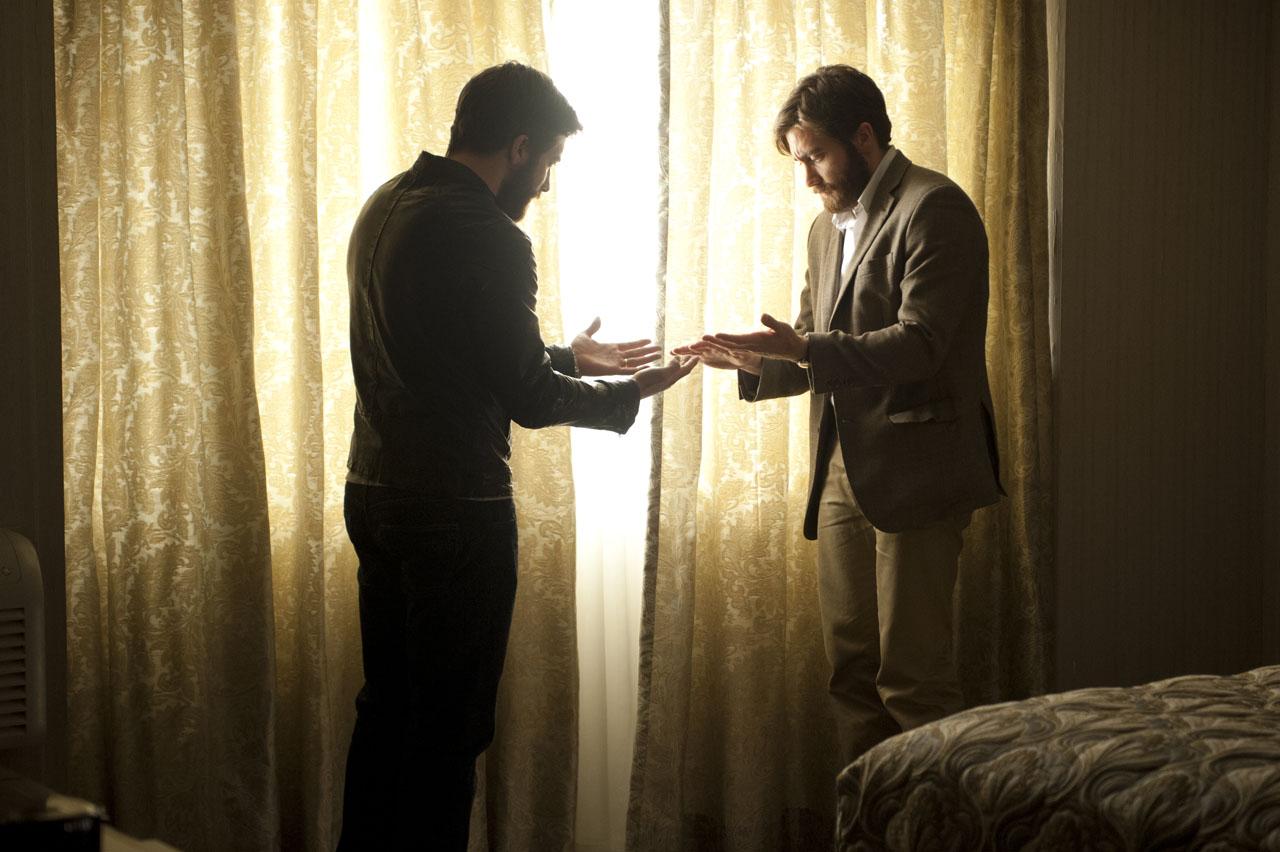
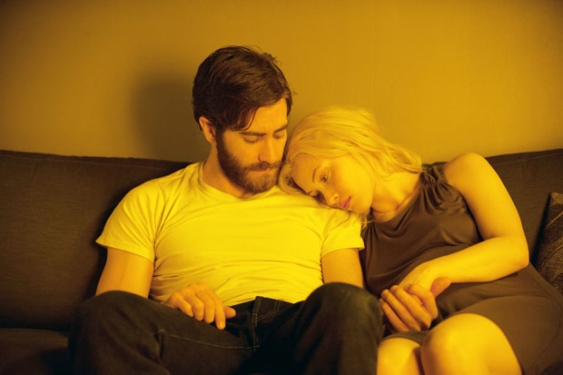
Enemy is weird, mysterious, and highly entertaining. Scenes are cast in a yellow hue which makes the world seem jaundiced, Adam’s visions – if that is what they are – are unwieldy and steeped in symbolism, is it reality or is he losing his mind? Anthony is the steady hand to Adam’s nervous wreck, leather wearing to tweed, straight-standing to stooped, lover of blueberries while Adam deplores them. However, they are not entirely different. Villeneuve likes the concept of duality – see his previous two films, the afore-mentioned Prisoners and Incendies – mirroring, mother-figures and the uncanny; the familiar and unfamiliar often meet and collide. Here it takes the form of the doppelgänger; two Jakes (or is there only one?), the seemingly alternative worlds they inhabit and the pretty blondes they each love, Laurent and Sarah Gradon who plays Anthony’s wife Helen are also visually strikingly similar. There are recurring motifs dotted throughout and the religious aspect of the characters’ names is intriguing.

enemy-poster

Personally, I applied Freud to my reading to Enemy and this added coherence; as the male subconscious is exposed, questions of mothers, fear of fatherhood and existential crisis surround the contempt of the inner self but hey, that’s me. The film is complex (and entertaining) enough to withstand any reading and still be profound, and that ending will leave you astounded long after the credits roll. The only minor criticism is the vapid representation of the female characters especially the two main women, neither is explored fully and both tend to blend into the waxy yellow surroundings. Isabella Rossellini makes an impressionable cameo and then is gone all too fleetingly but then, perhaps they are meant to, and really one is not supposed to understand any of it…chaos un-deciphered.

At one point Adam turns to Anthony and asks “What’s happening?” To which Anthony replies, “I think you know…” Nope, haven’t got the foggiest but that is all part of the fun.

Categories
film review

I am Divine (Dir. Jeffrey Schwarz, 2013)

Cinematic audiences have been very used to cis men ‘donning a dress’ in order to hide or covet something over the decades. In Some Like it Hot (1959), Gerry and Joe (Jack  Lemmon and Tony Curtis) needed to flee the city after witnessing a Mob hit. Michael Dorsey (Dustin Hoffman) became Dorothy Michaels to secure a recurring role on a soap opera in Tootsie (1982) boys dressing as girls have caused mayhem in horror films; the definitive, of course, being proto-slasher, Psycho (1960). There have been road movies with drag-artists aiming for acceptance – self as well as societal – and life contentment amid lipstick, chicken fillets, and feather boas like in The Adventures of Priscilla: Queen of the Desert (1994) and To Wong Foo Thanks For Everything, Julie Newmar (1995). Plus, there are men (homosexual, heterosexual, cis…) wishing to extrapolate the maternal realm with the help of prosthetics and spirit gum like Albin/Albert (Michel Serrault and Nathan Lane respectively) in La cage aux folles/The Birdcage (1978/1996) or Daniel Hillard and Euphegenia Doubtfire. The genre, if one can suggest there is one, straddles comedy and tragedy and rarely offers anything in between.

When Harris Glenn Milstead shimmied and sashayed in his little (operative word being ‘little’) numbers, people took notice. Wearing a dress seemingly freed him and enabled him the life he coveted,  he unapologetically introduced the world to his alter-ego: Divine. And oh, what a woman – loud, brash, crude, angry and trashy (often by her own admission). Lady Divine didn’t give two flying kitten-heels what people thought of her and with the help of childhood friend, John Waters, and make-up artist/costume designer extraordinaire Van Smith, they not only set out to prove that she was, not only, the most beautiful woman in the world but the filthiest.

divine-in-pink-flamingos-300x193
divine as dawn

Jeffrey Schwarz’s I am Divine is a labour of love, mixing contemporary interviews with archival footage, the documentary is warm, affectionate, and presents a touching portrayal of a larger-than-life transgressive – yet defining – drag artist and actor who was deeply loved by his friends, family and contemporaries. While Milstead’s story is far from unusual: ‘Glenny’ was chubby and bullied for his effeminate nature, his mother even took him to the Doctor who confirmed (!) that there was more femininity lurking beneath the surface of the masculine Milstead child. At 17, he met John Waters and the rest, as they say, is history. Divine was determined to be a star and, wherever possible, look exactly like Elizabeth Taylor while doing it.  

Schwarz paints a riotous, compelling, and wonderfully edited documentary celebrating the generous, sweet-natured, and fearless cult icon without ever resorting to the overtly camp or sugary twee. There is some darkness – the drug-taking, the food addiction that more than likely contributed to Milstead’s untimely death but Divine made the most of her time in the world, as one time member of theatre troupe The Cockettes, a solo recording artist, stand-up comedian, and as an actor. Not just any old actor either, an evolving and defining one – she was trash-talking Babs Johnson (Pink Flamingos) and Dawn Davenport (Female Trouble), frumpy and unfulfilled housewives Francine Fishpaw (Polyester) and Edna Turnblad (Hairspray), hot-blooded Rosie Velez in Comedy/Western Lust in the Dust. There were male counterparts too (like Earl Peterson and Arvin Hodgepile). She was in her element in Polyester, enjoying on-screen clinches and kisses with childhood-crush, Tab Hunter.

harris-glenn-milstead

Sadly, Divine passed away in his sleep the night before he was due to start filming as a series regular on Married With Children, and as this documentary states unequivocally; he was adored. A divine man who had a heart as big as his body, an icon to many but especially those who have ever felt different.

I am Divine is currently showing on MUBI