Categories
Blu-ray film review

Multiple Maniacs (Dir. John Waters, 1970)

He is regarded as The Pope of Trash and now John Waters’ third feature film, unavailable for decades, has been “restored, remastered and re-vomited” by premium label The Criterion Collection, following a limited release in arthouse theatres.

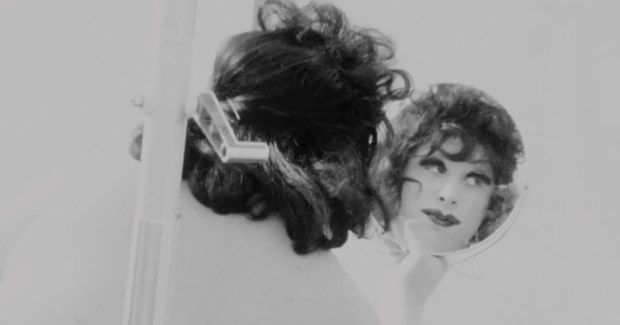
Multiple Maniacs stars Waters’ merry band of misfits, including David Lochary, Mink Stole, Mary Vivian Pearce, and Edith Massey. Those who would appear in most of his subsequent films, and led by the Queen: Miss Lady Divine, who we first see lying naked on a chaise longue, her Rubenesque derrière framed and in close-up. She leads the sideshow of “freaks” within Lady Divine’s Cavalcade of Perversion, a travelling band of “real, actual filth”. There’s a naked human pyramid, bra fetishist, a women giving oral pleasure to a bicycle saddle, a Jonesing addict, “actual queers kissing” and a bonafide puke-eater. Of course this is all a ruse, a front to house psychotic kidnappers and murderers. The brains (and beauty) of the outfit is Lady Divine. She’s the leader, the matriarch, think Ma Barker by way of a transgressive Elizabeth Taylor, who will do right by her people if they do right by her. Woe betide anybody who, for example, cheats or betrays.
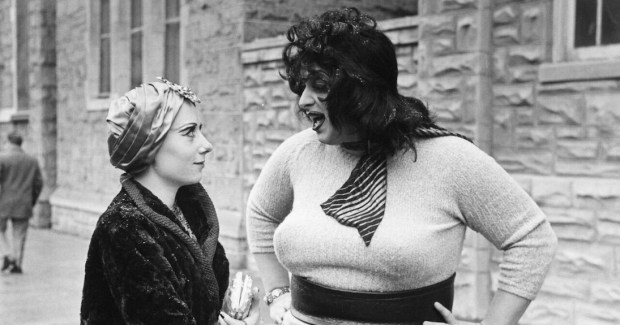
Shot on 16mm and made with a $5000 budget – via a loan by Waters’ father – Multiple Maniacs is deliberately offensive and grotesque. It has an avant garde sensibility, with low contrast grainy black and white film stock, which makes the sprawling chaos, horrible camerawork and zoom abuse more bearable. For all its gleeful delinquent subversion, it actually has a lot of charm. Sure, it glorifies carnage and wears its anti-establishment, anti-bourgeois respectability, and sacrilegious, cannabilistic heart on its sleeve but it does so with such veracity, it’s admirable. Disgusting and atrocious, it may be but it’s also hilarious.

Hippy values take a few knocks, there’s a definite anti-war vibe to the denouement but it celebrates art via the Warhol and Lichtenstein pictures on an interior wall, its Czech New Wave style, and even surrealism – it’s hard not to think of Dalí when Lobstora rears its rapey pincers. Nothing is sacred. Least of all Catholicism. There is religious iconography dotted amongst the mise-en-scène, and The Stations of the Cross is even recreated as Divine receives a seemingly never-ending “rosary job” from Mink Stole, in a Church pew. All to the strain of He’s Got the Whole World in His Hands.

Waters and his maniacs deliver on the blackest of comedies. All dialogue is frantic, emphatic and, at times, stilted and a little repetitive but that’s the Waters way. He and his friends, some from childhood, some dropouts from NYU created a filmmaking family which celebrated difference, embraced outsiders and misfits, and forged an artistic front for freaks. Divine was the heartbeat; loud, brash, crude, angry and trashy. She didn’t give two flying kitten heels what people thought of her, she knew she was beautiful.

In the words of the great auteur himself (oh, he’d hate that): “To understand bad taste one must have very good taste. Good bad taste can be creatively nauseating but must, at the same time, appeal to the especially twisted sense of humour, which is anything but universal.” Multiple Maniacs is a transgressive, blasphemous, and iconic piece of celluloid. It won’t be for everyone, but for those of us with a wicked sense of humour and good bad taste, it will be a religious experience.
Categories
film review

Selah and The Spades (Dir. Tayarisha Poe, 2020)

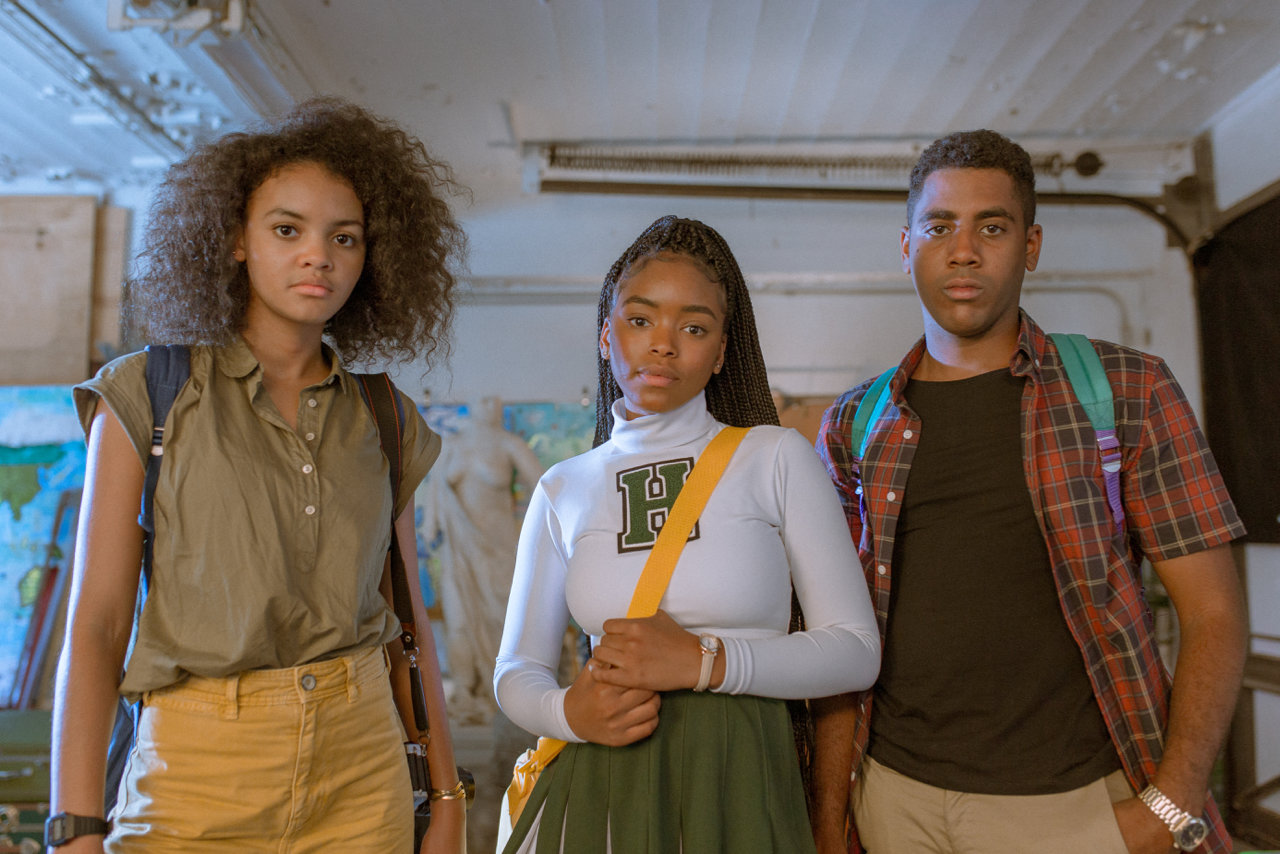
Pennsylvania’s Haldwell School sits on vast green grounds on the edge of a wooded area, away from civilisation and governance – although, bless his heart Headmaster Banton (Jesse Williams) tries. He attempts to push School Policy and assert authority but tends to, more often than not, falls short. The elite boarding school is in the hands of five factions (gangs are against the rules): The Sea, The Skins, The Bobbies, The Prefects, and The Spades. The Spades provide the ‘booze, pills and powders’ and business is booming. They all run the school but the most power appears to be in the hands of Queen bee Selah Summers (Lovie Simone) and her closest ally and associate Maxxie Ayoade (Jharrel Jerome).

Selah is in her senior year and should be thinking of college. It turns out it’s only her mother (Gina Torres) with whom she has a terse relationship who actually is, seeking an institution which will “keep you in your place, save you from yourself. Something has to.” The young entrepreneur would rather concentrate on her business and leaving it to a worthy protégée. Enter new scholarship student and keen photographer Paloma Davis (Celeste O’Connor) who appears to take it al in her stride and quickly aligns herself as a Spade.

Near the film’s beginning, The Spirit Squad (cheerleaders) perform one of their routines and it is here that several facts are laid out for us. “They never take the girls seriously… when you’re 17, everybody is telling you what you do with your bodies…” The crux of it is, The Spirit Squad took back that power, they decide the uniforms, routines and how much skin to show. Selah uses that power and runs with it. The control intoxicates with a fine line drawn between leaving behind a legacy and being erased from history, and it during those moments of fear that Selah exhibits the real darkness of her character, and where Lovie Simone comes into her own as we start to see that perfect façade begin to crack.

First time writer/director Tayarisha Poe makes an impressive and memorable feature debut – and a perfect jumping-off point for an original TV series (handy since one has already been commissioned). Selah… is an extraordinary and unique look at young adult life encapsulating satire, surrealism and style in a world of teen politics with razor-sharp dialogue and noir character study. It’s part Lord of the Flies, and Brick (ish) by way of Dear White People, Heathers and Ozma of Oz – that opening quote and the world it belongs to is hinted at throughout via the ruling princess (AKA the one true monarch), school colours, props, costumes even the location within the mise-en-scène, the Factions stand-ins for the Land of Oz’s quadrants.

Certainly Haldwell gives off the feeling of a world far from the emotional ties of home. This is thanks mainly to Jomo Fray’s hypnotic cinematography and Aska Matsumiya’s eclectically composed soundtrack replete with contemporary music and mystical dreamcatcher-like chimes adding an ethereal quality to an already uncanny setting. Colour is vibrant and varied, the use of light sublime and heightened. Make no mistake everything here is, it’s school (eye roll) – despite never actually depicting any lessons or classrooms. While the almost bored-sounding voiceover narratives ground in verisimilitude.

However, the film’s strength lies in its ensemble of characters – “a film by us all” as the credits declare – from poised perfectionist Selah to diet-Margo Tenenbaum Bobby (Ava Mulvey Ten), peacekeeper Paloma, loved-up Maxxie (Jerome continuing his run of multi-faceted characters and solid performances), and immaculate, yet inept, Headmaster. Whether these characters and their respective players turn up in the TV series remains to be seen but Selah and The Spades is an impressive, if fraught, first term in the halls of Haldwell.

Selah and The Spades is available now to stream through Amazon Prime Video.

Categories
film review

Blancanieves (Dir. Pablo Berger, 2012)

blancanieves-2012_71735

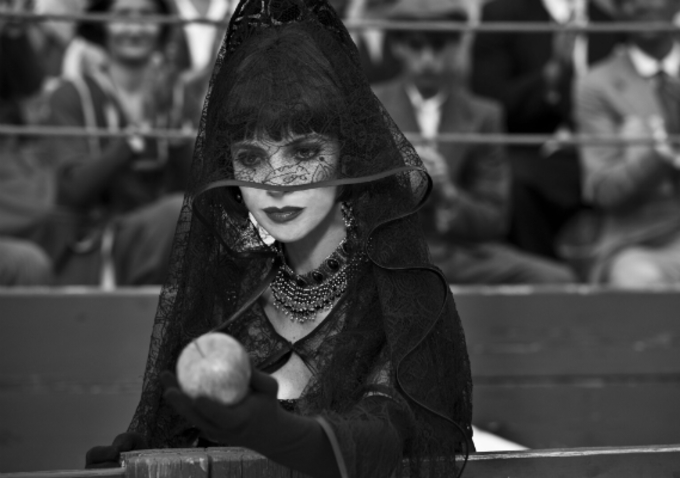
The tale of Snow White was published by Grimm brothers Jacob and Wilhelm in their Hausmärchen collection and has seen many a filmmaker make attempts to adapt the classic fairy tale to the big screen including Walt Disney, Michael Cohn and most recently Tarsem Singh and Rupert Sanders. Both directors released, respectively, very different versions, however, since literary publication in 1812 it has taken some 200 years for a truly original retelling to be produced and Blancanieves (2012, dir. Pablo Berger) not only pays tribute to silent cinema but also serves as a love letter to Hispanic culture and historiography.

apple

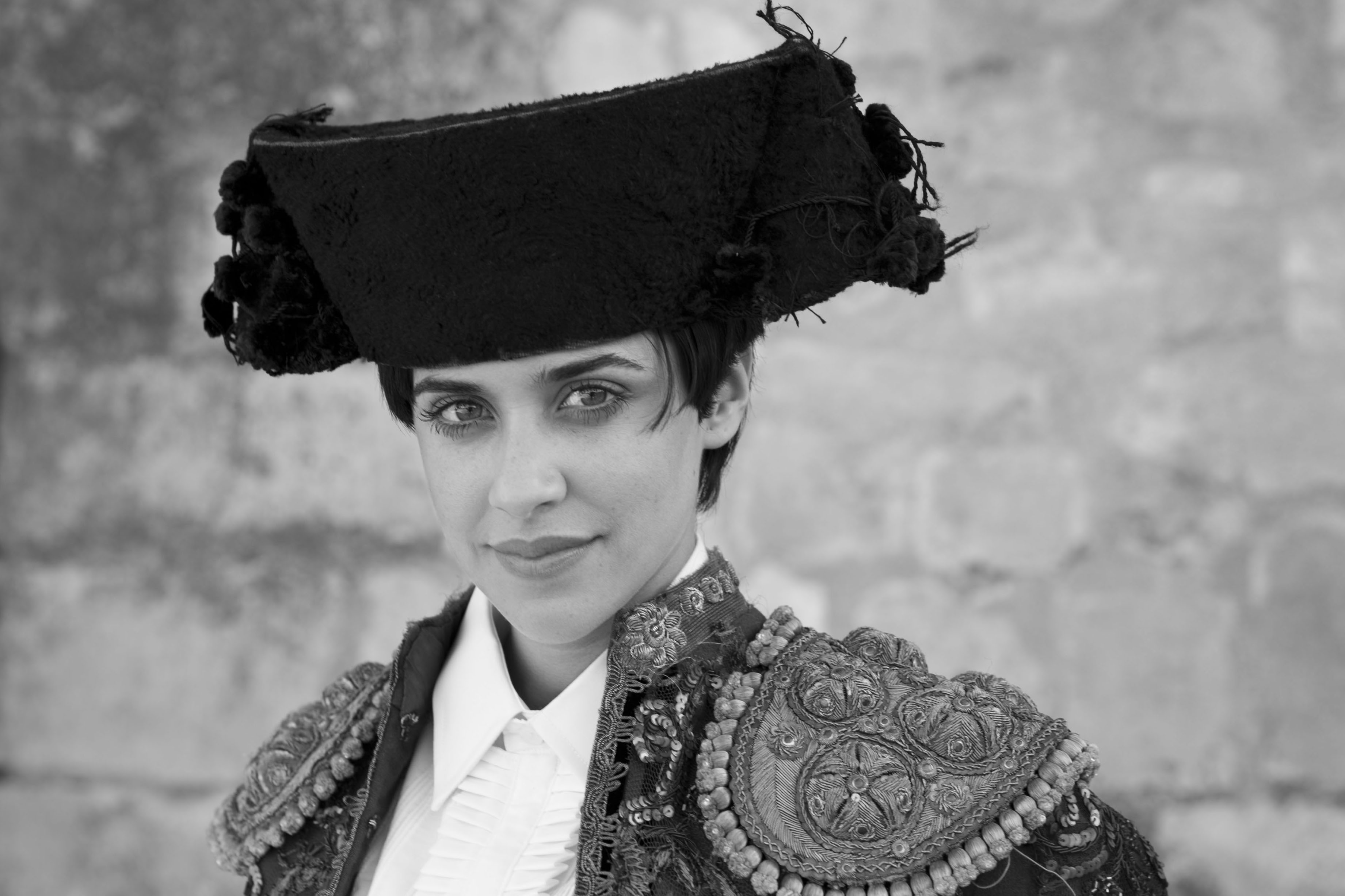
In 1910 Andalucia, Antonio Villata (Daniel Giménez Cacho) is at the height of his profession as a matador. His beautiful wife, and one time recording artist/flamenco dancer, Carmen (Inma Cuesta) watches from the crowd cradling their unborn child in her bulging belly. Tragedy strikes during the estocada and Antonio is gored by his opponent; the shock of which induces labour and baby Carmencita is born into the world motherless with a disinterested and bereaved father who, unable to fend for himself, soon remarries Nurse Encarna (Maribel Verdú). The woman’s disdain of the infant is apparent and her intentions clear from the moment she flutters her heavy kohled lashes at the fallen toreros and thus Carmencita (played in childhood by Sofia Oria) is raised by her grandmother Dõna Concha (Ángela Molina). When her grandmother passes away on the child’s Holy Communion day Carmencita is returned to her father and they can, albeit in secret, renew their relationship. A decade passes and Encarna’s villainy drives the adult Carmen (Macarena Garcia) out of the family home world and into the collective bosom of six bull-fighting dwarves, one of whom doubles, wonderfully, as Prince Charming.

Blancanieves-wallpaper-pic-05

This production was reportedly in development for several years before director-screenwriter Pablo Berger started shooting and nothing is left to chance. Verdú (Y tu Mamá También; Pan’s Labyrinth) who was Berger’s first choice to play Encarna clearly revels in the role; an evil stepmother she was born to play even sans magic mirror (here an artist’s interpretation of the wicked woman on canvas, in a multitude of costume changes, replaces the reflection motif). While this film takes the majority of its cues and sway from the Snow White tale – Blancanieves’ literal translation is SnoWhite – there are also intertextual signifiers to other Grimm tales along the way including Little Red Cap, Cinderella and The Sleeping Beauty via Tod Browning’s Freaks (1932). The mise-en-scène, as a whole, is an eclectic homage to the silent era of European cinema and the drama of the bullfight which includes the over-elaborate traje de luces (suit of lights) and black montera (hat), however, it is Alfonso De Vilallonga’s lush score, heavy on the flamenco beats, which is the real joy and builds emotion, tension and crescendo with each hand-clap of the non-diegetic sound.

In spite of the evidentiary early-20s influence Berger delivers a fresh spin on a female protagonist – often celebrated for her passivity and reliance upon a prince – which gives Carmen/Snow the edge needed for a 21st century heroine and reinforces this masterpiece’s declaration: that Blancanieves is, in fact, the fairest of them all.

Categories
film review

The Rape of Recy Taylor (Dir. Nancy Buirski, 2017)

For many, the first time hearing the name Recy Taylor would have been in January 2018 when Oprah Winfrey paid tribute to the extraordinary woman in her Golden Globe speech, and yet Taylor’s sexual assault would prove to be an organisational spark in the Civil Rights Movement decades before the Women’s Movement and the #MeToo resurgence.

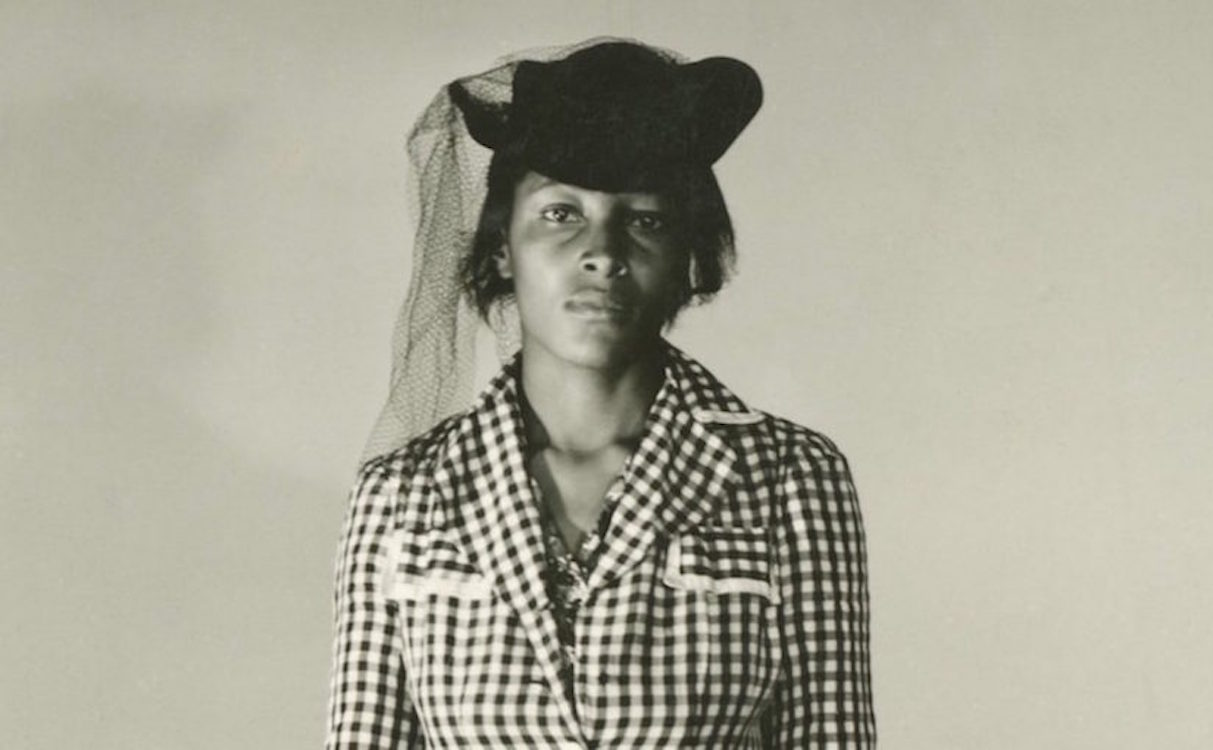
On September 3rd 1944, Recy Taylor neé Corbitt was kidnapped at gunpoint after leaving Church in Abbeville, Alabama by seven young white men. They drove her to a nearby wooded area where six of them – aged between 14-18 – took turns in raping and terrorising the 24-year-old sharecropper, wife and mother, before leaving her blindfolded and stranded at the side of the road. Despite three eye witnesses identifying the driver who would name all of his passengers (none of whom were questioned) an all white, all male jury dismissed the case. Enter the NAACP and their chief investigator, Ms. Rosa Parks who was to conduct a thorough investigation, help defend Taylor and seek punishment for her attackers – some eleven years before the Montgomery Bus Boycott – a dangerous business in Jim Crow-era South.

Writer-Director Nancy Buirski (The Loving Story) uses her film – which had premieres at the Venice Biennale and New York Film Festival – to expose the systematic racism that not only fostered the heinous crime but covered it up. She utilises footage from “race films” and their lack of white gaze to Recy Taylor’s story. These are intercut with gospel music and Church footage – shot by Zora Neale Hurston whose journalistic prose would prove important during another unconscionable and despicably unjust “rape” case in Scottsboro a decade earlier.

While the obvious tone of this documentary is solemnity, some may find its structure superfluous, however, these snippets of human life, art and joy in the face of such adversity are beautiful in an otherwise infuriating film where (yet again) white privilege not only dehumanised this woman but terrorised her family. The full impact of which is discussed in interviews with Taylor’s brother Robert and sister Alma. Hearing them describe how their father slept in a tree overlooking their home (after Recy and husband Willie’s house had been firebombed) with a shotgun as a means to protect his family is particularly hard to hear, made all the more galling when one considers the justification for lynching was the white man “protecting” his wife and daughters. Benny Corbitt was, of course, not afforded that power.

Recy Taylor was just one in a longer tradition of black women who spoke her truth and sought justice, and an aspect the documentary does particularly well is arguing passionately for their place in history – these women were always there. Harriet Tubman, Rosa Parks, Maya Angelou, Ruby Bridges, the afore-mentioned Winfrey – look at the audiences photographed during Martin Luther King’s  numerous rallies, they were there, or look to the backbone of the Black Panther Party, or consider there wouldn’t even be a #MeToo without Tarana Burke.

The Rape of Recy Taylor is urgent and essential viewing. It speaks to the visibility of the African American woman, and the countless women whose voices have failed to be heard. A quietly devastating dedication – get tissues for the last ten minutes – to strength, resilience, resistance and a sustained fight for justice. The name Recy Taylor stands for them all.

The Rape of Recy Taylor is available to stream on Amazon Prime Video and MUBI

Categories
film review

The Perfect Candidate (Dir. Haifaa Al Mansour, 2019)

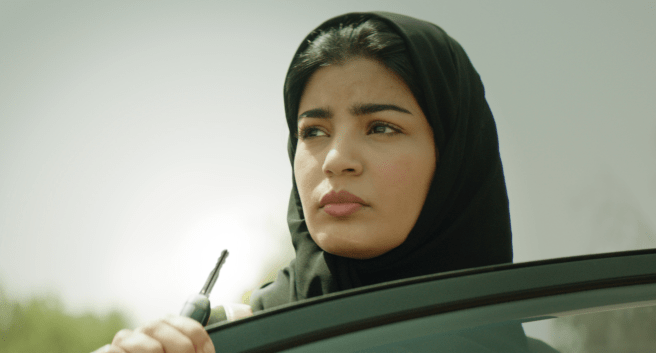
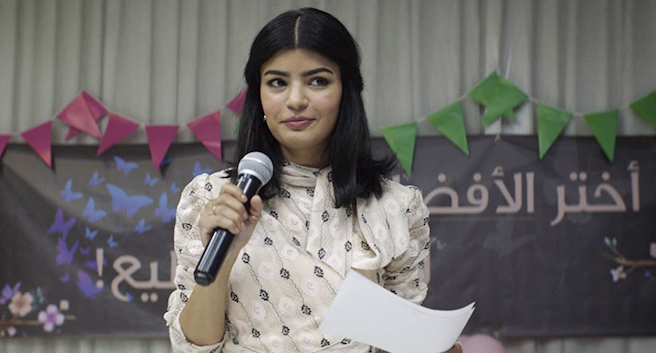
In 2017, the ban preventing Saudi women from driving was lifted and licenses were issued on the 24th June 2018. That same year Haifaa Al Mansour began production on her fourth film The Perfect Candidate (المرشح المثالي). It is no accident that Dr. Maryam Alsafan (Mila Al-Zahrani) drives, immediately placing the film in context and telling us something about the lead protagonist. Just as Wadjda’s (2012) coveted bike was bright green, Maryam’s car is a deep petrol blue in a sea of dirty white dusty vehicles.

The good doctor wears a niqab to drive and leaves it on when doing her rounds in the hospital. There, she has to contend with sick (male) patients shouting their dissent at being examined by a woman, making a difficult job ever harder. They would rather seek treatment from less qualified male nurses than have a woman lay her hands on them. One old man screams “Don’t look into her eyes!” a comment made even more ridiculous by the fact that her eyes are the only visible parts of her face to look at.

Maryam is what her music teacher father Abdulaziz (Khalid Abdulraheem) refers to as “a lion at home and a mouse in public” and serious. Seriously sincere about her patients and the road leading up to the hospital. A burst pipe has rendered it almost impossible for patients to reach their destination and the government refuses to fund the repair. However passionate she is, Maryam is determined not to stay at Al’hana hospital. Her ambitions lie in Riyadh, so when a networking conference taking place in Dubai presents itself, along with the promise of a job opportunity – for which she is the perfect candidate – she must attend.

A problem at the airport, however, prevents her from getting on the plane. Her paperwork has expired and she must seek a male’s signature in her father’s absence (he’s on tour with his band) before being able to travel. Maryam heads straight to her cousin, he has an office in the government and will surely help her. Upon leaving, Maryam instead finds herself heading home and running for local council.

With encouragement from her sisters, Sara (Noura Al Awad) and Selma (Dhay) Maryam pulls together a campaign strategy – her main objective being the road repair, which is apparently not usually high-up on a woman’s list of priorities (we prefer flowers and children-based subjects). While fundraising activities welcome a large body of women, whether they will, or be ‘allowed’ to, vote for her remains to be seen. There’s an unexpected juxtaposing of Maryam and her father’s narrative strand – she’s finding her voice, her public lion, and he’s learning to embrace music again and sing following the death of his wife. While her father is adored for his voice and rewarded, the main goal of Maryam’s (mostly male) constituency is, unsurprisingly, shutting her up.

Maryam’s political career may end as abruptly as it begins but it’s her journey where the interest lies. Just like all the women in Al Mansour’s films – Violet (Nappily Ever After), Mary Shelley, and, of course, Wadjda – transgress societal norms in their own way, and Maryam is no different. Certainly, this film is the by-product when characters like that headstrong 12-year-old and Dr. Maryam – through their determination and intelligence – find their voice and value (beyond what they have been told) in a man’s world, navigating the choppy waters of deep-rooted misogyny and seeing land on the other side.

While a lot of The Perfect Candidate belongs to the political drama – gender politics are certainly at the heart of most films created within a place of female oppression like Saudi Arabia – this film feels more like an ode to the importance of cultural arts, perhaps even a tribute to the filmmaker’s own father, Abdul Rahman Mansour, who is a poet. Whether a conscious decision or due to her co-writer Brad Niemann’s input, the patriarch of this particular family is far gentler and more empathetic than we’re used to seeing onscreen – Maryam is never discouraged at any point by her Abi. As a result the male characters feel a lot more tangible within this narrative, with a variety of masculinities explored. It pulls from Maryam’s arc somewhat but as a result feels a little more balanced, ultimately the film begins and ends with the future. A woman. No longer hidden behind her niqab (if she so chooses).

The film’s colour palette is simple and muted save for the odd flash of tint and tone. Accompanying it, Volker Bertelmann’s string-heavy score is sweeping and rather lovely. The viola, cello and violin notes – and the oud within the diegesis – are beautifully optimistic. Even if the majority of the film doesn’t quite communicate this hope, those last scenes in the hospital certainly do. They signify a slow turning tide coming to Saudi Arabia – one petrol blue car in a sea of dirty white dusty vehicles – and with Haifaa Al Mansour at the wheel, the future of Saudi cinema is in more than capable hands.