Categories
Film Festival film review

Restless (Dir. Jed Hunt, 2024)

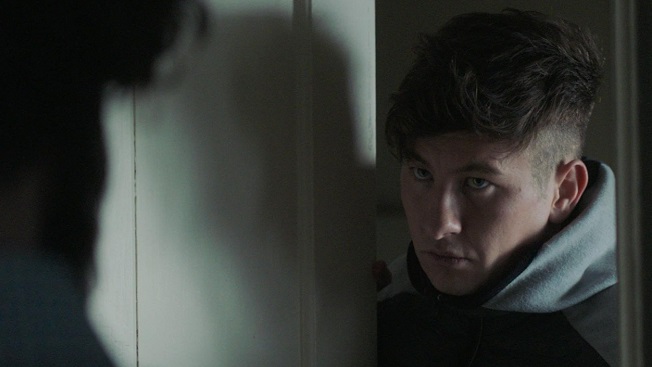
There is nothing worse than losing sleep and there is a special place in hell for anybody who comes for it and your peace of mind. This is something that Nicky (Lyndsey Marshal) quickly learns after new neighbour “Deano” (Aston McAuley) arrives in writer-director Jed Hunt’s feature debut Restless.

In an unnamed coastal town, empty-nester Nicky works practically all week in an understaffed and underfunded social care facility. Her days are, admittedly, a little banal but she – like the rest of us – relies on the small joys when she can claim them: listening to the classical music her late father insisted upon at breakfast, cooking dinner, baking to Beethoven, reading a good book and settling in on the sofa unwinding to the televised dulcet tones of Ken Doherty on the snooker (the heart wants what it wants). She lives vicariously through her teen son Liam (Declan Adamson via telephone) who is away at university. She grimaces during their latest chat when he tells her he’s off out to see an original cut of The Exorcist. Little does she know, she’ll perform her own exorcism over the next seven days.

It starts out harmless enough, just a small group unpacking a car. A blur of tracksuits and a fierce looking dog. Then the music starts, the antithesis of Rachmaninov, Vivaldi, Tchaikovsky et al, pound-pound-pounding through the walls. At first, Nicky drives to the waters edge with a pillow and gets some shut-eye before a new day dawns, bumps into Keith (Barry Ward) who invites her out for a drink later in the week (presenting her with a violin because of her love of classical music but that’s another story). He’s as sweet as he is cringeworthy. When deafening dance music keeps her awake a second and third night, she knocks next door and politely asks that Deano turn it down and is met with faux-niceties and “I got yer.” By day five, all out war has been declared as vengeance is vehemently pursued.

The performances – led so ably by Marshal – save Restless from being just another bleak kitchen-sink style British drama, it is actually something else entirely disguised as such and manages to surprise and swerve expectation. Lazy writing could have had these characters teeter and plummet into stereotype territory but a decent script by Hunt manages to always remain believable. The subject matter will be heavy for some – there is plenty of sly commentary on the state of the care and class system in Post-Brexit Britain where the sense of community (unity especially lacking) is null and void in places – and plenty triggering if you have ever lived next door to antisocial idiots who have little respect for others.

There are some memorable moments, Kate Robbins is a particular standout as Jackie who loves a fight – we all know someone like her – the cinematic flourish of the dream sequence is brilliant and the soundscape is fascinating even if the visuals can be a little on the nose at times. Nicky’s loss of reality and descent into mania is relatable (especially for those of us who have had to share a wall with hellish next-door neighbours), tense, uncomfortable and humorous – when she bakes the “special” brownies for Dean, the level of self-satisfaction even smug expression she wears is hilarious.

That’s what makes this debut work the most, the humour, which is why one can forgive the ending. Not sure, the felineicide is really sufficiently punished (#JusticeForReg) but some levity is absolutely needed given how near the knuckle the “reality” at times feels. This is testament to Hunt’s taut script and direction, David Bird’s almost vérité-style camerawork, Anna Meller’s editing, Ines Adriana’s integral and superlative sound design, and as, previously mentioned, lead actor Marshal.

Her nuanced performance carries the film in its entirety and that isn’t to dismiss McAuley’s turn as Deano but often it’s waiting on Nicky’s reaction to him – or something inconsequential his late-night selfishness/shenanigans causes. They become two sides of the same stubbornly-headed coin and even start to dress in similar colours – which keeps the audience invested. Like when she leans against the kitchen sink hate-eating a crunchie™ or buying expensive headphones and trying meditation apps to lull herself to the land of nod. This brief look of resignation, fury or determination on her emotive face speaks volumes. The irony being that only through the enforced insomnia, is Nicky activated (so-to-speak) and finally fully awake.

Loathe thy neighbour indeed.
Categories
Film Festival film review

Bring Them Down (Dir. Christopher Andrews, 2024)

Christopher Andrews’ directorial debut begins in the confines of a car as it races down a country lane at breakneck speed, a young woman Caroline (Grace Daly) is in the back and an older woman Peggy O’Shea (Susan Lynch) sits in the passenger seat. She’s had enough has Peggy, determined to leave the man who “terrifies” her, imploring ‘Mikey’ to “slow down”. This just ensures that the young driver, Michael, puts his foot down even more forcing the car out of his control.

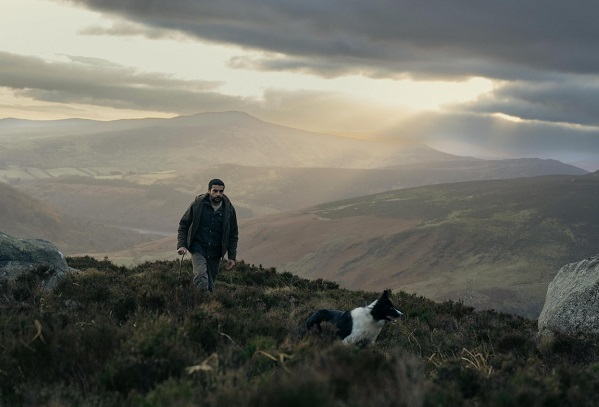
Flash-forward twenty years as daylight gives way to darkness. Storm Noah is on its way, and Michael (Christopher Abbott) returns from tending his sheep to find his gate destroyed. His hands are crimson, fingers tinged blue from the cold weather as he and his dog Mac make their way inside. A phone call from the man they share a hill with, Gary Keeley (Paul Ready), causes Michael’s Ray (Colm Meaney) to fume and spew vitriol, as we are swiftly realise he is wan to do. Two of the O’Shea’s rams are dead on Keeley land and have to be destroyed. Rustlers are maiming sheep across the county, cutting the legs off livestock, destroying livelihoods and outsiders like “Poles or one of that shower…” are blamed for it. Little does Michael know the culprits are far closer to home and two rams is nothing compared with what is to come.

Andrews uses the farming crisis, boundary disputes and tourism-led gentrification in Ireland as a backdrop for his film (he also wrote the screenplay). Gary is in huge financial debt due to an investment of holiday homes, the building of which has stalled due to a large piece of farmland in the vicinity; the owners of which refuse to be displaced. Characters are at emotional and economic odds, the animosity historical. It goes way beyond land borders and boundaries for these two particular families – Caroline (Nora-Jane Noone) permanently scarred from the car accident seen in the prologue is now married to Gary and mother of Jack (Barry Keoghan) – with the two main protagonist sons in the middle of a tense situation neither asked for.

Filmed in Wicklow (the gorgeous pastoral landscapes do for Ireland what God’s Own Country did for Yorkshire), Bring Them Down unfolds like a neo-western but is steeped in Irish tragedy, as two sons reconcile family loyalty with the men that rule their respective roosts destroying the other at whatever cost. There are two very different patriarchs in Gary and Ray. One is a couple of decades older than the other and yet similarly unwise – probably bearing the brunt of their own fathers before them – breathtakingly noxious and incapable of breaking the cycle of bruising generational trauma and misguided vengeance. The film straddles the notion of tradition and modernity which is most impactful in how the two families communicate. The O’Sheas largely speak Gaelic to one another, the Keeleys English, which is turn signifies a larger territorial implication.

The film is split into two acts and the shifting of perspectives works brilliantly adding some nuance to a provocative and compelling drama which is relentlessly grim. Erratic camerawork that can be often out-of-focus only adds to the brutality onscreen, at times nausea-inducing, backed musically by a bass heavy soundtrack and the semi-persistent pound of a Gaelic drum. The performances are, for the most part, excellent. Meaney is as his name suggests and in the short amount of time he is on camera manages to convey the fear Ray instilled in his wife and child once upon a time. Noone provides fine support as one more underestimated, if somewhat reductive, woman looking to flee a marriage.

I am still not overly fond of Keoghan and his acting style, the twitching oddity and/or sociopathic man-child feels overdone at this point. For me, it is Abbott and Ready who carry this film. Their performances are as multi-layered as their Arran jumpers, padded gilets and waxed jackets. Brit Ready (hapless Kevin in Motherland) is a revelation as unpredictable Keeley who can blow a gasket just as easily as he’s wracked with sobs. Which leaves American Abbott – one of the best actors of his generation (see James White or any number of his supporting roles if you don’t believe me) – his accent is flawless, dipping in and out of Gaelic with an ease which belies his Connecticut upbringing. His complicated and stoic Michael internalises everything portraying a multitude with a silent stare, slump of the shoulders or sniff of the nose. This is a man constantly battling to do the right thing grappling to remain composed.

Bring Them Down is a suffocating and stressful watch depicting internal strife and the harsh, brutal and violent realities of a small rural community within which toxic masculinity breeds in all its contemptible shame.

The film is released in UK cinemas on Friday 7th February courtesy of MUBI.

Categories
film review

First Cow (Dir. Kelly Reichardt, 2019)

First Cow surprisingly – for anyone who has seen the trailer – opens in the present day as a woman (Alia Shawkat) and her dog unearth human remains. Visually, it is reminiscent of Kelly Reichardt’s 2008 film, Wendy and Lucy. The sky is blue, birds are chirping and the low camera angle makes our eyeline at one with the earth, along with the bones. The camera pans to the river and a freighter moves languidly across the water. In the blink of the eye, it has transitioned to a tugboat and, just like that, we have travelled back in time.

Cookie Figowitz (John Magaro) is foraging amidst the greenery for mushrooms. They are his first choice but he searches for anything edible to feed the party of fur trappers he cooks for, as he tries to stretch their diminishing supplies. Among the leaves, brush and overgrowth he stumbles across a naked Chinese man (“not Indian”) and within moments Cookie has given calligrapher King-Lu (Orion Lee) food, something to wash it down with, a coat and a ride on his way.

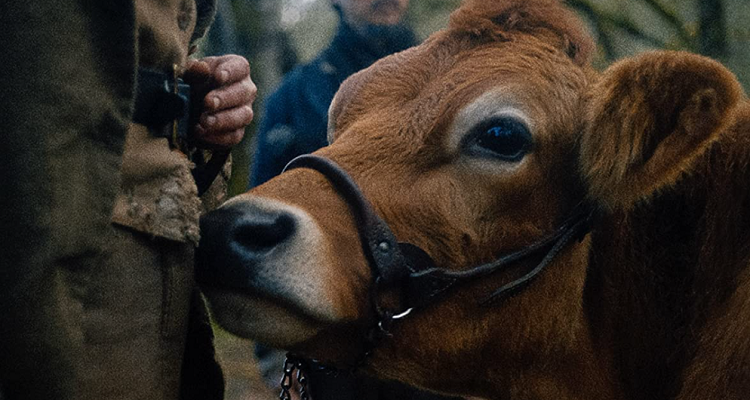
They won’t meet again for a number of days, weeks even, but when they do King-Lu will return the favour, giving Cookie shelter and a place to stay. The two become fast friends and set about making some money: “To get started, you need capital” declares King-Lu to which Cookie retorts without missing a beat: “You need leverage.” That leverage comes in the form of Chief Factor’s (Toby Jones) honey-coloured cow (Evie). You’ve heard the expression, why buy the cow when you can milk it for free? With her produce, the two budding entrepreneurs can make oily cakes. They drizzle them in honey and grated cinnamon, and make a killing selling them to the men mining and panning for gold.

As with the majority of Reichardt’s oeuvre, in terms of plot-points there aren’t many, but what is slowly revealed is an absolute pleasure to watch. She has the immense skill to relay so much with so very little and allows an audience to see but never instructs it where to look, often by her own sleight of hand in the editing suite. From the subtle timeline change to the use of light on the colour palette of yellows, earth tones and greens. It’s a quiet unassuming film, discerning, as it excavates American history and wrestles with the past and present – summed up during an exchange between Cookie and Lloyd (Ewen Bremner) in which one suggests that where they are isn’t the place for cows… “This isn’t the place for white men either.”

Based on Jon Raymond’s first novel The Half Life (2004), First Cow is the author’s fifth collaboration with Reichardt – their sixth Showing Up was released on Blu-ray by A24 earlier this month – and can be viewed as a companion piece to Meek’s Cutoff (or even Certain Women, also starring Michelle Williams), certainly a historical pre-cursor of early life in nineteenth century Oregon, America. Thematically, it acknowledges the ambiguities of (male) friendship. Those formed under the most unlikely circumstances and the power, grace, pleasure and heartaches that bind us together, marking human frailty and endeavour in such a profound, moving, and meditative way. The cast is led majestically but Magaro and Lee, who both give such delicate and beguiling performances, made only more poignant by William Tyler’s score – often only the plucked strings of an acoustic guitar.

First Cow is a moving and quiet fable about kinship and an America of the past and present, overflowing with the milk of human kindness.

First Cow is currently showing on MUBI.

Categories
Film Festival film review

Farewell Amor (Dir. Ekwa Msangi, 2020)

LFF 2020

The Civil War in Angola waged from 1975-2002. Despite several attempts at peace agreements and ceasefires, all collapsed amid decades of genocide and ethnic cleansing. With an estimated 800,000 dead and 13,000,000 internally displaced, some 435,000 were able to flee the country altogether and become refugees abroad.

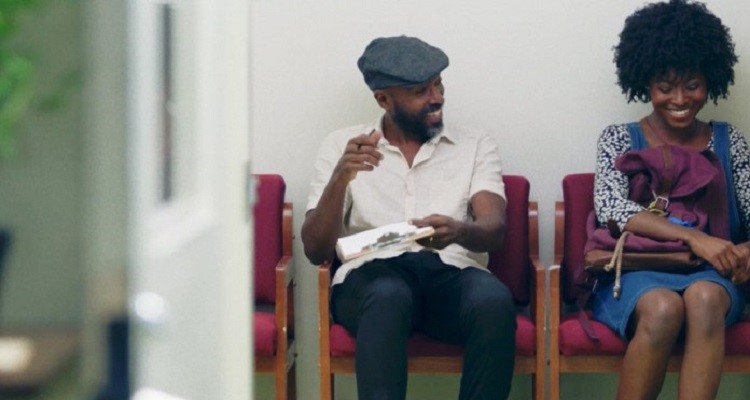
Ekwa Msangi’s affecting Farewell Amor opens with an airport pick-up. Walter (Ntare Guma Mbaho Mwine) is standing in arrivals meeting his wife Esther (Zainab Jah) and teenage daughter Sylvia (Jayme Lawson). The US reunification process has finally brought this family back together after seventeen long years apart. Esther and Sylvia were exiled to Tanzania while Walter has lived in New York driving a cab to make ends meet. Together, they must rebuild their family and attempt to settle, get to know each other again – or in the case of father and daughter for the first time – all in a one bedroom apartment and, for Esther and Sylvia, in a strange city.

Msangi chooses to use a Rashōmon-style of storytelling splitting her film into three sections, depicting each point-of-view. Each chapter is named for each character, giving them narrative agency over their own story, with the first meeting at the airport as the jumping-off point. We are party to their individual journeys as they come to terms with living in a strange land and as a Black person walking the streets in the US – the conversation Walter has with Sylvia about how people react to their skin colour is disheartening but also all too realistic – and provides insight into the types of secrets all families have for their individual and collective survival.

Esther has sought comfort, almost fanatically so, in her religion. Even for a good and loyal man like Walter, seventeen years is an eternity and he had found his in a nurse named Linda who has had to move out, move on and make way for Esther. Sylvia is the one with a future ahead of her and the one this has been the biggest upheaval for. She wants to dance despite her mother’s expectations of medical school, and enters a competition to win $1000 prize. It is Sylvia’s chapter that is the strongest and most impactful, making the absolute best of Osei Essad’s wonderfully evocative score and soundtrack.

Farewell Amor is a stunning first film. It runs with heavy themes amid the soul-searching (and often destroying) difficulties that comes with immigration, emigration and life as a refugee, but with no bombast or self-aggrandising statements. This is a story about honouring the past but placing importance on creating a future. It is redolent in its musicality and vibrancy of colour which is often integral to the culture it depicts yet it takes little to see ourselves in any one of those three gorgeous central performances. Ekwa Masangi has created an urgent and gentle drama – that still packs a punch – about struggle, fight, resilience and love; a sense of belonging and, above all else, family, made all the more poignant by the type of year many have experienced.

Farewell Amor is currently available to stream on MUBI

Categories
film review

I am Divine (Dir. Jeffrey Schwarz, 2013)

Cinematic audiences have been very used to cis men ‘donning a dress’ in order to hide or covet something over the decades. In Some Like it Hot (1959), Gerry and Joe (Jack  Lemmon and Tony Curtis) needed to flee the city after witnessing a Mob hit. Michael Dorsey (Dustin Hoffman) became Dorothy Michaels to secure a recurring role on a soap opera in Tootsie (1982) boys dressing as girls have caused mayhem in horror films; the definitive, of course, being proto-slasher, Psycho (1960). There have been road movies with drag-artists aiming for acceptance – self as well as societal – and life contentment amid lipstick, chicken fillets, and feather boas like in The Adventures of Priscilla: Queen of the Desert (1994) and To Wong Foo Thanks For Everything, Julie Newmar (1995). Plus, there are men (homosexual, heterosexual, cis…) wishing to extrapolate the maternal realm with the help of prosthetics and spirit gum like Albin/Albert (Michel Serrault and Nathan Lane respectively) in La cage aux folles/The Birdcage (1978/1996) or Daniel Hillard and Euphegenia Doubtfire. The genre, if one can suggest there is one, straddles comedy and tragedy and rarely offers anything in between.

When Harris Glenn Milstead shimmied and sashayed in his little (operative word being ‘little’) numbers, people took notice. Wearing a dress seemingly freed him and enabled him the life he coveted,  he unapologetically introduced the world to his alter-ego: Divine. And oh, what a woman – loud, brash, crude, angry and trashy (often by her own admission). Lady Divine didn’t give two flying kitten-heels what people thought of her and with the help of childhood friend, John Waters, and make-up artist/costume designer extraordinaire Van Smith, they not only set out to prove that she was, not only, the most beautiful woman in the world but the filthiest.

divine-in-pink-flamingos-300x193
divine as dawn

Jeffrey Schwarz’s I am Divine is a labour of love, mixing contemporary interviews with archival footage, the documentary is warm, affectionate, and presents a touching portrayal of a larger-than-life transgressive – yet defining – drag artist and actor who was deeply loved by his friends, family and contemporaries. While Milstead’s story is far from unusual: ‘Glenny’ was chubby and bullied for his effeminate nature, his mother even took him to the Doctor who confirmed (!) that there was more femininity lurking beneath the surface of the masculine Milstead child. At 17, he met John Waters and the rest, as they say, is history. Divine was determined to be a star and, wherever possible, look exactly like Elizabeth Taylor while doing it.  

Schwarz paints a riotous, compelling, and wonderfully edited documentary celebrating the generous, sweet-natured, and fearless cult icon without ever resorting to the overtly camp or sugary twee. There is some darkness – the drug-taking, the food addiction that more than likely contributed to Milstead’s untimely death but Divine made the most of her time in the world, as one time member of theatre troupe The Cockettes, a solo recording artist, stand-up comedian, and as an actor. Not just any old actor either, an evolving and defining one – she was trash-talking Babs Johnson (Pink Flamingos) and Dawn Davenport (Female Trouble), frumpy and unfulfilled housewives Francine Fishpaw (Polyester) and Edna Turnblad (Hairspray), hot-blooded Rosie Velez in Comedy/Western Lust in the Dust. There were male counterparts too (like Earl Peterson and Arvin Hodgepile). She was in her element in Polyester, enjoying on-screen clinches and kisses with childhood-crush, Tab Hunter.

harris-glenn-milstead

Sadly, Divine passed away in his sleep the night before he was due to start filming as a series regular on Married With Children, and as this documentary states unequivocally; he was adored. A divine man who had a heart as big as his body, an icon to many but especially those who have ever felt different.

I am Divine is currently showing on MUBI