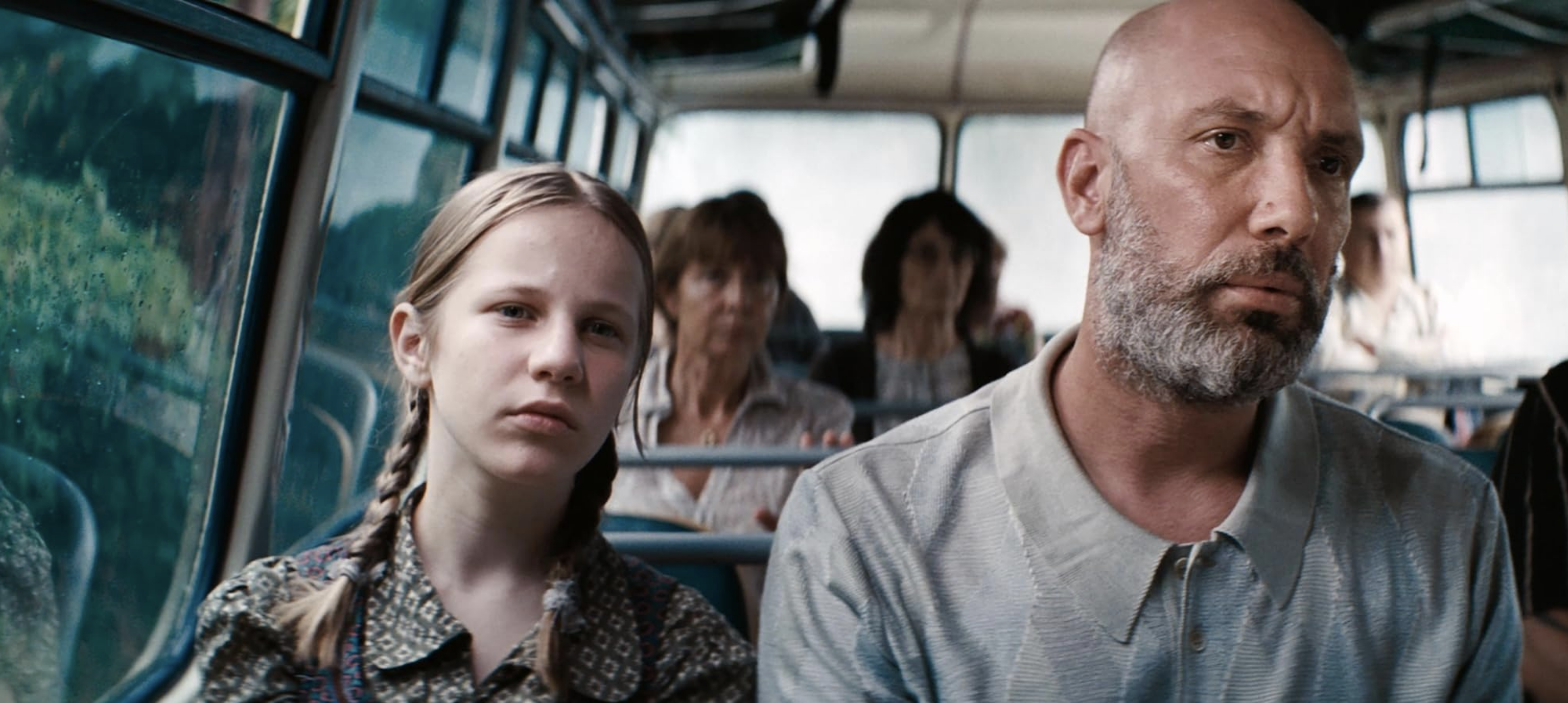
Widower Ali (Zachary Baharov) lives a peaceful life in a rural and isolated area, deep in the hills of Bulgaria close to the Greek border with his mother-in-law and teenage daughter, “wonderful” 14-year-old, Tarika (Vesela Valcheva).
The family produce milk and cheese from their one goat (delivered to both the Imam and local Priest), mill flour and Ali picks up the odd shift at the local mine to make ends meet. Tarika has recently been diagnosed with Butterfly Vertebra, the same bone disorder as her mother and grandmother before her. A genetic abnormality which can result in butterfly wings forming from the spine and scapula. It is up to Ali as to whether his daughter undergoes the surgery to prevent full metamorphosis, before his daughter experiences any real change in her body. Her grandmother still bearing the scars from her own medical intervention.
Foot and mouth is seemingly prevalent in the area as sheep are removed from farms and taken away by men in hazmat suits – as witnessed by father and daughter on their bus-ride home. It’s an overnight journey thus establishing just how far away their dwelling is from “civilisation”. They are without electricity and running water but are self-sufficient, existing in their own cosmos. An idyll only recently disturbed by a hovering helicopter while more animals are located and destroyed, and the army a little farther out building a fence between the border .
There is a timeless fairy tale quality to Tarika (thankfully renamed from The Herd), it even brought to mind loose aspects of Frankenstein. It is not initially clear when this story is set, costumes are old fashioned – especially the Mayor’s (Ivan Savov) Biggles-inspired get up he insists on wearing while riding his motorbike and sidecar. Then during the, frankly, fabulous traditional dance number at the village fair the flag of the European Union billows stage left to the wafting of the Bulgaria tricolour stage right. Bulgaria only entered the EU in January of 2007 and yes, it feels dated but the politics are current (albeit also antiquated).

At no point does Milko Lazarov’s film suffer from the quiet and lack of dialogue thanks largely to Kaloyan Bozhilov’s stunning cinematography which does most of the heavy lifting, shot on 35mm film, it evokes such feeling and established sense of place, power and joy. Shots are often in isolation, like the five coloured rugs recently washed and drying on rocks in the sunshine. Although, further reading suggests this may allude to Bulgarian riddles/folklore and the ancient pantheon of Gods.
Characters are not always immediately identifiable or even noticeable amid the backdrop. The vista shots are breathtaking, often filmed in extreme long-shot – indicating the vast world beyond the characters’ door and expressing just how isolated this child truly is. Each frame is a work of art, like a watercolour the palette of which communicates the natural world Tarika is at one with and finds peace in. The still-life image punctuated with birdsong, light and bright, bursting with greens, lemons, oranges and ochres. It brought to mind Hit the Road (2021) which similarly deals with a changing country, political climate, and a child’s point-of-view all sprinkled in a touch of magical realism.
The supernatural is alluded to with Tarika’s presence, her mother having manifested her daughter’s very existence. The myth surrounding the family’s matriarch, most specifically her death, looms throughout. The child is to be feared, thrown stones at and generally shunned. She is – “just like her mother” – blamed for the droughts and inexplicable accidents or deaths. When she feeds an immigrant and soothes the woman’s baby, the Mayor sheds his man of the people mask and shows his true vile nature. Like most men in power he is a hypocrite, a man whose main motivation is to divide and dominate.
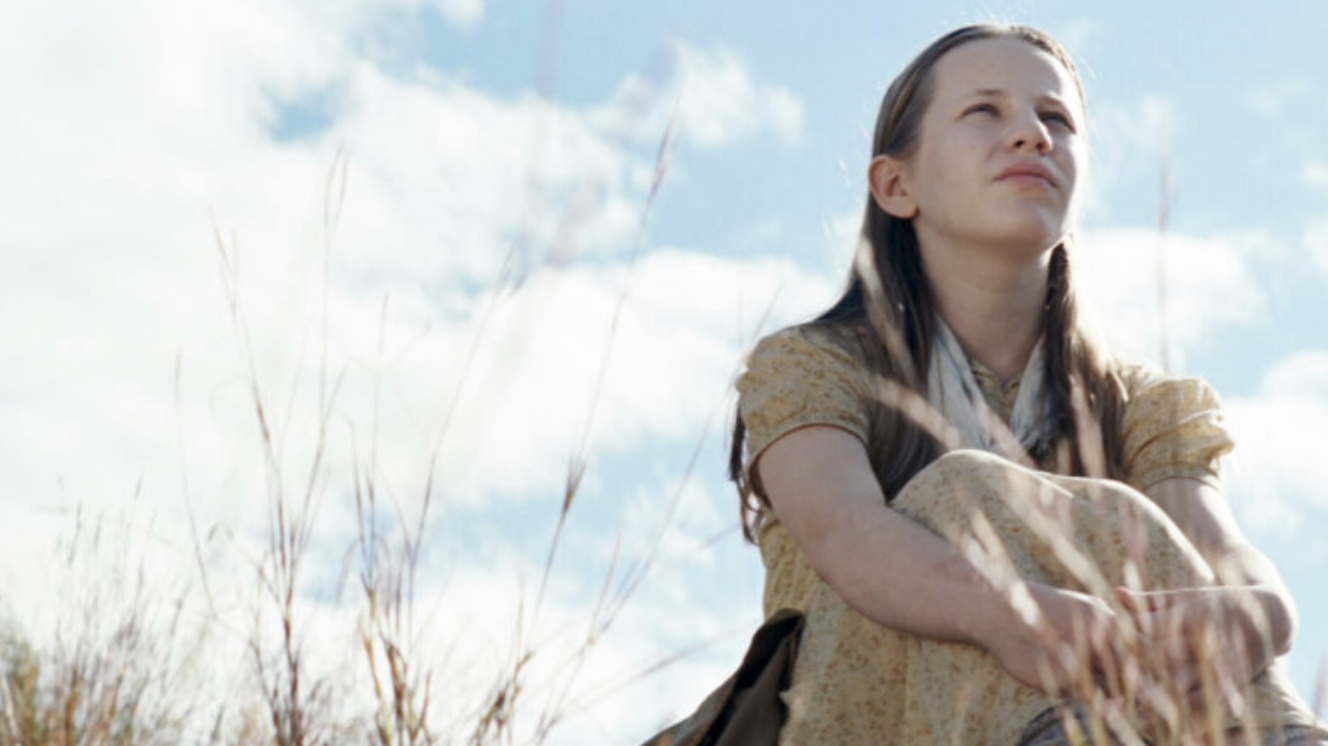
Throughout Tarika, there are moments which require little explanation, however, any unanswered questions by the denouement only further enhances the beauty of the film. The socio-political commentary is clear, however. This is Bulgaria yet could be anywhere in this day and age, as the world edges towards open xenophobia and basic human rights violated in the wake of so-called wealth, prosperity and nationhood. The characters are not particularly overdrawn but do not lose their credibility. The village fair sequence results in a wonderful interaction between a performing clown – played beautifully by Christos Stergioglou (Dogtooth) – who sees something in the titular character. While the recounted love story of Ali and his wife is heart-swelling. His love for both his late bride and flaxen-haired daughter is palpable and the lengths he will go to protect her encapsulates what it is to be human.
Butterflies and birdsong are everywhere in this exquisite film about hope, love, freedom and the ephemerality of life. Lazarov combines Kaurismäki’s tragedy and minimalism with Kusturica’s naturalism and empathy to create a unique, beguiling and deeply moving film.
 The Framing Device