Categories
Film Festival film review

Mother Vera (Dir. Cécile Embleton & Alys Tomlinson, 2024)

“I didn’t want to become a nun,” confesses Vera at one point during Cécile Embleton and Alys Tomlinson’s absorbing and beautifully structured Grierson Award-winning documentary, Mother Vera. The genesis of which was a black and white photograph (see above). The portrait was taken by Tomlinson, during one of her visits to Catholic pilgrimage sites and published in her book, Ex-Voto – so named for the devotional votive offerings often left at these sites of worship.

For some sisters (and Catholics), the calling can be romanticised, childhood piety guides the novitiate on their path and any struggles with faith rarely discussed out loud. For the titular figure at the centre of this film nothing could be further from the truth.

Born Olga, Vera’s road was one filled with nightclubs, perfume, motorbikes and heroin. Not to mention the imprisoned husband before she found recovery, and God. Even after twenty years, redemption is still on the table: “I broke the lives of many people. I must be from hell.” Her backstory is slowly drip fed to the audience, almost elliptically, and delivered in short, often blunt, sentences which while never really expanded upon are without self-pity or, refreshingly, true regret. She is the perfect conduit to help the ex-prisoners in the congregation, men cloistered under her care seeking to reconcile their own addictions and reclamation.

Diegetic sound reverberates in every striking frame and there are many, austere and stunningly rich. From the nun shot from behind ringing bells, each peal seemingly moving ropes at will making her look like a marionette to close-ups of women reading scripture and their hands clutching rosaries, forefingers and thumbs cradling each bead as they silently count the prayers. Religious iconography adorns most interior walls and then there is the neon lighted cross at the head of an outdoor baptismal pool which upon first glance resembles an open grave. Images which are fleeting, often in isolation but evocative enough to render to memory.

Daily life at the St. Elisabeth monastery is filmed in stark contrast, black and white only further enhances the grey. Lighting is reduced to flickering candlelight, low camera angles focus on the swishing of the cassock as feet climb stairs, shadows move en masse until focus eventually pulls upwards and the apostolniks and skufias of the sisters, old and young alike, come into view. This contrast is never more apparent than when those dark melancholic frames give way to the daylight and the deep snow Vera rides her steed through heading towards the ominous forest on the grounds periphery. It is outside with the horses where she finds peace, her pockets of joy reserved for when she visits her family.

This documentary sits very comfortably within the realm of ‘slow cinema’, thematically (and visually) similar to films like Ida (Pawlikowski, 2013) and The Innocents (Fontaine, 2016) but with a fundamental truth and reality at its core. It carries emotional heft as the search for liberation and personal freedom becomes ever more apparent. The shift in the journey of the enigmatic Olga/Vera – herself the personification of a votive offering – also occurs in the filmmaking too. The slow transition to colour in those last twenty minutes is glorious and perfectly judged, the first initial bleeding of which comes after the inky black apostolnik is seen burning into ash and dissolving into the cold night air.

Mother Vera defies expectation. It is a visually gorgeous meditation in (mostly) monochrome – filmed with creativity and originality through a non-judgemental lens about one resilient and courageous woman’s search for identity and self-acceptance. Embleton and Tomlinson took a still image and over 91 minutes made it come to life onscreen.

Categories
Film Festival film review

Motherboard (Dir. Victoria Mapplebeck, 2024)

Matrescence is a word that is slowly finding its way back into vernacular after decades without recognition in Western society. This transition goes further than the narrative surrounding pregnancy, birth and motherhood women have been fed for centuries. It goes far beyond the development of the foetus, how the baby turns out and looks instead at unexamined moral assumptions about motherhood – and explains the metamorphosis and how it ends. As a chimera with her child’s cells knitted to her body and bones and her brain colonised, forever connected.

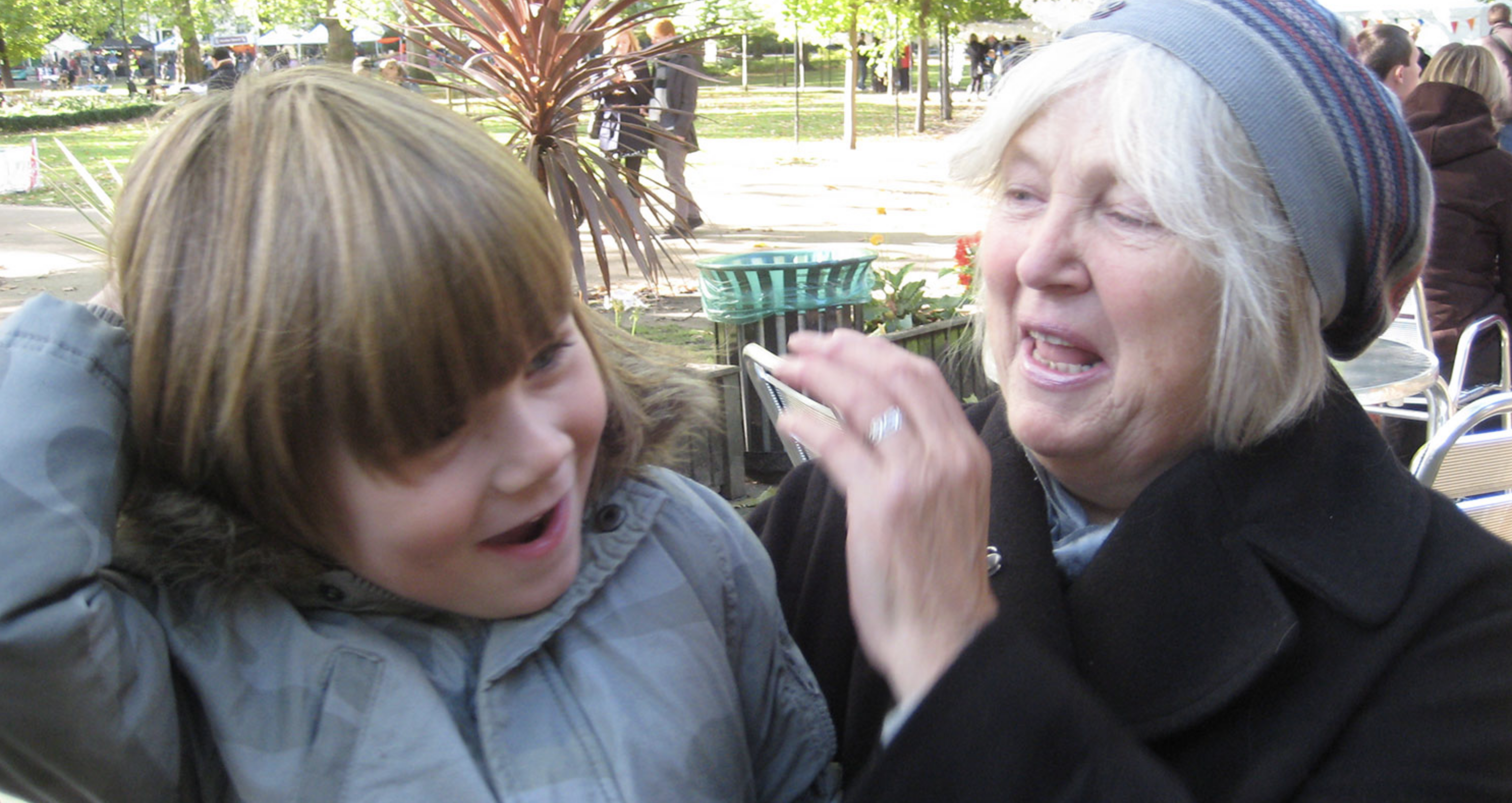
Victoria Mapplebeck’s feature debut Motherboard, shot over two decades on a DVCAM and five generations of iPhone is a collaboration between a mother and her son but attempts to depict the multitude of changes a woman goes through above beyond the physical mutation of growing another human. At 38, pregnant and alone after being dumped by a man reportedly not for fatherhood she begins to document her journey of motherhood post-birth. A filmmaker-cum-academic, Victoria is no stranger to an absentee father, her own walked out on her mother when she was a toddler.

Her baby’s father, upon meeting his child on the first of less than a handful of times, demands a paternity test before announcing his move to Spain and over the years his apathy does not change. One feels nothing but shame for him. Jim grows into a seemingly great little human in spite of him – that thumbs-up during the scan in the first scene of the film telling us all we need to know – and because of his mother and grandmother, Betty. He is mature beyond his years, sensitive and pragmatic even before he reaches ten years old.

While absent fathers are nothing new in this family, Victoria does manage to repair some of the fractures in her relationship with her own father in a particularly moving moment, Jim’s interest at 13 in developing a relationship with his other parent coincides with Victoria’s cancer diagnosis and the rounds of chemotherapy she must face. There is no sugar-coating, no bemoaning of the selfish human she pro-created with (at least on camera) or any self-pity: “I don’t care if I die. I just want to get [Jim] to adulthood.”

This documentary uses live-action footage, voicemails, voiceovers and text messages to paint a fiercely unsentimental look at motherhood, and the frustrations that go along with it not to mention the guilt and unfiltered messiness of life with a child and the attempt to navigate a career alongside. It is really beautiful seeing Jim evolve – over 90 minutes – the small squeaky voice giving way to a deep resonant tone, the small day bed replaced with a double to house his growth spurt.

We bear witness to the teenager, moody, monosyllabic, fighting the onset of depression amid a pandemic-induced lockdown and drug experimentation. That these struggles occur during the time Victoria starts to take baby-steps back into the filmmaking world, pitching her film to the Venice film festival are merely coincidence or because of are never really explored. However, understandably, it leads to some really intense and terse moments between the two, and on the other end of the phone there’s a voice of reason in Betty.

Victoria. Betty. They are the constants. Two women who raise(d) their children (mostly) alone. The former never stops needing the latter, who is often on hand to offer sage advice, empathise with, offer thoughts on films, or bake a shepherd’s pie, and Jim has another mother to go to when things get a little too tough between him and his own mum.

Motherboard frames the joys and expectations of motherhood and to some degree womanhood as the woman of this piece attempts to carve a place for herself in the world, recouping earlier sacrifices after the maternal block (Jim refers to it as a mental one). It is humane, warm and candidly relatable.

At the heart of it, there is no denying the connection between this mother and her child.

Categories
Film Festival film review

Tarika (Dir. Milko Lazarov, 2024)

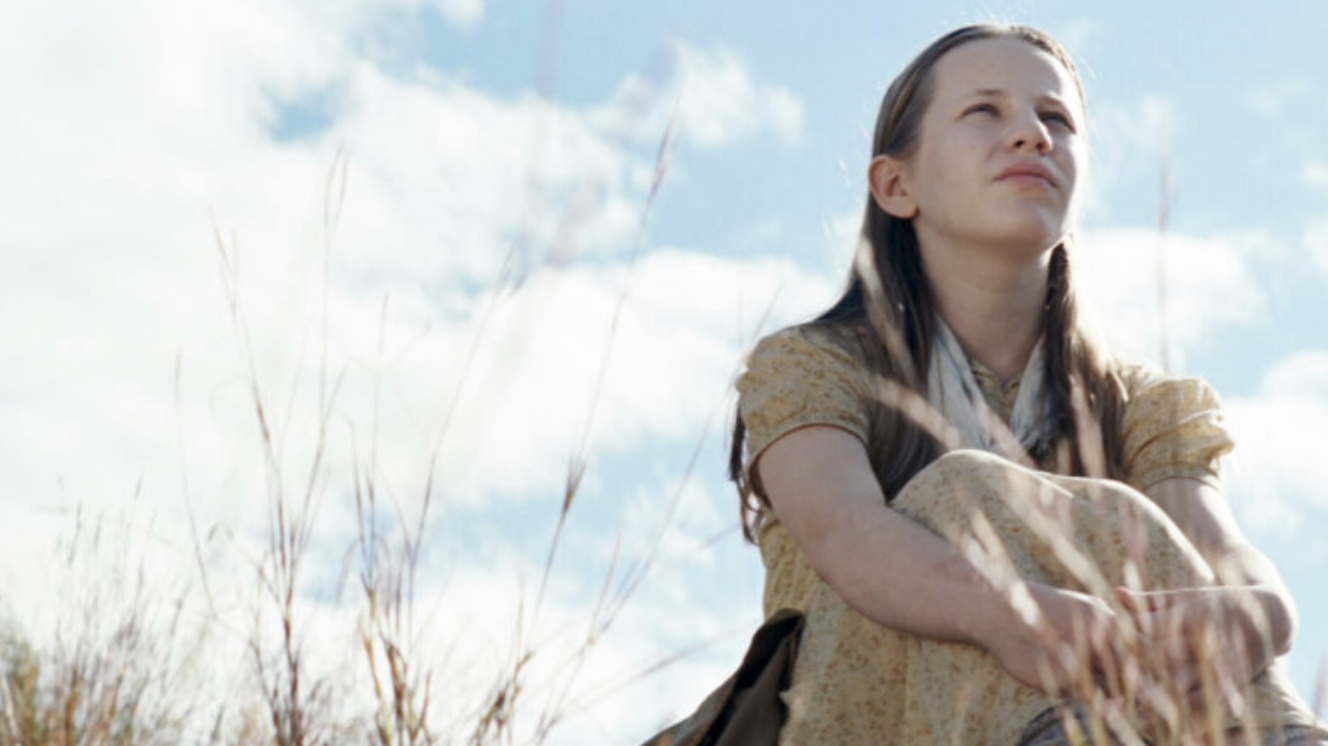
Widower Ali (Zachary Baharov) lives a peaceful life in a rural and isolated area, deep in the hills of Bulgaria close to the Greek border with his mother-in-law and teenage daughter, “wonderful” 14-year-old, Tarika (Vesela Valcheva).

The family produce milk and cheese from their one goat (delivered to both the Imam and local Priest), mill flour and Ali picks up the odd shift at the local mine to make ends meet. Tarika has recently been diagnosed with Butterfly Vertebra, the same bone disorder as her mother and grandmother before her. A genetic abnormality which can result in butterfly wings forming from the spine and scapula. It is up to Ali as to whether his daughter undergoes the surgery to prevent full metamorphosis, before his daughter experiences any real change in her body. Her grandmother still bearing the scars from her own medical intervention.

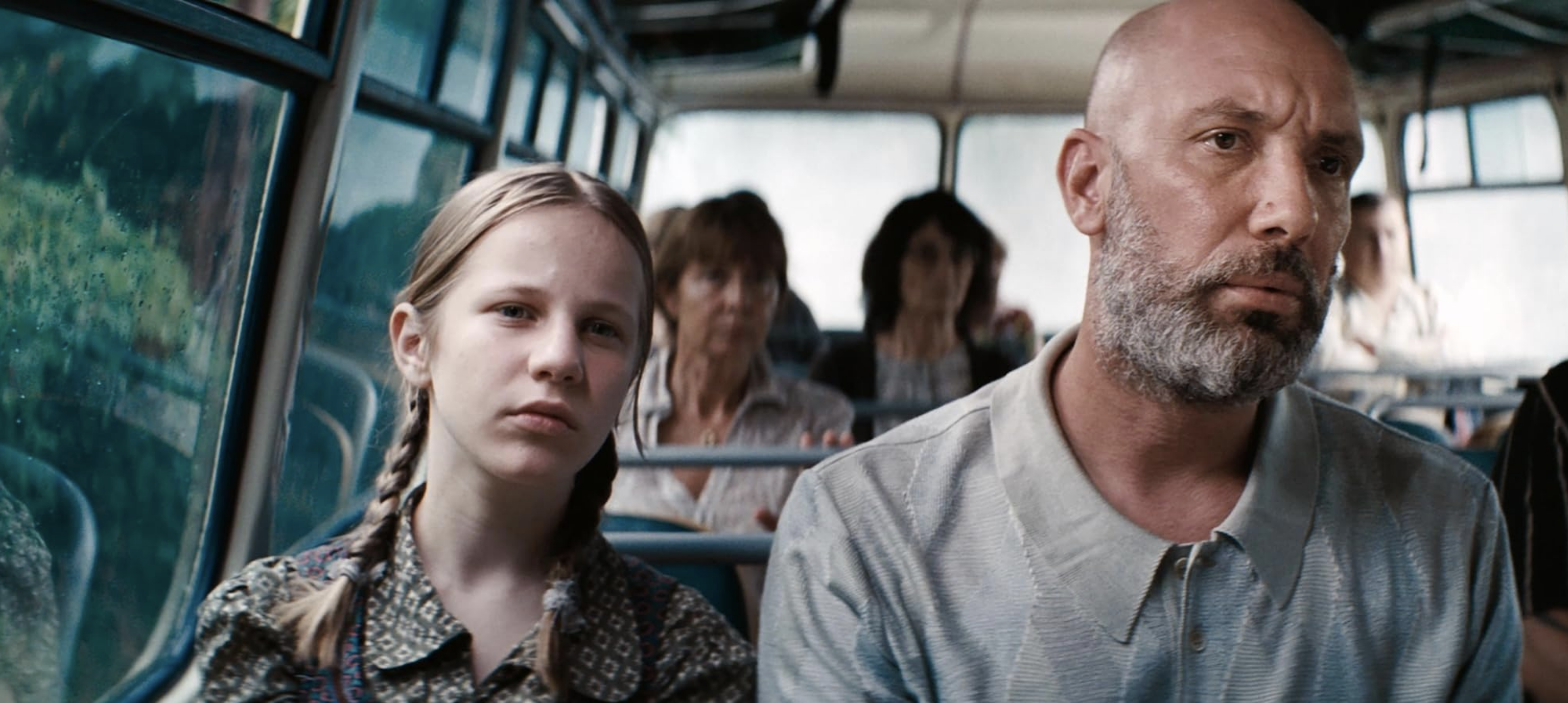
Foot and mouth is seemingly prevalent in the area as sheep are removed from farms and taken away by men in hazmat suits – as witnessed by father and daughter on their bus-ride home. It’s an overnight journey thus establishing just how far away their dwelling is from “civilisation”. They are without electricity and running water but are self-sufficient, existing in their own cosmos. An idyll only recently disturbed by a hovering helicopter while more animals are located and destroyed, and the army a little farther out building a fence between the border .

There is a timeless fairy tale quality to Tarika (thankfully renamed from The Herd), it even brought to mind loose aspects of Frankenstein. It is not initially clear when this story is set, costumes are old fashioned – especially the Mayor’s (Ivan Savov) Biggles-inspired get up he insists on wearing while riding his motorbike and sidecar. Then during the, frankly, fabulous traditional dance number at the village fair the flag of the European Union billows stage left to the wafting of the Bulgaria tricolour stage right. Bulgaria only entered the EU in January of 2007 and yes, it feels dated but the politics are current (albeit also antiquated).

At no point does Milko Lazarov’s film suffer from the quiet and lack of dialogue thanks largely to Kaloyan Bozhilov’s stunning cinematography which does most of the heavy lifting, shot on 35mm film, it evokes such feeling and established sense of place, power and joy. Shots are often in isolation, like the five coloured rugs recently washed and drying on rocks in the sunshine. Although, further reading suggests this may allude to Bulgarian riddles/folklore and the ancient pantheon of Gods.

Characters are not always immediately identifiable or even noticeable amid the backdrop. The vista shots are breathtaking, often filmed in extreme long-shot – indicating the vast world beyond the characters’ door and expressing just how isolated this child truly is. Each frame is a work of art, like a watercolour the palette of which communicates the natural world Tarika is at one with and finds peace in. The still-life image punctuated with birdsong, light and bright, bursting with greens, lemons, oranges and ochres. It brought to mind Hit the Road (2021) which similarly deals with a changing country, political climate, and a child’s point-of-view all sprinkled in a touch of magical realism.

The supernatural is alluded to with Tarika’s presence, her mother having manifested her daughter’s very existence. The myth surrounding the family’s matriarch, most specifically her death, looms throughout. The child is to be feared, thrown stones at and generally shunned. She is – “just like her mother” – blamed for the droughts and inexplicable accidents or deaths. When she feeds an immigrant and soothes the woman’s baby, the Mayor sheds his man of the people mask and shows his true vile nature. Like most men in power he is a hypocrite, a man whose main motivation is to divide and dominate.

Throughout Tarika, there are moments which require little explanation, however, any unanswered questions by the denouement only further enhances the beauty of the film. The socio-political commentary is clear, however. This is Bulgaria yet could be anywhere in this day and age, as the world edges towards open xenophobia and basic human rights violated in the wake of so-called wealth, prosperity and nationhood. The characters are not particularly overdrawn but do not lose their credibility. The village fair sequence results in a wonderful interaction between a performing clown – played beautifully by Christos Stergioglou (Dogtooth) – who sees something in the titular character. While the recounted love story of Ali and his wife is heart-swelling. His love for both his late bride and flaxen-haired daughter is palpable and the lengths he will go to protect her encapsulates what it is to be human.

Butterflies and birdsong are everywhere in this exquisite film about hope, love, freedom and the ephemerality of life. Lazarov combines Kaurismäki’s tragedy and minimalism with Kusturica’s naturalism and empathy to create a unique, beguiling and deeply moving film.

Categories
Film Festival film review

180° Rule (Dir. Farnoosh Samadi, 2020)

LFF 2020

It is not often that you hear women in Iranian cinema discuss abortion and rarely in the first twenty minutes of a film’s opening. It is the first indication that 180° Rule is a little different and that there’s a woman at the helm. Farnoosh Samadi, over the course of 83 minutes, subtly depicts a woman’s experience in a society fighting between tradition and modernity which renders women and girls without agency, and often leads to suffering and silence.

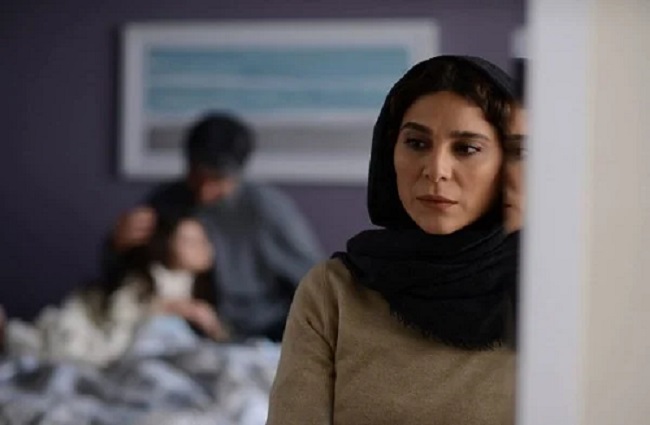
Sara (Sahar Dolatshahi) is a school teacher, well liked and preparing for a few days leave to celebrate a family wedding when one of her students, Yasi (Sadaf Asgari) admits to being pregnant (after swallowing pills to induce miscarriage). Sara offers guidance and advice where she can before heading home to pack. However popular she is at work, home life is a somewhat different matter – visually symbolised by the boiling, overflowing milk-pan on the stove in the opening frame – her husband Hamed (Pejam Jamshidi) is aloof, unfeeling, stoic and somewhat miserable. Criticisms come thick and fast and those that don’t are loaded in accusation.

She’s a nag, she smokes too much, she has allowed the cat on the bed again, she’s a bad driver, she’s responsible for his daughter being ill (it’s a cough and a temperature…) and then he’s claiming his workload will prevent him from accompanying her and daughter Raha to the upcoming nuptials. Which means that they have to stay behind lest travel unaccompanied or in the car with a ‘strange man’ (a taxi driver). This is made all the more disappointing by just how much his child has been looking forward to being the flower girl. Weighing up her options – and the expectations of her mother, extended family and daughter – Sara makes a choice and it is a decision that will change her life irreparably and we see the ripples for the remainder of the film.

During which time Samadi intentionally disrupts and disorientates the audience. The inclusion of Yasi’s subplot later on is purposeful and in keeping with the pace of the film and its reflection of reality. Change happens so quickly and impulsive, even inexplicable, decisions don’t always have time to reverberate or be made understandable – the plain and simple fact is that people, women can suddenly start acting strangely.

In a patriarchal society – like the one depicted so astutely onscreen – moral responsibility is placed on women, they’re conditioned to follow the rules, to do as they are told and avoid transgression at all cost. If they fail they’re expected to suppress their feelings and the pressures of secrets, lies, shame and guilt can often be their undoing, sadder still is that Samadi’s screenplay is loosely based on a true story. 

180°Rule is an evocative film that won’t necessarily be embraced by all but the juxtaposition of light and dark, black and white whether figuratively or in a lighting choice, a costume, or animal in frame is striking. Its mournful score, thanks to Amir Nobakht’s sound design only adds to the haunting melodrama and subtle social commentary.

It’s a technically impressive and visually arresting drama led by an extremely convincing lead in Dolatshahi. Were it not for her and the empathy she elicits, from what becomes a largely subdued and silent performance, it is doubtful the film would work quite so well. It will be likened to the work of Asghar Farhadi, somewhat understandably during one particular scene yet however flattering it is to be compared to a master filmmaker, and for a first feature no less (following short films: The Silence (2016), Grace (2017) and The Role (2018)), this piece of work is made all the more compelling, not in spite of but because of its female lens.

Categories
Film Festival film review

Babyteeth (Dir. Shannon Murphy, 2019)

LFF 2019

Small-time drug dealer Moses (Toby Wallace) literally barges his way into Milla’s life while she is standing on the platform awaiting her train home from school. In the following moments, the jittery off-his-face-on-pharmacuticals nervous energy of the scruff-bag almost guarantees he won’t be going anywhere soon. He “saves her life” by stemming a sudden nosebleed with the shirt off his back. She offers to give him fifty bucks if he’ll do something for her, and as Moses hacks off her long hair with dog clippers, Milla (Eliza Scanlen) is smitten.

Meanwhile, across town (still in Sydney), therapist Henry Finlay (Ben Mendelsohn) is listening to Anna (Essie Davis) who is laying on an ottoman in the middle of the floor while he devours a sandwich. Only when they begin to awkwardly orchestrate sex on Henry’s desk do we realise that they are husband and wife and Milla is their daughter. Oh yes, and Milla has – although the word is never uttered once during the film’s 118-minute duration – a form of cancer.

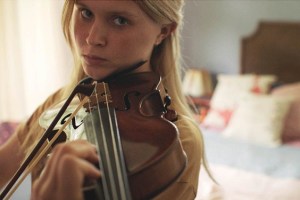
Surrounding the Finlays – and Moses – are a cast of memorable and wonderful characters. There’s heavily pregnant Toby (Emily Barclay) who has recently moved into the house across the street, Latvian music teacher Gidon (Eugene Gilfedder) – he teaches Milla violin and was once Anna’s musical touring partner, Tin Wah (Edward Lau) – an accidental truant who’s a musical prodigy in the making, and Zachy (Zack Grech) Moses’ little brother. Each flesh out the story in their own memorable way but the film belongs to the four leads: Scanlen, Wallace, Davis and Mendelsohn.

To reveal more about the plot would spoil but suffice to say Shannon Murphy’s directorial debut feature is a little beauty. Based on Rita Kalnejais’ 2012 play – she adapts her own work for the screen – it thankfully has kept all the descriptors from the stage version. The film is chopped up into vignettes, each given a title which don’t always work, often only serving as a distraction, however, here are edited together flawlessly. They even help create a laugh before any action unfolds.

Murphy’s direction is subtle and natural – nothing feels forced. Light floods every frame even during night-time sequences, this is not a film about death despite its looming scythe but a celebration of life, first love and family achieved in such a beautiful way. Babyteeth is a bittersweet comedy and utterly unique. It’s not quite a coming-of-age story nor is it one of those heinous last-chance-at-love stories where the dying girl lies pale and clammy in her bed, or is accompanied by an oxygen tank in every scene. There is hope, joy and teen angst everywhere, and yes, the sobering fact that Milla may die is never far from the audience’s minds but her illness doesn’t define her.

Eliza Scanlen more than proved her acting mettle in Sharp Objects (a penchant for teeth too it seems) and creates a fully-rounded character in Milla. She’s not always likeable (what teenage girl is?) but we empathise with her, and can’t help but love her. Toby Wallace is brilliant as (almost) complete loser, Moses, who’s not beyond redemption, and nowhere near boyfriend material. Yet, there’s something so sweet and tragically melancholic about him. Which leaves the ‘olds’. If you’d like to see a masterclass in acting from two Australian legends of the large and small screen, look no further than Essie Davis and Ben Mendelsohn. They’re fabulous in most things individually but together something else entirely.

That’s one of things this film does so well, it’s not just about a diagnosis or how it effects the sick but those around them, and Davis and Mendelsohn convey so much with very little. It’s in the nuance of a sigh, a look, a nudge of affection, a kiss on the forehead, or getting exasperated at your wife’s ‘shower move’ just so she can get you naked. Let’s just say, Moses isn’t the only one self-medicating and dulling the pain, Anna hasn’t been able to play the piano at all since Milla’s news.

Music plays a huge part of this film, it’s what opens it – a string quartet hammer out a gorgeous version of “Golden Brown” while the remainder of the soundtrack – wonderfully put together by Amanda Brown – varies from electro, soul, cheesy pop to Mozart and Bach. Each piece conveys emotional heft and given that music means so much to the mother and daughter onscreen, it’s a really lovely way of exploring their relationship without unnecessary exposition.

Milla still has one of her baby teeth – hence the title – the perfect symbol for the childhood she wants to be free of and the adulthood she may never encounter. As a film, Babyteeth is a glorious joy from beginning to end; heart-aching and hilarious with an immensely talented cast who genuinely make this a special experience.

Quoted in the trailer! :)