Categories
film review

Excision (Dir. Richard Bates Jr., 2012)

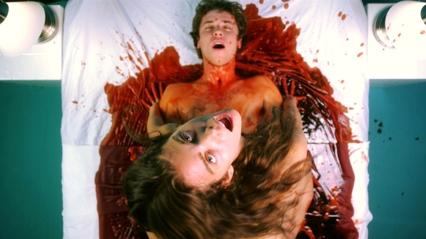
Being a teenage girl can, for want of a better word, suck. Fighting against changes you cannot control, whether they be bodily, emotional, and/or familial; attempting to force yourself to fit into whichever societal mould proves popular can be exhausting, often heartbreaking and wholly unnecessary (survival and hindsight can be a wonderful thing). Within the horror genre, females are often victimised, punished for sexual transgression, through the finality of death, as per the ‘slasher’ movie or can be depicted as teenagers and aligned with the abject. This abjection can be in the form of literal law-breaking, often by committing murder, seeking pleasure through the perverse and/or the secretion of bodily fluids, most often menstrual blood. While some female critics/theorists have read these texts as a further attack of their gender by patriarchy, these “monstrous femmes” have rendered some of the most memorable female protagonists recorded on celluloid. These include cult favourites Sissy Spacek as Carrie (1976, dir. Brian De Palma), Katharine Isabelle in Ginger Snaps (2000, dir. John Fawcett) and now AnnaLynne McCord’s astonishing portrayal in Richard Bates Jr’s Excision (2012).

McCord, best known as a spoiled, rich blonde in the re-vamped 90210 delivers an, in any other generic movie, award-winning performance as socially awkward Pauline. Physically, she is unrecognisable with lank, greasy brunette hair, acne strewn blemishes and hunched stance. She embodies a complete smorgasbord of emotions and characteristics and goes against the ‘norms’ of the female in horror, specifically in her lack of sexual reluctance, aspirations to be a surgeon and the oblivious way in which she approaches life. Most significantly, she is no passive victim. Pauline lives in picket-fenced suburbia in a repressive family unit headed by her castrating mother Phyllis (Traci Lords), emasculated father Bob (Roger Bart) and ailing little sister Grace (Ariel Winter). Phyllis exerts her maternal authority over the whole household and is determined to raise her daughters through the Church and the formality and etiquette of cotillion. At the crux of the difficult, terse and often cruel mother-daughter relationship is the ferocious need for the other’s love and acceptance.
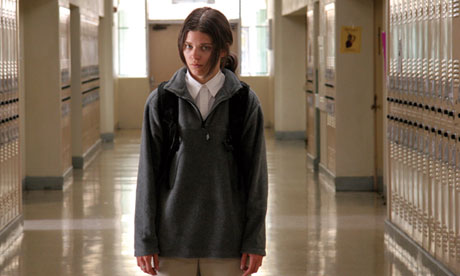
 Pauline is a sociopath but manages to convey levels of real empathy.   She is gauche, fiercely intelligent, obsessive and delusional and suffers vivid dreams, of which only the audience is party; these are often sexually indulgent and display necrophiliac fetishes.  For all of the blood, gore and toe-curling masturbatory fantasies, at Excision’s heart is pitch black, offbeat, comedy. These comedic moments are most evidently displayed in the ingenuity of the casting: John Waters as Pauline’s Preacher-cum-psychiatrist, Malcolm McDowell as her maths teacher and former adult film star Lords as her mother, plus losing her virginity to Peter Pan (Jeremy Sumpter) rounds things off nicely. Bates’ directorial debut is truly impressive, made with deliciously demented precision, a fierce sense of humour and, as its title suggests, is incredibly cathartic.
Categories
DVD film review

Chernobyl Diaries (Dir. Brad Parker, 2012)

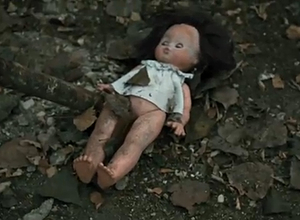
The Chernobyl disaster of April 1986 is considered to be the worst nuclear power plant accident in history and its alienation zone in Pripyat is the setting for Brad Parker’s, distasteful, Chernobyl Diaries.

Following a tour of Europe, friends Chris (Jesse McCartney), Natalie (Olivia Taylor Dudley) and Amanda (Devin Kelley) travel to Kiev to visit Chris’ older brother Paul (Jonathan Sadowski). After sampling the nightlife and encountering some contrived Russian male stereotypes, Paul persuades his kid brother to sample “extreme tourism” and along with Michael (Nathan Phillips), Zoë (Ingrid Bolsø Berdal) and their tour guide Uri (Dimitri Diatchenko), they try their luck through the guard-patrolled Pripyat exclusion zone.

When they are refused entry, the tourists choose an alternative route and soon find themselves stranded, trapped in a van, surrounded by the vast, desolate waste ground. Predictably, they are not alone, the only sound breaking the silence – aside from their occasional yells – is a Geiger-counter that crackles within the diegesis reminding them, and the audience, that they are inhaling radioactive fumes. This narrative may have had the potential to be a rational premise if, in fact, the “othered” being (in addition to the invisible, ionizing radiation) that is tracking them is actually revealed at a reasonable moment. Alas, it is not and we have to wait until the last five minutes and by this time any interest has completely waned. The premise of a horror film usually is for it to actually scare, or at the very least, make a viewer’s heart-rate pulsate – again, something which is severely lacking here.

It is increasingly difficult to summon enthusiasm for films such as this one especially since the runaway success of [Rec] (2007, dir(s). Jaume Balagueró and Paco Plaza), which was excellent and clearly the inspiration for this, with its handheld cinematography, low-key lighting and similar plotline. Unfortunately, an aspect within the mise-en-scène is where the similarity ends. This film is just 84 minutes which should give some indication as to how woefully under-developed the screenplay is (co-written by Paranormal Activity’s writer / director Oren Peli; Carey and Shane Van Dyke – grandsons of Dick). Perhaps, had the audience been made to care for these characters then greater empathy would have been experienced when they are picked off one-by-one. Or perhaps not, as the case may be.

There is nothing new here just more clichéd drivel which Hollywood insists on recycling – specifically using found footage as a plot reveal (a mobile phone fills in the gaps when two characters disappear) if this mode of representation is to be utilised then at least make it somewhat credible and not as a further display of writing limitations. At one point a main protagonist actually narrates so, it would appear, to avoid confusion.

This film is dull, tedious and despite its generic label of horror it is anything but scary. All moments which are included to make the audience react are cued so minutely that predictability and mediocre acting prevent any viewer participation or interaction.

Chernobyl Diaries is about as authentic as the Van Dyke Snr’s Cockney accent in Mary Poppins (1964, dir. Robert Stevenson).