Categories
film review

The Babadook (Dir. Jennifer Kent, 2014)

“If it’s in a word, or in a look, you can’t get rid of the babadook…”

baba5

For Amelia (Essie Davis) every day is a challenge. Made increasingly difficult by her six-year-old son Samuel (Noah Wiseman). Sam is an affectionate, energetic and boisterous little boy, wise beyond his years, avoided at school for being weird (potentially hyperactive) and between his obsession with magic, his preoccupation with keeping his mother safe from ‘monsters’ and his sleeplessness; he is – to put it mildly – hard work. His upcoming seventh birthday also happens to coincide with his father Oskar’s (Benjamin Winspear) violent death, a loss Amelia has yet to fully come to terms with. She is vacant, restless and on autopilot juggling single parenthood, her job as a carer, and looking in on elderly neighbour Grace Roach (Barbara West). A one-time children’s author, Amelia is able to quell Samuel’s night-time fears usually with a bedtime story until he selects Mister Babadook from the bookshelf. “It’s okay mum,” the brave little soldier declares “I’ll protect you.”

baba3

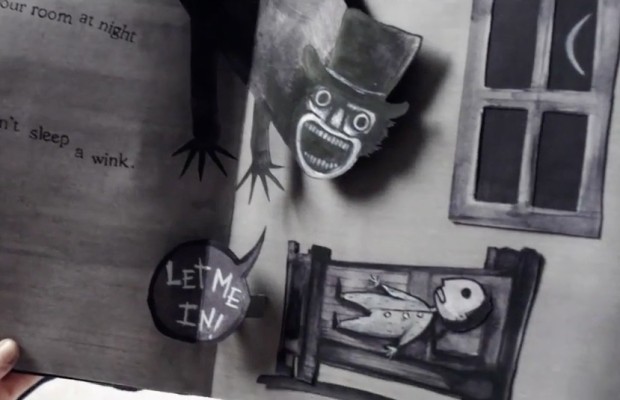
The Babadook is actress/writer Jennifer Kent’s directorial debut, made for reportedly just $2.3 million and based upon her 2005 short Monster. Its cinematic palette takes its cues from the blue-black, white and grey of a pencil drawing and visually, the film’s fairy tale simplicity works incredibly well on the screen. It is rich, nostalgic yet somehow timeless and paints a deeply emotional and visceral gothic picture in which an audience is subject to the inside of the protagonist’s mind (think of a much subtler and aesthetically prettier The Shining). We see a relatable woman engulfed by grief, drowning under the weight of motherhood, and exhausted in the malevolence of depression. This verisimiliar performance steeped in empathy is testament to the supremely talented Davis who is as consistently wonderful as always (see in particular HBO’s Cloudstreet). However, in her Amelia we see complexity, a melancholic soul with an unravelling mind; her ferocity for life, love, even survival has been stifled, buried deeply.
baba4

The emotional profundity of this fabulous film makes it wholly affecting – an internal demon which manifests to test the protagonist’s strength. Whether she stands up, cowers, screams in its face or fights for her freedom remains to be seen. It may let her go…this time or as the childish rhyme suggests, it may never be vanquished. Go and experience The Babadook, it will touch you, scare you, get under your skin and remain there. It will make you feel, it may even cause you to shed a tear – honestly, when was the last time a horror film did that?

The Babadook opens nationwide on 24th October 2014

Support the publishing of the book here: The Babadook – book – book – book

Categories
DVD film review

Texas Chainsaw (Dir: John Luessenhop, 2013)

No Massacre, No Substance

Texas-Chainsaw

The old adage, “you can never have too much of a good thing” would appear to be the mantra of Hollywood horror producers – excellence being sporadic and fleeting. Friday the 13th tops the list of saturated horror franchises with twelve movies, followed by Halloween with ten and then there are the seven Saws. The next dire instalment of mediocrity is probably not too far behind.

Leatherface

It has been thirty-nine years since Tobe Hooper’s seminal family horror, The Texas Chain Saw Massacre (1974) and over the years viewers have been party to sequels, new generations, prequels and  remakes – “Chain Saw Massacre” became “Chainsaw Massacre” and then no “Massacre” at all – none of which have even come close to the first. Part of what made Hooper’s original so influential was its stark cinematography, verisimilitude and its “true story” marketing (based loosely on the exploits of real-life serial killer Ed Gein) with a documentary-style voiceover and photographic stills filmed on 16mm. Its narrative and plot were, of course, entirely fictional but the finished film serves as a subtle commentary on the political climate and symptomatic of the era; something of worth created within budgetary constraints. The US was still knee-deep in the Vietnam War and this affecting horror visualised an apocalyptic landscape, sparse and abandoned through industrial capitalism (Robin Wood). It depicted a non-traditional, perhaps arguably degenerate, familial homestead transgressing the boundaries of the norm and surviving via cannibalistic insanity. As a movie, it stays with you long after viewing and its esteemed standing in the horror genre a testament to director Hooper and writer Kim Henkel, who created an influential piece of frightening art in spite of a profound lack of blood, guts and gore.

1-Texas-Chainsaw-3D(1)

A whole decade has passed since Marcus Nispel’s futile remake starring Jessica Biel and seven years since …The Beginning which tried to explain away all elements which made the original so groundbreaking and yet still the unnecessary franchise additions keep coming. The latest attempt, Texas Chainsaw is released on DVD from the 27 May 2013 through LionsGate. The film begins moments after the 1974 release and condenses its pioneer into a few short frames culminating in Sally Hardesty’s (Marilyn Burns) bloodied and hysterical escape. A Hatfield and McCoy type battle ensues between the Sawyers and Hartmans which leaves the old farmhouse burned to the ground, several members of each party dead and a small child ripped from the arms of her mother. Flashforward to present day and Heather Miller (Percy Jackson’s Alexandra Daddario) learns of her adoption and her biological grandmother Verna who has left her a significant inheritance. She jumps into a Volkswagen with her boyfriend Ryan (Tremaine ‘Trey Songz’ Neverson) and friends Nikki (Tania Raymonde) and Kenny (Keram Malicki-Sanchez) to learn her true identity. They pick up a drifter along the way in the form of Darryl (Shawn Sipos) and arrive in Texas to revel in her new-found wealth and meet her birth family, of which there is only one surviving member.

alexdtc

Regurgitating elements of horror films including Psycho (1960), Halloween (1978) The Funhouse (1981), I Know What You Did Last Summer (1997) (there’s even a cheesy nod to Saw), this film lacks any of the originality, atmosphere, zeal or purpose of those previously mentioned. Its director John Luessenhop has, by his own admission, never directed horror before and it shows. He has attempted to make a film comprising mainly of replicated shots, imitating but never matching the original source material. The mise-en-scène is coaxed to the point of contrivance, resulting in no scares and making for dull, and insulting, viewing especially for a fan of the genre. The decision to discount the franchise instalments which have been made since ’74 is certainly an interesting one from writers Debra Sullivan, Adam Marcus and Kristen Elms, especially in the introduction of the extended Sawyer clan (the Sawyer family name was not introduced until the 1986 sequel).

Unfortunately, this lack of research and attention to detail is evident throughout the 90 minutes and, for a film selling itself as a saga continuation, is problematic. There is an attempt to humanise the psychopath to almost Frankensteinian level asking the audience to illicit empathy for a character that back in the day was motiveless and incapable of remorse and one who should be close to retirement age by now. The recurring motif of meat has all but been removed, here “flesh” obviously connoted through its Abercrombie-&-Fitch-alike cast of characters, all of whom are underdeveloped, and a leading lady who blatantly and irritatingly defies the timeline the writers and director are attempting to evoke. Throw in a few derivative proverbs regaling family, highlight vigilantism and have at least three cameo appearances that only draw attention to the shortcomings and you have got yourself a wholly atrocious and (un)bloody waste of time.

Categories
Blu-ray film review

Sleep Tight (Dir. Jaume Balagueró, 2011)

sleeptight092811

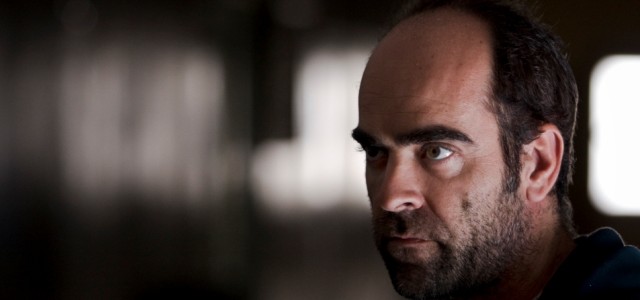
“There is always a way to be happy” declares a radio station caller during the opening of Sleep Tight [Mientras duermes], the intertitle cuts to a shot of César (Luis Tosar) standing on a roof-top seemingly ready to jump, clearly the exception to this declaration. His voiceover confesses that he has no motivation to rise out of bed in the morning, that he is never happy despite the fact that he “tries”. Cut again to him lying in bed next to a sleeping beauty, he awakens and begins a day-shift as an apartment building concierge. He visits his sick mother in hospital and on the surface appears to be an amiable everyman, invisible to some and less so to others.

sleep-tight-movie

Clara (Marta Etura) – the sleeping beauty – is the exact opposite to César in every way possible, not least in her sunny disposition. She is often shot in natural light and her bright, airy apartment and pale coloured summer wardrobe is juxtaposed with the male lead whose affiliation with the darkness becomes more and more apparent as the film progresses. Despite her ray-of-sunshine persona Clara’s life is far from idyllic, she is receiving poison-pen correspondence masquerading as love letters and disturbing text messages. The difference between the two characters? Clara always finds a way to smile, to be happy whether in her day-to-day routine or dancing around her living room. She is seemingly satisfied with her lot in life – little does she know just how unsafe she is in her own home.

SleepTight

Jaume Balagueró’s previous films [Rec] (2007) and [Rec]2 (2009) have been deeply rooted within the horror genre and this, ever-so, slight departure proves that his talent for building tension and unease really is innate. This psychological thriller gets under the skin and is executed perfectly with its canted and panning camerawork and especially with its playful soundtrack which lulls the audience into a false sense of security. Luis Tosar (Mr Nice, Cell 211) gives an outstanding performance, his César is sneering, ice cold and without empathy – a sociopath in every sense of the word. 

This film is a testament to the lengths a person will go to, to destroy another’s spirit and its ending hammers home the true horror and hatred of humanity. There may be a cost to being happy – or perhaps there are more people who take absolute pleasure in inciting hatred and misery than we may think. It is tense, unnerving and delivers a well-plotted narrative which will stay with you long after the credits have rolled. Good luck sleeping tight after this one.

Categories
Blu-ray film review

Dracula (Dir. Terence Fisher, 1958)

DRACULA-C-LEE

It seems somewhat ironic that a country so set on suppression would help instil and depict the inextricable link between sex, horror and death and yet long after the rise of German Expressionist and Universal horror in the States – in which the heimlich and unheimlich were visually portrayed amid ideologies of repression and scepticism – British horror cinema only really emerged in the 1950s following decades of censorship. Among those banned were The Cabinet of Dr. Caligari ( 1920, dir. Robert Wiene), Nosferatu (1922, dir. F.W. Murnau) and Freaks (1932, dir. Tod Browning) and significant cuts were made to Whale’s Frankenstein (1931) and Browning’s Dracula (1931). The British censors appeared to completely overlook the cathartic effect of the horror film until the birth of Hammer (so named after co-founder William Hinds’ stage name). These films were defined by a number of factors including a restrained style and the use of colour, their settings were often historical (cleverly to avoid censorship), with themes of patriarchal authority, class divide and the notion of ‘maleness’ prevalent. These male characters were often given priority within the ideological diegesis and fought emasculation in one form or other. The films, more often than not, also included the inimitable partnership of Peter Cushing and Christopher Lee and for a time Hammer revelled in its elusive quality, screen splendour, and success but by the 1970s the lauded films became a distant memory as each new movie lost vigour, became more derivative and relied upon overt eroticism to maintain its popularity, in a series of films I like to refer to as Carry On…Hammer.

dracula1

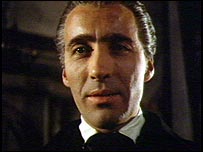
Thankfully Dracula (1958, dir. Terence Fisher) was one made within Hammer’s ‘Golden Age’ (1957-1964) and, since its 2007 restoration by the BFI, is released on 3-disc DVD and Blu-ray on the 18th March 2013 replete with scenes that have been unavailable for decades and a great deal of extras: including a variety of featurettes, commentaries, and interviews with cast members, screenwriter Jimmy Sangster and fans of the film like Sir Christopher Grayling, Kim Newman and Mark Gatiss. The actual print is glorious and beautifully restored showcasing the film’s palette of colour and lush, decadent sets comprising of inviting heavy drapes, dark wood and blazing fires. While audiences are familiar with Stoker’s 1897 tale, there are liberties taken, by Sangster, with the story. Dr. Van Helsing (Peter Cushing) arrives at Castle Dracula to investigate the disappearance of his colleague and protégé Jonathan Harker (John van Eyssen). Jonathan became the librarian to The Count (Christopher Lee) as a cover, while his true intention is “to end Dracula’s reign of terror.” This reign includes the seduction of both his fiancée Lucy Holmwood (Carol Marsh) and her older, married sister, Mina (Melissa Stribling) which builds to a fantastic finale accompanied by James Bernard’s terrifying and haunting score.

If Schreck’s rat-like Nosferatu was a subtext for plague and a ‘fear-of the foreigner’ and Lugosi’s thick Hungarian accent and histrionics made an attempt to aid the supernatural elements of a walking corpse, specifically in his slow pacing and deliberate enunciation of broken English. There was/is an eerie charm to his Count, however, it was not until Christopher Lee’s portrayal was sex so obviously aligned with Dracula and he became the ‘lover’; a sexual and provocative nuance to the role has continued with Frank Langella (1979), Gary Oldman (1992) and, dare I say, Gerard Butler (2000). Lee brings the virile, exotic ‘other’ to sex up the Victorian bourgeoisie; a formidable task given his thirteen lines of dialogue and lots of hissing. Make no mistake, despite its roots within the British stiff-upper lipped realm where evil is pronounced with a hard ‘e’ and ending in ‘ville’, this is a film about sex, marriage, adultery and seduction and well worth a re-visit in its original uncut, splendiferous, form.

Categories
film review

Sightseers (Dir. Ben Wheatley, 2012)

sightseers

Redundancy, oppressive living environment thanks mainly to a passive-aggressive matriarch, canine-icide and all those little annoying habits of others, like littering, personal success and the class-divide which make one want to pummel in somebody’s skull – desires which social convention and psychological adjustment prevent – are the main themes of Ben Wheatley’s third directorial outing Sightseers following Down Terrace (2009) and Kill List (2011).

The main protagonists Chris (Steve Oram) and Tina (Alice Lowe) are lucky to find each other in this cynical age of romance and chance (plus it reaffirms the old adage that there is indeed someone for everyone however angry or homicidal you may be). He wants to show his new girlfriend “his world” which involves a caravan, a large bag of extra strong mints and excursions to some of the country’s leading, albeit, obscure heritage sites. Tina intends to let him and rock his (world) in her, wholly fetching, knitted bra and crotch-less, big knickers. Following an accident at their first stop (the tram museum) things take a sinister turn and their holiday tests them both and the strength of their relationship.

alice

Chris refers to Tina as “his muse”, however, she is more of an unconventional femme fatale throughout a series of transgressions and while Sightseers’ pitch black context is, inadvertently, played for laughs, it is Tina’s story arc which is the most evolutionary. She embodies the two binaries of women which are often indicative of the noir: the dependable, domesticated and safe in addition to the alluring, sexual (the lingerie really has to be seen to be believed) and dangerous female. Chris is the male in crisis and she, on occasion, a function of his dilemma and powerlessness. Interestingly, the time she rebels against her own passivity and becomes the idealised version, she believes, Chris wants her to be is the moment when she is dressed at her most feminine, in a dress, completed with lipstick. The scene in which she exerts her first real sign of independence is also the scene in which she, it can be argued, seizes phallic power, here, signified as a very large writing pencil. Certainly, the last sequence does suggest that Tina is the one in control and has, perhaps, precipitated the whole journey and its outcome – “witch!”

movies_sightseers_still_6

This film really showcases Wheatley’s direction given his lack of involvement with the story and there will be comparisons made between this and Mike Leigh’s Nuts in May (1976) and like last year’s Kill List this film also owes a debt of gratitude to Hammer horror. Essentially, the fact that he did not write it makes this a radically different film from his previous, and yet still retains elements of the Wheatley style . Screenplay praise, of which there should be much heaping, falls to the writers and lead actors. Oram and Lowe who both had small parts in Kill List, are better known for their television roles in comedy series Tittybangbang and Garth Marenghi’s Dark Place respectively, as well as dual appearances in The Mighty Boosh and Channel 4’s Comedy Lab. Here, they are a match made in heaven as “a ginger faced man and an angry woman.”

Forget what has gone before, this is the comedy of the year. Caravanning is the deadliest and sexiest way to holiday.