
The tale of Snow White was published by Grimm brothers Jacob and Wilhelm in their Hausmärchen collection and has seen many a filmmaker make attempts to adapt the classic fairy tale to the big screen including Walt Disney, Michael Cohn and most recently Tarsem Singh and Rupert Sanders. Both directors released, respectively, very different versions, however, since literary publication in 1812 it has taken some 200 years for a truly original retelling to be produced and Blancanieves (2012, dir. Pablo Berger) not only pays tribute to silent cinema but also serves as a love letter to Hispanic culture and historiography.
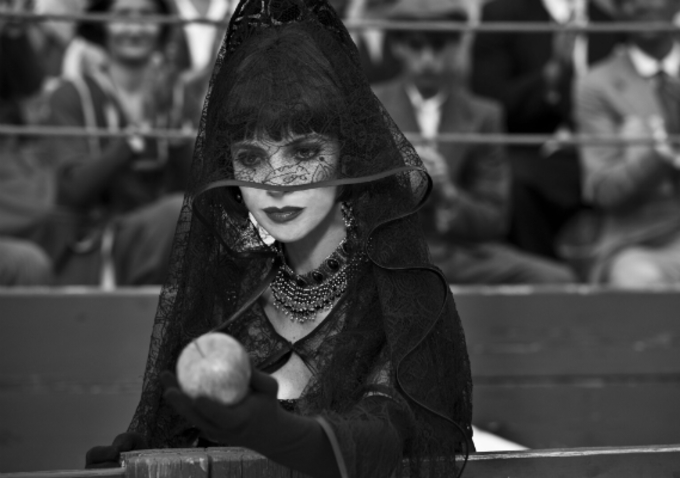
In 1910 Andalucia, Antonio Villata (Daniel Giménez Cacho) is at the height of his profession as a matador. His beautiful wife, and one time recording artist/flamenco dancer, Carmen (Inma Cuesta) watches from the crowd cradling their unborn child in her bulging belly. Tragedy strikes during the estocada and Antonio is gored by his opponent; the shock of which induces labour and baby Carmencita is born into the world motherless with a disinterested and bereaved father who, unable to fend for himself, soon remarries Nurse Encarna (Maribel Verdú). The woman’s disdain of the infant is apparent and her intentions clear from the moment she flutters her heavy kohled lashes at the fallen toreros and thus Carmencita (played in childhood by Sofia Oria) is raised by her grandmother Dõna Concha (Ángela Molina). When her grandmother passes away on the child’s Holy Communion day Carmencita is returned to her father and they can, albeit in secret, renew their relationship. A decade passes and Encarna’s villainy drives the adult Carmen (Macarena Garcia) out of the family home world and into the collective bosom of six bull-fighting dwarves, one of whom doubles, wonderfully, as Prince Charming.
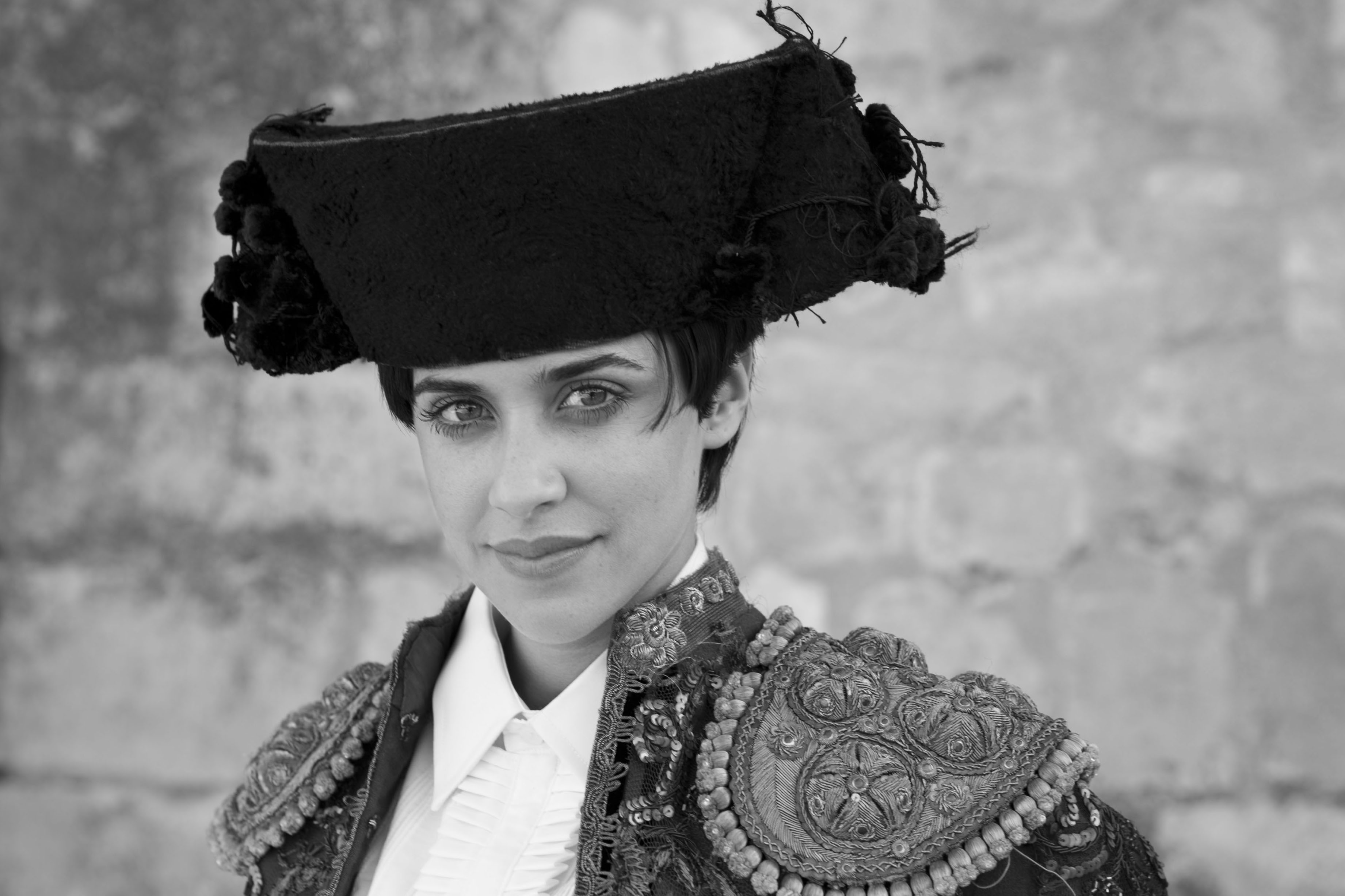
This production was reportedly in development for several years before director-screenwriter Pablo Berger started shooting and nothing is left to chance. Verdú (Y tu Mamá También; Pan’s Labyrinth) who was Berger’s first choice to play Encarna clearly revels in the role; an evil stepmother she was born to play even sans magic mirror (here an artist’s interpretation of the wicked woman on canvas, in a multitude of costume changes, replaces the reflection motif). While this film takes the majority of its cues and sway from the Snow White tale – Blancanieves’ literal translation is SnoWhite – there are also intertextual signifiers to other Grimm tales along the way including Little Red Cap, Cinderella and The Sleeping Beauty via Tod Browning’s Freaks (1932). The mise-en-scène, as a whole, is an eclectic homage to the silent era of European cinema and the drama of the bullfight which includes the over-elaborate traje de luces (suit of lights) and black montera (hat), however, it is Alfonso De Vilallonga’s lush score, heavy on the flamenco beats, which is the real joy and builds emotion, tension and crescendo with each hand-clap of the non-diegetic sound.
In spite of the evidentiary early-20s influence Berger delivers a fresh spin on a female protagonist – often celebrated for her passivity and reliance upon a prince – which gives Carmen/Snow the edge needed for a 21st century heroine and reinforces this masterpiece’s declaration: that Blancanieves is, in fact, the fairest of them all.


 The Framing Device