Categories
film review

It (Dir. Andy Muschietti, 2018)

It feels idiotic to assume yet I expect most of the world is well-versed in the Stephen King novel and if not the book then the TV serial which surfaced in 1990. It’s back and, just like before children are disappearing and the adults are oblivious. Amidst a downpour in 1988, a little figure clad in a yellow slicker and green galoshes runs alongside the paper boat that his big brother and ‘bestest pal’ made for him. SS Georgie battles the raging seas i.e. gushing rainwater on the streets of Derry, Maine, until it slips from tiny grasp into the storm drain.

Twelve months later and still reeling from the loss of his little brother George (Jackson Robert Scott), Bill Denbrough (Jaeden Lieberher) and his group of friends: Richie Tozier (Finn Wolfhard), Eddie Kaspbrak (Jack Dylan Grazer), Ben Hanscomb (Jeremy Ray Taylor), Beverly Marsh (Sophia Lillis), Mike Hanlon (Chosen Jacobs) and Stanley Uris (Wyatt Oleff) known affectionately, as The Losers Club join forces to defeat school bullies and the evil thing that is devouring the town’s children.

Adapting any major work must be hard, not least when the original text is a magnum opus. Liberties were certainly taken in 1990 condensing nearly 1400 pages into a three-hour TV series but then I was a child, had yet to read a King novel, and was utterly horrified at the prospect of Pennywise the Dancing Clown and his shifting shape(s) of fear. This time round, and now well-read, it feels slightly more faithful in some ways and yet there are those damn liberties again. Despite early production problems, and the acrimonious departure which took with him, his Will Poulter-shaped Pennywise and director’s chair, Cary Fukunaga retains a writer credit alongside his writing partner Chase Palmer but it’s Gary Dauberman who takes the lead while Andrés (Andy) Muschietti (Mama) steers the ship.

The novel’s structure has changed and 50s Derry is transposed to the 80s – just as Regan handed over the keys of 1600 Pennsylvania Avenue to Bush – but that just gives the 15-rated film a Stand By Me meets The Goonies (and John Wayne Gacy) retro quality that actually really works. Splitting the film into two chapters and avoiding those flashbacks and forwards, means these kids are able to hook us entirely, we’re completely invested in their plight, their friendships and fears, and that emotional connection is made. This is their time and each of the main cast is a delight.

Richie’s still a motormouth and has the best lines, Bev – she of Winter fire hair – is great; kind and tough, hypochondriac Eddie is more verbose than I remember, Bill’s still a little bland, and Ben’s a sweetheart (with excellent taste in boybands). Stanley’s character is fleshed out a little more while, disappointingly, Mike’s is somewhat diluted. His interest in Derry history is sidelined and given to Ben for reasons unknown, and not, one hopes, just a way for the filmmakers’ to avoid the racial elements of the story. He is clearly painted as the outsider. Fingers crossed that come Chapter Two some of these issues will be addressed, and he receives the narrative pull that was expected. My point is, gripes aside, it’s like revisiting old friends.

Had I watched this version at 11 years old, I’d have been traumatised, It comes back every 27 years (in actuality, 25 for me) and now I’m the adult no longer afraid (well, ish). To be fair, Bill Skarsgård in the clown get-up is the stuff of nightmares. He’s less abrasive and wisecracking than Tim Curry, and there is an underlying innocence to his Pennywise which adds to the vile and creepy. His body movements are manic and frenetic, even a little awkward, like a child who has experienced a growth spurt overnight and boy, is he hungry (the saliva drenched lips and string of drool, a dead giveaway). He is terrifying and yet, for me, the scares throughout the film are somewhat lacking despite the gripping sense of unease felt from the start with poor Georgie. 

Visually, the film is stunning thanks largely to Chung Chung-hoon’s cinematography, Janie Bryant’s costumes, and the VFX and make-up provided, in part, by Stan Winston alums Tom Woodruff Jr and Alec Gillis. The sets are elaborate and striking and for horror fans it has a real kid-in-a-sweet-shop feel, especially the house on Neibolt Street. The set-pieces are thrilling and rich in detail, and littered with plenty of horror-themed easter eggs, the jump scares are fairly frequent and perhaps a little obvious but there was one that the two guys sat next to me didn’t see coming.

All-in-all, this is a thoroughly enjoyable adaptation, horrific, heartfelt, and not in the least bit hokey; a perfect trip down memory lane via childhood street and nostalgia way. By the time the credits roll, you’ll float too.

Categories
film review

Most Beautiful Island (Dir. Ana Asensio, 2018)

“Are you ready to receive the gift of salvation?” a street preacher asks lead character Luciana as she walks past him. It’s a running theme through the first half of Most Beautiful Island as Luciana discusses redemption with her mother. She has left her home country following an accident involving her daughter Sofia (we don’t know the specifics but there’s a shoebox containing baby clothes, sealed in plastic bags to preserve the newborn smell). In the US she must find the belief to survive and the faith that things will, have to, improve.

The film opens with a camera sweeping crowded streets, randomly honing in on unidentified women and briefly following them before moving onto the next, until it eventually finds Luciana (writer-director Ana Asensio). She is trying to see a doctor for the nausea, nightmares and nose bleeds which are becoming more and more prevalent, however she, like many undocumented individuals, has no health insurance nor the $75 spare to pay for the appointment. Her day made worse as she returns home to passive-aggressive notes from her roommate demanding rent and the Post-Its tacked to food items in the fridge reminding her that they are “Not Yours”.

What follows is a relentless pelting of lack of privilege and hardship, tightly framed and often in close-up to give a real sense of discomfort and entrapment as each situation becomes increasingly worse; living hand to mouth, the crappy jobs which include babysitting bratty children or dressing like a sexy chicken to advertise fast food (the latter something immigrant men are spared, presumably). While discussing the dismal prospects with friend Olga (Natasha Romanova) – another woman finding her way in the world – Luciana considers donating her eggs for the $8000 offered in a magazine ad, it’s either that or fully embrace the defeat she has been feeling. However, things look promising when Olga offers Luciana the opportunity to cover for her at a party, all she needs is a LBD and heels and in return she will earn $2000.

At some point, alarm bells must start ringing as Luciana is led to the bowels of a Chinese restaurant to pick up a handbag, a designer knock-off complete with a padlock and then onto the hastily scribbled address she carries on a scrap of paper. As a viewer, you’re internally screaming for her to turn back as her evening becomes more bizarre, she finds herself in a web of weirdness, and the significance of those women seen in the opening moments is made apparent. To say any more would be to spoil but suffice to say Jeffrey Alan Jones’ music comes into its own here, the jarring sounds adding to the tension as the voyeuristic handheld super 16mm camera bounces between close-ups and wide shots, most of the action taking place behind a closed door – we’re as much in the dark as Luciana.

Most Beautiful Island depicts the day and night, light and dark aspect of the American Dream, and the form the film takes is very much split in two as the day brings opportunity and the night brings the dastardly (and genre-favourite and the film’s producer Larry Fessenden in a very small role). Asensio’s deployment of those genre elements in the second half exaggerates an already increasingly hopeless situation and is particularly effective. The first-time director manages to communicate a great deal, harrowingly, in a taut 80 minutes and refreshingly doesn’t sugar-coat the human plight at the centre of her narrative.

Categories
film review

Anchor and Hope (Dir. Carlos Marques-Marcet, 2017)

Following on from his 2014 long distance romance, 10,000km, Carlos Marques-Marcet, once again, looks at love in the modern age. In Anchor and Hope, he reunites with Natalia Tena and David Verdaguer only this time, thankfully, they are both on the same continent.

Kat (Tena) and Eva (Oona Chaplin) are four years into their relationship and following the death of their cat Chorizo, the conversation (re)turns to children. Enter Kat’s best friend, Barcelona-based Roger (an impressively hirsute Verdaguer) who comes to stay on their houseboat. When Eva drunkenly expresses her desire and longing for a baby, Roger – the sport that he is – offers to supply his “little fish” and help create their family. The only one not completely on board with such a huge life decision is Kat, who still believes it is “narcissistic” and “selfish” to procreate.

Marques-Marcet and co-writer Jules Nurrish cite María Llopis’ text Maternidades Subversivas in the film’s credits, and it’s easy to see how Llopsis’ work inspired. She wrote of the different maternity models born in light of new experiences and struggles in today’s society. No longer is motherhood limited to the hetero-normative cis-woman but can be subverted as a way of changing the world and even deemed an act of insurgency.

For so long, families had one model and this was only recreated onscreen. Thankfully, films have begun to catch up somewhat. There is a great scene in Anchor and Hope where the trio tell Eva’s “wacky” mother Germaine (played by actual mater Geraldine Chaplin) about their baby plans and it awakens an impassioned speech from Kat who speaks out against the older generation. Those who claimed to have “rebelled” and, as it turns out, did not change a thing; instead conforming where they failed. Choosing to have a child does not require the prerequisite checklist which some deem so important.

The film is shot episodically and made up of four titled vignettes. It’s a screwball comedy for the 21st Century, containing a hilarious singalong to Inner Circle’s 90s hit Sweat (A La La La La Long) and filmed on a houseboat which resides largely on London’s canal system. It’s a refreshing London which is depicted, almost idyllic with its palette of greens, oranges and golds, the grey and oppressive concrete jungle appears to be far away from this utopia. Dagmar Weaver-Madsen’s camera moves languidly through the womb-like canal tunnels and serves the narrative and plot which remains largely unpredictable. All is topped off deliciously with an eclectic and whimsical soundtrack including tracks sung by both female leads.

All three actors work incredibly well together and the chemistry between Tena and Verdaguer – who can be seen in the delightful Summer 1993 – is, well tenable. The naturalism feels unforced and realistic, like a family playing for the camera (all to impress their older sibling behind it). While the two provide, at times, the humour, it is Oona Chaplin who provides the heart. She is wonderful as Eva and possesses a real vulnerability and tenacity (and aversion to tequila) which is hard to pull off convincingly.

Anchor and Hope is a decidedly honest and modern love story which is unafraid to ask the big questions surrounding men, women and parenthood. All the while navigating the choppy waters faced in love and relationships.

Categories
film review

My Friend Dahmer (Dir. Marc Meyer, 2017)

There’s usually always one. The slightly awkward loner in school; the social outcast whose interests include tennis, band practice, binge-drinking and, you know, dissolving dead animal carcasses in acid. For Revere High in Ohio, during the seventies, that kid was Jeff Dahmer (Ross Lynch).

Based on fellow classmate, John ‘Derf’ Backderf’s bestselling graphic novel, My Friend Dahmer takes place during a very specific timeframe, the graduating year of 1977-78. The isolated teenage Dahmer makes friends (well, almost) with Derf (Alex Wolff), Neil (Tommy Nelson) and Mike (Harrison Holzer) as they look forward to college and a life beyond the oppressive institution that is high school. For Dahmer, it was the year his warring parents (played respectively by Anne Heche and Dallas Roberts) finally divorced and abandoned him just prior to his first (human) kill.

Backderf’s comic – the original source material for Director Marc Meyer’s script – is a stark portrait, weirdly grotesque with a sweet and sinister edge. It depicts high school as a cruel and relatable experience, that yearning to fit in, the shelter it provides from the harsher outside world, and that’s just for every other kid who doesn’t grow up to be a killer. There’s a tenderness in Derf’s pages as he recounts his life as a teenager looking in on the kid that doesn’t belong. Sadly, by changing the narrative point-of-view, the film loses that originality and becomes yet another character study depicting the early years of a serial killer. The coming-of-age aspect and the odd pacing means, as a whole, it never quite coalesces.

That said, there are nice touches, little story kernels which hint at the future: the gifting of the dumbbells, the choice of roommate on the class trip, even his mother – not afforded much screentime but played brilliantly by Heche – declaring at the dinner table that they now “eat their mistakes”. The mise-en-scène tends to consist of yellows, greens, browns and blues and Dahmer’s costumes co-ordinate with the surroundings. He blends into the background, hiding in plain sight, repressing his hinted-at sexuality and more macabre predilections until that fateful day he chose to pick up Steven Hicks.

Ross Lynch’s performance is chilling – he has the vacant stare and distinctive gait down, second only to Jeremy Renner’s portrayal in the 2003 biopic Dahmer. Somewhat apt given that this film could act as a pre-cursor to that one. The first half of the serial killer’s life as it were. Given his tumultuous family life, it is easy to pity the strange and lonely boy depicted in this film, however, any sympathy is limited. Feigning meltdowns, ridiculing and mimicking palsy, reenacting his mother’s manic episodes AKA ‘spaz attacks’ as entertainment reveals the darker side of Jeff’s nature even before the murders, necrophilia and cannibalism.

My Friend Dahmer is a somewhat unremarkable and slight study of a psychopath in the suburban seventies. It lacks the nuance and honesty of the source material but manages to humanise the human before he became a monster and begs the question: where were all the adults?

Categories
film review

78/52 (Dir. Alexandre O. Philippe, 2017)

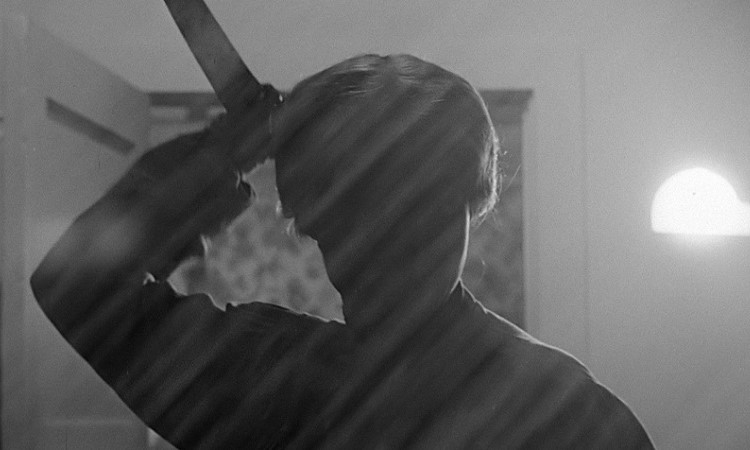
Shot almost exclusively in stylish black and white (save for the colour film clips and art pieces), Alexandre O. Philippe’s documentary 78/52 celebrates Alfred Hitchcock, and the most infamous shower scene ever committed to celluloid (and after its decline). Its title referring to the mammoth 78 set ups and 52 cuts that makes up the sequence which lasts just 45 seconds.

Recreating scenes of the proto-slasher and taking full advantage of Jon Hegel’s string-heavy score, 78/52 relies upon audience participation; ours and those onscreen seated on a set decorated not too dissimilarly to the Bates house, all floral wallpaper, old fashioned TV set and dressed in trinkets. By the final third, we are watching those talking heads involved viewing the scene in question to utterances of “wow”, the odd gleeful “yes”, only Marli Renfro (Janet Leigh’s body double) appears uncomfortable. Just one more aspect of voyeurism which begins with Norman Bates and his peep-hole.

From Saul Bass’ storyboards and Hitch’s script notes, Bernard Herrmann’s score, and the casting of Leigh’s body-double Renfro, to the type of melon used for stabbing foley and of course, the watered-down Hershey’s chocolate syrup which doubled so convincingly for blood; 78/52 is an interesting and in-depth critique of an iconic piece of film by a controversial cinematic auteur. It is effective, informative and well-produced as the likes of Peter Bogdanovich, Guillermo del Toro, Bret Easton Ellis, Tere Carrubba (Hitchcock’s granddaughter), Eli Roth, Osgood Perkins, Jamie Lee Curtis, and Danny Elfman – amongst many others including directors, actors, authors, film editors, professors of cinema, composers, AFI scholars and art curators – wax lyrical about the film which was so culturally and socio-politically integral to cinema and its reception. As one suggests, it elevated not only the horror genre but cinema as a whole.

While the influence of Psycho is staggering, one small scene cannot quite sustain a whole 91 minute film which is why it veers somewhat through Hitch’s body of work and the film as a whole. The majority of observations are interesting, however, there are moments which are superfluous and trite and a few which remain unsaid. For example, Hitchcock’s notorious onset working practices is a subject never broached and what of the sexualised aspect of the shower scene, the symbolic rape (though there is Bogdanovich’s ‘feeling’ of rape after seeing Psycho for the first time and a comparison to Irréversible), or the female gaze? Again, topics that are mentioned in passing and danced around but never explicitly with reference to the subject matter (or not at all). Karyn Kusama and Illeana Douglas (two of only seven women interviewed) aren’t afforded the time to expand upon their thoughts – or were and then cut. It seems almost ironic to set up a discussion about a horror film which has an integral scene removing the woman and then not have a few more female filmmakers, fans and/or experts to voice opinion – unless that’s the point?

As a piece of art, there is no denying Psycho remains a cornerstone of the horror genre and cinema, it broke taboos and pushed boundaries and is one of Hitchcock’s masterpieces within a substantial and impressive oeuvre. In the words of Edgar Allan Poe “the death of a beautiful woman, unquestionably, is the most poetical topic world” which pop up onscreen as the documentary begins. It’s just a shame that more women weren’t included to talk about it rather than the whole discussion, or thereabouts, dominated by white males.

78/52 is for those who have an interest in the art and history of film. Part visual essay, Hitchcock commentary, and Psycho autopsy, it’s entertaining enough and well worth a watch but for anybody who has ever studied film or auteur theory, there will be little you didn’t already know.