Categories
film review

Falling (Dir. Viggo Mortensen, 2020)

There have been numerous attempts to depict the cruelty of dementia onscreen, detailing the disease, from diagnosis to decline. Often told from the (adult) children’s perspective, most of these films comment on the hardship and then the parent is often shoved into assisted living – despite refusal – where there are medical professionals who will help them. Viggo Mortensen’s Falling doesn’t necessarily reinvent the wheel, however, his film is a family drama first and foremost with dementia in a supporting role.

The actor was on a night-flight returning from his mother Grace’s funeral in 2015 when he initially got the idea for a film. At the wake, he noted in his journal all the conversations he’d had and overheard, a lot of which triggered remembrances from childhood. He was intrigued by the differing recollections of memories (often the same ones) shared during the memorial.

Memory is a theme which has recurred through his previously published work, including books Coincidence of Memory, and I Forget You for Ever and makes up the genesis of Falling, his feature debut as writer-director. This debut is seen through the eyes of John Peterson (played respectively Luca & Liam Crescitelli, Grady McKenzie, Etienne Kellici, William Healy and, finally, as an adult by Mortensen himself) and uses fictionalised aspects of the actor’s childhood .
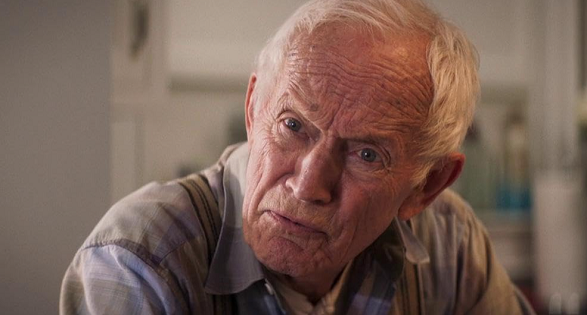
Angry Old Man

Willis (Lance Henriksen) is a belligerent old bastard of a man, foul-mouthed, abrasive and stuck in a time-warp. He is stoic and habitually unmoving in his attitude and views of the world, made all the more problematic by his advancing dementia. His son John, a pilot, who lives with his partner Eric (Terry Chen) and daughter Monica (Gabby Velis) in California brings Willis to visit so that he and sister Sarah (Laura Linney) can make plans for their father’s long-term health-care. Specifically, selling the farm in upstate New York and finding somewhere geographically closer to them so that they may share the care-load.

Willis’ reaction comes as no surprise to the whole idea. Cue a multitude of slurs, expletives and the testing of anyone’s patience but John remains calm, reticent and immune to the insults until, well, he isn’t. In a series of flashbacks, we see there is no love lost between father and son – the term “cocksucker” is used as both an expletive and term of endearment. It is these flashes of memory that give way to happier moments as Willis – the younger iteration played by Sverrir Gudnason – and Gwen’s (Hannah Gross) love story is detailed in snatches of scenes, like a slideshow, depicting their wedding day, the birth of their children and the inevitable fracture and breakdown of their relationship. These snapshots are interwoven with moments seen through the eyes of their children.
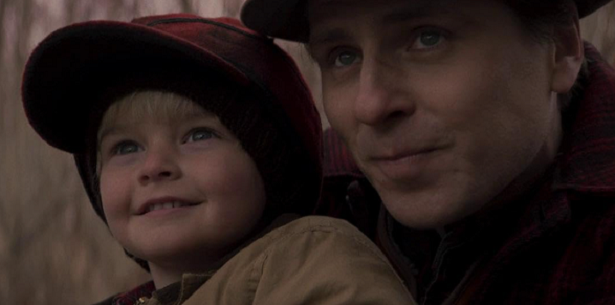
Young John (Grady McKenzie) and his father Willis (Sverrir Gudnason)

Amongst these, we see father and son bonding, hunting and fishing on the lake, the joy evident on the little lad’s face. There was affection once-upon-a-time but as John grows and away from Willis’ overbearing control, through divorce after divorce, the relationship becomes fractious building to a head during the boy’s teenage years.

The film frames Gwen as the love of Willis’ life, however, he doesn’t seem to know what true happiness is with or without her, and he spends the last few years of their relationship torturing her and trying to make her as miserable as possible. Yet, in a film which focusses on subjectivity and memory can the viewer take anything at face value or do we doubt everything? These flashes belong to multiple people, their perceptions as they experience them, and then there’s Willis’ recollections are even more questionable due to his advancing years and disease.

Mortensen comes across as a fairly unassuming and private man which makes this all the more fascinating. Reportedly working for free in order to finance this film, the film’s producer, director, screenwriter and composer chose to fictionalise some elements of his early life and childhood without losing verisimilitude leaving the viewer to question what the ‘factual’ element is. Apparently, Little Viggo (he was never know as junior) did have a dead duck as a pet which fed his ‘obsession’ with death, and the scar above his top lip was allegedly caused by barbed wire (and not by his father’s hand as the film suggests). He’s not a pilot either but his brother, Walter, had a cameo as one in an early Mortensen film, The Crew (1994). Their other brother Charles is also named in the film’s pre-credit dedication – there is no sister. In reality, Mortensen apparently took on the lion-share of caring for their parents – both of whom had dementia – prior to their respective deaths, Falling is not only a love letter to lost parents but for his younger siblings.

The Petersons, L-R: Willis (Gudnason) and Gwen (Hannah Gross)

There are little nuggets of information scattered throughout that, upon first viewing, few would be aware of but serve as nods to the Mortensen/Atkinson family history. It is clearly no accident that John has the surname he does. While Mortensen went by Little Viggo, his father tended to be Peter. John Peterson is, symbiotically, Peter’s son. Much was made of Mortensen’s choice of sexuality for his main character, however, he has stated in interviews that he wanted to exaggerate the polarisation between father and son. Both are presented in a very specific microcosm of American society – you’d be hard pressed not to miss the Obama image on the fridge – and a Presidential term that was afflicted with the darker aspects of misogyny, racism, homophobia and misanthropy (it was to get oh so much worse with the 45th). Themes suggested in this narrative. John and Willis are at odds over political affiliations, life choices, sexuality, as well as their memories of Gwen.

As a side note, it’s a really astute observation that the older generation i.e. Sarah and John won’t call out Willis for his bullshit opinions but his older grandchildren will. Monica, on the other hand will often lapse into Spanish (presumably she is the personification of the Mortensen boys’ childhood in Latin America) – her mother tongue – but is his best friend. She’s the only one who will accept him for who he is. Coincidentally, an immigrant like herself.
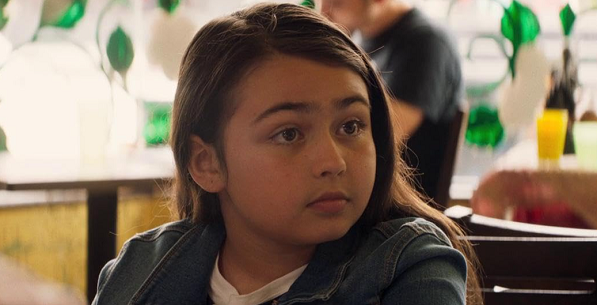
Eric (Terry Chen) and John’s daughter Monica (Gabby Velis)

Mortensen’s maternal grandfather (and one brother’s namesake) was Canadian and a medical doctor and two Canadians plays Doctors here. Close friend and collaborator David Cronenberg (as deadpan proctologist Dr. Klausner) and Hannah Gross’ actual father Paul plays Dr. Solvei. Mortensen own son, Henry, also makes an appearance as law enforcement officer Sgt. Saunders. So many father and son references and yet the real driving force of the narrative is the mother – she is the conscience running through the film and, as previously mentioned, only in her absence is her (somewhat romanticised) presence felt all the more, the subjective memories of her often the bone of contention between father and son. For John, his mother has gone, his memories are relegated to the past while Willis – due to his declining cognisance – has Gwen in the present despite having had a couple of wives since her. She is whom he recollects, imagines her in front of him, and continues to love during his sun-downing.

Thankfully, they are eventually able to accept each other’s version of events, something Mortensen also learnt in real life. He told Alec Baldwin during his podcast episode that this is aspect he personally finds so unconvincing about the so-called ‘dementia’ films; the need to depict people as bumbling and forgetful, with their carers gently revising their recollections, as this wasn’t his experience at all. “One thing you learn is not to correct them. It’s too late – don’t argue anymore… if they’re enjoying the memory, let it go.”

It is those types of scenes, as Falling edges towards its denouement, that are the most heart-breaking as the son moves back in with the old man (Canada doubling for Watertown, New York state) who, in his confused state, believes his ranch is under siege – despite having sold parts of it and promptly forgotten. In reality, Mortensen Sr. would lapse into Danish to converse, often slipping back to his own childhood while the actor would sleep in the next room with a baby monitor for company. Onscreen, Henriksen’s Willis mistakes John for his own father. John has dealt with his father, his diagnoses and outbursts with relative calm, diplomacy and resignation up to this point but to hear him raise his voice, see him rage – albeit briefly – exposes more of his humanity, pain and sorrow etched upon his (unshaven) face, and his usual perfectly coiffed hair standing on end.

It’s the first time his guard slips, his usual immaculate appearance refreshingly missing while Red River plays on a small portable TV in the background. In Howard Hawks’ 1948 Western things get tense between John Wayne as a Texas Rancher and his adopted son, Montgomery Clift. It’s no coincidence that John is trying to broker a deal to sell the remaining land given his ornery father is now too infirm to work it or save it. It also serves as a reminiscence back to a ‘simpler’ time, the old west in which ‘men were men’, a (toxic) masculinity which Willis clearly subscribed to but is also frozen in suspended in time, unwilling (unable?) to change. Décor of the surrounding rooms and even Mortensen’s costumes cement this, all are dated and somewhat old-fashioned. Henriksen’s performance is extraordinary throughout and especially in these moments, enabling such sympathy in a man who has up to that point been largely unpleasant and devoid of sentimentality is certainly no mean feat.
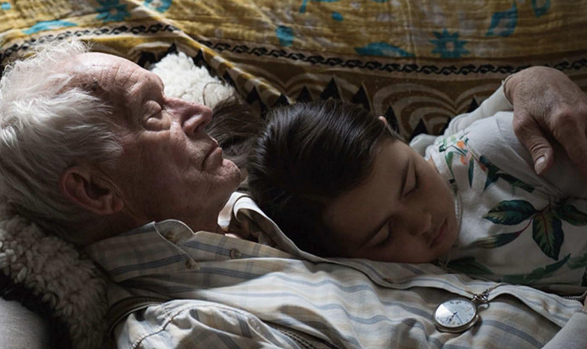
Grandpa Willis and his favourite person share a nap

Falling is gorgeously edited by Ronald Sanders (A History of Violence, Eastern Promises, A Dangerous Method) and stunningly shot by DoP Marcel Zyskind (The Two Faces of January, The Dead Don’t Hurt). Certainly, it didn’t hinder the first-time director having a cast and crew of familiar people/frequent collaborators working alongside him in what proves, to be a beautiful and cathartic experience, one that stays with you. There is a lot to admire and be moved by.

It asks questions about age, memory, its perception, recollection, retainment and reconstruction – and its persistence (there’s even a sneaky nod to Dalí’s 1931 painting, see image above) the notion of verisimilitude, and, above all else, forgiveness. This is no typical screen dementia patient, there is no withering away quietly – here the patriarch keeps his personality, his faults hard to ignore. He is tenacious, angry, insecure, his presence overwhelming at times; impossible to love and loved anyway. It’s a film which reconciles life with the parent you have with the one you might have wished for, full of compassion, empathy, and grace.
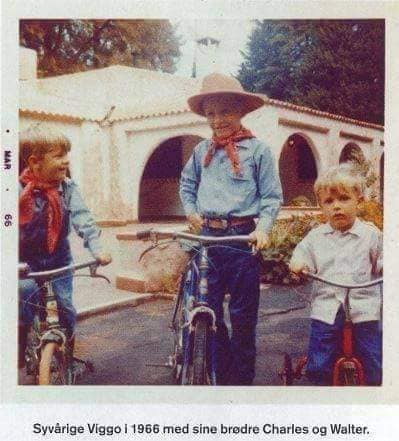
Mortensen (centre) with brothers Charles and Walter (1966)
Categories
Film Festival film review

Memory Box (Dir. Khalil Joreige and Joanna Hadjithomas, 2021)

On Christmas Eve as the snow blankets the ground and buries car wheels deep in Montreal, Alex (Paloma Vauthier) and her Téta (Clémence Sabbagh) open the door to a parcel from Beirut. The delivery – addressed to Alex’s mother Maia (Rim Turkhi) – is initially turned away by the oldest matriarch who declares that “the past stinks”. The box contains cassette tapes of a life suppressed; Maia’s teenage years of the 70s and 80s in the wake of the sender’s death. Liza was Maia’s best friend and her dying wish, it appears, was to be reunited with her friend albeit through their memories, photos, notebooks and audio files. While Maia is too bereft to embrace her past, Alex finds the perfect opportunity to connect with a country she has never visited and a woman, her own mother, whom she barely knows.

With the aid of the box the audience learns, along with Alex, what a life is like during war – for most of us, we have not had to experience it – and bridging the generational divide however possible. Images literally come to life and interact with the music playing from the cassette recordings, for example, a memorable time-lapse sequence sound-tracked to Visage’s “Fade to Grey” while, you’ve guessed it, fading to grey. It may sound trite but it’s far from it as real-action bombs and gunfire burn holes in negative strips, and a potentially simplistic premise is fleshed out. It is incredibly evocative of a country ravaged by war and visually impressive, beautifully edited by Tina Baz.

Shifting between fantasy and reality, and with the help of flashbacks Alex enters her mother’s adolescence, her dreams and nightmares during the Lebanese Civil war and the loves and losses overcome during a tumultuous time. Alex, with the help of the late Liza, her Téta and the memory box is able to embrace the most important relationship of her life and see her mother not only as a woman and friend but with new understanding. The same goes for Maia and her own matriarch.

With such heavy hitting themes surrounding death, trauma, and abandonment, it is often the case for films depicting this sort of conflict to do so with earnestness and solemnity, however, Memory Box doesn’t do that. There were some 120,000 fatalities during 1975-1990 but not all perished in Beirut, many survived, lived and thrived and it is these people who are celebrated, the dead honoured in this intergenerational tale with women at the heart of its narrative.

To go forward, one must go back and sometimes reunite with your trauma and, in this case, a homeland which has been suppressed, wartime survival which has been denied, tragedy which has been compartmentalised, like a photo film that has never been processed in over thirty years. There is a compassion to Joreige, Hadjithomas and Gaëlle Macé’s screenplay which is non-judgemental and forgiving, especially in relation to Raja’s reappearance as an adult (Rabih Mroue). The first half may rely of a visual inventiveness and the image, yet, the second still manages to hit with emotional resonance and be deeply moving brimming with moments of levity.

Memory Box is a handcrafted gem by experimental filmmakers, Khalil Joreige and Joanna Hajithomas. Utilising their own photographs and journals written between 1982 and 1988 they create a visually inventive and accessible film which re-writes personal history, questions memory, its unreliability, and how it shapes the present. While visuals are particularly pop-arty and magazine-like, there is an overpowering resonance and meaningful juxtaposition. This is their memory box, made for their children, for whom the film is dedicated.

Memory Box is available to rent from all the usual places you can stream from.

Categories
Film Festival film review

Petite Maman (Dir. Céline Sciamma, 2021)

“Shall we read?”

“No, I want to sleep to get to tomorrow.”

An elderly woman completes a crossword with a young girl – there is a brief assumption she’s her granddaughter but the child gets up to leave with an “au revoir”. The girl then goes into every room along the dimly lit corridor and bids farewell to the other female residents until she reaches her destination; the bright room at the end of the hallway. ”Mama, can I keep her stick?”

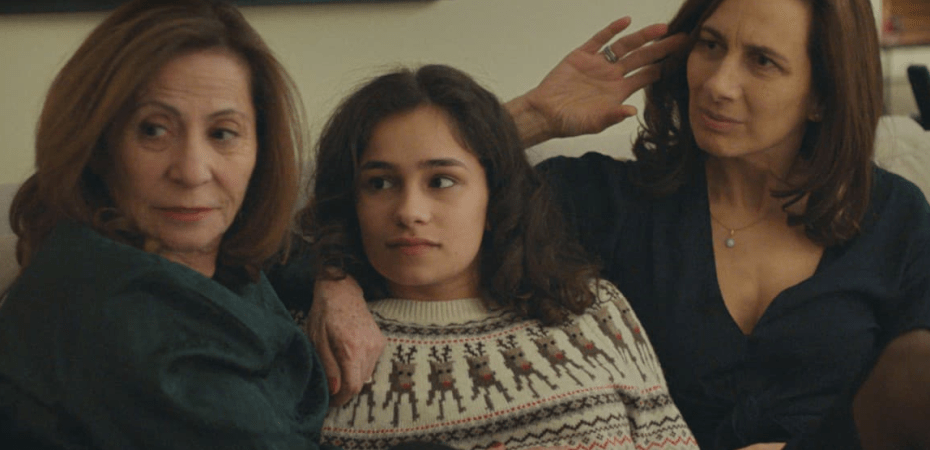
After the passing of her grandmother, Nelly (Joséphine Ganz) and her mother Marion (Gabrielle Sanz) drive to the latter’s childhood home to pack up belongings, keepsakes and transport furniture, as families are wan to do after a bereavement. Nelly feeds her mother from the backseat of the car, extends the juice carton to her lips and then reassuringly clamps her arms around her mother’s neck as they both follow Papa (Stéphane Varupenne) driving the white van in front. Nelly is every inch the little mother of the title despite the interchangeability of role throughout the taut 82-minute film.

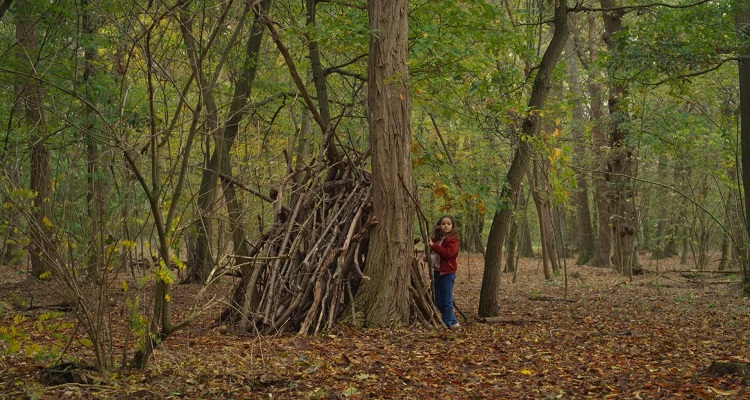
Nelly moves into her mother’s childhood bedroom and they both go through Marion’s note pads, school books and toys. The little girl chides her mother’s inability to spell but offers words of encouragement about a drawing of a fox. It’s an incredibly tender and loving relationship between the two. Despite being only eight years old, Nelly is wise beyond her years, empathy seeps from her every pore; she can sense her mother’s vulnerability and offers her narrow shoulders and small arms within which comfort can be sought. When Marion suddenly leaves, it is up to her daughter and partner to stay on and finish packing up. Nelly attempts to engage her father by bringing up the treehouse her mother built in the surrounding woods but the man merely shrugs and says he can’t recall anything about it. ” You don’t forget,” she scolds, “You just don’t listen.”

What happens next is so matter-of-fact that to go into detail would ruin the surprise (NB. Don’t watch the trailer if you wish to avoid spoilers) but it relies upon an open-minded audience and one which is willing to accept the ordinary and enchanted; the magic and imagination of a child. We all sought it once upon a time.

While Portrait of a Woman on Fire cemented Céline Sciamma as auteur, her earlier filmography has tended to forefront children and teenagers. Adults don’t really exist in the world she creates and she writes the world from their viewpoint whether they are eight-years-old, teenage girls, a tomboy, or a courgette. This film uses an autumnal colour palette full of lush browns and greens, and rich blues and burgundies; colours echoed between mother and daughter. Its costumes look to corduroy, woven jumpers and anoraks to weight the seasonal surroundings but also to give it a timeless quality. Transitions in time are slight but not insignificant – French language aside, this could be anywhere.

Childhood is a tricky thing to navigate while you’re experiencing it – although you tend not to realise just how much until you’re out the other side. Petite maman is extraordinary and enchanting, small and yet packs a punch. It is a thoroughly gorgeous film in which memories are tangible, maturation comes quickly, and a loving and assertive little woman seeks to renew her connection with her maman and say goodbye to her beloved grand-mère on her own terms.

Categories
film review

The Rape of Recy Taylor (Dir. Nancy Buirski, 2017)

For many, the first time hearing the name Recy Taylor would have been in January 2018 when Oprah Winfrey paid tribute to the extraordinary woman in her Golden Globe speech, and yet Taylor’s sexual assault would prove to be an organisational spark in the Civil Rights Movement decades before the Women’s Movement and the #MeToo resurgence.

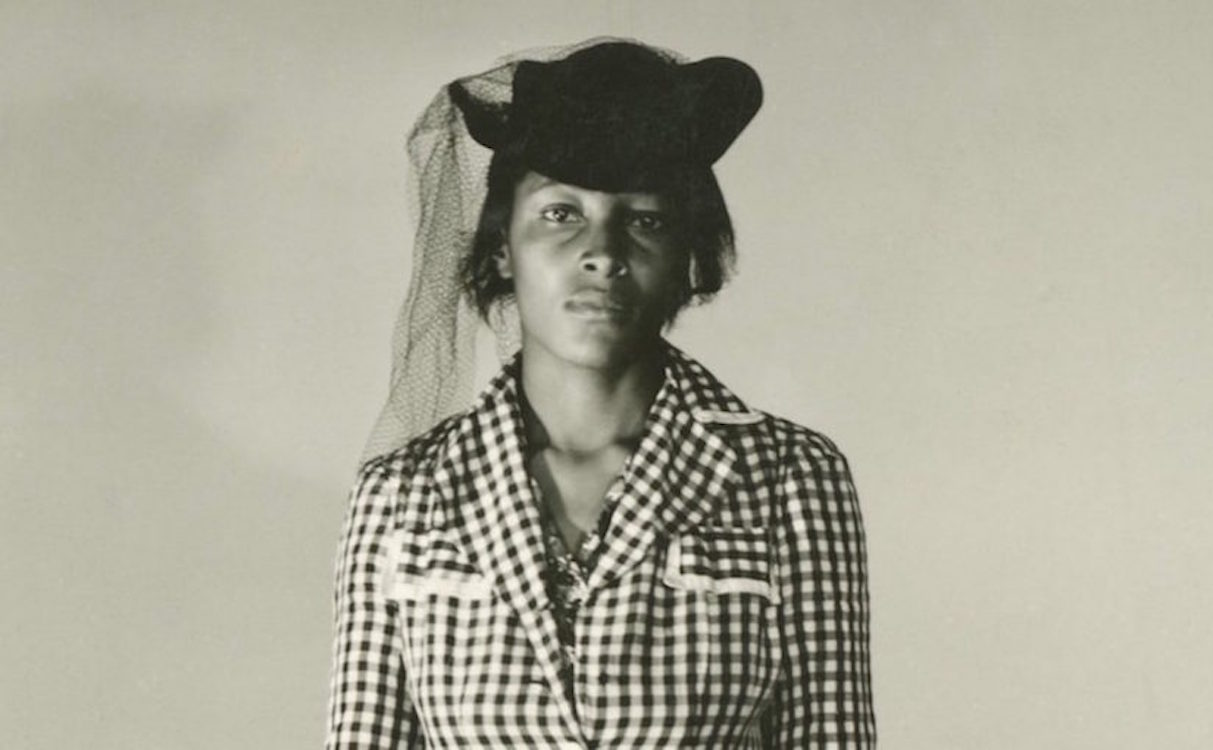
On September 3rd 1944, Recy Taylor neé Corbitt was kidnapped at gunpoint after leaving Church in Abbeville, Alabama by seven young white men. They drove her to a nearby wooded area where six of them – aged between 14-18 – took turns in raping and terrorising the 24-year-old sharecropper, wife and mother, before leaving her blindfolded and stranded at the side of the road. Despite three eye witnesses identifying the driver who would name all of his passengers (none of whom were questioned) an all white, all male jury dismissed the case. Enter the NAACP and their chief investigator, Ms. Rosa Parks who was to conduct a thorough investigation, help defend Taylor and seek punishment for her attackers – some eleven years before the Montgomery Bus Boycott – a dangerous business in Jim Crow-era South.

Writer-Director Nancy Buirski (The Loving Story) uses her film – which had premieres at the Venice Biennale and New York Film Festival – to expose the systematic racism that not only fostered the heinous crime but covered it up. She utilises footage from “race films” and their lack of white gaze to Recy Taylor’s story. These are intercut with gospel music and Church footage – shot by Zora Neale Hurston whose journalistic prose would prove important during another unconscionable and despicably unjust “rape” case in Scottsboro a decade earlier.

While the obvious tone of this documentary is solemnity, some may find its structure superfluous, however, these snippets of human life, art and joy in the face of such adversity are beautiful in an otherwise infuriating film where (yet again) white privilege not only dehumanised this woman but terrorised her family. The full impact of which is discussed in interviews with Taylor’s brother Robert and sister Alma. Hearing them describe how their father slept in a tree overlooking their home (after Recy and husband Willie’s house had been firebombed) with a shotgun as a means to protect his family is particularly hard to hear, made all the more galling when one considers the justification for lynching was the white man “protecting” his wife and daughters. Benny Corbitt was, of course, not afforded that power.

Recy Taylor was just one in a longer tradition of black women who spoke her truth and sought justice, and an aspect the documentary does particularly well is arguing passionately for their place in history – these women were always there. Harriet Tubman, Rosa Parks, Maya Angelou, Ruby Bridges, the afore-mentioned Winfrey – look at the audiences photographed during Martin Luther King’s  numerous rallies, they were there, or look to the backbone of the Black Panther Party, or consider there wouldn’t even be a #MeToo without Tarana Burke.

The Rape of Recy Taylor is urgent and essential viewing. It speaks to the visibility of the African American woman, and the countless women whose voices have failed to be heard. A quietly devastating dedication – get tissues for the last ten minutes – to strength, resilience, resistance and a sustained fight for justice. The name Recy Taylor stands for them all.

The Rape of Recy Taylor is available to stream on Amazon Prime Video and MUBI

Categories
Essay film review

Storytelling and Reality in The Fall and The City of Lost Children

The power of fairy tales and stories in childhood can impact a lifetime not least due to the bedtime story whereby the adult attempts to lull the child to sleep with tales of wonder, and aid in the creation of dreams. Dreams, according to Freud, unconsciously assist with the resolution of a conflict and will be considered later, in greater detail, through an analysis of The City of Lost Children (1995). However, it is the action itself of storytelling which is intriguing, specifically between the adult, the child and the space they commune or what Maria Tatar refers to as a “contact zone”[1], a place of mutual meeting and experience as depicted in a film like The Fall (2006).

By distinguishing between the adult and child Tatar creates ambivalence, how can these two individuals share a mutual experience when she herself sets them apart from each other? Not to mention their individual reader identification and expectation[2]. The contact zone can be said to exist but it is not more likely a mutual meeting of contradictory experience (or even be described as repellent)? A story’s narrative sets both adult and child onto different paths. Adam Gopnik suggests that “the grown up wants a comforting image of childhood”[3] and is driven by nostalgia while the child uses the tales to move beyond childish things, a way of bypassing childhood and venturing out, albeit figuratively, into the world. There is even a suggestion that this contact zone/story space may extend to the dream-world specifically when considering Jeunet & Caro’s The City of Lost Children.

Fairy tales have, over the years, been the cause of much debate. Psychoanalyst Bruno Bettelheim stated that the tales speak directly to children[4] while Danish Folklorist Bengt Holbek maintained that fairy tales were written for an adult audience with children occasionally listening to narratives not meant for their ears[5]. What if they were written with both in mind? After all children are small(er) adults and adults are grown up children. Why should the listener or audience miss out on revisiting an aspect of childhood by vacating the realm of youth? It is the intention of this article to examine two original screen fairy tales in relation to the dual protagonists depicted, the notion of storytelling and the distinction of the ambivalent “contact zone”. The use of this concept, has been renamed the “story space” and may be a basis for the adult/child casting, however, this doubling or duality of character representation offers other possibilities, some of which will be explored.

In Tarsem Singh’s The Fall the protagonists consist of an adult and a child, strangers brought together by accidental circumstances. The film opens with an intertitle: “Los Angeles, long long ago” and scenes from the opening sequence quickly establish the setting in circa. 1915 California. Stuntman Roy Walker (Lee Pace) is languishing on the male ward of a picturesque hospital, confined to his bed after a stunt fall ends badly. Walker is a broken man in more ways than one, he has, not only, lost the use of his legs but the love of his life to the film’s leading man. Romanian immigrant Alexandria (Catinca Untaru) is on the other side of the compound in the children’s ward, her left arm in plaster following her fall from the top of a fruit picking ladder. Neither is necessarily destined to meet but both are isolated with few visitors. One day the wind blows Alexandria’s note to Sister Evelyn (Justine Waddell) out of her hands, into an open window and onto Roy’s lap.

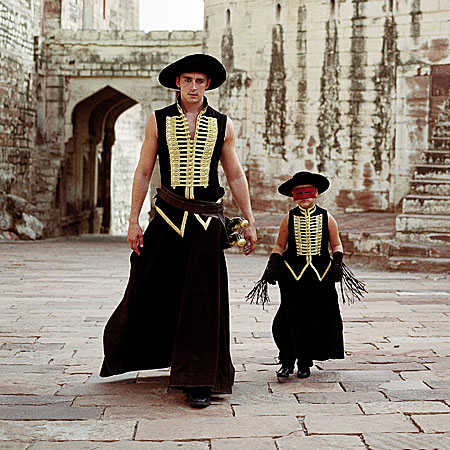
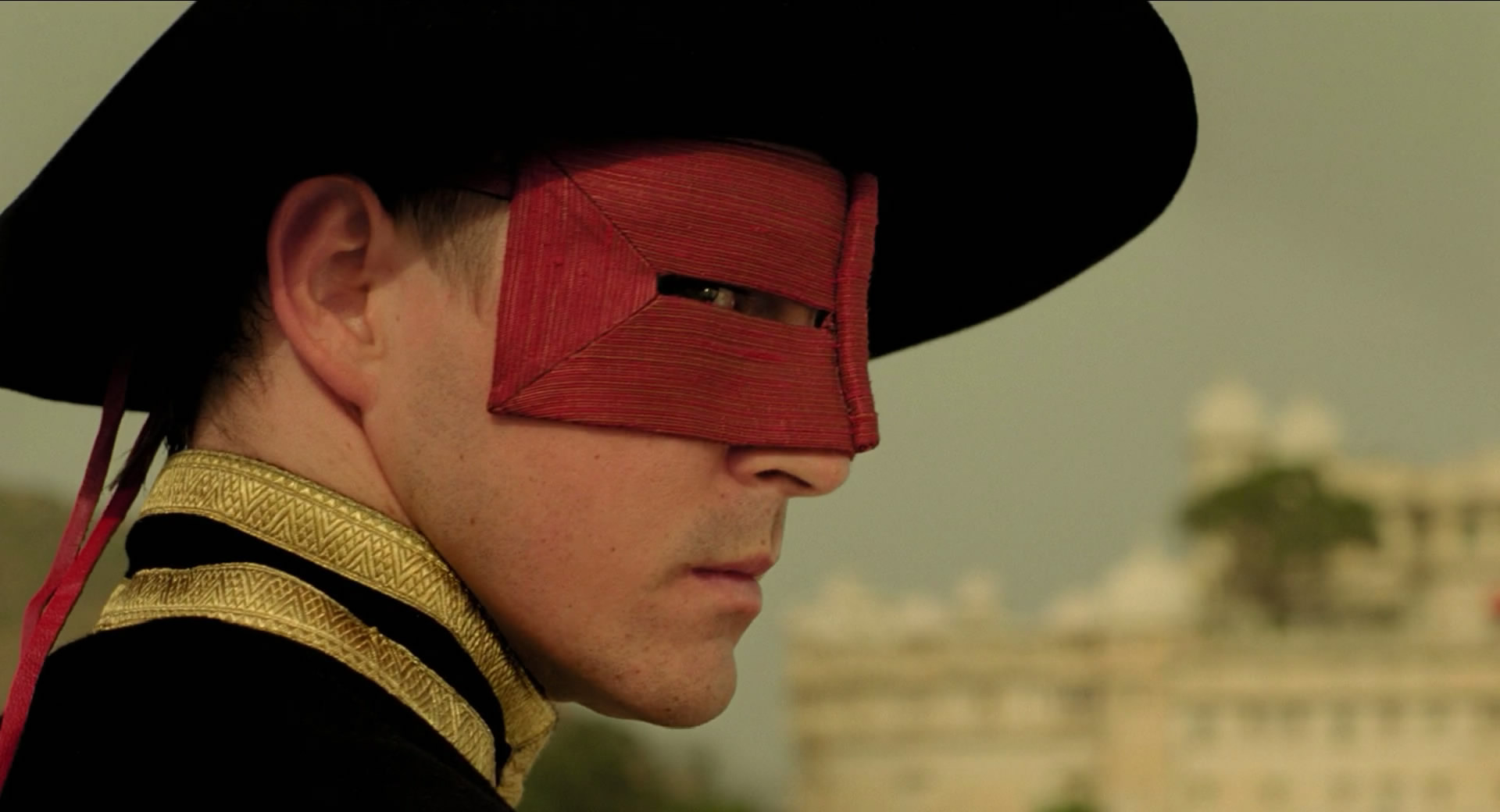
So begins two exposition stories, one weighted in reality the other in an alternative world where the outcome is dependent upon how the real infiltrates the imaginary. Roy’s epic tale is a story of six unlikely companions; buccaneer and explosives expert Luigi (Robin Smith), ex-slave Otta Benga (Marcus Wesley), Charles Darwin (Leo Bill), The Indian (Jeetu Verma), a Mystic (Julian Bleach) and The Blue Bandit (Emil Hostina) and follows their quest to defeat the evil Governor Odious (Daniel Caltagirone).
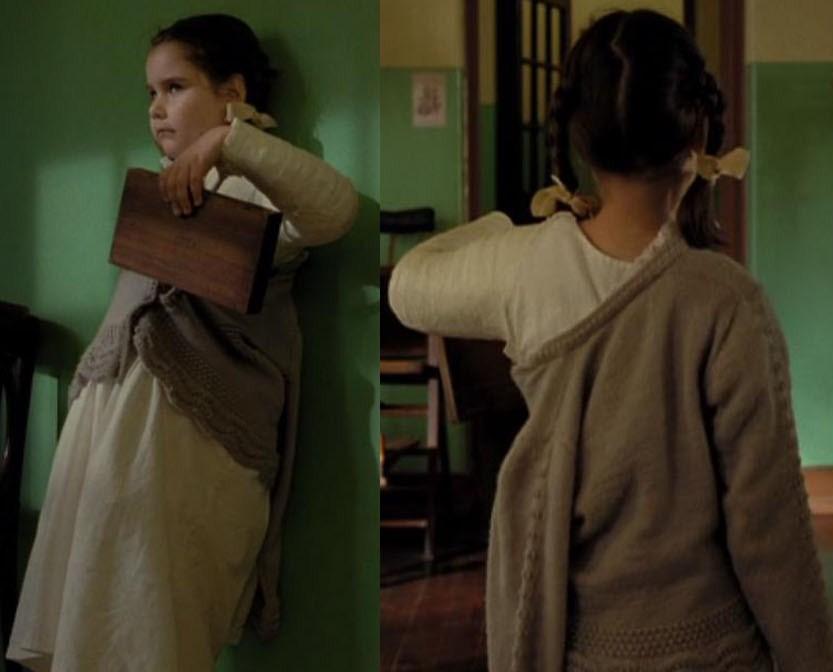
From the start there is an indication that the visuals are formed through Alexandria’s imagination, elements within the fantastical realm are linked to the sights she sees around the hospital. She is providing the pictures while Roy creates the words. For example, much like The Wizard of Oz (1939), characters are drawn from the real world and find their way into the imaginary, Otta Benga is played by the man who delivers ice to the hospital and Odious’ henchman are costumed to closely resemble the Radiographer Alexandria is afraid of. Often the images and description do not correspond with each other, and the Indian of Alexandria’s mind is a man from India who wears a turban and who is mourning the death of his wife while Roy’s, unreliable, narration describes the man living in a wigwam and marrying a squaw[6].

The inclusion of the villainous Odious in the form of Sinclair (Caltagirone) the actor who has stolen the heart of Roy’s actress girlfriend once again confuses the narrative and thus the cinematic narrator[7] has to take over. It is also following this first segment of story that the audience is aware of the real reason behind Roy’s affection of Alexandria’s company. He is using the story space to manipulate the small girl and will only continue the tale after she has located a bottle of morphine for him so he can finally “sleep”.

1.1
1.2

Alexandria is dark-haired and adorably plump and when she is first shot, she is framed within a doorframe, a crucifix mounted on the wall above her thus suggesting that she is inextricably linked with the divine. She has a special relationship with the hospital’s priest and even steals the Eucharist from the chapel and shares it with Roy who asks her if she is trying to save his soul. Her green eyes, missing teeth[8] and stilted English make for an engaging and naturalised performance not least because the audience can occasionally miss snatches of dialogue. Her left arm is perpetually outstretched away from her body for the majority of the film’s runtime and she is almost always dressed in a white nightgown and taupe cardigan which she cannot wear properly due to the frame of the plaster cast. The wooden box she carries, which looks like a book, contains items she “likes”, photographs of her family, a spoon, small toys; a nostalgia box of memories.

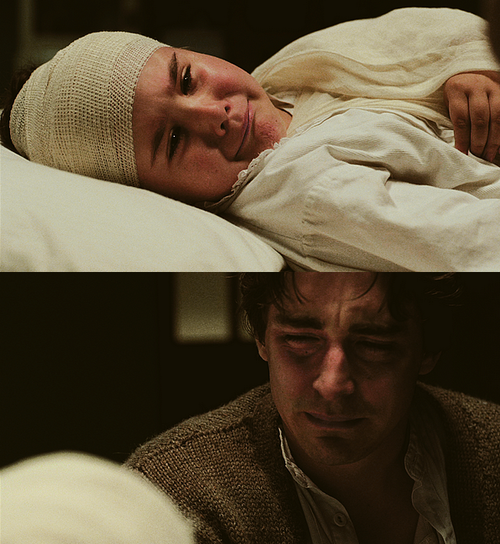
Roy is also a brunette and despite their gender difference they are often clothed the same and often mimic each other’s body language (see images below). This may be an attempt by the adult to place the child at ease or perhaps is the visual depiction of the contact zone / story space previously discussed. Roy and Alexandria’s mutual experience of a fall, hospitalisation and subsequent isolation is the meeting place for them both. The story they both appear to enjoy, whether Roy wishes to return to his childhood or Alexandria wants to surpass hers, as Gopnik ascertains, remains to be seen.

1.5

On the surface, it can be argued that the girl represents the child Roy may never have. He has lost the love of life and the severity of his injury is never fully explored. For Alexandria, he may be a replacement father-figure having lost her father in a house fire. These are easy summations to make, however, another reading may suggest that Alexandria is Roy’s repressed inner child, or as described in Jungian theory, the Divine Child[9] who has manifested through his suicidal despair. This archetype, according to Jung, is weak by design, under developed but one which can bring happiness and instil hope when it has been lost.

While this, in part, is true, Alexandria is stronger and more mature, even at six, than the infant images which are associated with the Divine Child. She is just as manipulative as Roy and changes the narrative at will, even inserting herself into the story when it looks like the original narrator is close to death. Rather than embodying the child archetype she can be read as Roy’s shadow, quite literally becoming his double once she is a part of the narrative and injects herself into the imaginary world, referring to herself as the Bandit’s daughter, stronger than ever, with two perfectly formed front teeth.

3.1

In reality, the roles have reversed in the sense that it is Roy who is now visiting a prostrate Alexandria. She has made a second attempt at getting the bottle of morphine pills, broken into the dispensary and fallen again which has resulted in a serious head injury and Roy is visibly distraught at what he has caused. It is worth noting that after her fall, Alexandria’s recovery is seen through a series of cinematic stills whereby her back-story is shown through live action images and animatronics. Her life literally flashes before her and this sequence is much darker than Roy’s beautifully invented panorama suggesting a real ambivalence between experience and innocence.

Roy admits that the story was a subterfuge to push the girl into assisting his suicide but Alexandria stubbornly refuses to believe this, even after Roy begins murdering the tale’s protagonists one by one. She begs him to stop and he tells her that it is his story, to which she answers “mine too”. Roy, who was also inserted into the fantasy after the death of the Blue Bandit and is now personifying the vengeful Black Bandit, allows Odious to drown him while his double-in-miniature looks on. Back in the hospital, both Alexandria and Roy are in tears and she begs him “Please. Don’t kill him I don’t want him to die. She loves him”.

Alexandria then makes an admission, she has known all along what Roy intended to do with the morphine pills “I don’t want you to die”. In preventing Alexandria’s despair, Roy has to save himself and in the fairy tale world he bursts through the water, re-born, and saved by his blessing in disguise[16]. This confirmation of mortality, as experienced through Alexandria, is further explained by Bettelheim “[the] psychosocial crises of growing up are imaginatively embroidered and symbolically represented in fairy tales […] but the essential humanity of the hero, despite his strange experiences, is affirmed by the reminder that he will have to die like the rest of us”[10].

lp
The-Fall-0661

In The City of Lost Children, one character who is in denial about death is Krank (Daniel Emilfork). He is ageing at a progressive rate because he cannot dream; a lack of imagination is slowly killing him and so, he kidnaps children against the backdrop of a timeless, surrealist, Paris in order to extract their dreams and manipulate them as his own. He does this without realising that in his company they too cannot dream only produce nightmares which terrorise the thief in slumber.

Visually this text is very different from The Fall, where there was a palette abundant in colours and light, here there is limited light and the dominant colours are (as in Jeunet’s later film Amélie [2001]) red and green. This lack of light is metaphorical of the disorientating struggle displayed in the mise-en-scéne; this is a place where babies are left out in rubbish bins and not missed. Krank’s “uncle” Irvin is a disembodied brain which survives in a tank and in the opening twenty minutes serves as the intradiegetic narrator and sets the scene:

brain

“Once upon a time, there lived an inventor with a gift for giving life. […] Having neither wife nor child, he decided to make them himself. His wife’s gift was to be the most beautiful princess in the world. Alas a bad fairy gene cast a spell on the inventor so that when the princess was born, she was only three inches tall. He cloned six children in his own image, so similar you could hardly tell them apart but the bad spell meant that they all had the sleeping sickness. He needed a confidant, so, inside a fish tank, he grew a brain that had many migraines. Finally, he created his masterpiece, a man more intelligent than the most intelligent men. Alas, the inventor also gave him a flaw. He couldn’t dream […] it made him so unhappy that he grew old unimaginably fast [and then] died in dreadful agony, having never had a single dream.”

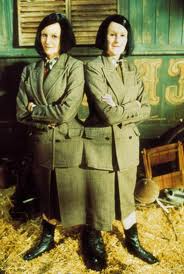
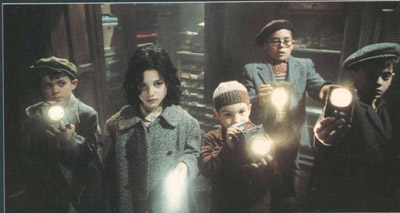
This is hardly the ideological filmic representation of hopes, wishes and desires that Jack Zipes describes when he is discussing the screen fairy tale[11] but a social commentary on the complex use of technology versus religious fundamentalism. The inventor creates his family through technology and essentially ‘plays God’ only to be worshipped by a cult of Cyclops who, in return for their sight, kidnap the children Krank requires for his dream-catching. The messianic figure of One (Ron Perlman) whose back story is linked with other fairy tales (Jonah and the Whale and Pinocchio[12]) enlists the help of an alluded-to Wendy[13], Miette (Judith Vittet) and her gang of Lost Boys/ urchins to rescue One’s little brother Denrée (Joseph Lucien). Miette and her fellow orphans work for The Octopus (Geneviève Brunet and Odile Mallet) identical twin sisters who dress, function, speak and work as one entity, conjoined at the leg.

4.2
4.3

While these dual characters are literally mirrored in their representation there are other characters which are connected subconsciously. Krank is beyond childhood without having actually experienced one and yet acts like a child, prone to tantrums and crying fits. Miette, on the other hand, is still physically in childhood but has the demeanour of an adult. Her orphaned abandonment has enabled her to mature quickly and her instinct for survival has her resorting to any means necessary to live, she is wise and tough far beyond her years. Miette and Krank are, in essence, two facets of the same person.

As described by Gopnik in his 1996 New Yorker article, Krank wants a way back into childhood while Miette wishes to embrace adulthood, even envisioning a relationship with the man-child strongman, One. When Miette and Krank come together in their contact zone/story space it is not through traditional storytelling but a dream in which they get to embrace their shadow selves and share a mutual experience.

dream-device

Jung articulated this exchange in this way, “beneath the social mask we wear every day we have a hidden shadow side, an impulsive, wounded, sad or isolated part that we generally try to ignore. The Shadow can be a source of emotional richness and vitality, and acknowledging it can be a pathway to healing and an authentic life. We meet our dark side, accept it for what it is and we learn to use its powerful energies in productive ways […] By acknowledging and embracing The Shadow as deeper level of consciousness and imagination can be experienced.” [14]

Krank is dispossessed of a soul, an imagination and empathy and upon sharing consciousness with Miette – the girl who does not dream – can finally experience what he has been missing. In the same token, Miette can embrace her youth and rescue the man she loves. The child in the crib is dressed in pyjamas which are the same colour and style and the boy’s hair has been reddened, he resembles a young One, this is evidently how she reconciles the contact zone.

4.1

Interestingly, only when the child starts to morph into Krank does the ageing process begin, the Shadow selves meet. Unlike The Fall, where assumptions are made regarding Alexandria and Roy’s future selves, here Krank accepts his Shadow and so begins his regression. In opposition, Miette begins to wither and age until the demented dream-catcher is a baby. Miette must embrace her biggest fear so she can move forward and that is imagining One dead. This interchange of dreams kills Krank in reality thus substantiating the importance of imagination, use of enchantment and originality.

Fairy tales give the adult reader a re-presented imagination. Understandably, the physical child may have evolved but these screen tales enable the repressed child to re-emerge through viewer identification. Perhaps, just like the children in these texts they enforce a sense of hope, strength and resilience which has long been forgotten.

The inclusion of a child within an adult diegesis serves more than just viewer manipulation[15]. This division of realities and mirroring of locations, narratives and characterisations is an integral part of the postmodern film and more specifically this dual nature is present in screen fairy tales. While the texts that have been considered here have a very distinct separation between the real and imaginary, it would be worth considering the screen fairy tale which is based in reality and consider what purpose they may serve for an adult audience.

Sources

[1] Maria Tatar, Enchanted Hunters: The Power of Stories in Childhood (New York/London: W. W. Norton & Company, 2009). A term borrowed from Mary Louise Pratt. Tatar changes the context of the original contact zone and sets about making her own.

[2] Ibid. p242. “The power of reading together derives in part from the fact that it involves a transaction between more than a single reader and a text. The dialogue that takes place between the [storytelling] partners fuels the transformative power of the story, leaving both the child and adult altered in ways they might never have imagined. [Mary Louise] Pratt found in contact zones a process of transculturation, with colonizer and colonized entering into lively, two-way cultural exchanges”.

[3] Adam Gopnik, “Grim Fairy Tales”, The New Yorker (November 18, 1996) p96. http://www.newyorker.com/archive/1996/11/18/1996_11_18_096_TNY_CARDS_000376397 [accessed 10 January 2012].

[4] Bruno Bettelheim, The Uses of Enchantment: The Meaning and Importance of Fairy Tales, (UK: Penguin, 1991).

[5] Bengt Holbek, Interpretation of Fairy Tales: Danish Folklore – A European Perspective, (Denmark: Suomalainen tiedeakatemia, 1987).

[6] These differences can also be examples of Pratt’s ‘contact zone’ specifically with the cross-cultural experience between American Roy and Romanian Alexandria.

[7] Seymour Chatman, Story and Discourse: Narrative Structure in Fiction and Film, (USA: Cornell University Press, 1980).

[8] Missing teeth as a motif are used throughout the picture. Roy tells Alexandria that power is symbolically associated with teeth and that she is currently “missing some strength”. Upon further investigation, however, teeth can be associated with illness and death and even a lack of faith (Greek) and in Chinese culture missing teeth symbolise telling lies. Some cultures believe that losing teeth can be sign that an individual has placed more faith in the word of man and has lost trust in God.

[9] Carl G. Jung, Essays on a Science of Mythology: The Myth of the Divine Child and the Mysteries of Eleusis, (USA: Princeton University Press, 1969).

[10] The movie’s tagline is quite apt here. Only at Roy’s lowest ebb did she manifest.

[11] Bettelheim, 1978 pp39-40.

[12] Jack Zipes, Happily Ever After: Children and the Culture Industry, (New York/London: Routledge, 1997) p9.

[13] One is an ex-whaler and following the loss of this job is hired by a travelling circus, of sorts, as a strongman. Aside from size he is for all intents and purposes a boy.

[14] J M Barrie, Peter Pan, (UK: Puffin [Re-issue], 2014).

[15] Jung, cited in Connie Zweig and Steve Wolf, Romancing the Shadow: A Guide to Soul Work for a Vital Life, (UK/USA: Random House Publishing 1999) p21.

[16] Karen Lury, The Child in Film: Tears, Fears and Fairy Tales (UK: I B Tauris & Co Ltd, 2010). Lury likens the child to a pet and even refers to both as ‘it’, she ascertains that the inclusion of children within a narrative is merely to serve an emotional purpose for the viewer.