Categories
film review Retrospective

Two Decades on… The Piano

It is hard to believe that Palme d’Or winner The Piano is twenty years old this year, specifically given its timelessness, Michael Nyman’s evocative score (The Promise can be sampled here) and the seductive panoramic allure of a Gothic New Zealand. One which remains mesmerising upon a multitude of re-visits; frozen forever on screen.

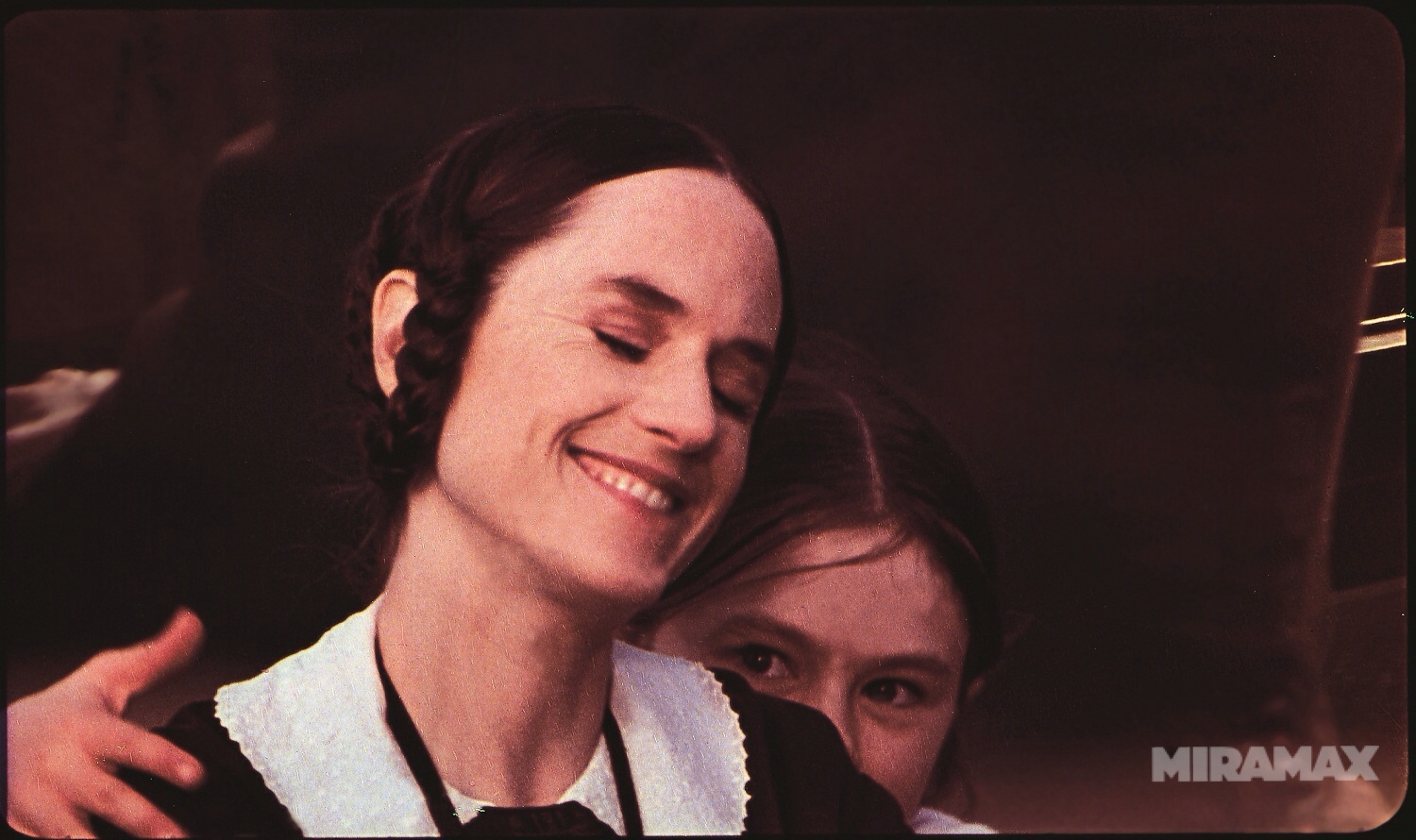
Ada McGrath (Holly Hunter) is sold into marriage by her father and sails from Scotland, across rough waters to New Zealand where she and her young daughter Flora (Anna Paquin) are to begin a new life in the home of new husband (and father) wealthy landowner, Alisdair Stewart (Sam Neill). Ada is mute and relies upon sign language, a small notebook contained in a locket around her neck and, above all else, her piano and music to speak for her. Alisdair, not only, dismisses the importance of the instrument to his new wife but gives it away to employee George Baines (Harvey Keitel) who, upon hearing Ada play, agrees to sell it back to her one key at a time.
piano

Writer/Director Jane Campion presents events in chronological order, much like a piece of music allowing for this story to have an introduction, middle and resolution. Campion, a filmmaker, with a propensity for engaging feminist interest through a female protagonist, desire and gaze does not disappoint with Ada. One would be forgiven for thinking the character is a product of the oppressive, Victorian society she inhabits, after all she is objectified from the start; sold into marriage, left on a beach much like her piano; her silence often mistaken for obedience. One could argue that this is not the case, Ada exists on the fringes of society; her self-assured identity and sheer wilfulness make her one of the most fascinating characters committed to celluloid. Her austere costume (designed and created by Janet Patterson) functions for and against her femininity (Bruzzi, 1997). These items often restrict her movements yet at other times rescue her from unwanted exposure, pawing male hands or indeed provide a place of shelter; a hoop underskirt is utilised as a makeshift tent in the opening sequences. The bonnet is a symbol of submissiveness but tends to be discarded more often than not.

piano

The piano and Ada are inextricably linked and the bound motif represents her voice, sexuality, passion, mood and freedom; a tool that can be, and is, used against her. Power struggle appears to be the main theme of the film displayed through sexual politics, patriarchy and colonialism. Alisdair is the white settler whose link to the Māori people is Baines, a coloniser who has adapted to the ways of the native (he still has tartan items displayed about his home pertaining to his Scottish roots) but has attempted to assimilate into NZ culture with his clothing, wild hair and Māori tattoos which adorn his nose. These markings add a sexual aggressiveness to his ‘othered’ facade; however, one would argue that it is his whiteness and lack of education which makes him belligerent, specifically in relation to the Māori people in this text. Rather ideologically, they display a naïve innocence which encourages the idea of Pākehā as the savage. Neill and Keitel give outstanding performances as the uptight Stewart and outsider Baines, men who conform and subvert type/expectation as much as the females in the diegesis. It is, however, Holly Hunter’s film. An accomplished pianist, she played all musical pieces and, allegedly, insisted upon communicating through sign language on and off set as the film was made. In fact save for Ada and her ‘mind’s voice’ at the film’s commencement and end, one forgets Hunter can really talk at all.

While The Piano can be described as a Gothic melodrama or Art film, at its narrative heart it depicts a mother-daughter relationship, offers up ideas of the absent father and draws parallels not only with the play within it: Bluebeard (Charles Perrault) but Rebecca (Daphne du Maurier) in its portrayal of a female who leaves home and enters a new world dominated by a male figure. It deals with concepts of freedom, affronting destiny, definition of the self, re-birth and the sexual-political appropriation of ambiguities. It showcases the directorial talent of ‘Kiwi’ Campion and her cinematographer Stuart Dryburgh who insist upon giving the audience a distinctive, sexually provocative spectacle; a sumptuous production which depicts the uneasiness of the New Zealand landscape with authenticity and, even occasional, mirth. The Piano remains a gorgeous and enigmatic masterpiece, one which continues to get better with age.

Categories
Blu-ray film review

Sleep Tight (Dir. Jaume Balagueró, 2011)

sleeptight092811

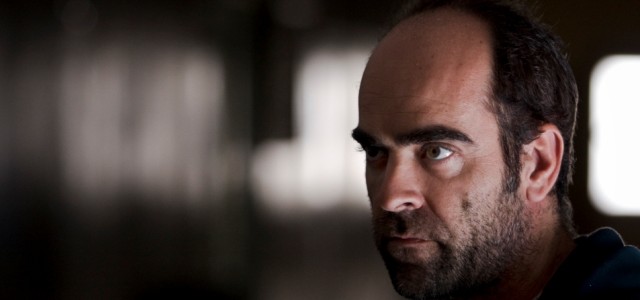
“There is always a way to be happy” declares a radio station caller during the opening of Sleep Tight [Mientras duermes], the intertitle cuts to a shot of César (Luis Tosar) standing on a roof-top seemingly ready to jump, clearly the exception to this declaration. His voiceover confesses that he has no motivation to rise out of bed in the morning, that he is never happy despite the fact that he “tries”. Cut again to him lying in bed next to a sleeping beauty, he awakens and begins a day-shift as an apartment building concierge. He visits his sick mother in hospital and on the surface appears to be an amiable everyman, invisible to some and less so to others.

sleep-tight-movie

Clara (Marta Etura) – the sleeping beauty – is the exact opposite to César in every way possible, not least in her sunny disposition. She is often shot in natural light and her bright, airy apartment and pale coloured summer wardrobe is juxtaposed with the male lead whose affiliation with the darkness becomes more and more apparent as the film progresses. Despite her ray-of-sunshine persona Clara’s life is far from idyllic, she is receiving poison-pen correspondence masquerading as love letters and disturbing text messages. The difference between the two characters? Clara always finds a way to smile, to be happy whether in her day-to-day routine or dancing around her living room. She is seemingly satisfied with her lot in life – little does she know just how unsafe she is in her own home.

SleepTight

Jaume Balagueró’s previous films [Rec] (2007) and [Rec]2 (2009) have been deeply rooted within the horror genre and this, ever-so, slight departure proves that his talent for building tension and unease really is innate. This psychological thriller gets under the skin and is executed perfectly with its canted and panning camerawork and especially with its playful soundtrack which lulls the audience into a false sense of security. Luis Tosar (Mr Nice, Cell 211) gives an outstanding performance, his César is sneering, ice cold and without empathy – a sociopath in every sense of the word. 

This film is a testament to the lengths a person will go to, to destroy another’s spirit and its ending hammers home the true horror and hatred of humanity. There may be a cost to being happy – or perhaps there are more people who take absolute pleasure in inciting hatred and misery than we may think. It is tense, unnerving and delivers a well-plotted narrative which will stay with you long after the credits have rolled. Good luck sleeping tight after this one.

Categories
Blu-ray film review

Dracula (Dir. Terence Fisher, 1958)

DRACULA-C-LEE

It seems somewhat ironic that a country so set on suppression would help instil and depict the inextricable link between sex, horror and death and yet long after the rise of German Expressionist and Universal horror in the States – in which the heimlich and unheimlich were visually portrayed amid ideologies of repression and scepticism – British horror cinema only really emerged in the 1950s following decades of censorship. Among those banned were The Cabinet of Dr. Caligari ( 1920, dir. Robert Wiene), Nosferatu (1922, dir. F.W. Murnau) and Freaks (1932, dir. Tod Browning) and significant cuts were made to Whale’s Frankenstein (1931) and Browning’s Dracula (1931). The British censors appeared to completely overlook the cathartic effect of the horror film until the birth of Hammer (so named after co-founder William Hinds’ stage name). These films were defined by a number of factors including a restrained style and the use of colour, their settings were often historical (cleverly to avoid censorship), with themes of patriarchal authority, class divide and the notion of ‘maleness’ prevalent. These male characters were often given priority within the ideological diegesis and fought emasculation in one form or other. The films, more often than not, also included the inimitable partnership of Peter Cushing and Christopher Lee and for a time Hammer revelled in its elusive quality, screen splendour, and success but by the 1970s the lauded films became a distant memory as each new movie lost vigour, became more derivative and relied upon overt eroticism to maintain its popularity, in a series of films I like to refer to as Carry On…Hammer.

dracula1

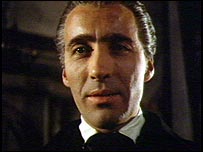
Thankfully Dracula (1958, dir. Terence Fisher) was one made within Hammer’s ‘Golden Age’ (1957-1964) and, since its 2007 restoration by the BFI, is released on 3-disc DVD and Blu-ray on the 18th March 2013 replete with scenes that have been unavailable for decades and a great deal of extras: including a variety of featurettes, commentaries, and interviews with cast members, screenwriter Jimmy Sangster and fans of the film like Sir Christopher Grayling, Kim Newman and Mark Gatiss. The actual print is glorious and beautifully restored showcasing the film’s palette of colour and lush, decadent sets comprising of inviting heavy drapes, dark wood and blazing fires. While audiences are familiar with Stoker’s 1897 tale, there are liberties taken, by Sangster, with the story. Dr. Van Helsing (Peter Cushing) arrives at Castle Dracula to investigate the disappearance of his colleague and protégé Jonathan Harker (John van Eyssen). Jonathan became the librarian to The Count (Christopher Lee) as a cover, while his true intention is “to end Dracula’s reign of terror.” This reign includes the seduction of both his fiancée Lucy Holmwood (Carol Marsh) and her older, married sister, Mina (Melissa Stribling) which builds to a fantastic finale accompanied by James Bernard’s terrifying and haunting score.

If Schreck’s rat-like Nosferatu was a subtext for plague and a ‘fear-of the foreigner’ and Lugosi’s thick Hungarian accent and histrionics made an attempt to aid the supernatural elements of a walking corpse, specifically in his slow pacing and deliberate enunciation of broken English. There was/is an eerie charm to his Count, however, it was not until Christopher Lee’s portrayal was sex so obviously aligned with Dracula and he became the ‘lover’; a sexual and provocative nuance to the role has continued with Frank Langella (1979), Gary Oldman (1992) and, dare I say, Gerard Butler (2000). Lee brings the virile, exotic ‘other’ to sex up the Victorian bourgeoisie; a formidable task given his thirteen lines of dialogue and lots of hissing. Make no mistake, despite its roots within the British stiff-upper lipped realm where evil is pronounced with a hard ‘e’ and ending in ‘ville’, this is a film about sex, marriage, adultery and seduction and well worth a re-visit in its original uncut, splendiferous, form.

Categories
Blu-ray film review

René Clément: 100th Anniversary Collection

clement

The name René Clément is one synonymous with French filmmaking, however, you would be forgiven for not being overly-familiar with his work. He was declared in a 1957 Cahiers du Cinema article as “the greatest living director”, however, the cinéastes and iconoclasts associated with the journal deemed his work too inconsequential to the French New Wave movement, labelling him, old fashioned, banal and, even, a “sell-out”. A great director he was, in his day, but not an auteur according to François Truffaut, Jean-Luc Godard et al. To mark Clément’s centenary, Studio Canal are releasing, individually, Forbidden Games (Jeux Interdits, 1952), Gervaise (1956), The Deadly Trap (Maison Sous les Arbres, 1971) and And Hope to Die (La Course du Lievre a Travers les Champs, 1972). This package of films displays Clément’s versatility and evolution as a director, showcasing his obvious Neo-Realist influences and interests of the fifties and the mysterious crime-thriller generic amalgam of the seventies. It must be said that while most may not have seen his films before, these Studio Canal releases do serve as an educational quadrilogy to Clément’s detailed and observational style of filmmaking.

deadlytrap
gervaise
forbiddengames

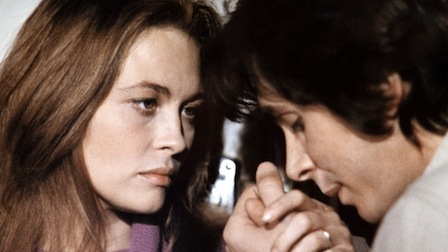
The Deadly Trap opens with melodramatic nuances; soft focus, water-coloured effects amid a dreamlike sequence. Clément has been described as the French Hitchcock but this film is more reminiscent of Nicholas Roeg’s Don’t Look Now (1973) with Venice substituted for Paris and the red colour motif replaced by yellow. A young couple Jill (Faye Dunaway) and Phillip (Frank Langella) have moved to France for his work, a job seemingly in jeopardy. Their marriage is in crisis and she appears to be literally losing her mind: replicating dress purchases, losing car keys and nearly killing their two children. Clément’s cleverly paced direction builds tension and takes the viewer through a taut espionage-cum-mystery thriller. The two leads work perfectly, childlike, carefree Jill played by Dunaway is clueless to the events unfolding around her and Langella’s Phillip who is brooding but gentle with his shock of unruly black hair and penetrating brown eyes. His magnetism is still as present forty plus years later.

Another screen veteran, Jean-Louis Trintignant, who can currently be seen in Amour (2012, dir. Michael Haneke), stars in And Hope to Die alongside Hollywood stalwart, Robert Ryan. Part Western/gangster/crime caper, this is the worst of the bunch, over-acted and badly dubbed, specifically Ryan, the weak script and pretentious visuals, unfortunately, add weight to a director coming to the end of his career. Like this, based upon the novel Black Friday by David Goodis, Gervaise is also an adaptation. Inspired by Émile Zola’s L’assommoir (1877), depicting an uncompromising look at the rise and fall of a washer-woman played beautifully by Maria Schell, struggling to raise her three children, torn between her alcoholic husband, the business she owns and the other man she is in love with. Much like Kenji Mizoguchi’s The Life of Oharu (1952), this vivid portrayal does not seek to manipulate or incite sentimentality or sympathy but displays the suffering of an ordinary woman who never complains but “fights back” and survives. This film has more fluidity to it than the afore-mentioned, in all aspects, and appears lovingly crafted making its BAFTA awards and prizes at the Venice Film festival all the more deserved.

The true gem of this collection, Forbidden Games, is shot in a realist style and appears to be the director at his most creative. Refused at Cannes for being an “insult to peasants” Forbidden Games has been beautifully restored depicting children’s happiness during a time of misery. Set during World War II, five year old Paulette (Brigitte Fossey) watches her parents and pet puppy die while they shield her from flying bullets. Not completely aware or understanding of her predicament she is taken in by the Dolles family and quickly becomes the charge of a surrogate big brother, in the form of Michel (Georges Poujoly). The two children grow to love each other with complicity, aggression and innocence through a mutual fascination and morbidity of death. They create their own pet cemetery; a place where they can play and look after the “souls” that are laid there. It becomes a game; they watch mourners in church to garner tips for their own staged funerals and then start stealing from places of worship and even the graves of the deceased villagers.

The two adolescent leads are wonderful, especially Fossey who plays Paulette, she often is lit with an extra halo of light adding an angelic quality to an already beautiful performance. The true meaning of death eludes the character, after all she is only five years old and with Michel’s prompting she learns her prayers and becomes transfixed by the sight of a cross. This lack of Catholic knowledge could be an allusion to the child’s Judaism and by the film’s dénouement the viewer can see the enormity of Michel’s love and attention; he saves her life in more than one way. There is purity and power to Clément’s direction here, the notion of grief is never fully explored and it does not incite emotion as expected but observes; never manipulating. It is clear, in this film, that Clément was greatly influenced by Vittorio De Sica through the Neo-Realist style.

One trait evident through these four films is all scenes are filled with interchangeable images which are rendered with diligent and deliberate care; they are there to be observed. His deft uses of verisimilitude make for an unpredictable and diverse collection of films and while he may not have contributed to the “new soul” of French cinema, historically, Réne Clément was certainly a talented old soul of cinema and deserves to be re-visited and explored. Banal and old-fashioned this collection is not.

Categories
film review

Sightseers (Dir. Ben Wheatley, 2012)

sightseers

Redundancy, oppressive living environment thanks mainly to a passive-aggressive matriarch, canine-icide and all those little annoying habits of others, like littering, personal success and the class-divide which make one want to pummel in somebody’s skull – desires which social convention and psychological adjustment prevent – are the main themes of Ben Wheatley’s third directorial outing Sightseers following Down Terrace (2009) and Kill List (2011).

The main protagonists Chris (Steve Oram) and Tina (Alice Lowe) are lucky to find each other in this cynical age of romance and chance (plus it reaffirms the old adage that there is indeed someone for everyone however angry or homicidal you may be). He wants to show his new girlfriend “his world” which involves a caravan, a large bag of extra strong mints and excursions to some of the country’s leading, albeit, obscure heritage sites. Tina intends to let him and rock his (world) in her, wholly fetching, knitted bra and crotch-less, big knickers. Following an accident at their first stop (the tram museum) things take a sinister turn and their holiday tests them both and the strength of their relationship.

alice

Chris refers to Tina as “his muse”, however, she is more of an unconventional femme fatale throughout a series of transgressions and while Sightseers’ pitch black context is, inadvertently, played for laughs, it is Tina’s story arc which is the most evolutionary. She embodies the two binaries of women which are often indicative of the noir: the dependable, domesticated and safe in addition to the alluring, sexual (the lingerie really has to be seen to be believed) and dangerous female. Chris is the male in crisis and she, on occasion, a function of his dilemma and powerlessness. Interestingly, the time she rebels against her own passivity and becomes the idealised version, she believes, Chris wants her to be is the moment when she is dressed at her most feminine, in a dress, completed with lipstick. The scene in which she exerts her first real sign of independence is also the scene in which she, it can be argued, seizes phallic power, here, signified as a very large writing pencil. Certainly, the last sequence does suggest that Tina is the one in control and has, perhaps, precipitated the whole journey and its outcome – “witch!”

movies_sightseers_still_6

This film really showcases Wheatley’s direction given his lack of involvement with the story and there will be comparisons made between this and Mike Leigh’s Nuts in May (1976) and like last year’s Kill List this film also owes a debt of gratitude to Hammer horror. Essentially, the fact that he did not write it makes this a radically different film from his previous, and yet still retains elements of the Wheatley style . Screenplay praise, of which there should be much heaping, falls to the writers and lead actors. Oram and Lowe who both had small parts in Kill List, are better known for their television roles in comedy series Tittybangbang and Garth Marenghi’s Dark Place respectively, as well as dual appearances in The Mighty Boosh and Channel 4’s Comedy Lab. Here, they are a match made in heaven as “a ginger faced man and an angry woman.”

Forget what has gone before, this is the comedy of the year. Caravanning is the deadliest and sexiest way to holiday.