Categories
film review

Dances With Wolves (Dir. Kevin Costner, 1990)

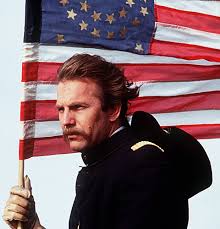
The Western can be described as an opportunistic film genre[1], one often utilised as an ideological tool to re-write American history, and Kevin Costner has taken the occasion to create a mediocre revisionist Western fable. A cinematically, epic journey which is, admirably, the actor’s debut in the forum of directing. Costner has clearly taken inspiration from auteur John Ford and this is evident in Dean Semler’s sweeping cinematography of the Western frontier and surrounding landscape. Dances with Wolves[2] was born from an age of political correctness and post-Vietnam sensibilities and can be read as an apology for Westward expansion.[3] This film appears to be about righting wrongs, idealising and romanticising East/West history.
dww3

Much like Ethan Edwards (John Wayne) in The Searchers[4] following the end of the Civil War, Lt. John Dunbar (Costner) is on a quest to discover or re-cover his identity. The war has left him disillusioned and in search of change whether that be physically, emotionally or geographically. While The Searchers (and many more besides) depicted American racism, Costner attempts to propagate the notion of good and evil in the culture of Red and White, often seen as antinomies[5] of the Western genre – here, Sioux/Pawnee tribe(s) and Dunbar/Union Comrades. Both races are ignorant of difference and fear is driven by an ignorance of the respective worlds in which they reside. Dunbar embraces the tribe and attempts to assimilate into their world, offering his ‘White Man’ wisdom in an exchange of ideas.
dww5

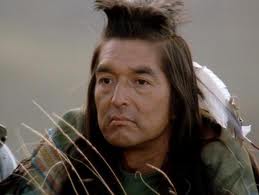
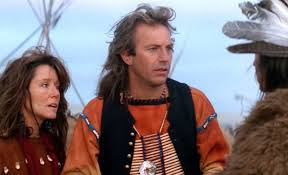
Michael Blake’s screenplay based upon his novel of the same name replaces the Comanche Indian with the Sioux tribe and each character performance delivers gravitas not least due to casting. White actors in ‘red face’ of the classical Hollywood era have, thankfully, been replaced with actors of Native American origin and defy stereotypes. Graham Greene, Rodney A. Grant, Wes Studi and Floyd ‘Red Crow’ Westerman depict the multi-faceted Native American and attempt to reconcile the ambivalence and ambiguity of the human spirit (something that the more-recently made Twilight Saga[6] has failed to do). They are, however, rarely shot alone within the frame and are often seen in groups; the ‘pack’ to Dunbar’s ‘lone wolf’. The same human ambiguity cannot be said for the female characters within the picture. There are two women who appear within the mise-en-scène, Black Shawl (Tantoo Cardinal) and the other, Stands with a Fist (Mary McDonnell). The latter is a white woman who has lived with the tribe since childhood and the only female who shares any prominence in the narrative – she is the means by which the two worlds of East and West/Civilisation and Wilderness can communicate effectively. When she is first introduced onscreen, she is in the same place of despair as Dunbar in the film’s opening shot; bloody, alone and without a reason to live.
dww

It comes as little surprise that Dunbar, now named Dances with Wolves, marries Stands with a Fist and by doing do re-enforces the white patriarchal ideology of the American identity. He has been the man caught between two cultures and attempts to birth a new identity – here alluded to by the removal of facial hair and Military dress. He grows his hair, wears Native dress and speaks in Native tongue, yet by marrying the only white woman in the tribe, miscegenation is avoided and the white race can continue to dominant the screen. Dunbar fights shoulder-to-shoulder with ‘his’ tribe in another Civil War, this time Sioux against Pawnee. This is a war he agrees with as the purpose is to make men free and is not ruled by political objectives.

First-time director Costner spends a slow-paced 114 minutes attempting to reproduce a version of the American ancestor, one that descendants can be proud of. One of racial inclusion, of understanding and empathy and yet the exclusion and absence[7] of the African-American race during the time of slavery and Civil War speaks volumes. Although, the subsequent release of films like Django Unchained[8] highlights the role of the African-American cowboy in history – the last film of note to depict a black character in such a film was Unforgiven[9] – there seems to be little room for a multi-ethnic American identity as the pre-dominant patriarchal white ideology still takes precedent and the ‘Frontier Hero’ will always, it would be appear, be white.

[1] French, P. Westerns: Aspects of a Movie Genre, UK: Carnacet Press Ltd [1977] (2005).

[2] Dances With Wolves (1990, dir. Kevin Costner).

[3] Barrett, J. Shooting the Civil War: Cinema, History and American National Identity (London: IB Tauris 2009, p81).

[4] The Searchers (1956, dir. John Ford).

[5] Kitses, J. Horizons West, London: BFI (1969).

[6] The Twilight adaptations have replaced the word Indian with Wolf but still depict Native Americans as angry young men waging war on the ‘White’ (Vampire) man.

[7] Cripps, T. ‘The Absent Presence in American Civil War Films’ Historical Journal of Film, Radio and Television, vol.14, no.4 (1994) p.367

[8] Django Unchained (2012, dir. Quentin Tarantino).

[9] Unforgiven (1992, dir. Clint Eastwood).

Categories
film review

The Babadook (Dir. Jennifer Kent, 2014)

“If it’s in a word, or in a look, you can’t get rid of the babadook…”

baba5

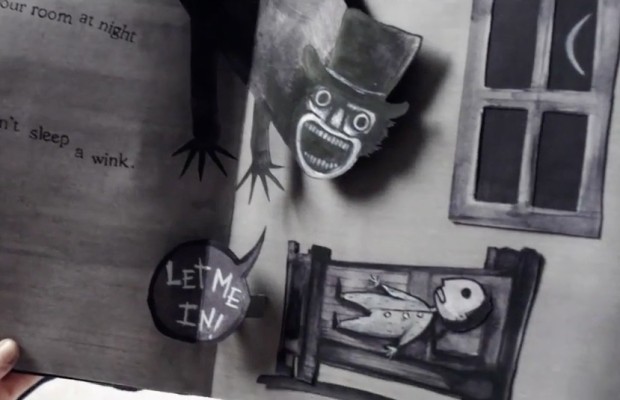
For Amelia (Essie Davis) every day is a challenge. Made increasingly difficult by her six-year-old son Samuel (Noah Wiseman). Sam is an affectionate, energetic and boisterous little boy, wise beyond his years, avoided at school for being weird (potentially hyperactive) and between his obsession with magic, his preoccupation with keeping his mother safe from ‘monsters’ and his sleeplessness; he is – to put it mildly – hard work. His upcoming seventh birthday also happens to coincide with his father Oskar’s (Benjamin Winspear) violent death, a loss Amelia has yet to fully come to terms with. She is vacant, restless and on autopilot juggling single parenthood, her job as a carer, and looking in on elderly neighbour Grace Roach (Barbara West). A one-time children’s author, Amelia is able to quell Samuel’s night-time fears usually with a bedtime story until he selects Mister Babadook from the bookshelf. “It’s okay mum,” the brave little soldier declares “I’ll protect you.”

baba3

The Babadook is actress/writer Jennifer Kent’s directorial debut, made for reportedly just $2.3 million and based upon her 2005 short Monster. Its cinematic palette takes its cues from the blue-black, white and grey of a pencil drawing and visually, the film’s fairy tale simplicity works incredibly well on the screen. It is rich, nostalgic yet somehow timeless and paints a deeply emotional and visceral gothic picture in which an audience is subject to the inside of the protagonist’s mind (think of a much subtler and aesthetically prettier The Shining). We see a relatable woman engulfed by grief, drowning under the weight of motherhood, and exhausted in the malevolence of depression. This verisimiliar performance steeped in empathy is testament to the supremely talented Davis who is as consistently wonderful as always (see in particular HBO’s Cloudstreet). However, in her Amelia we see complexity, a melancholic soul with an unravelling mind; her ferocity for life, love, even survival has been stifled, buried deeply.

baba4

The emotional profundity of this fabulous film makes it wholly affecting – an internal demon which manifests to test the protagonist’s strength. Whether she stands up, cowers, screams in its face or fights for her freedom remains to be seen. It may let her go…this time or as the childish rhyme suggests, it may never be vanquished. Go and experience The Babadook, it will touch you, scare you, get under your skin and remain there. It will make you feel, it may even cause you to shed a tear – honestly, when was the last time a horror film did that?

The Babadook opens nationwide on 24th October 2014

Support the publishing of the book here: The Babadook – book – book – book

Categories
Blu-ray film review

One Eyed Jacks (Dir. Marlon Brando, 1961)

OneEyedJacks-posterb

The name Marlon Brando is not necessarily one synonymous with the Western genre and yet he made three of them throughout his illustrious career, The Missouri Breaks (1976, Arthur Penn), The Appaloosa (1966, Sidney J. Furie) and the first, One-Eyed Jacks (1961), which also happens to be the only film he directed. A one-time vehicle for Stanley Kubrick, it was fraught with problems pre and post-production, the budget reportedly grew from $1.8 to $6 million when Brando took over and its eight week shooting time was extended to six months while the film’s finished edit had an original running time of five hours. This was before a Paramount executive made the decision to remove Brando’s creative authority and heavily cut the duration for release. It may have had its issues behind the scenes, but onscreen it remains one of the most memorable, and visually masterful Westerns ever produced.

This quirky revenge-Western, based upon Charles Neider’s The Authentic Death of Hendry Jones, tells the story of partners-in-crime; bank robbers Dad Longworth (Karl Malden) and The Rio Kid (Brando). It is 1880 and they are running from the law in Sonora, Mexico when Dad double-crosses Kid following their latest heist, and leaves him to be captured. Kid then spends five years in prison plotting his revenge before he can make his escape. When he does finally run into his old mentor, vengeance of the gun-toting variety is problematic, as Dad is now law-abiding, the local Sheriff, and married to Maria (Katy Jurado) with a step-daughter, Louisa (Pina Pellicer), towards whom Dad displays an obvious attraction. Rio, noticing the stolen, lustful glances, seeks retribution via seduction. Although never the intention, The Kid and Louisa fall in love and must, in Rio’s case, survive Dad’s wrath in doing so; a rage which involves a very public, painful flogging and brutal trigger-finger breaking.

brandomalden

Malden and Brando collaborated on three projects in a friendship that latest five decades, arguably some of their best work: Elia Kazan’s A Streetcar Named Desire (1951) and On the Waterfront (1954), and Brando’s baroque Western. Here, some may say cast against type (oh, and Baby Doll), Malden displays a repugnancy and cruelty in his performance as well-spoken Dad, a man dripping in piety and sanctimony. He exudes the seductive and paralysing power of the father figure within the diegetic space; the surrogate patriarch to The Kid – a young man putting a hard, obstinate face on his sensitivities in order to defeat the self-righteous and judgemental Longworth. This aspect of the script seemingly resonated with actor-director Brando, whose contentious and volatile relationship with his own father was reputed to be part of his motivation for making the film. Allowing the transposition of feelings or ‘emotional mechanics’ onscreen in keeping with his (and Malden’s) erudition as a student of the Constantin Stanislavski Method. Brando’s performance combines the manipulative, impulsive traits of a child while oozing his usual ambivalent sexuality. Rio is relatively non-violent as cowboys go, polished and clean shaven, one who would rather exert his virility by spending time with women than attend the saloon with his compadres. He is internally emotive and visibly tough; the explosive and volatile temper can dissolve as quickly into tears or laughter.

brando

Visually, the film employs a lot of fluid camera movement and some of the tracking and panning shots are simply beautiful – courtesy of Brando’s eye and Charles Lang Jnr’s cinematography – in a film which relies upon John Ford-esque framing and takes evident inspiration from Sam Peckinpah. One-Eyed Jacks is replete with Brando’s over-indulgent and meticulous eye. Legend has it that the first-time director would delay filming until the right kind of waves hit the shore – it pays off too. It is one one of the most enthralling and visually captivating films of the Western genre committed to celluloid, and clearly a passion project. Steven Spielberg is a big fan. Martin Scorsese lauds it as one of the greatest Westerns ever made – in fact, they both were consultants on the restoration. Personally, it has always been at the very top of my favourite Westerns list and Brando performances but then, you’re more likely to listen to Marty.

Extras listed below are from the 4K restoration by Universal Pictures and The Film Foundation which was released by Arrow Academy in Dual-format DVD and Blu-ray.

Disc Extras
Introduction by Martin Scorsese (2:51)
In this brief introduction , Scorsese lauds One-Eyed Jacks as a masterpiece, not only as a fan but as a person interested in film history. He commends its representation as the “bridge between the emotional values of New Hollywood and the moviemaking sensibilities of Old Hollywood.” Quite the endorsement.

Marlon Brando: The Wild One (53:33)
Written and directed by Paul Joyce, this programme was originally aired on TV on August 11th 1996. Joyce interviews numerous subjects about their dealings with Brando, including co-stars, friends, famous fans, and directors int he forms of: Dennis Hopper, Shelley Winters, Kevin McCarthy, Arthur Penn, Peter Bart, Martin Sheen, Francis Ford Coppola and Anthony Hopkins. All, except Bart, revered the actor and his enthralling screen magnetism. These interviews are intercut with clips and images from some of the Brando greats; Viva Zapata! (1952), On the WaterfrontLast Tango in Paris (1972), The Missouri BreaksThe Young Lions (1958), One-Eyed JacksThe Chase (1966), Burn! (1969), The Godfather (1972) and Apocalypse Now (1979). While some of the anecdotes seem impersonal, some are touching, and many speak of Brando with genuine affection. Brando’s love of children, his weight problems, and his approach to fatherhood, which Martin Sheen claims had a huge influence of the way he raised his own children. This is a perfect, albeit very male-centric, introduction to the star, for those who know little about Brando. It is interesting to note that both Malden and Brando were still living at this point and either chose not to take part in this or were not asked.

Francis Ford Coppola on Brando (43:46)
This rather tedious segment is the extended interview from the Paul Joyce documentary. Despite a 2017 edit, the interview is (as was the doc itself) twenty-plus years old. Yes, Coppola talks of Brando’s genius, and brandishes him the easiest actor to work with, and is awed by his intelligence, talent and physical beauty etcetera. It’s very repetitive as it regurgitates a lot of the footage and dialogue we’ve already seen and heard. As a super-fan of Brando – he was the subject of my Undergrad dissertation – none of the anecdotes or film trivia are new. It’s understandable why Coppola was asked to participate, he worked with Brando twice, but none of it has much to do with One-Eyed Jacks. Martin Scorsese discussing the film’s history, production, or restoration process would have made more sense and had have been welcome.

Arthur Penn on Marlon Brando (44:48)
Again, the same as Coppola’s segment, this is the extended interview with Penn. Another male director that worked with Marlon on two occasions, at least one of the Penn/Brando collaborations was a Western! Similarly to the Coppola footage, it’s monotonous as a second man recounts similar anecdotes and experiences when he worked with the actor twenty years previous. Penn is more articulate than Coppola so parts of this are interesting although, he does offer history which is, not only, not specific to Brando but also little by way of One-Eyed Jacks. What is evident is Penn’s love for the man, the enigma, the “irreverent adolescent” whose devotion to his art made audiences believe in the film’s narrative and character before them. About OEJ, Penn states “If you want to [experience] the real artistry of the man, go see One-Eyed Jacks.”

I would implore anybody to do the same.

Categories
film review

Calvary (Dir. John Michael McDonagh, 2014)

calvary

In the name of the Father.

Forgiveness is a tricky business especially when religion is thrown into the mix. For Father James Lavelle (Brendan Gleeson) everyday duties amid his often troubled, sometimes inexplicable, parishioners, take a sinister turn when, during confession, one of them tells the Priest that he will be murdered within the week. Father Lavalle is instructed to put his affairs in order because killing a Priest, and on a Sunday, “That’ll be a good one.” Given John Michael McDonagh’s last cinematic outing, you would be forgiven for expecting a punchline; The Guard was blackly comic, even laugh-out-loud chucklesome, and here – reunited again with leading man, Gleeson – one would expect much of the same. There are comic moments, however, the tone of Calvary is much darker; still amusing but angry.

calvary4

This tragically woven satire has much to say about a country; fractured as it is amid financial ruin and governed, in part, by a disjointed religious institution as well as commenting on the themes of life, death, and faith – what is to be saved and what is to be damned. Using topical issues which have dogged the Catholic Church for decades, this is a who-will-do-it as opposed to a who-dunnit which unfolds like a subversive Western, rural Ireland an unlikely, yet perfect substitute for America’s Wild West with Gleeson as the ‘good’ hero attempting to save the deeply flawed town from themselves and, in doing so, himself from the lone gunman. Among the cast of characters there is the quirky atheist doctor (Aiden Gillen), the supercilious, smarmy banker (Dylan Moran), the cynical, religiously lapsed pub licensee (Pat Shortt), the imprisoned serial killer (Domhnall Gleeson), the cuckolded butcher (Chris O’Dowd), and even a village idiot (Killian Scott); all of whom Father Lavalle tries to steer onto the path of righteousness or dissuade from the life-choices they insist on pursuing, in addition to comforting his own self-destructive daughter (Kelly Reilly), before his day of reckoning. These people are deeply flawed, fallible, clearly as bad as each other and by-and-large vile products of the world they live in.

calvary3

It is a film that re-envisions the Stations of the Cross albeit through a Parish Priest in County Sligo and while it is not quite perfect – the script meanders a little – Calvary is wonderful; original, modest, and bleakly dramatic with an outstanding performance by Brendan Gleeson who can convey so much with so very little; a big-bear of a gentle man who wears the cassock and clerical collar with aplomb – it is satsifying to see a decent Priest depicted, it feels like it has been far too long The film’s denouement is dramatic, grand, even operatic in scale, some may argue that it is misjudged but, gut-wrenching as it is, there is no other way it could have ended. With its biting satire, surprising comedy and sheer contemptible anger, Calvary delivers a body-blow that resonates long after the credits roll.

Out on DVD, Blu-ray and available via VoD on 11th August 2014

Categories
film review

Inside Llewyn Davis (Dir. Joel and Ethan Coen, 2013)

inside-llewyn-davis

The Coens have, since their feature debut Blood Simple in 1984, been blessing audiences with their onscreen Americana-drama amid whimsy and quirk for the past three decades. Their latest offering Inside Llewyn Davis expands upon the musical odyssey started in O Brother Where Art Thou? What began with 1930s Bluegrass ends with the Greenwich Village folk scene of the sixties.

inside_llewyn_davis

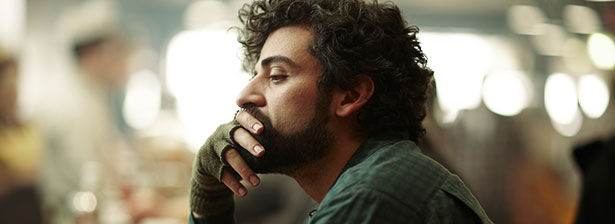
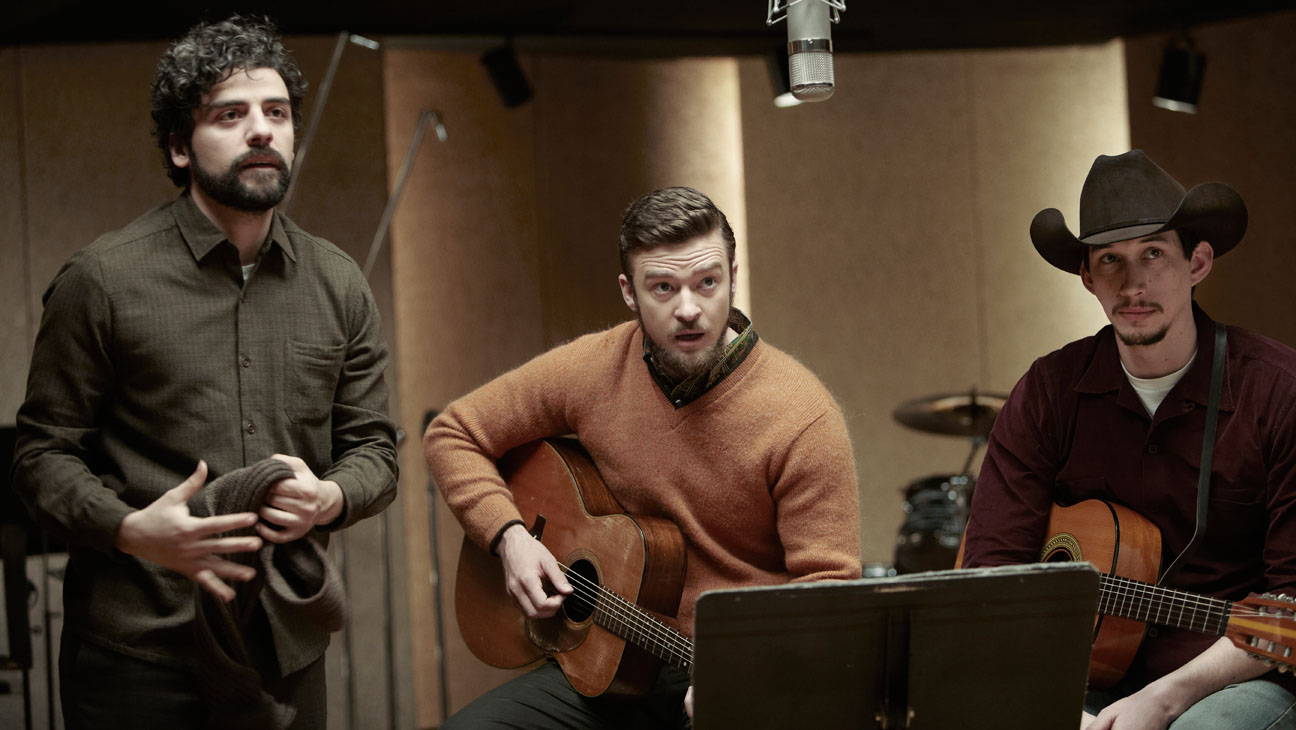
Llewyn, a blue-collar ex-Marine – a dead-pan, sardonic Oscar Isaac – is attempting to carve out a decent solo musical career (following the death of his singing partner) whilst living hand-to-mouth, surviving dangerously close to the bread line. He relies upon friends and acquaintances to provide him with a place to rest his head in between gigging and navigating a semblance of a career. He is supported by a cast of memorable characters including Jean and Jim, played by a less insipid Carey Mulligan who is extraordinary as the epitome of the angry young woman alongside her apple-pie husband Jim (Justin Timberlake); The Gorfeins: Lillian and Mitch (Robin Bartlett and Ethan Phillips), Al Cody (Adam Driver), Troy Nelson (Stark Sands), Roland Turner (John Goodman) and Johnny Five (Garrett Hedlund) – all wonderfully weird in their own way and beautifully rendered, only Sands’ Troy stumbles into caricature territory with his cardboard portrayal.

…Llewyn is Oscar Isaac’s first leading role and one the Julliard-educated actor was destined to play, his vocals are phenomenal. Although a collaborative effort by T-Bone Burnett, Marcus Mumford, and the supporting cast, all of whom sing their own song too, it is Isaac who shines; Llewyn is unlucky and not particularly likeable but as soon as he opens his mouth, (almost) all is forgiven. There is so much empathy to be felt for the character and the moment he utters the line, “I’m so fucking tired. I thought I just needed a goodnight’s sleep but it’s more than that.” Well, I challenge anybody who claims to have never felt that before.

inside_dave_van_ronk_p
inside_llewyn_davis4_zps7f488634
Dave Van Ronk Performing In NY
llewyn

While O Brother… was sepia in visuals, Inside Llewyn Davis’ palette is greys and greens offsetting a snow-kissed Greenwich Village, New Jersey, and Chicago. There is a melancholy to the visual aesthetic, thanks to Bruno Delbonnel’s cinematography who replaces Coen regular Roger Deakins. Although, an original screenplay, it is clear that inspiration was taken from the story of Dave Van Ronk, a struggling musician around the same time as the setting of the film, and his 2005 biography The Mayor of MacDougal Street, even down to the inclusion of the cat (see album cover above).

oscar_isaac_

Ah, the cat. *Everybody* has a theory about the domesticated mammal. The Gorfein’s ginger tabby, Ulysses (*other Homeric signifiers include: Troy, the gate of [the polished] horn, the fact that Llewyn is a sailor and on an existential odyssey and also the notion of music and muses. There were nine muses and coincidentally, a cat is said to have nine lives) escapes the apartment while under Llewyn’s watch and much of the film is spent searching for the escapee. What the feline symbolises is open to conjecture with only the filmmakers knowing the real answer and refusing to share. At one point a disembodied character mishears dialogue and declares, “Llewyn is the cat.” Personally, I interpreted the cat as an extension of Llewyn’s heart – missing-in-action a lot of the time -and the plot as depicting a lost soul in purgatory; stuck in limbo, fighting to make amends and yet forever doomed to remake the same mistakes, perform at the same dives, etcetera.

inside-llewyn-davis-movie-picture-8

Following a beating after playing Pappi Corsicato’s ‘joint’, Llewyn awakens in a blindingly white apartment (the Gorfein’s) and eats eggs whilst perusing their record collection. He is head-to-toe in white and pulls out a copy of If I Had Wings, his duet with Mike, there is an ethereal quality to the image. Later, his car journey with Johnny and Roland can be read as on the Road to Hell; underworld bound, with the final destination: The Gate of Horn a further allusion, Bud Grossman (F. Murray Abraham) can be seen as a St. Peter figure that will either welcome or refuse a entry into ‘heaven’. Redemption is often referred to as the ‘bosom of Abraham’ and the casting of an Abraham in this instance, in the form of F. Murray cannot be an accident. The Coen’s Jewish farce, A Serious Man (2009) deals with the crumbling life, both personally and professionally, of the title character leading him to question his faith. Llewyn Davis is of Welsh/Italian parentage, it is not too much of a stretch of to suggest Catholicism, however here, rather than question his faith, he merely ponders the transitional (and possibly the transcendental) aspect of his life.

It is interesting to further note that a lot of the songs used in the film, for example, Hang Me (Oh Hang Me), Fare Thee Well (Dink’s Song), The Death of Queen Jane, Five Hundred Miles all deal with themes of journey; of departure and/or death, and the fact that the last words of the film are au revoir as Llewyn lies in an alley having been beaten by a Grim Reaper-like figure (who also sounds suspiciously like Coen regular Sam Elliott) adds weight to the argument. Or perhaps, these words bid a final farewell to Van Ronk who died in 2002.

Whatever your interpretation, Inside Llewyn Davis is a wonderful homage to a bygone era, and a musical scene which not only continued long after 1961 but one that has seen somewhat of a resurgence over the last few years. It depicts the harshness and loneliness reality can have on your dreams and aspirations; for me one of the Coen’s finest.