Categories
Film Festival film review

Bob Trevino Likes it (Dir. Tracie Laymon, 2024)

Lily Trevino (Barbie Ferreira) is an emotionally raw young woman with a beautiful heart who spends her time suppressing her true feelings amid people pleasing and desperately trying to retain a relationship with her father Robert (French Stewart). It’s a hard slog especially given the type of irredeemable narcissistic shit of a patriarch she has been blessed with. When a date with yet another middle-age blonde goes horribly wrong, Robert blames the only person he claims has constantly ruined his life and severs ties with his only daughter, ghosts her – she is even threatened with arrest if she trespasses at his retirement village again.

Bereft at his rejection once again, Lily seeks therapy and a chance to move on. She throws herself into her work as a home-help for Daphne (Lauren ‘Lolo’ Spencer) and tries to forget the only parent she has. It works until she finds herself trawling Facebook and she runs a search on her father’s name and befriends another Bob Trevino (John Leguizamo) and a correspondence ensues. Actually, it’s more than that. It’s a beautiful friendship, a lifeline for both of them. Lily tells random people on the bus that “my new dad is so kind.” He is, although horrible at basketball and for Bob, Lily allows him to take her camping for the first time, open up about his deceased son who he shared with scrap-booker obsessive and champion Jeanie (Rachel Bay Jones), and impart wisdom – “We’re all broken. We all have things we need to heal from.”

For the cynical, this is a ridiculous premise for a film and in anybody else’s hands it may well have been but writer-director Laymon has first-hand experience of such an unlikely act of kindness. She and her Bob – despite never meeting IRL – had nine years of correspondence. Her choice of casting is also perfect. Ferreira and Leguizamo are equally as wonderful as the other, a perfect fit of chaos and calm, and earnest chemistry. Their supporting cast are great and are all provided with their own arcs within the overarching narrative. Stewart is pretty unrecognisable as the bio-dad and while his actions are incomprehensible, it is easy to render him sad too; hurt people hurt people.

Social media gets a bad rep and for all its trolls, toxicity and often ruinous effects on mental health – certainly more so since the M*sk administration of Twitter – however, there are pockets of the internet which are there for good. Think all those people who never fail to share the Tom Holland Lip Synch Challenge video or that woman who accidentally texted a complete stranger about Thanksgiving dinner… that guy is still an annual guest at her table. Tracie Laymon’s Bob Trevino Likes It is up there with putting a positive spin on the worldwide web and its multitude of apps – Natalie Morales’ Language Lessons (2021) also did something similar a few years back.

This film will warm the cockles of your heart and break it into a million pieces before sticking it back together again. There’s something incredibly powerful about a woman finally accessing her rage, asking for help when she needs it and ultimately saving herself albeit with a little help from a chosen family. Kindness costs nothing and this film hammers home the importance of this and the need for human connection, especially in a world which often leaves you disconnected and in the cold. Open your heart to it, it’s so surprisingly wonderful and lovely. Enjoy and proceed with tissues.

Categories
Film Festival film review

Andrea Gets a Divorce (Dir. Josef Hader, 2024)

Policewoman Andrea (Birgit Minichmayr) wants a divorce. Her ex-husband Andi (Thomas Stipsits) is the life and soul of any (birthday) party but they want different things. He wants her back, to continue drinking excessively, embarrassing her in public and she wants a divor… well, you get the picture. A new job awaits her in the capital St Pölten, she’ll be a Detective Inspector interacting with “real criminals” and not wasting time on the side of the road catching speeding violators.

After celebrating partner Georg’s (Thomas Schubert) birthday in which Andi makes yet another desperate attempt at getting her back, this time imploring her to arrest him, revving his car engine while intoxicated. She confiscates his car keys and makes him walk home. Later, while she’s driving home her father calls and she takes her eyes off the road for a second and accidentally mows down Andi. She tries to save him and when it is futile, she gets back in her vehicle and drives off. Only when Georg hammers on the door to tell her that her estranged husband is dead at the wheel of RE teacher and ex-boozer – now an imbiber of black tea and milk only – Franz Leitner (Josef Hader) does Andrea realise that she may just get away with it.

Andrea Gets a Divorce is a quietly charming little film, an Austrian dramedy which actually has much to say beyond its humour (though not quite the biting satire we have come to expect from Austria) and dose of melancholy. Whether commenting on the effects of alcohol – Austria changed its alcohol laws in 2019 – without being judge and jury, casual racism within a rural town, or the sly inherent sexist commentary a woman faces, and a police officer at that. Andrea’s weight, marital status, biological clock are all up for discussion, at one point she is even likened to an SS officer. She’s a single woman bearing the burden of responsibility for everything it seems and not merely straddling her new role as a law-breaker. Finding balance and prioritising themselves is not always the natural way of things for a woman and this film depicts the push, pull and self-doubt beautifully. Or as remarked early on, “the women are moving away and the men are getting weirder.”

Minichmayr is excellent as the closed-off lead, she who rarely smiles while struggling with her guilt and sense of justice. Writer-director Hader follows up his 2017 debut Wild Mouse with this and is delightful in support as forgetful Franz whose ill-gotten culpability threatens to ruin him in a haze of late-night disco dancing and G&Ts. While it could have been easy to write off these people as simpletons from a small town, Hader avoids leaning into clichéd stereotypes. There is some complexity and layering to these characters who are settled in their mundane provincial little lives, somewhat fearful of change which tends to be true of most quaint little places.

All roads are paved with good intentions, or just the one in and out of town which is shot perfectly and bookends a sweet film. Andrea Gets a Divorce is a wonderfully wry and sensitive piece of storytelling about life and friendship, forgiveness and guilt surrounding a divorce and bereavement at losing a whole person or that sense of self. It is woven together with an amusing if deadpan sense of humour, often callous but rarely alienating. The joke punchline being the very film title itself.

Categories
Film Festival film review

Bring Them Down (Dir. Christopher Andrews, 2024)

Christopher Andrews’ directorial debut begins in the confines of a car as it races down a country lane at breakneck speed, a young woman Caroline (Grace Daly) is in the back and an older woman Peggy O’Shea (Susan Lynch) sits in the passenger seat. She’s had enough has Peggy, determined to leave the man who “terrifies” her, imploring ‘Mikey’ to “slow down”. This just ensures that the young driver, Michael, puts his foot down even more forcing the car out of his control.

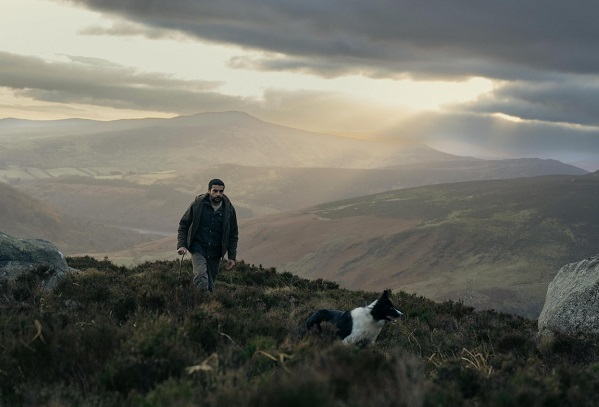
Flash-forward twenty years as daylight gives way to darkness. Storm Noah is on its way, and Michael (Christopher Abbott) returns from tending his sheep to find his gate destroyed. His hands are crimson, fingers tinged blue from the cold weather as he and his dog Mac make their way inside. A phone call from the man they share a hill with, Gary Keeley (Paul Ready), causes Michael’s Ray (Colm Meaney) to fume and spew vitriol, as we are swiftly realise he is wan to do. Two of the O’Shea’s rams are dead on Keeley land and have to be destroyed. Rustlers are maiming sheep across the county, cutting the legs off livestock, destroying livelihoods and outsiders like “Poles or one of that shower…” are blamed for it. Little does Michael know the culprits are far closer to home and two rams is nothing compared with what is to come.

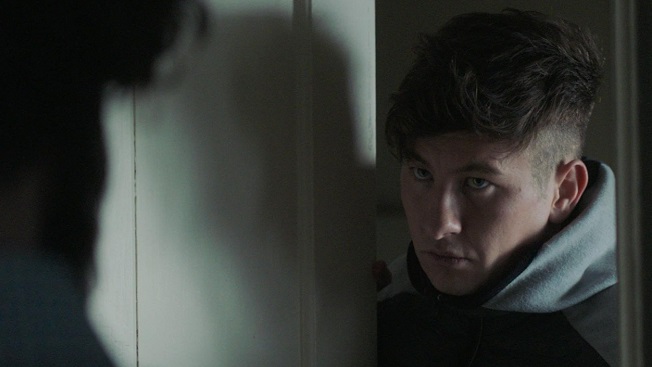
Andrews uses the farming crisis, boundary disputes and tourism-led gentrification in Ireland as a backdrop for his film (he also wrote the screenplay). Gary is in huge financial debt due to an investment of holiday homes, the building of which has stalled due to a large piece of farmland in the vicinity; the owners of which refuse to be displaced. Characters are at emotional and economic odds, the animosity historical. It goes way beyond land borders and boundaries for these two particular families – Caroline (Nora-Jane Noone) permanently scarred from the car accident seen in the prologue is now married to Gary and mother of Jack (Barry Keoghan) – with the two main protagonist sons in the middle of a tense situation neither asked for.

Filmed in Wicklow (the gorgeous pastoral landscapes do for Ireland what God’s Own Country did for Yorkshire), Bring Them Down unfolds like a neo-western but is steeped in Irish tragedy, as two sons reconcile family loyalty with the men that rule their respective roosts destroying the other at whatever cost. There are two very different patriarchs in Gary and Ray. One is a couple of decades older than the other and yet similarly unwise – probably bearing the brunt of their own fathers before them – breathtakingly noxious and incapable of breaking the cycle of bruising generational trauma and misguided vengeance. The film straddles the notion of tradition and modernity which is most impactful in how the two families communicate. The O’Sheas largely speak Gaelic to one another, the Keeleys English, which is turn signifies a larger territorial implication.

The film is split into two acts and the shifting of perspectives works brilliantly adding some nuance to a provocative and compelling drama which is relentlessly grim. Erratic camerawork that can be often out-of-focus only adds to the brutality onscreen, at times nausea-inducing, backed musically by a bass heavy soundtrack and the semi-persistent pound of a Gaelic drum. The performances are, for the most part, excellent. Meaney is as his name suggests and in the short amount of time he is on camera manages to convey the fear Ray instilled in his wife and child once upon a time. Noone provides fine support as one more underestimated, if somewhat reductive, woman looking to flee a marriage.

I am still not overly fond of Keoghan and his acting style, the twitching oddity and/or sociopathic man-child feels overdone at this point. For me, it is Abbott and Ready who carry this film. Their performances are as multi-layered as their Arran jumpers, padded gilets and waxed jackets. Brit Ready (hapless Kevin in Motherland) is a revelation as unpredictable Keeley who can blow a gasket just as easily as he’s wracked with sobs. Which leaves American Abbott – one of the best actors of his generation (see James White or any number of his supporting roles if you don’t believe me) – his accent is flawless, dipping in and out of Gaelic with an ease which belies his Connecticut upbringing. His complicated and stoic Michael internalises everything portraying a multitude with a silent stare, slump of the shoulders or sniff of the nose. This is a man constantly battling to do the right thing grappling to remain composed.

Bring Them Down is a suffocating and stressful watch depicting internal strife and the harsh, brutal and violent realities of a small rural community within which toxic masculinity breeds in all its contemptible shame.

The film is released in UK cinemas on Friday 7th February courtesy of MUBI.

Categories
Film Festival film review

Housewife of the Year (Dir. Ciarán Cassidy, 2024)

This documentary opens with a citation of article 41.12 of the Irish Constitution in which it states that no mothers will be “obliged by economic necessity to engage in labour to the neglect of their duties in the home.” The marriage bar would remain until 1973 three years after second-wave feminism hit Ireland. Preceding both, in 1968, was the launch of the annual contest Housewife of the Year.

Described as a “friendly competition”, women across Ireland would be judged on how effectively they budgeted and prepared meals. As well as their sense of humour, appearance, personality, sincerity, and civic mindedness – think Miss World sans swimwear segment. It would be televised from 1982 with beloved broadcaster Gay Byrne (1934-2019) as host with the winner getting £300 in cash along with £300 in white goods, usually a “beautiful cooker.”

Director Ciarán Cassidy uses the backdrop of this derisive, surreal and sexist competition to interrogate the role of women in Irish society over the years. There is mention of the Magdalene Laundries, the Catholic doctrine and rigidity surrounding contraception, poverty, the Ann Lovett tragedy of 1984, the Divorce Referendum of 1986 (which was eventually overturned in 1995). Yet, the real meat on the bones is the present day interviews with some of the contestants (and winners).

These extraordinary women – Margaret, Ena, Ann, Sally, Patricia, Miriam, Ellen, Bernie and Philomena – and their stories are fascinating and kind of shattering in equal measure. Their lack of choice and how they adhered to a life of wife and mother, their confinements lasting far beyond the forty weeks of pregnancy. Interned not only in the marriage itself but many quite literally pregnant for decades. Ann was married at 20 years old and by 31 had thirteen children (including four sets of twins). Patricia had to juggle her housework, child-rearing and fulfil her duties as a postal worker when her husband fell ill and unable to work. Miriam sacrificed her career as a Nurse in London just as soon as she uttered her vows, while Bernie was petrified that she’d be found out, her eldest child’s illegitimacy exposed, that her subsequent marriage and further five children would render her disqualified.

On the surface, Cassidy’s film questions the conformity perhaps just not quite as much as the women themselves. Many lament that the decisions made for them, this lack of choice was ridiculous but yet, somewhat paradoxically, credit the competition with giving them the confidence and self-esteem to speak up and question if there was more to life than what was expected of them. Or, in the case of Ellen, the impetus to survive when her husband walked out on her.

Housewife of the Year does not reinvent the wheel in terms of documentary style, combining a lot of talking head interviews with archival footage, however, it is beautifully edited by Cara Holmes and having the former contestants introduced via a spotlight on stage is a lovely touch. It leans heavily into nostalgia, is always sympathetic but never delves too deeply or rages quite hard enough, in the way that many an audience member will upon viewing. While it is pretty wonderful that these women are here to tell their tales, it is always at the forefront of your mind that many, many more are not. Women and girls abandoned by blatant misogyny and a deplorable system, which would have sooner seen them dead than accept a teenage pregnancy or fill a prescription for a diaphragm (without a court case). Not so far removed from where the USA is headed today.

During its run, the contest gave face to a generation of women who in spite of it all kept going and while the State endeavoured to make them second-class citizens, it was their resilience which ensured that, eventually, they would endeavour to make the State work for them. That they could achieve something, there was possibility in the future and change would come. Eventually.

Housewife of the Year plays this year’s Irish Film Festival, London which runs from 13-17 November.

Categories
Film Festival film review

Mother Vera (Dir. Cécile Embleton & Alys Tomlinson, 2024)

“I didn’t want to become a nun,” confesses Vera at one point during Cécile Embleton and Alys Tomlinson’s absorbing and beautifully structured Grierson Award-winning documentary, Mother Vera. The genesis of which was a black and white photograph (see above). The portrait was taken by Tomlinson, during one of her visits to Catholic pilgrimage sites and published in her book, Ex-Voto – so named for the devotional votive offerings often left at these sites of worship.

For some sisters (and Catholics), the calling can be romanticised, childhood piety guides the novitiate on their path and any struggles with faith rarely discussed out loud. For the titular figure at the centre of this film nothing could be further from the truth.

Born Olga, Vera’s road was one filled with nightclubs, perfume, motorbikes and heroin. Not to mention the imprisoned husband before she found recovery, and God. Even after twenty years, redemption is still on the table: “I broke the lives of many people. I must be from hell.” Her backstory is slowly drip fed to the audience, almost elliptically, and delivered in short, often blunt, sentences which while never really expanded upon are without self-pity or, refreshingly, true regret. She is the perfect conduit to help the ex-prisoners in the congregation, men cloistered under her care seeking to reconcile their own addictions and reclamation.

Diegetic sound reverberates in every striking frame and there are many, austere and stunningly rich. From the nun shot from behind ringing bells, each peal seemingly moving ropes at will making her look like a marionette to close-ups of women reading scripture and their hands clutching rosaries, forefingers and thumbs cradling each bead as they silently count the prayers. Religious iconography adorns most interior walls and then there is the neon lighted cross at the head of an outdoor baptismal pool which upon first glance resembles an open grave. Images which are fleeting, often in isolation but evocative enough to render to memory.

Daily life at the St. Elisabeth monastery is filmed in stark contrast, black and white only further enhances the grey. Lighting is reduced to flickering candlelight, low camera angles focus on the swishing of the cassock as feet climb stairs, shadows move en masse until focus eventually pulls upwards and the apostolniks and skufias of the sisters, old and young alike, come into view. This contrast is never more apparent than when those dark melancholic frames give way to the daylight and the deep snow Vera rides her steed through heading towards the ominous forest on the grounds periphery. It is outside with the horses where she finds peace, her pockets of joy reserved for when she visits her family.

This documentary sits very comfortably within the realm of ‘slow cinema’, thematically (and visually) similar to films like Ida (Pawlikowski, 2013) and The Innocents (Fontaine, 2016) but with a fundamental truth and reality at its core. It carries emotional heft as the search for liberation and personal freedom becomes ever more apparent. The shift in the journey of the enigmatic Olga/Vera – herself the personification of a votive offering – also occurs in the filmmaking too. The slow transition to colour in those last twenty minutes is glorious and perfectly judged, the first initial bleeding of which comes after the inky black apostolnik is seen burning into ash and dissolving into the cold night air.

Mother Vera defies expectation. It is a visually gorgeous meditation in (mostly) monochrome – filmed with creativity and originality through a non-judgemental lens about one resilient and courageous woman’s search for identity and self-acceptance. Embleton and Tomlinson took a still image and over 91 minutes made it come to life onscreen.