Héctor Babenco’s collaborative Kiss of the Spider Woman, is a stunning film which, in part, plays with the harshest realities and escapist fantasies and yet challenges both social and political norms, even some twenty years after release.
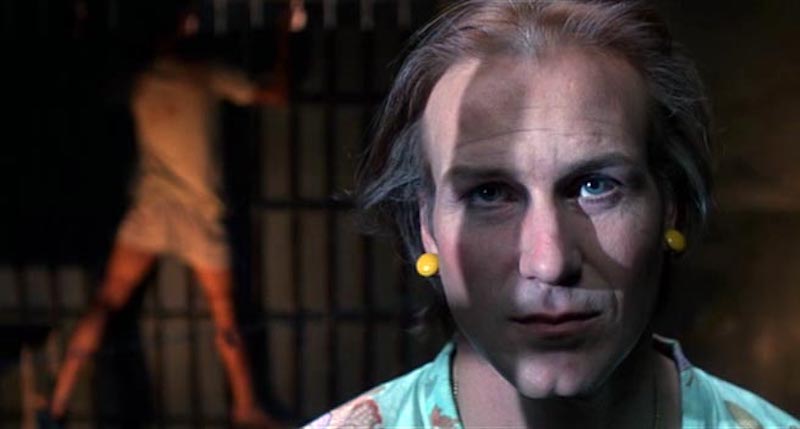
Luis Molina (William Hurt) and Valentin Arregui (Raúl Juliá) share a prison cell in Brazil. They are unlikely bedfellows, not least due to their partisan beliefs. Valentin is a revolutionary; a political prisoner – tortured almost daily by the guards – while Molina identifies as trans and is incarcerated for engaging in a sex act with a minor. There is little more to add in relation to the plot as it unfolds so surprisingly and gracefully, that is really needs to be discovered unspoiled. Based upon Manuel Puig’s novel of the same name, …Spider Woman was initially a potential vehicle for Burt Lancaster. After languishing in development hell while director Babenco made several attempts to seduce author Puig with ice-cream (!) in order to obtain the rights.
It is a spirited film in spite of its subject matter and is truly one of the most intriguing prison-dramas, I have had the pleasure of viewing. While there are small supporting roles, it is Hurt and Juliá’s film. The way they play off of each other is astonishing; like a dance – rhythmic, precise, sophisticated and incredibly moving. It is a complete role reversal, Juliá is restrained as Valentin while Hurt – usually so staid on film – is the extroverted one in his flowered kimono and blood-red turban. His costume(s) and hair colour pop against the greys and blues of the dreary cell backdrop. As they serve out their respective time, Molina describes a love story he has watched at the cinema – in actuality a Nazi Propaganda film named In Her Glory – recounting the affairs of lounge singer Leni Lamaison (Sonia Braga); ‘our’ film cutting to the sepia toned histrionic set of the other. These intercuts are a little clunky and it is no surprise that these sequences were filmed after the main story had wrapped, however, regardless they work and Braga is mesmeric, not only as Lamaison but as Valentin’s girlfriend Marta as well as the titular Spider Woman. Her presence shapes the reality and fantasy aspects of the film and helps them merge as the imagined eventually takes over.
Kiss of the Spider Woman is a visually gorgeous masterpiece, it is rich, ambivalent and mysterious while playing with an ideology which is truly rewarding. There are nuances amid the themes of pain, fear and humiliation as the homosexual and Marxist attempt to discover what makes a real man. Released during the Reagan-era and as Rock Hudson died, declaring his sexuality and the illness which would claim his life, …Spider Woman captures the zeitgeist of the 80s and yet, amazingly, remains captivating and somewhat timeless.
Two years ago, the Wonder Woman film had been announced, a leading lady cast, and I wrote one of those self-important, attention-seeking open letter to DC. I implored them not to use the New 52 storyline (turns out I’m still not a fan), to consider the character, and make a film worthy of the woman…
Fast forward to 2017. Present day bookends the main flashback narrative as Diana Price, currently residing in Paris, receives *that* photo from Bruce Wayne. We are then introduced to a very determined eight-year-old Diana (the captivating Lilly Aspell) who is desperate to train with her fellow Amazons, including Artemis (Ann Wolfe), Menalippe (Lisa Love Kongsli), Epione (Eleanor Matsuura), Philippus (Ann Ogbomo) et al under the watchful eye of her aunt, General Antiope (a tremendous Robin Wright) and the revered leadership of Queen Hippolyta. In an attempt to quell her daughter’s thirst for combat training, Hippolyta (Connie Nielsen) recounts the story of their people accompanied by some rather impressive baroque visuals all within the premise of a bedtime tale, and then forbids her curious child from learning to defend herself. This only instigates the girl’s secret training but through Antiope’s teaching, Princess Diana’s potential is revealed.
Predictably, the Amazons exposure to the outside world arrives in the form of one Captain Steve Trevor (Chris Pine) who crash lands his plane into Themysciran waters, hotly pursued by German soldiers. Diana, of course, saves his life, intrigued at the sight of a man. One thing leads to another and soon she is grabbing the Golden Lasso of Hestia (one-time the Lasso of Truth of Aphrodite forged from the golden girdle of Gaea), a pretty impressive shield, and the “God-killer”, a bronze-gilded sword before setting sail to “The War” with Trevor. Not before a pretty impressive showdown between the Amazons and the gun-wielding soldiers. Surely, as per Hippolyta’s history lesson, these men are controlled by Ares, the God of War who was sent packing long ago by his father Zeus.
Ah, Zeus… that’s my biggest gripe. The New 52 began circulation in 2011, during the DC relaunch and offered a version of Wonder Woman that claimed to be close to the character’s classical roots and told a story of Gods, Goddesses, heroes and prophecy. Ancient myths provide archetypes that can be appropriated and a mythology which can be repurposed, sure okay, but gone is the fatherless child moulded from clay and given life by Aphrodite, and in her place, a daughter of Zeus. This iteration challenges the definition of family, and not least William Moulton Marston’s original idealised matriarchy. Just how many angry siblings will turn up in the future and reign havoc? There are also some dubious gender politics which are often at odds with the beloved 76-year-old character.
Did it need challenging? Not remotely, but DC films since Nolan (and the relaunch) have proven, it’s all about the dark, oppressive, depressing, grounding-in-reality adaptations. This feels so new in comparison to all those other heroes who have seen several versions come to fruition, despite only having one or two years on WW. They have been afforded some screen evolution and a film history where she has not. Even the war depicted was changed in this cinematic outing. Wonder Woman was always the symbol of women’s contribution to the WWII resistance and the women’s movement. Now, she is placed within the confines of the First World War, and lovely visuals aside, a nice nod to Superman (1978) and one mention of suffrage, makes little difference to the overall plot, other than to contain the thematic critique of war and patriarchy. Something that still would have worked if set during the forties. Now, we have to believe that our compassionate and caring Diana turned her back on humanity during WWII…
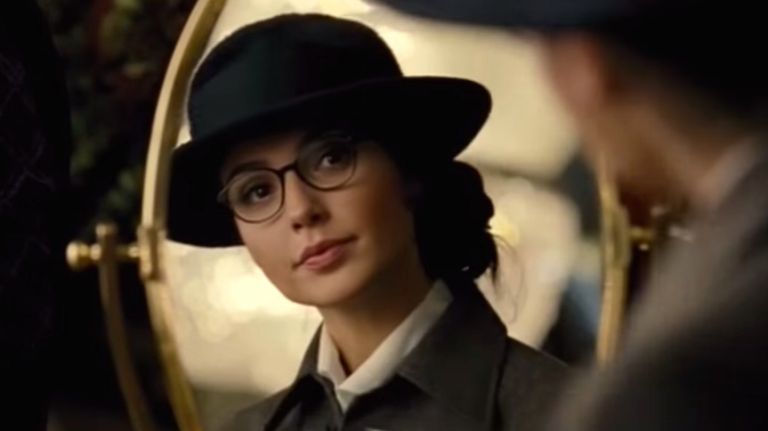
Origin niggles aside, I thoroughly enjoyed Patty Jenkins’ film, more so with each viewing. There is action, levity, and warmth, Diana even gets to try her first ice-cream, which is wonderful. Gadot exceeds expectations as the Warrior Princess. Her Diana Prince is driven, yet her naiveté is so well measured; for all her innocence and misunderstanding of how man’s world works, she is no passive wallflower. She has agency and a voice and is unafraid to use it. She doesn’t require rescuing but is only too happy to rescue anybody who needs her. She is intelligent, brave, resourceful, humble, and kind. Love is the impetus and becomes integral to her strength.
When she leaves Themyscira and ventures out into the destructive world of men, Diana believes that she is seeking Ares; who may now be in the guise of General Erich Ludendorff (Danny Huston). He, with his masked partner-in-crime Dr. Maru (Elena Anaya) at his side – dubbed Dr. Poison for her penchant for making toxic concoctions – intend to prevent armistice and cause as much death, destruction and suffering along the way. Only by destroying Ares will peace be restored, Diana states earnestly, Steve nods along, wishing he could believe in her myth.
While the villains (at least one in particular) are somewhat underdeveloped, the ‘good guys’ fare a little better. Sameer (Saïd Taghmaoui), The Chief (Eugene Brave Rock) and Charlie (Ewen Bremner) are all deeply flawed men and products of their environments but their loyalty is commendable. They make an unlikely band of brothers, led by an affable Pine, who are more than content to fight alongside a woman. In yet another change, Etta Candy (Lucy Davis) is no longer the brash American we know and love, but British and despite their close friendship in print, she and Diana are not afforded enough screen-time together. I would have loved more Etta, Lucy Davis is utterly charming in the role.
Wonder Woman is not perfect, there are a few filmic flaws, however, there is more than enough magic within a handful of scenes to make it memorable, captivating and awe-inspiring. While it would have been nice to have stayed on Themyscira a little longer, the fight sequences are a sight to behold. Women: gracefully fearless, bold and brave, handing male derrières back to their owners certainly has a desired effect. The colour palette is, at times, stunning and makes the most of Paradise Island and the blue-grey landscapes of London only serve to make Lindy Hemmings’ work on the iconic red, gold and blue costume and armour pop. Diana had already declared “I am the man for the job” and an hour or so further in, she proves it physically with the crossing of No Man’s Land. This is where Rupert Gregson-Williams’ score reaches its epic aural beauty, moving from that piece of music to Wonder Woman’s Wrath, which incorporates Zimmer’s theme, is perfectly executed and a real highlight. The crossing of No Man’s Land and the subsequent scenes in Veld make the film; throat lumps were swallowed and tears leaked. This is the character I have loved and adored since I was a child: selfless, strong and fearless.
Yes, there is emphasis on the female form but it is a source of power and not necessarily pleasure. On Themyscira, these are women of differing ages, sizes and of colour. These are active bodies and not merely for titillation, Jenkins really steers the camera away from what could have been deemed salacious shots in another pair of hands. Diana represents a vision of warrior qualities that are equal to or greater than men’s and exemplifies a mix of gender qualities that adult men and women recognise as necessary, and yet never loses her femininity. Wonder Woman is powerful, not in spite of her femininity but because of it. Marston believed that young women (children and men too tbf) needed to see a heroic image of themselves, and it has been a long time coming but she’s here, at last, off the page and in the flesh; for us all to see, believe in, and realise our own capabilities via her.
This first attempt may lack polished visual effects, suffer occasionally from pacing issues, the odd bit of dubious dialogue and the final third, specifically the end fight, does feels like a misstep. However, Wonder Woman proves that a big budget can rest upon the shoulders of a woman director – not a “politically correct token” or a “gamble” – and that a female superhero and feminist icon can front a film and be a box office draw whilst being caring and altruistic. Her strength lies not only in her indestructibility but her heart and capacity to love, and to me that is far more important than the overuse of slow-motion. It may not be the film deserved but it’s one you can believe in.
Nikolai Leskov’s 1865 novella Lady Macbeth of Mtsensk has not only been staged as an opera, a ballet, and adapted as a 1962 Andrzej Wajda film but now acclaimed one-time Young Vic director in residence, William Oldroyd, brings Alice Birch’s screenplay debut to contemporary cinema audiences. Transposing the Russian set story to the 19th century, specifically the rural North-East of England.
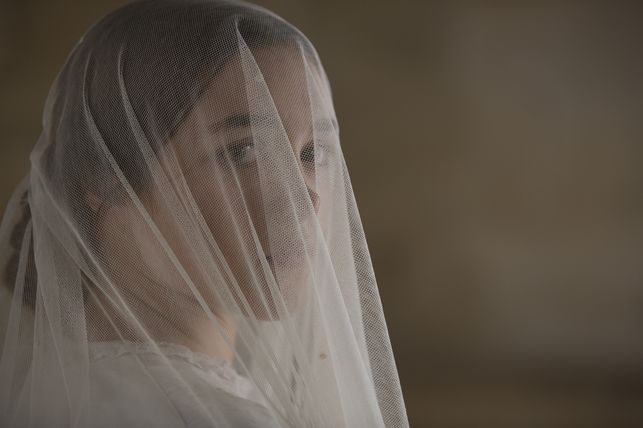
This Lady Macbeth tells the story of Katherine (Florence Pugh), sold into marriage to Alexander (Paul Hilton) and forced to live with the older man and his father, Boris (Christopher Fairbank). Her new husband doesn’t touch her, barely speaks to her and expects “his property” to remain indoors at all times. Katherine’s only physical contact is with her near-mute maid Anna (Naomi Ackie).
Gender hierarchy in 19th Century Britain meant that women were deemed second class citizens and treated as commodities and here, Katherine is no different; sold into a loveless marriage alongside a patch of land, initially unable to exercise much control over her body, her voice, even her sleep patterns, in a house that is determined to silence her and keep her quelled. Katherine is easy to empathise with as we see her sitting alone, day after day, fighting to keep her eyes open. She craves the outdoors, the right to breathe and the freedom to do as she pleases. Cinematographer Ari Wegner’s tight framing is oppressive, the tension palpable, as we are invited to witness the daily rituals of a woman; silence broken only by the vicious raking of a hairbrush dragging out knots and tangles of hair or the violent pulls of the restrictive corset cutting off the air supply, crushing lungs with each tug.
When her husband and father-in-law go away on business, her wish for air is granted, however, on one of her strolls, she gets inappropriately handled by farmhand Sebastien (played beautifully by Cosmo Jarvis). When he visits her that night and attempts to force his way into her marital bed there is a struggle before she drags him in. With Sebastian, she can exert control, exude sexuality, seduce and subjugate. While Shakespearean Lady Macbeth was punished for her explicit threat to the patriarchy, Katherine subverts all expectation, and at one point literally laughs in the face of it. She is the epitome of looking like the innocent flower but being the serpent underneath.
Florence Pugh is astonishing in this unsettling tale. Her character’s adultery, defiance and contempt glorious in its transgression. Pugh made a terrific impression in Carol Morley’s The Falling (2015) but this incredible performance is the one which will make her a star. She is ably and brilliantly backed by co-stars Cosmo Jarvis and Naomi Ackie as, pawns to be manipulated, Sebastian and Anna. Their ethnicity is never overtly commented upon, but reflects the detailed, historically accurate, research the filmmakers carried out of the period. Despite their class difference, Anna and Katherine are the same, products of the society they inhabit; subservient and imprisoned.
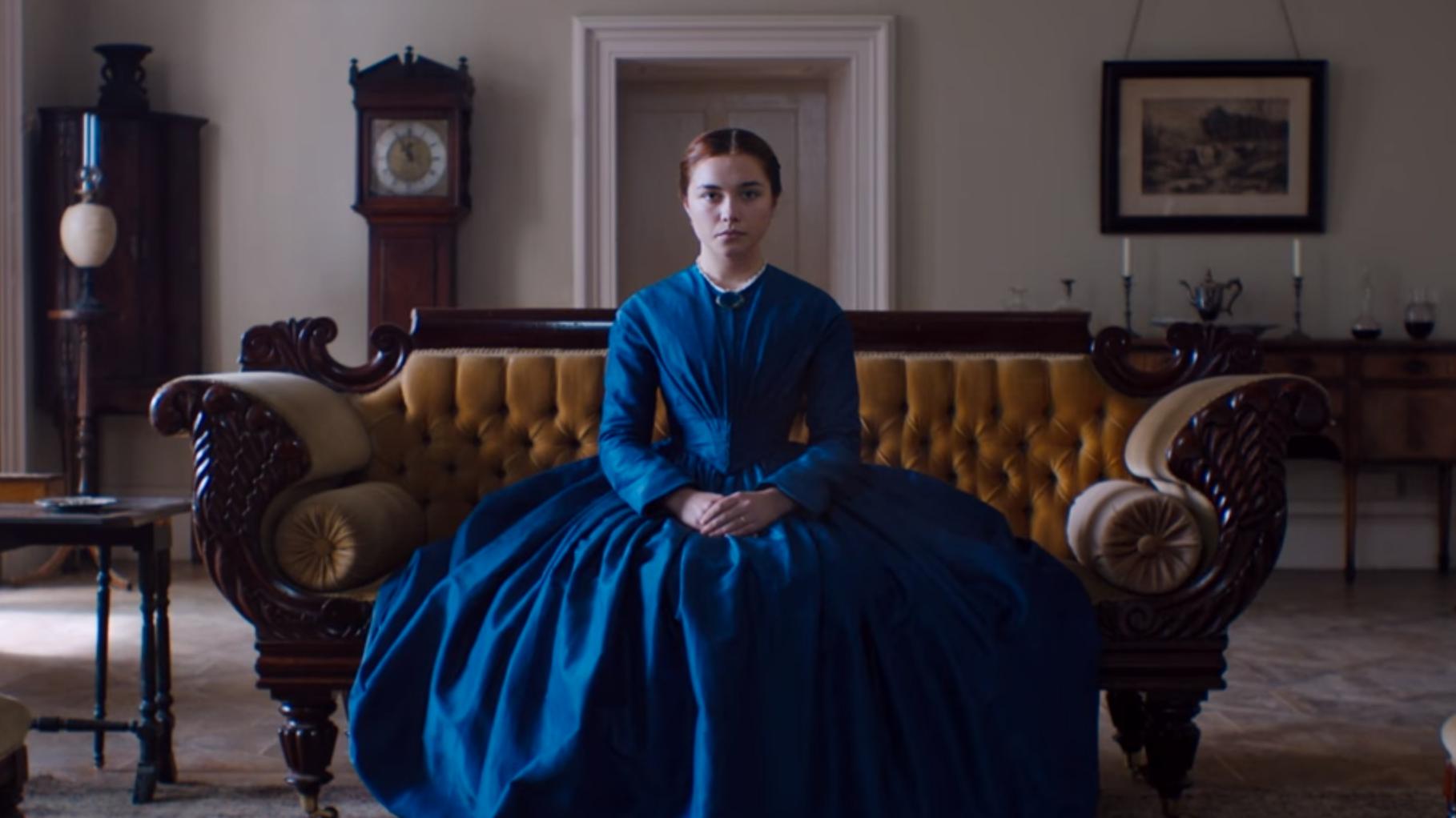
Oldroyd’s production is without complexity, there’s the voyeuristic static camera, long takes, lingering periods of silence which only add to the suffocating drama and tension and serves this type of simple, albeit subversive, narrative perfectly. The beauty lies in the performances, not one can be faulted, and the stark cinematography and lack of musical cues packs a stifling punch. Its austere and almost severe lack of colour (save for a beautiful peacock blue dress designed by Holly Waddington) indoors is juxtaposed quite beautifully with the warming tones of the exterior shots which are reminiscent of Arnold’s Wuthering Heights (2011) and Campion’s Bright Star (2009).
Tense, beguiling, and suffocating, Lady Macbeth is a compelling adaptation of a Russian novella via Shakespearean literature and depicts a microcosm of a British society of the past. Pugh delivers an outstanding performance – in a superb drama – as a powerful, defiant, adulterous and ambitious woman who owns her autonomy in a time when she was afforded none.
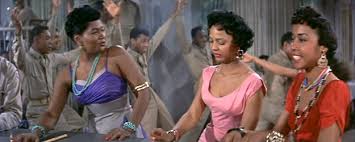
Shot in glorious technicolor and Cinemascope, Otto Preminger’s Carmen Jones is a treat for the senses. From the opening credits and the strains of Bizet’s opera, vivid colour floods the screen in this lovely restoration from the BFI.
Using Bizet’s 19th century-set opera is transposed to a Southern military base at the end of the second world war, starring an all-black cast performing an Oscar Hammerstein book and lyrics. In terms of musicality it never quite works, I mean, who dubs Harry Belafonte? However, Carmen Jones is an incredibly important film, and one that should be heralded as monumental.
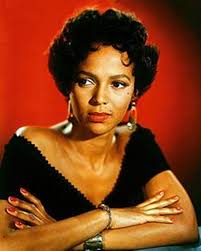
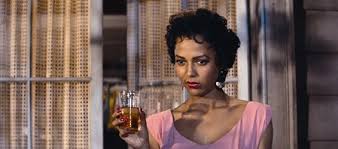
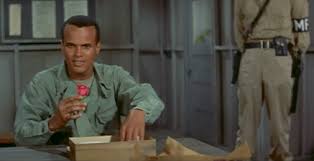
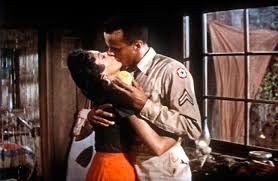
Carmen (played beautifully by Dorothy Dandridge) is a troublemaker. She exudes a tomboyish quality; a playful femininity which sees her climbing, running in heels, happy for rough and tumble, and an inner strength which belies her slight frame. Her arrest places her in a car with strait-laced G.I. Joe (Belafonte). He is charged with driving her to jail. Needless to say, Carmen tried to escape and after wrestling Joe to the ground, he finds himself in her childhood home, being cooked for, seduced away form his girl Cindy Lou (Olga James), and then imprisoned himself for allowing the duplicitous Ms. Jones to flee.
Sultry Carmen is hedonistic, carnal and revels in her freedom whether sexual or geographical – she makes it abundantly clear – she will never relinquish it. She is the epitome of the transgressive woman, and just like those women of cinema (and in keeping with the opera’s tragic heroine), she is irrevocably punished for her transgressions. Interestingly, examining the notion of freedom, conformity, acceptability and erotic desire of Carmen is worth questioning; is she is defeated or merely defiant? Her active sexuality does not appear over-sexualised but feels liberated and yet it is the scenes in which Belafonte is shirtless that feel fetishised. As Carmen’s freedom is threatened, her frequent calling of Joe “boy” loses its affection and becomes derisive.
Love, jealousy and tragedy are abound in this opulent and liberal affair, people of colour fill every frame, Dandridge and Belafonte are supported by Pearl Bailey, Joe Adams, Diahann Carroll and Brock Peters to name but a few. They have agency, and are (mostly) free from stereotype. With songs entitled “Dat’s Love”, “Dis Flower” and “He’s Got His Self Another Woman”, written to Bizet’s musical score, and every effort to present a black community (albeit thought through the lens of an émigré man), it seems incredibly odd to disjoint the narrative and risk alienating the viewer by having these songs dubbed with the operatic vocal talents of Marilyn Horne and LeVern Hutcherson. I can’t help but feel these songs would be more memorable, more gut-punchingly real if sung by the souls that play each character; the opera dub upsets the rhythm of the film.
Carmen Jones is wonderful but deserves to be seen on a huge screen, it loses a sense of this grandeur as a home release yet, regardless, is a gift; even an imperfect one. Its complexities certainly make for an interesting watch and one to unpick. Preminger’s use of space and incisive camerawork means there is a lot of visual charm but it feels muddled, a historical achievement for 1954, absolutely but missing something musically. The imposition of Horne’s vocals disjoints and the differences in pitch, tone and timbre seem, at times, farcical. It did, however, make an icon and Oscar-winner of Dandridge and rightly so, she is incredible in the role, and why CJ should always be hailed as “culturally, historically [and] aesthetically significant.”[1]
Carmen Jones is available now on Blu-ray and screened as a part of the BFI’s Black Star season which ran from 17 October – 31 December 2016.
[1] In 1992, Carmen Jones was selected for preservation in the United States National Film Registry by the Library of Congress who described it as above.
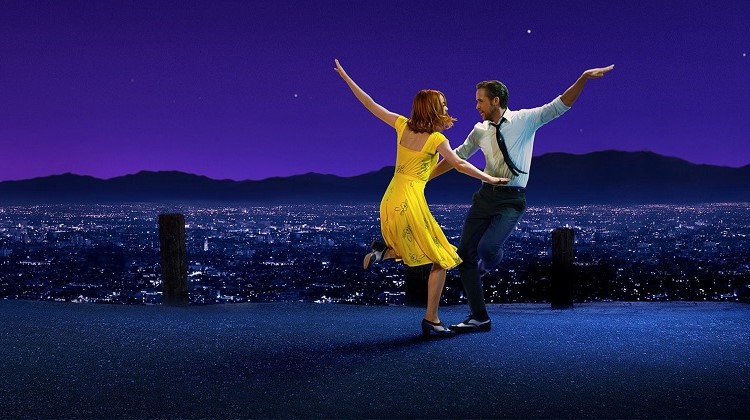
Damien Chazelle’s 2014 feature debut, Whiplash, think Full Metal Jacket within a musical conservatory, featured an obsessive jazz drummer and his pushy teacher. In his follow-up, La La Land, music is once again key as pianist Sebastian (Ryan Gosling) attempts to earnestly preserve traditional jazz in downtown L.A. Across town – and yet destined to bump into each other at every possible turn – is barista and wannabe actress Mia (Emma Stone).
La La Land’s DNA is laced with nostalgia, a yearning for the past while attempting to carve out a future. There are nods to Singin’ in the Rain, An American in Paris, The Umbrellas of Cherbourg, Rebel Without a Cause, and even Mary Poppins dotted amongst the score and original songs penned by Justin Hurwitz, Benj Pasek, Justin Paul, and Chazelle. The main theme and ensemble songs stand out, in particular the opening number. Another Day In The Sun is glorious, it alleviates a traffic jam on a stiflingly hot day, like the Everybody Hurts video only on prozac, and possibly breakfast alcohol. It pops with colour like an overlong GAP® commercial (not a criticism) and is a joy to behold. Sadly, the rest of the film doesn’t live up to that first five minutes. There are moments sure but it’s all rather sedate from then on, in spite of a couple of catchy riffs and melodies. The catchiest on the soundtrack i.e. the one I’m currently playing on repeat is John Legend’s Start A Fire.
Legend plays Keith, Sebastian’s one-time musical collaborator, they fell out over how they believed Jazz should be played. I’m with Keith – and his fabulous track – it needs to evolve. “You’re so obsessed with Kenny Clarke and Thelonious Monk—these guys were revolutionaries. How are you going to be a revolutionary if you’re such a traditionalist? You’re holding onto the past, but jazz is about the future.” Given a dubious script, it almost makes complete sense to learn that musician Legend ad-libbed this whole monologue. Similarly, Chazelle’s take on the Hollywood musical is just that too – traditional, safe; lacking in breadth or depth. It reminded me a bit of Gondry’s Mood Indigo in that respect.
Gosling makes for an accomplished jazz pianist, he’s not the greatest singer in the world and is no Gene Kelly but the dance numbers are lovely, reminiscent of those Cinemascope musicals of days gone by, only not as accomplished. You know how those sequences between Reynolds, O’Connor, Kelly et al were clearly rehearsed but yet still somehow felt spontaneous? There’s none of that here, everything is staged to within an inch of its life and it suffers for it. Especially the acting. In fact, I left the cinema wishing for more choreography (however contrived) as the acting fell so flat. Never have I seen Gosling and Stone quite so bland, I was expecting at least a little of the chemistry so evident in Crazy, Stupid, Love.
Kudos and fist-bumps to Stone though who does a tremendous amount, albeit tepidly, with a flimsy character. Mia has very little to say. Chazelle tends to rely on close-ups of facial expressions. It’s a delightful visage but for a two-hander, it starts to infuriate somewhat. Only near the end do we actually get to hear Stone belt out some lyrics to The Fools Who Dream, I understand the character’s earlier hesitation but a little passion in previous songs would not have gone amiss.
Visually, the film is beautiful. Mary Zophres’ costumes are stunning and the use of colour sublime, although some of the interior lighting choices are interesting. I did find it particularly fascinating that Mia and Sebastian’s sister Laura (a criminally underused Rosemarie DeWitt) are introduced in identical colours – and appreciated that by the end, when real life has taken over, with dreams fulfilled or not etc., these primary colours are muted and have almost disappeared. That’s one reason why I’d have to respectfully disagree with those who are pegging this film as one for “dreamers”, I think it’s one for realists, however battle-scarred they may be.
Understandably, audiences go doolally for Hollywood glitz and glamour, frequently gaga for Gosling and/or suckers for Stone. Hell, some even have a thing for musicals (I love them ordinarily). This, for all its visual aesthetics and occasional toe-tapping ditties, didn’t quite work for me…








 The Framing Device