Categories
film review

My Friend Dahmer (Dir. Marc Meyer, 2017)

There’s usually always one. The slightly awkward loner in school; the social outcast whose interests include tennis, band practice, binge-drinking and, you know, dissolving dead animal carcasses in acid. For Revere High in Ohio, during the seventies, that kid was Jeff Dahmer (Ross Lynch).

Based on fellow classmate, John ‘Derf’ Backderf’s bestselling graphic novel, My Friend Dahmer takes place during a very specific timeframe, the graduating year of 1977-78. The isolated teenage Dahmer makes friends (well, almost) with Derf (Alex Wolff), Neil (Tommy Nelson) and Mike (Harrison Holzer) as they look forward to college and a life beyond the oppressive institution that is high school. For Dahmer, it was the year his warring parents (played respectively by Anne Heche and Dallas Roberts) finally divorced and abandoned him just prior to his first (human) kill.

Backderf’s comic – the original source material for Director Marc Meyer’s script – is a stark portrait, weirdly grotesque with a sweet and sinister edge. It depicts high school as a cruel and relatable experience, that yearning to fit in, the shelter it provides from the harsher outside world, and that’s just for every other kid who doesn’t grow up to be a killer. There’s a tenderness in Derf’s pages as he recounts his life as a teenager looking in on the kid that doesn’t belong. Sadly, by changing the narrative point-of-view, the film loses that originality and becomes yet another character study depicting the early years of a serial killer. The coming-of-age aspect and the odd pacing means, as a whole, it never quite coalesces.

That said, there are nice touches, little story kernels which hint at the future: the gifting of the dumbbells, the choice of roommate on the class trip, even his mother – not afforded much screentime but played brilliantly by Heche – declaring at the dinner table that they now “eat their mistakes”. The mise-en-scène tends to consist of yellows, greens, browns and blues and Dahmer’s costumes co-ordinate with the surroundings. He blends into the background, hiding in plain sight, repressing his hinted-at sexuality and more macabre predilections until that fateful day he chose to pick up Steven Hicks.

Ross Lynch’s performance is chilling – he has the vacant stare and distinctive gait down, second only to Jeremy Renner’s portrayal in the 2003 biopic Dahmer. Somewhat apt given that this film could act as a pre-cursor to that one. The first half of the serial killer’s life as it were. Given his tumultuous family life, it is easy to pity the strange and lonely boy depicted in this film, however, any sympathy is limited. Feigning meltdowns, ridiculing and mimicking palsy, reenacting his mother’s manic episodes AKA ‘spaz attacks’ as entertainment reveals the darker side of Jeff’s nature even before the murders, necrophilia and cannibalism.

My Friend Dahmer is a somewhat unremarkable and slight study of a psychopath in the suburban seventies. It lacks the nuance and honesty of the source material but manages to humanise the human before he became a monster and begs the question: where were all the adults?

Categories
film review

78/52 (Dir. Alexandre O. Philippe, 2017)

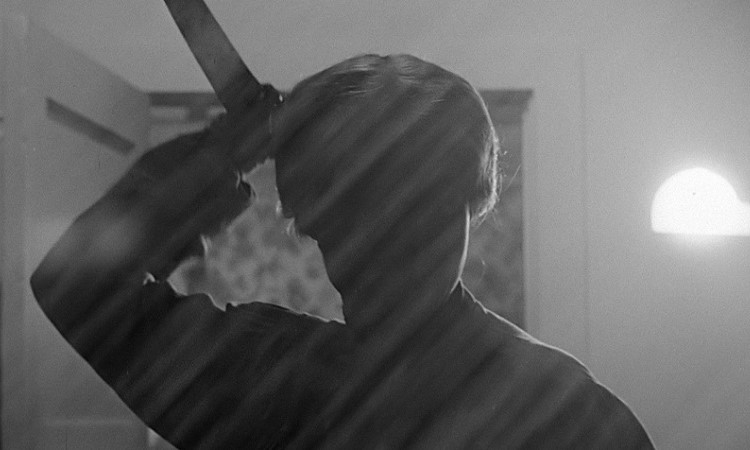
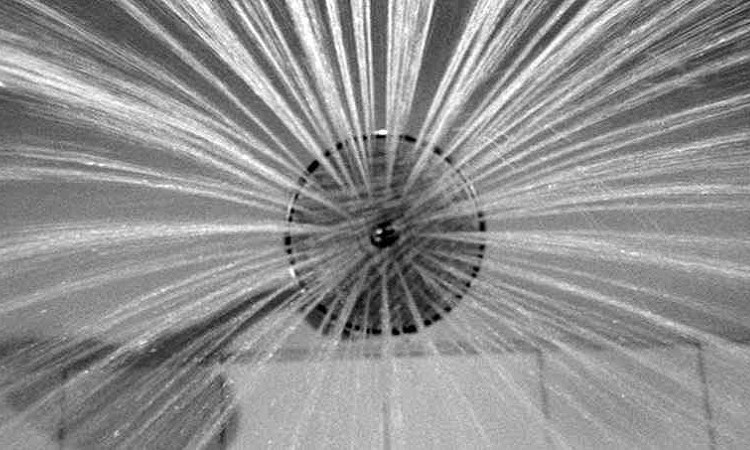
Shot almost exclusively in stylish black and white (save for the colour film clips and art pieces), Alexandre O. Philippe’s documentary 78/52 celebrates Alfred Hitchcock, and the most infamous shower scene ever committed to celluloid (and after its decline). Its title referring to the mammoth 78 set ups and 52 cuts that makes up the sequence which lasts just 45 seconds.

Recreating scenes of the proto-slasher and taking full advantage of Jon Hegel’s string-heavy score, 78/52 relies upon audience participation; ours and those onscreen seated on a set decorated not too dissimilarly to the Bates house, all floral wallpaper, old fashioned TV set and dressed in trinkets. By the final third, we are watching those talking heads involved viewing the scene in question to utterances of “wow”, the odd gleeful “yes”, only Marli Renfro (Janet Leigh’s body double) appears uncomfortable. Just one more aspect of voyeurism which begins with Norman Bates and his peep-hole.

From Saul Bass’ storyboards and Hitch’s script notes, Bernard Herrmann’s score, and the casting of Leigh’s body-double Renfro, to the type of melon used for stabbing foley and of course, the watered-down Hershey’s chocolate syrup which doubled so convincingly for blood; 78/52 is an interesting and in-depth critique of an iconic piece of film by a controversial cinematic auteur. It is effective, informative and well-produced as the likes of Peter Bogdanovich, Guillermo del Toro, Bret Easton Ellis, Tere Carrubba (Hitchcock’s granddaughter), Eli Roth, Osgood Perkins, Jamie Lee Curtis, and Danny Elfman – amongst many others including directors, actors, authors, film editors, professors of cinema, composers, AFI scholars and art curators – wax lyrical about the film which was so culturally and socio-politically integral to cinema and its reception. As one suggests, it elevated not only the horror genre but cinema as a whole.

While the influence of Psycho is staggering, one small scene cannot quite sustain a whole 91 minute film which is why it veers somewhat through Hitch’s body of work and the film as a whole. The majority of observations are interesting, however, there are moments which are superfluous and trite and a few which remain unsaid. For example, Hitchcock’s notorious onset working practices is a subject never broached and what of the sexualised aspect of the shower scene, the symbolic rape (though there is Bogdanovich’s ‘feeling’ of rape after seeing Psycho for the first time and a comparison to Irréversible), or the female gaze? Again, topics that are mentioned in passing and danced around but never explicitly with reference to the subject matter (or not at all). Karyn Kusama and Illeana Douglas (two of only seven women interviewed) aren’t afforded the time to expand upon their thoughts – or were and then cut. It seems almost ironic to set up a discussion about a horror film which has an integral scene removing the woman and then not have a few more female filmmakers, fans and/or experts to voice opinion – unless that’s the point?

As a piece of art, there is no denying Psycho remains a cornerstone of the horror genre and cinema, it broke taboos and pushed boundaries and is one of Hitchcock’s masterpieces within a substantial and impressive oeuvre. In the words of Edgar Allan Poe “the death of a beautiful woman, unquestionably, is the most poetical topic world” which pop up onscreen as the documentary begins. It’s just a shame that more women weren’t included to talk about it rather than the whole discussion, or thereabouts, dominated by white males.

78/52 is for those who have an interest in the art and history of film. Part visual essay, Hitchcock commentary, and Psycho autopsy, it’s entertaining enough and well worth a watch but for anybody who has ever studied film or auteur theory, there will be little you didn’t already know.

Categories
film review

I Am Not a Witch (Dir. Rungano Nyoni, 2017)

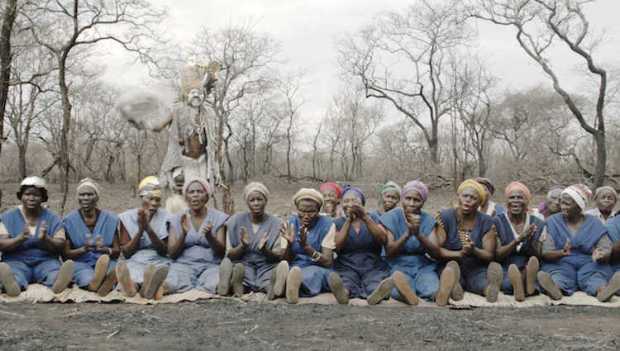
Dramatic strains of Vivaldi strings play over the mini-bus crawling along as a tour guide announces to his passengers that they have arrived at their destination. Out everyone pours around the van to view whatever it is they have clearly paid to see, “so exciting, once you see the witches.” The what now? The camera captures what can only be described as a human zoo; behind metal barriers sits a group a women, dressed in blue, partially painted in white, their clownish make-up made more apparent as they howl and pull faces for the benefit of their visitors.

Shula (Maggie Mulubwa) – though she has no name until much later on – is an orphan who’s accused of witchcraft. Evidence is patchy at best, she has the ability to ‘curse’ water, make people trip and fall, and hack off a man’s arm (it miraculously grew back). The fact that she refuses to confirm or deny the charge means she is “cunning and deceiving” and before she knows it, she’s shipped off to government worker Mr. Banda (Henry B. J. Phiri) who oversees the small witch camp as seen as the start of the film.

After consulting a witch doctor who “proves” witchcraft, the little girl is fitted with a spindle and spool of white ribbon, the length of which varies from woman to woman, all to “prevent them flying away”. Shula is then offered the choice of either accepting her label and joining the women or cutting the ribbon and being transformed into a goat. It’s not difficult to realise which she will choose, she’s eight.

While the rest of the colony work tending the fields and hoping for rain, Shula is “witchified” and dressed in a frilly sack, twigs and leaves in her hair, white make-up adorns her face as she taken from village to village condemning thieves i.e. choosing the one she thinks is guilty. It’s ridiculous. The rewards she earns she shares amongst the women and that’s what is so bittersweet, there’s genuine camaraderie and affection between them and Shula now has a family, full of grandmothers – as all of these women are considerably older – sorrow, time and circumstance etched into their lived-in faces.

What strikes most about Rungano Nyoni’s first feature is how strong and self-assured it is. I Am Not a Witch is completely unique and striking in its gendered social critique and satirical rendering of persecuting patriarchal control. Thankfully, the comedy does not overwhelm but punctuates perfectly. The central performance which is mostly a silent one, by Maggie Mulubwa is rendered beautifully, her largely impassive and gorgeous face is often shot in close-up and the slightest expression is subtly mesmerising. The use of colour, which tends to be the odd swatch whether white, blue, red, purple, or the bright orange of the transporting truck is set against the dusty greys, and dirty sepia tones of the earth superbly. The impossible point-of-view shots, long languid takes, and narrative ellipses provide a visual erudition and subtle sophistication to the magical realism and that final shot is absolutely breathtaking.

I Am Not a Witch is a stunning debut, an amusing if poignant fable critiquing a very real social problem and making the Zambian-born Nyoni a filmmaker to watch out for in the future.

Categories
film review

Men and Chicken (Dir. Anders Thomas Jensen, 2015)

Although renowned for the nordic noir insurgence of recent years – it is fair to say that – not only are the Danes prolific filmmakers and masters of tension but they appear to have a dark, very specific sense of humour and especially in the case of writer/director Anders Thomas Jensen.

Jensen has, over the last sixteen years or so, created a wonderfully weird little world with Flickering Lights (2000), The Green Butchers (2003) and, Adam’s Apples (2010). Men & Chicken fits perfectly into this twisted little village of well, not to put too finer point on it, weirdos. These are incredibly simple stories told at the periphery of the societal norm and are deliciously transgressive with the filmmaker gathering a supreme ensemble fronted by Mads Mikkelsen, Nikolaj Lie Kaas, and Nicolas Bro who feature in all four features. These fine actors, usually known for their dramatic roles clearly relish the opportunity to play, and play they do.

The film opens fairy tale-like with two small boys walking hand-in-hand down a brightly lit corridor, Frans Bak and Jeppe Kaas’ score is wonderfully dreamlike, melodic ominous strings give way to piano and woodwind. The voice-over narration illicits a sense of whimsy which is almost immediately undermined as Gabriel (David Dencik) visits his dying father. His brother Elias (Mikkelsen) is at a therapy session/date at which he reveals aspects of his rapey subconscious, he’s overbearing, has possible incestuous leanings and, what we will soon discover, a chronic masturbatory “issue”. Physically, the only indication that the two are brothers is a harelip, although, only a scar in Gabriel’s case, and once their father passes they discover a VHS taped confessional which serves to reveal the truth behind their real parentage.

Somewhat reluctantly, they set off on a road-trip in the hope of meeting their real paterfamilias Dr. Evelio Thanatos, a Danish/Italian medical researcher whose fancy-sounding name literally translates into “he who gives life” and “death instinct” (stopping along the way for Elias to relieve himself). Their journey takes them to the Island of Ork – population 38 – where they find more brothers living in a crumbling sanatorium amid peeling paint. Francis (Søren Malling), Joseph (Bro) and Gregor (Lie Kaas) share their home with a variety of animals, have an indoor badminton court, and a room full of cheese, they all possess the distinctive harelip, beak-like noses, and unfortunate hair/facial tics and like Elias, large prominent teeth. One doesn’t need to imagine too hard the smells permeating from the dilapidation and general uncleanliness, especially amid the palette of nude, taupe, brown and orange, or eggshell-manure chic if you will.

Understandably, Men & Chicken won’t be to everybody’s taste. It is The League of Gentlemen by way of The Three Stooges, a slapstick social satire combining hilarious horror with pitch black humour, and while there is something quite grotesque and melancholic about the whole thing, it’s actually fairly moving as the notion of what constitutes as family is questioned and civilisation, religion, philosophy and social etiquette is introduced to the three hovel-dwelling brothers.

By the time the family’s full parental history is revealed, the pay-off is well worth the wait. Ridiculous yes, but a testament to the acting prowess and writing to deliver something so ludicrous. Yet, it is bizarrely emotive, not one family fits all and for the Thanatos boys, it comes in many (many) forms surrounded by lots of poultry and cheese.

Categories
film review

The Piano (Dir. Jane Campion, 1993)

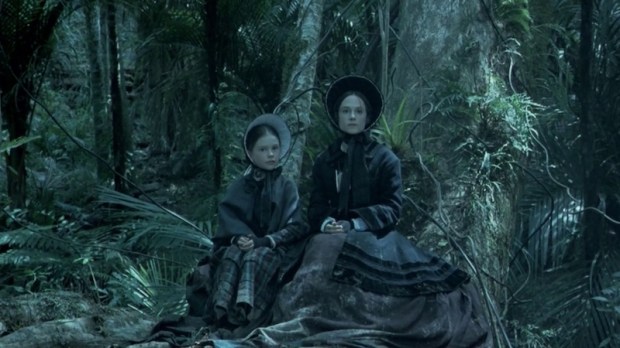
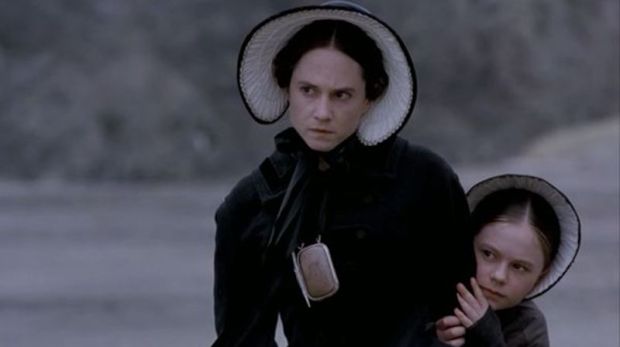
Ada McGrath (Holly Hunter) is sold into marriage by her father and sails from Scotland, across rough waters to New Zealand where she and her young daughter Flora (Anna Paquin) are to begin a new life in the home of new husband (and father), and emotionally frigid landowner, Alisdair Stewart (Sam Neill). Ada is mute and relies upon sign language, a small notebook contained in a locket around her neck and, above all else, her piano and music to speak for her. Alisdair, not only, dismisses the importance of the instrument to his new wife but gives it away to employee George Baines (Harvey Keitel) who, upon hearing Ada play, agrees to sell it back to her one key at a time.

Writer-Director Campion, a filmmaker with a propensity for engaging feminist interest through a female protagonist, desire and gaze does not disappoint with Ada. While some may misinterpret her as a product of the oppressive, Victorian society she inhabits, objectified from the start, sold into marriage and left on a beach much like her piano; her silence often mistaken for obedience. One could argue that in actuality Ada exists on the fringes of society; her self-assured identity and sheer wilfulness make her one of the most fascinating characters of Campion’s creation. Her austere costume (designed and created by Janet Patterson) functions for and against her femininity. These items often restrict her movements yet at other times rescue her from unwanted exposure, pawing male hands or indeed provide a place of shelter; a hoop underskirt is utilised as a makeshift tent in the opening sequences. The bonnet is a symbol of submissiveness but tends to be discarded more often than not.

Power struggle appears to be the main theme of the film displayed through sexual politics, patriarchy and colonialism. Alisdair is the white settler whose link to the Māori people is Baines, a coloniser who has adapted the ways of the native (he still has tartan items displayed about his home pertaining to his Scottish roots) but has attempted to assimilate into NZ culture with his clothing, wild hair and tā moko which adorn his nose. These markings add a sexual aggressiveness to his ‘othered’ facade; however, his whiteness and lack of education makes him belligerent, specifically in relation to the (ideologically homogenised) Māori people he has chosen to live amongst. He, too, never quite belongs.

Neill and Keitel give outstanding performances (in a cast full of NZ film stalwarts) as the uptight Stewart and outsider Baines, men who conform and subvert type/expectation as much as the women in the diegesis. It is, however, Holly Hunter’s film. The piano and Ada are inextricably linked. The instrument represents her voice, sexuality, passion, mood and freedom; a tool that can be – and is – used against her. Hunter, an accomplished pianist played all musical pieces and, allegedly, insisted upon communicating through sign language on and off set as the film was made. In fact save for Ada and her ‘mind’s voice’ at the film’s commencement and end, one forgets Hunter can really talk at all.

While The Piano can be described as a Gothic melodrama, at its narrative heart it depicts a mother-daughter relationship, offers up ideas of the absent father and draws parallels not only with the play within it: Perrault’s Bluebeard but also Du Maurier’s Rebecca in its portrayal of a woman who leaves home and enters a new world dominated by a male figure. It deals with concepts of freedom, affronting destiny, definition of the self, re-birth and the sexual-political appropriation of ambiguities, while showcasing the talent of Campion and her cinematographer Stuart Dryburgh. They insist upon giving the audience a distinctive, sexually provocative spectacle; a sumptuous production which depicts the unease provided by the New Zealand landscape with authenticity and, even occasional, mirth.

Given its timelessness, Michael Nyman’s magnificently evocative score and the seductive panoramic allure of a Gothic New Zealand, it’s hard to believe The Piano is 25 already. It remains extraordinary, a gorgeous and enigmatic masterpiece which only gets better with age, except in its depiction of its Māori people.