Categories
Blu-ray film review

Kill, Baby… Kill! (Dir. Mario Bava, 1966)

Dr Paul Eswai (Giacomo Rossi Stuart, papa of Kim) arrives somewhere in Eastern Europe at the behest of Inspector Kruger (Piero Lulli) to perform the autopsy of Irene Hollander (Mirella Pamphili) whose death is burnt on our retinas during the opening credits. She is the latest in a long line of residents who die, all seemingly at their own hand, and yet something is nagging at the Inspector. The villagers themselves are suspicious of the medical outsider and do everything in their power to prevent a postmortem even enlisting the help of local witch Ruth (Fabienne Dali) to make the reparations for a peaceful afterlife and to counteract “the curse” inflicted by the creepy blonde child in white who likes to peer into windows. For the stoic and steadfast Doctor who is so initiated in the world of science, it becomes increasingly difficult for him to reconcile the rational amidst the supernatural, old superstitions, and his own eyes. He, along with Nurse Monica Schuftan (Erika Blanc) work together to unlock the secrets of the village, the eerie goings-on in the crumbling Villa Graps, and the history behind the reclusive Baroness (Giovanna Galletti) and her little girl Melissa (Valerio Valeri).

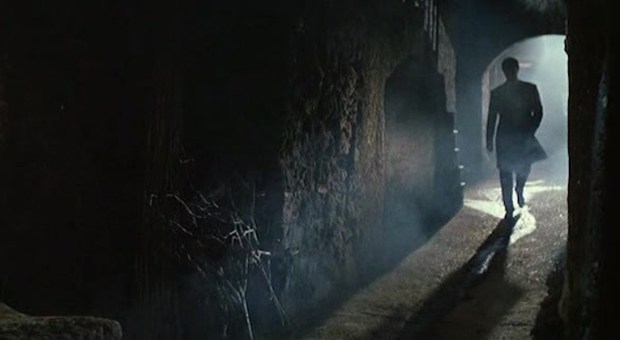
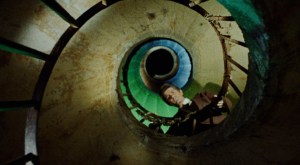
Mario Bava was a genius when it came to horror and the Gothic. He was a master of avoiding blood and gore, when needed, and often instead concentrated on building mood and atmosphere, through music, cinematography, special effects, and diegetic sound: echoing footsteps, squealing cats, and creaking doors were among his specialities, as well as the sublime use of lighting and coloured gels. He depicted fear and the emotional experience of it through an artistic subtlety few have been able to replicate. Bava transgressed the medium which left him unappreciated in his time, and his body of work often overlooked. Operazione paura or the US-monikered Kill, Baby… Kill! is a beautiful and enchanting piece of supernatural horror, atmospheric and credible in its Gothic tropes. Under the threat of death or no, Villa Graps is well worth the visit.

The Arrow Video label of Arrow Films has put together a great package celebrating this Gothic gem, one of a slew of Bava’s oeuvre which have been restored and made available to own including Black Sunday, The Girl Who Knew Too Much, Black Sabbath, and Blood and Black Lace. Aside from the 2K restoration HD digital transfer, there is, as one has come to expect a whole host of additional treats besides.

The Devil’s Daughter: Bava and the Gothic Child (21 mins) – This in-depth audio essay written and narrated by Kat Ellinger is brilliant. She discusses Bava’s influence on contemporary filmmakers, specifically citing Guillermo del Toro’s Crimson Peak. In addition, she works her way through examples of Gothic literature and cinema, paying particular attention to the Gothic family, monstrous mother, and demonic child in relation to KBK as well as other films which followed and those which are indebted to Mario Bava and the character of Melissa Graps. A 2007 interview with Bava’s AD and son, Lamberto is the subject of Kill Baby Kill (25 mins) during which Bava Jr talks about working with his father and grandfather (Eugenio was also a special effects technician and cinematographer) and their collective interest and pursuit of the supernatural.

The whole documentary-style interview takes place in Calcata, Italy as Bava takes us on a tour of the village which was used as the location for KBK, through Villa Frascati which doubled for Villa Graps and discusses the fun they had recreating the cemetery (amongst other interiors and exteriors) on a sound stage. Erika in Fear (10 mins) – After introducing the main feature, Erika Blanc gives this lighthearted interview during which she describes her experiences on set and what it was like working with her director. Affectionate reminisces are abound as Blanc denounces cinema of today as being flat which is one of the reasons why audiences are only discovering Bava’s technically precise and professionally perfect films now; they’re not used to such vibrant colour.

Yellow (2006) (6 mins) – Semih Tareen’s short film and beautifully-hued love letter to the cinema of Mario Bava.

German Opening Titles (3:25) – in which orange text declares the title of the film Die toten Augen des Dr. Dracula – odd, given Dracula’s nowhere to be found.

International Trailer (2:32)

Photocomic – 68 slides break down the vintage photocomic book, in which every frame is depicted in comic book cells. This was originally published in Film Horreur in 1976 and provided by Uwe Huber.

Image Gallery – 28 slides show the German posters and lobby cards – which Erika Blanc works her way through in her interview – again provided by Uwe Huber.
New audio commentary – provided by Tim Lucas, author of Mario Bava: All the Colors of the Dark.

Reversible sleeve featuring original and newly commissioned artwork by Graham Humphreys.

First pressing only: Collector’s booklet featuring new writing by critic Travis Crawford.

Region: B/2|Rating 15|Language: Italian/English|Subtitles: English/English SDH|Aspect Ratio: 1.85:1|Audio: Mono|Colour|Discs: 2

Categories
Blu-ray film review

Witness For the Prosecution (Dir. Billy Wilder, 1957)

A year barely passes without an Agatha Christie adaptation hitting the BBC, while they all have their merits they are rarely as enjoyable as Billy Wilder’s version of Witness For the Prosecution. Made in ‘57 and released a year later, it was the first film adaptation based on Christie’s play adapted from her own short story which opened on stage in London during 1953.

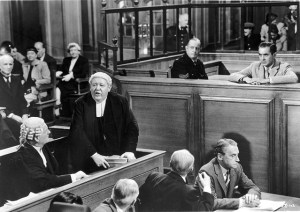
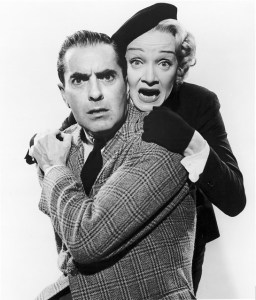
The courtroom drama – set mostly in London’s Old Bailey – centres upon Sir Wilfrid Roberts Q.C. (Charles Laughton) who is recovering from a heart attack and vows to avoid (at his Doctor’s behest) criminal cases for the foreseeable. Enter Leonard Vole (Tyrone Power) who stands accused of murdering a Mrs. Emily French (Norma Varden), the older rich widow who had become rather attached to the affable and attractive Vole after their perfect meet-cute via the window of a milliners. She even made the eggbeater inventor (yes, really) the main beneficiary of her will. While everything points to Vole as the killer, Sir Wilfrid believes in the accused’s innocence and takes on his case. First on the agenda is speaking to the man’s alibi, his wife Christine (an impressively stoic Marlene Dietrich).

Wilder co-wrote the screenplay, this time with Harry Kurnitz. The director was on a break from a regular collaborator following his acrimonious split with Charles Brackett, and had written only the one screenplay – Love in the Afternoon – with I.A.L. Diamond. Witness For the Prosecution was the last before he and Iz would cement their writing relationship with Some Like it Hot (1959) and The Apartment (1960).

What strikes most about this Witness… is the humour. Unsurprising given the acerbic, wry wit which peppers every Wilder screenplay, however, it would all be nothing without the performances which make this film. Power – in his final film before his death – is solid as prime suspect Vole, prone to histrionics but what man potentially facing the death penalty isn’t? Dietrich gives fine Garboesque support as his secretive wife Christine. The star of this particular show, however, is Laughton.

The British veteran actor clearly had a ball with Sir Wilfrid, producing a playful performance; sympathetic and incredibly funny. Given his history of heavy drama and those darker roles, it really is a joy to see especially in his scenes with nurse Miss Plimsoll (Elsa Lanchester). There is no Plimsoll in the original Christie play\short story, she is the creation of the screenwriters. Although, a safe assumption is that the casting was all Wilder. Choosing Lanchester, given her and Laughton’s working and personal relationship was a genius move and provides more than one deliciously raucous moment between the husband and wife.

Granted, it has been 61 years and few will view this without prior knowledge of the plot and the ending(s) (of which there are several). Despite the imploring voiceover the end credits: “The management of this theatre suggests that for the greater entertainment of your friends who have not yet seen the picture, you will not divulge, to anyone the secret of the ending of Witness For the Prosecution.” It doesn’t hamper the viewing experience of Eureka! Entertainment’s – courtesy of their Masters of Cinema series – lovely package of the film, which is available on Blu-ray for the first time in the UK.

The 1080p presentation (with an uncompressed LPCM mono soundtrack) contains a number of extras which only enhance the main feature. This includes audio commentary provided by critic and Diabolique Editor-in-Chief Kat Ellinger.

Monocles and Cigars: Simon Callow on Charles Laughton (15:48) – Actor\writer Callow discusses WFTP in relation to Laughton, his performance in the film and his career as both an actor and director of stage and screen. He also briefly touches upon Laughton’s closeted love life and relationship with Elsa Lanchester which in itself was an unconventional and enduring love story. This feature is nowhere near long enough, Callow’s such an interesting interviewee and commanding presence who clearly adores his subject matter.

The Interview with Neil Sinyard (24:32) is slightly longer as the Professor of Film Studies discusses Billy Wilder’s career and collaborators. Sinyard focusses on the “lesser-known” films in the émigré writer-director’s oeuvre, like The Spirit of St. Louis (1957), Love in the Afternoon (1957), One, Two, Three (1961) and Hold Back the Dawn (1941), (all highly recommended by this reviewer). He talks specifics and comparisons between the stage play and film versions of WFTP, comedy and character. It’s a must-see for Wilder fans or even if you’re discovering the director for the first time.

Billy Wilder on Witness For the Prosecution (13:40) – This short interview is taken from the three-part 1992 programme, Billy: How Did You Do It? directed by Gisela Grischow and Volka Schlöndorff. It is Schlöndorff in conversation with the charismatic director who was 86 years young at the time of interview.

Within the first two minutes Wilder speaks German, French and English and is interrupted by the telephone in his office. He’s playful and charming, swinging on his chair and interrupting the interviewer (only to correct him, you understand). He only has fond things to say about Dietrich who he worked with twice on A Foreign Affair (1948) and this, praising her intellect, key lighting knowledge and of course “the face”. It’s another welcome extra to the disc but do try and source the original interview in its entirety – all parts are available on the Blu-ray edition of Eureka!’s The Lost Weekend (1945) – you will not regret it.

Also included is a collector’s booklet featuring her essays by film scholar Henry Miller and critic Phillip Kemp, a letter from Agatha Christie to Billy Wilder and rare archival imagery (unavailable for review), and of course, there is also the theatrical trailer and a reversible sleeve.

Witness For the Prosecution may well be regarded as a “lesser known” Wilder, however, it is well worth a punt not only for all the reasons mentioned above but its theatrical pacing, Wilder’s expressionistic mise-en-scène and it would be remiss not to mention that monocle trick. It was reportedly praised by Christie as the best adaptation of her work she had seen, and well, if it’s good enough for Agatha…

Categories
film review

Bombshell: The Hedy Lamarr Story (Dir. Alexandra Dean, 2018)

It was at the 90th Academy Awards when Frances McDormand took to the stage and declared to the seated guests, industry and world at large that women have stories to tell. One such fascinating tale belongs to Ms. Hedy Lamarr.

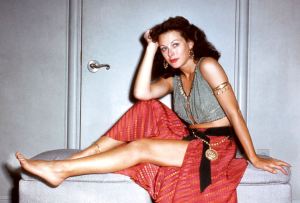
Alexandra Dean’s Bombshell: The Hedy Lamarr Story begins with a quote attributed to the actress: “Any girl can look glamorous, all she has to do is stand still and look stupid.” Hedy was very glamorous but far from stupid. Her beauty allegedly transforming her from an ugly duckling in youth to become the very thing she was judged solely upon. Born Hedwig Eva Maria Kiesler in Vienna, ‘Hedy’ was afforded private schooling (she particularly enjoyed chemistry) and exposed to the arts from an early age. By her own admission, she was an “enfant terrible” posing nude at 16 before developing an interest in acting. Which led to Ecstasy (1933) – a Czech film that saw her skinny dip, cavort naked lakeside and feign orgasm (the film’s rarely discussed outside of these “scandalous” moments). The Pope and Hitler denounced it, the latter not for its explicitness but rather the religious beliefs of its lead actress (the Kieslers were Jewish) – before Hedy set sail for Hollywood (she would become Lamarr courtesy of Louis B. Mayer’s wife Margaret) from London after escaping her first husband. There were six marriages in all, none particularly happy yet two resulted in children with motherhood a role she appeared to mostly enjoy.

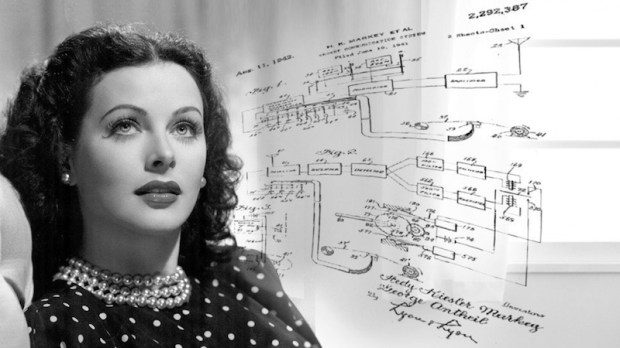
It was, however, her relationships with Howard Hughes and the composer George Entheil which would help sustain her love of invention (Hughes gave her access to his chemists and lab) and provide her with what Google animator Jennifer Hom, describes as a “perfect underdog crime-fighter-by-night-story.” Hedy would work all day and then, of an evening, experiment and in 1941 with Entheil, the self-proclaimed “bad boy of music”, she created a radio controlled torpedo, the 1942 patent of which could (and did, come The Cuban Missile Crisis) revolutionise the war effort. Instead, they were thanked for their time and Lamarr was directed to selling war bonds – she made $343 million’s worth. When MGM failed to provide suitable film roles she found them herself, producing The Strange Woman in 1946 and co-producing Dishonoured Lady a year later, a feat relatively unheard of, in Hollywood, outside of Dorothy Arzner and Ida Lupino.

Life was never plain sailing, there were more divorces, a nervous breakdown, the addictive ‘vitamin B’ shots from Dr. Feelgood Max Jacobsen, odd bouts of kleptomania, the botched cosmetic surgeries, the dubious autobiography and subsequent court case that she would lose costing around the $9.8 million mark, and her reclusion from the world. The lynchpin to all of this heartache, one could argue, is that patent, which today is worth $30 billion and is a technology used in wifi, bluetooth, mobile telephones, GPS and the military, and one which has effected our daily lives, and for which she was paid nothing. There was, at least, the Electronic Frontier Foundation Special Pioneer Award in 1997 and the eventual induction into the Invention Hall of Fame in 2014 (commemorating her 100th birthday) which would slowly inform the world of this genius woman who was more than just a pretty face.

In terms of documentary form, Dean’s approach is rather prosaic. From its piano-accompanied montages to the mixing of images, film clips, archival interview footage and talking-heads. These include Lamarr’s son Anthony Loder, daughter Denise Hedwig Colton, granddaughters, and a whole host of critics, biographers, historians – actress Diane Kruger also reads from personal letters. The crux of the whole film, however, rests on the lost and found audio tapes of an interview conducted in 1990 by Forbes Magazine staff writer Fleming Meeks. Hedy Lamarr gets to tell her own story and comes across as spirited and unpretentious with a wicked sense of humour; a fighter, survivor and a woman of extremes and complexity, which makes it all the more tragic that she became a media punchline and, in her later years, perhaps defined her self-worth against her ageing physical beauty.

Bombshell is an evident labour of love, passionately told (rarely sugar-coated), beautifully edited, by Dean, Penelope Falk and Lindy Jankura, and surprisingly moving. Its content and form, however conventional, is in much the same vein as Ingrid Bergman: In Her Own Words (2015) and even the more playful Mansfield 66/67 (2017); documentaries which seek to expose the myths of these successful women, subvert assumption and conflate the notion of brains and beauty (it’s amazing, a woman can have both in spades). Hedy Lamarr was an immigrant, a feminist icon – long before the term was coined – and a trailblazer in science and technology invention; an underestimated woman who, with her beautiful brain and frequency hopping, had a hand in literally connecting us all.

Categories
film review

Mansfield 66/67 (Dir. P. David Ebersole and Todd Hughes, 2018)

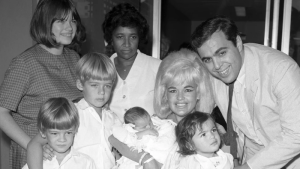
Once Jayne Mansfield’s star began its descent in the 1960s, the hour-glass-figured actress continued to court publicity wherever she could get it, fast becoming a reality TV star of sorts. She would appear in the tabloids seemingly inebriated (pills and booze they claimed), and photographed during many-a wardrobe malfunction, that 40″ chest fighting for freedom and yet she continued to work – completing Single Room Furnished – before her life was tragically cut short aged 34.

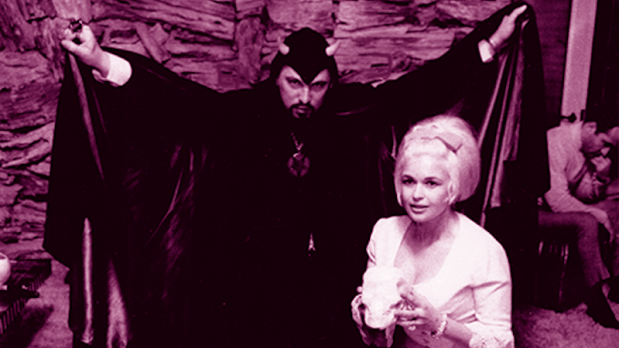
A year earlier from the crash that would claim her life, Mansfield appeared in a photoshoot with Anton LaVey, the High Priest of The Church of Satan and it was soon suggested that she was now a Witch worshipping at the altar of LaVey – the Satanist who would allegedly place a curse on Sam Brody, Mansfield’s lover at the time. Brody would die in the car alongside Jayne on that fateful night on June 29 1967, and it is these last two years of the actress’ life that husband and husband filmmaking producers P. David Ebersole and Todd Hughes (Dear Mom, Love CherRoom 237) concentrate on in their documentary.

Mansfield 66/67 is far from ordinary in its form, combining dance numbers, songs and monologues (performed by students of Leeds Beckett University) intercut among the archive footage, animated reenactments, photographs, and newspaper clippings. There is a cast of adoring fans and conspiracy theorists including John Waters, Mamie Van Doren, Kenneth Anger, Cheryl Dunye, Yolanda Ross and Drag artist Peaches Christ, as well as insights from Los Angeles historian Alison Martino and academics Dr. Eileen Jones, Dr. Eve Oishi, and Dr. Barbara Hahn. It is a fascinating and visual delight with a tone befitting its subject.

While the film makes no bones about focussing on salacious scandal and rumour – there is even a disclaimer at the very beginning – it doesn’t hurt it. Just as sex sells so does conjecture and falsehood (we are living in the Fake News era after all), and amongst the knowing kitsch and farce a solid argument is made positioning Mansfield as a feminist icon. One that suggests she transcended her sexual identity, and exploited the sexist culture which, some will continue to argue, exploited her. Amidst the Pink Palace, heart-shaped pools, jewels, Chihuahuas and overtly sexualised image, this woman who spoke five languages, played the violin and piano to concert level, and mothered five children was, in fact, liberated.

This highly intelligent documentary is a wonderfully weird watch, and while dressed largely in pink and fluff, it has a lot to say about the expectations placed upon women, and doesn’t take itself too seriously, much like the woman at the heart of its soul. Mansfield 66/67 is an entertaining exploration about the lasting impact of myth and the rise of the women’s movement. A film full of fun, love and admiration for the underestimated blonde bombshell, who was original, self-reliant, determined, and fabulous, and appeared to live her short life to its fullest.

Did the Devil make her do it? Damned if I know.

Categories
film review

Anchor and Hope (Dir. Carlos Marques-Marcet, 2017)

Following on from his 2014 long distance romance, 10,000km, Carlos Marques-Marcet, once again, looks at love in the modern age. In Anchor and Hope, he reunites with Natalia Tena and David Verdaguer only this time, thankfully, they are both on the same continent.

Kat (Tena) and Eva (Oona Chaplin) are four years into their relationship and following the death of their cat Chorizo, the conversation (re)turns to children. Enter Kat’s best friend, Barcelona-based Roger (an impressively hirsute Verdaguer) who comes to stay on their houseboat. When Eva drunkenly expresses her desire and longing for a baby, Roger – the sport that he is – offers to supply his “little fish” and help create their family. The only one not completely on board with such a huge life decision is Kat, who still believes it is “narcissistic” and “selfish” to procreate.

Marques-Marcet and co-writer Jules Nurrish cite María Llopis’ text Maternidades Subversivas in the film’s credits, and it’s easy to see how Llopsis’ work inspired. She wrote of the different maternity models born in light of new experiences and struggles in today’s society. No longer is motherhood limited to the hetero-normative cis-woman but can be subverted as a way of changing the world and even deemed an act of insurgency.

For so long, families had one model and this was only recreated onscreen. Thankfully, films have begun to catch up somewhat. There is a great scene in Anchor and Hope where the trio tell Eva’s “wacky” mother Germaine (played by actual mater Geraldine Chaplin) about their baby plans and it awakens an impassioned speech from Kat who speaks out against the older generation. Those who claimed to have “rebelled” and, as it turns out, did not change a thing; instead conforming where they failed. Choosing to have a child does not require the prerequisite checklist which some deem so important.

The film is shot episodically and made up of four titled vignettes. It’s a screwball comedy for the 21st Century, containing a hilarious singalong to Inner Circle’s 90s hit Sweat (A La La La La Long) and filmed on a houseboat which resides largely on London’s canal system. It’s a refreshing London which is depicted, almost idyllic with its palette of greens, oranges and golds, the grey and oppressive concrete jungle appears to be far away from this utopia. Dagmar Weaver-Madsen’s camera moves languidly through the womb-like canal tunnels and serves the narrative and plot which remains largely unpredictable. All is topped off deliciously with an eclectic and whimsical soundtrack including tracks sung by both female leads.

All three actors work incredibly well together and the chemistry between Tena and Verdaguer – who can be seen in the delightful Summer 1993 – is, well tenable. The naturalism feels unforced and realistic, like a family playing for the camera (all to impress their older sibling behind it). While the two provide, at times, the humour, it is Oona Chaplin who provides the heart. She is wonderful as Eva and possesses a real vulnerability and tenacity (and aversion to tequila) which is hard to pull off convincingly.

Anchor and Hope is a decidedly honest and modern love story which is unafraid to ask the big questions surrounding men, women and parenthood. All the while navigating the choppy waters faced in love and relationships.