Categories
Film Festival film review

Judy and Punch (Dir. Mirrah Foulkes, 2019)

LFF 2019

Despite origins in 16th century Italy and containing a character named Pulcinella, the concept of the traditional puppet show Punch & Judy would eventually make its home in Britain during the 17th century – historians say 1662, thanks to a diary entry by the Bridget Jones of his day, Samuel Pepys.
Within a hundred years ‘Pulcinella’ was anglicised to the much snappier and succinct ‘Mr. Punch’ and Joan, his wife also had a name change and took on the moniker ‘Judy’. Puppets on strings would pull a Pinocchio, only rather than becoming ‘real’ they would adorn the hands of the hidden human and entertain adults and children alike for more than 350 years – regardless of form or plot-line – usually at the seaside. Perhaps it was the sea air which rendered audiences immune to the repugnancy of the insidious Mr. Punch.

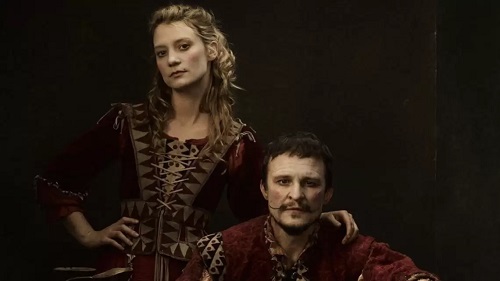
‘Seaside’ is the locale of Mirrah Foulkes’ debut feature, ‘somewhere in England’ and ‘nowhere near the sea’. A small cloaked figure steals into town to sneak into the evening’s show. Bottler Judy (Mia Wasikowska) shakes a tankard for coinage and entertains the crowd before announcing the main event: Professor Punch (Damon Herriman) and his puppets. He appears through crimson velvet drapery with a bang and cloud of smoke; caked in face-paint, jester-like in his stage costume complete with twirled moustache. Make no mistake, this – debatable when we see Judy’s puppeteering skills – is the star of the show. By the end of the elaborate opening credits we, just like the rowdy audience onscreen, are hooked.

Punch and Judy live in a beautiful home with their daughter, Baby (the cheek pinchingly adorable Scarlett and Summer Dixon), maid Maud (Brenda Palmer) and her husband Scaramouche (Tony Norris). They await the day that scouts arrive in Seaside to discover the magic of their talent and transplant it to The Big Smoke. He wants more fame and fortune – swanning around Seaside as a minor celeb is not quite enough for his ego – while she seems fairly content with their lot. Although, she does seek to tone down the ‘punchy and smashy’ aspect of the show, while imploring him to stop frequenting local watering hole McDrinkie’s, and ideally would like the community around her to be a little less… judgemental.

Townspeople are banished as heretics to the Black Forest, others are publicly hanged, and women are stoned daily for reasons that are utterly ridiculous but are, of course, to the folk of Seaside signs of witchcraft and (obviously) the work of The Devil. Leading the charge is the simpering and sneering Mr. Frankly (Tom Budge) who rewards the important men of town with casting the first stone and brings actual fanfare to the Gallows. New Constable Derrick (Benedict Hardie) has his work cut out; crimes and grievances bypass his office and result in quick confessions and executions. Then there’s his crush on Judy… while local prostitute Polly (Lucy Velik) only has eyes for Punch. Maud’s job is becoming harder as hubby Scaramouche’s memory worsens but as long as her master gets his sausages before Toby the dog gets his paws on them, all should be well.

Plot-wise, if you’re at all familiar with the show, then you can rest assured it’s all here. Foulkes gives us a bit of an origin story – albeit a subverted one – which looks at the historical context and celebration of (gendered) violence, as well as the notion of oral histories and storytelling in its earliest form, idiom and allegory. The film is darkly comic from the very beginning with a never-faltering tone which is perfectly pitched and often black. It’s hard to find the humour in heavy hitting themes such as domestic violence, alcoholism, adultery, murder, early onset dementia, and misogyny but writer-director Foulkes finds that twisted balance perfectly. Assisting her in some lovely cinematography is seasoned DoP Stefan Duscio, gorgeous period costumes designed by Edie Kurzer and a gloriously bizarre soundtrack courtesy of composer François Tetaz – there’s a theatricality to his music which simultaneously feels dated and contemporary when accompanied with the action onscreen.

Performances are solid from Hardie’s drippy Derrick to Gillian Jones’ dark, mysterious – and possibly necromantic – Dr. Goodtime. Terry Norris’ bumbling Scaramouche is a delight, Wasikowska is always worth the price of admission, and the currently ubiquitous Herriman is suitably deranged as maniacal Punch. It’s a charming collective of Australian actors – including Foulkes behind the camera (she can be seen in front of it in The GiftThe Turning, and Animal Kingdom) albeit with a multitude of British and Irish accents. Not every single one is convincing but it often adds to the hilarity – Herriman’s is of course flawless.

Astonishingly, the entire film was filmed on location in Australia and yet is so authentically ‘English-looking’. It all works brilliantly. As an origin story, comedy, and dark drama Judy & Punch is an assured, astute and compelling film. It’s one which offers up a lot and delivers on everything – History becomes Herstory and brava to that.

Categories
Blu-ray film review

The Colour of Pomegranates (Dir. Sergei Parajanov, 1968)

There are two versions of The Colour of Pomegranates to choose from on disc one of the Second Sight limited edition box set. The Armenian version (“Parajanov’s cut) was restored – explained in the introductory intertitles – from the original camera negative provided by Gosfilmofond in Russia, in addition to the 35mm dupe negative held by the National Cinema Centre of Armenia. The Russian version (“Yutkevich’s cut) is presented “for posterity” using the original camera negative. For the purposes of this review, the Armenian version will be the one referred to, it is after all Sergei Parajanov’s vision which deserves to be seen uncut.

Armenian troubadour Sayat Nova, born Harutyun Sayatyan, (1712-1795) is the subject of The Colour of Pomegranates and although not a typical biopic, it does approach Sayatyan’s life in linear order from his birth into a wool-dyeing family, his education in literature by the Armenian Church; to his marriage, subsequent widowerhood and his monastic life in Haghpat before his death through a series of non-narrative visually poetic frames. The most significant aspects of the poet’s life are depicted through detailed tableaux, combining colour, costume and music within an extraordinary mise-en-scéne. Parajanov used a static camera so every scene resembles a painting with a theatricality to the performances – which renders the 4K scan and colour grading beautifully naturalistic despite the overt artifice within each frame. One could argue against the film’s accessibility but it is easy to follow, rich in metaphor, symbolism and allegory that its historical and biographical basis within Armenian culture means it is deeply resonant on a universal level.

“In this healthy and beautiful life only I have been made to suffer. Why is that so?”

Only when looking into Sergei Parajanov’s life does it also becomes apparent – and the disc extras help hugely in this – that TCOP isn’t just about Sayat Nova. The Georgian-born Armenian Parajanov was considered a controversial director of the Soviet era and yet is now regarded as one of the greatest masters of cinema. After seeing Andrei Tarkovsky’s Ivan’s Childhood (1962), the inspired filmmaker changed his artistic method and, in 1964, made Shadow of Forgotten Ancestors in this new style to international acclaim, while at home its aesthetic and ideology was attacked and promptly banned. Even when Parajanov moved back to Armenia from Russia, it made little difference. Russian censors deemed …Pomegranates inappropriate, claiming it did not reflect Sayat Nova’s (who had been dead some 174 years at that point) life, renamed it and instigated a trial and imprisonment. Parajanov was jailed for five years with a whole host of vague charges levelled at him including suspected homosexuality, illegal antiques trading, incitement of suicide… he was forbidden from making films for the next 15 years.

The Colour of Pomegranates is a unique and fascinating achievement and it’s easy to see its inspiration in the likes of Alejandro Jodorowsky and Tarsem Singh’s work. Some may call it obtuse but even with its limited use of language, it is glorious in content, colour and cinematography – one of those films you should see before you die. This luxurious box set is, aptly, as rich in content as the film itself. Second Sight have packed the limited edition with extras which enhances (and informs) the experience.

Extras

Parajanov’s Cut: The Armenian version of the film (80 mins) – complete with an annotated commentary by James Steffen, author of The Cinema of Sergei Parajanov, and advisor of the new restoration.

Yutkevich’s Cut: The Russian version of the film (70 mins). This has an annotated commentary by Levon Abrahamyan.

Disc 2

Kyiv Frescoes (14:36) – new 2K restoration, accompanied by an annotated commentary by Daniel Bird. During 1965, Parajanov worked on these screen tests, when the film was cancelled and production halted indefinitely the filmmaker took his screen tests and made them into a short film which is a celebration of the great patriotic war.

Pomegranates Rediscovered (8:38) – a short film describing the restoration process, the presentation of negatives, colour grading and the 4K scan. Presented by Cecilia Cenciarelli of Cineteca Di Bologna, this is really interesting, particularly with the split screen comparison showing the amount of work it took to reproduce this gorgeous film.

Free Parajanov! (11:39) – An audio interview with Tony Rayns which plays over stills from the film. In it the critic discusses how he discovered Parajanov and the first screening he attended of The Colour of Pomegranates.

The World is a Window: The Making of The Colour of Pomegranates (75:58) – This in depth documentary is enlightening, if a little dry in places as four contributors; scholars James Steffen and Karla Oeler, photographer Yuri Mechitov and cultural anthropologist Levon Abrahamyan discuss the making of the film amid the political climate.

Memories of Sayat Nova (31:38) – Short subtitled film by Levon Grigoryan from 2006. The most interesting aspect is that the film states that it is “impossible to restore Sayat Nova” and contains grainy footage from the then finished film (which would then end up as a purple-hued negative as seen in a previous extra). That version was shorter, the full cut never destined to be restored.

Parajanov: A Requiem (59:06) – A short documentary from 1994 featuring the filmmaker – an extremely happy delight of a man – who recounts the casting process of the film, his thoughts on being a director (they can never be trained, “it is a gift from the womb”). He discusses his time in prison and presents footage from his earlier films, shows the exhibits which would become part of the Parajanov Museum. The last third holds footage from the Venice Film Festival (1988) and Istanbul Film Festival (1989) where the filmmaker introduces his film. At the latter, he rather poignantly declares he “would like to die after this.” He passed the following year.

120-page limited edition book – this features an introduction by Martin Scorsese, archive material, new writing, costume designs, storyboards and original literary script (unavailable for review).

Categories
DVD film review

The Secret of Santa Vittoria (Dir. Stanley Kramer, 1969)

Fermented grape juice is a special kind of elixir, even Shakespeare was a fan of crushing a cup and some, one could argue, might go to extreme lengths for a glass of vino, maybe even a bottle… or million. Stanley Kramer’s The Secret of Santa Vittoria opens with Fabio (Giancarlo Giannini) rushing home to deliver good news, il Duce has been ousted from the NFP. Sadly, the young man’s enthusiasm isn’t met in quite the way he was hoping as most of Santa Vittoria does not understand what the end of Fascism means for them but Mussolini has gone and the Germans are on their way, led by Captain von Prum (Hardy Krüger) and will take whatever they like.

The film is set in a generic wine-producing region of Italy (in approximately 1943 although made some 25 years later) where the men drink and their wives are seen but generally not heard, a real “Boys Club”. Bombolini (Anthony Quinn) is one man whose wife, Rosa (Anna Magnani) insists on being heard. She runs the inn with her husband and is at the end of her rope; she loved him once but cannot remember exactly when. He’s well liked amongst the other hard-drinkers and they encourage him to put “a fist in her mouth” mainly because “it’s a sad house when the cock is silent and the hen does all the crowing.” Ah, domestic violence is hilarious, isn’t it? Especially when a film normalises women hitting men but the threat against women is somehow more shocking. To be fair, in this film, neither gender comes off particularly well. Fragile masculinity is personified in Quinn’s Bombolini, he is – not to put too finer point on it – an idiot and the townspeople make him Mayor *because* he’s a fool which bodes well. Predictably, the title and gold medallion leads the clown to think he’s arrived, and Rosa will suddenly become obedient. Almost immediately, we realise this is not the case but he does cease drinking and successfully hides the bulk of the fruits of their labour/vinification.

There are a couple of subplots which largely deal with the love lives of three female characters: Signora Rosa, Caterina (Virna Lisa) – who returns to the village after the death of her Fascist husband but then falls in love with injured soldier Tufa (Sergio Franchi) who she nurses back to health, and who also happens to be a Fascist. However, as he’s a peasant from Santa Vittoria she’s willing to turn a blind-eye. Rounding off the trio is Rosa and Italo’s daughter, Angela (Patrizia Valturri). She’s in love with Fabio but is only interested in sex, not marriage.

One of the major niggles with The Secret of Santa Vittoria is it hasn’t aged well. Its politics are muddled and archaic, it never leads with a message or knows exactly what it wants to say, it does pick up pace – how the townspeople shift the million bottles of wine is quite something albeit disbelief suspending – and the jaunty and affable score is enjoyable but none of it is affecting, surprising or particularly spontaneous. It functions as a huge Hollywood production, structured to within an inch of its life. It isn’t a musical but would have worked very well as one.

The saving grace is Anna Magnani, in her last English-speaking role. Her powerful demeanour and beautiful imperious face never falters; it’s worth watching all the way through just to see that world-class grimace break into a grin. She was a stunning actress and here makes the most of the material given – by no means a stretch – she’s wonderful as the tough and feisty Rosa, the only downside is she’s not given nearly enough screen-time.

The Secret of Santa Vittoria is a pleasant, mostly entertaining fare; perfect Sunday afternoon viewing, with, of course, a quaffable glass of red.

Categories
Blu-ray film review

The Cat O’Nine Tails (Dir. Dario Argento, 1972)

The Cat O’Nine Tails [il gatto a nove code] is largely regarded (tenuously so) as the second instalment of Dario Argento’s Animal Trilogy, sandwiched between The Bird With the Crystal Plumage (1971) and Four Flies on Grey Velvet (1974). While it does lack some of the panache of those two films, the Karl Malden vehicle is still a largely enjoyable fare, seemingly influenced by The Spiral Suitcase and Hitchcock’s Suspicion, and containing some visuals that would be seen again in Deep Red (1975).

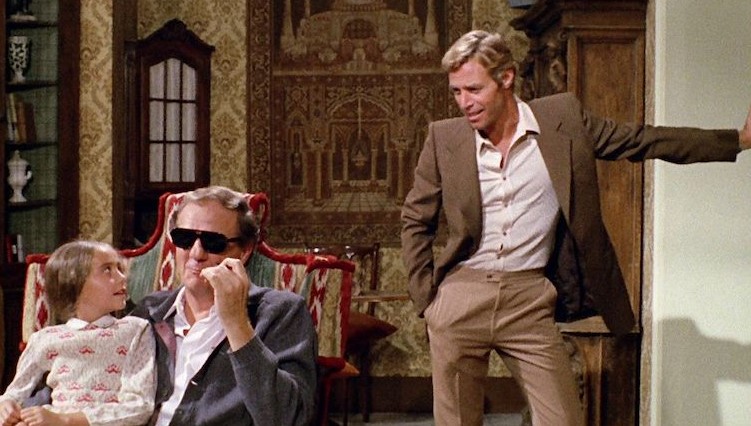
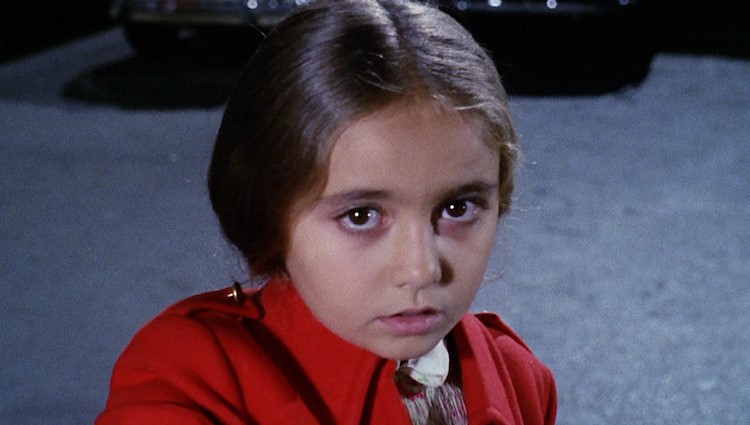
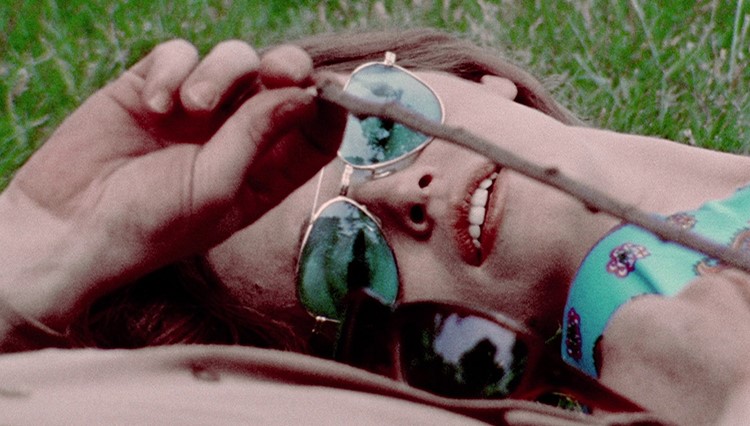
Upon walking home one evening with his niece Lori (Cinzia De Carolis) – who affectionately refers to him as “Cookie” (or Biscottino depending on whether you’re watching the English or Italian dub) – Franco Arnò (Malden), a blind crossword writer overhears a conversation which sounds suspiciously like blackmail in a car near his apartment. He thinks nothing more until a break-in at The Terzi Institute, a genetics lab, triggers a number of deaths. Ex-newspaper man Arnò joins forces with the handsome and charismatic investigative journalist Carlo Giordani (James Franciscus) and together, they do a little digging and attempt to solve the mystery, which in true Gialli style, picks off anybody who edges closer to the truth, via some nifty subjective camerawork before revealing the killer.

The Cat O’Nine Tails is an unique entry into the Argento oeuvre because it is the only film to remain uncensored in any parts of the world, and yet, by his own admission, it is one of the filmmaker’s least favourite. He believes it to be “too American”. Perhaps, it is the sprawling narrative which fixates on genetics and the XXY chromosome which can distinguish criminality – the murder gene – and the nine leads which make it increasingly convoluted and by the time the end arrives, and on a rooftop no less, the killer’s reveal feels rather arbitrary.

Less than twenty minutes in, there’s a tremendous set-piece involving a train and corpse; in addition to murder, intrigue, jump-cuts, extreme close-ups, recurring visual motifs – the filmmaker’s use of colour really is second only to Bava – glorious costumes courtesy of Luca Sabatelli and charming performances from Malden and child actor De Carolis, all backed extraordinarily by a subtle yet jarring score by that little-known composer, Ennio Morricone. While it is regarded as a lesser Argento – although not to the degree of Dracula 3DThe Cat O’Nine Tails is a stylish little number, perhaps not narratively speaking but as per Argento, a visual treat.

Arrow Video once again fleshes out their restoration with extras, although this time not quite as many or as varied as expected, the greatest achievement is that 4K restoration, the 1080p presentation, and the newly translated English subtitles for the soundtrack. The audio commentary is provided by Argento author and father of FrightFest Alan Jones, who is joined by critic/author Kim Newman. The commentary does contain spoilers so it is advisable to watch the film beforehand but it’s interesting, personally, I could listen to Alan Jones read a shopping list, but both men have fun and their vast knowledge is more than put to good use.

Special Features

Nine Lives (15:22) – An exclusive interview with co-writer/director Dario Argento recorded for Arrow Video in 2017 written, edited and directed by Federico Caddeo. In it, the filmmaker discusses the story and how he regards it as a sequel to The Bird With the Crystal Plumage and how he found shooting in Turin.

The Writer O’Many Tales (34:46) – Dardano Sacchetti wrote CONT with Argento and in this extended interview, the Italian writer discusses his career in detail, from his filmic first memory to how he met Dario Argento, and how he spent his pay check. It’s a little drawn out, and far more about the man than the film, and also twice as long as the Argento segment, in which he’s incredibly respectful to his ex-collaborator but make no mistake, there’s no love lost between the two men.

Child Star – Another new interview, this time with actress Cinzia De Carolis. This was unavailable at the time of review due to a disc error.

Giallo in Turin (15:09) – A chat with production manager Angelo Iacono, in it he discusses his 16-year relationship (seven films) with Dario Argento whom he describes as “adorable”.

Original Ending (3:07) – As originally written, The Cat O’Nine Tails didn’t end with the death of [redacted]. Footage was shot of Lori being rescued and an epilogue featuring Giordani and Terzi. While the original footage is now lost, the script pages survive and are presented here in English for the first time, containing lobby card images from the ending.

Trailers: Italian Theatrical (1:46), International Theatrical (1:52), US Domestic Theatrical Trailer (1:37)

Also included as part of the boxset is reversible sleeve featuring original and newly commissioned artwork by Candice Tripp, a double-sided fold-out poster, four lobby card reproductions and (unavailable for review) a limited edition booklet illustrated by Matt Griffin, featuring an essay on the film by Dario Argento, and new writing by Barry Forshaw, Troy Howarth and Howard Hughes.


Categories
Blu-ray film review

George A. Romero: Between Night and Dawn

When George Romero sadly passed away in July of 2017, it is fair to say the news left film fans in mourning and specifically horror fiends. Famous for his flesh-eating and satirical Dead trilogy – which would eventually become a six-film anthology by 2009, he was a filmmaker who refused to be pigeon-holed (as the films in this set will attest). Before Dawn of the Dead (1978) and Martin (1978) he completed three other features. It is these  – There’s Always Vanilla (1971), Season of the Witch (1972) and The Crazies (1973) which were lovingly restored and presented in a box set by the wonderful folks at Arrow Films and their Video label.

There’s Always Vanilla AKA The Affair was the first film made by the team behind Night of the Living Dead (1968) and was fraught with problems from the start of its troubled production. It is not so much a film directed by Romero – his style is barely recognisable – than superbly edited making the most of a flimsy plot. The film centres around a love story during the 70s in which sexuality was liberated and countercultural, clearly inspired by Mike Nichol’s The Graduate (1968) and Larry Peerce’s Goodbye, Columbus (1969) which had been released a few years before. Chris (Raymond Laine) loves Lynn (Judith Ridley) and she loves him until… they don’t, she’s a commercial actress and he’s struggling to find a niche following time served in the army.

The film was carved from a short showreel meant for Laine (a dead-ringer for a young Russell Crowe) and while the crosscutting and juxtapositions are rather heavy-handed, – and the first half feels somewhat aimless and laboured – Vanilla‘s an interesting look at the experimental cinematic mood – it captures an essence of the era. Granted, with some horrendously dated gender labels and stereotypes. There is a hint of the director during the sinister and sleazy abortion scenes in which canted camera angles and filters are employed and an ominous soundtrack plays.

There’s Always Vanilla, so named for the lead character’s father’s analogy for life – the more exotic flavours tend to be discontinued or hard to locate, you see but there’s always… well, you get the drift. The pretty metaphor within the ending which we also see at the film’s opening brings it full circle and attempts to convey the alleged freedom and liberty of the decade, or perhaps it’s also a state of mind; you’re only free if you believe you are – deeply philosophical questions for a film that started life as a showreel. While the film is dated and technically flawed, it really captures a mood and authenticity of a period and the beginnings of a filmmaker and his team at the genesis of their craft.

Season of the Witch AKA Hungry Wives (awful) or Jack’s Wife (working title) fares better. Made in 1972 and revolving around housewife Joan Mitchell (Jan White) and her eventual dabbling in the occult, courtesy of a few tarot card readings, before accepting her place in a coven. What strikes most with this film is the level of sophistication in comparison to …Vanilla. Still prevalent are some technical flaws however, from the Buñuelian and atmospheric opening to the depiction of female disillusionment within the narrative, this film is fascinating.

It isn’t necessarily about magic but rather how a woman – who wants more beyond marriage and motherhood – wishes to embrace her independence and sexual prime, and take back some power through witchcraft (almost depicted here as a completion of womanhood). One can see its distinct influence on Anna Biller’s fabulously feminist The Love Witch (2016). Using themes of oppression and transgression, it is no accident that this film’s existence stems from the period of women’s lib – patriarchy manifested as a demon-masked man on the prowl, personifying Joan’s fears, albeit within a recurring dream sequence – while fragile and toxic masculinity personified through the characters of Jack Mitchell (Bill Thunhurst) and Greg (Raymond Laine).

Season of the Witch is a gem of a film, from its avant-garde opening to the interesting depiction of gender roles coupled with the enigmatic and nuanced performance of Jan White. It feels like a primer for Martin with its political progression, religious motifs and the use of the colour red (although to differing effects).

This use of chromatic is also prominently used in The Crazies, a science-fiction-horror-thriller in which a small American town is quarantined following the accidental release of a biological weapon. The Army have “everything under control”, at least they certainly want everyone to believe they do – reinforced by a non-diegetic military drumroll punctuated sporadically throughout. We, along with the townspeople are on a need-to-know basis as all hell breaks loose and national security becomes a real concern.

We’re subjected to horrifying images as people are dragged from their sanctuary of Church or a small group of individuals are backed into a stand-off, threatened by gunfire. Then, there’s the scientist who makes a breakthrough with an antidote (the soldiers have all been inoculated first with what little antibiotics they have) only to be murdered, his vials of life-saving serum (red again) smashed around him. David (W.G. McMillan) and Judy’s (Lane Carroll) arc pulls at the heartstrings and, a few pacing issues aside, it is them we root for.

Watching the films in this boxset in chronological order shows a distinct progression in the New York native/Carnegie Mellon alum’s filmmaking. The man who made films (whether writing, directing or editing or a combination of all three) instinctively, was politically progressive, possessed a sense of humour and rarely wrote characters that weren’t multi-faceted. He depicted a rare equality within male and female characterisations and did not exploit or resort to sex.

Mr. Romero, George, you are sorely missed.

This box set of his early works between Night of the Living Dead and Dawn of the Dead – see what they did there? is replete with extras and special features and is a must-buy for any fan. He was still developing his style and craft and the films may not strike as much of a chord as the ones that followed*, however, there’s still much to enjoy and appreciate. Season of the Witch, and the Guillermo del Toro interview with George – which is a wonderful and joyous watch – are worth the purchase alone. Alternatively, all three are now available individually via Arrow.

*”My stuff is my stuff. Sometimes, it’s not as successful as my other stuff but it’s my stuff.” (G.A.R, 2011)