Categories
film review

Chain Reactions (Dir. Alexandre O. Philippe, 2024)

Utilising his tried, tested and not terribly ground breaking format, Alexandre O. Philippe is back behind the camera of another visual essay/love letter to an aspect – or individual (Lynch/Oz deviated slightly, no doubt Kim Novak’s Vertigo will also) – associated with horror cinema. This time it is Tobe Hooper’s The Texas Chain Saw Massacre which is placed under the microscope, within a bacteria-teeming petri-dish as it were.

Once again, Philippe combines archival material including “never seen before” BTS footage and scenes from the film all split over five chapters. There is also a multitude of other works mentioned by each talking head subject as they liken, contrast, use to bolster their individual reading/thesis statement of Hooper’s seminal work. Each segment features the individual – comedian/actor Patton Oswalt, the ‘Horror Nonna’ herself Dr Alexandra Heller-Nicholas, filmmakers Takashi Miike and Karyn Kusama, and Stephen King – and their relationship with the film. Arguably, the GHOAT an integral piece of American cinema. Its cultural and artistic impact having built over the last five decades.

Part of what made Hooper’s original so influential was its stark cinematography, verisimilitude and its “true story” marketing with a documentary-style voiceover courtesy of John Larroquette and shot on 16mm. Its narrative and plot were, of course, entirely fictional but the finished film serves as a subtle commentary on the political climate and symptomatic of the era; something of worth created within budgetary constraints ($140,000 back in the day). The US was still knee-deep in the Vietnam War and this affecting horror visualised an apocalyptic landscape, sparse and abandoned through industrial capitalism. It depicted a non-traditional, perhaps arguably degenerate, familial homestead transgressing the boundaries of the norm and surviving via cannibalistic insanity. As a movie, it stays with you long after viewing and its esteemed standing in the horror genre a testament to director Hooper and writer Kim Henkel, who created an influential piece of frightening art in spite of a profound lack of blood, guts and gore.

Released on October 11 1974, Hooper and Henkel’s filmed screenplay depicted a decaying world beneath the discomfort and humidity of the Texan heat. Sweat and smells almost permeate off the print. Post-Watergate, the Vietnam War, and Elmer Wayne Henley’s killing spree – although, over the years it would become more associated with Ed Gein’s ghoulish face-swapping – are all connoted and The Texas Chain Saw Massacre was the result. A film without sentimentality determined to show the brutality of things at a time where most monsters were men who wore masks and final girl tropes were yet to be seen (or studied at length).

While all interviewees are admitted admirers of the film, Oswalt takes the ‘fan’ angle more than the rest; their respective professions already implying they have something more substantial to contribute. He theorises and contrasts against other horror films and delivers an astute reading of the film – not least the teeth-gnashing title which he likens to chewing flesh when spoken aloud. Takashi Miike – like the man before – saw Chain Saw in the eighties after his initial cinema screening choice City Lights (Chaplin, 1931) sold out. Drawn to the title – in translation The Devil’s Sacrifice – he likens the shock value to his experience of Grave of the Fireflies, lauding TTCSM‘s inspiration on his own film career; violence isn’t the goal but “causing pain is serious business.”

What follows is Heller-Nicholas and Kusama with Stephen King’s rather pointless and lengthy segment shoved ham-fistedly in between them. He prattles on about everything but TTCSM it feels like while the two women whose monologues complement each others and yet are wholly individual and equally as riveting. They are the highlight of the whole documentary.

This is doubly-pleasing given that 78/52 included women who were never really afforded time to fully expand their thoughts. Here, the interlocutors are articulate, incisive, and once again prove that not only do women enjoy, love, and revere horror cinema – which is still somewhat gendered as a genre – but that their reading(s) and subjective reactions can enrich a beloved film and help it endure another fifty years. Certainly the parallels read between the 1983 Ash Wednesday bushfires of South-Eastern Australia and Hooper’s film didn’t come from any of the men or likening the palette of yellows and reds to the works of Bosch and Bacon. None of the blokes comment on the broken version of masculinity within the disappointment and disintegration of the American Dream either, note the similarities found in Hooper’s earlier film Eggshells (1969), discuss film language and framing at length nor reveal they lost their brother on the same date, in August, as Sally Hardesty loses hers. Rendering the film text with even more profundity.

Chain Reactions is an erudite exploration of the legacy, beauty, horror and influence of Hooper’s The Texas Chain Saw Massacre. Some chapters are more successful than others but all allude to the artistry and zeitgeist-altering of this enduring masterpiece, a film to be watched time and again, cinema to immerse oneself in, investigate, nurture, hold dear and think about long after the credits have rolled. Directing an audience back – or introducing a new generation – to this film after a slew of remakes, reboots, and requels can only be a great thing. In the words of the Horror Nonna “film is magic” and the love for Leatherface* is everlasting.

Chain Reactions is available on DVD and Digital in the UK and Ireland from 27th October

*Nobody did it better than Gunnar Hansen and lord knows many have tried.

Categories
Film Festival film review

Restless (Dir. Jed Hunt, 2024)

There is nothing worse than losing sleep and there is a special place in hell for anybody who comes for it and your peace of mind. This is something that Nicky (Lyndsey Marshal) quickly learns after new neighbour “Deano” (Aston McAuley) arrives in writer-director Jed Hunt’s feature debut Restless.

In an unnamed coastal town, empty-nester Nicky works practically all week in an understaffed and underfunded social care facility. Her days are, admittedly, a little banal but she – like the rest of us – relies on the small joys when she can claim them: listening to the classical music her late father insisted upon at breakfast, cooking dinner, baking to Beethoven, reading a good book and settling in on the sofa unwinding to the televised dulcet tones of Ken Doherty on the snooker (the heart wants what it wants). She lives vicariously through her teen son Liam (Declan Adamson via telephone) who is away at university. She grimaces during their latest chat when he tells her he’s off out to see an original cut of The Exorcist. Little does she know, she’ll perform her own exorcism over the next seven days.

It starts out harmless enough, just a small group unpacking a car. A blur of tracksuits and a fierce looking dog. Then the music starts, the antithesis of Rachmaninov, Vivaldi, Tchaikovsky et al, pound-pound-pounding through the walls. At first, Nicky drives to the waters edge with a pillow and gets some shut-eye before a new day dawns, bumps into Keith (Barry Ward) who invites her out for a drink later in the week (presenting her with a violin because of her love of classical music but that’s another story). He’s as sweet as he is cringeworthy. When deafening dance music keeps her awake a second and third night, she knocks next door and politely asks that Deano turn it down and is met with faux-niceties and “I got yer.” By day five, all out war has been declared as vengeance is vehemently pursued.

The performances – led so ably by Marshal – save Restless from being just another bleak kitchen-sink style British drama, it is actually something else entirely disguised as such and manages to surprise and swerve expectation. Lazy writing could have had these characters teeter and plummet into stereotype territory but a decent script by Hunt manages to always remain believable. The subject matter will be heavy for some – there is plenty of sly commentary on the state of the care and class system in Post-Brexit Britain where the sense of community (unity especially lacking) is null and void in places – and plenty triggering if you have ever lived next door to antisocial idiots who have little respect for others.

There are some memorable moments, Kate Robbins is a particular standout as Jackie who loves a fight – we all know someone like her – the cinematic flourish of the dream sequence is brilliant and the soundscape is fascinating even if the visuals can be a little on the nose at times. Nicky’s loss of reality and descent into mania is relatable (especially for those of us who have had to share a wall with hellish next-door neighbours), tense, uncomfortable and humorous – when she bakes the “special” brownies for Dean, the level of self-satisfaction even smug expression she wears is hilarious.

That’s what makes this debut work the most, the humour, which is why one can forgive the ending. Not sure, the felineicide is really sufficiently punished (#JusticeForReg) but some levity is absolutely needed given how near the knuckle the “reality” at times feels. This is testament to Hunt’s taut script and direction, David Bird’s almost vérité-style camerawork, Anna Meller’s editing, Ines Adriana’s integral and superlative sound design, and as, previously mentioned, lead actor Marshal.

Her nuanced performance carries the film in its entirety and that isn’t to dismiss McAuley’s turn as Deano but often it’s waiting on Nicky’s reaction to him – or something inconsequential his late-night selfishness/shenanigans causes. They become two sides of the same stubbornly-headed coin and even start to dress in similar colours – which keeps the audience invested. Like when she leans against the kitchen sink hate-eating a crunchie™ or buying expensive headphones and trying meditation apps to lull herself to the land of nod. This brief look of resignation, fury or determination on her emotive face speaks volumes. The irony being that only through the enforced insomnia, is Nicky activated (so-to-speak) and finally fully awake.

Loathe thy neighbour indeed.

Categories
film review

The Convert (Dir. Lee Tamahori, 2023)

“Our people once were warriors […] They were people with mana, pride… people with spirit.”

After his masterful directorial debut in 1994 – within which Rena Owen delivers the aforementioned line – Lee Tamahori found himself in Hollywood. Helming a multitude of thrillers and a Bond instalment before returning to his homeland, Aotearoa, and reuniting with Temuera Morrison for ’60s set period drama Mahana (2016), in which the Māori actor plays yet another terrifying patriarch. Morrison is the only thing missing from Tamahori’s latest project, The Convert.

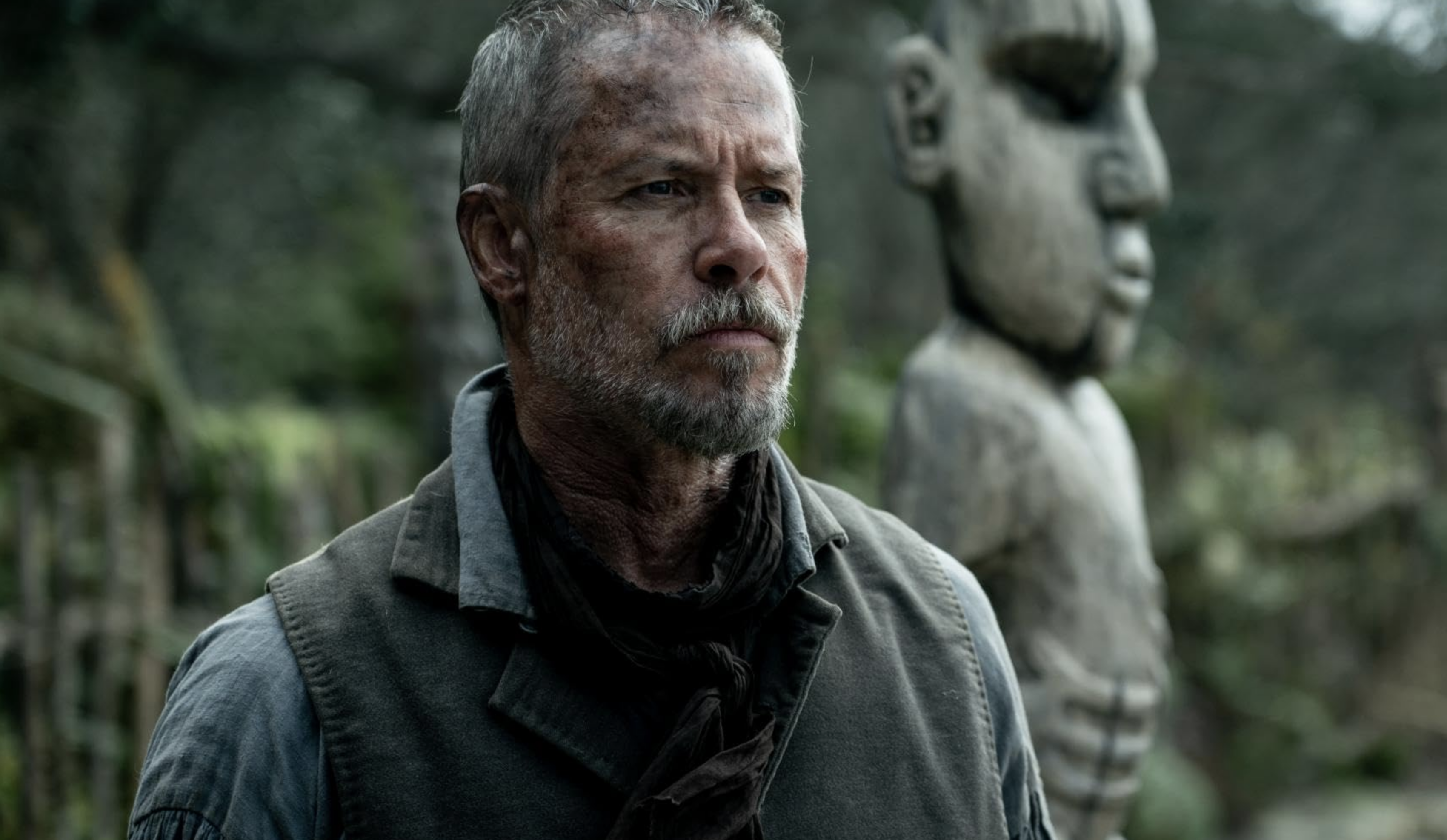
In 1830, a decade before the Treaty of Waitangi (1843) was signed, lay minister Thomas Munro (Guy Pearce) is hoping for safe passage across the Tasman Sea to his new home of Epworth – a new colony taking shape on one of the islands. It’s a treacherous journey as a storm hits culminating in a fellow passenger being buried at sea, first-mate Kedgley (a fairly convincing ‘Northern’ Dean O’Gorman) isn’t worried. A quick stopover on a neighbouring island will enable them to restock supplies regroup before heading on their merry way.

Struck by its beauty, Munro wishes to camp there for the night – never considering it to be somebody’s home or what consequences his or the group’s presence will bring. It isn’t long before they find out. Having stumbled across a tribal war, Chief of the Ngāti Ruapu tribe, Te Akatarewa (Lawrence Makoare) pays his respects to King George before mercilessly killing Māori trespassers. Munro attempts to barter for the remaining lives, offering his horse as payment. Rangimai (Tioreore Ngatai-Melbourne) is saved but her husband perishes and she is forced to endure her grief aboard the settler’s ship until Epworth comes into view.

Things are not much better there. Self-appointed Mayor Beachamp (Mark Mitchinson) rents the land from the local chieftain, Maianui (Antoio Te Maioha) and has grand ambitions for the new homestead but only if his townspeople are white and English. Padgett (William Wallace) the Irish grocer and Scottish Hegarty (Jaqueline Mackenzie) – who happens to be the widow of a Māori warrior – are already shunned already and have no chance of integration. Sadly, it is no surprise how Rangimai’s presence brings the worst out of the locals who would rather let her die than supply medical aid. This, in spite of the fact they are visitors to her homeland and she also happens to be the landlord’s daughter.

Munro quickly finds his people – suffice to say it isn’t Beachamp and his cronies who deem anybody different from themselves ‘savages’ and yet murder with impunity while allegedly seeking justice. Who exactly is the savage, again? Munro, on the other hand, is an articulate and well-meaning man of God, happy to be guided by Hegarty who is able to speak te reo and teaches him about Māori culture, and never straying far from his notebook, within which he sketches portraits of all he meets and logs his identity, connections – his equivalent of tā moko.

Inspired by Hamish Clayton’s Wulf, Tamahori depicts the messy complexity of Māori history, juxtaposing the Pakeha/Māori relationship with the interchangeable savage and civilised dichotomy often depicted in NZ Cinema. The brutality of the period in which irreconcilable cultural differences are ever present. Shifting allegiances and unstable male identity is shot in tandem, and within, the beauty of the land. The natural landscape is used here to heighten the dramatic sequences, darker sands shot against ominous skies overcast with clouds. While the greens of the majestic terrain are muted and cold, greys, browns and blues are punctuated with the occasional burst of red, white and/or black connoting the Māori flag – just like in Once Were Warriors.

The Māori depicted in this film are divided, partly on tribal lines but also between those who embrace utu and those who believe in a peaceful resolution, interestingly personified in daughter (Rangimai) and father (Maianui). Munro is the ‘man alone’ – but not for long – as male identities conflict, allegiances shift in and outside of cultural difference through tribal (iwi) or sub-tribal (hapu) groupings. Munro seems to have greater issue with white Europeans over anyone else and this level of self-hatred is made all the more clear once his own violent history is revealed. It’s a surprisingly emotional performance from Pearce whose jaw historically has always clenched, on the rare occasion grinned yet rarely have we seen him racked in sobs. He is deftly supported by Mackenzie but the real powerhouse is Ngatai-Melbourne. Her Rangimai is mesmerising and by far the most interesting character with a compelling arc.

The Convert is a sweeping historical epic, intelligently made and authentic in its depictions and performances. DoP Gin Loane does a tremendous job weighting the action onscreen in verisimilitude which goes hand-in-hand with Liz McGregor’s costumes and Gabrielle Jones’ make-up, the intricate ta moko beautifully recreated and replicated amongst the cast. While deemed (mostly) fictional, it is easy to place in a historical context. Munro appears to be a stand-in for Henry Williams (1792-1867) a man who was responsible for influencing several thousand Māori to convert and spread the word of a Christian God through much of the North Island. He also played an integral part in the translation of the Treaty of Waitangi too.

Over Tamahori’s trifecta of Māori films, he depicts a very specific timeline albeit not in the order of making. The events of The Convert and subsequent history paves the way for Mahana, concluding with Once Were Warriors working ever closer to encourage the authentic portrayal of Māori onscreen. More please.

The Convert is available to stream now.

Categories
Film Festival film review

Peacock (Dir. Bernhard Wenger, 2024)

©NGFGeyhalterfilm-CALAfilm-AlbinWidner

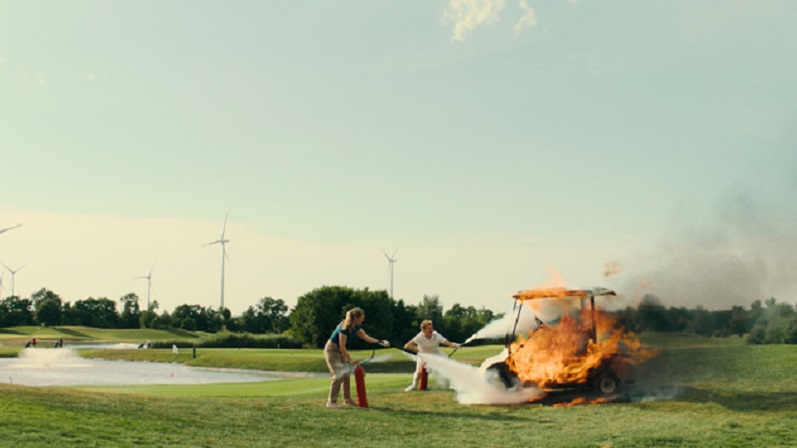
Bernhard Wenger’s feature debut begins completely out of context as a golf cart is engulfed in flames. Two people run into frame unleashing fire extinguishers until the blaze is out and golfers slowly walk over commending the duo on a heroic job well done.

We will soon learn the man is Matthias (Albrecht Schuch, All Quiet on the Western Front, System Crasher) and he works for a company called My Companion, not your regular ‘friend for hire’ agency headed by his boss and friend David (Anton Noori). Matthias fulfils the needs, wants and desires of complete strangers, whether putting out inexplicable golf fires, attending outdoor concerts with older women or posing as the pilot father of a small child, moustachioed Matthias is the star of the company, his success evident in the glowing reviews he receives for his “work” and obvious wealth symbolised by the immaculate house he shares with girlfriend Sophia (Julia Franz Richter).

The problem is Matthias is so good at his job that he ceases to exist beyond a surface level in everyday life, he needs cueing up for everything, when to speak, when to appear sympathetic and when to act. Everything is a construct and performative and Sophia has had enough – “You don’t seem real anymore” – and leaves him. What follows is an existential calamity onscreen. The male in crisis here is handsome, polite, patient, considerate, professionally adept and yet socially inept it is laugh-out-loud hilarious and so cringeworthy, the whole body flinches, also a little heart breaking. Matthias is played to perfection by Schuch whose comic timing is sublime made all the more inviting by Albin Widner’s pristine cinematography, visual humour coolly framed and aesthetically pleasing.

©NGFGeyhalterfilm-CALAfilm-AlbinWidner

Wenger’s assured and absurdist satire takes a swipe at corporation and capitalism. The unpredictability of technology beautifully depicted during the scene when Alexa fails to understand his request for a specific song and declares it will chose a song for him and decides upon ‘Clap Your Hands’ which, of course, interferes with the electricity and clap-activated overhead lights.

Here, the world is a microcosm and life is just one long performance while posing “serious” questions about what constitutes as art – if that happens to be a naked man dousing himself in paint and throwing himself head first into a blank canvas on stage, then fill your boots. To watch the almost-perfect albeit passive man – which in itself is a breath of fresh air from, what feels like, the multitude(s) of male toxicity onscreen – regress and slowly unravel is heart-stinging and, though it’s kind of mean, a laugh-out-loud joy in a film that is tonally perfect from that opening sequence on the green. The dénouement of which is *chef’s kiss*.

Peacock, visually, is reminiscent of Joachim Trier’s work – complete with a Norwegian love interest – shot through with the dead-pan sensibility associated with other Scandi cinema specifically early Östlund or even Lanthimos (when there was a Greek ‘weird’ Wave stirring). Though, by the end, it feels as excruciating (and amusing) as something like Toni Erdmann (2016), whereby the lead is resigned to a specific way of life but then experiences a rebirth, of sorts, which presents a whole new approach to navigating the world.

Matthias can be a your hero, companion, a son, everything for you… but just not as himself.

Categories
Film Festival film review

Andrea Gets a Divorce (Dir. Josef Hader, 2024)

Policewoman Andrea (Birgit Minichmayr) wants a divorce. Her ex-husband Andi (Thomas Stipsits) is the life and soul of any (birthday) party but they want different things. He wants her back, to continue drinking excessively, embarrassing her in public and she wants a divor… well, you get the picture. A new job awaits her in the capital St Pölten, she’ll be a Detective Inspector interacting with “real criminals” and not wasting time on the side of the road catching speeding violators.

After celebrating partner Georg’s (Thomas Schubert) birthday in which Andi makes yet another desperate attempt at getting her back, this time imploring her to arrest him, revving his car engine while intoxicated. She confiscates his car keys and makes him walk home. Later, while she’s driving home her father calls and she takes her eyes off the road for a second and accidentally mows down Andi. She tries to save him and when it is futile, she gets back in her vehicle and drives off. Only when Georg hammers on the door to tell her that her estranged husband is dead at the wheel of RE teacher and ex-boozer – now an imbiber of black tea and milk only – Franz Leitner (Josef Hader) does Andrea realise that she may just get away with it.

Andrea Gets a Divorce is a quietly charming little film, an Austrian dramedy which actually has much to say beyond its humour (though not quite the biting satire we have come to expect from Austria) and dose of melancholy. Whether commenting on the effects of alcohol – Austria changed its alcohol laws in 2019 – without being judge and jury, casual racism within a rural town, or the sly inherent sexist commentary a woman faces, and a police officer at that. Andrea’s weight, marital status, biological clock are all up for discussion, at one point she is even likened to an SS officer. She’s a single woman bearing the burden of responsibility for everything it seems and not merely straddling her new role as a law-breaker. Finding balance and prioritising themselves is not always the natural way of things for a woman and this film depicts the push, pull and self-doubt beautifully. Or as remarked early on, “the women are moving away and the men are getting weirder.”

Minichmayr is excellent as the closed-off lead, she who rarely smiles while struggling with her guilt and sense of justice. Writer-director Hader follows up his 2017 debut Wild Mouse with this and is delightful in support as forgetful Franz whose ill-gotten culpability threatens to ruin him in a haze of late-night disco dancing and G&Ts. While it could have been easy to write off these people as simpletons from a small town, Hader avoids leaning into clichéd stereotypes. There is some complexity and layering to these characters who are settled in their mundane provincial little lives, somewhat fearful of change which tends to be true of most quaint little places.

All roads are paved with good intentions, or just the one in and out of town which is shot perfectly and bookends a sweet film. Andrea Gets a Divorce is a wonderfully wry and sensitive piece of storytelling about life and friendship, forgiveness and guilt surrounding a divorce and bereavement at losing a whole person or that sense of self. It is woven together with an amusing if deadpan sense of humour, often callous but rarely alienating. The joke punchline being the very film title itself.