Categories
film review

Falling (Dir. Viggo Mortensen, 2020)

There have been numerous attempts to depict the cruelty of dementia onscreen, detailing the disease, from diagnosis to decline. Often told from the (adult) children’s perspective, most of these films comment on the hardship and then the parent is often shoved into assisted living – despite refusal – where there are medical professionals who will help them. Viggo Mortensen’s Falling doesn’t necessarily reinvent the wheel, however, his film is a family drama first and foremost with dementia in a supporting role.

The actor was on a night-flight returning from his mother Grace’s funeral in 2015 when he initially got the idea for a film. At the wake, he noted in his journal all the conversations he’d had and overheard, a lot of which triggered remembrances from childhood. He was intrigued by the differing recollections of memories (often the same ones) shared during the memorial.

Memory is a theme which has recurred through his previously published work, including books Coincidence of Memory, and I Forget You for Ever and makes up the genesis of Falling, his feature debut as writer-director. This debut is seen through the eyes of John Peterson (played respectively Luca & Liam Crescitelli, Grady McKenzie, Etienne Kellici, William Healy and, finally, as an adult by Mortensen himself) and uses fictionalised aspects of the actor’s childhood .
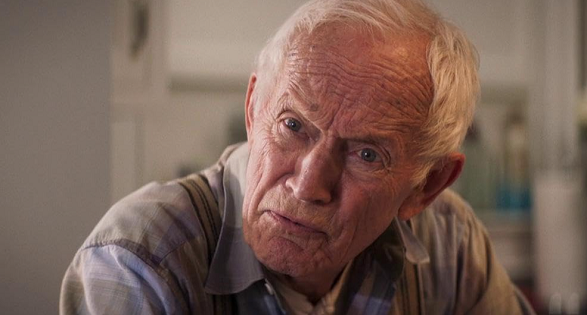
Angry Old Man

Willis (Lance Henriksen) is a belligerent old bastard of a man, foul-mouthed, abrasive and stuck in a time-warp. He is stoic and habitually unmoving in his attitude and views of the world, made all the more problematic by his advancing dementia. His son John, a pilot, who lives with his partner Eric (Terry Chen) and daughter Monica (Gabby Velis) in California brings Willis to visit so that he and sister Sarah (Laura Linney) can make plans for their father’s long-term health-care. Specifically, selling the farm in upstate New York and finding somewhere geographically closer to them so that they may share the care-load.

Willis’ reaction comes as no surprise to the whole idea. Cue a multitude of slurs, expletives and the testing of anyone’s patience but John remains calm, reticent and immune to the insults until, well, he isn’t. In a series of flashbacks, we see there is no love lost between father and son – the term “cocksucker” is used as both an expletive and term of endearment. It is these flashes of memory that give way to happier moments as Willis – the younger iteration played by Sverrir Gudnason – and Gwen’s (Hannah Gross) love story is detailed in snatches of scenes, like a slideshow, depicting their wedding day, the birth of their children and the inevitable fracture and breakdown of their relationship. These snapshots are interwoven with moments seen through the eyes of their children.
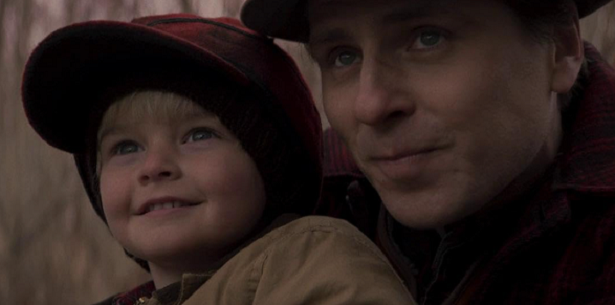
Young John (Grady McKenzie) and his father Willis (Sverrir Gudnason)

Amongst these, we see father and son bonding, hunting and fishing on the lake, the joy evident on the little lad’s face. There was affection once-upon-a-time but as John grows and away from Willis’ overbearing control, through divorce after divorce, the relationship becomes fractious building to a head during the boy’s teenage years.

The film frames Gwen as the love of Willis’ life, however, he doesn’t seem to know what true happiness is with or without her, and he spends the last few years of their relationship torturing her and trying to make her as miserable as possible. Yet, in a film which focusses on subjectivity and memory can the viewer take anything at face value or do we doubt everything? These flashes belong to multiple people, their perceptions as they experience them, and then there’s Willis’ recollections are even more questionable due to his advancing years and disease.

Mortensen comes across as a fairly unassuming and private man which makes this all the more fascinating. Reportedly working for free in order to finance this film, the film’s producer, director, screenwriter and composer chose to fictionalise some elements of his early life and childhood without losing verisimilitude leaving the viewer to question what the ‘factual’ element is. Apparently, Little Viggo (he was never know as junior) did have a dead duck as a pet which fed his ‘obsession’ with death, and the scar above his top lip was allegedly caused by barbed wire (and not by his father’s hand as the film suggests). He’s not a pilot either but his brother, Walter, had a cameo as one in an early Mortensen film, The Crew (1994). Their other brother Charles is also named in the film’s pre-credit dedication – there is no sister. In reality, Mortensen apparently took on the lion-share of caring for their parents – both of whom had dementia – prior to their respective deaths, Falling is not only a love letter to lost parents but for his younger siblings.

The Petersons, L-R: Willis (Gudnason) and Gwen (Hannah Gross)

There are little nuggets of information scattered throughout that, upon first viewing, few would be aware of but serve as nods to the Mortensen/Atkinson family history. It is clearly no accident that John has the surname he does. While Mortensen went by Little Viggo, his father tended to be Peter. John Peterson is, symbiotically, Peter’s son. Much was made of Mortensen’s choice of sexuality for his main character, however, he has stated in interviews that he wanted to exaggerate the polarisation between father and son. Both are presented in a very specific microcosm of American society – you’d be hard pressed not to miss the Obama image on the fridge – and a Presidential term that was afflicted with the darker aspects of misogyny, racism, homophobia and misanthropy (it was to get oh so much worse with the 45th). Themes suggested in this narrative. John and Willis are at odds over political affiliations, life choices, sexuality, as well as their memories of Gwen.

As a side note, it’s a really astute observation that the older generation i.e. Sarah and John won’t call out Willis for his bullshit opinions but his older grandchildren will. Monica, on the other hand will often lapse into Spanish (presumably she is the personification of the Mortensen boys’ childhood in Latin America) – her mother tongue – but is his best friend. She’s the only one who will accept him for who he is. Coincidentally, an immigrant like herself.
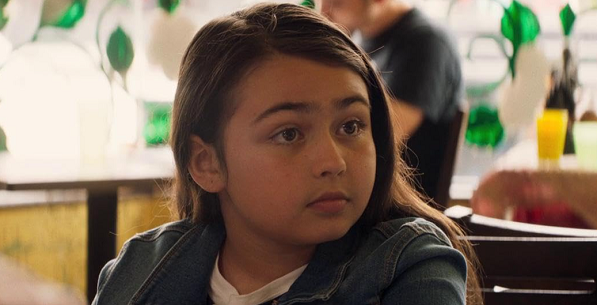
Eric (Terry Chen) and John’s daughter Monica (Gabby Velis)

Mortensen’s maternal grandfather (and one brother’s namesake) was Canadian and a medical doctor and two Canadians plays Doctors here. Close friend and collaborator David Cronenberg (as deadpan proctologist Dr. Klausner) and Hannah Gross’ actual father Paul plays Dr. Solvei. Mortensen own son, Henry, also makes an appearance as law enforcement officer Sgt. Saunders. So many father and son references and yet the real driving force of the narrative is the mother – she is the conscience running through the film and, as previously mentioned, only in her absence is her (somewhat romanticised) presence felt all the more, the subjective memories of her often the bone of contention between father and son. For John, his mother has gone, his memories are relegated to the past while Willis – due to his declining cognisance – has Gwen in the present despite having had a couple of wives since her. She is whom he recollects, imagines her in front of him, and continues to love during his sun-downing.

Thankfully, they are eventually able to accept each other’s version of events, something Mortensen also learnt in real life. He told Alec Baldwin during his podcast episode that this is aspect he personally finds so unconvincing about the so-called ‘dementia’ films; the need to depict people as bumbling and forgetful, with their carers gently revising their recollections, as this wasn’t his experience at all. “One thing you learn is not to correct them. It’s too late – don’t argue anymore… if they’re enjoying the memory, let it go.”

It is those types of scenes, as Falling edges towards its denouement, that are the most heart-breaking as the son moves back in with the old man (Canada doubling for Watertown, New York state) who, in his confused state, believes his ranch is under siege – despite having sold parts of it and promptly forgotten. In reality, Mortensen Sr. would lapse into Danish to converse, often slipping back to his own childhood while the actor would sleep in the next room with a baby monitor for company. Onscreen, Henriksen’s Willis mistakes John for his own father. John has dealt with his father, his diagnoses and outbursts with relative calm, diplomacy and resignation up to this point but to hear him raise his voice, see him rage – albeit briefly – exposes more of his humanity, pain and sorrow etched upon his (unshaven) face, and his usual perfectly coiffed hair standing on end.

It’s the first time his guard slips, his usual immaculate appearance refreshingly missing while Red River plays on a small portable TV in the background. In Howard Hawks’ 1948 Western things get tense between John Wayne as a Texas Rancher and his adopted son, Montgomery Clift. It’s no coincidence that John is trying to broker a deal to sell the remaining land given his ornery father is now too infirm to work it or save it. It also serves as a reminiscence back to a ‘simpler’ time, the old west in which ‘men were men’, a (toxic) masculinity which Willis clearly subscribed to but is also frozen in suspended in time, unwilling (unable?) to change. Décor of the surrounding rooms and even Mortensen’s costumes cement this, all are dated and somewhat old-fashioned. Henriksen’s performance is extraordinary throughout and especially in these moments, enabling such sympathy in a man who has up to that point been largely unpleasant and devoid of sentimentality is certainly no mean feat.
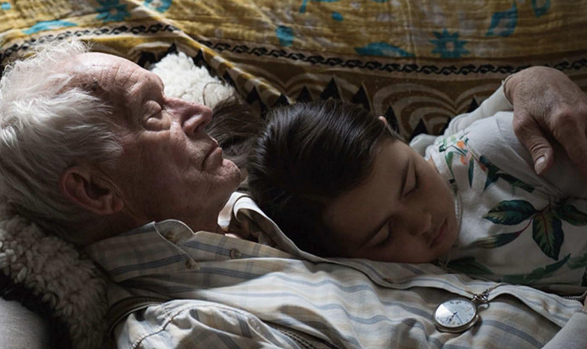
Grandpa Willis and his favourite person share a nap

Falling is gorgeously edited by Ronald Sanders (A History of Violence, Eastern Promises, A Dangerous Method) and stunningly shot by DoP Marcel Zyskind (The Two Faces of January, The Dead Don’t Hurt). Certainly, it didn’t hinder the first-time director having a cast and crew of familiar people/frequent collaborators working alongside him in what proves, to be a beautiful and cathartic experience, one that stays with you. There is a lot to admire and be moved by.

It asks questions about age, memory, its perception, recollection, retainment and reconstruction – and its persistence (there’s even a sneaky nod to Dalí’s 1931 painting, see image above) the notion of verisimilitude, and, above all else, forgiveness. This is no typical screen dementia patient, there is no withering away quietly – here the patriarch keeps his personality, his faults hard to ignore. He is tenacious, angry, insecure, his presence overwhelming at times; impossible to love and loved anyway. It’s a film which reconciles life with the parent you have with the one you might have wished for, full of compassion, empathy, and grace.
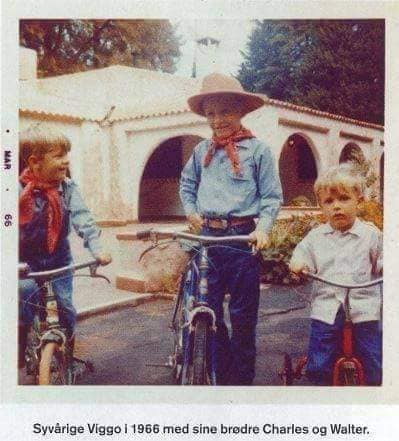
Mortensen (centre) with brothers Charles and Walter (1966)
Categories
Film Festival film review

Memory Box (Dir. Khalil Joreige and Joanna Hadjithomas, 2021)

On Christmas Eve as the snow blankets the ground and buries car wheels deep in Montreal, Alex (Paloma Vauthier) and her Téta (Clémence Sabbagh) open the door to a parcel from Beirut. The delivery – addressed to Alex’s mother Maia (Rim Turkhi) – is initially turned away by the oldest matriarch who declares that “the past stinks”. The box contains cassette tapes of a life suppressed; Maia’s teenage years of the 70s and 80s in the wake of the sender’s death. Liza was Maia’s best friend and her dying wish, it appears, was to be reunited with her friend albeit through their memories, photos, notebooks and audio files. While Maia is too bereft to embrace her past, Alex finds the perfect opportunity to connect with a country she has never visited and a woman, her own mother, whom she barely knows.

With the aid of the box the audience learns, along with Alex, what a life is like during war – for most of us, we have not had to experience it – and bridging the generational divide however possible. Images literally come to life and interact with the music playing from the cassette recordings, for example, a memorable time-lapse sequence sound-tracked to Visage’s “Fade to Grey” while, you’ve guessed it, fading to grey. It may sound trite but it’s far from it as real-action bombs and gunfire burn holes in negative strips, and a potentially simplistic premise is fleshed out. It is incredibly evocative of a country ravaged by war and visually impressive, beautifully edited by Tina Baz.

Shifting between fantasy and reality, and with the help of flashbacks Alex enters her mother’s adolescence, her dreams and nightmares during the Lebanese Civil war and the loves and losses overcome during a tumultuous time. Alex, with the help of the late Liza, her Téta and the memory box is able to embrace the most important relationship of her life and see her mother not only as a woman and friend but with new understanding. The same goes for Maia and her own matriarch.

With such heavy hitting themes surrounding death, trauma, and abandonment, it is often the case for films depicting this sort of conflict to do so with earnestness and solemnity, however, Memory Box doesn’t do that. There were some 120,000 fatalities during 1975-1990 but not all perished in Beirut, many survived, lived and thrived and it is these people who are celebrated, the dead honoured in this intergenerational tale with women at the heart of its narrative.

To go forward, one must go back and sometimes reunite with your trauma and, in this case, a homeland which has been suppressed, wartime survival which has been denied, tragedy which has been compartmentalised, like a photo film that has never been processed in over thirty years. There is a compassion to Joreige, Hadjithomas and Gaëlle Macé’s screenplay which is non-judgemental and forgiving, especially in relation to Raja’s reappearance as an adult (Rabih Mroue). The first half may rely of a visual inventiveness and the image, yet, the second still manages to hit with emotional resonance and be deeply moving brimming with moments of levity.

Memory Box is a handcrafted gem by experimental filmmakers, Khalil Joreige and Joanna Hajithomas. Utilising their own photographs and journals written between 1982 and 1988 they create a visually inventive and accessible film which re-writes personal history, questions memory, its unreliability, and how it shapes the present. While visuals are particularly pop-arty and magazine-like, there is an overpowering resonance and meaningful juxtaposition. This is their memory box, made for their children, for whom the film is dedicated.

Memory Box is available to rent from all the usual places you can stream from.

Categories
Blu-ray film review

The Miracle Worker (Dir. Arthur Penn, 1960)

Helen Keller lost her sight, hearing and ability to speak at 19 months old after contracting a mystery illness (although, Doctors now believe it was more than likely Scarlet Fever). Over 25 years, she learnt to communicate and learn. Her schooling took her from Alabama to Boston and New York before she graduated cum laude from Radcliffe College in 1904 aged 24 and so – following the publishing of her memoir The Story of My Life – began her career of social and political activism (women’s suffrage, birth control, pacifism, socialism), and as an lifelong advocate for the blind and deaf before co-founding the ACLU.

By Keller’s side, during this time and until her own death in 1936 was Anne Sullivan. Sullivan became Keller’s teacher at just 20 years-old when she left The Perkins School for the Blind in Massachusetts for rural Alabama and the cotton plantation that the Kellers lived on.

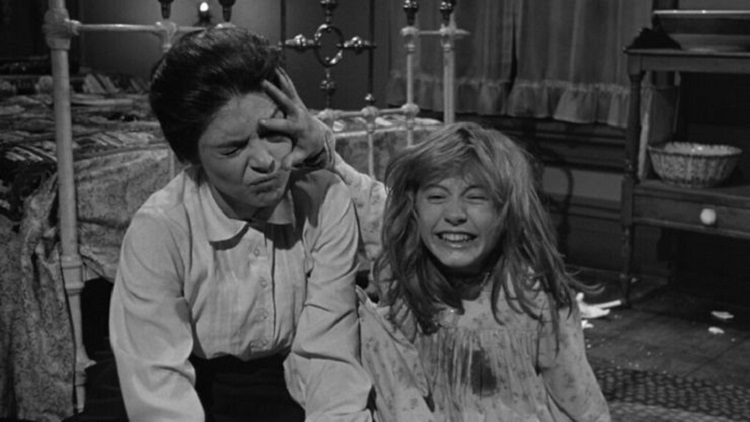
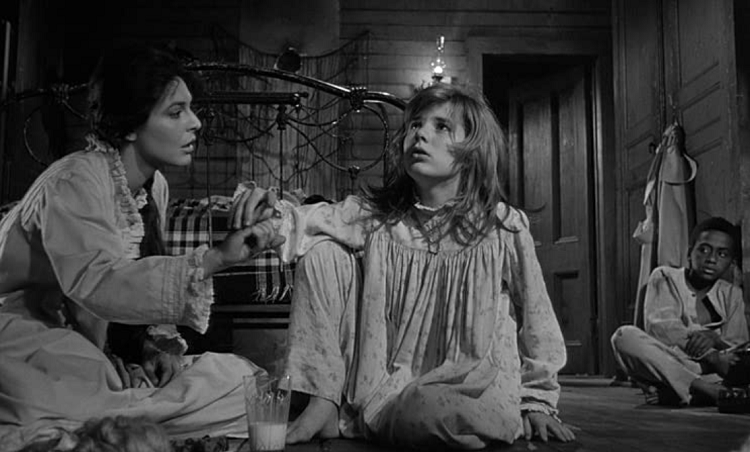
It is this time period – well, that first month to be exact – that is the basis for The Miracle Worker. Keller’s story would have its genesis in TV before heading for the Broadway stage. It was adapted for the screen by William Gibson (who originally wrote the stage play) with Arthur Penn directing his own Broadway hit in 1962. Both Anne Bancroft and Patty Duke reprised their roles from the stage to screen to critical acclaim including two gold and shiny Academy Awards which they both received, respectively, following the film’s release.

While it opens rather histrionically, with a scene between Kate Keller (Inga Swenson) and the Captain (Victor Jory), thankfully the film quickly finds it dramatic feet with those early moments giving weight to the immediacy Helen’s hearing, speech and sight were lost as a baby. The first seven years pass in the blink of an eye and the young Helen is now wild, unruly, almost feral because no one understands her (or even really tries to). Instead, they allow her to get away with erratic behaviour and even violence, a concept far easier on their lives.

Our introduction to Anne Sullivan (Anne Bancroft) is at the train station bidding her current students’ farewell as she leaves for Alabama. The slight Irish lilt is a little distracting given that the real Anne, although the daughter of Irish immigrants, was allegedly born in Boston, however, it serves as way of establishing the difference in background of the woman – whose own sight was damaged at aged five – and the Kellers who reside on the plantation property.

It is during this travelling montage that we see flashes of Anne’s memories and her humble beginnings. Images are out-of-focus and superimposed within the frame, almost like photographs that have not been properly developed. It’s an excellent touch and however fleeting immediately flag the aspects of life Anne is haunted by. Within moments of meeting each other, Helen learns the word ‘D-O-L-L’, however, with family members still around offering unnecessary commentary describing Helen as either a ‘monkey’ or ‘fencepost’, Anne’s job is never made any easier.

Bancroft’s Sullivan takes no prisoners. She is pushy, likes to challenge the rules with her quick temper, and as a result her relationship with the Captain comes across as a pre-cursor to that of George Banks and Mary Poppins. The two are continually at logger-heads not helped by his ‘Southern Gentleman’ ways, booming voice and dismissive, tyrannical nature. Anne attempting to teach Helen is a long, arduous task. Yet, at no point is the child pitied. Duke humanises her, makes Helen a fully formed character who happens to have a disability. One which her family seeks to define her by.

These scenes between are utterly compelling but hard to watch. They’re wrought, fraught with repetition and open-handed slaps and biting – not just on Helen’s part – it is at times amusing without necessarily meaning to be and can even be described as abusive but it is a means to an end. Anne is determined to teach the ‘problem child’, make her unlearn all those awful habits her family have ignored even encouraged, and submit to learning.

While there is the occasional diegetic sound – a pair of heavy boots smacking against the wooden floor as the girl thrashes about during a tantrum or the smashing of plates – scenes between the two leads are largely silent, only occasionally punctuated lovingly by Laurence Rosenthal’s melodic soundtrack and the instrumental leitmotif of the song ‘Mockingbird’. Aram Avakian’s editing is flawless and Ernesto Caparrós cinematography stunning under Penn’s directorial eye. Yes, it is staged and the camera tends to be static more often than not but it works.

Holding all of this together are two extraordinary performances, supported ably by Swenson, Jory and Andrew Prine (as Helen’s older half-brother James). Anne Bancroft and Patty Duke are superb together and it is more than easy to see why they both won the critic’s favour and countless awards for these roles – so ingrained in her career was The Miracle Worker that Duke would not only play the Sullivan role on TV in 1979 (opposite Melissa Gilbert) but would go onto direct a run of the play in Washington during 2011. You root for both teacher and pupil throughout and by the breath-taking and cathartic ending, you love them.

Fact has been blurred somewhat, and some truths left out altogether, however, it isn’t terribly important. There is the question of whether this film could be made in this day and age without severe backlash (one tends to think not in the wake of ‘woke’). Yet, even without knowing Helen and Anne’s real history; the grit, determination and sheer awe-inspiring narrative and gutsy performances on display here are more than enough for an audience to invest in.

Disc Extras

The film has now been restored in 1080p from a high definition digital transfer by Eureka Entertainment, as part of their Classics range and is released, available on Blu-ray for the first time, this week.

The disc restoration is evident especially when original footage is viewed via the theatrical trailer (2:21). The clean-up is very good, scratches are minimal, there is still some grain visible but extreme close-ups are crystal clear serving both women’s framing, Bancroft’s pores often visible and Duke’s child-like open face and vacant eyes transfixing (the resemblance between the 16-year-old actress and her eldest son Sean is striking).

Extras are kept to a minimum on this release when compared to some of Eureka’s other releases. However, in addition to the theatrical trailer there is an audio essay provided by critic and author Amy Simmons (11:14), who not only places the picture within historical context but also discusses the thematics of Arthur Penn’s oeuvre. It’s an interesting albeit short essay played over a slide show of stills (one can’t help but feel an extended version would have made an excellent commentary for the entire film). However, the film and its performances make up for any lack some may feel.

Accompanying the disc is a collector’s booklet featuring new essays by film critic and writer Alexandra Heller-Nicholas and film critic/author Richard Combs.

Categories
Film Festival film review

Farewell Amor (Dir. Ekwa Msangi, 2020)

LFF 2020

The Civil War in Angola waged from 1975-2002. Despite several attempts at peace agreements and ceasefires, all collapsed amid decades of genocide and ethnic cleansing. With an estimated 800,000 dead and 13,000,000 internally displaced, some 435,000 were able to flee the country altogether and become refugees abroad.

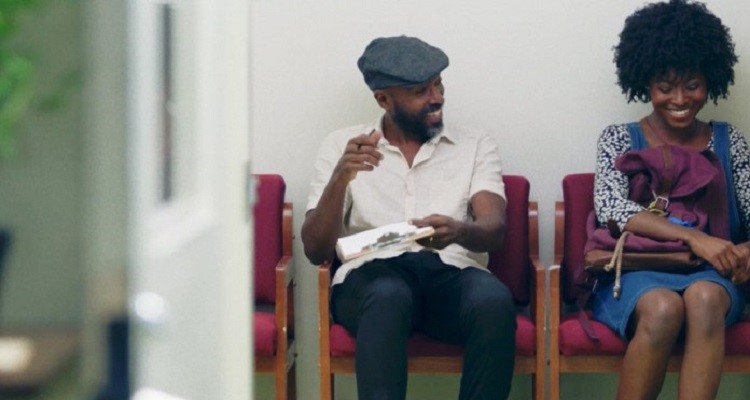
Ekwa Msangi’s affecting Farewell Amor opens with an airport pick-up. Walter (Ntare Guma Mbaho Mwine) is standing in arrivals meeting his wife Esther (Zainab Jah) and teenage daughter Sylvia (Jayme Lawson). The US reunification process has finally brought this family back together after seventeen long years apart. Esther and Sylvia were exiled to Tanzania while Walter has lived in New York driving a cab to make ends meet. Together, they must rebuild their family and attempt to settle, get to know each other again – or in the case of father and daughter for the first time – all in a one bedroom apartment and, for Esther and Sylvia, in a strange city.

Msangi chooses to use a Rashōmon-style of storytelling splitting her film into three sections, depicting each point-of-view. Each chapter is named for each character, giving them narrative agency over their own story, with the first meeting at the airport as the jumping-off point. We are party to their individual journeys as they come to terms with living in a strange land and as a Black person walking the streets in the US – the conversation Walter has with Sylvia about how people react to their skin colour is disheartening but also all too realistic – and provides insight into the types of secrets all families have for their individual and collective survival.

Esther has sought comfort, almost fanatically so, in her religion. Even for a good and loyal man like Walter, seventeen years is an eternity and he had found his in a nurse named Linda who has had to move out, move on and make way for Esther. Sylvia is the one with a future ahead of her and the one this has been the biggest upheaval for. She wants to dance despite her mother’s expectations of medical school, and enters a competition to win $1000 prize. It is Sylvia’s chapter that is the strongest and most impactful, making the absolute best of Osei Essad’s wonderfully evocative score and soundtrack.

Farewell Amor is a stunning first film. It runs with heavy themes amid the soul-searching (and often destroying) difficulties that comes with immigration, emigration and life as a refugee, but with no bombast or self-aggrandising statements. This is a story about honouring the past but placing importance on creating a future. It is redolent in its musicality and vibrancy of colour which is often integral to the culture it depicts yet it takes little to see ourselves in any one of those three gorgeous central performances. Ekwa Masangi has created an urgent and gentle drama – that still packs a punch – about struggle, fight, resilience and love; a sense of belonging and, above all else, family, made all the more poignant by the type of year many have experienced.

Farewell Amor is currently available to stream on MUBI

Categories
Film Festival film review

180° Rule (Dir. Farnoosh Samadi, 2020)

LFF 2020

It is not often that you hear women in Iranian cinema discuss abortion and rarely in the first twenty minutes of a film’s opening. It is the first indication that 180° Rule is a little different and that there’s a woman at the helm. Farnoosh Samadi, over the course of 83 minutes, subtly depicts a woman’s experience in a society fighting between tradition and modernity which renders women and girls without agency, and often leads to suffering and silence.

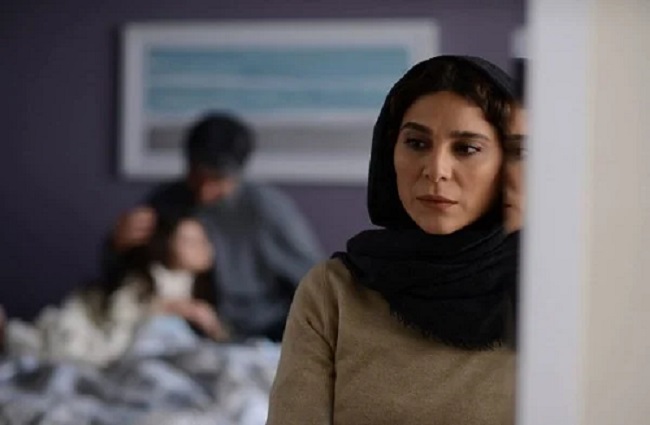
Sara (Sahar Dolatshahi) is a school teacher, well liked and preparing for a few days leave to celebrate a family wedding when one of her students, Yasi (Sadaf Asgari) admits to being pregnant (after swallowing pills to induce miscarriage). Sara offers guidance and advice where she can before heading home to pack. However popular she is at work, home life is a somewhat different matter – visually symbolised by the boiling, overflowing milk-pan on the stove in the opening frame – her husband Hamed (Pejam Jamshidi) is aloof, unfeeling, stoic and somewhat miserable. Criticisms come thick and fast and those that don’t are loaded in accusation.

She’s a nag, she smokes too much, she has allowed the cat on the bed again, she’s a bad driver, she’s responsible for his daughter being ill (it’s a cough and a temperature…) and then he’s claiming his workload will prevent him from accompanying her and daughter Raha to the upcoming nuptials. Which means that they have to stay behind lest travel unaccompanied or in the car with a ‘strange man’ (a taxi driver). This is made all the more disappointing by just how much his child has been looking forward to being the flower girl. Weighing up her options – and the expectations of her mother, extended family and daughter – Sara makes a choice and it is a decision that will change her life irreparably and we see the ripples for the remainder of the film.

During which time Samadi intentionally disrupts and disorientates the audience. The inclusion of Yasi’s subplot later on is purposeful and in keeping with the pace of the film and its reflection of reality. Change happens so quickly and impulsive, even inexplicable, decisions don’t always have time to reverberate or be made understandable – the plain and simple fact is that people, women can suddenly start acting strangely.

In a patriarchal society – like the one depicted so astutely onscreen – moral responsibility is placed on women, they’re conditioned to follow the rules, to do as they are told and avoid transgression at all cost. If they fail they’re expected to suppress their feelings and the pressures of secrets, lies, shame and guilt can often be their undoing, sadder still is that Samadi’s screenplay is loosely based on a true story. 

180°Rule is an evocative film that won’t necessarily be embraced by all but the juxtaposition of light and dark, black and white whether figuratively or in a lighting choice, a costume, or animal in frame is striking. Its mournful score, thanks to Amir Nobakht’s sound design only adds to the haunting melodrama and subtle social commentary.

It’s a technically impressive and visually arresting drama led by an extremely convincing lead in Dolatshahi. Were it not for her and the empathy she elicits, from what becomes a largely subdued and silent performance, it is doubtful the film would work quite so well. It will be likened to the work of Asghar Farhadi, somewhat understandably during one particular scene yet however flattering it is to be compared to a master filmmaker, and for a first feature no less (following short films: The Silence (2016), Grace (2017) and The Role (2018)), this piece of work is made all the more compelling, not in spite of but because of its female lens.