Categories
film review

Bombshell: The Hedy Lamarr Story (Dir. Alexandra Dean, 2018)

It was at the 90th Academy Awards when Frances McDormand took to the stage and declared to the seated guests, industry and world at large that women have stories to tell. One such fascinating tale belongs to Ms. Hedy Lamarr.

Alexandra Dean’s Bombshell: The Hedy Lamarr Story begins with a quote attributed to the actress: “Any girl can look glamorous, all she has to do is stand still and look stupid.” Hedy was very glamorous but far from stupid. Her beauty allegedly transforming her from an ugly duckling in youth to become the very thing she was judged solely upon. Born Hedwig Eva Maria Kiesler in Vienna, ‘Hedy’ was afforded private schooling (she particularly enjoyed chemistry) and exposed to the arts from an early age. By her own admission, she was an “enfant terrible” posing nude at 16 before developing an interest in acting. Which led to Ecstasy (1933) – a Czech film that saw her skinny dip, cavort naked lakeside and feign orgasm (the film’s rarely discussed outside of these “scandalous” moments). The Pope and Hitler denounced it, the latter not for its explicitness but rather the religious beliefs of its lead actress (the Kieslers were Jewish) – before Hedy set sail for Hollywood (she would become Lamarr courtesy of Louis B. Mayer’s wife Margaret) from London after escaping her first husband. There were six marriages in all, none particularly happy yet two resulted in children with motherhood a role she appeared to mostly enjoy.

It was, however, her relationships with Howard Hughes and the composer George Entheil which would help sustain her love of invention (Hughes gave her access to his chemists and lab) and provide her with what Google animator Jennifer Hom, describes as a “perfect underdog crime-fighter-by-night-story.” Hedy would work all day and then, of an evening, experiment and in 1941 with Entheil, the self-proclaimed “bad boy of music”, she created a radio controlled torpedo, the 1942 patent of which could (and did, come The Cuban Missile Crisis) revolutionise the war effort. Instead, they were thanked for their time and Lamarr was directed to selling war bonds – she made $343 million’s worth. When MGM failed to provide suitable film roles she found them herself, producing The Strange Woman in 1946 and co-producing Dishonoured Lady a year later, a feat relatively unheard of, in Hollywood, outside of Dorothy Arzner and Ida Lupino.

Life was never plain sailing, there were more divorces, a nervous breakdown, the addictive ‘vitamin B’ shots from Dr. Feelgood Max Jacobsen, odd bouts of kleptomania, the botched cosmetic surgeries, the dubious autobiography and subsequent court case that she would lose costing around the $9.8 million mark, and her reclusion from the world. The lynchpin to all of this heartache, one could argue, is that patent, which today is worth $30 billion and is a technology used in wifi, bluetooth, mobile telephones, GPS and the military, and one which has effected our daily lives, and for which she was paid nothing. There was, at least, the Electronic Frontier Foundation Special Pioneer Award in 1997 and the eventual induction into the Invention Hall of Fame in 2014 (commemorating her 100th birthday) which would slowly inform the world of this genius woman who was more than just a pretty face.

In terms of documentary form, Dean’s approach is rather prosaic. From its piano-accompanied montages to the mixing of images, film clips, archival interview footage and talking-heads. These include Lamarr’s son Anthony Loder, daughter Denise Hedwig Colton, granddaughters, and a whole host of critics, biographers, historians – actress Diane Kruger also reads from personal letters. The crux of the whole film, however, rests on the lost and found audio tapes of an interview conducted in 1990 by Forbes Magazine staff writer Fleming Meeks. Hedy Lamarr gets to tell her own story and comes across as spirited and unpretentious with a wicked sense of humour; a fighter, survivor and a woman of extremes and complexity, which makes it all the more tragic that she became a media punchline and, in her later years, perhaps defined her self-worth against her ageing physical beauty.
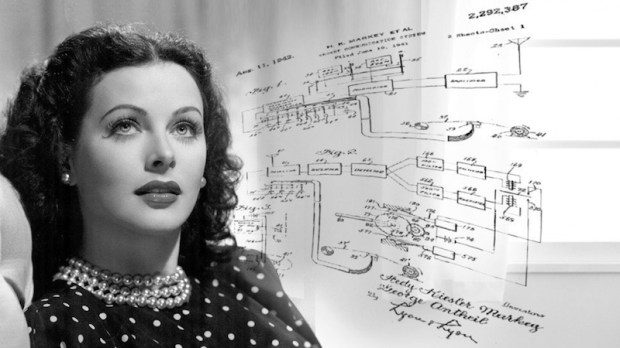
Bombshell is an evident labour of love, passionately told (rarely sugar-coated), beautifully edited, by Dean, Penelope Falk and Lindy Jankura, and surprisingly moving. Its content and form, however conventional, is in much the same vein as Ingrid Bergman: In Her Own Words (2015) and even the more playful Mansfield 66/67 (2017); documentaries which seek to expose the myths of these successful women, subvert assumption and conflate the notion of brains and beauty (it’s amazing, a woman can have both in spades). Hedy Lamarr was an immigrant, a feminist icon – long before the term was coined – and a trailblazer in science and technology invention; an underestimated woman who, with her beautiful brain and frequency hopping, had a hand in literally connecting us all.
Categories
film review

Mansfield 66/67 (Dir. P. David Ebersole and Todd Hughes, 2018)

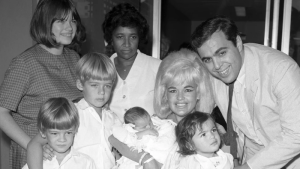
Once Jayne Mansfield’s star began its descent in the 1960s, the hour-glass-figured actress continued to court publicity wherever she could get it, fast becoming a reality TV star of sorts. She would appear in the tabloids seemingly inebriated (pills and booze they claimed), and photographed during many-a wardrobe malfunction, that 40″ chest fighting for freedom and yet she continued to work – completing Single Room Furnished – before her life was tragically cut short aged 34.

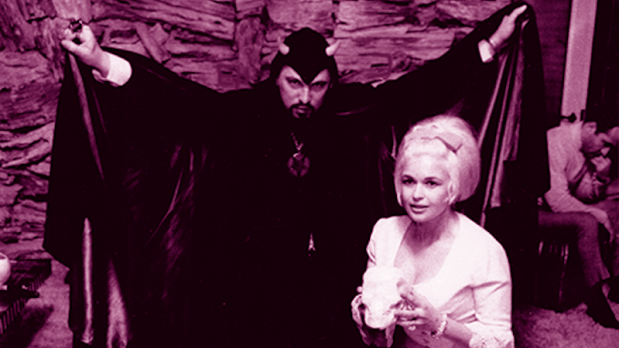
A year earlier from the crash that would claim her life, Mansfield appeared in a photoshoot with Anton LaVey, the High Priest of The Church of Satan and it was soon suggested that she was now a Witch worshipping at the altar of LaVey – the Satanist who would allegedly place a curse on Sam Brody, Mansfield’s lover at the time. Brody would die in the car alongside Jayne on that fateful night on June 29 1967, and it is these last two years of the actress’ life that husband and husband filmmaking producers P. David Ebersole and Todd Hughes (Dear Mom, Love CherRoom 237) concentrate on in their documentary.

Mansfield 66/67 is far from ordinary in its form, combining dance numbers, songs and monologues (performed by students of Leeds Beckett University) intercut among the archive footage, animated reenactments, photographs, and newspaper clippings. There is a cast of adoring fans and conspiracy theorists including John Waters, Mamie Van Doren, Kenneth Anger, Cheryl Dunye, Yolanda Ross and Drag artist Peaches Christ, as well as insights from Los Angeles historian Alison Martino and academics Dr. Eileen Jones, Dr. Eve Oishi, and Dr. Barbara Hahn. It is a fascinating and visual delight with a tone befitting its subject.

While the film makes no bones about focussing on salacious scandal and rumour – there is even a disclaimer at the very beginning – it doesn’t hurt it. Just as sex sells so does conjecture and falsehood (we are living in the Fake News era after all), and amongst the knowing kitsch and farce a solid argument is made positioning Mansfield as a feminist icon. One that suggests she transcended her sexual identity, and exploited the sexist culture which, some will continue to argue, exploited her. Amidst the Pink Palace, heart-shaped pools, jewels, Chihuahuas and overtly sexualised image, this woman who spoke five languages, played the violin and piano to concert level, and mothered five children was, in fact, liberated.

This highly intelligent documentary is a wonderfully weird watch, and while dressed largely in pink and fluff, it has a lot to say about the expectations placed upon women, and doesn’t take itself too seriously, much like the woman at the heart of its soul. Mansfield 66/67 is an entertaining exploration about the lasting impact of myth and the rise of the women’s movement. A film full of fun, love and admiration for the underestimated blonde bombshell, who was original, self-reliant, determined, and fabulous, and appeared to live her short life to its fullest.

Did the Devil make her do it? Damned if I know.

Categories
film review

78/52 (Dir. Alexandre O. Philippe, 2017)

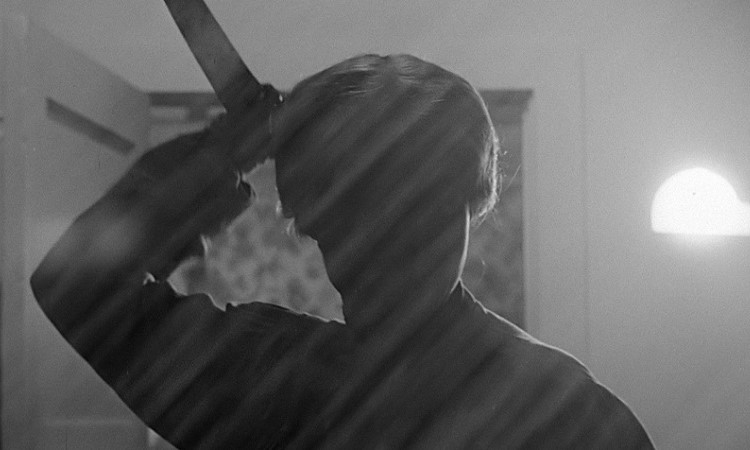
Shot almost exclusively in stylish black and white (save for the colour film clips and art pieces), Alexandre O. Philippe’s documentary 78/52 celebrates Alfred Hitchcock, and the most infamous shower scene ever committed to celluloid (and after its decline). Its title referring to the mammoth 78 set ups and 52 cuts that makes up the sequence which lasts just 45 seconds.

Recreating scenes of the proto-slasher and taking full advantage of Jon Hegel’s string-heavy score, 78/52 relies upon audience participation; ours and those onscreen seated on a set decorated not too dissimilarly to the Bates house, all floral wallpaper, old fashioned TV set and dressed in trinkets. By the final third, we are watching those talking heads involved viewing the scene in question to utterances of “wow”, the odd gleeful “yes”, only Marli Renfro (Janet Leigh’s body double) appears uncomfortable. Just one more aspect of voyeurism which begins with Norman Bates and his peep-hole.

From Saul Bass’ storyboards and Hitch’s script notes, Bernard Herrmann’s score, and the casting of Leigh’s body-double Renfro, to the type of melon used for stabbing foley and of course, the watered-down Hershey’s chocolate syrup which doubled so convincingly for blood; 78/52 is an interesting and in-depth critique of an iconic piece of film by a controversial cinematic auteur. It is effective, informative and well-produced as the likes of Peter Bogdanovich, Guillermo del Toro, Bret Easton Ellis, Tere Carrubba (Hitchcock’s granddaughter), Eli Roth, Osgood Perkins, Jamie Lee Curtis, and Danny Elfman – amongst many others including directors, actors, authors, film editors, professors of cinema, composers, AFI scholars and art curators – wax lyrical about the film which was so culturally and socio-politically integral to cinema and its reception. As one suggests, it elevated not only the horror genre but cinema as a whole.

While the influence of Psycho is staggering, one small scene cannot quite sustain a whole 91 minute film which is why it veers somewhat through Hitch’s body of work and the film as a whole. The majority of observations are interesting, however, there are moments which are superfluous and trite and a few which remain unsaid. For example, Hitchcock’s notorious onset working practices is a subject never broached and what of the sexualised aspect of the shower scene, the symbolic rape (though there is Bogdanovich’s ‘feeling’ of rape after seeing Psycho for the first time and a comparison to Irréversible), or the female gaze? Again, topics that are mentioned in passing and danced around but never explicitly with reference to the subject matter (or not at all). Karyn Kusama and Illeana Douglas (two of only seven women interviewed) aren’t afforded the time to expand upon their thoughts – or were and then cut. It seems almost ironic to set up a discussion about a horror film which has an integral scene removing the woman and then not have a few more female filmmakers, fans and/or experts to voice opinion – unless that’s the point?

As a piece of art, there is no denying Psycho remains a cornerstone of the horror genre and cinema, it broke taboos and pushed boundaries and is one of Hitchcock’s masterpieces within a substantial and impressive oeuvre. In the words of Edgar Allan Poe “the death of a beautiful woman, unquestionably, is the most poetical topic world” which pop up onscreen as the documentary begins. It’s just a shame that more women weren’t included to talk about it rather than the whole discussion, or thereabouts, dominated by white males.

78/52 is for those who have an interest in the art and history of film. Part visual essay, Hitchcock commentary, and Psycho autopsy, it’s entertaining enough and well worth a watch but for anybody who has ever studied film or auteur theory, there will be little you didn’t already know.

Categories
Film Festival film review

Listen to Me Marlon (Dir. Stevan Riley, 2015)

LFF 2015

1638832 001
listentomebud

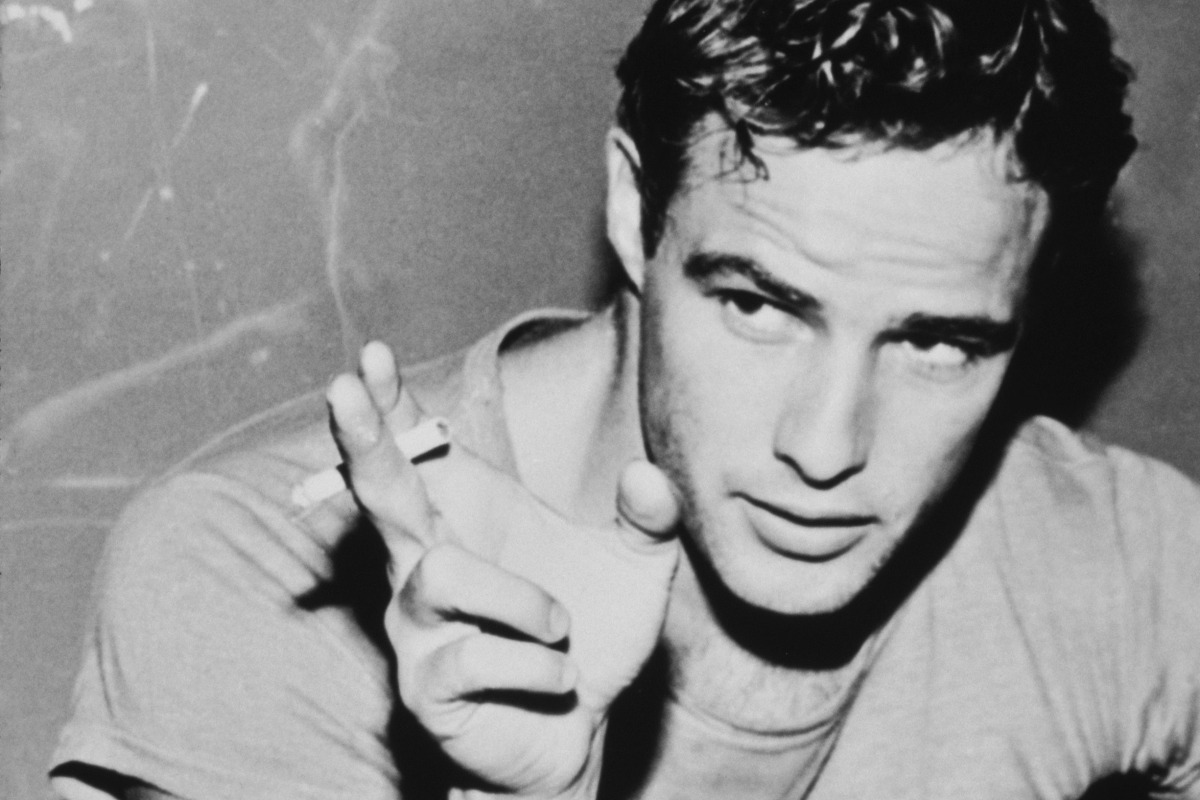
‘Bud’ Brando means a lot to me. He was the subject of my Undergrad dissertation and to this day he fascinates me. Not just a pretty face he appeared to be a mass of ambiguity and encompassed the beautiful; a masculine yet feminine dichotomy, enigma and myth. There was an ambition and an underlying vulnerability I was drawn to, hell, even empathised with but by the end of my research, these ambiguities, half-truths and general lack of consistency allowed me to dissect the actor’s persona and his choice of film roles yet the man remained somewhat of a mystery. 

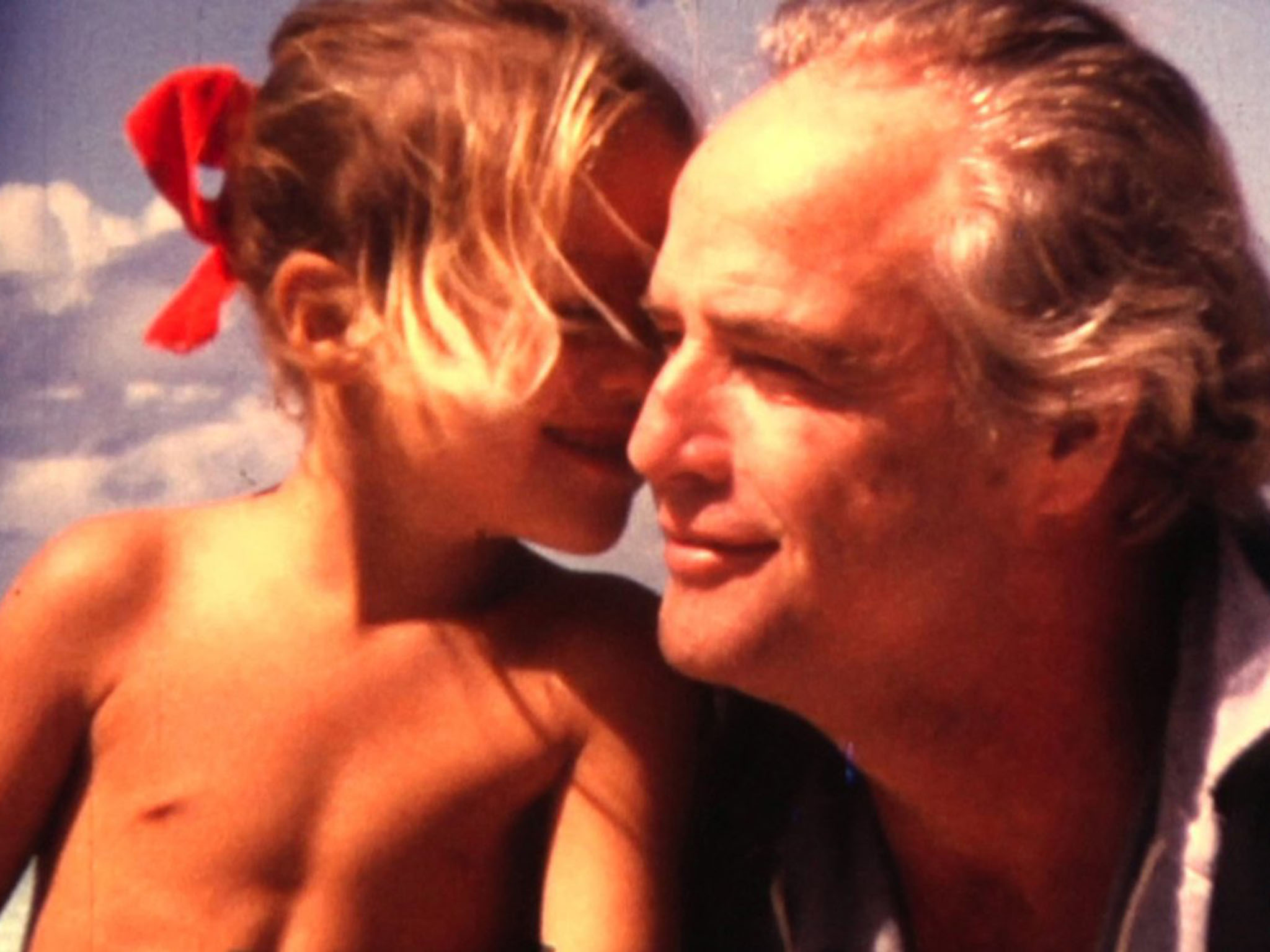
Recently screened at the 59th BFI London Film Festival, Stevan Riley’s film Listen to Me Marlon opens with a digitised print of Brando’s face – one used during his incarnation as Superdad, Jor-El. It’s an eerie image, like a death mask but also rather apt given that fatherhood is such a huge part of this documentary. It/Brando begins to recite a monologue before news coverage takes over, detailing the shooting of Dag Drollet at Brando’s home in 1990. Dag was the boyfriend of Brando’s daughter Cheyenne and father of her son Tuki – he was killed after a struggle with her elder brother Christian. Cheyenne would later commit suicide. It was a tragedy that changed the actor overnight and something he never appeared to get over.

listen-to-me-marlon (1)

Riley edits shots of an empty home against the audio soliloquies and these are intercut with video footage and archival interviews of Brando during his heyday and beyond. He does a tremendous job at giving an audience, unfamiliar with the star, a real glimpse at the man. A lot of the visual segments are not necessarily new but the tapes are revelatory. The actor grew tired of psychoanalysts and began self-hypnosis in an attempt to understand himself. The man depicted throughout this documentary is one with unquenchable curiosity; intelligent, articulate and thoughtful – a shy and sensitive soul determined to have love and freedom. His enigma remains somewhat intact, and thanks to writer/director/editor Riley an audience can experience a real intimacy with a largely misunderstood Marlon.

LISTEN_TO_ME_MARLON_still

Listen to Me Marlon is a beautiful, affectionate gem of a film which perfectly balances the fact with fiction; the philosophical man and myth. To hear the distinctive nasal tone of the much-mimicked actor and to note the change in octave and speed as he gets older is actually very moving. This is a last testament of sorts: Bud in his own words. And what wonderfully warm, sad and amusing words they are.

Categories
film review

I am Divine (Dir. Jeffrey Schwarz, 2013)

Cinematic audiences have been very used to cis men ‘donning a dress’ in order to hide or covet something over the decades. In Some Like it Hot (1959), Gerry and Joe (Jack  Lemmon and Tony Curtis) needed to flee the city after witnessing a Mob hit. Michael Dorsey (Dustin Hoffman) became Dorothy Michaels to secure a recurring role on a soap opera in Tootsie (1982) boys dressing as girls have caused mayhem in horror films; the definitive, of course, being proto-slasher, Psycho (1960). There have been road movies with drag-artists aiming for acceptance – self as well as societal – and life contentment amid lipstick, chicken fillets, and feather boas like in The Adventures of Priscilla: Queen of the Desert (1994) and To Wong Foo Thanks For Everything, Julie Newmar (1995). Plus, there are men (homosexual, heterosexual, cis…) wishing to extrapolate the maternal realm with the help of prosthetics and spirit gum like Albin/Albert (Michel Serrault and Nathan Lane respectively) in La cage aux folles/The Birdcage (1978/1996) or Daniel Hillard and Euphegenia Doubtfire. The genre, if one can suggest there is one, straddles comedy and tragedy and rarely offers anything in between.

When Harris Glenn Milstead shimmied and sashayed in his little (operative word being ‘little’) numbers, people took notice. Wearing a dress seemingly freed him and enabled him the life he coveted,  he unapologetically introduced the world to his alter-ego: Divine. And oh, what a woman – loud, brash, crude, angry and trashy (often by her own admission). Lady Divine didn’t give two flying kitten-heels what people thought of her and with the help of childhood friend, John Waters, and make-up artist/costume designer extraordinaire Van Smith, they not only set out to prove that she was, not only, the most beautiful woman in the world but the filthiest.

divine-in-pink-flamingos-300x193
divine as dawn

Jeffrey Schwarz’s I am Divine is a labour of love, mixing contemporary interviews with archival footage, the documentary is warm, affectionate, and presents a touching portrayal of a larger-than-life transgressive – yet defining – drag artist and actor who was deeply loved by his friends, family and contemporaries. While Milstead’s story is far from unusual: ‘Glenny’ was chubby and bullied for his effeminate nature, his mother even took him to the Doctor who confirmed (!) that there was more femininity lurking beneath the surface of the masculine Milstead child. At 17, he met John Waters and the rest, as they say, is history. Divine was determined to be a star and, wherever possible, look exactly like Elizabeth Taylor while doing it.  

Schwarz paints a riotous, compelling, and wonderfully edited documentary celebrating the generous, sweet-natured, and fearless cult icon without ever resorting to the overtly camp or sugary twee. There is some darkness – the drug-taking, the food addiction that more than likely contributed to Milstead’s untimely death but Divine made the most of her time in the world, as one time member of theatre troupe The Cockettes, a solo recording artist, stand-up comedian, and as an actor. Not just any old actor either, an evolving and defining one – she was trash-talking Babs Johnson (Pink Flamingos) and Dawn Davenport (Female Trouble), frumpy and unfulfilled housewives Francine Fishpaw (Polyester) and Edna Turnblad (Hairspray), hot-blooded Rosie Velez in Comedy/Western Lust in the Dust. There were male counterparts too (like Earl Peterson and Arvin Hodgepile). She was in her element in Polyester, enjoying on-screen clinches and kisses with childhood-crush, Tab Hunter.

harris-glenn-milstead

Sadly, Divine passed away in his sleep the night before he was due to start filming as a series regular on Married With Children, and as this documentary states unequivocally; he was adored. A divine man who had a heart as big as his body, an icon to many but especially those who have ever felt different.

I am Divine is currently showing on MUBI