Categories
Film Festival film review

Housewife of the Year (Dir. Ciarán Cassidy, 2024)

This documentary opens with a citation of article 41.12 of the Irish Constitution in which it states that no mothers will be “obliged by economic necessity to engage in labour to the neglect of their duties in the home.” The marriage bar would remain until 1973 three years after second-wave feminism hit Ireland. Preceding both, in 1968, was the launch of the annual contest Housewife of the Year.

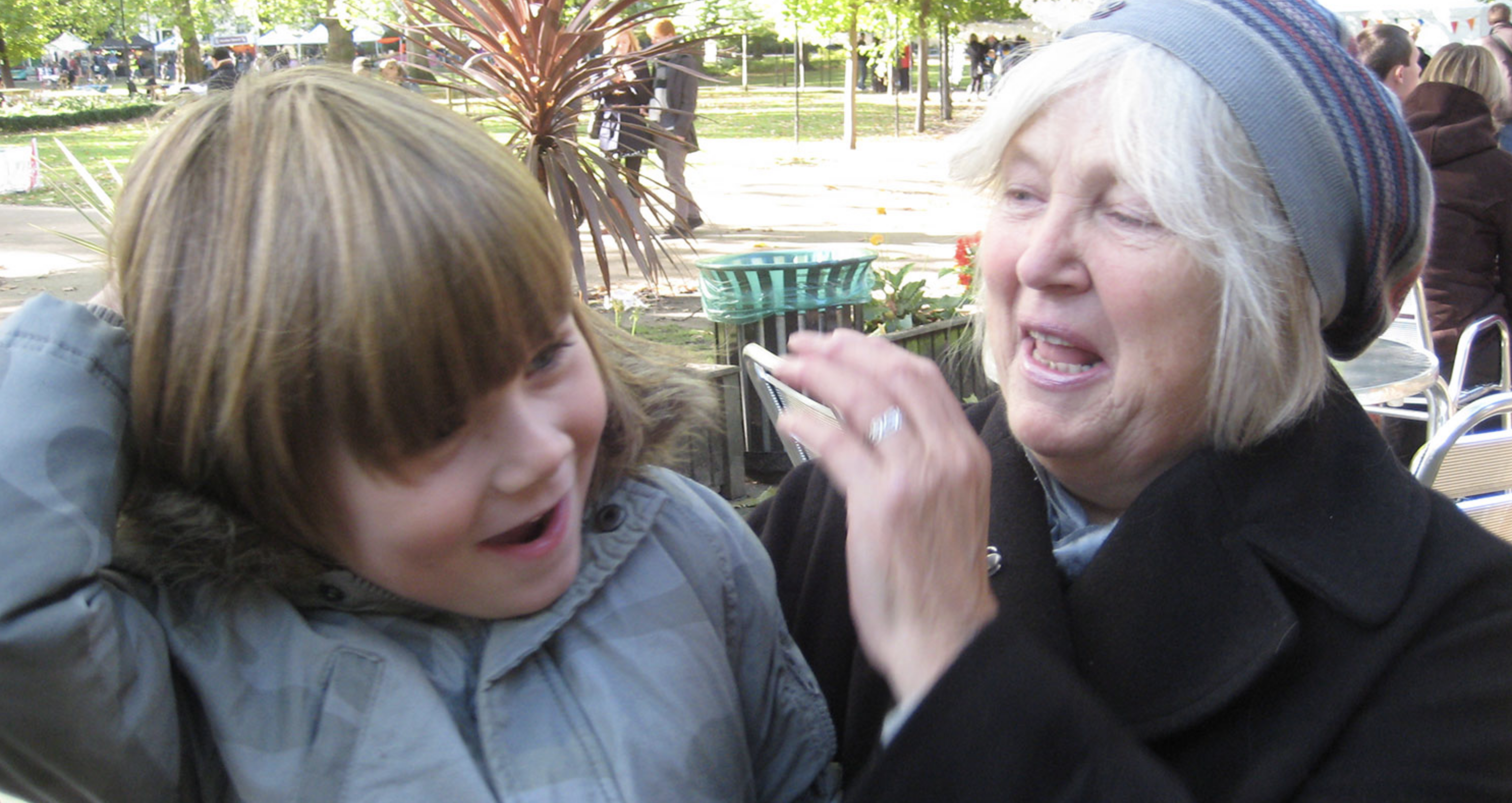
Described as a “friendly competition”, women across Ireland would be judged on how effectively they budgeted and prepared meals. As well as their sense of humour, appearance, personality, sincerity, and civic mindedness – think Miss World sans swimwear segment. It would be televised from 1982 with beloved broadcaster Gay Byrne (1934-2019) as host with the winner getting £300 in cash along with £300 in white goods, usually a “beautiful cooker.”

Director Ciarán Cassidy uses the backdrop of this derisive, surreal and sexist competition to interrogate the role of women in Irish society over the years. There is mention of the Magdalene Laundries, the Catholic doctrine and rigidity surrounding contraception, poverty, the Ann Lovett tragedy of 1984, the Divorce Referendum of 1986 (which was eventually overturned in 1995). Yet, the real meat on the bones is the present day interviews with some of the contestants (and winners).

These extraordinary women – Margaret, Ena, Ann, Sally, Patricia, Miriam, Ellen, Bernie and Philomena – and their stories are fascinating and kind of shattering in equal measure. Their lack of choice and how they adhered to a life of wife and mother, their confinements lasting far beyond the forty weeks of pregnancy. Interned not only in the marriage itself but many quite literally pregnant for decades. Ann was married at 20 years old and by 31 had thirteen children (including four sets of twins). Patricia had to juggle her housework, child-rearing and fulfil her duties as a postal worker when her husband fell ill and unable to work. Miriam sacrificed her career as a Nurse in London just as soon as she uttered her vows, while Bernie was petrified that she’d be found out, her eldest child’s illegitimacy exposed, that her subsequent marriage and further five children would render her disqualified.

On the surface, Cassidy’s film questions the conformity perhaps just not quite as much as the women themselves. Many lament that the decisions made for them, this lack of choice was ridiculous but yet, somewhat paradoxically, credit the competition with giving them the confidence and self-esteem to speak up and question if there was more to life than what was expected of them. Or, in the case of Ellen, the impetus to survive when her husband walked out on her.

Housewife of the Year does not reinvent the wheel in terms of documentary style, combining a lot of talking head interviews with archival footage, however, it is beautifully edited by Cara Holmes and having the former contestants introduced via a spotlight on stage is a lovely touch. It leans heavily into nostalgia, is always sympathetic but never delves too deeply or rages quite hard enough, in the way that many an audience member will upon viewing. While it is pretty wonderful that these women are here to tell their tales, it is always at the forefront of your mind that many, many more are not. Women and girls abandoned by blatant misogyny and a deplorable system, which would have sooner seen them dead than accept a teenage pregnancy or fill a prescription for a diaphragm (without a court case). Not so far removed from where the USA is headed today.

During its run, the contest gave face to a generation of women who in spite of it all kept going and while the State endeavoured to make them second-class citizens, it was their resilience which ensured that, eventually, they would endeavour to make the State work for them. That they could achieve something, there was possibility in the future and change would come. Eventually.

Housewife of the Year plays this year’s Irish Film Festival, London which runs from 13-17 November.

Categories
Film Festival film review

Mother Vera (Dir. Cécile Embleton & Alys Tomlinson, 2024)

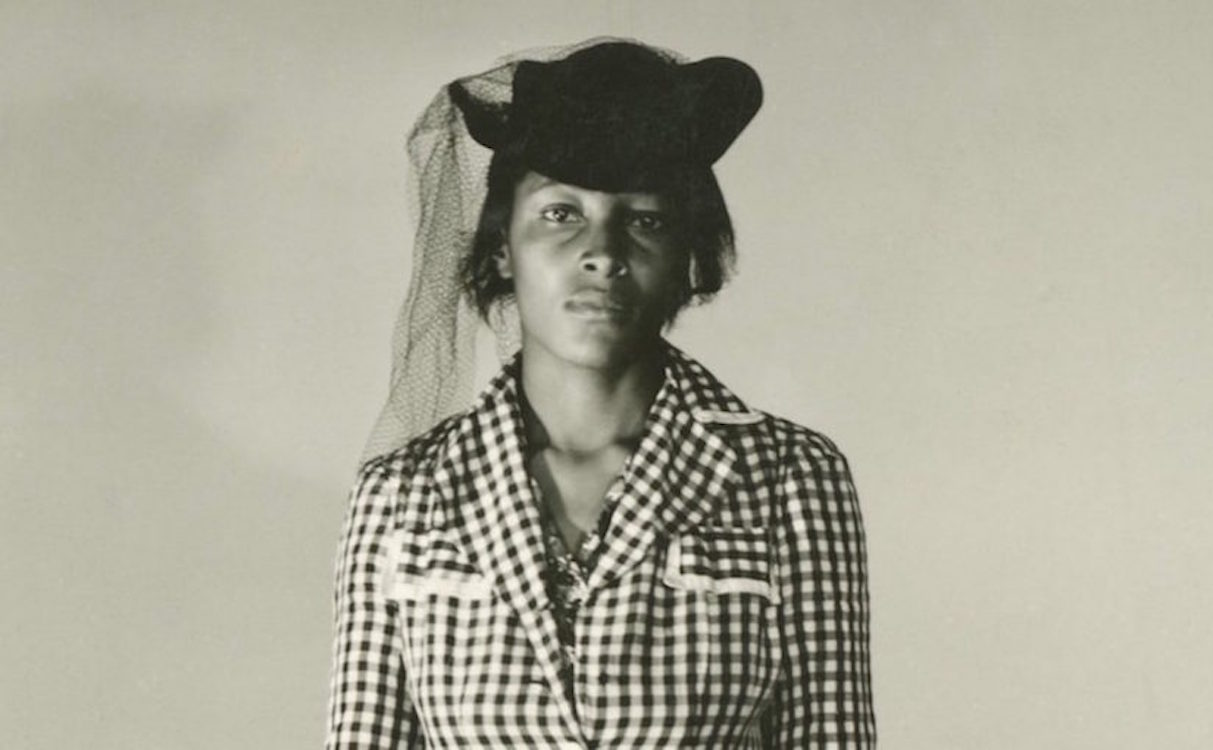
“I didn’t want to become a nun,” confesses Vera at one point during Cécile Embleton and Alys Tomlinson’s absorbing and beautifully structured Grierson Award-winning documentary, Mother Vera. The genesis of which was a black and white photograph (see above). The portrait was taken by Tomlinson, during one of her visits to Catholic pilgrimage sites and published in her book, Ex-Voto – so named for the devotional votive offerings often left at these sites of worship.

For some sisters (and Catholics), the calling can be romanticised, childhood piety guides the novitiate on their path and any struggles with faith rarely discussed out loud. For the titular figure at the centre of this film nothing could be further from the truth.

Born Olga, Vera’s road was one filled with nightclubs, perfume, motorbikes and heroin. Not to mention the imprisoned husband before she found recovery, and God. Even after twenty years, redemption is still on the table: “I broke the lives of many people. I must be from hell.” Her backstory is slowly drip fed to the audience, almost elliptically, and delivered in short, often blunt, sentences which while never really expanded upon are without self-pity or, refreshingly, true regret. She is the perfect conduit to help the ex-prisoners in the congregation, men cloistered under her care seeking to reconcile their own addictions and reclamation.

Diegetic sound reverberates in every striking frame and there are many, austere and stunningly rich. From the nun shot from behind ringing bells, each peal seemingly moving ropes at will making her look like a marionette to close-ups of women reading scripture and their hands clutching rosaries, forefingers and thumbs cradling each bead as they silently count the prayers. Religious iconography adorns most interior walls and then there is the neon lighted cross at the head of an outdoor baptismal pool which upon first glance resembles an open grave. Images which are fleeting, often in isolation but evocative enough to render to memory.

Daily life at the St. Elisabeth monastery is filmed in stark contrast, black and white only further enhances the grey. Lighting is reduced to flickering candlelight, low camera angles focus on the swishing of the cassock as feet climb stairs, shadows move en masse until focus eventually pulls upwards and the apostolniks and skufias of the sisters, old and young alike, come into view. This contrast is never more apparent than when those dark melancholic frames give way to the daylight and the deep snow Vera rides her steed through heading towards the ominous forest on the grounds periphery. It is outside with the horses where she finds peace, her pockets of joy reserved for when she visits her family.

This documentary sits very comfortably within the realm of ‘slow cinema’, thematically (and visually) similar to films like Ida (Pawlikowski, 2013) and The Innocents (Fontaine, 2016) but with a fundamental truth and reality at its core. It carries emotional heft as the search for liberation and personal freedom becomes ever more apparent. The shift in the journey of the enigmatic Olga/Vera – herself the personification of a votive offering – also occurs in the filmmaking too. The slow transition to colour in those last twenty minutes is glorious and perfectly judged, the first initial bleeding of which comes after the inky black apostolnik is seen burning into ash and dissolving into the cold night air.

Mother Vera defies expectation. It is a visually gorgeous meditation in (mostly) monochrome – filmed with creativity and originality through a non-judgemental lens about one resilient and courageous woman’s search for identity and self-acceptance. Embleton and Tomlinson took a still image and over 91 minutes made it come to life onscreen.

Categories
Film Festival film review

Motherboard (Dir. Victoria Mapplebeck, 2024)

Matrescence is a word that is slowly finding its way back into vernacular after decades without recognition in Western society. This transition goes further than the narrative surrounding pregnancy, birth and motherhood women have been fed for centuries. It goes far beyond the development of the foetus, how the baby turns out and looks instead at unexamined moral assumptions about motherhood – and explains the metamorphosis and how it ends. As a chimera with her child’s cells knitted to her body and bones and her brain colonised, forever connected.

Victoria Mapplebeck’s feature debut Motherboard, shot over two decades on a DVCAM and five generations of iPhone is a collaboration between a mother and her son but attempts to depict the multitude of changes a woman goes through above beyond the physical mutation of growing another human. At 38, pregnant and alone after being dumped by a man reportedly not for fatherhood she begins to document her journey of motherhood post-birth. A filmmaker-cum-academic, Victoria is no stranger to an absentee father, her own walked out on her mother when she was a toddler.

Her baby’s father, upon meeting his child on the first of less than a handful of times, demands a paternity test before announcing his move to Spain and over the years his apathy does not change. One feels nothing but shame for him. Jim grows into a seemingly great little human in spite of him – that thumbs-up during the scan in the first scene of the film telling us all we need to know – and because of his mother and grandmother, Betty. He is mature beyond his years, sensitive and pragmatic even before he reaches ten years old.

While absent fathers are nothing new in this family, Victoria does manage to repair some of the fractures in her relationship with her own father in a particularly moving moment, Jim’s interest at 13 in developing a relationship with his other parent coincides with Victoria’s cancer diagnosis and the rounds of chemotherapy she must face. There is no sugar-coating, no bemoaning of the selfish human she pro-created with (at least on camera) or any self-pity: “I don’t care if I die. I just want to get [Jim] to adulthood.”

This documentary uses live-action footage, voicemails, voiceovers and text messages to paint a fiercely unsentimental look at motherhood, and the frustrations that go along with it not to mention the guilt and unfiltered messiness of life with a child and the attempt to navigate a career alongside. It is really beautiful seeing Jim evolve – over 90 minutes – the small squeaky voice giving way to a deep resonant tone, the small day bed replaced with a double to house his growth spurt.

We bear witness to the teenager, moody, monosyllabic, fighting the onset of depression amid a pandemic-induced lockdown and drug experimentation. That these struggles occur during the time Victoria starts to take baby-steps back into the filmmaking world, pitching her film to the Venice film festival are merely coincidence or because of are never really explored. However, understandably, it leads to some really intense and terse moments between the two, and on the other end of the phone there’s a voice of reason in Betty.

Victoria. Betty. They are the constants. Two women who raise(d) their children (mostly) alone. The former never stops needing the latter, who is often on hand to offer sage advice, empathise with, offer thoughts on films, or bake a shepherd’s pie, and Jim has another mother to go to when things get a little too tough between him and his own mum.

Motherboard frames the joys and expectations of motherhood and to some degree womanhood as the woman of this piece attempts to carve a place for herself in the world, recouping earlier sacrifices after the maternal block (Jim refers to it as a mental one). It is humane, warm and candidly relatable.

At the heart of it, there is no denying the connection between this mother and her child.

Categories
Film Festival film review

Truman + Tennessee: An Intimate Conversation (Dir. Lisa Immordino Vreeland, 2021)

“Life is partly what we make it, and partly what is made by the friends we choose” – Tennessee Williams

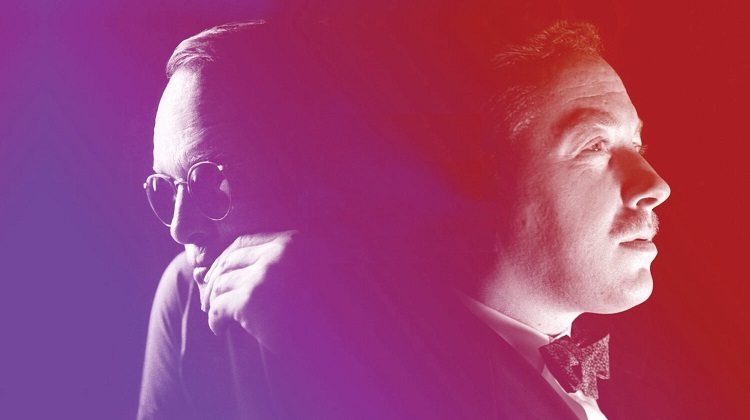
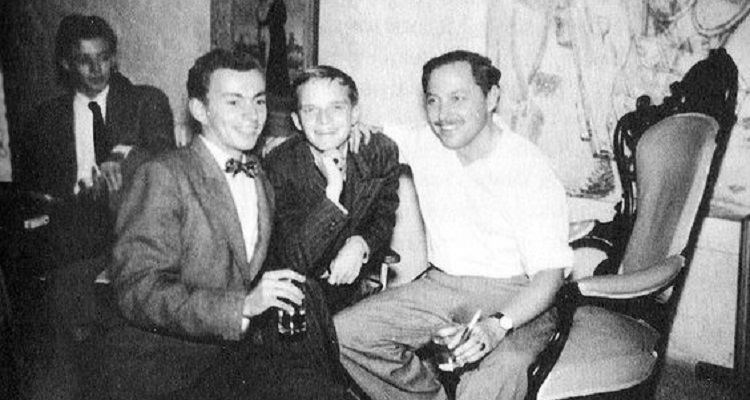
Tennessee Williams and Truman Capote were two of the greatest writers of American Literature during the Twentieth Century – Pulitzer Prize-winning even in Williams’ case. They were also friends for over 40 years until their respective deaths in 1983 and 1984. Lisa Immordino Vreeland’s documentary gives an 86 minute window into this relationship, promising an intimate conversation and doesn’t waste a second.

Utilising archival footage, stills and photographs – beautiful ones courtesy of the Cecil Beaton and Richard Avedon collections amongst others – the film establishes the two men as singular subjects as well as through a dual portrait. The split screen of both being interviewed by David Frost (or Dick Cavett) albeit on separate shows is a brilliant touch especially given both are faced with a similar line of questioning in spite of their very apparent (or so this reviewer thought) differences. That’s the beauty of this film, it never presupposes the viewer’s prior knowledge – there is more than enough here to keep ardent fans happy while schooling those less-than-familiar minds. Unless mistaken, it does feel like there is slightly more meat on the bones in relation to Williams’ personal history, career, subsequent film adaptations, etcetera. however, this is not a complaint, he was the older of the two and seemed the more prolific.

The ‘conversation’ begins in 1940 when both men first meet and extends decades until their deaths in the 1980s, it is rendered here and stitched together between their respective correspondence, snippets of interviews as well as passages of seminal works, their great love stories, battles with addiction and personal tragedies. Jim Parsons and Zachary Quinto’s voiceovers ‘as’ Truman and Tennessee respectively serve a purpose, however, can be at odds with the archival footage and detracts from an otherwise immersive experience. Neither quite nails the pitch and cadence of the eloquent Southern gents who had such distinctive timbre and speaking voices. That said, it is a brilliant piece of casting.

There is no denying that both TC and TW were supremely gifted, often troubled, men who helped shape the Southern Gothic literary genre and their work, in turn, gave some of the most memorable adaptations committed to film. Although to listen to them neither were all too keen. Capote felt betrayed after Marilyn Monroe – who he had always envisioned as Holly Golightly in Breakfast at Tiffany’s – was replaced by Audrey Hepburn, and Williams loathed what film censors would do to his plays. He hated that everything had to be intimated and could never be shown, only for the last ten minutes of the film would it become apparent, that, for example, Stanley had raped Blanche in A Streetcar Named Desire. It was the reason he fought so hard for artistic control of his work.

Their friendship was a complex one, lives often paralleling beyond the 13-year age gap or sheer coincidence – both had non-existent relationships with their fathers who they would compartmentalise, write out of their lives as well as their names – Truman at aged 9 and Tennessee at 18. They both struggled to accept their sexuality believing, somewhat devastatingly, that life would have served them better, or at the very least during childhood, had they been born girls. There were of course a multitude of differences, not least in relation to fame; one sought it unabashed and relentlessly while the other found it a “tedious bore”. One believed his most successful novel (In Cold Blood) was due to the fact that he didn’t appear anywhere in it while the other claimed to have only written the one autobiographical play (The Glass Menagerie).

Yet for all their unfaltering support of each other there were the petty jealousies, churlish goading and combative comments. Certainly, the description of Williams in Capote’s unfinished novel is less than kind but Immordino Vreeland steers her film in a more positive direction. There is enough pathos and poignancy in these frames which gives, not only a nostalgia hit, and a push to revisit their works but a real insight into their frank worldview, compulsions (of which writing was top of the list) and moments of real empathy. Although not new information, to actually hear Williams talk of his own self-loathing, and sister Rose’s ECT treatment is utterly heart-breaking.

Truman + Tennessee is an intimate and fascinating portrait of two behemoths of the written word; a dramatist and a writer (though neither descriptor is mutually exclusive) and definitely one for fans of Stevan Riley’s Listen to Me Marlon (2015) in which there is some attempt to demythologise a persona, or in this case two. These men – one a lover of Chekov the other of Moby Dick – butted heads, belittled and bitched about each other, often competitors as well as confidants, and if we’re to believe Truman Capote when he stated: “Friendship and love are the same thing,” then it’s safe to surmise from this documentary that they also loved each other madly.

Truman + Tennessee had its UK Premiere thanks to Dogwoof at the Glasgow Film Festival and is released on VoD on April 30th.

Categories
film review

The Rape of Recy Taylor (Dir. Nancy Buirski, 2017)

For many, the first time hearing the name Recy Taylor would have been in January 2018 when Oprah Winfrey paid tribute to the extraordinary woman in her Golden Globe speech, and yet Taylor’s sexual assault would prove to be an organisational spark in the Civil Rights Movement decades before the Women’s Movement and the #MeToo resurgence.

On September 3rd 1944, Recy Taylor neé Corbitt was kidnapped at gunpoint after leaving Church in Abbeville, Alabama by seven young white men. They drove her to a nearby wooded area where six of them – aged between 14-18 – took turns in raping and terrorising the 24-year-old sharecropper, wife and mother, before leaving her blindfolded and stranded at the side of the road. Despite three eye witnesses identifying the driver who would name all of his passengers (none of whom were questioned) an all white, all male jury dismissed the case. Enter the NAACP and their chief investigator, Ms. Rosa Parks who was to conduct a thorough investigation, help defend Taylor and seek punishment for her attackers – some eleven years before the Montgomery Bus Boycott – a dangerous business in Jim Crow-era South.

Writer-Director Nancy Buirski (The Loving Story) uses her film – which had premieres at the Venice Biennale and New York Film Festival – to expose the systematic racism that not only fostered the heinous crime but covered it up. She utilises footage from “race films” and their lack of white gaze to Recy Taylor’s story. These are intercut with gospel music and Church footage – shot by Zora Neale Hurston whose journalistic prose would prove important during another unconscionable and despicably unjust “rape” case in Scottsboro a decade earlier.

While the obvious tone of this documentary is solemnity, some may find its structure superfluous, however, these snippets of human life, art and joy in the face of such adversity are beautiful in an otherwise infuriating film where (yet again) white privilege not only dehumanised this woman but terrorised her family. The full impact of which is discussed in interviews with Taylor’s brother Robert and sister Alma. Hearing them describe how their father slept in a tree overlooking their home (after Recy and husband Willie’s house had been firebombed) with a shotgun as a means to protect his family is particularly hard to hear, made all the more galling when one considers the justification for lynching was the white man “protecting” his wife and daughters. Benny Corbitt was, of course, not afforded that power.

Recy Taylor was just one in a longer tradition of black women who spoke her truth and sought justice, and an aspect the documentary does particularly well is arguing passionately for their place in history – these women were always there. Harriet Tubman, Rosa Parks, Maya Angelou, Ruby Bridges, the afore-mentioned Winfrey – look at the audiences photographed during Martin Luther King’s  numerous rallies, they were there, or look to the backbone of the Black Panther Party, or consider there wouldn’t even be a #MeToo without Tarana Burke.

The Rape of Recy Taylor is urgent and essential viewing. It speaks to the visibility of the African American woman, and the countless women whose voices have failed to be heard. A quietly devastating dedication – get tissues for the last ten minutes – to strength, resilience, resistance and a sustained fight for justice. The name Recy Taylor stands for them all.

The Rape of Recy Taylor is available to stream on Amazon Prime Video and MUBI