Matrescence is a word that is slowly finding its way back into vernacular after decades without recognition in Western society. This transition goes further than the narrative surrounding pregnancy, birth and motherhood women have been fed for centuries. It goes far beyond the development of the foetus, how the baby turns out and looks instead at unexamined moral assumptions about motherhood – and explains the metamorphosis and how it ends. As a chimera with her child’s cells knitted to her body and bones and her brain colonised, forever connected.
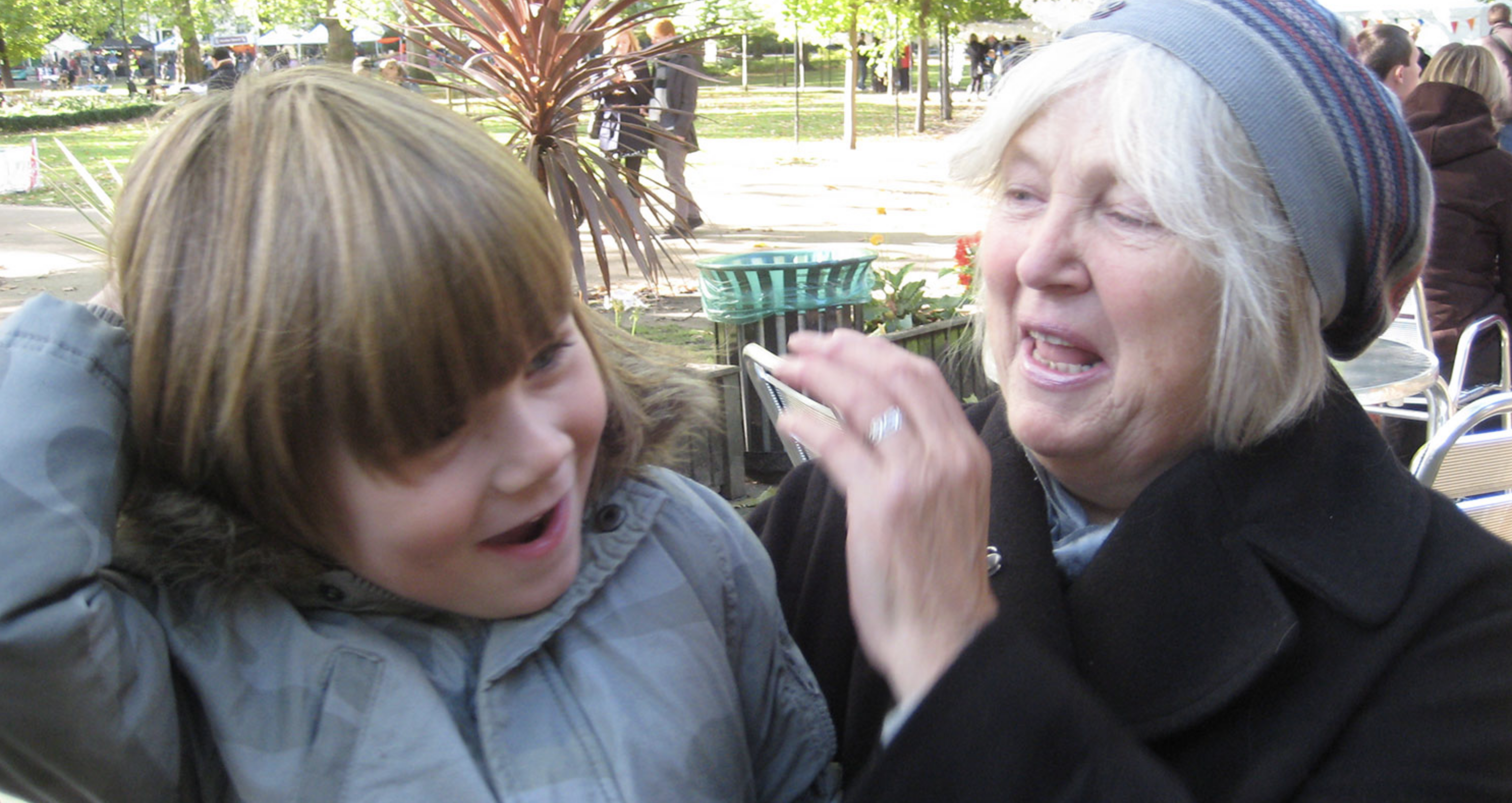
Victoria Mapplebeck’s feature debut Motherboard, shot over two decades on a DVCAM and five generations of iPhone is a collaboration between a mother and her son but attempts to depict the multitude of changes a woman goes through above beyond the physical mutation of growing another human. At 38, pregnant and alone after being dumped by a man reportedly not for fatherhood she begins to document her journey of motherhood post-birth. A filmmaker-cum-academic, Victoria is no stranger to an absentee father, her own walked out on her mother when she was a toddler.
Her baby’s father, upon meeting his child on the first of less than a handful of times, demands a paternity test before announcing his move to Spain and over the years his apathy does not change. One feels nothing but shame for him. Jim grows into a seemingly great little human in spite of him – that thumbs-up during the scan in the first scene of the film telling us all we need to know – and because of his mother and grandmother, Betty. He is mature beyond his years, sensitive and pragmatic even before he reaches ten years old.
While absent fathers are nothing new in this family, Victoria does manage to repair some of the fractures in her relationship with her own father in a particularly moving moment, Jim’s interest at 13 in developing a relationship with his other parent coincides with Victoria’s cancer diagnosis and the rounds of chemotherapy she must face. There is no sugar-coating, no bemoaning of the selfish human she pro-created with (at least on camera) or any self-pity: “I don’t care if I die. I just want to get [Jim] to adulthood.”
This documentary uses live-action footage, voicemails, voiceovers and text messages to paint a fiercely unsentimental look at motherhood, and the frustrations that go along with it not to mention the guilt and unfiltered messiness of life with a child and the attempt to navigate a career alongside. It is really beautiful seeing Jim evolve – over 90 minutes – the small squeaky voice giving way to a deep resonant tone, the small day bed replaced with a double to house his growth spurt.
We bear witness to the teenager, moody, monosyllabic, fighting the onset of depression amid a pandemic-induced lockdown and drug experimentation. That these struggles occur during the time Victoria starts to take baby-steps back into the filmmaking world, pitching her film to the Venice film festival are merely coincidence or because of are never really explored. However, understandably, it leads to some really intense and terse moments between the two, and on the other end of the phone there’s a voice of reason in Betty.
Victoria. Betty. They are the constants. Two women who raise(d) their children (mostly) alone. The former never stops needing the latter, who is often on hand to offer sage advice, empathise with, offer thoughts on films, or bake a shepherd’s pie, and Jim has another mother to go to when things get a little too tough between him and his own mum.
Motherboard frames the joys and expectations of motherhood and to some degree womanhood as the woman of this piece attempts to carve a place for herself in the world, recouping earlier sacrifices after the maternal block (Jim refers to it as a mental one). It is humane, warm and candidly relatable.
At the heart of it, there is no denying the connection between this mother and her child.
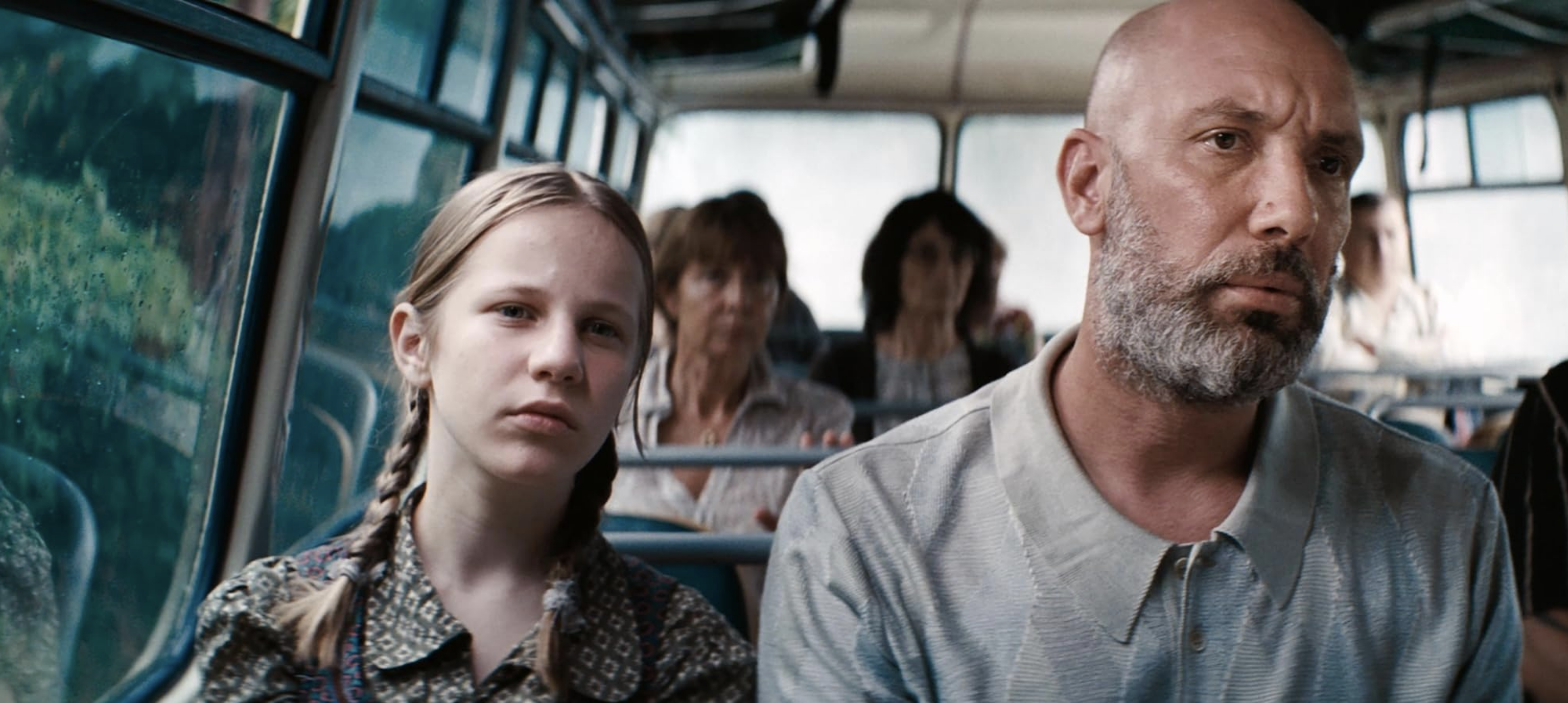
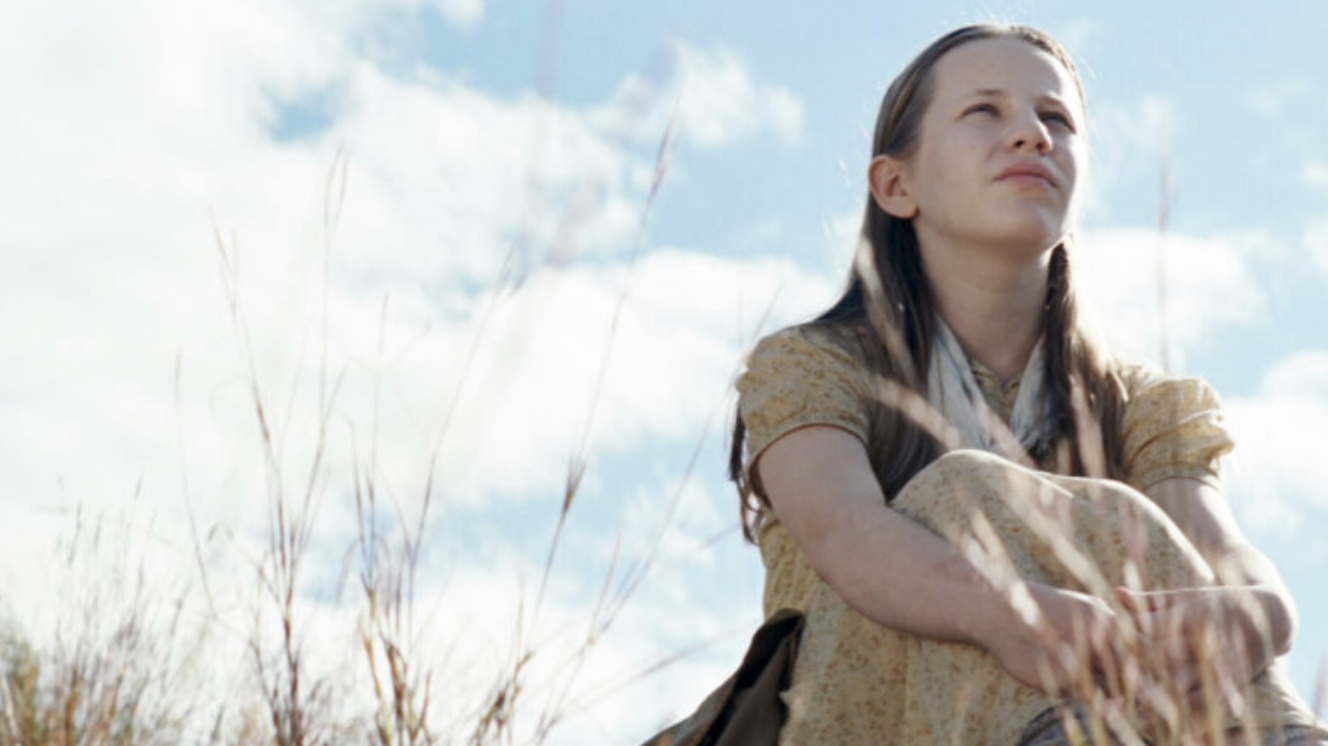
Widower Ali (Zachary Baharov) lives a peaceful life in a rural and isolated area, deep in the hills of Bulgaria close to the Greek border with his mother-in-law and teenage daughter, “wonderful” 14-year-old, Tarika (Vesela Valcheva).
The family produce milk and cheese from their one goat (delivered to both the Imam and local Priest), mill flour and Ali picks up the odd shift at the local mine to make ends meet. Tarika has recently been diagnosed with Butterfly Vertebra, the same bone disorder as her mother and grandmother before her. A genetic abnormality which can result in butterfly wings forming from the spine and scapula. It is up to Ali as to whether his daughter undergoes the surgery to prevent full metamorphosis, before his daughter experiences any real change in her body. Her grandmother still bearing the scars from her own medical intervention.
Foot and mouth is seemingly prevalent in the area as sheep are removed from farms and taken away by men in hazmat suits – as witnessed by father and daughter on their bus-ride home. It’s an overnight journey thus establishing just how far away their dwelling is from “civilisation”. They are without electricity and running water but are self-sufficient, existing in their own cosmos. An idyll only recently disturbed by a hovering helicopter while more animals are located and destroyed, and the army a little farther out building a fence between the border .
There is a timeless fairy tale quality to Tarika (thankfully renamed from The Herd), it even brought to mind loose aspects of Frankenstein. It is not initially clear when this story is set, costumes are old fashioned – especially the Mayor’s (Ivan Savov) Biggles-inspired get up he insists on wearing while riding his motorbike and sidecar. Then during the, frankly, fabulous traditional dance number at the village fair the flag of the European Union billows stage left to the wafting of the Bulgaria tricolour stage right. Bulgaria only entered the EU in January of 2007 and yes, it feels dated but the politics are current (albeit also antiquated).
At no point does Milko Lazarov’s film suffer from the quiet and lack of dialogue thanks largely to Kaloyan Bozhilov’s stunning cinematography which does most of the heavy lifting, shot on 35mm film, it evokes such feeling and established sense of place, power and joy. Shots are often in isolation, like the five coloured rugs recently washed and drying on rocks in the sunshine. Although, further reading suggests this may allude to Bulgarian riddles/folklore and the ancient pantheon of Gods.
Characters are not always immediately identifiable or even noticeable amid the backdrop. The vista shots are breathtaking, often filmed in extreme long-shot – indicating the vast world beyond the characters’ door and expressing just how isolated this child truly is. Each frame is a work of art, like a watercolour the palette of which communicates the natural world Tarika is at one with and finds peace in. The still-life image punctuated with birdsong, light and bright, bursting with greens, lemons, oranges and ochres. It brought to mind Hit the Road (2021) which similarly deals with a changing country, political climate, and a child’s point-of-view all sprinkled in a touch of magical realism.
The supernatural is alluded to with Tarika’s presence, her mother having manifested her daughter’s very existence. The myth surrounding the family’s matriarch, most specifically her death, looms throughout. The child is to be feared, thrown stones at and generally shunned. She is – “just like her mother” – blamed for the droughts and inexplicable accidents or deaths. When she feeds an immigrant and soothes the woman’s baby, the Mayor sheds his man of the people mask and shows his true vile nature. Like most men in power he is a hypocrite, a man whose main motivation is to divide and dominate.
Throughout Tarika, there are moments which require little explanation, however, any unanswered questions by the denouement only further enhances the beauty of the film. The socio-political commentary is clear, however. This is Bulgaria yet could be anywhere in this day and age, as the world edges towards open xenophobia and basic human rights violated in the wake of so-called wealth, prosperity and nationhood. The characters are not particularly overdrawn but do not lose their credibility. The village fair sequence results in a wonderful interaction between a performing clown – played beautifully by Christos Stergioglou (Dogtooth) – who sees something in the titular character. While the recounted love story of Ali and his wife is heart-swelling. His love for both his late bride and flaxen-haired daughter is palpable and the lengths he will go to protect her encapsulates what it is to be human.
Butterflies and birdsong are everywhere in this exquisite film about hope, love, freedom and the ephemerality of life. Lazarov combines Kaurismäki’s tragedy and minimalism with Kusturica’s naturalism and empathy to create a unique, beguiling and deeply moving film.
There have been numerous attempts to depict the cruelty of dementia onscreen, detailing the disease, from diagnosis to decline. Often told from the (adult) children’s perspective, most of these films comment on the hardship and then the parent is often shoved into assisted living – despite refusal – where there are medical professionals who will help them. Viggo Mortensen’s Falling doesn’t necessarily reinvent the wheel, however, his film is a family drama first and foremost with dementia in a supporting role.
The actor was on a night-flight returning from his mother Grace’s funeral in 2015 when he initially got the idea for a film. At the wake, he noted in his journal all the conversations he’d had and overheard, a lot of which triggered remembrances from childhood. He was intrigued by the differing recollections of memories (often the same ones) shared during the memorial.
Memory is a theme which has recurred through his previously published work, including books Coincidence of Memory, and I Forget You for Ever and makes up the genesis of Falling, his feature debut as writer-director. This debut is seen through the eyes of John Peterson (played respectively Luca & Liam Crescitelli, Grady McKenzie, Etienne Kellici, William Healy and, finally, as an adult by Mortensen himself) and uses fictionalised aspects of the actor’s childhood .
Angry Old Man
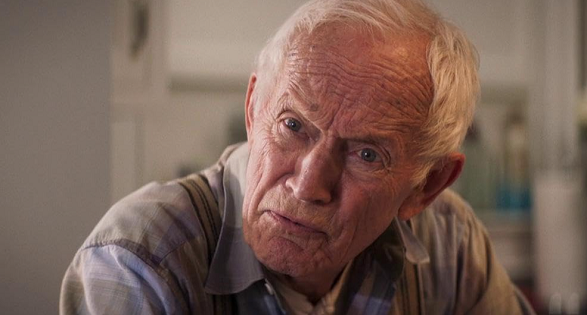
Willis (Lance Henriksen) is a belligerent old bastard of a man, foul-mouthed, abrasive and stuck in a time-warp. He is stoic and habitually unmoving in his attitude and views of the world, made all the more problematic by his advancing dementia. His son John, a pilot, who lives with his partner Eric (Terry Chen) and daughter Monica (Gabby Velis) in California brings Willis to visit so that he and sister Sarah (Laura Linney) can make plans for their father’s long-term health-care. Specifically, selling the farm in upstate New York and finding somewhere geographically closer to them so that they may share the care-load.
Willis’ reaction comes as no surprise to the whole idea. Cue a multitude of slurs, expletives and the testing of anyone’s patience but John remains calm, reticent and immune to the insults until, well, he isn’t. In a series of flashbacks, we see there is no love lost between father and son – the term “cocksucker” is used as both an expletive and term of endearment. It is these flashes of memory that give way to happier moments as Willis – the younger iteration played by Sverrir Gudnason – and Gwen’s (Hannah Gross) love story is detailed in snatches of scenes, like a slideshow, depicting their wedding day, the birth of their children and the inevitable fracture and breakdown of their relationship. These snapshots are interwoven with moments seen through the eyes of their children.
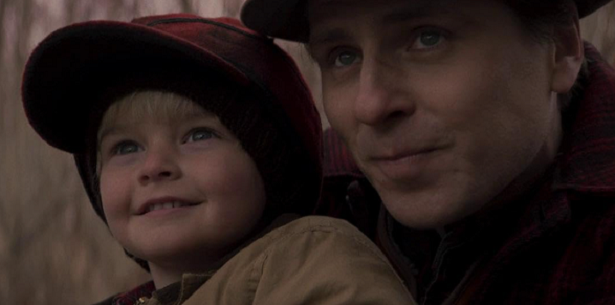
Young John (Grady McKenzie) and his father Willis (Sverrir Gudnason)
Amongst these, we see father and son bonding, hunting and fishing on the lake, the joy evident on the little lad’s face. There was affection once-upon-a-time but as John grows and away from Willis’ overbearing control, through divorce after divorce, the relationship becomes fractious building to a head during the boy’s teenage years.
The film frames Gwen as the love of Willis’ life, however, he doesn’t seem to know what true happiness is with or without her, and he spends the last few years of their relationship torturing her and trying to make her as miserable as possible. Yet, in a film which focusses on subjectivity and memory can the viewer take anything at face value or do we doubt everything? These flashes belong to multiple people, their perceptions as they experience them, and then there’s Willis’ recollections are even more questionable due to his advancing years and disease.
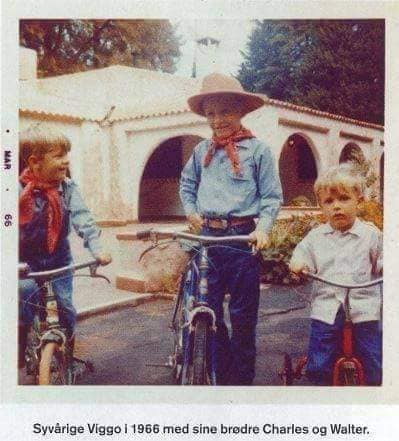
Mortensen comes across as a fairly unassuming and private man which makes this all the more fascinating. Reportedly working for free in order to finance this film, the film’s producer, director, screenwriter and composer chose to fictionalise some elements of his early life and childhood without losing verisimilitude leaving the viewer to question what the ‘factual’ element is. Apparently, Little Viggo (he was never know as junior) did have a dead duck as a pet which fed his ‘obsession’ with death, and the scar above his top lip was allegedly caused by barbed wire (and not by his father’s hand as the film suggests). He’s not a pilot either but his brother, Walter, had a cameo as one in an early Mortensen film, The Crew (1994). Their other brother Charles is also named in the film’s pre-credit dedication – there is no sister. In reality, Mortensen apparently took on the lion-share of caring for their parents – both of whom had dementia – prior to their respective deaths, Falling is not only a love letter to lost parents but for his younger siblings.
The Petersons, L-R: Willis (Gudnason) and Gwen (Hannah Gross)
There are little nuggets of information scattered throughout that, upon first viewing, few would be aware of but serve as nods to the Mortensen/Atkinson family history. It is clearly no accident that John has the surname he does. While Mortensen went by Little Viggo, his father tended to be Peter. John Peterson is, symbiotically, Peter’s son. Much was made of Mortensen’s choice of sexuality for his main character, however, he has stated in interviews that he wanted to exaggerate the polarisation between father and son. Both are presented in a very specific microcosm of American society – you’d be hard pressed not to miss the Obama image on the fridge – and a Presidential term that was afflicted with the darker aspects of misogyny, racism, homophobia and misanthropy (it was to get oh so much worse with the 45th). Themes suggested in this narrative. John and Willis are at odds over political affiliations, life choices, sexuality, as well as their memories of Gwen.
As a side note, it’s a really astute observation that the older generation i.e. Sarah and John won’t call out Willis for his bullshit opinions but his older grandchildren will. Monica, on the other hand will often lapse into Spanish (presumably she is the personification of the Mortensen boys’ childhood in Latin America) – her mother tongue – but is his best friend. She’s the only one who will accept him for who he is. Coincidentally, an immigrant like herself.
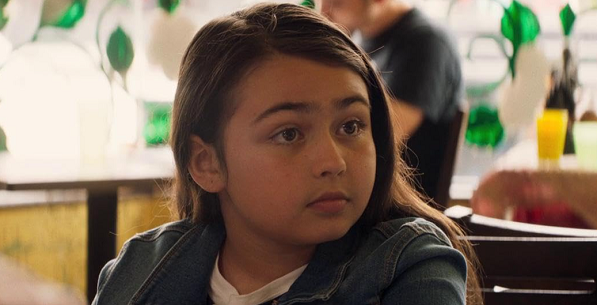
Eric (Terry Chen) and John’s daughter Monica (Gabby Velis)
Mortensen’s maternal grandfather (and one brother’s namesake) was Canadian and a medical doctor and two Canadians plays Doctors here. Close friend and collaborator David Cronenberg (as deadpan proctologist Dr. Klausner) and Hannah Gross’ actual father Paul plays Dr. Solvei. Mortensen own son, Henry, also makes an appearance as law enforcement officer Sgt. Saunders. So many father and son references and yet the real driving force of the narrative is the mother – she is the conscience running through the film and, as previously mentioned, only in her absence is her (somewhat romanticised) presence felt all the more, the subjective memories of her often the bone of contention between father and son. For John, his mother has gone, his memories are relegated to the past while Willis – due to his declining cognisance – has Gwen in the present despite having had a couple of wives since her. She is whom he recollects, imagines her in front of him, and continues to love during his sun-downing.
Thankfully, they are eventually able to accept each other’s version of events, something Mortensen also learnt in real life. He told Alec Baldwin during his podcast episode that this is aspect he personally finds so unconvincing about the so-called ‘dementia’ films; the need to depict people as bumbling and forgetful, with their carers gently revising their recollections, as this wasn’t his experience at all. “One thing you learn is not to correct them. It’s too late – don’t argue anymore… if they’re enjoying the memory, let it go.”
It is those types of scenes, as Falling edges towards its denouement, that are the most heart-breaking as the son moves back in with the old man (Canada doubling for Watertown, New York state) who, in his confused state, believes his ranch is under siege – despite having sold parts of it and promptly forgotten. In reality, Mortensen Sr. would lapse into Danish to converse, often slipping back to his own childhood while the actor would sleep in the next room with a baby monitor for company. Onscreen, Henriksen’s Willis mistakes John for his own father. John has dealt with his father, his diagnoses and outbursts with relative calm, diplomacy and resignation up to this point but to hear him raise his voice, see him rage – albeit briefly – exposes more of his humanity, pain and sorrow etched upon his (unshaven) face, and his usual perfectly coiffed hair standing on end.
It’s the first time his guard slips, his usual immaculate appearance refreshingly missing while Red River plays on a small portable TV in the background. In Howard Hawks’ 1948 Western things get tense between John Wayne as a Texas Rancher and his adopted son, Montgomery Clift. It’s no coincidence that John is trying to broker a deal to sell the remaining land given his ornery father is now too infirm to work it or save it. It also serves as a reminiscence back to a ‘simpler’ time, the old west in which ‘men were men’, a (toxic) masculinity which Willis clearly subscribed to but is also frozen in suspended in time, unwilling (unable?) to change. Décor of the surrounding rooms and even Mortensen’s costumes cement this, all are dated and somewhat old-fashioned. Henriksen’s performance is extraordinary throughout and especially in these moments, enabling such sympathy in a man who has up to that point been largely unpleasant and devoid of sentimentality is certainly no mean feat.
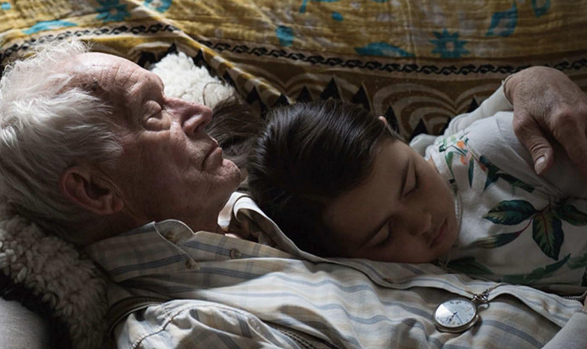
Grandpa Willis and his favourite person share a nap
Falling is gorgeously edited by Ronald Sanders (A History of Violence, Eastern Promises, A Dangerous Method) and stunningly shot by DoP Marcel Zyskind (The Two Faces of January, The Dead Don’t Hurt). Certainly, it didn’t hinder the first-time director having a cast and crew of familiar people/frequent collaborators working alongside him in what proves, to be a beautiful and cathartic experience, one that stays with you. There is a lot to admire and be moved by.
It asks questions about age, memory, its perception, recollection, retainment and reconstruction – and its persistence (there’s even a sneaky nod to Dalí’s 1931 painting, see image above) the notion of verisimilitude, and, above all else, forgiveness. This is no typical screen dementia patient, there is no withering away quietly – here the patriarch keeps his personality, his faults hard to ignore. He is tenacious, angry, insecure, his presence overwhelming at times; impossible to love and loved anyway. It’s a film which reconciles life with the parent you have with the one you might have wished for, full of compassion, empathy, and grace.
Mortensen (centre) with brothers Charles and Walter (1966)
An elderly woman completes a crossword with a young girl – there is a brief assumption she’s her granddaughter but the child gets up to leave with an “au revoir”. The girl then goes into every room along the dimly lit corridor and bids farewell to the other female residents until she reaches her destination; the bright room at the end of the hallway. ”Mama, can I keep her stick?”
After the passing of her grandmother, Nelly (Joséphine Ganz) and her mother Marion (Gabrielle Sanz) drive to the latter’s childhood home to pack up belongings, keepsakes and transport furniture, as families are wan to do after a bereavement. Nelly feeds her mother from the backseat of the car, extends the juice carton to her lips and then reassuringly clamps her arms around her mother’s neck as they both follow Papa (Stéphane Varupenne) driving the white van in front. Nelly is every inch the little mother of the title despite the interchangeability of role throughout the taut 82-minute film.
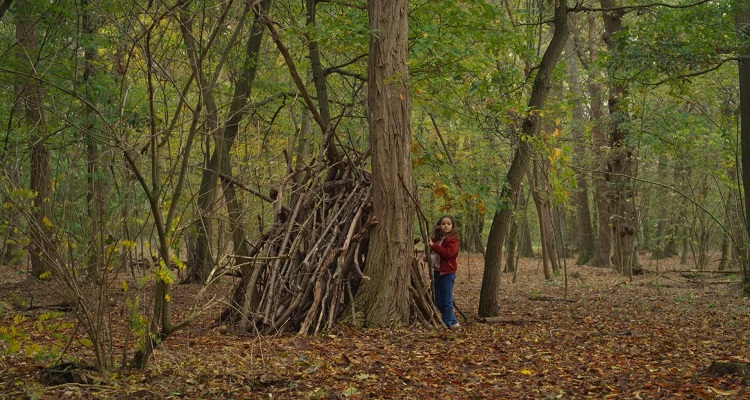
Nelly moves into her mother’s childhood bedroom and they both go through Marion’s note pads, school books and toys. The little girl chides her mother’s inability to spell but offers words of encouragement about a drawing of a fox. It’s an incredibly tender and loving relationship between the two. Despite being only eight years old, Nelly is wise beyond her years, empathy seeps from her every pore; she can sense her mother’s vulnerability and offers her narrow shoulders and small arms within which comfort can be sought. When Marion suddenly leaves, it is up to her daughter and partner to stay on and finish packing up. Nelly attempts to engage her father by bringing up the treehouse her mother built in the surrounding woods but the man merely shrugs and says he can’t recall anything about it. ” You don’t forget,” she scolds, “You just don’t listen.”
What happens next is so matter-of-fact that to go into detail would ruin the surprise (NB. Don’t watch the trailer if you wish to avoid spoilers) but it relies upon an open-minded audience and one which is willing to accept the ordinary and enchanted; the magic and imagination of a child. We all sought it once upon a time.
While Portrait of a Woman on Fire cemented Céline Sciamma as auteur, her earlier filmography has tended to forefront children and teenagers. Adults don’t really exist in the world she creates and she writes the world from their viewpoint whether they are eight-years-old, teenage girls, a tomboy, or a courgette. This film uses an autumnal colour palette full of lush browns and greens, and rich blues and burgundies; colours echoed between mother and daughter. Its costumes look to corduroy, woven jumpers and anoraks to weight the seasonal surroundings but also to give it a timeless quality. Transitions in time are slight but not insignificant – French language aside, this could be anywhere.
Childhood is a tricky thing to navigate while you’re experiencing it – although you tend not to realise just how much until you’re out the other side. Petite maman is extraordinary and enchanting, small and yet packs a punch. It is a thoroughly gorgeous film in which memories are tangible, maturation comes quickly, and a loving and assertive little woman seeks to renew her connection with her maman and say goodbye to her beloved grand-mère on her own terms.
Despite origins in 16th century Italy and containing a character named Pulcinella, the concept of the traditional puppet show Punch & Judy would eventually make its home in Britain during the 17th century – historians say 1662, thanks to a diary entry by the Bridget Jones of his day, Samuel Pepys.
Within a hundred years ‘Pulcinella’ was anglicised to the much snappier and succinct ‘Mr. Punch’ and Joan, his wife also had a name change and took on the moniker ‘Judy’. Puppets on strings would pull a Pinocchio, only rather than becoming ‘real’ they would adorn the hands of the hidden human and entertain adults and children alike for more than 350 years – regardless of form or plot-line – usually at the seaside. Perhaps it was the sea air which rendered audiences immune to the repugnancy of the insidious Mr. Punch.
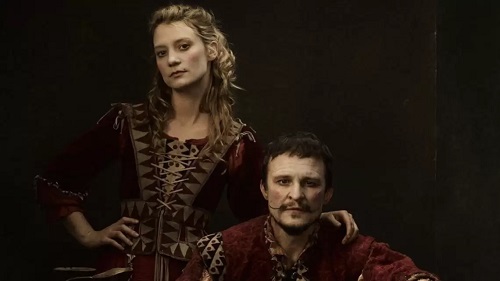
‘Seaside’ is the locale of Mirrah Foulkes’ debut feature, ‘somewhere in England’ and ‘nowhere near the sea’. A small cloaked figure steals into town to sneak into the evening’s show. Bottler Judy (Mia Wasikowska) shakes a tankard for coinage and entertains the crowd before announcing the main event: Professor Punch (Damon Herriman) and his puppets. He appears through crimson velvet drapery with a bang and cloud of smoke; caked in face-paint, jester-like in his stage costume complete with twirled moustache. Make no mistake, this – debatable when we see Judy’s puppeteering skills – is the star of the show. By the end of the elaborate opening credits we, just like the rowdy audience onscreen, are hooked.
Punch and Judy live in a beautiful home with their daughter, Baby (the cheek pinchingly adorable Scarlett and Summer Dixon), maid Maud (Brenda Palmer) and her husband Scaramouche (Tony Norris). They await the day that scouts arrive in Seaside to discover the magic of their talent and transplant it to The Big Smoke. He wants more fame and fortune – swanning around Seaside as a minor celeb is not quite enough for his ego – while she seems fairly content with their lot. Although, she does seek to tone down the ‘punchy and smashy’ aspect of the show, while imploring him to stop frequenting local watering hole McDrinkie’s, and ideally would like the community around her to be a little less… judgemental.
Townspeople are banished as heretics to the Black Forest, others are publicly hanged, and women are stoned daily for reasons that are utterly ridiculous but are, of course, to the folk of Seaside signs of witchcraft and (obviously) the work of The Devil. Leading the charge is the simpering and sneering Mr. Frankly (Tom Budge) who rewards the important men of town with casting the first stone and brings actual fanfare to the Gallows. New Constable Derrick (Benedict Hardie) has his work cut out; crimes and grievances bypass his office and result in quick confessions and executions. Then there’s his crush on Judy… while local prostitute Polly (Lucy Velik) only has eyes for Punch. Maud’s job is becoming harder as hubby Scaramouche’s memory worsens but as long as her master gets his sausages before Toby the dog gets his paws on them, all should be well.
Plot-wise, if you’re at all familiar with the show, then you can rest assured it’s all here. Foulkes gives us a bit of an origin story – albeit a subverted one – which looks at the historical context and celebration of (gendered) violence, as well as the notion of oral histories and storytelling in its earliest form, idiom and allegory. The film is darkly comic from the very beginning with a never-faltering tone which is perfectly pitched and often black. It’s hard to find the humour in heavy hitting themes such as domestic violence, alcoholism, adultery, murder, early onset dementia, and misogyny but writer-director Foulkes finds that twisted balance perfectly. Assisting her in some lovely cinematography is seasoned DoP Stefan Duscio, gorgeous period costumes designed by Edie Kurzer and a gloriously bizarre soundtrack courtesy of composer François Tetaz – there’s a theatricality to his music which simultaneously feels dated and contemporary when accompanied with the action onscreen.
Performances are solid from Hardie’s drippy Derrick to Gillian Jones’ dark, mysterious – and possibly necromantic – Dr. Goodtime. Terry Norris’ bumbling Scaramouche is a delight, Wasikowska is always worth the price of admission, and the currently ubiquitous Herriman is suitably deranged as maniacal Punch. It’s a charming collective of Australian actors – including Foulkes behind the camera (she can be seen in front of it in The Gift, The Turning, and Animal Kingdom) albeit with a multitude of British and Irish accents. Not every single one is convincing but it often adds to the hilarity – Herriman’s is of course flawless.
Astonishingly, the entire film was filmed on location in Australia and yet is so authentically ‘English-looking’. It all works brilliantly. As an origin story, comedy, and dark drama Judy & Punch is an assured, astute and compelling film. It’s one which offers up a lot and delivers on everything – History becomes Herstory and brava to that.









 The Framing Device