Dr Paul Eswai (Giacomo Rossi Stuart, papa of Kim) arrives somewhere in Eastern Europe at the behest of Inspector Kruger (Piero Lulli) to perform the autopsy of Irene Hollander (Mirella Pamphili) whose death is burnt on our retinas during the opening credits. She is the latest in a long line of residents who die, all seemingly at their own hand, and yet something is nagging at the Inspector. The villagers themselves are suspicious of the medical outsider and do everything in their power to prevent a postmortem even enlisting the help of local witch Ruth (Fabienne Dali) to make the reparations for a peaceful afterlife and to counteract “the curse” inflicted by the creepy blonde child in white who likes to peer into windows. For the stoic and steadfast Doctor who is so initiated in the world of science, it becomes increasingly difficult for him to reconcile the rational amidst the supernatural, old superstitions, and his own eyes. He, along with Nurse Monica Schuftan (Erika Blanc) work together to unlock the secrets of the village, the eerie goings-on in the crumbling Villa Graps, and the history behind the reclusive Baroness (Giovanna Galletti) and her little girl Melissa (Valerio Valeri).
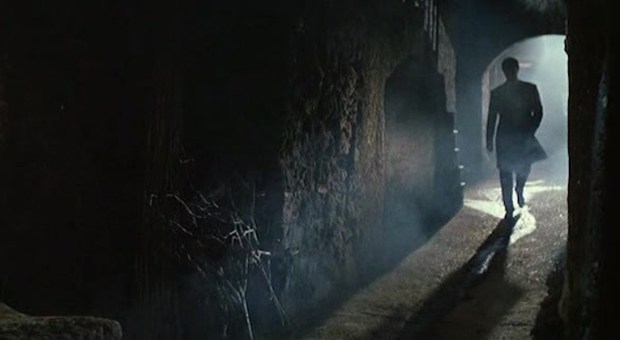
Mario Bava was a genius when it came to horror and the Gothic. He was a master of avoiding blood and gore, when needed, and often instead concentrated on building mood and atmosphere, through music, cinematography, special effects, and diegetic sound: echoing footsteps, squealing cats, and creaking doors were among his specialities, as well as the sublime use of lighting and coloured gels. He depicted fear and the emotional experience of it through an artistic subtlety few have been able to replicate. Bava transgressed the medium which left him unappreciated in his time, and his body of work often overlooked. Operazione paura or the US-monikered Kill, Baby… Kill! is a beautiful and enchanting piece of supernatural horror, atmospheric and credible in its Gothic tropes. Under the threat of death or no, Villa Graps is well worth the visit.
The Arrow Video label of Arrow Films has put together a great package celebrating this Gothic gem, one of a slew of Bava’s oeuvre which have been restored and made available to own including Black Sunday, The Girl Who Knew Too Much, Black Sabbath, and Blood and Black Lace. Aside from the 2K restoration HD digital transfer, there is, as one has come to expect a whole host of additional treats besides.
The Devil’s Daughter: Bava and the Gothic Child (21 mins) – This in-depth audio essay written and narrated by Kat Ellinger is brilliant. She discusses Bava’s influence on contemporary filmmakers, specifically citing Guillermo del Toro’s Crimson Peak. In addition, she works her way through examples of Gothic literature and cinema, paying particular attention to the Gothic family, monstrous mother, and demonic child in relation to KBK as well as other films which followed and those which are indebted to Mario Bava and the character of Melissa Graps. A 2007 interview with Bava’s AD and son, Lamberto is the subject of Kill Baby Kill (25 mins) during which Bava Jr talks about working with his father and grandfather (Eugenio was also a special effects technician and cinematographer) and their collective interest and pursuit of the supernatural.
The whole documentary-style interview takes place in Calcata, Italy as Bava takes us on a tour of the village which was used as the location for KBK, through Villa Frascati which doubled for Villa Graps and discusses the fun they had recreating the cemetery (amongst other interiors and exteriors) on a sound stage. Erika in Fear (10 mins) – After introducing the main feature, Erika Blanc gives this lighthearted interview during which she describes her experiences on set and what it was like working with her director. Affectionate reminisces are abound as Blanc denounces cinema of today as being flat which is one of the reasons why audiences are only discovering Bava’s technically precise and professionally perfect films now; they’re not used to such vibrant colour.
Yellow (2006) (6 mins) – Semih Tareen’s short film and beautifully-hued love letter to the cinema of Mario Bava.
German Opening Titles (3:25) – in which orange text declares the title of the film Die toten Augen des Dr. Dracula – odd, given Dracula’s nowhere to be found.
International Trailer (2:32)
Photocomic – 68 slides break down the vintage photocomic book, in which every frame is depicted in comic book cells. This was originally published in Film Horreur in 1976 and provided by Uwe Huber.
Image Gallery – 28 slides show the German posters and lobby cards – which Erika Blanc works her way through in her interview – again provided by Uwe Huber.
New audio commentary – provided by Tim Lucas, author of Mario Bava: All the Colors of the Dark.
Reversible sleeve featuring original and newly commissioned artwork by Graham Humphreys.
First pressing only: Collector’s booklet featuring new writing by critic Travis Crawford.
School is the worst place to hide in plain sight when you’re different and bullies are unforgiving and relentless, it’s one of the reasons why Stephen King’s first novel has stood the test of time and why Brian De Palma’s 1976 adaptation of Carrie still remains the best of its kind and resonates with an audience. Released just in time for Christmas (a Carrie White Christmas, no?) Arrow Video has pulled together a pretty decent limited edition boxset complete with a new 4K restoration from the original negative, replete with a whole host of new and archival extras, and new writing on the film.
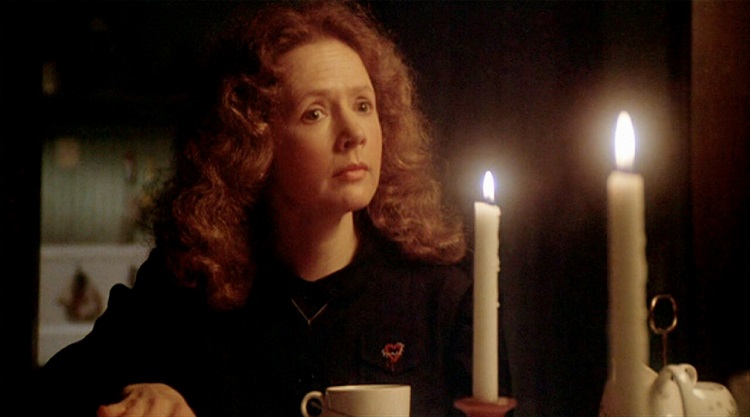
Carrie White (Sissy Spacek) is the only child of a religiously maniacal Gothic seamstress mother. Margaret (Piper Laurie) is a woman who insists on spreading the word of the Lord whether others like it or not. Her daughter wants nothing more than to fit in and be a regular teenager, however, the girls at school: Helen (Edie McClurg), Norma (P.J. Soles), and Sue (Amy Irving) led by Chris (Nancy Allen) have no intention of letting that happen. Even the teachers are mean. From that opening scene on the volley ball court in which our eponymous heroine is isolated and invited to “eat shit” after missing the ball to the following in the changing room. As Carrie’s pleasurable moment in the shower is interrupted by the violent and visceral experience of her first period. The original mean girls are at their most feral in their vicious hysteria as they launch sanitary pads and tampons at their vulnerable and terrified peer.
This girl is crying out for a mother and when she returns home it should be a place of comfort, somewhere she can feel safe, not a place where she has to repent in a closet for a biological function. However, with an abusive mother like Margaret – school is respite for her. A maternal figure comes in the unlikely form of gym teacher Miss Collins (Betty Buckley) and then the unexpected happens and Tommy Ross (William Katt) – who is supposed to be going with Sue Snell – asks her to Prom. Sue feels, that by asking Tommy to take Carrie to the biggest night of the school year, it will assuage her guilt for attacking the timid girl in the shower. Tommy, much like the majority of the males in this film (and there aren’t many) is a pawn; a conduit for the girl(s) to use to get their way. See also Billy (John Travolta) and Chris’ relationship and her pig of a plan for Carrie. The women are the ones in control – Carrie just has extra ability to play with.
De Palma’s adaptation bypasses the epistolary structure of the novel entirely and combines the weighty issues with satire. While there are brief moments which homage Psycho – some references are subtler than others – the score which should have been Bernard Herrmann’s instead went to Pino Donaggio who created a wonderfully atmospheric accompaniment and found the best way of repurposing the late Herrmann’s work (by isolating individual notes from the shower sequence and using the high-pitched shrill strings during the times when Carrie loses control). It is in those moments the film comes into its own – although, Arrow really missed a trick not including the soundtrack.
Carrie was not the first (or last) to conflate questions of femininity and the supernatural. If anything it paved the way for more male filmmakers to attempt to get their heads around the abject notion of menstruation. The text also subverted the idea of the American home as a safe space, instead its white picket fence and asymmetrical visage became a place of dread, fear and anxiety. Helped immensely by the religious iconography and paraphernalia invading the oppressive domestic space and aiding the sexual repression enforced my mother – there’s that Psycho link again.
The film created a bit of a feminist backlash too, particularly in relation to the shower scene and the alignment of pigs blood and women’s blood – women as pigs (?) and the monstrous female body as the site of transgression. Certainly, there are some interesting readings in relation to Carrie and it will, of course, depend on your perspective. Carrie is “othered” (like almost every other monster in horror) because, as Alexandra Heller-Nicholas states (citing Carol Clover) during her audio commentary: “horror is a female genre” – our protagonist is the literal outsider and yet we are invited to identify with her. Her fury at the world and those who punish her is fully justified, as frightening, irrational and uncontrollable that power is in its force; Carrie stands up to her bullies, and well, there’s something rather empowering in that.
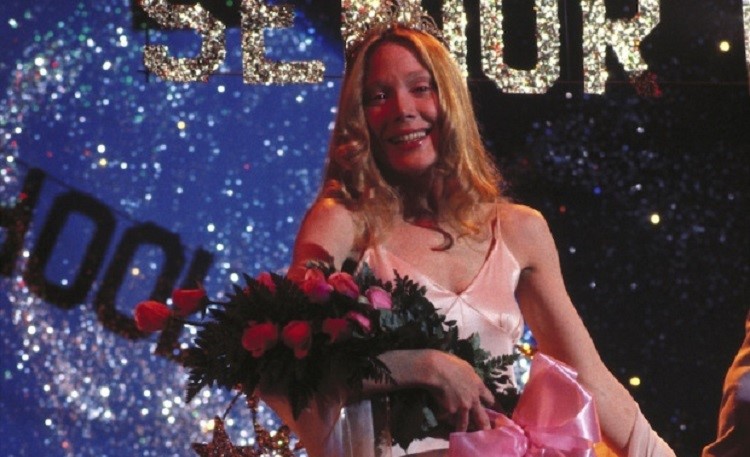
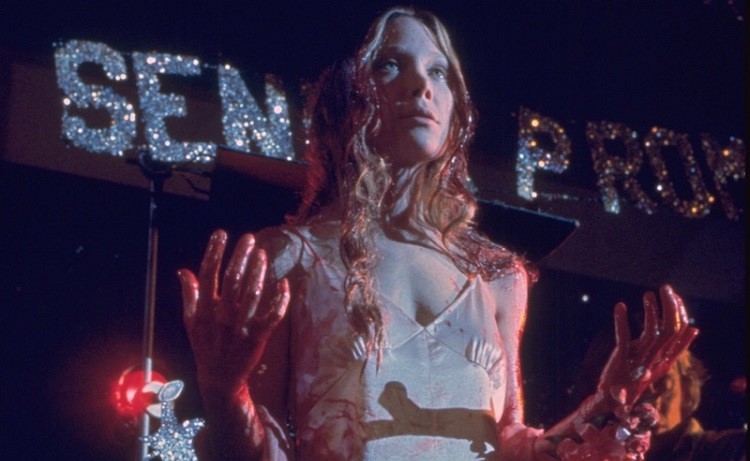
The Prom, its framing, use of space, split screens, Dutch angles, colour filters and the composition of each shot is superb (and a nice nod to Argento). Those blue and red filters and the scenes they colour are the greatest aspect to come from the restoration, they are visually amazing and, for me, the peerless part of the film. Even 40 years on, it holds up as one of the filmmaker’s best, if not the best (although, I’ll have to rewatch Sisters and get back to you on that). Carrie still resonates, we’re aligned with the “monster” of the piece and identify completely with this girl and her need/want of acceptance. Despite the fact that we know how the film ends, it’s easy to watch and still wish for a different outcome.
Special Features
Audio commentary provided by writers-critics-authors and all round good eggs, Alexandra Heller-Nicholas and Lee Gambin. These Aussies are authoritative (you can always trust these two when it comes to horror), knowledgeable and, better than anything, fun to listen to as they watch and examine Carrie; its themes, composition and their mutual love of it.
Acting Carrie (42 mins) – This 2001 featurette contains interviews with De Palma, art director Jack Fisk and the cast including: Sissy Spacek, Piper Laurie, Amy Irving, Priscilla Pointer, William Kat, P.J. Soles, Betty Buckley and Nancy Allen. They discuss the casting process which took place at the same time of Star Wars (Katt auditioned for Han Solo and Irving, Princess Leia). Spacek only auditioned following husband (and the film’s art director) Jack Fisk’s involvement and Laurie came out of retirement to play Margaret – it worked out well, they were both nominated for Academy Awards for their respective roles. Remember the last horror film to do that? Exactly. It’s an entertaining feature as we’re taken through the filmmaking process, story boarding details, and that shower scene. A building frenzy which Irving describes as “beautiful” and Allen, “disturbing. Ladies, it is indeed both.
More Acting Carrie (20 mins) updates on the previous extra by having a lot of the same cast members interviewed in 2016. There are new stills and images in this, however, a lot of anecdotes are repeated but it’s nice to see the cast in their advancing years. The addition of Edie McClurg is new (though the typo in the credits change her to ‘Eddie’) as we discover the real fire which broke out on the soundstage during filming and Soles’ perforated ear-drum following fire hose hi-jinks. Visualising Carrie: From Words to Images (41 mins) is a mini-feature which details Lawrence D. Cohen’s script brandishing in pre-production hell before securing a director. The Jack Fisk interview is the most interesting part as he details the process in making the White household which is known as “father, son and Holy Ghost” architecture due to its asymmetrical style, how he fashioned the Saint Sebastian statue in Carrie’s closet and the other religious icons he acquired for the set dressing. There’s a beautiful mention of the late Bill Paxton who put Fisk onto the pig farm.
Singing Carrie: Carrie the Musical (6 mins) – Although short lived, there was a 1988 musical production of Carrie which was written by Lawrence D. Cohen and starred Betty Buckley as Margaret White. Both she and Cohen discuss it and surmise why it failed on stage. In a 2016 interview Cohen is back in Writing Carrie (28 mins) as he discusses his process from receiving Stephen King’s manuscript, finishing it in one sitting and reviewing it for the paper he worked for. He believed even back then it would make a great film and upon seeing Obsession (1976) he knew De Palma was the man for the job. Cohen speaks warmly of his director and the success they both had with Carrie. He launches into discussing Carrie the musical, which seems a little redundant as the previous disc feature has already given us the lowdown.
A 2016 interview with cinematographer Mario Tosi follows in Shooting Carrie (14 mins), in which he describes the wonderful experience of working with “difficult communicator” De Palma. Tosi speaks in stilted English and uses cue-cards, not sure why he couldn’t have spoken in his mother tongue given the subtitled Donaggio interview later on. Cutting Carrie (24 mins) is a 2016 interview with editor Paul Hirsch in which he repeats a lot of information that has gone before. The monotonous tone of the man’s voice adds to the tedium of this extra as he describes the “painful” process of cutting the film. Not sure why he mentions Allen and Irving’s subsequent marriages either. This is worth skipping.
Although not drastically different from the very first feature, Casting Carrie is 15 minute long interview with casting director Harriet B. Helberg about her first screen credit which she loved every second of working on (from what she can remember). She’s a big fan of the remakes too. Bucket of Blood (24mins) – a 2016 interview with composer Pino Donaggio is one of the disc’s highlights as he recollects how De Palma changed his life and took him from the canals of Venice to Hollywood. It’s a charming interview and nowhere long enough as he takes us through his score; from the homage to Herrmann and his use of strings to create suspense to the more melodic music, like Carrie’s theme. For a musical genius, the man is so very humble and such a lovely interviewee. Horror’s Hallowed Ground is a 10 minute, low-budget episode of a TV series which began in 2006 (a lot are available on YouTube) where host Sean Clark visits locations from classic horror films. It crosscuts from Clark to the locations/scenes in the film. It’s harmless and well put together if amateurish.
The last of the big features is a brand new visual essay Comparing Carrie in which writer-editor Jonathan Bygraves compares the three screen versions of Carrie from 1976, 2002, and 2013. He examines time periods, production, structure, the characterisation of Carrie (Sissy Spacek, Angela Bettis, Chloe Grace Moretz), the different versions of Margaret White played by Piper Laurie, Patricia Clarkson and Julianne Moore respectively. There is one small mistake in which one image is labelled as 2002 when it belongs to 2013 and I can’t say I’m a fan of the font used. It’s all written in blood-red capital letters and would have been so much more readable in lowercase (and therefore referencing the 1976 credits). That said, the strains of Donaggio’s melodious score over the top of the essay is wonderful.
Alternate TV Opening – Details the main differences in the censored TV version.
Gallery – 45 slides showing posters, stills, publicity shots including some of the prologue that was shot but never used.
Trailer – Spoilery trailer which they’d never get away with today because… Film Twitter.
TV Spots (3 mins) – Five of them in total. All of which stating “If you have a taste for terror, you will have a date with Carrie” which is a “chilling blend of American Graffiti and Psycho.”
Radio Spots (1min 30sec) – Same voiceover used as in the TV spots.
Carrie Trailer Reel (6mins) – Combines trailers from 2002 TV movie Carrie (dir. David Carson), The Rage: Carrie II (1999, dir. Katt Shea) and 2013’s Carrie (dir. Kimberly Peirce).
Reversible Sleeve featuring original and new artwork by Laz Marquez (see featured image).
Limited Edition 60-page booklet (unavailable at the time of review) featuring new writing on the film by Neil Mitchell, author of Devil’s Advocates: Carrie, a reprint of The Final Girls’ 40th anniversary Carrie zine, and an archive interview with Brian De Palma.
I’m loathe to describe something as the “definitive” version of anything, however, if we’re talking about editions of Carrie, then this one is as near as damn it. It repurposes a lot of extra features which appear on the 2016 Shout Factory Collector’s Edition Blu-ray and archival bits and pieces from 2001’s MGM Special Edition DVD but my main gripe (and I’m really searching for one, honest), the thing that would have made it absolutely perfect – or “definitive” if I have to put a label on it – is the missing soundtrack.
Arrow Video’s new restoration of David Cronenberg’s Videodrome (1983) follows in the footsteps of Rabid (1977) and Shivers (1975) also restored and re-released on dual format this year. Each film with its disc-filled extras is clearly a labour of love.
Just preceding the Video Nasties Act of 1984, Videodrome, I’m sure would have gotten Mary Whitehouse’s knickers in a twist with the film’s provocative, paranoiac and altogether pleasure-seeking premise. The narrative centres on Civic TV executive Max Renn (James Woods) and his quest to find the next ‘big thing’ in sensationalist programming. His station is responsible for “soft core pornography and hard core violence” which Renn unapologetically justifies as a result of economics. Moral questions arise surrounding the over-stimulation of the consumer following exposure to dehumanising images via the media. These questions are depicted through metaphor, potential Freudian imagery and the former protégé of Dick Smith, multi-Oscar winning make-up effects Wizard Rick Baker (Smith famously created the exploding head in Scanners). Fellow Canadian, composer Howard Shore, yet again, provides the score (Shore and Cronenberg have worked together on all but The Dead Zone) and employs the use of a Synclavier II synthesiser alongside an orchestra. This electronic sound adds a dark, ominous, even metallic, tone to the film and aids with the 80s nostalgia along with the coiffed hair, shoulder pads and leather ties.
Renn stumbles upon Videodrome – a pirate television station which depicts the torture, brutality and eventual death of its subjects. Becoming obsessive to continually transgress social boundaries, Renn shows the footage to his girlfriend Nicki Brand (a hypnotic Deborah Harry) who, by her own admission, is the perfect over-stimulated test audience. She is sexually free (connoted by her costume, both cut and colour) and is immediately enamoured at the premise of the snuff sequences. Her enthusiasm for all things dark and painful grows and she even disappears to audition in Pittsburgh upon hearing the show is filmed there. Left alone, Max begins to suffer hallucinations; disturbing, intriguing visions which only seek to feed his need to consume the morally ambivalent visual media and further blur the line between fantasy and reality. His interactions with the Marshall McLuhan-inspired Brian O’Blivion (velvet-voiced Jack Creley, only ever visible via a television screen) increase the bizarre especially when we learn O’Blivion’s history to Videodrome. It is an aesthetically pleasurable film; body parts are fetishised, Betamax tapes pulsate and television undulate and literally swallow the flesh.
Anybody familiar with the articulately intense septuagenarian director will immediately recognise the body consciousness which is prevalent in a large percentage of his oeuvre. The man, who has cited Bergman, Fellini and Kurosawa as main inspirations, presents the limitations of the human body within his own artistic nihilism. Ideologies are often invasive and monstrous, the embodied becomes disembodied whilst sex and violence surrounds, causes, or indeed invades the diegesis. There can be contradictory readings of Cronenberg’s films; does he fight for the patriarchal pleasures he depicts and stray dangerously close to misogyny or destroy said pleasures while reinforcing the fragility of the physical body and mind? While the male consciousness is seen in crisis and at odds with the social world around him, it is the female body which appears abject and the site of disgust. In Videodrome, the male mind becomes more abhorrent through feminine imagery; Renn’s torso is repeatedly violated via the vagina-like opening. Or perhaps, it is like the man himself stated a few years ago; he plugs into the zeitgeist, examines and plays around with it. In simple terms Cronenberg’s films are about life and death yet he cleverly uses the horror and prosthetics as a distancing tactic. He questions who or what we are and presents, albeit through social paranoia and viscera, the evolutionary limitations of the human body and the emotional terror of the waking nightmare.
Videodrome has never been more relevant in the face of the current media and image appropriation. It is disorientating, visually audacious and presents an ideology which is fascinating, wholly original but is, perhaps, one of the more convoluted Cronenbergs. That said, as a first time viewer (yes, I know…) the experience of it was exhilarating.
Blu-ray Extras
Never one to scrimp on material, Arrow has collected an array of goodies and following the film, there are numerous options for the viewer to take, although do yourself a favour and hit them all.
Cinema of the Extreme – The 1997 BBC documentary featuring Repo Man director, Alex Cox, David Cronenberg and George A. Romero briefly discuss cinema extremes. These verbal tidbits are intercut with clips of Shivers, Dawn of the Dead (1978) Videodrome and Crash (1996). It is a slight, fairly insignificant documentary which never goes into great detail but Cronenberg’s thoughts on censorship are always worth a listen (Cox’s on Seven, not so much).
Forging the New Flesh – Visual Effects artist Michael Lennick narrates (and stars) in the first of his four contributions to these extras and discusses the techniques used in the making of the film. This, unfortunately, short but fascinating featurette contains behind-the-scenes footage and interviews Rick Baker, Bill Sturgeon, David Cronenberg and star James Woods.
Fear on Film – One of the highlights of the disc extras is a roundtable discussion originally aired in 1982; presented by Mick Garris and featuring David Cronenberg, John Carpenter and John Landis in tweed, flared jeans and big hair respectively. The conversation centres around the horror genre, what scares the filmmakers, films, as well as their individual takes on censorship and ratings. Although, less than 30 mins long, it is a highly entertaining and lively chat and well worth watching.
Samurai Dreams – The complete and uncensored Japanese series Samurai Dreams with optional commentary by Michael Lennick who is still revelling in the Videodrome/Samurai Dreams experience some 32 years later.
Helmet Camera Test / Why Betamax? – Bite-sized early test footage showing Max Renn’s virtual hallucination chamber head-gear and a second segment which very briefly details why Betamax was the format of choice.
Promotional Featurette – This is an extension of Forging the New Flesh documentary although written and directed by Mick Garris and features behind-the-scenes footage and the making of Videodrome. Interviews include: Cronenberg, Harry and Woods As with the previous featurettes, these are brief but still interesting.
Audio Commentary is provided by author Tim Lucas (Videodrome: Studies in the Horror Film).
Cronenberg: Early Works Blu-ray
Transfer of the Future – The ever entertaining and jovial Kim Newman discusses, examines and critiques Cronenberg’s early career and labels him a child of Romero and genre auteur along with fellow underground directors Brian De Palma and Tobe Hooper.
The Early Works – Restored by the Toronto Film Festival, Criterion Collection and Arrow Films respectively, these films show the progression of Cronenberg as an art student and his shorts through to the first feature film which was made some five years before Shivers.
Transfer (1966)
From the Drain (1967)
Stereo (1969)
Crimes of the Future (1970)
In Transfer, shot on a snowy Canadian landscape, an analyst (Mort Ritts) and his patient Ralph (Rafe McPherson) thrash out their doctor/patient relationship via farce and Freudian speak; while in From the Drain, two men (Mort Ritts and Stephen Nosko), seemingly war veterans sit clothed in a bathtub awaiting something ominous which may or may not come out of the drain. Stereo was the first short feature film shot on 35mm and has an establishing shot reminiscent of Fellini’s La Dolce Vita (1960) and appears to be heavily influenced by Bergman. It stars Ronald Mlodzik (later seen in Shivers and Rabid) whose costume looks deliciously Hammer-House-of-Horror-like. This is the best of the bunch, definitely my favourite; shot in black-and-white, silent save for a voiceover, the canted camera angles add to the general creepiness and sterility of the sanatorium set amidst the Ontario north woods. Subjects are placed in isolation and operated on, telepathic ability and extra sensory perception is monitored through sexual interaction. Finally, the last feature is Crimes of the Future a potential follow-up to the preceding film. Restored exclusively by Arrow Films from a new 4k scan of the original 35mm negative, again starring Mlodzik (as Adrian Tripod), and again silent but for the added commentary, only this time in colour. In the House of Skin all women are extinct and Tripod is in search of the enigmatically named Antoine Rouge.
It is fascinating to see the early attempts of an artist, to witness how he develops and to note his visual interests and motifs even back then. There’s the Freudian terminology (which all eventually came to a head in A Dangerous Method [2012]), themes of consciousness, sexual experimentation, telepathy and the oddly monikered characters which have all been seen over the Cronenberg oeuvre at one time or another. They may not, necessarily, be to everybody’s taste but they are revelatory in their style, content and deserve to be seen in all of their restored loveliness. All-in-all, Arrow has produced a beautiful box set which cannot be recommend highly enough.








 The Framing Device