Categories
Film Festival film review

Motherboard (Dir. Victoria Mapplebeck, 2024)

Matrescence is a word that is slowly finding its way back into vernacular after decades without recognition in Western society. This transition goes further than the narrative surrounding pregnancy, birth and motherhood women have been fed for centuries. It goes far beyond the development of the foetus, how the baby turns out and looks instead at unexamined moral assumptions about motherhood – and explains the metamorphosis and how it ends. As a chimera with her child’s cells knitted to her body and bones and her brain colonised, forever connected.

Victoria Mapplebeck’s feature debut Motherboard, shot over two decades on a DVCAM and five generations of iPhone is a collaboration between a mother and her son but attempts to depict the multitude of changes a woman goes through above beyond the physical mutation of growing another human. At 38, pregnant and alone after being dumped by a man reportedly not for fatherhood she begins to document her journey of motherhood post-birth. A filmmaker-cum-academic, Victoria is no stranger to an absentee father, her own walked out on her mother when she was a toddler.

Her baby’s father, upon meeting his child on the first of less than a handful of times, demands a paternity test before announcing his move to Spain and over the years his apathy does not change. One feels nothing but shame for him. Jim grows into a seemingly great little human in spite of him – that thumbs-up during the scan in the first scene of the film telling us all we need to know – and because of his mother and grandmother, Betty. He is mature beyond his years, sensitive and pragmatic even before he reaches ten years old.

While absent fathers are nothing new in this family, Victoria does manage to repair some of the fractures in her relationship with her own father in a particularly moving moment, Jim’s interest at 13 in developing a relationship with his other parent coincides with Victoria’s cancer diagnosis and the rounds of chemotherapy she must face. There is no sugar-coating, no bemoaning of the selfish human she pro-created with (at least on camera) or any self-pity: “I don’t care if I die. I just want to get [Jim] to adulthood.”

This documentary uses live-action footage, voicemails, voiceovers and text messages to paint a fiercely unsentimental look at motherhood, and the frustrations that go along with it not to mention the guilt and unfiltered messiness of life with a child and the attempt to navigate a career alongside. It is really beautiful seeing Jim evolve – over 90 minutes – the small squeaky voice giving way to a deep resonant tone, the small day bed replaced with a double to house his growth spurt.

We bear witness to the teenager, moody, monosyllabic, fighting the onset of depression amid a pandemic-induced lockdown and drug experimentation. That these struggles occur during the time Victoria starts to take baby-steps back into the filmmaking world, pitching her film to the Venice film festival are merely coincidence or because of are never really explored. However, understandably, it leads to some really intense and terse moments between the two, and on the other end of the phone there’s a voice of reason in Betty.
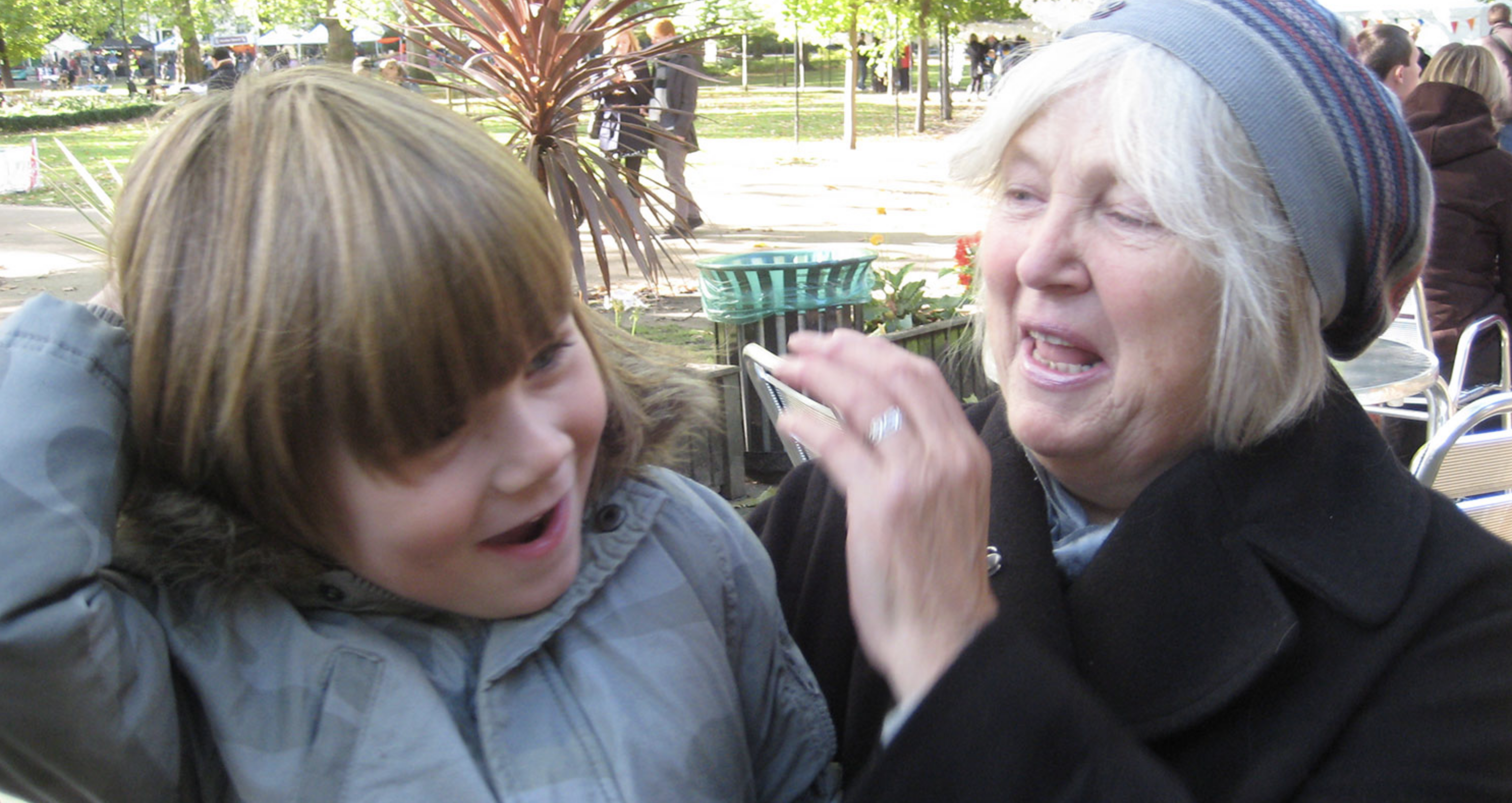
Victoria. Betty. They are the constants. Two women who raise(d) their children (mostly) alone. The former never stops needing the latter, who is often on hand to offer sage advice, empathise with, offer thoughts on films, or bake a shepherd’s pie, and Jim has another mother to go to when things get a little too tough between him and his own mum.

Motherboard frames the joys and expectations of motherhood and to some degree womanhood as the woman of this piece attempts to carve a place for herself in the world, recouping earlier sacrifices after the maternal block (Jim refers to it as a mental one). It is humane, warm and candidly relatable.

At the heart of it, there is no denying the connection between this mother and her child.
Categories
Film Festival film review

Tarika (Dir. Milko Lazarov, 2024)

Widower Ali (Zachary Baharov) lives a peaceful life in a rural and isolated area, deep in the hills of Bulgaria close to the Greek border with his mother-in-law and teenage daughter, “wonderful” 14-year-old, Tarika (Vesela Valcheva).

The family produce milk and cheese from their one goat (delivered to both the Imam and local Priest), mill flour and Ali picks up the odd shift at the local mine to make ends meet. Tarika has recently been diagnosed with Butterfly Vertebra, the same bone disorder as her mother and grandmother before her. A genetic abnormality which can result in butterfly wings forming from the spine and scapula. It is up to Ali as to whether his daughter undergoes the surgery to prevent full metamorphosis, before his daughter experiences any real change in her body. Her grandmother still bearing the scars from her own medical intervention.

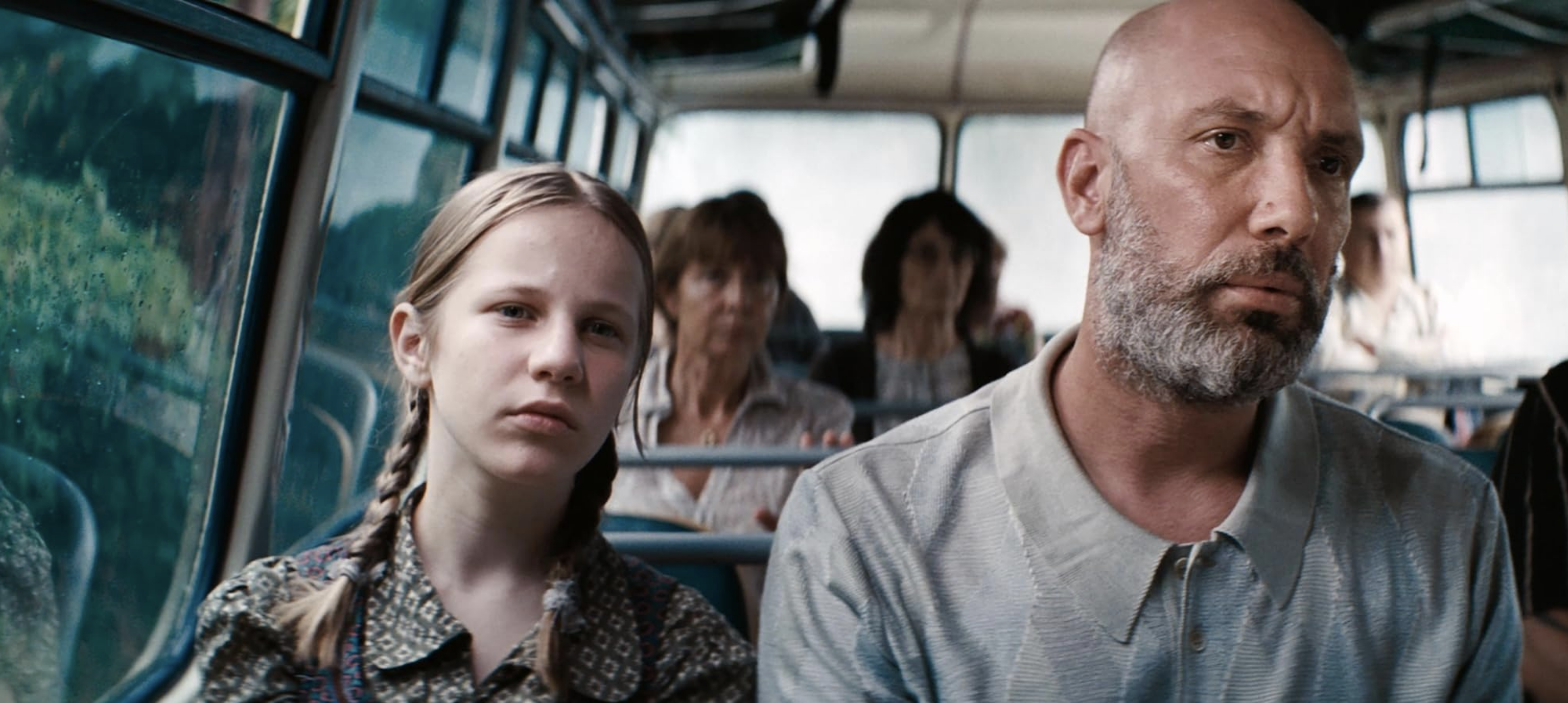
Foot and mouth is seemingly prevalent in the area as sheep are removed from farms and taken away by men in hazmat suits – as witnessed by father and daughter on their bus-ride home. It’s an overnight journey thus establishing just how far away their dwelling is from “civilisation”. They are without electricity and running water but are self-sufficient, existing in their own cosmos. An idyll only recently disturbed by a hovering helicopter while more animals are located and destroyed, and the army a little farther out building a fence between the border .

There is a timeless fairy tale quality to Tarika (thankfully renamed from The Herd), it even brought to mind loose aspects of Frankenstein. It is not initially clear when this story is set, costumes are old fashioned – especially the Mayor’s (Ivan Savov) Biggles-inspired get up he insists on wearing while riding his motorbike and sidecar. Then during the, frankly, fabulous traditional dance number at the village fair the flag of the European Union billows stage left to the wafting of the Bulgaria tricolour stage right. Bulgaria only entered the EU in January of 2007 and yes, it feels dated but the politics are current (albeit also antiquated).

At no point does Milko Lazarov’s film suffer from the quiet and lack of dialogue thanks largely to Kaloyan Bozhilov’s stunning cinematography which does most of the heavy lifting, shot on 35mm film, it evokes such feeling and established sense of place, power and joy. Shots are often in isolation, like the five coloured rugs recently washed and drying on rocks in the sunshine. Although, further reading suggests this may allude to Bulgarian riddles/folklore and the ancient pantheon of Gods.

Characters are not always immediately identifiable or even noticeable amid the backdrop. The vista shots are breathtaking, often filmed in extreme long-shot – indicating the vast world beyond the characters’ door and expressing just how isolated this child truly is. Each frame is a work of art, like a watercolour the palette of which communicates the natural world Tarika is at one with and finds peace in. The still-life image punctuated with birdsong, light and bright, bursting with greens, lemons, oranges and ochres. It brought to mind Hit the Road (2021) which similarly deals with a changing country, political climate, and a child’s point-of-view all sprinkled in a touch of magical realism.

The supernatural is alluded to with Tarika’s presence, her mother having manifested her daughter’s very existence. The myth surrounding the family’s matriarch, most specifically her death, looms throughout. The child is to be feared, thrown stones at and generally shunned. She is – “just like her mother” – blamed for the droughts and inexplicable accidents or deaths. When she feeds an immigrant and soothes the woman’s baby, the Mayor sheds his man of the people mask and shows his true vile nature. Like most men in power he is a hypocrite, a man whose main motivation is to divide and dominate.

Throughout Tarika, there are moments which require little explanation, however, any unanswered questions by the denouement only further enhances the beauty of the film. The socio-political commentary is clear, however. This is Bulgaria yet could be anywhere in this day and age, as the world edges towards open xenophobia and basic human rights violated in the wake of so-called wealth, prosperity and nationhood. The characters are not particularly overdrawn but do not lose their credibility. The village fair sequence results in a wonderful interaction between a performing clown – played beautifully by Christos Stergioglou (Dogtooth) – who sees something in the titular character. While the recounted love story of Ali and his wife is heart-swelling. His love for both his late bride and flaxen-haired daughter is palpable and the lengths he will go to protect her encapsulates what it is to be human.

Butterflies and birdsong are everywhere in this exquisite film about hope, love, freedom and the ephemerality of life. Lazarov combines Kaurismäki’s tragedy and minimalism with Kusturica’s naturalism and empathy to create a unique, beguiling and deeply moving film.

Categories
film review

Fingernails (Dir. Christos Nikou, 2023)

Anna (Jessie Buckley) drives along just as the dulcet tones of Bonnie Tyler’s Total Eclipse of the Heart fades out on the radio. The DJ thanks the caller for their request and commiserates on their negative test “it happens to us all”. Anna is a teacher currently between jobs and even the woman on the other side of the desk asking her job-related questions is lamenting negative results. While all will become clear whatever is happening is effecting plenty of people. Plus, if you have seen Christos Nikou’s debut film Apples, you’ll know that this almost-dystopia isn’t so far removed from the world we currently inhabit.

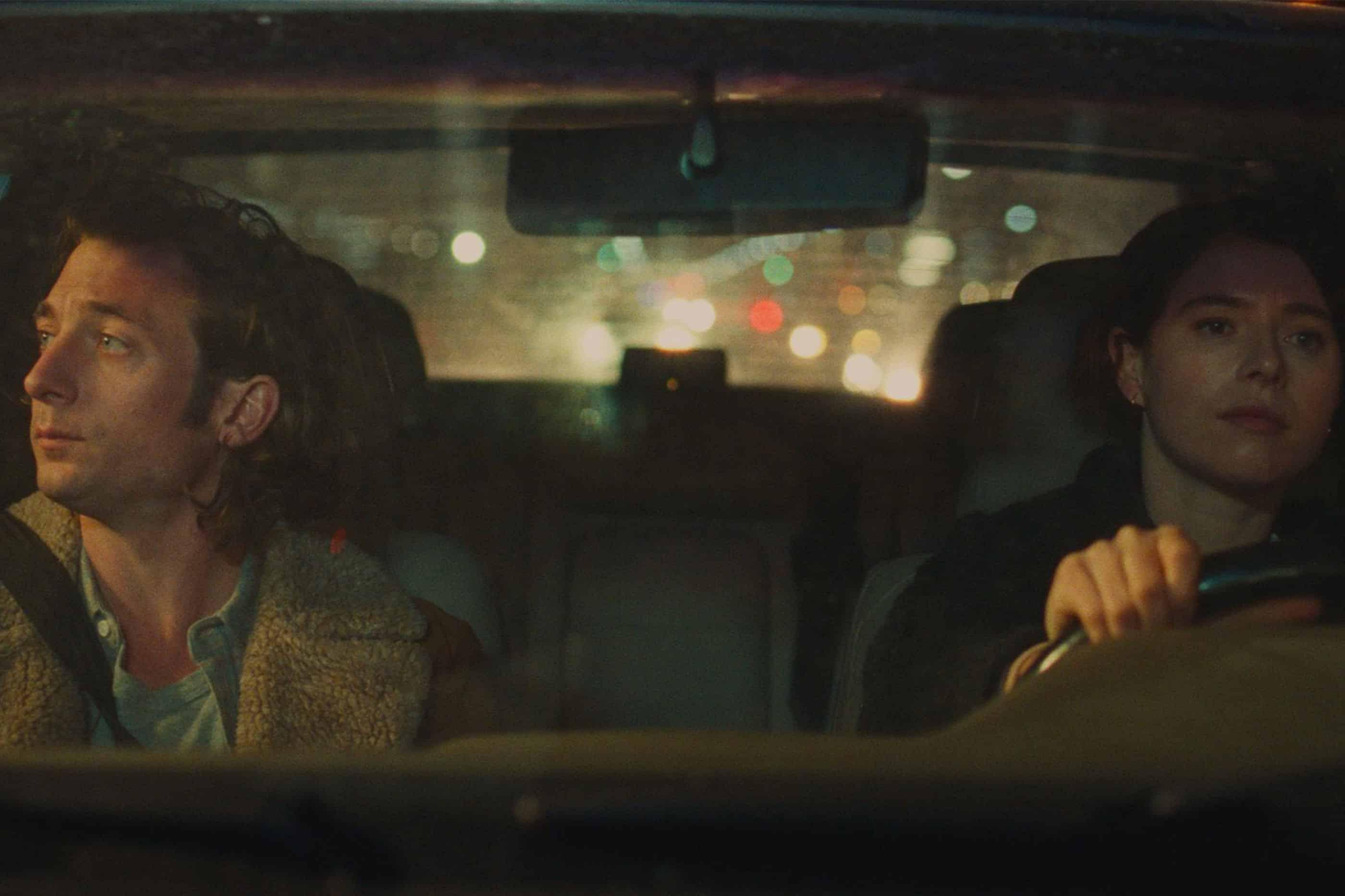
Later that evening, Anna receives a phone-call from The Love Institute offering her a job – overcome with curiosity she accepts on the spot but keeps it to herself. At dinner with her partner, Ryan (Jeremy Allen White) and coupled friends the ‘tests’ are explained, sort of. Couples visit The Institute, take the test, and based on its outcome it will be determined if those in the relationship(s) are actually in love. Anna and Ryan took it years previously, they are what Helen Fielding would call ‘smug marrieds’ (albeit just co-habiting and not actually married). Did you know that only those who sleep soundly and sing aloud to songs are actually in love?

When she starts at her new place of work under the management of divorcé Duncan (Luke Wilson). He who delivers her induction which includes Playmobil figures and a multitude of toy-realised scenarios (meet-cuticles, shall we say… I’ll get my coat). Anna is then assigned to shadow Amir (Riz Ahmed) as she learns the ropes. It’s a quirky set-up in which couples arrive (in a multitude of races but always heteronormative duos. NB. the gay couple who ‘break’ the machine later in the film) and are put through their paces, their connection prodded and poked at, their bond put to a slew of tests. Like, can they identify their partner while blindfolded just from body odour or do they trust each other enough to be flung out of a plane from a great height while sharing a parachute? All the while listening to the sound of pee-inducing rain through the sound system or only singing French lyrics during karaokec’est romantique et la lange d’amour!

Just like in Apples, the analog and digital dichotomy is blindingly obvious and yet again, somebody is assigning tasks/tests to ascertain some kind of proof of diagnosis as it were i.e. loss of memory or, here, romantic compatibility. Until the final test and they have a fingernail (of their choosing) ripped out with pliers which is then placed in a petri dish and shoved in a microwave-esque piece of machinery before the result is determined.

Anna throws herself into her job and makes many test suggestions along the way, some of these even find their way home. Perhaps she and Ryan can shower each other after drawing their portraits or pull a Sam/Molly Swayze/Moore at the pottery wheel. It becomes apparent that Anna is delighted by love and the prospect of it and yet still won’t disclose to her one-and-only where she goes everyday. Why is she so bothered by his opinion (he loathes the Institute though we never find out why)?

Like its predecessor, Fingernails is a quiet, wry look at love and human connection, an allegory on the belief of love. Its premise isn’t so far-fetched when one considers how the majority of us look for it in this day and age courtesy of social media, dating apps and the reliance of technology. Matches made based on a percentage score following a few asinine and inconsequential questions, algorithm and the swiping of a finger. There’s a timeless quality before technology is onmipresent – shot on 35mm - to the film, a space without mobile phones before technology is omnipresent. Visuals suggest it could be the nineties but music gives an eighties flavour. The soundtrack is, just like Apples, perfectly curated for the subject matter at hand: Bonnie Tyler’s Total Eclipse of the Heart, Only You and Don’t Go by Yazoo, and Frankie Valli’s The Night providing emotional heft and accompaniment when needed.

There’s an Eternal Sunshine of the Spotless Mind melancholy and Truman Show tragi-comedy to Nikou’s sophomore feature which is less dark (figuratively and literally speaking), the colour palette is still muted and muddy in tone with the occasional flash of red. The filmmaker refutes the whole ‘Greek Weird Wave’ label and cites American cinema as his main influence - hammered home by the North American setting and English speaking cast. Stylistically speaking it is not quite dystopian but something is definitely off in this absurdist allegory and the search for human connection and true love. Love is instinctual, it needs to be felt, and according to a working class hero is all you need. The course of which never did run smooth, unlike the healthy nailbed.

Fingernails is available to watch on Apple TV+

Categories
book film review Retrospective Review TV

2023 – Wrap up

What a year!

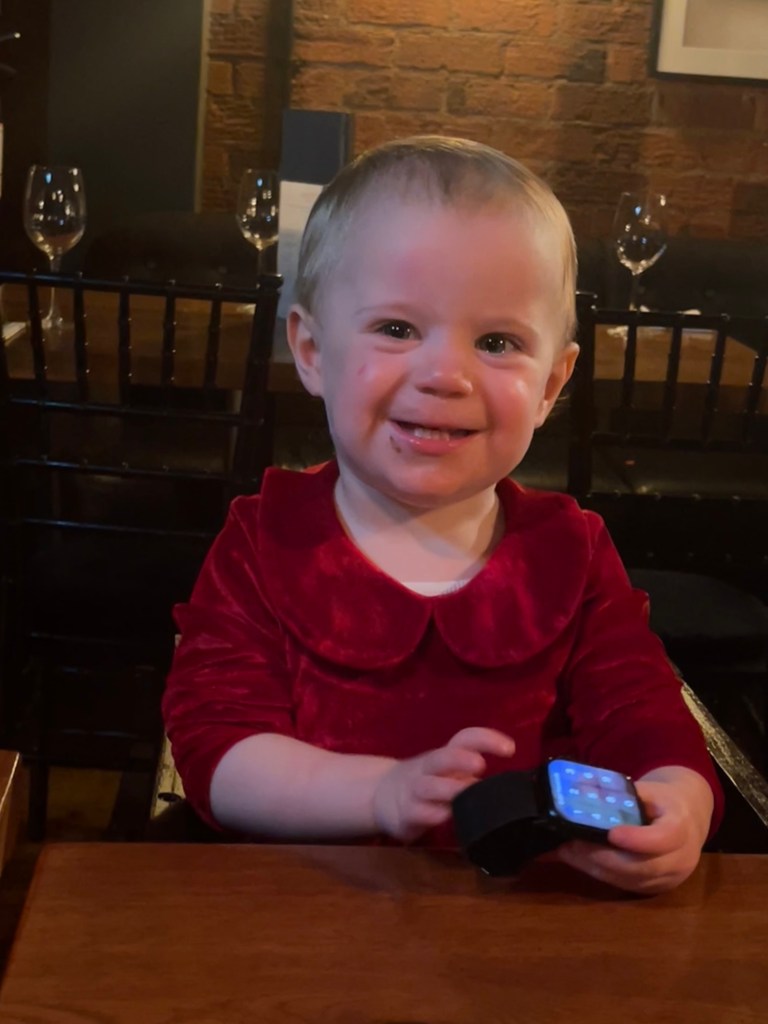
From January to April, things were moving along nicely. My goddaughter-niece turned one – despite the fact that I cannot remember life before she arrived – but then a few things rocked my little bubble and the people I hold the dearest. It has culminated in the twelve months of 2023 feeling like three years. It wasn’t all bad, there were some positives amid the… seizures… tears… pneumonia… the end of a friendship… cyst on the brain… a stenosis diagnosis… a healing trip to London to experience the shattering catharsis of A Little Life on stage… a Fringe & Bracket reunion… tears… fractured limbs… a much needed sunshine break… I started writing again… all those murdered babies and no ceasefire in sight… ‘Whoopi’ was vacated… relief… healing and self-care… stopped expecting a ‘me’ from anybody… I stopped writing again… boundaries… said enough… I am enough… oh, and Last Christmas finally made Christmas #1 39 years after initial release – RIP George x

Anyway. Phew. Shrugs, *blows raspberry at stress and worry*

I did manage to see some films this year albeit non-film festival ones courtesy of my Curzon and mubi memberships. Below are the twenty I admired the most, half of which excitedly were directed (and written) by women and depict the whole gamut of emotions experienced by a multitude of fully-rounded, complex humans. My favourite being the masterclass in misogyny, Justine Triet’s pitch perfect Anatomy of a Fall.

Favourites Films of 2023

Favourite Books of 2023

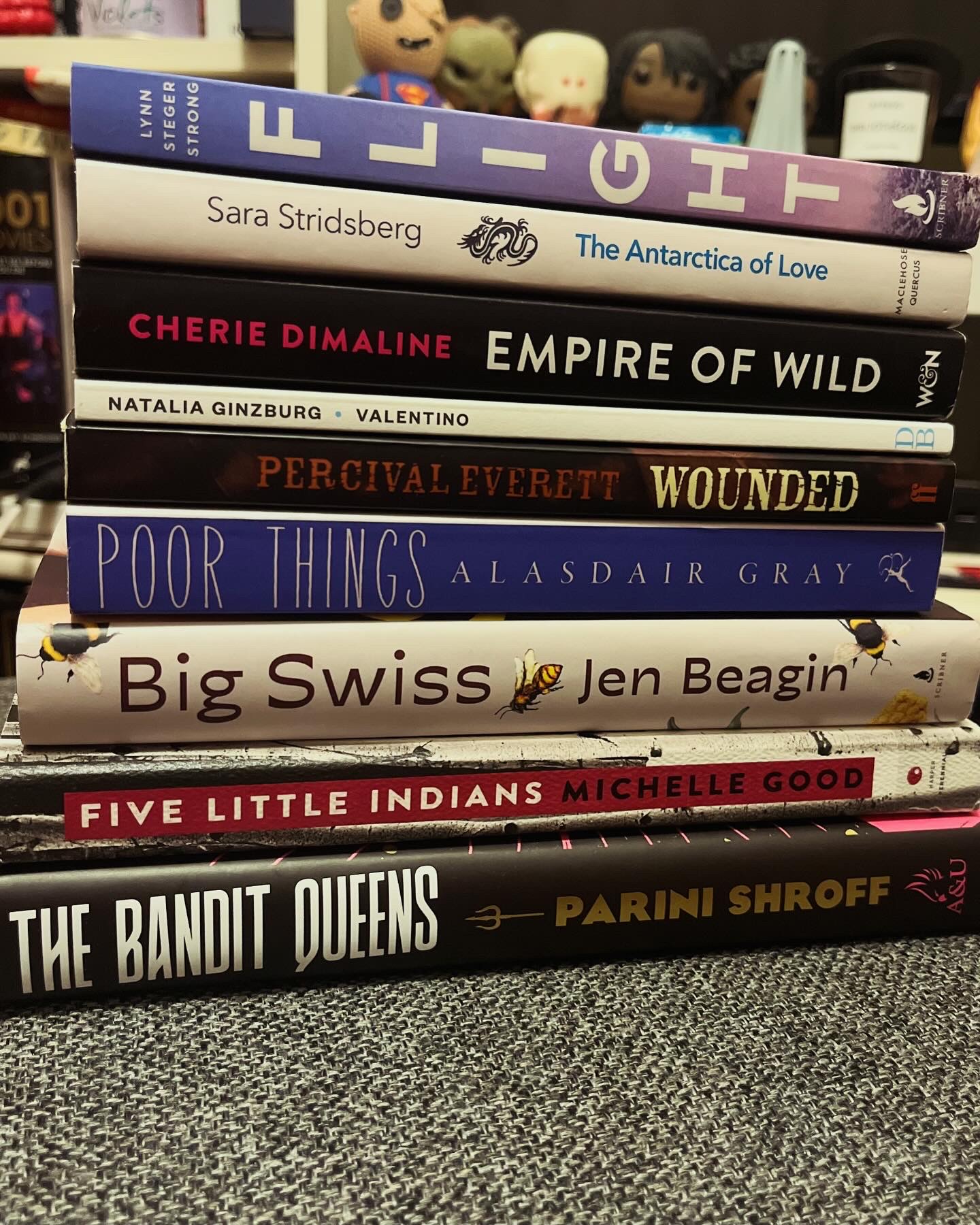
Thankfully, I also managed to read. Again, not as many as I’d have liked but personal distractions aside, 60 isn’t too bad. That’s 17,339 pages – actual pages too as I just don’t think I’m cut out for a Kindle. Absolute fave eleven are below left, on the right is a pile of honourable mentions: fiction and non, a volume of comics, women in translation, four blokes and a bit of poetry. If somebody was to make me choose just one, then today it would be Lagioia’s The City of the Living which I happened to review earlier in the year.

TV/streaming highlights of 2023

It was the year that bid farewell to The Marvellous Mrs Maisel (flashbacks, forwards and ageing make-up galore. Also, can’t spell it with just the one ‘l’, soz), Succession (AKA Wambsgans Win) and Happy Valley (bye-bye Tommy Lee Royce). There was a second series for Somebody Somewhere which is just the loveliest show in the world; gentle, tender, funny, and full of grace and warmth. Other TV highlights for me included:

Poker Face – Casino cocktail waitress Charlie Cale (Natasha Lyonne) entangles herself with some shady people following the murder of her best friend. She goes on the run, solving crimes wherever she ends up. Made all the more interesting by her uncanny ability to spot a lie. Think Wonder Woman (sans lasso) meets Columbo via the quick-witted brain of Rian Johnson.

The Last of Us – Pedro! In the adaptation of a game I will never play! Yet more importantly, S1 E03: Long, Long Time – Survivalist Bill (Nick Offerman) makes an unlikely connection in Frank (Murray Bartlett). Perfection.

The Bear S2 E08, Forks. Richie (Ebon Moss-Bachrach) finally comes into his own after Carmy (Jeremy Allen White) sends him to a posh restaurant to ultimately polish the cutlery.

Dark Winds – It’s 1971 and the discovery of three dead bodies in a motel coincide with an armoured bank heist. Navajo reservation cops Lt. Joe Leaphorn (Zahn McClarnon) and Sgt. Bernadette Manuelito (Jessica Matten) investigate the brutal deaths of three of their own with the help of a new recruit, Jim Chee (Kiowa Gordon). A revisionist western mini-series at its finest, re-appropriated from the perspective of indigenous Americans by indigenous Americans (producers Robert Redford and George R.R. Martin’s names add a little cash/cache). It’s brilliant and thankfully has been renewed for two more series. Whether we, in the UK get those remains to be seen but I sincerely hope so.

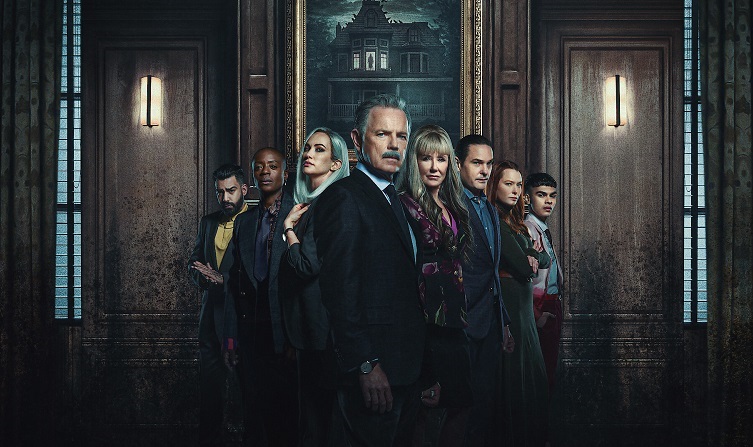
The Fall of the House Usher – I, admittedly, haven’t really been a fan of anything Mike Flanagan has done since The Haunting of Hill House (2018) but I think, he may have surpassed even that with this celebration of all things Edgar Allan. The whole cast bring their A-game and it is deliciously dark, twisted and utterly compelling from the first ten minutes. Poe-etic even (ugh). As an aside, I bloody love Bruce Greenwood – the perfect replacement for the other guy.

                  Fin

Phoebe
Categories
film review

First Cow (Dir. Kelly Reichardt, 2019)

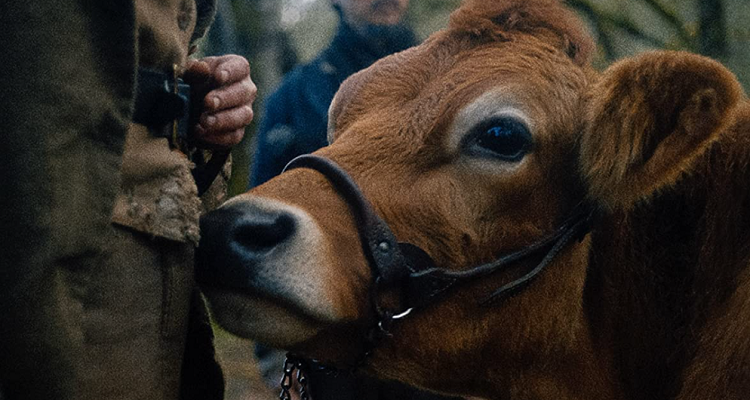
First Cow surprisingly – for anyone who has seen the trailer – opens in the present day as a woman (Alia Shawkat) and her dog unearth human remains. Visually, it is reminiscent of Kelly Reichardt’s 2008 film, Wendy and Lucy. The sky is blue, birds are chirping and the low camera angle makes our eyeline at one with the earth, along with the bones. The camera pans to the river and a freighter moves languidly across the water. In the blink of the eye, it has transitioned to a tugboat and, just like that, we have travelled back in time.

Cookie Figowitz (John Magaro) is foraging amidst the greenery for mushrooms. They are his first choice but he searches for anything edible to feed the party of fur trappers he cooks for, as he tries to stretch their diminishing supplies. Among the leaves, brush and overgrowth he stumbles across a naked Chinese man (“not Indian”) and within moments Cookie has given calligrapher King-Lu (Orion Lee) food, something to wash it down with, a coat and a ride on his way.

They won’t meet again for a number of days, weeks even, but when they do King-Lu will return the favour, giving Cookie shelter and a place to stay. The two become fast friends and set about making some money: “To get started, you need capital” declares King-Lu to which Cookie retorts without missing a beat: “You need leverage.” That leverage comes in the form of Chief Factor’s (Toby Jones) honey-coloured cow (Evie). You’ve heard the expression, why buy the cow when you can milk it for free? With her produce, the two budding entrepreneurs can make oily cakes. They drizzle them in honey and grated cinnamon, and make a killing selling them to the men mining and panning for gold.

As with the majority of Reichardt’s oeuvre, in terms of plot-points there aren’t many, but what is slowly revealed is an absolute pleasure to watch. She has the immense skill to relay so much with so very little and allows an audience to see but never instructs it where to look, often by her own sleight of hand in the editing suite. From the subtle timeline change to the use of light on the colour palette of yellows, earth tones and greens. It’s a quiet unassuming film, discerning, as it excavates American history and wrestles with the past and present – summed up during an exchange between Cookie and Lloyd (Ewen Bremner) in which one suggests that where they are isn’t the place for cows… “This isn’t the place for white men either.”

Based on Jon Raymond’s first novel The Half Life (2004), First Cow is the author’s fifth collaboration with Reichardt – their sixth Showing Up was released on Blu-ray by A24 earlier this month – and can be viewed as a companion piece to Meek’s Cutoff (or even Certain Women, also starring Michelle Williams), certainly a historical pre-cursor of early life in nineteenth century Oregon, America. Thematically, it acknowledges the ambiguities of (male) friendship. Those formed under the most unlikely circumstances and the power, grace, pleasure and heartaches that bind us together, marking human frailty and endeavour in such a profound, moving, and meditative way. The cast is led majestically but Magaro and Lee, who both give such delicate and beguiling performances, made only more poignant by William Tyler’s score – often only the plucked strings of an acoustic guitar.

First Cow is a moving and quiet fable about kinship and an America of the past and present, overflowing with the milk of human kindness.

First Cow is currently showing on MUBI.