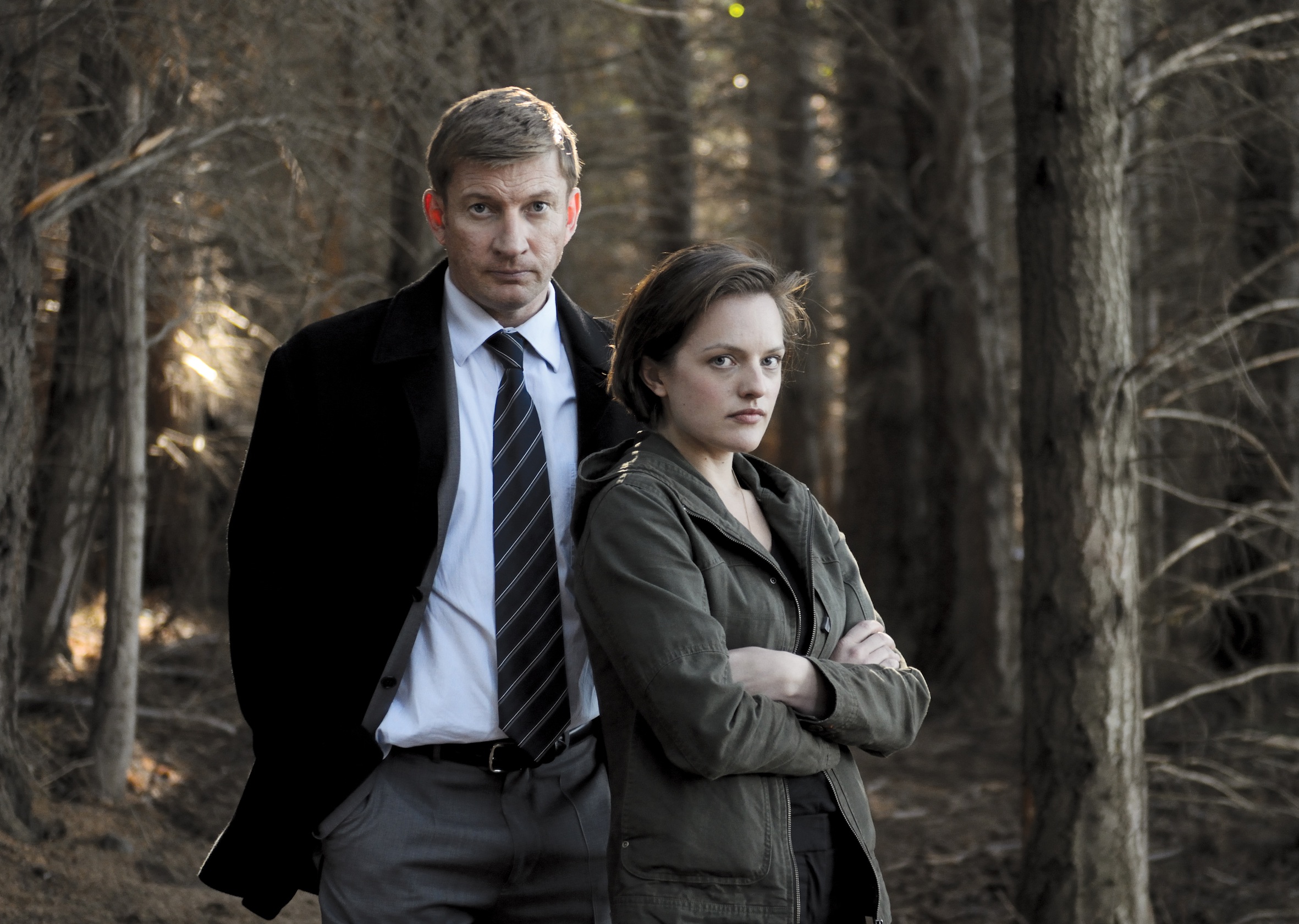
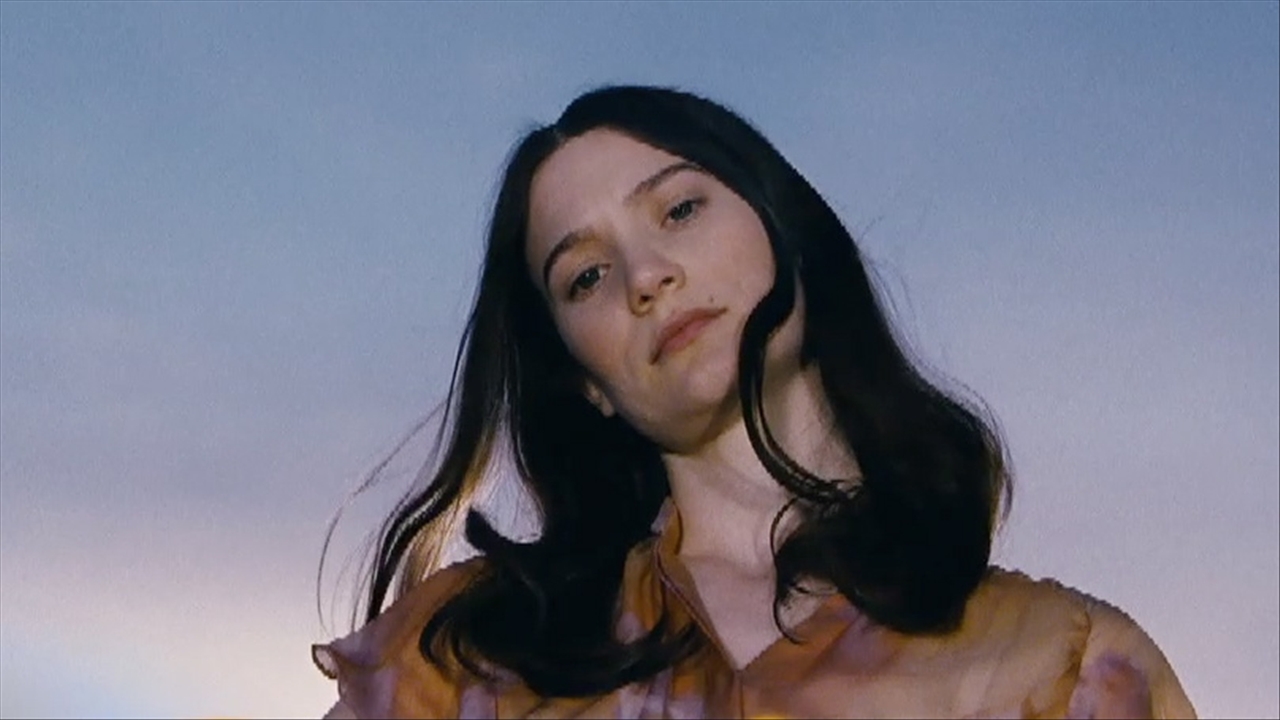
A determining factor, some may argue, at the heart of Campion’s oeuvre is the inclusion of a strong, emotive (and convincing) female protagonist seen in the likes of Sweetie (1981), An Angel At My Table (1990), The Piano (1993) and In the Cut (2003) to name but a few; these women are usually in search of themselves and while their strength and femininity are rarely questioned they tend to be deeply flawed characters. In Campion’s crime mini-series Top of the Lake – which sees her reunited with collaborator and long-time friend Gerard Lee – leading protagonist Robin Griffith (Elisabeth Moss) picks up the baton left by these memorable characters.
When 12-year-old Tui Mitchum (Jacqueline Joe) is rescued from Lake Top’s freezing stretch of water, her pregnancy is discovered and Detective Robin Griffith – having returned ‘home’ from Sydney – insists on taking the case. Over the course of the six-part drama, she contends with a lot more than just a statutory rape case; namely a dying mother, a long-term engagement she may or may not want, the boy she left behind, and her own demons that she has never fully faced. Throw into the mix, the all-female commune (attempting to take refuge from the debilitating aspects of their respective lives) that has set up home in a field they call Paradise, led by the enigmatic GJ (Holly Hunter). Feeling such a strong personal affiliation with young rape victim Tui, Robin is determined to assist the child; a prospect made all the more difficult when Tui disappears from a dysfunctional community full of secrets, lies, and deception, seemingly led by her father, Matt (Peter Mullan).
Boasting a cast which includes David Wenham (Oranges and Sunshine), Genevieve Lemon (The Piano) and Thomas M. Wright (soon to be seen in the US version of The Bridge) as well as the stellar prowess of Hunter and Mullan, all of whom are superb, this is really Moss’s show. Proving that she can do so much more than MadMen‘s Peggy Olson, she is, quite simply, brilliant as the psychologically paradoxical Robin. Filmed largely on New Zealand’s South Island (a character in itself), Top of the Lake, is a TV story which unfolds like a novel much like HBO’s Deadwood. Yet amid its style there is a stark hyper-realism and mimetic quality which emerges at its own pace – some may say a snail’s – but this deliberate pacing, silence and haunting cinematography has a purpose and builds upon the thrilling tension.
It is, oddly, reminiscent of Smillas’s Feeling for Snow (1997), yet ups the emotionally raw ante (and provides a much more relatable leading lady). Campion and Lee wrote a script in 2010, a lot of which is improvised around here, and manages to keep audience interest through many-a subject matter including murder, incest, police corruption and gender politics. Misandry and misogyny go hand-in-hand; the invisibility of the older woman is offset by the impotency of the ageing male, here in Lake Top everybody is damaged, vulnerable and/or breaking the law in some capacity. By the last episode, the conclusion of which is grimly satisfying, one realises that there is no actual resolution; there are still unanswered questions which is frustratingly refreshing and not usually expected in crime television of today’s standard, at least not of the English speaking variety anyway. Campion nails it yet again.
Pre-production code females were given carte blanche when it came to committing their ‘crimes’ against men/society, without veritable punishment, leaving the likes of Theda Bara, Pola Negri and Ida Lupino free to vamp it up, transgress, and use their feminine wiles as they chose, with little condemnation or repercussion. Post-code ladies like Marguerite Namara, for example, in 1931’s Gipsy Blood (aka Carmen), is not quite so lucky. Adapted from the novel Carmen by Prosper Mérimée and informed by the subsequent opera, Gipsy Blood tells the tale of a cigarette factory worker caught up in a love quadrangle. Directed by Cecil Lewis and music arranged and conducted by Malcolm Sargent, this Elstree Studios production is the first filmic rendering of Georges Bizet’s libretto.
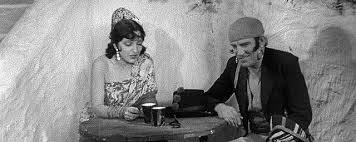
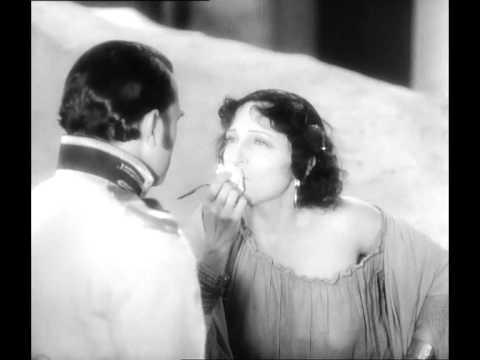
Set in Seville, ‘betrayer of all men’, Carmen (American soprano Namara) is striking and clearly, the star, with her alabaster skin, black hair and saucer-like eyes framed with dark lashes. She’s the quintessential Spanish woman in her flamenco dress, hooped earrings and headscarf, standing with her hands on her hips, emitting an air of authority and accentuating her breasts and hip. She’s a seducer, capricious, even duplicitous and when stiff upper-lipped, innocent (and quick tempered) officer Don Josè (Thomas Burke), caddish, lecherous moustachioed corporal Zuniga (Lester Matthews) and charming Toreador Escamillo (Lance Fairfax) fall for her ample charms, it can’t end well. It’s the usual story: woman wrongly labelled ‘harlot’ because she exudes passion, sexuality and confidence leads to murderous jealousy all the while depicting the proletarian life amid immorality, and lawlessness (and xenophobic/sexist stereotyping).
Displaying stark cinematography, replete with chiaroscuro tones, Gipsy Blood is a delight albeit archaically put together. It won’t be for everyone, especially given the histrionic acting and, at times, stilted, awkwardly delivered dialogue. Sadly, the singing ability from the main mezzo-soprano, baritone and tenor does not quite match the acting style but in its deliciously camp and melodic story there is joy to be found. Granted, you probably have heard the arias sung far more proficiently in the 70 years since but Sargent’s arrangements still shine, no mean feat given the audio recording limitations of 30s cinema. A word of advice, never trust a dark, exotic temptress; they’ll break your heart!
It has been a ridiculously brilliant year for film and this list made all the more difficult by trips to FrightFest and LFF but I have stuck (as best I can) to 2013 releases. My favourite film of 2014, so far, is The Strange Colour of Your Body’s Tears (dir. Hélène Cattet and Bruno Forzani) and I implore all to see it when it is out in March. Anyway, I digress, in reverse order the films I have enjoyed most this year.
#13 After Lucia (2012, dir. Michel Franco)
#12 Lore (2012, dir. Cate Shortland)
#11 Laurence Anyways (2012, dir. Xavier Dolan)
#10 Stoker (2013, dir. Park Chan-wook)
#9 Wadjda (2012, dir. Haifaa al-Mansour)
#8 Simon Killer (2012, dir. Antonio Campos)
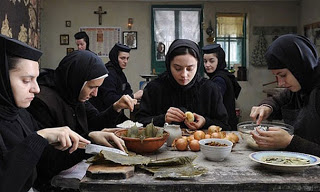
#7 Beyond the Hills (2012, dir. Cristian Mungiu)
#6 Bullhead (2012, dir. Michaël R. Roskam)
#5 Frances Ha (2012, dir. Noah Baumbach)
#4 Blancanieves (2012, dir. Pablo Berger)
#3 Before Midnight (2013, dir. Richard Linklater)
#2 Big Bad Wolves (2013, dir. Aharon Keshales & Narot Papushado)
#1 La Grande Bellezza (2013, dir. Paolo Sorrentino)
Special mentions:
Django Unchained (2013, dir. Quentin Tarantino)
Spider Baby (1968, dir. Jack Hill)
Grabbers (2012, dir. Jon Wright)
I Wish (2011, dir. Koreeda Hirokazu)
Forbidden Games (1952, dir. René Clément)
The Hunt (2012, dir. Thomas Vinterberg)
Only God Forgives (2013, dir. Nicolas Winding-Refn)
A Field in England (2013, dir. Ben Wheatley)
Lake Mungo (2008, dir, Joel Anderson)
The Act of Killing (2013, dir. Joshua Oppenheimer)
Mud (2012, dir. Jeff Nichols)
Oslo, 31 August (2011, dir. Joachim Trier)
Where Do We Go Now? (2011, dir. Nadine Labaki)
Holy Motors (2012, dir. Leos Carax)
Blonde Venus (1932, dir. Josef von Sternberg)
McCullin (2012, dir. David and Jacqui Morris)
What Richard Did (2012, dir. Lenny Abrahamson)
The Kings of Summer (2013, dir. Jordan Vogt-Roberts)
Head On (2004, dir. Fatih Akin)
Bal (2010, dir. Semih Kaplanoğlu)
‘Twas also the year I ‘discovered’ Abbas Kiarostami. The man is, for want of a better word, a genius. I would highly recommend the following:
During the first ten years of the Showa period (1926-1989) in Japanese history, the Militant Faction of the Army staged a coup. This endeavour to overthrow Imperial power resulted in the assassination of Finance Minister Takashasi Korekiyo and after a three day revolt the military rebellion ended. An incident that would coincide with the rebellion was of individual magnitude – three months after the failed coup, a prostitute named Sada Abe was apprehended by Japanese authorities for her role in the death of Kichizo Ishida. Upon her person were Kichizo’s severed penis and bloody testicles, organs she had removed after he was dead. Her personal rebellion and revolt also lasted three days.
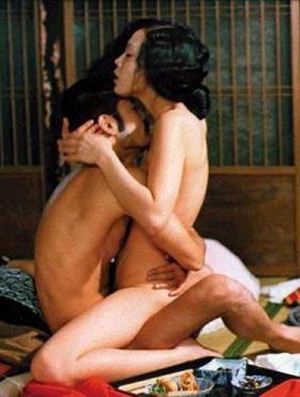
Forty years later, filmmaker Oshima Nagisa whose oeuvre consists of many keiko-eiga films, produced and subsequently released Ai no corrida [In the Realm of the Senses] (1976). Its suji (described in its crudest form) is based upon Abe’s exploits of 1936 and her sexual affair with former master Ishida. Oshima was regarded as a New Wave filmmaker, iconoclastic with his subject matter and techniques and had a tendency to establish a strong correlation between political and sexual repression, Ai no corrida is no exception. In creating the film text, Oshima rebels against Japanese tradition, not least the cinematic conventionality which viewers of Japanese narrative cinema had grown to expect; a veritable representation of what it was like to be truly ‘Japanese’.
These new stories could not be told in the old ways; new content demanded new forms. Traditional forms – the old classical style of conventional studio filmmaking – reflected the political and cultural status quo. To critique and reform a corrupt society, to change the way people think and act, would require a change in how they see and hear. (Nelson Kim, Senses of Cinema, 2004)[1]
In order to accomplish what Kim describes – the art of the New Wave filmmaker – the director must rebel. This is clearly evident in the film’s form and content, namely its transgression and explicit depictions of sexuality. Ai no Corrida in its entirety sees scene-upon-scene of penetrative sex, fellatio, autoeroticism, rape and abjection; taboos which are rarely broken in mainstream, progressive cinema. Sexual activity is, universally a private activity, one which is usually performed behind closed doors; an act of intimacy which is played out, much like a theatrical performance and one which is central to the film’s mise-en-scène (Turim, 1998)[2]. Oshima invites the spectator into the couple’s clandestine domain, their ‘realm’ and encourages voyeurism alongside unequivocal exhibitionism. With his use of tight framing and enclosed, claustrophobic settings and locations, the viewer has no choice but to look; to embrace the visuals and read-between-the-sex, as it were, for a deeper political reading. Pornography it is not, as no frame serves for pleasure or titillation.
Ultimately, it is the objectification of the representational – both vigorous and at times inventive – sex which functions in alienating and distancing the viewer. This can be read as both an element of political modernism or a clever and distinct filmmaking technique in which the spectator experiences the same isolation and disjunction Sada (Matsuda Eiko) and Kichi (Fuji Tatsuya) are subjected to. Perhaps it is both or neither, one thing is clear and that is the protagonists’ segregation, from themselves, from thirties’ militant Japan and complete rejection of the ideological hegemonic structure which threatens to oppress them.
To dismiss Ai no corrida as a film about sex is an injustice. Granted, Sada and Kichi do spend the majority of their time (and film) inside four walls and each other’s body and mind and it would appear that they are incapable of any other form of communication, however, there is so much more beyond their passion. During their brief excursions in the outside world, Sada and her lover are set against Japan’s industrialisation. The sterility of the landscape of ‘new’ Japan is juxtaposed with their outdated kimono dress cut in garish colour set against the grey, sterile landscape. Children are visual representations of the future and can be seen carrying the new design of national flag, thereby indicative of the difference between militarist and imperialist Japan. A division which was in existence at the time of 1936 and, by extension, the Japan Oshima was attempting to unburden in the mid seventies at the time of production. The children throw snowballs (another indication of the politically ‘cold climate’) at the elderly – here, in the form of a male suffering from erectile disfunction. This, while depicting the cruelty of youth also symbolises how the aged are now ineffective within society, aided further by the old(er) geisha’s incontinence later on in the film.
Every individual has character duality, something Nelson Kim describes as ‘the social being and the ‘ everyday self’ and these aspects of character allow Sada and Kichi to ‘fuck their way to freedom’. This idea of sexual liberation was very much a Western ideology culminating in a sexual revolution which ran from the mid-sixties through to the mid-seventies. A movement which coincided with the production of this film and, it would seem, influenced it with other imported Western ideals including those contributing to values governing sexuality. If this modernity of the West did in fact influence Japanese values; specifically those associated with sexuality, then Oshima’s influence in depicting his iconoclastic vision of Japan clearly came from the West – namely France, a country which provided finance for the film’s production and a safe haven for editing.
In a Japan, which is seen as destructive and offering little in the way of liberation, Sada and Kichi, in their activity articulate their emancipation through their sexual desire, “[a] desire [which] mocks the notion of will and rationality”.[3] Kichi, however mocking is repression personified, walks in the opposite direction to marching soldiers in one of the film’s iconic moments. While many critics have interpreted this as rebellion, another perspective may suggest defeat. He will never be a part of the society they represent and, just like them, he is destined to die, at the hands of an oppressor no less. For that is what Sada essentially becomes, her activity and aggressiveness relegates Kichi to submissive male; provider of pleasure. He is no longer a man but sexual object, while it is the female who is the dominant and controlling one. Furthermore, the last scene in which Sada chokes him can be read as suicide; he cannot sustain or fulfil his lover’s voracious sexual appetite and his death which occurs in the midst of performing his duty causes him to surrender. Only in death is Kichi truly free.
Ai no corrida remains a timeless, highly stylised and transgressive critique of the corruptive influence of patriarchal ideology and of its implications on Japanese society. Oshima maintained that a film can only be truly political when it moves the spectator and his direction and style is certainly persuasive in altering viewer perception, even evoking attributes of the Lacanian model. In this case a piece of filmic art which is particularly acquiescent in its keiko-eiga ideal, yet at its heart displays a representation of civilisation and the oppresive hegemonic structures which allegedly keeps the human race ‘civilised’. Running deeper than its political theme, however, is a depiction of Eros and Thanatos and a fight for freedom – some may say the human condition.
The much anticipated Superman reboot has opened in cinemas (last week for those of you holidaying on Krypton) and yes, for the most part, it is pretty good and yes, it is all the Twitterverse can tweet about or so it has seemed since opening weekend. It is now time to move on and consider DC’s next move. Man of Steel’s success, hot on the heels of The Dark Knight, has meant talks of a Justice League of America movie, for those of you not in the know The JLA is to DC what The Avengers are to Marvel. It is only logical (and fair) that the third major player in the League, and indeed the DC Universe, gets their stand alone origin film. I am, of course referring to Wonder Woman.
Created in 1941 – following Superman in ’38 and Batman in ’39 – by William Moulton Marston, in part, for the following reason:
“Not even girls want to be girls so long as our feminine archetype lacks force, strength, and power […] they don’t want to be tender, submissive, peace-loving as good women are. Women’s strong qualities have become despised because of their weaknesses. The obvious remedy [was] to create a feminine character with the strength of Superman plus all the allure of a good and beautiful woman.” (WMM, 1943)
Erm, okay William…”tender, submissive, peace-loving [weak] as good women are…” . I will, however, on this occasion ignore the slight stench of misogyny and gross misrepresentation of women in this reasoning, on the basis that you created my favourite superhero (I idolise all the other guys too but there is a special place in my heart for WW) and I think the important sentence in this statement is “with the strength of Superman” because she is just as tough; the woman of steel.
We all know female superheroes are somewhat scarce, not necessarily on the comic-book page but certainly onscreen (and no, Jean Grey and a foul-mouthed eleven year old do not count, at least not for me), conceivably, a product of their time or maybe too many females transgressing the boundaries of the norm would encourage women wanting to be women – Gloria Steinem has written several essays on the Amazonian, attesting to the strength and influence of the feminine archetype. Perhaps, in spite of Joss Whedon’s utter condemnation of the notion that men aren’t interested in the exploits of female she-roes, there is actually some truth in it. Who wouldn’t want to see the strength and power of Gaea, the hunting skills of Artemis, the wisdom of Athena, the speed of Hermes and the beauty of Aphrodite personified in the intelligent, honest and disarming charm of Diana Prince?
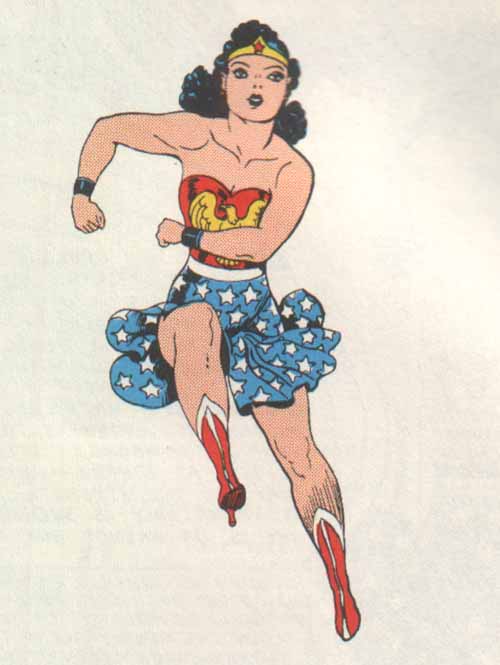
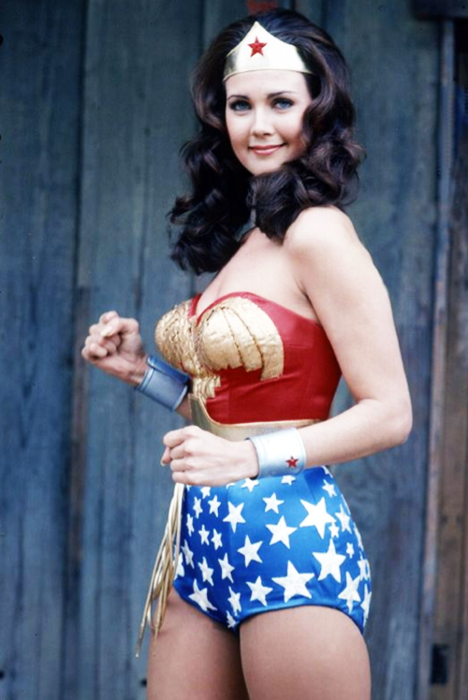
Dressed in the red, white and blue standard of freedom and democracy – Batman isn’t the only one with an arsenal of goodies – she wears a tiara which is razor-sharp and can be hurled like a boomerang, her bracelets worn at the wrist can deflect bullets and serve as a reminder of the shackles once worn when the Amazons were the prisoners of Ares. She carries Hestia’s golden Lasso of Truth; tiny chain-links with limitless length, indestructibility and of course, anybody bound in it are compelled to tell the truth. Wonder Woman does have the ability to fly (although not soar high), can spin at blurring speed, usually to shed her civvies, is able to communicate with most animals and beasts and has numerous vehicles at her disposal, all invisible. Like I said, she’s just as physically strong and special as Supes. Their similarities are actually hard to ignore: they are both on Earth, separated from their familial roots, both have an alias to protect and while they don’t fully comprehend the planet they inhabit they wish to shield and, wherever possible, save the humans living on it, and still she has not been immortalised on the big screen, yet Superman’s genesis gets regurgitated every decade or so.
There is the (now) kitsch and fabulously camp television series made in the 70s which ran for three seasons and saw former Miss USA, Lynda Carter don the girdle and fight for our rights in satin tights. She was wonderful in it; strong, fearless, savvy, intelligent and beautiful, a Goddess on Earth instilling hope and convincing the world of compassion, humility and generosity – all the while kicking ass. Carter is 61 now and will forever be a Wonder Woman but it’s time for a change, the character needs to be brought into the twenty-first century. David E. Kelley did attempt it in 2011 with Adrianne Palicki in the titular role, Elizabeth Hurley as the villain, along with a supporting cast that included Cary Elwes and Tracie Thoms. His pilot was never optioned probably down to the horrible SFX and the fact that he portrayed the beautiful peace-loving princess as a sexually frustrated spinster who curls up in front of The Notebook, or obsesses over a Facebook page when she’s not ripping out people’s throats – as soon as Diana pulls out the merchandise and dolls, it all gets a little too meta.
Wonder Woman is, in the words of Lynda Carter, “the beautiful, unafraid, tenacious and powerful woman we know resides within us [even you boys], the antithesis of victim […] a symbol of extraordinary possibilities that inhabits us, hidden though they may be.” Last year, I saw a billionaire playboy take to the sky dressed as a giant bat, last week I witnessed a super alien male don a red cape and protect a city. I don’t see how watching an Amazonian Warrior wearing a tiara, star-spangled shorts and attempting to educate mankind is any different. It is time for the Wonder Woman to have a go at saving the world.














 The Framing Device