Categories
Film Festival film review

Carol (Dir. Todd Haynes, 2015)

LFF 2015

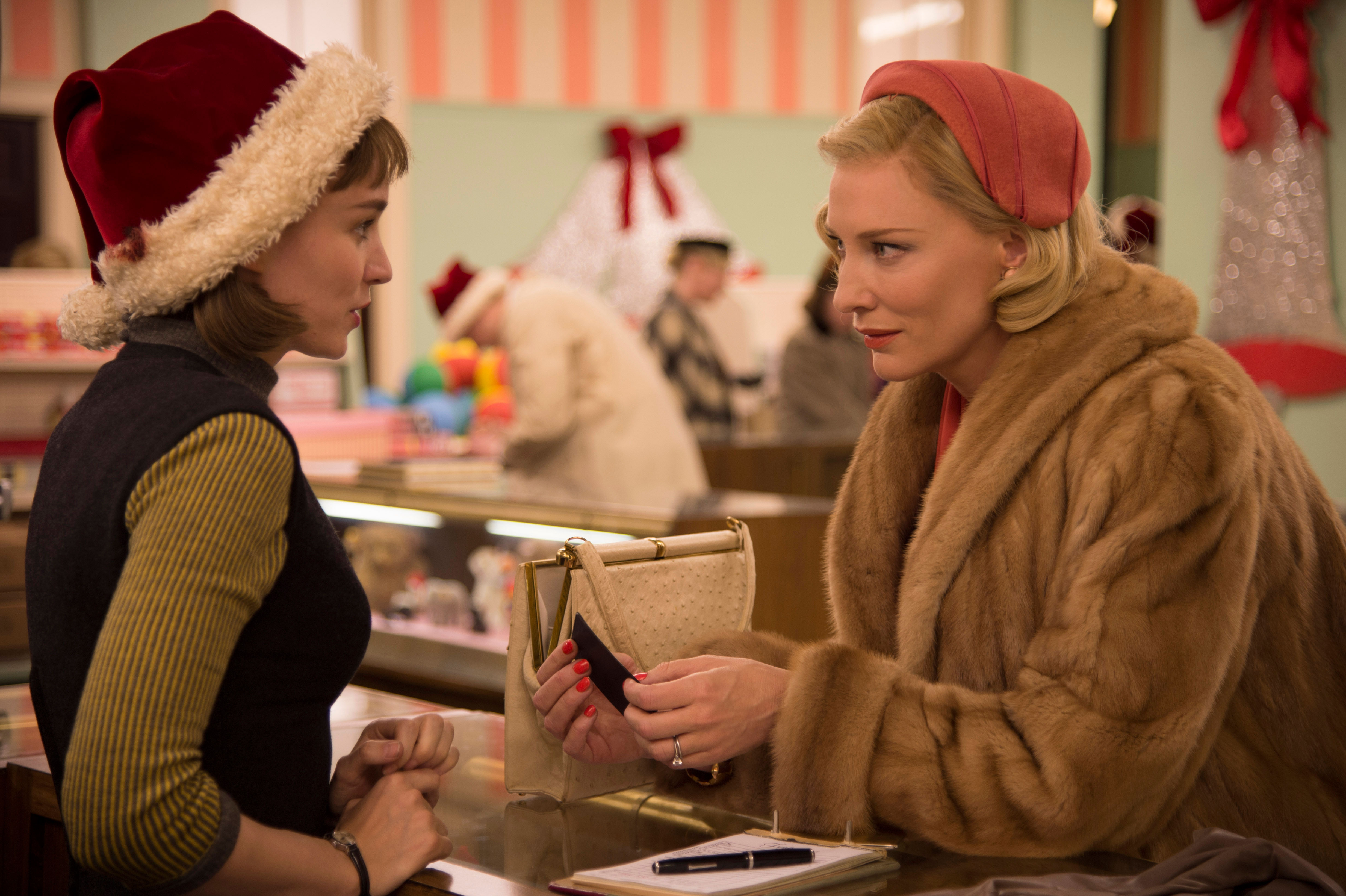
Patricia Highsmith has always written credible males. Her themes of masculinity, love and murder have thrilled audiences for decades both in the literary and filmic world. Carol, (originally published as The Price of Salt under a pseudonym) could not be further from the likes of Strangers on a Train, The Talented Mr. Ripley or The Two Faces of January. Here, protagonists are female and the thrilling cat-and-mouse chase becomes a different kind of pursuit in this superbly told love story.

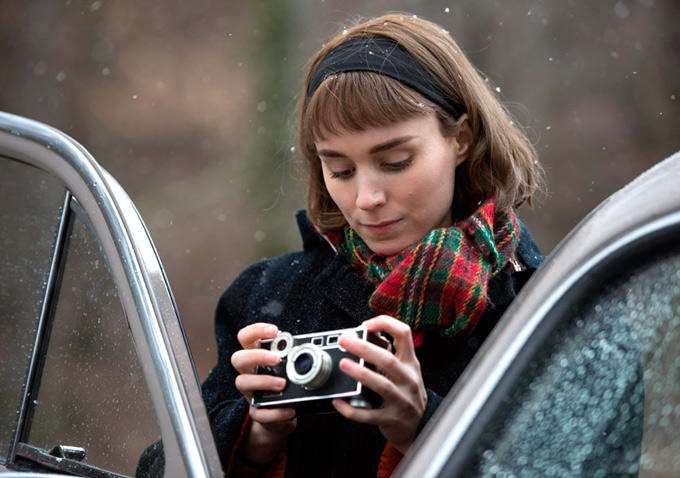
Not only a love story between two women but Carol looks at the heartbreak of a mother separated from her child amid an acrimonious divorce and the sexual politics of the fifties sheds light on the limitations of women and their role in both the home and society. Haynes is a master of the period and shoots women beautifully. He appears to understand them, intuit their strengths, weaknesses, whims and nuances. He is also notorious for getting the finest performances out of his leading ladies – Julianne Moore (Far From Heaven), Kate Winslet (Mildred Pierce) and now Rooney Mara. Make no mistake that while she may play the titular character and gives a stunning performance, Cate Blanchett is out-classed at every turn by Mara.
Much like Haynes’ previous work, there is a reverential Sirkian quality to this drama. The highly stylised mise-en-scène appears as if belonging to a live-action Edward Hopper or Norman Rockwell painting. The attention to detail makes for hazy viewing; the colours are rich, the costumes are resplendent and Carter Burwell’s gorgeous score sets the melancholic yet triumphant tone. Carol is an intricate, heart-swelling amour fou which depicts the mesmeric, insanity and beauty of love.

carol3

Carol is out on UK cinema release on 27th November.
Categories
Film Festival film review

Chevalier (Dir. Athina Rachel Tsangari, 2015)

LFF 2015

chevalier (1)

Economic crisis birthed a Greek New Wave with Athina Rachel Tsangari leading the fore. Historically, she has written, produced and/or directed many of the films associated with the Greek film industry resurgence – Dogtooth, Alps, Attenberg (and acted in Before Midnight too with her lead actor Panos Koronis). She and fellow Greek director Yorgos Lanthimos (The Lobster) screened at this year’s LFF.

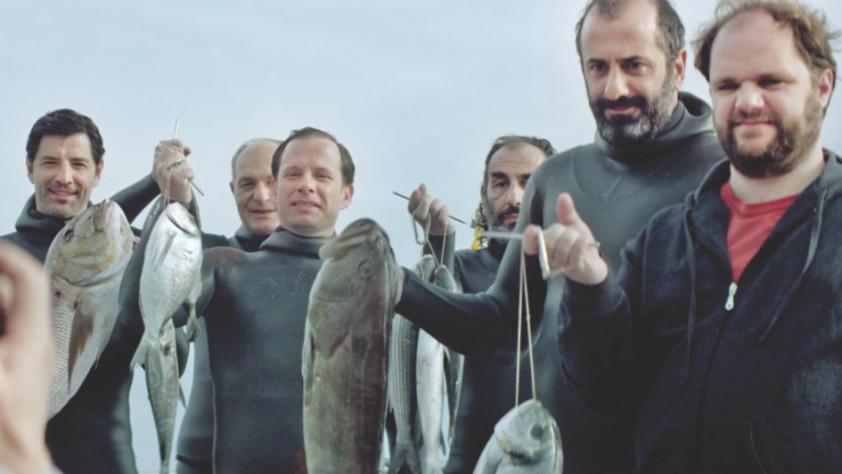
Tsangari’s last cinematic outlets Attenberg (2010) and her 2012 short The Capsule heavily featured females and their place in – and on the periphery of – the world around them; the director’s next concentrates on the adult male. In spite of its gallic sounding name, Chevalier is very much Greek. Set upon a yacht amid the Aegean Sea and a palette of pale greys and marine blues, it is like Attenberg in that the look is minimalist playing against the backdrop of the Aegean and the insular interior of the boat.

Chevalier_PyrpassopoulosPapadimitriou

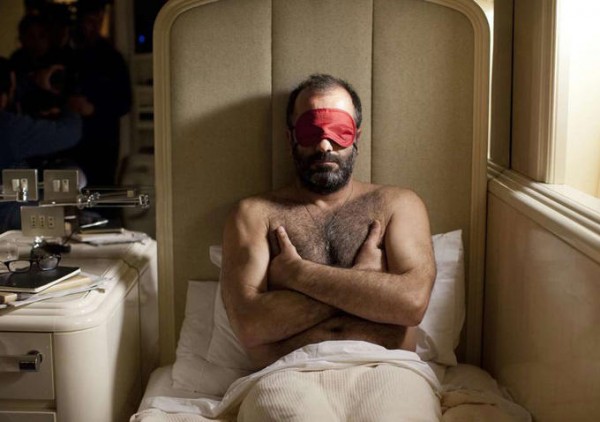
We never find out what brought these men together, or why they decided on a boat-trip. There are indications as to how they know each other: the Doctor and his handsome predecessor, the Insurance salesman nudist son-in-law, and his loner-genius brother who cannot go into the water (although, we never find out why), the one who spends an inordinate amount of time on his hair, and his pal; they are all friends of sorts. Growing tired of the tedium of card playing and incongruity of asking each other what fruit they see each other as, they decide to make things interesting and create a new game – who is the best in general? They start marking each other on everything, from sleeping posture, the ability to make an IKEA shelving unit, to the size and girth of their erections. The Chevalier of the title is referenced by a signet ring, often worn by French nobility and although its meaning varies depending upon which culture it inhabits, it is also a decoration given by a Patriarch of the Orthodox Church/Knight/Nobleman. You get the gist.

Co-written by Efthymis Filippou (Alps, Dogtooth) which may give an indiction the absurdist direction the film will veer. As to the journey, we’re all along for the boat-ride. To see these men primp and preen is a riot and even I relished (and perhaps snorted) at the male insecurity and ludicrous machismo on display as characters start to examine themselves in the mirror and bemoan the size of their thighs; an anxiety usually associated with female culture.

panos

There is little guidance in relation to interpretation; the film can be read in socio-political terms especially when the game catches on with the boat’s chef and porter but Tsangari never leads one way or another.  Friendships will be tested and manipulated, blood bonds broken and formed as the best man overall is discovered.

Chevalier is a rebellious, brilliantly mordant and shrewd satire of the male ego. It is absurdist, surreal in parts, and hilariously droll from start to finish. It takes an astute filmmaker to hold a mirror up to society and provoke laughter and it will make you laugh. A lot.

Categories
Film Festival film review

Listen to Me Marlon (Dir. Stevan Riley, 2015)

LFF 2015

1638832 001
listentomebud

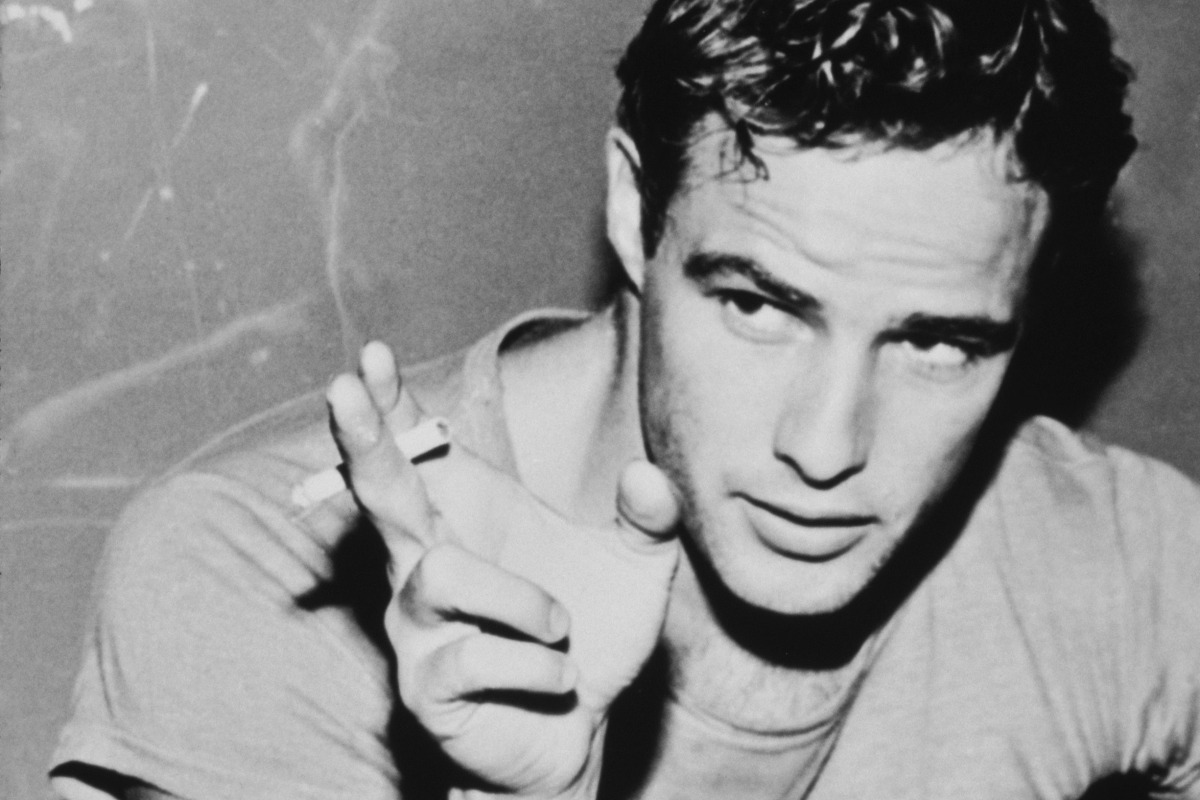
‘Bud’ Brando means a lot to me. He was the subject of my Undergrad dissertation and to this day he fascinates me. Not just a pretty face he appeared to be a mass of ambiguity and encompassed the beautiful; a masculine yet feminine dichotomy, enigma and myth. There was an ambition and an underlying vulnerability I was drawn to, hell, even empathised with but by the end of my research, these ambiguities, half-truths and general lack of consistency allowed me to dissect the actor’s persona and his choice of film roles yet the man remained somewhat of a mystery. 

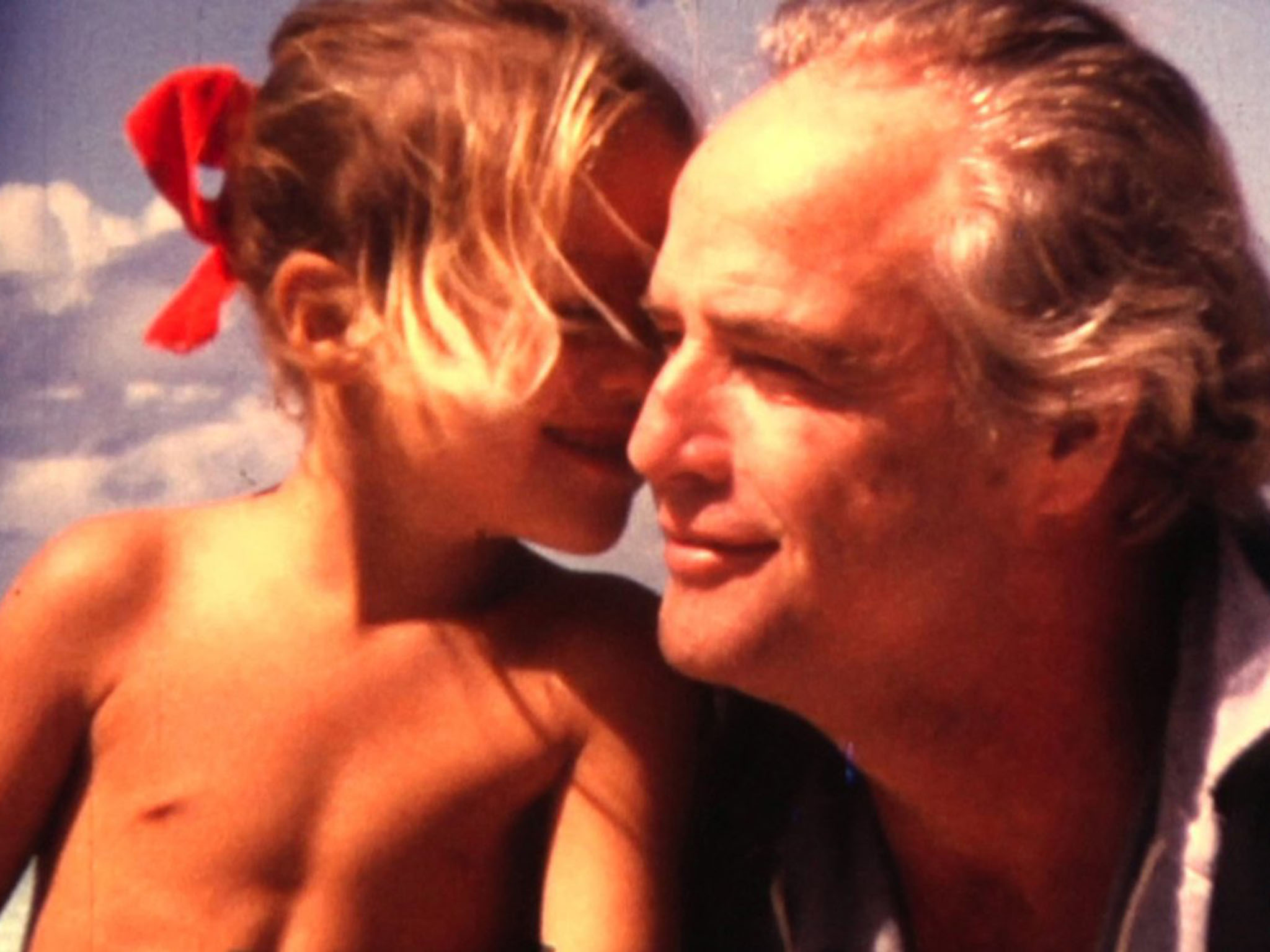
Recently screened at the 59th BFI London Film Festival, Stevan Riley’s film Listen to Me Marlon opens with a digitised print of Brando’s face – one used during his incarnation as Superdad, Jor-El. It’s an eerie image, like a death mask but also rather apt given that fatherhood is such a huge part of this documentary. It/Brando begins to recite a monologue before news coverage takes over, detailing the shooting of Dag Drollet at Brando’s home in 1990. Dag was the boyfriend of Brando’s daughter Cheyenne and father of her son Tuki – he was killed after a struggle with her elder brother Christian. Cheyenne would later commit suicide. It was a tragedy that changed the actor overnight and something he never appeared to get over.

listen-to-me-marlon (1)

Riley edits shots of an empty home against the audio soliloquies and these are intercut with video footage and archival interviews of Brando during his heyday and beyond. He does a tremendous job at giving an audience, unfamiliar with the star, a real glimpse at the man. A lot of the visual segments are not necessarily new but the tapes are revelatory. The actor grew tired of psychoanalysts and began self-hypnosis in an attempt to understand himself. The man depicted throughout this documentary is one with unquenchable curiosity; intelligent, articulate and thoughtful – a shy and sensitive soul determined to have love and freedom. His enigma remains somewhat intact, and thanks to writer/director/editor Riley an audience can experience a real intimacy with a largely misunderstood Marlon.

LISTEN_TO_ME_MARLON_still

Listen to Me Marlon is a beautiful, affectionate gem of a film which perfectly balances the fact with fiction; the philosophical man and myth. To hear the distinctive nasal tone of the much-mimicked actor and to note the change in octave and speed as he gets older is actually very moving. This is a last testament of sorts: Bud in his own words. And what wonderfully warm, sad and amusing words they are.

Categories
Blu-ray film review

Eaten Alive (Dir. Tobe Hooper, 1977)

ea3

Arrow Films’ release of Eaten Alive is introduced (as part of the extras package) by helmer and Texas Chain Saw Massacre maestro Tobe Hooper, as a parting shout he exclaims “Hope you like the colours!”

EA1

Hmm, it starts very shakily and in the space of 11 minutes a woman escapes from a brothel and winds up at a fleapit motel (all clearly set on a studio lot). Two men try to rape her (including a young Robert Englund), she is forked to death (no pun intended) and thrown to a swamp-dwelling creature which could be a crocodile or alligator; locals are unsure. I wish I could tell you it gets better… even though it was adapted by Kim Henkel, Texas Chain Saw Massacre this is not.

All characters stumble upon Judd’s grotty Starlight Hotel with its dirty damp patches and soiled walls – believe when I tell you, you’d rather sleep in your car. Judd (Neville Brand)is a loner Patriot, guns (and American flag) adorn most walls, there’s even a swastika flag draped on a chair. Judd isn’t the type of man to leave you alone, he has a pet alligator and leers suggestively at any and all females that pass through. He’s a misogynist who even takes delight at terrorising a small calliper-wearing (female) child. That said every character is practically irredeemable; child and ‘gator aside. From an unrecognisable Carolyn Jones as brothel owner Hattie, via rugged ‘cowboy’ Sheriff (Stuart Whitman), to arguably the greatest Final Girl Marilyn Burns as Faye who sadly spends most of the film with her mouth taped shut. The filters used create an artificiality, which given the setting makes perfect sense and does add to the whole surreal B-movie effect. Garish reds and blues distort images and there’s a lot of eerie, atmospheric mist over the swamp; in keeping with the red, white, and blue of the flag.

eaburns

Okay, so dig a little deeper and there are indications of an ideology, the film is playing to affirm and just like Hooper’s earlier work, the family is at the centre but the problem is Eaten Alive – or as it is otherwise known Death Trap – isn’t very good; it’s disjointed and a little exploitative particularly in its scopophilia. There is some inexplicable make-up work and a foray of (dodgy) women’s wigs which further aid the ridiculous.

So yes Tobe, can’t say I enjoyed the film greatly but I liked the colours.

Categories
film review

We Are Still Here (Dir. Ted Geoghegan, 2015)

housewash

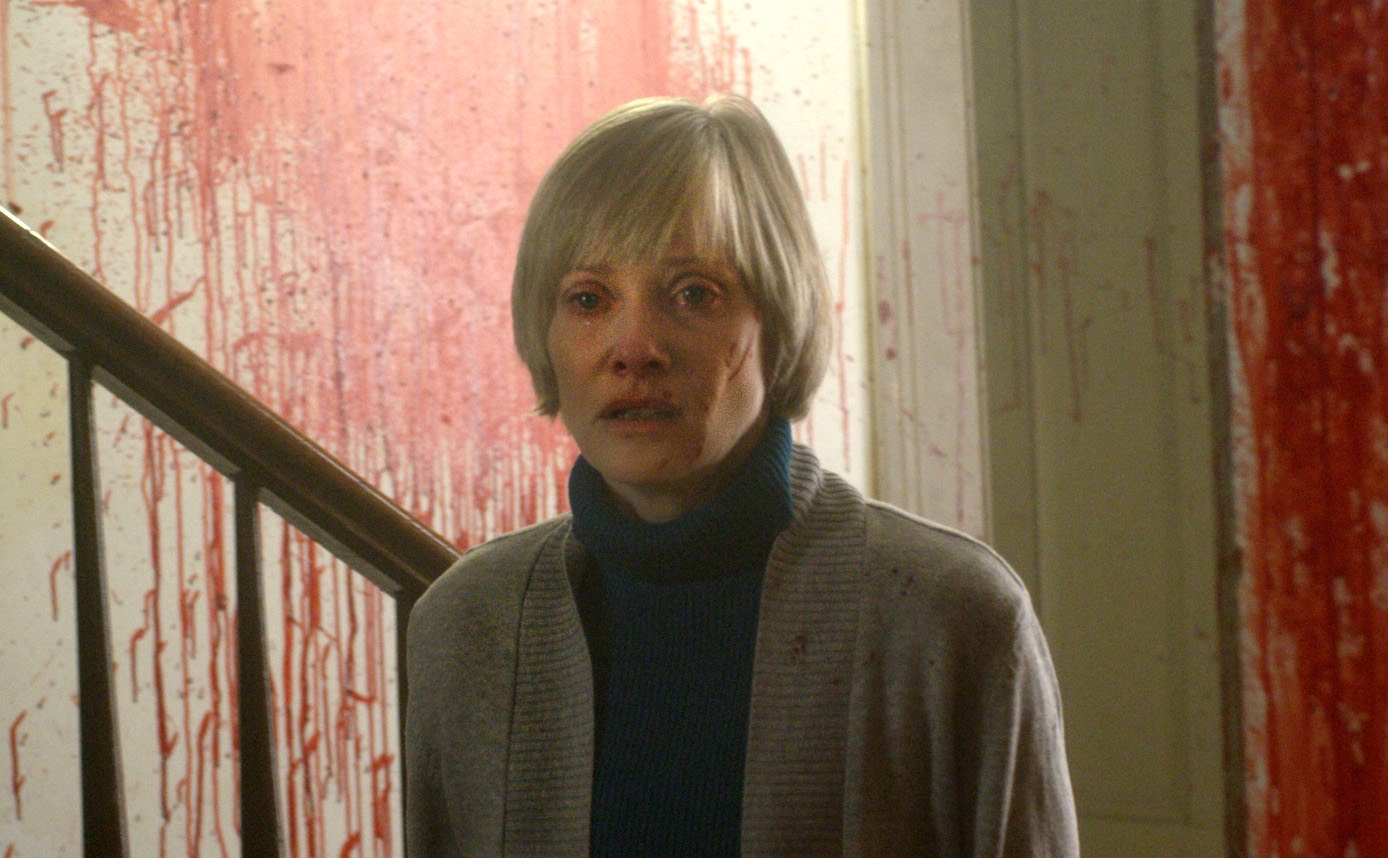
The opening shot of Ted Geoghegan’s directorial debut We Are Still Here is a blank canvas of snow; desolate, cold and perfect. Anne and Paul Sacchetti are on the way to their new home – the exterior landscape is not the only frosty element to the scene, the deep chill clearly present in the car. Anne (Barbara Crampton) is broken – though no victim; devastation is written all over her face, her eyes red raw from crying. Paul (Andrew Sensenig) keeps his feelings hidden in the odd tumbler of scotch. They have recently lost their son Bobby in a car accident and the new home is obvious attempt at escaping painful memories; the couple are connected in their grief and yet completely alone with it.

From the moment they pull up to the house, it is evident that things are not what they seem. It is very subtle but look closely at the shutters of the windows, they move, as if they are blinking; the house lives. It has a history and energy which hippy séance-loving friends Jacob and May Lewis (Larry Fessenden and Lisa Marie) zone into when they pay a visit to the Sacchettis. The eeriness of the vacant rooms, creaking of door hinges and floorboards and a breeze coming from seemingly nowhere that keeps knocking over a framed photograph of Bobby. It has all the hallmarks of a haunted house film but somehow this feels more authentic. The camera is intrusive and lurks voyeuristically, the editing similar to Don’t Look Now as it draws the audience in, dialogue is scarce but that just adds to the tension.

Family is the heart of this film and Wojciech Golczewski’s original music compliments the theme wonderfully, playing with the melodrama and creating tension and foreboding. There are nods to Mario Bava, Lucio Fulci and Pupi Avati but they blend perfectly with the contemporary, albeit dateless, setting. There is even a yellow labelled J&B bottle of scotch perfectly placed, (although rebranded as B&J) displaying a sense of humour amid the modern aesthetic. The film is a slow burn and builds steadily to a bloody, yet profound, denouement. Oddtopsy FX provide some fabulous effects and gives us some real picturesque deaths as the house quite literally devours. Who knew arterial spray against a canvas backdrop could look so beautiful?

We Are Still Here plays with the 70s and 80s but feels wholly original. It is smart, well-acted, funny and was the standout of this year’s FrightFest.