Categories
film review

Lady Macbeth (Dir. William Oldroyd, 2016)

Nikolai Leskov’s 1865 novella Lady Macbeth of Mtsensk has not only been staged as an opera, a ballet, and adapted as a 1962 Andrzej Wajda film but now acclaimed one-time Young Vic director in residence, William Oldroyd, brings Alice Birch’s screenplay debut to contemporary cinema audiences. Transposing the Russian set story to the 19th century, specifically the rural North-East of England.
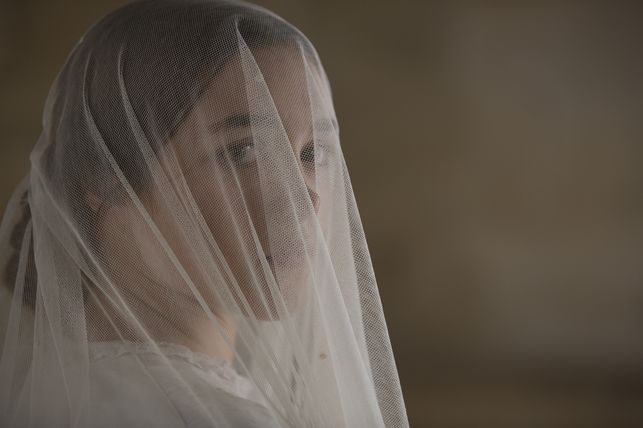
This Lady Macbeth tells the story of Katherine (Florence Pugh), sold into marriage to Alexander (Paul Hilton) and forced to live with the older man and his father, Boris (Christopher Fairbank). Her new husband doesn’t touch her, barely speaks to her and expects “his property” to remain indoors at all times. Katherine’s only physical contact is with her near-mute maid Anna (Naomi Ackie).

Gender hierarchy in 19th Century Britain meant that women were deemed second class citizens and treated as commodities and here, Katherine is no different; sold into a loveless marriage alongside a patch of land, initially unable to exercise much control over her body, her voice, even her sleep patterns, in a house that is determined to silence her and keep her quelled. Katherine is easy to empathise with as we see her sitting alone, day after day, fighting to keep her eyes open. She craves the outdoors, the right to breathe and the freedom to do as she pleases. Cinematographer Ari Wegner’s tight framing is oppressive, the tension palpable, as we are invited to witness the daily rituals of a woman; silence broken only by the vicious raking of a hairbrush dragging out knots and tangles of hair or the violent pulls of the restrictive corset cutting off the air supply, crushing lungs with each tug. 

When her husband and father-in-law go away on business, her wish for air is granted, however, on one of her strolls, she gets inappropriately handled by farmhand Sebastien (played beautifully by Cosmo Jarvis). When he visits her that night and attempts to force his way into her marital bed there is a struggle before she drags him in. With Sebastian, she can exert control, exude sexuality, seduce and subjugate. While Shakespearean Lady Macbeth was punished for her explicit threat to the patriarchy, Katherine subverts all expectation, and at one point literally laughs in the face of it. She is the epitome of looking like the innocent flower but being the serpent underneath.

Florence Pugh is astonishing in this unsettling tale. Her character’s adultery, defiance and contempt glorious in its transgression. Pugh made a terrific impression in Carol Morley’s The Falling (2015) but this incredible performance is the one which will make her a star. She is ably and brilliantly backed by co-stars Cosmo Jarvis and Naomi Ackie as, pawns to be manipulated, Sebastian and Anna. Their ethnicity is never overtly commented upon, but reflects the detailed, historically accurate, research the filmmakers carried out of the period. Despite their class difference, Anna and Katherine are the same, products of the society they inhabit; subservient and imprisoned.

Oldroyd’s production is without complexity, there’s the voyeuristic static camera, long takes, lingering periods of silence which only add to the suffocating drama and tension and serves this type of simple, albeit subversive, narrative perfectly. The beauty lies in the performances, not one can be faulted, and the stark cinematography and lack of musical cues packs a stifling punch. Its austere and almost severe lack of colour (save for a beautiful peacock blue dress designed by Holly Waddington) indoors is juxtaposed quite beautifully with the warming tones of the exterior shots which are reminiscent of Arnold’s Wuthering Heights (2011) and Campion’s Bright Star (2009).
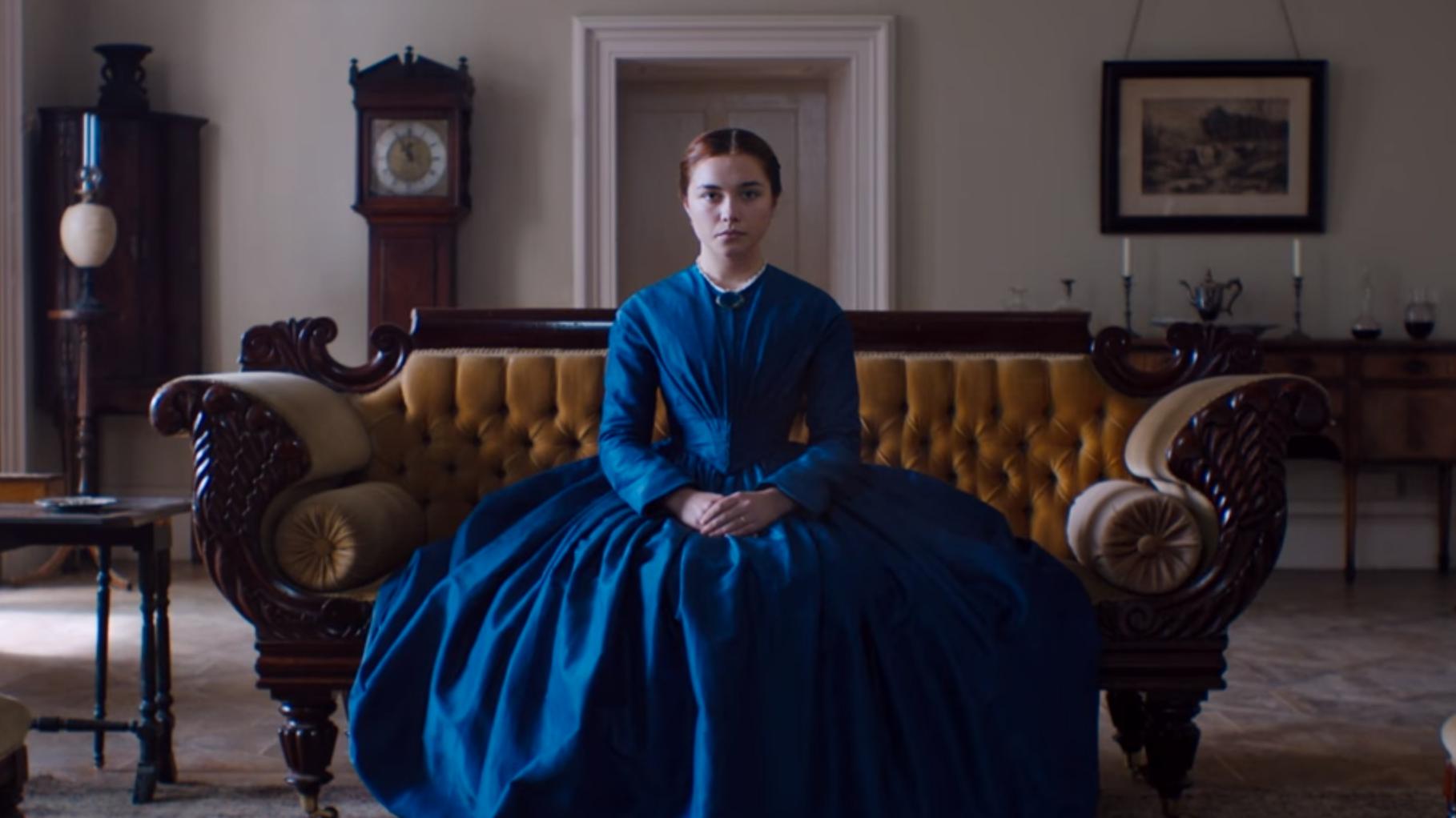
Tense, beguiling, and suffocating, Lady Macbeth is a compelling adaptation of a Russian novella via Shakespearean literature and depicts a microcosm of a British society of the past. Pugh delivers an outstanding performance – in a superb drama – as a powerful, defiant, adulterous and ambitious woman who owns her autonomy in a time when she was afforded none.
Categories
Retrospective Review TV

On Girls…

“If it hurts, you’ll always remember…”

After six seasons, sixty-two episodes, one thousand, eight hundred and sixty minutes (give or take), it’s over. Girls is no more. Hannah et al have moved on, to pastures new, not necessarily together but what joy, cynicism and dark, comedic delights they left behind. Also, it’s probably still in Sky box sets too if you just can’t say goodbye yet.

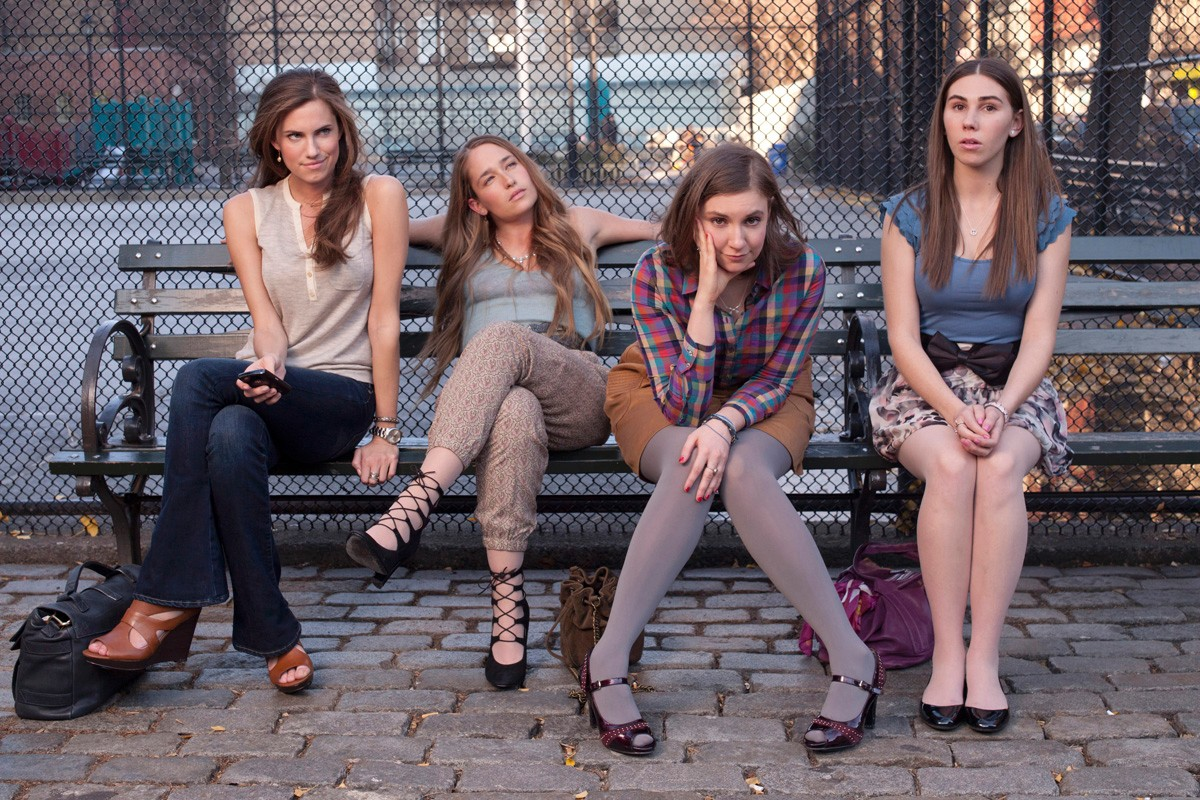
Following on from her success with semi-autobiographical Tiny Furniture (2010), Lena Dunham turned to television and created Girls. It never sat comfortably within a specific genre, part drama, part sitcom, like an anti-Sex and the City despite covering some occasional, similar ground. Realism wasn’t always its strongest suit but the writing always felt authentic even when certain situations seemed implausible. It dealt with the complications of women (those four with the alliterative names mostly) between the ages of 24-27 – that weird age where you never feel fully adult, have left girlhood behind but still need to navigate the choppy waters of self-discovery and finding your place in the world. These were young women who had all the self-confidence but little to no self-worth, they made each other’s problems about themselves and allowed their selfish anxiety to dictate their emotions. They attempted to be independent yet were reluctant to cut the apron strings entirely.

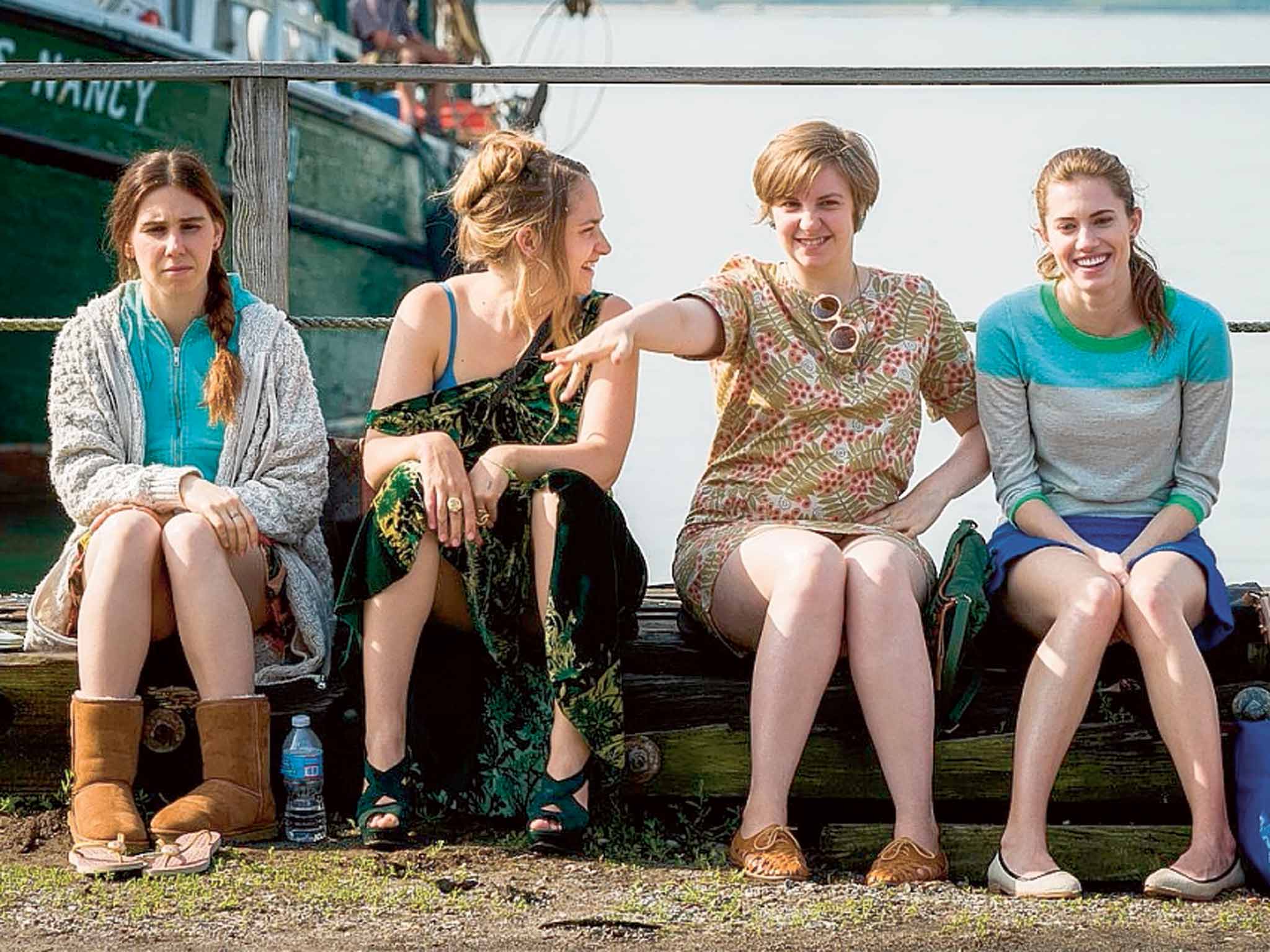
The series covered many topics including drug addiction, STIs, unwanted pregnancy, alcoholism, abortion, motherhood, infidelity, loneliness, death, and mental health. Whilst attempting to combat or even approach some of these issues, they all – Hannah Horvath (Lena Dunham), Marnie Michaels (Allison Williams), Jessa Johansson (Jemima Kirke), and Shoshanna Shapiro (Zosia Mamet) – made mistakes. Sometimes horribly, a lot of the time irreparably but that just made us root for them all all the more. Or many of you bailed on them around season 2/3 and have yet to go back…

Much criticism stemmed from the characters’ likability. That’s women for you. We’re not all sunshine and light, not all of the time, there are multiple facets, complexities that not many shows manage to depict quite so vividly. The girls’ fallibility and often cringeworthy behaviour (sometimes age appropriate, mostly grossly immature) is what made me latch on. Men have been getting away with being unapologetically “men” onscreen since the dawn of time, apparently women pose a greater problem.

Let’s not pull punches; Hannah Horvath was an annoying character, the one based on Dunham, she who often spoke before thinking, she who, nine times out of ten needed that extra bit of attention. We’ve all had at least one friend like her, probably, we’re not even friends anymore. It happens. The others weren’t perfect, not by a long shot, hello Marnie?  but Hannah, for all her flaws and foibles was the heart of the show. She and her friends became a talking point between you and yours – the question of their friendship and why they were friends was never far from our minds, they never did seem completely compatible but something worked. Until they didn’t. Hey ho, that’s life.

Hannah lived outside of her sexual experiences, she saw her ‘job’ to fulfil certain things so she had something to write about; situations with which to glean as much experience from. Her sex scenes were nothing if not honest, hilarious and convincing. She was weird, surrounded by a cast of weirdos; characters we all empathised with time and again. All they ever wanted was to be happy; being loved was a bonus.

For its duration Girls never seemed far from censure – too privileged, too white, too much nudity (specifically Dunham). Most moans seemed to spend a little too much time on Hannah/Lena’s body. Unapologetic in her own skin, and why not, she doesn’t look like your typical TV star, certainly not the kind of woman to shed clothes so regularly and unabashedly. It was refreshing. Finally somebody onscreen who wobbled a bit having a convincing sex life. It made little difference that she was the creator, writer, producer, director and lead actress, she was there to be body-shamed by… well, it was scary how many. Somebody like Patrick Wilson (see, One Man’s Trash S2 E05) wouldn’t f*ck any woman who looked like that, yada yada yada.

It’s a white show. Written by a white woman about four (white) friends; its creator, co-producer, Jenni Konner and executive producer, Judd Apatow are Jewish too if this is something of interest (side note: must research criticism levelled at Knocked Up or latest show LOVE). One of the first things Dunham did, following comments about the lack of diversity on the show, was cast Donald Glover as Sandy in two episodes (It’s About Time S2 E01 and I Get Ideas S2 E02) which depicted Hannah’s ignorance surrounding the issue of race – they also made him a Republican too. While there have been numerous characters of colour albeit, one could argue, clumsily added, and mostly in supporting, non-recurring roles; still, attempts have been made to address the imbalance. Those same critics who describe the show as whitewashing would probably now accuse of tokenism or misrepresentation. The scrutiny with which Girls was subjected to over the last six years, one could surmise, is down to the gender of its creator. I’m sure there are some male-led shows that are held to account, just not quite in the same way as those by/for/with women.

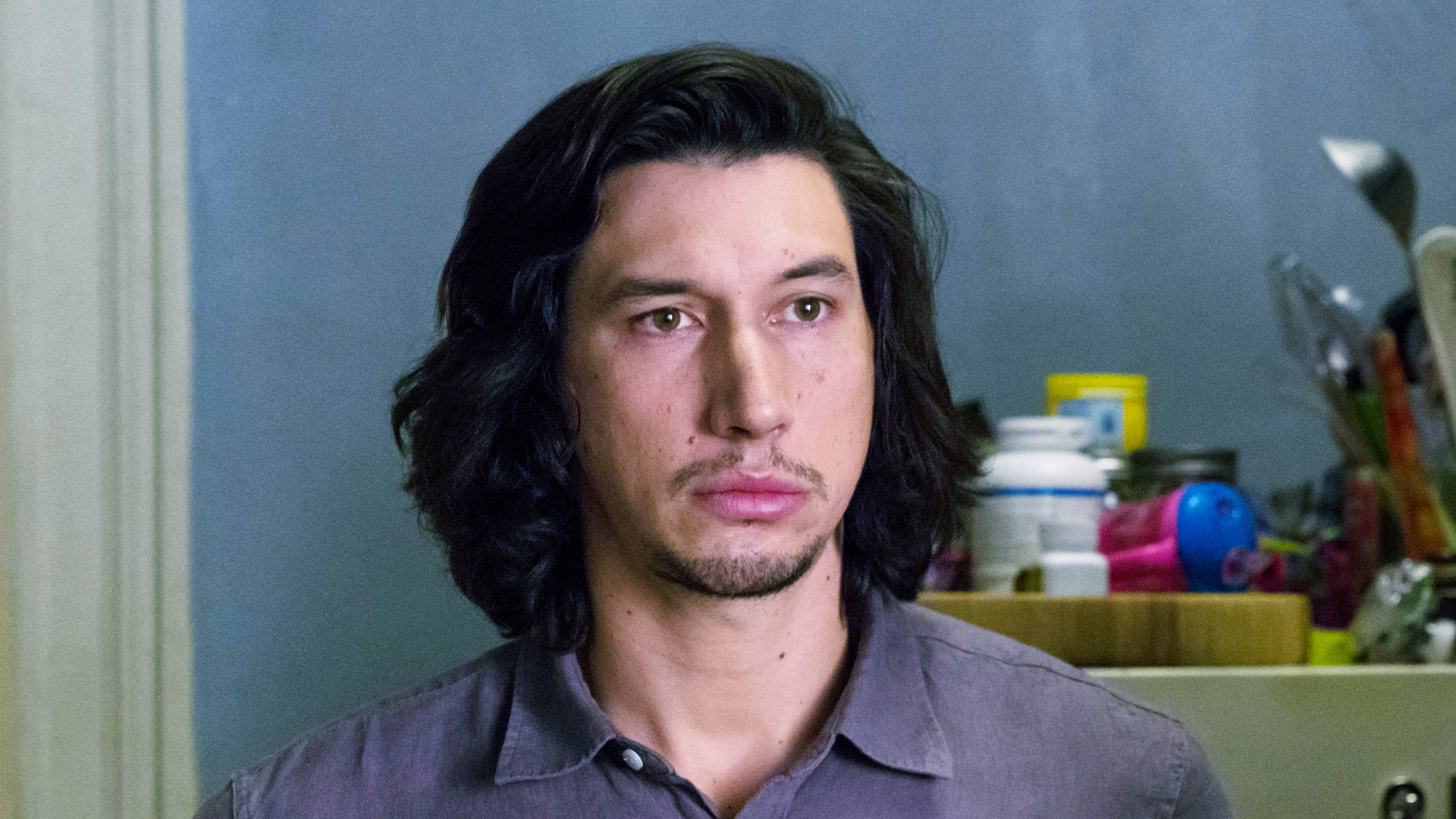
If you’ve never bothered with it, fair enough, I would implore you to check out the bottle-neck episodes for a riveting taste of just how good the show can be, One Man’s Trash, Flo (S3 E09), The Panic in Central Park (S5 E06), American Bitch (S6 E03). Girls showed women in all their complexities, fallibility, humiliations and vulnerabilities. It was dark, cynical and sometimes depressing; not always a comforting watch but funny – I don’t think it’s given enough credit for its humour. Or for its ability to write men. Specifically Adam Sackler. To listen to Dunham, their show was a collaborative effort, replete with improvising so who knows the *true* author of Adam, regardless he remains amazingly written; the epitome of the sensitive, complicated, masculine male. A man in AA; his sobriety sometimes a battle. His dark, sexual, almost deviant behaviour and the temper… oh the temper. That which exploded usually to save him exposing his vulnerability. He was deep, complex and – just like the rest of the show’s characters – grew, evolved, shifted. It was a joy to watch, Adam Driver is a joy to watch. He (Sackler) was, is, for all intents and purposes, Dunham’s finest creation.

So, how to end it all? (Finale review over at TDF: Latching) 

I will miss Hannah and the gang immensely (even Marnie). The girls may have been maddening and mortifying but we loved them; through their imperfections it allowed us to disengage from reality for a bit and embrace our own flaws.

Adulting can be hard. Womaning is harder.

Categories
Blu-ray film review

Carmen Jones (Dir. Otto Preminger, 1954)

Carmen

Shot in glorious technicolor and Cinemascope, Otto Preminger’s Carmen Jones is a treat for the senses. From the opening credits and the strains of Bizet’s opera, vivid colour floods the screen in this lovely restoration from the BFI.

images-3

Using Bizet’s 19th century-set opera is transposed to a Southern military base at the end of the second world war, starring an all-black cast performing an Oscar Hammerstein book and lyrics. In terms of musicality it never quite works, I mean, who dubs Harry Belafonte? However, Carmen Jones is an incredibly important film, and one that should be heralded as monumental.

images-4

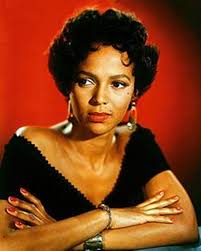
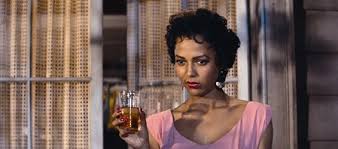
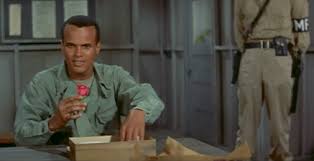
Carmen (played beautifully by Dorothy Dandridge) is a troublemaker. She exudes a tomboyish quality; a playful femininity which sees her climbing, running in heels, happy for rough and tumble, and an inner strength which belies her slight frame. Her arrest places her in a car with strait-laced G.I. Joe (Belafonte). He is charged with driving her to jail. Needless to say, Carmen tried to escape and after wrestling Joe to the ground, he finds himself in her childhood home, being cooked for, seduced away form his girl Cindy Lou (Olga James), and then imprisoned himself for allowing the duplicitous Ms. Jones to flee. 

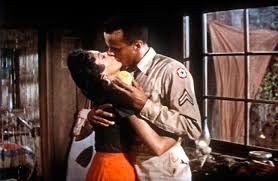
Sultry Carmen is hedonistic, carnal and revels in her freedom whether sexual or geographical – she makes it abundantly clear – she will never relinquish it. She is the epitome of the transgressive woman, and just like those women of cinema (and in keeping with the opera’s tragic heroine), she is irrevocably punished for her transgressions. Interestingly, examining the notion of freedom, conformity, acceptability and erotic desire of Carmen is worth questioning; is she is defeated or merely defiant? Her active sexuality does not appear over-sexualised but feels liberated and yet it is the scenes in which Belafonte is shirtless that feel fetishised. As Carmen’s freedom is threatened, her frequent calling of Joe “boy” loses its affection and becomes derisive.

imgres-1

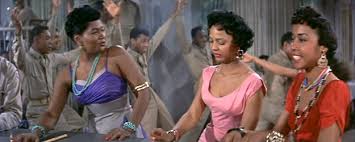
Love, jealousy and tragedy are abound in this opulent and liberal affair, people of colour fill every frame, Dandridge and Belafonte are supported by Pearl Bailey, Joe Adams, Diahann Carroll and Brock Peters to name but a few.  They have agency, and are (mostly) free from stereotype. With songs entitled “Dat’s Love”, “Dis Flower” and “He’s Got His Self Another Woman”, written to Bizet’s musical score, and every effort to present a black community (albeit thought through the lens of an émigré man), it seems incredibly odd to disjoint the narrative and risk alienating the viewer by having these songs dubbed with the operatic vocal talents of Marilyn Horne and LeVern Hutcherson. I can’t help but feel these songs would be more memorable, more gut-punchingly real if sung by the souls that play each character; the opera dub upsets the rhythm of the film.

imgres-2

Carmen Jones is wonderful but deserves to be seen on a huge screen, it loses a sense of this grandeur as a home release yet, regardless, is a gift; even an imperfect one. Its complexities certainly make for an interesting watch and one to unpick. Preminger’s use of space and incisive camerawork means there is a lot of visual charm but it feels muddled, a historical achievement for 1954, absolutely but missing something musically. The imposition of Horne’s vocals disjoints and the differences in pitch, tone and timbre seem, at times, farcical. It did, however, make an icon and Oscar-winner of Dandridge and rightly so, she is incredible in the role, and why CJ should always be hailed as “culturally, historically [and] aesthetically significant.”[1] 

Carmen Jones is available now on Blu-ray and screened as a part of the BFI’s Black Star season which ran from 17 October – 31 December 2016.

[1] In 1992, Carmen Jones was selected for preservation in the United States National Film Registry by the Library of Congress who described it as above.

Categories
film review

La La Land (Dir. Damien Chazelle, 2016)

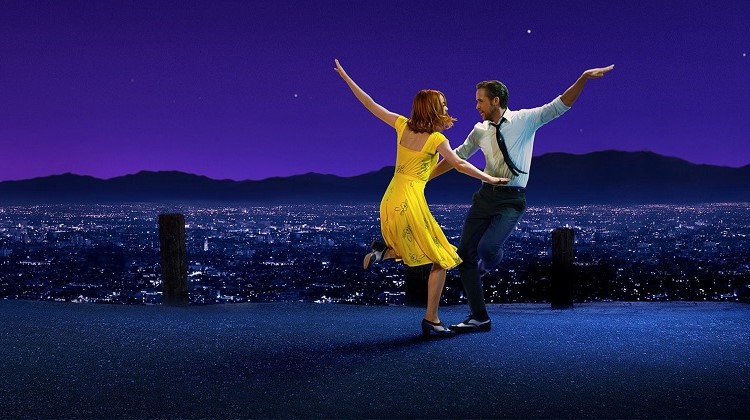
Damien Chazelle’s 2014 feature debut, Whiplash, think Full Metal Jacket within a musical conservatory, featured an obsessive jazz drummer and his pushy teacher. In his follow-up, La La Land, music is once again key as pianist Sebastian (Ryan Gosling) attempts to earnestly preserve traditional jazz in downtown L.A. Across town – and yet destined to bump into each other at every possible turn – is barista and wannabe actress Mia (Emma Stone).

La La Land’s DNA is laced with nostalgia, a yearning for the past while attempting to carve out a future. There are nods to Singin’ in the RainAn American in ParisThe Umbrellas of CherbourgRebel Without a Cause, and even Mary Poppins dotted amongst the score and original songs penned by Justin Hurwitz, Benj Pasek, Justin Paul, and Chazelle. The main theme and ensemble songs stand out, in particular the opening number. Another Day In The Sun is glorious, it alleviates a traffic jam on a stiflingly hot day, like the Everybody Hurts video only on prozac, and possibly breakfast alcohol. It pops with colour like an overlong GAP® commercial (not a criticism) and is a joy to behold. Sadly, the rest of the film doesn’t live up to that first five minutes. There are moments sure but it’s all rather sedate from then on, in spite of a couple of catchy riffs and melodies. The catchiest on the soundtrack i.e. the one I’m currently playing on repeat is John Legend’s Start A Fire.

Legend plays Keith, Sebastian’s one-time musical collaborator, they fell out over how they believed Jazz should be played. I’m with Keith – and his fabulous track – it needs to evolve. “You’re so obsessed with Kenny Clarke and Thelonious Monk—these guys were revolutionaries. How are you going to be a revolutionary if you’re such a traditionalist? You’re holding onto the past, but jazz is about the future.” Given a dubious script, it almost makes complete sense to learn that musician Legend ad-libbed this whole monologue. Similarly, Chazelle’s take on the Hollywood musical is just that too – traditional, safe; lacking in breadth or depth. It reminded me a bit of Gondry’s Mood Indigo in that respect.

Gosling makes for an accomplished jazz pianist, he’s not the greatest singer in the world and is no Gene Kelly but the dance numbers are lovely, reminiscent of those Cinemascope musicals of days gone by, only not as accomplished. You know how those sequences between Reynolds, O’Connor, Kelly et al were clearly rehearsed but yet still somehow felt spontaneous? There’s none of that here, everything is staged to within an inch of its life and it suffers for it. Especially the acting. In fact, I left the cinema wishing for more choreography (however contrived) as the acting fell so flat. Never have I seen Gosling and Stone quite so bland, I was expecting at least a little of the chemistry so evident in Crazy, Stupid, Love.

Kudos and fist-bumps to Stone though who does a tremendous amount, albeit tepidly, with a flimsy character. Mia has very little to say. Chazelle tends to rely on close-ups of facial expressions. It’s a delightful visage but for a two-hander, it starts to infuriate somewhat. Only near the end do we actually get to hear Stone belt out some lyrics to The Fools Who Dream, I understand the character’s earlier hesitation but a little passion in previous songs would not have gone amiss.

Visually, the film is beautiful. Mary Zophres’ costumes are stunning and the use of colour sublime, although some of the interior lighting choices are interesting. I did find it particularly fascinating that Mia and Sebastian’s sister Laura (a criminally underused Rosemarie DeWitt) are introduced in identical colours – and appreciated that by the end, when real life has taken over, with dreams fulfilled or not etc., these primary colours are muted and have almost disappeared. That’s one reason why I’d have to respectfully disagree with those who are pegging this film as one for “dreamers”, I think it’s one for realists, however battle-scarred they may be.

Understandably, audiences go doolally for Hollywood glitz and glamour, frequently gaga for Gosling and/or suckers for Stone. Hell, some even have a thing for musicals (I love them ordinarily). This, for all its visual aesthetics and occasional toe-tapping ditties, didn’t quite work for me…

Not my tempo.

Categories
Article film review

Ghostbusters (Dir. Paul Feig, 2016)

File_005

*minor spoilers

For my 4th birthday, I received – amongst many gifts – a beautiful Ghostbusterscake. It was huge, had red-frosting and the logo emblazoned across the front. My cousin, born six years before and ten days later got the same cake (only his icing was blue). Lol [his name not laughter] was responsible for my introduction to Ghostbusters and Star Wars, actually, if truth be told. At no point did he exclude me because I was younger or because I was a girl, and let’s face it, a four-year-old will test any ten-year-old’s patience regardless of gender.

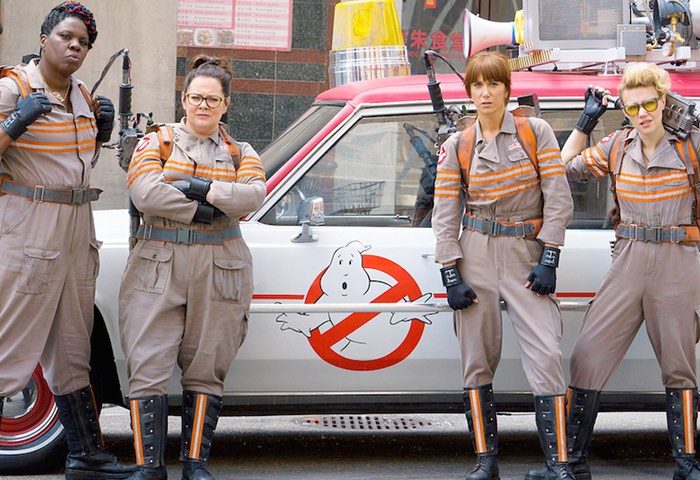
I remember having the crap scared out of me watching the film on TV then suffering sleepless nights, that bloody ghost in the library. Six years later I had a David [brother] to pass the love of ghosts and busting onto; films  cartoons, and toys, oh-so-many-toys. Spengler (Harold Ramis), Stantz (Dan Aykroyd), Zeddemore (Ernie Hudson)  and smart-ass Venkman (Bill Murray) held a special place in my (and his) childish heart. Now, Yates (Melissa McCarthy), Gilbert (Kristen Wiig), Holtzmann (Kate McKinnon) and Tolan (Leslie Jones) will provide joy for a whole new generation. Seriously, why is that so terrible?

File_001

The expected happened. I grew up, the little girl repressed somewhat but still knocking around, and rewatching Ghostbusters (1984) as an adult is a whole different experience. Now you can laugh at the adult humour that sailed over your cherubic head, cringe at the effects which at times are pretty awful and the best part? Crawl under a duvet, hungover, and passively let each scene douse you in nostalgia like an ectoplasmic gloop. A sequel arrived in 1989 – largely disliked now – who knew? It was fine. I regularly rewatch.

File_002

The reboot was announced. Urgh! Originality is a concept lost on most Hollywood studios. This one was to be directed by Paul Feig. For the record, he seems like a very nice man, always impeccably dressed, and there’s no denying how he has boosted women-led films, but he directed Bridesmaids (deplore), The Heat (lukewarm) and Spy (I adored that one). Was it really a surprise that this Ghostbusters, his vision, would be all-woman? I was intrigued sure, can’t say I was overly fussed either way. The casting of Hemsworth piqued my interest, not least because he would be the male Janine (Annie Potts) – bravo!

Time passed as the darker pockets of the internet cried, screamed and generally threw a strop. Misogyny is never pretty and even that four-year-old girl (now a 35-year-old woman) was verbally abused for daring to say she liked the trailer. These men seemed to have forgotten their own mothers, sisters, grandmothers and aunts as they rendered women ill-equipped to play *fictional* paranormal scientists; their childhoods (long gone) destroyed forever. *Pause for dramatic effect*

File_004

The world lost a vital 1/4 of the original line-up in 2014, with the sudden passing of Harold Ramis. A Ghostbusters III without him would have been senseless. While unable to cameo in the new film, one of his sons makes an appearance and that gorgeous gold bust seen from Gilbert’s desk is a beautiful touch and definitely brought a lump to my throat. Okay, progression. Four more humans don the overalls, get slimed and save New York from paranormal activity, not such a far-fetched notion. Oh, and they have lady-parts…So, what’s it all about?

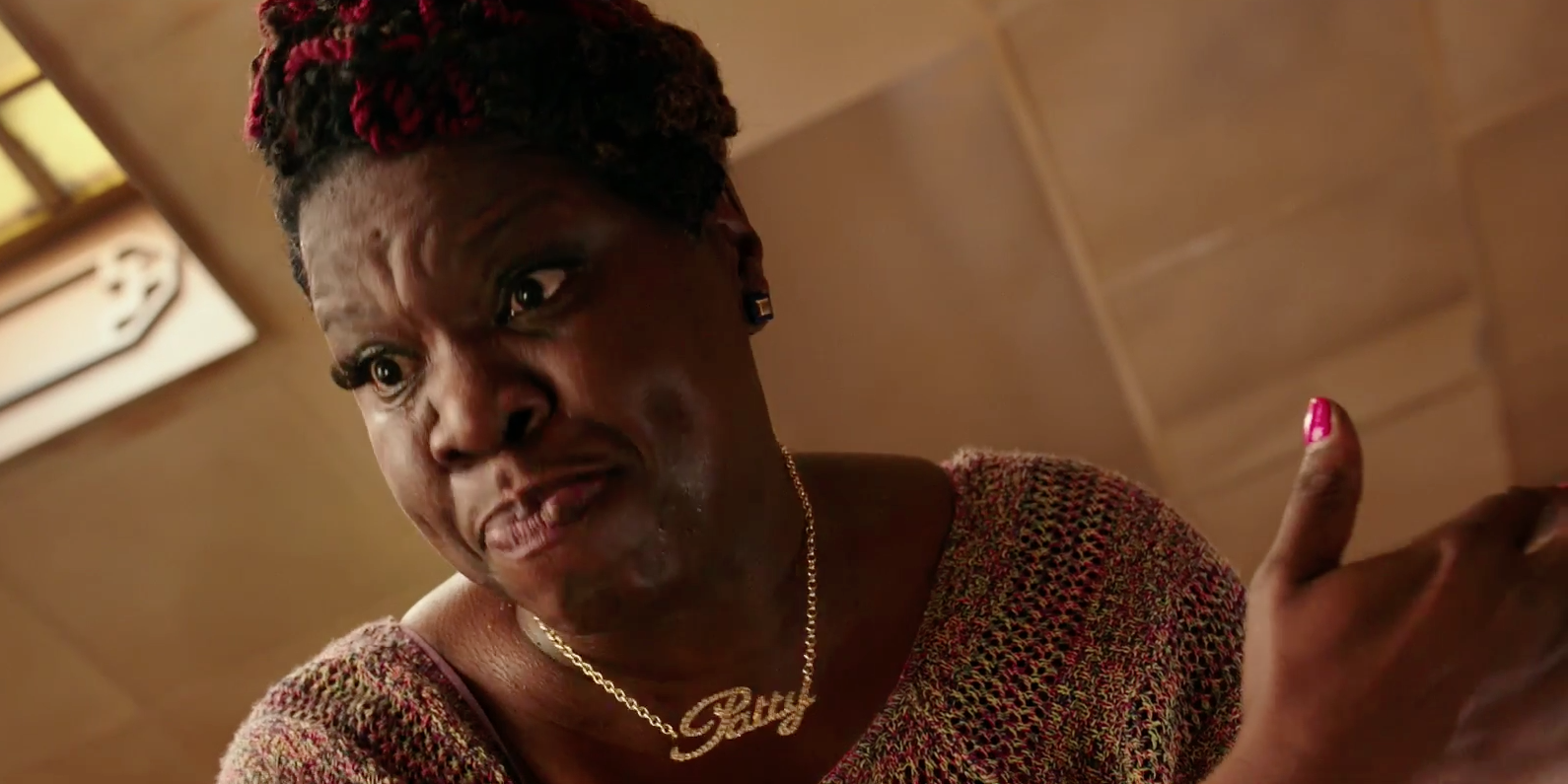
Following a very effective opening whereby Gertrude Aldridge’s ghost (Bess Rous) is terrorising her childhood home, physicist Erin Gilbert (Wiig) – up for tenure at the prestigious Columbia University – is approached by Ed Mulgrave (Ed Begley Jr). Clutching Gilbert’s co-authored book, a hardbacked thesis written by Dr. Gilbert and her ex-colleague/ estranged friend Abby Yates (McCarthy), he begs for her help. Unaware of the book’s existence, Erin visits Abby and her new colleague, engineer Jillian Holtzmann (McKinnon) in a lab strewn with gadgets – think Egon’s place, only messier.With the help of human A-Z and New York history buff, Patty Tolan (Jones) and inept-but-we-gave-him-the-job-because-he-was-the-only-applicant receptionist, Kevin (Chris Hemsworth), the Ghostbusters (it’s easier for Kev to pronounce than the actual name, you see) are born; to capture paranormal entities and prove their existence to the world while a city of naysayers including the Mayor (Andy Garcia) attempt to discredit them.

New-Ghostbusters-Movie-2016-International-Trailer-Released

Doesn’t sound so drastically different from the previous incarnation and you would be right in thinking the original has served as a blueprint much like The Force Awakens‘ (2015) similarities to A New Hope (1977). Each acknowledges what has gone before but stands alone in its own, inclusive, right. There are enough nods to the past for the girl with the cake to recollect fondly and yet enough meta commentary and gags for the adult to snigger at and mentally high-five all involved.

ghostbusters-2016-movie-trailer-750x400
Girls 2016

It’s not “man-hating” which is how I saw it described this morning. The antagonist, Rowan North (played another SNL alum Neil Casey) is white, male, and a little fragile but so are most Bond villains, and after the scourge of hate heaped upon this film, why wouldn’t the filmmakers and writers respond not least in an entertaining way? And it is, you know, extremely so, and I’m sorry but a blast from a ray gun aimed at a marshmallowy nutsack is amusing. It has been a long time since a big studio offered a blockbuster that is as enjoyable and, more importantly, FUN as this one.

ghostbusters-gozer-roof
Boys 1984

The cameos (there are a fair few and perhaps one or two could have been saved for the inevitable sequel) but they would not have worked so well had those actors been playing the characters they made famous yonks ago. Thankfully, they’re a breath of fresh air and each one more joyful than the last. Hemsworth is perfect as pretty but dumb Kevin, his Norse God alter-ego is a saviour, however, it’s refreshing that four ladies get to rescue him, and I don’t necessarily mean just from peril – they become a family. The women themselves are hilarious, smart, loud, brash, uptight, and gloriously realistic albeit plonked in a disbelief suspended setting.  Abby and Erin are the heart of the narrative, it’s their friendship which drives the plot while Jillian and Patty are the funny. I’m unfamiliar with their Saturday Night Live work but Jones is hysterical and McKinnon, a revelation. It’s not perfect, nor was I expecting to be, it’s a Ghostbusters film and I don’t mean that in a derisive way – as long as there are creepy ghosts, gloop, busting of said see-through creeps and humour, I’m easily pleased.

It does exactly what it set out to do, which is bring the Ghostbusters into the 21st century, passing the proton pack to a whole new generation. That’s the beauty of it, there is no either/or, everyone will have a preference, sure but neither undermines the other – there are now eight Ghostbusters to identify with and choose as your favourite – I just had faceache and a warm, fuzzy feeling throughout watching this one. I’m still chuckling days later. If only that four year old girl could have seen it…