Categories
film review

I Am Not a Witch (Dir. Rungano Nyoni, 2017)

Dramatic strains of Vivaldi strings play over the mini-bus crawling along as a tour guide announces to his passengers that they have arrived at their destination. Out everyone pours around the van to view whatever it is they have clearly paid to see, “so exciting, once you see the witches.” The what now? The camera captures what can only be described as a human zoo; behind metal barriers sits a group a women, dressed in blue, partially painted in white, their clownish make-up made more apparent as they howl and pull faces for the benefit of their visitors.
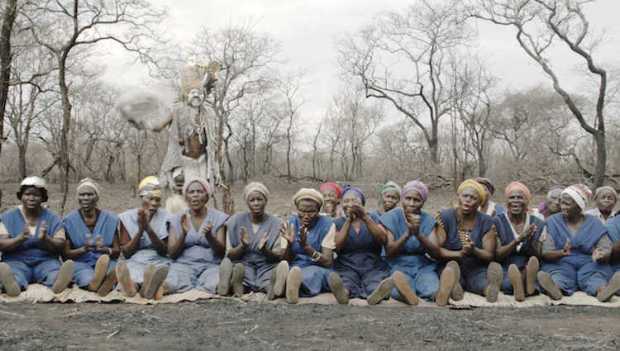
Shula (Maggie Mulubwa) – though she has no name until much later on – is an orphan who’s accused of witchcraft. Evidence is patchy at best, she has the ability to ‘curse’ water, make people trip and fall, and hack off a man’s arm (it miraculously grew back). The fact that she refuses to confirm or deny the charge means she is “cunning and deceiving” and before she knows it, she’s shipped off to government worker Mr. Banda (Henry B. J. Phiri) who oversees the small witch camp as seen as the start of the film.

After consulting a witch doctor who “proves” witchcraft, the little girl is fitted with a spindle and spool of white ribbon, the length of which varies from woman to woman, all to “prevent them flying away”. Shula is then offered the choice of either accepting her label and joining the women or cutting the ribbon and being transformed into a goat. It’s not difficult to realise which she will choose, she’s eight.

While the rest of the colony work tending the fields and hoping for rain, Shula is “witchified” and dressed in a frilly sack, twigs and leaves in her hair, white make-up adorns her face as she taken from village to village condemning thieves i.e. choosing the one she thinks is guilty. It’s ridiculous. The rewards she earns she shares amongst the women and that’s what is so bittersweet, there’s genuine camaraderie and affection between them and Shula now has a family, full of grandmothers – as all of these women are considerably older – sorrow, time and circumstance etched into their lived-in faces.

What strikes most about Rungano Nyoni’s first feature is how strong and self-assured it is. I Am Not a Witch is completely unique and striking in its gendered social critique and satirical rendering of persecuting patriarchal control. Thankfully, the comedy does not overwhelm but punctuates perfectly. The central performance which is mostly a silent one, by Maggie Mulubwa is rendered beautifully, her largely impassive and gorgeous face is often shot in close-up and the slightest expression is subtly mesmerising. The use of colour, which tends to be the odd swatch whether white, blue, red, purple, or the bright orange of the transporting truck is set against the dusty greys, and dirty sepia tones of the earth superbly. The impossible point-of-view shots, long languid takes, and narrative ellipses provide a visual erudition and subtle sophistication to the magical realism and that final shot is absolutely breathtaking.

I Am Not a Witch is a stunning debut, an amusing if poignant fable critiquing a very real social problem and making the Zambian-born Nyoni a filmmaker to watch out for in the future.

Categories
film review

Men and Chicken (Dir. Anders Thomas Jensen, 2015)

Although renowned for the nordic noir insurgence of recent years – it is fair to say that – not only are the Danes prolific filmmakers and masters of tension but they appear to have a dark, very specific sense of humour and especially in the case of writer/director Anders Thomas Jensen.

Jensen has, over the last sixteen years or so, created a wonderfully weird little world with Flickering Lights (2000), The Green Butchers (2003) and, Adam’s Apples (2010). Men & Chicken fits perfectly into this twisted little village of well, not to put too finer point on it, weirdos. These are incredibly simple stories told at the periphery of the societal norm and are deliciously transgressive with the filmmaker gathering a supreme ensemble fronted by Mads Mikkelsen, Nikolaj Lie Kaas, and Nicolas Bro who feature in all four features. These fine actors, usually known for their dramatic roles clearly relish the opportunity to play, and play they do.

The film opens fairy tale-like with two small boys walking hand-in-hand down a brightly lit corridor, Frans Bak and Jeppe Kaas’ score is wonderfully dreamlike, melodic ominous strings give way to piano and woodwind. The voice-over narration illicits a sense of whimsy which is almost immediately undermined as Gabriel (David Dencik) visits his dying father. His brother Elias (Mikkelsen) is at a therapy session/date at which he reveals aspects of his rapey subconscious, he’s overbearing, has possible incestuous leanings and, what we will soon discover, a chronic masturbatory “issue”. Physically, the only indication that the two are brothers is a harelip, although, only a scar in Gabriel’s case, and once their father passes they discover a VHS taped confessional which serves to reveal the truth behind their real parentage.

Somewhat reluctantly, they set off on a road-trip in the hope of meeting their real paterfamilias Dr. Evelio Thanatos, a Danish/Italian medical researcher whose fancy-sounding name literally translates into “he who gives life” and “death instinct” (stopping along the way for Elias to relieve himself). Their journey takes them to the Island of Ork – population 38 – where they find more brothers living in a crumbling sanatorium amid peeling paint. Francis (Søren Malling), Joseph (Bro) and Gregor (Lie Kaas) share their home with a variety of animals, have an indoor badminton court, and a room full of cheese, they all possess the distinctive harelip, beak-like noses, and unfortunate hair/facial tics and like Elias, large prominent teeth. One doesn’t need to imagine too hard the smells permeating from the dilapidation and general uncleanliness, especially amid the palette of nude, taupe, brown and orange, or eggshell-manure chic if you will.

Understandably, Men & Chicken won’t be to everybody’s taste. It is The League of Gentlemen by way of The Three Stooges, a slapstick social satire combining hilarious horror with pitch black humour, and while there is something quite grotesque and melancholic about the whole thing, it’s actually fairly moving as the notion of what constitutes as family is questioned and civilisation, religion, philosophy and social etiquette is introduced to the three hovel-dwelling brothers.

By the time the family’s full parental history is revealed, the pay-off is well worth the wait. Ridiculous yes, but a testament to the acting prowess and writing to deliver something so ludicrous. Yet, it is bizarrely emotive, not one family fits all and for the Thanatos boys, it comes in many (many) forms surrounded by lots of poultry and cheese.

Categories
film review

The Piano (Dir. Jane Campion, 1993)

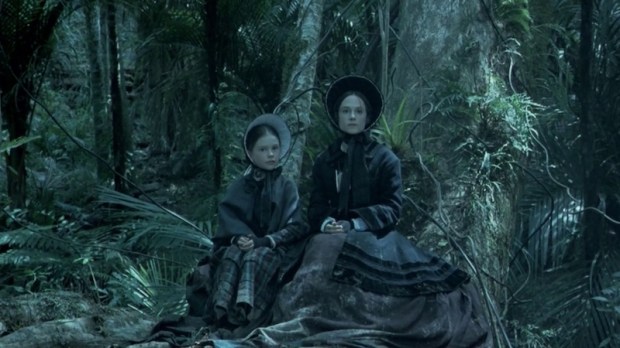
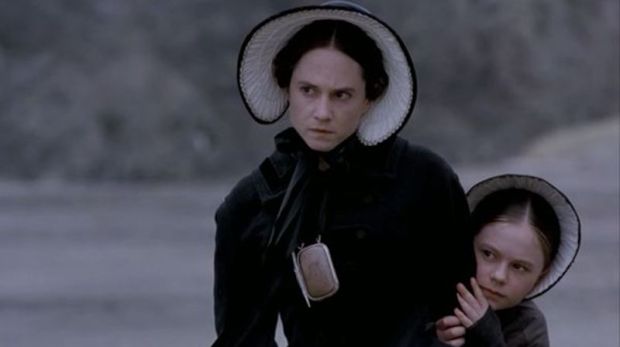
Ada McGrath (Holly Hunter) is sold into marriage by her father and sails from Scotland, across rough waters to New Zealand where she and her young daughter Flora (Anna Paquin) are to begin a new life in the home of new husband (and father), and emotionally frigid landowner, Alisdair Stewart (Sam Neill). Ada is mute and relies upon sign language, a small notebook contained in a locket around her neck and, above all else, her piano and music to speak for her. Alisdair, not only, dismisses the importance of the instrument to his new wife but gives it away to employee George Baines (Harvey Keitel) who, upon hearing Ada play, agrees to sell it back to her one key at a time.

Writer-Director Campion, a filmmaker with a propensity for engaging feminist interest through a female protagonist, desire and gaze does not disappoint with Ada. While some may misinterpret her as a product of the oppressive, Victorian society she inhabits, objectified from the start, sold into marriage and left on a beach much like her piano; her silence often mistaken for obedience. One could argue that in actuality Ada exists on the fringes of society; her self-assured identity and sheer wilfulness make her one of the most fascinating characters of Campion’s creation. Her austere costume (designed and created by Janet Patterson) functions for and against her femininity. These items often restrict her movements yet at other times rescue her from unwanted exposure, pawing male hands or indeed provide a place of shelter; a hoop underskirt is utilised as a makeshift tent in the opening sequences. The bonnet is a symbol of submissiveness but tends to be discarded more often than not.

Power struggle appears to be the main theme of the film displayed through sexual politics, patriarchy and colonialism. Alisdair is the white settler whose link to the Māori people is Baines, a coloniser who has adapted the ways of the native (he still has tartan items displayed about his home pertaining to his Scottish roots) but has attempted to assimilate into NZ culture with his clothing, wild hair and tā moko which adorn his nose. These markings add a sexual aggressiveness to his ‘othered’ facade; however, his whiteness and lack of education makes him belligerent, specifically in relation to the (ideologically homogenised) Māori people he has chosen to live amongst. He, too, never quite belongs.

Neill and Keitel give outstanding performances (in a cast full of NZ film stalwarts) as the uptight Stewart and outsider Baines, men who conform and subvert type/expectation as much as the women in the diegesis. It is, however, Holly Hunter’s film. The piano and Ada are inextricably linked. The instrument represents her voice, sexuality, passion, mood and freedom; a tool that can be – and is – used against her. Hunter, an accomplished pianist played all musical pieces and, allegedly, insisted upon communicating through sign language on and off set as the film was made. In fact save for Ada and her ‘mind’s voice’ at the film’s commencement and end, one forgets Hunter can really talk at all.

While The Piano can be described as a Gothic melodrama, at its narrative heart it depicts a mother-daughter relationship, offers up ideas of the absent father and draws parallels not only with the play within it: Perrault’s Bluebeard but also Du Maurier’s Rebecca in its portrayal of a woman who leaves home and enters a new world dominated by a male figure. It deals with concepts of freedom, affronting destiny, definition of the self, re-birth and the sexual-political appropriation of ambiguities, while showcasing the talent of Campion and her cinematographer Stuart Dryburgh. They insist upon giving the audience a distinctive, sexually provocative spectacle; a sumptuous production which depicts the unease provided by the New Zealand landscape with authenticity and, even occasional, mirth.

Given its timelessness, Michael Nyman’s magnificently evocative score and the seductive panoramic allure of a Gothic New Zealand, it’s hard to believe The Piano is 25 already. It remains extraordinary, a gorgeous and enigmatic masterpiece which only gets better with age, except in its depiction of its Māori people.

Categories
Blu-ray film review

Peppermint Soda (Dir. Diane Kurys, 1977)

Growing up is never easy and when you’re a girl on the cusp of womanhood, it can be worse (trust me). You fight the naïvety, loneliness and quiet rebellion of adolescence, face the ups and downs of school and try to balance a tumultuous home-life having never really gotten over your parents’ divorce – as is the premise of Peppermint Soda. Everyday battles include struggling to have a relationship with an overwrought mother who, not only, has a radically different one with your sister but seems to have little room for you outside of her new boyfriend and recent Psoriasis diagnosis.

It’s about a year (1963) of stolen kisses, summers on the beaches of Normandy and winter skiing trips, the loss of innocence, first love, as that awkward boy pays attention, and you finally get your first period. Music punctuates your daily life. Being curious and suspicious of sex is a given and rebelling in any small nylon way you can, desperately vying for the attention and affection of said older sister who must see how fragile you are; how angry and frustrated you are by everything, your altogether sullen nature when not bursting into tears but then, she has her own issues to deal with…

Peppermint Soda [Diabolo menthe] is arguably the first of its kind – a female-helmed and led film which deals explicitly with girls and growing pains, sisterhood, and its unbreakable bond. There have been many male-led dramas, not least The 400 Blows (1959), to which this film owes its final shot yet films such as this and À ma soeur [Fat Girl] (2001), Tomboy (2011), The Wonders (2015), Mustang (2015 and Divines (2016) are particularly important because they are framed and written by women and depict how girls see themselves, and not only validate their existence in a largely non-sexualised way but tend to encapsulate beautiful storytelling within a very small window of adolescence and puberty.

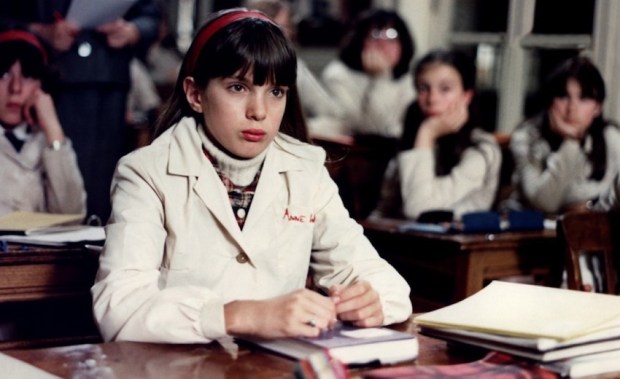
Based upon director Diane Kurys’ own youth, this delightful film largely takes place within the classrooms and corridors of the Lycée Jules-Ferry. The teachers at which are sarcastic, cruel, sadistic and mean-spirited or a laughing stock held together by frayed nerves. The whole place has a surreal edge to it, and its characters. Keep an eye out for Mme. Clou (Dora Doll) the gym teacher who dresses in an Adidas tracksuit, neck towel, full face of make-up, fur coat and hair turban.

For all of its lighter moments, there are heartbreaking ones – played out against elements of the political climate in 60s France – few of which are resolved. Peppermint Soda is light on plot and is edited together like several vignettes, and while Anne (Eléonore Klarwein) is very much the main character, there are moments which veer into Frédérique’s (Odile Michel) subjectivity and it’s seamless. Both sisters exhibit a maturity which can dissolve, more noticeably by the former, into a petulant childishness which strikes a chord, we’ve all been there, and it’s what makes this story so universal and timeless. The siblings are together and yet totally separate as they advance into adulthood and realise that it’s not all it’s cracked up to be. Friendships are forged, broken and lost in an instant.

Frank, funny and painfully realistic, Peppermint Soda is deftly directed, charmingly written, and a triumphant portrayal of the edge of adolescence, and who doesn’t love to be reminded of that time. Merde!

Categories
film review

Boy (Dir. Taika Waititi, 2015)

The year is 1984, and 11-year-old Boy (James Rolleston) welcomes us into his “interesting world” as he stands before his classmates and recounts who he is, what he likes (Michael Jackson), and who he shares his life with. There’s Nan (Mavis Paenga), cousins Miria, Kiko, Che, Hucks and Kelly, Aunty Gracey (Rachel House) who’s a tennis coach, the “mailman”, school bus driver and manager of the local shop; a pet goat named Leaf and a six-year-old brother Rocky (Te Aho Eketone-Whitu). Rocky thinks he has superpowers. Bless him, he doesn’t.

Boy’s interests include art (cue desk graffiti), social studies (getting picked on by older boys) and Michael Jackson. His other idol is his father, Alamein (Taika Waititi), a master carver, deep sea treasure diver, captain of the rugby team and holder of the record for punching people out with a single fist. The reality couldn’t be further from the truth but in Boy’s world, reality isn’t really the mainstay, he is a kid after all.

After Nan leaves to attend a funeral, he’s the man of the house and so he ensures all the younger children wash, eat and generally thrive, until Alamein Sr returns to Waihau Bay, fresh out of prison, seeking a “treasure” he buried in the field opposite the house. It gives him the perfect opportunity to reconnect with his estranged sons as long as they stop calling him Dad… it’s “weird”. Boy, initially thrilled by his father’s return, soon comes to the painful realisation that his father isn’t the hero he imagined. In complete contrast, Rocky’s reluctance to accept the man he has never known comes full circle and his doubt and suspicion turns to respect. The moment all three boys reach the point of transformation is a deeply moving and beautiful thing, and harks back to that opening quote perfectly – “You could be happy here… we could grow up together” (E.T., 1982). 

Boy is a thematically rich film and one which comments upon rurality, poverty, childhood, adulthood and grief while using magical realism, animation, mythology and a free-spirited style which also incorporates intertextuality and 80s popular culture to bring Waititi’s approach to identity and masculinity to the screen. That very specific form and unique Aotearoa voice has been so prevalent since those couple of Taika-written and directed episodes of Flight of the Conchords.

While including visuals of the sublime landscape, hostile terrain and open roads that have long been associated with New Zealand cinema, Waititi also gives us a Māori film rich in culture and beautiful hues of colour via a nostalgic trip to the eighties. The absentee father within a Māori family is just one of the thematic links Boy has to Once Were Warriors (1994) and Whale Rider (2002), however, here the comedy and pathos, drama and fantasy is – as one has come to expect following Eagle vs. Shark (2007), What We Do in the Shadows (2014) and Hunt for the Wilderpeople (2016) – charmingly measured.

Rolleston is wonderful in the titular role, however, one can’t help but fall in love with the largely mute and thoughtful, cape-wearing Rocky as both boys shine in this endearing and magical coming-of-age drama. Waititi is equally adorable as the misunderstood big boy of the trio, Alamein, a man who has yet to truly face his responsibilities or fully embrace adulthood but whose little men will help him pull his socks up. Boy is a big-hearted film – possibly even Waititi’s finest – poignant, funny, an effortless joy. Oh, and that Haka hybrid is genius.