Categories
film review

Jigsaw (Dir. Michael and Peter Spierig, 2017)

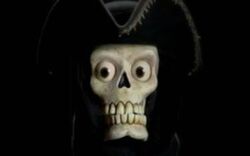
Remember the first time John Kramer (Tobin Bell) uttered those menacing words “I want to play a game”? It was ten years ago before he succumbed to brain cancer in Saw IV. Not that death stopped him, mind you, he merely continued to torment from beyond the grave and yes, you’ve guessed it, he came back for yet another film outing.

Jigsaw wastes no time throwing us right into the action of a high speed car chase with lots of heavy breathing as cops pursue on foot. The Game has already started unbeknownst to Detective Halloran (Callum Keith Rennie) and his partner Detective Keith Hunt (Clé Bennett). Following the discovery of a decapitated corpse hanging from a foot bridge, and after the autopsy provides a USB drive, and a DNA link to the long-dead Jigsaw Killer, Halloran and Hunt join forces with ME, Logan Nelson (Matt Passmore, think an Aussie Thomas Jane) and his assistant Eleanor Bonneville (Hannah Emily Anderson). All are determined to get to the bottom of the case before more bodies pile up.

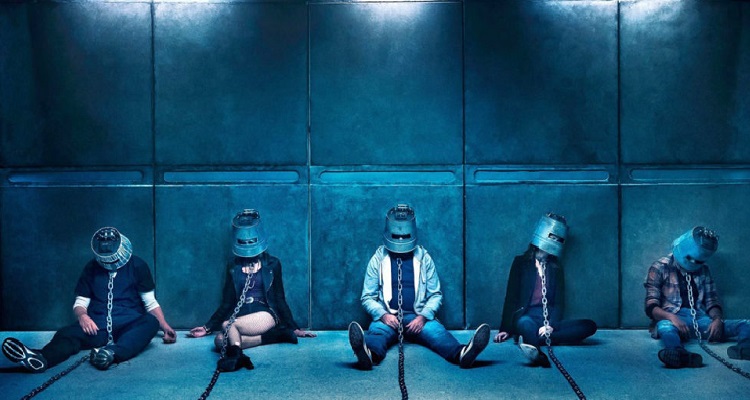
Meanwhile, five – who quickly become four – unsuspecting (although, as time will tell, not wholly innocent) strangers: Anna (Laura Vandervoort), Mitch (Mandela Van Peebles), Ryan (Paul Braunstein) and Carly (Brittany Allan) come-to in a room, each attached – by heavy chains around their necks – to the wall in front of them. A voice declares that “the truth will set [them] free”, mentions the denial of culpability…blood sacrifice… well, most will get the gist by now. However, this time, this lot actually listen to instruction and agree to work together in order to survive and come out of the game relatively unscathed.

Taking the reigns of the eight instalment are the Spierig Brothers. The German-born Australian identical twins, Michael and Peter, are no strangers to darker sci-fi/horror genre pieces at their filmography can attest: 2009’s Daybreakers, Predestination (2014) and, most recently the Jason Clarke and Helen Mirren-starrer Winchester. They certainly make Jigsaw (or Saw VIII if you will) their own which is no easy feat given the notoriety of the already established series.

Bringing their regular DoP Ben Nott along for the ride makes a huge difference to the visual look of the film; scenes are brighter with some scenes even taking place outside. The narrative is simplified, more logical and feels more like a police procedural thriller, there’s far less gore and “torture porn” than one has come to expect from these films and it’s all the better for it – that said the film does provide some excellent prosthetics and Special FX. It’s stylishly done, largely unpredictable and definitely plays more with the idea of sin and confession than previous films with Kramer painted as a God – to listen to producers in some of the extras, Tobin Bell is one – he has been resurrected more times than Lazarus and here to cleanse the soul.

Any fan of these films need not worry, while there are refreshing flourishes, this has more in common with the very first (and vastly superior) chapter and while it does manage to stand alone in its own right, make no mistake, it’s a Saw movie. Jigsaw would make the ideal end to a storyline – John’s epitaph – which some may argue ran out of steam long ago. However, with the general populace continually screwing each other over, maybe humanity needs Kramer (and his dulcet tones) to be our cinematic moral compass and continue to deliver penitence for a few more years to come.
Categories
film review

Almost Heaven (Dir. Carol Salter, 2017)

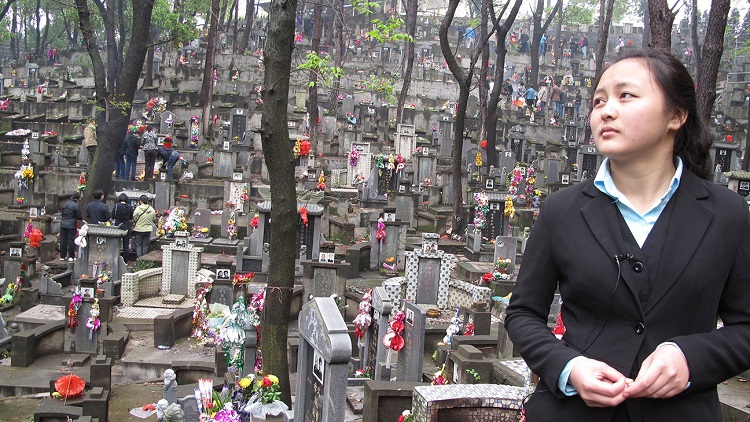
Nominated for Best Documentary at the 67th Berlin Film Festival, Carol Salter’s feature debut welcomes us with an intertitle. “In China, job opportunities are limited for teenagers.” This is then followed with multiple shots of vast, wide open corridors, silent doorways and car parks before being interrupted by an interaction between two extremely young co-workers discussing mosquito bites. It is then that we realise that these stiflingly quiet and desolate surroundings belong to a funeral home.

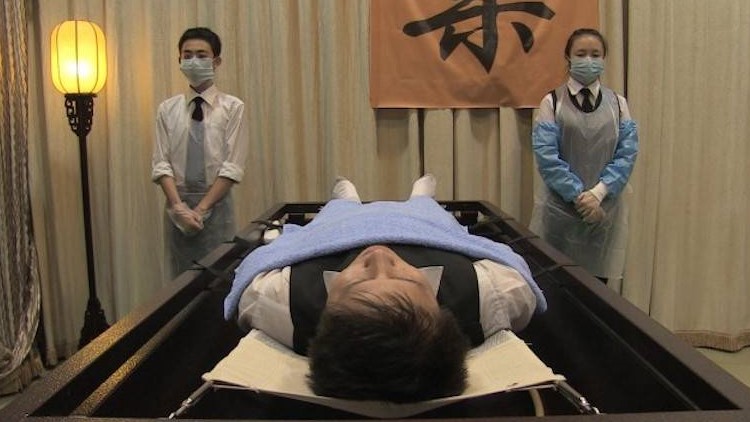
17-year-old Ying Ling works at the Ming Yang Mountain Funeral Home, far from home, at which cadavers arrive and depart via a hydraulic lift in the car park. In order to pass her exams and progress within the company, she must learn how to prep and cleanse a body before it can be viewed by a grieving family. One could argue a harrowing prospect for a such a sweet and young girl, one who is afraid of ghosts, made all the more understandable given the nature of the job and the eerie labyrinthine place of work.

Juxtaposing these expanses of space with tight close-ups of the frequently worried expression on her subject’s face, Salter elicits a shared social and psychological space. We watch as this kid – who observes everything, works 24-hour shifts, and whose cruel mother refuses to let her return home even for winter clothes – as she advances in her career whereby one day she is charged with keeping the plant life alive, before death becomes her one and only daily job. Refreshingly, these teenagers don’t see their future in the dead and yet by the documentary’s denouement, this is exactly where Ying Ling’s colleague Jin Hua finds his business.

Their friendship is an uplifting aspect of an otherwise uneasy watch, although humour does punctuate the documentary throughout. It needs to. Ying Ling and Jin Hua do everything together – live, eat, laugh, share days off, prepare the dead, and the affection between them is sweetly endearing; it rivals siblinghood yet teeters on something more. Jin Hia is Ying Ling’s beacon, her little piece of heaven amid the depressing, mosquito-pestered mortuary.

As for the funeral home itself, it’s ran as mostly highly efficient businesses are; preoccupied with making money, receiving cash and occasionally berating its staff. There’s a coldness to it, perpetuated by the long takes and the silence, and while respect is paid to the dearly departed, the same can’t be said for the living as money disputes rear their ugly heads during the most unfortunate moments.

What follows the second half is a number of harrowing scenes in which blood violently stains some sheets and shrouds and we, along with, Ying Ling, are confronted with the visceral horror of death and the wailing sorrow and melancholy of grief. While Salter’s camera stays on the periphery of those scenes, and can never be accused of being disrespectful, it nevertheless feels intrusive. Grief and mourning is such a private experience, having a camera record these moments feels almost voyeuristic in their candidness.

That said, it never strays into being overtly maudlin. Almost Heaven is an observational coming-of-age documentary where childhood is slowly diminished (in 75 short minutes) by approaching adulthood, and life and death is played out quite literally between takes. It is a gentile rumination on migratory workers, a reflection of life, death, and all the things in between.

Categories
DVD Review TV

Channel Zero: Candle Cove

Based upon Kris Straub’s creepypasta short story, Candle Cove was the first anthology in Syfy’s Channel Zero series with the second No End House, Butcher’s Block (S3) and The Dream Door (S4) swiftly following before announcement of its cancellation. Its creator Nick Antosca and producers Don Mancini (Child’s Play) and Harley Peyton (Twin Peaks) brought a unique experience to the small screen, most of which are now available on DVD and Blu-ray.

Candle Cove opens during two months in 1988, five children: Jacob Booth, Sadie Williams, Carl Cutter, Gene Hazel and Eddie Painter go missing with four later found murdered. Only one – Eddie – was never returned nor remains discovered for burial. The Iron Hill Murders were never solved and now, 28 years later, Eddie’s identical twin brother Mike (Paul Schneider) a child psychologist is recovering from a breakdown and plagued by nightmares that eventually make him head home to mother Marla (Fiona Shaw) and the childhood home and friends he left behind. Once there, he realises that a TV show has started to air again called Candle Cove, an eerie puppet-led programme that only children seem to be able to see and which brainwashes them into participating in some deeply disturbing antics.

As more children go missing and start acting strangely, losing teeth along the way, Mike, – even finding himself a suspect at one point – must embrace his repressed memories, childhood traumas and nightmares head-on if he is ever going to discover the truth about Eddie. His creepy journey will see him recollect the bullying, the paralysing fear, and meet the mysterious Jawbone, its merry band of shipmates aboard the happy ship on the way to Candle Cove, and prevent history repeating itself.

While some shows tend to tell their stories from the child’s perspective, the world between adults and kids separated, here they interlink; childhood fear enforces adulthood and that trauma never leaves – all those things that grown-ups dismiss as an overactive imagination manifest and are all the more real and frightening. What makes Candle Cove so effective is its thoughtful and understated – even mundane – approach to horror. Yes, it uses tropes familiar in the world of Stephen King but there are also elements of The Twilight ZoneThe X-FilesAmerica Gothic and even Mystic River (2009), with additional (and repetitious) layers of intrigue. The fact that Winnipeg (doubling for Iron Hill) is so green, lush and naturally shot only enhances the supernatural.

There are nods to Treasure Island, The Muppets and an all-too terrifying version of the tooth fairy but not like you’ve ever seen. Childhood fears are its emotional backbone but it uses guilt, grief, dream logic and some surreal and whimsical imagery to really sell the deeply unsettling. The performances particularly those of Schneider, Shaw and two of the children, Abigail Pniowsky (Arrival) as Lily Painter and Luca Villacis, who portrays the Painter twins beautifully and skilfully relays two very separate personalities, elevates the subject matter. The thing about murderous children is that they are utterly terrifying; corrupted innocence disturbs and distresses on such a profound level. The lack of gratuitous violence is refreshing also, it’s not completely absent but tends to be distancing, quick and almost always off-screen.

Told over six episodes this anthology is an atmospheric and quietly unique experience, it builds the dread and truly unsettles staying with you long after the denouement. It’ll haunt your dreams especially the child made entirely of human teeth but never fear, head to bravery cave, all your secrets will be safe in Candle Cove…

Categories
Blu-ray film review

Suntan (Dir. Argyris Papadimitropoulos, 2017)

In keeping with 2015’s Chevalier and The Lobster, Argyris Papadimitropoulos’ Suntan also places masculinity and middle-age under the microscope, it also happens to be Greek. Billed as a “coming of middle-age story”, it focusses upon Kostis (Maki Papadimitriou) who arrives on the island of Antiparos to take over as the new Doctor. As his new found friend Takis (Yannis Tsortekis) – think Chet Pussy (Cheech Marin) in From Dusk Till Dawn – explains only during the summer months does the island come to life and teems with tourists who inhabit the camping site just outside of the small city centre.

suntan_02

This summer brings with it, Anna (Elli Tringou), Jason (Dini Hart), Alin (Hara Kotsali), Mila (Milou Van Groesen) and Morten (Marcus Collen); an obnoxious bunch of youths who are determined to enjoy their holiday to the nth degree. They soon find themselves in Kostis’ examination room when Anna falls off her bike and upon treating her, the good doctor’s heart begins to flutter.

The sun, sea, and sand serves as a glorious backdrop, making sufficient use of lens flare as Kostis starts to “accidentally” run into the group who all seem intent on encouraging him and using him to amuse, abuse and buy them beer. They are sexually liberated spoilt brats whose nubile tanned taut flesh is often shot juxtaposing the Doc’s pale, hairy middle-aged paunch – the camera shames him and objectifies them, especially Anna.

His overeagerness is sweet yet cringeworthy and his lack of self-awareness overwhelming. We are initially invited, perhaps even encouraged to feel for him, he’s lonely, he missed the boat in some areas of life, he has regrets of youth, it’s easy enough but then, things take a turn.  His unlikely friendship with the woman half his age becomes an obsession, and his entitlement and aggressive behaviour gives way to darkness and a misogyny that is breathtaking.

4489_suntan

Papadimitriou embodies the sad-sack Kostis beautifully and while the ending comes as a bit of a shock, the lead up to the breakdown is heartbreaking and difficult to watch. Call it a cautionary tale or a painful parable yet Suntan is a solidly directed and acted Greek (New Wave) tragedy, however, where The Lobster and Chevalier relied upon biting satire within its drama, this falls short of humour and just plays out as dark, upsetting, and all a bit mean.

EXTRAS

Interview with director Argyris Papadimitropoulos (26 mins) –  Delivered in segments the director discusses the origins of the film, script, casting, and filming. Papadimitropoulos has a long standing history with the island of Antiparos, having began visiting at aged 16, he never wanted to recreate on film but depict it as it truly is. He talks about where the idea for the script came from (actually following his reading of Michel Houellebecq’s Whatever) which made him think of those who have access to pleasure and those who don’t. Thinking on the dichotomies in the film, it makes sense even down to the casting of the non-professional and inexperienced Elli Tringou opposite the “genius” of Makis Papadimitriou. This in depth sit-down with Suntan‘s filmmaker is really interesting and well worth watching after the main feature.

The Making of Suntan (15 mins) – A run-of-the-mill behind the scenes documentary-style featurette with a seriously good soundtrack, very Club La Luna, and in complete contrast to the previous extra.

Deleted Scenes – These include ‘Boogaloo’, ‘Downhill’, ‘Kalargyros’, ‘Milu Pees’ and ‘Camping’.

Theatrical Trailer

1080p Presentation on the Blu-ray|Progressive encode on the DVD|5.1 Surround and Stereo soundtrack options|Optional English subtitles (containing 1 or 2 errors)

Categories
Film Festival film review

Sicilian Ghost Story (Dir. Fabio Grassadonia and Antonio Piazza, 2017)

Fabio Grassadonia and Antonio Piazza’s Sicilian Ghost Story begins dialogue-free as Luna (Julia Jedlikowska) follows the object of her adolescent affection into the woods which surround school. Giuseppe (Gaetano Fernandez) is a gentle soul who adores video games, football and horses – all the things that cement their burgeoning love. On this particular day, Luna’s ‘White Knight’ saves her from a rabid Rottweiler albeit in a crisp white shirt and grey trousers – as opposed to armour – but it’s a nice nod to Marco Mancassola’s short story in We Won’t Be Confused Foreverfrom which the film is derived.

The young couple’s time together displeases Luna’s strict and oppressive mother (Sabine Timoteo) who is framed as the Wicked Stepmother with her mild sauna compulsion, and made all the more severe by her 19th century-looking clothing. Mother and daughter relations are fractious at best therefore making it easier for Luna to rebel against later on. Her mother’s opinion means little to her, as she continues to skip school and spend her afternoons with Giuseppe. While this film has all the markings of a love story this aspect of the narrative never feels contrived nor does it overwhelm, it merely drives Luna in her quest to find Giuseppe when he suddenly disappears.

At its core, the film sets to retell the true story surrounding the kidnapping of Giuseppe Di Matteo in 1993 (the basis for Mancassola’s short story) yet does so in a completely unique way. It is steeped in mythology and fairy tale imagery – specifically reminiscent of Basile and the Brothers Grimm – as the symbolic manifests in Luna’s connection to Giuseppe, his abduction failing to ignite much concern among the adults around her. Cinematographer Luca Bigazzi’s fluid camera movement and expertise with low-angle shots and a distorted lens conveys the strange atmosphere and enforces the supernatural aspect of the young protagonists’ bond as they learn the cruelty of the world.

It is easy to compare Sicilian Ghost Story to Pan’s Labyrinth not least in the centring of a female protagonist fighting against a patriarchal force (here, the Mafia) and the juxtaposition of a childlike fairy tale fantasy with the harsher, violence realities of life, however, this has much more in common with the likes of Paperhouse (1988) and I’m Not Scared (2003). There are even aspects of the poliziotteschi genre despite the themes of innocence, experience, fantasy and reality explored through Luna’s point-of-view. She refuses to be silent and finds her voice, determined to locate what is lost. It’s a mature and assured central performance by the Polish-born Jedlikowska who carries this visually gorgeous feature more than capably on her shoulders.

There are not many pieces of work that can straddle so many genres but this allegorical coming-of-age-fantasy-romance-crime drama meditates on first love, rebellion, grief and tragedy. It takes elements of all those familiar genre motifs and fuses them so succinctly to create something unique and profoundly affecting; embracing the power of myth and philosophically laying ghosts to rest.