Categories
book film review Retrospective Review TV

2023 – Wrap up

What a year!

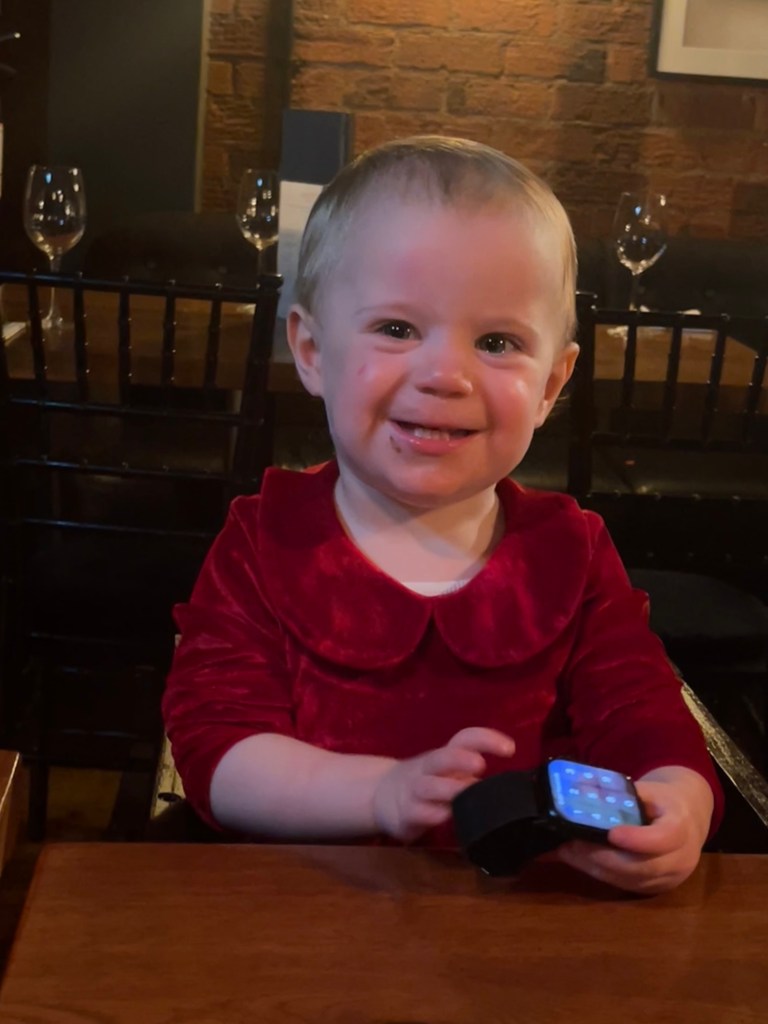
From January to April, things were moving along nicely. My goddaughter-niece turned one – despite the fact that I cannot remember life before she arrived – but then a few things rocked my little bubble and the people I hold the dearest. It has culminated in the twelve months of 2023 feeling like three years. It wasn’t all bad, there were some positives amid the… seizures… tears… pneumonia… the end of a friendship… cyst on the brain… a stenosis diagnosis… a healing trip to London to experience the shattering catharsis of A Little Life on stage… a Fringe & Bracket reunion… tears… fractured limbs… a much needed sunshine break… I started writing again… all those murdered babies and no ceasefire in sight… ‘Whoopi’ was vacated… relief… healing and self-care… stopped expecting a ‘me’ from anybody… I stopped writing again… boundaries… said enough… I am enough… oh, and Last Christmas finally made Christmas #1 39 years after initial release – RIP George x

Anyway. Phew. Shrugs, *blows raspberry at stress and worry*

I did manage to see some films this year albeit non-film festival ones courtesy of my Curzon and mubi memberships. Below are the twenty I admired the most, half of which excitedly were directed (and written) by women and depict the whole gamut of emotions experienced by a multitude of fully-rounded, complex humans. My favourite being the masterclass in misogyny, Justine Triet’s pitch perfect Anatomy of a Fall.

Favourites Films of 2023

Favourite Books of 2023

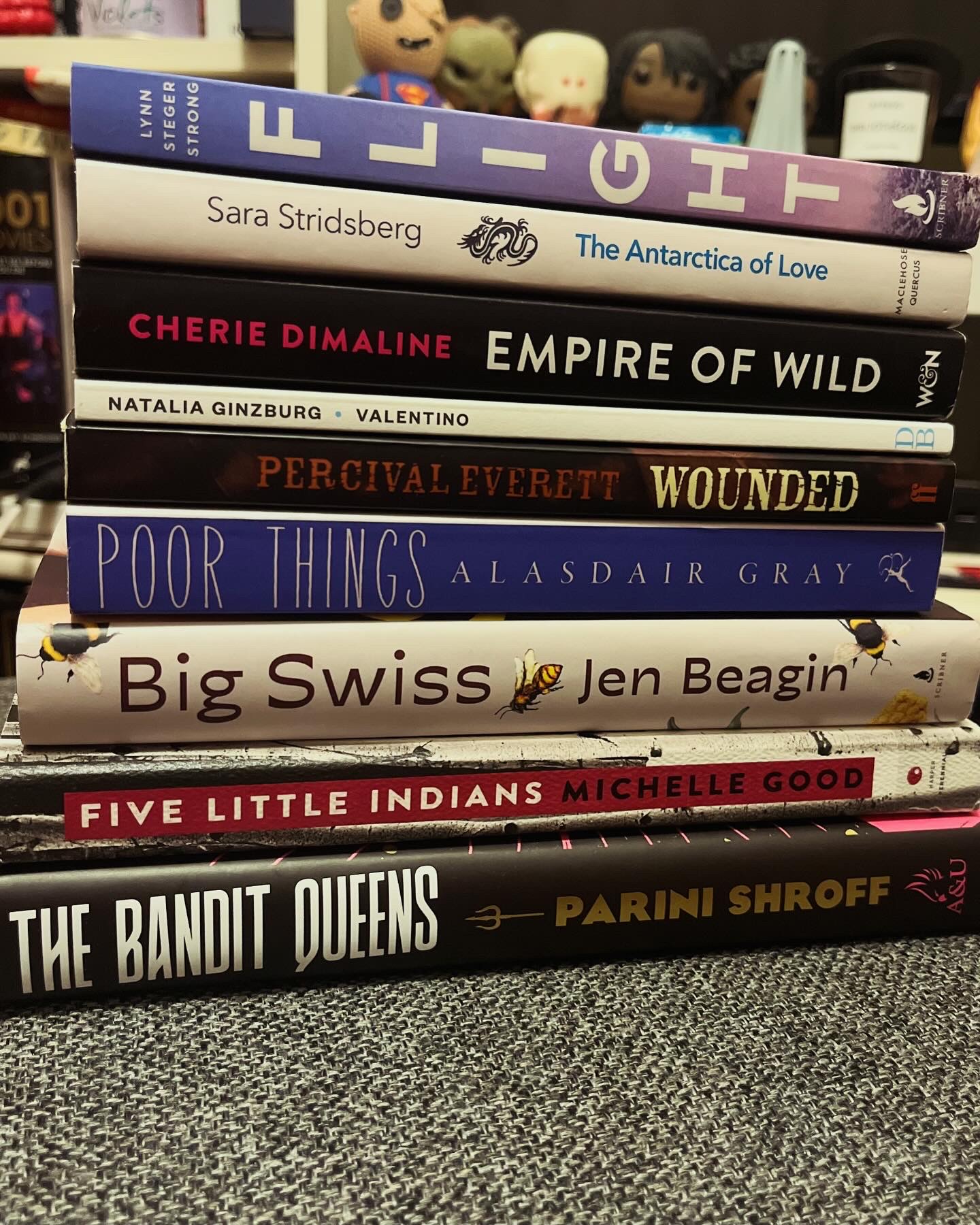
Thankfully, I also managed to read. Again, not as many as I’d have liked but personal distractions aside, 60 isn’t too bad. That’s 17,339 pages – actual pages too as I just don’t think I’m cut out for a Kindle. Absolute fave eleven are below left, on the right is a pile of honourable mentions: fiction and non, a volume of comics, women in translation, four blokes and a bit of poetry. If somebody was to make me choose just one, then today it would be Lagioia’s The City of the Living which I happened to review earlier in the year.

TV/streaming highlights of 2023

It was the year that bid farewell to The Marvellous Mrs Maisel (flashbacks, forwards and ageing make-up galore. Also, can’t spell it with just the one ‘l’, soz), Succession (AKA Wambsgans Win) and Happy Valley (bye-bye Tommy Lee Royce). There was a second series for Somebody Somewhere which is just the loveliest show in the world; gentle, tender, funny, and full of grace and warmth. Other TV highlights for me included:

Poker Face – Casino cocktail waitress Charlie Cale (Natasha Lyonne) entangles herself with some shady people following the murder of her best friend. She goes on the run, solving crimes wherever she ends up. Made all the more interesting by her uncanny ability to spot a lie. Think Wonder Woman (sans lasso) meets Columbo via the quick-witted brain of Rian Johnson.

The Last of Us – Pedro! In the adaptation of a game I will never play! Yet more importantly, S1 E03: Long, Long Time – Survivalist Bill (Nick Offerman) makes an unlikely connection in Frank (Murray Bartlett). Perfection.

The Bear S2 E08, Forks. Richie (Ebon Moss-Bachrach) finally comes into his own after Carmy (Jeremy Allen White) sends him to a posh restaurant to ultimately polish the cutlery.

Dark Winds – It’s 1971 and the discovery of three dead bodies in a motel coincide with an armoured bank heist. Navajo reservation cops Lt. Joe Leaphorn (Zahn McClarnon) and Sgt. Bernadette Manuelito (Jessica Matten) investigate the brutal deaths of three of their own with the help of a new recruit, Jim Chee (Kiowa Gordon). A revisionist western mini-series at its finest, re-appropriated from the perspective of indigenous Americans by indigenous Americans (producers Robert Redford and George R.R. Martin’s names add a little cash/cache). It’s brilliant and thankfully has been renewed for two more series. Whether we, in the UK get those remains to be seen but I sincerely hope so.
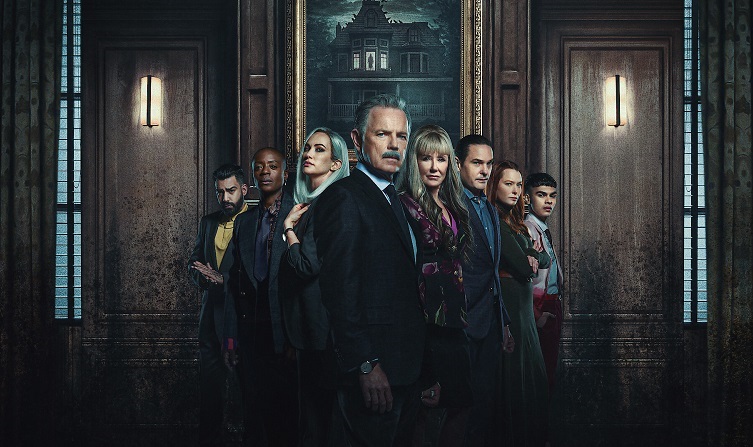
The Fall of the House Usher – I, admittedly, haven’t really been a fan of anything Mike Flanagan has done since The Haunting of Hill House (2018) but I think, he may have surpassed even that with this celebration of all things Edgar Allan. The whole cast bring their A-game and it is deliciously dark, twisted and utterly compelling from the first ten minutes. Poe-etic even (ugh). As an aside, I bloody love Bruce Greenwood – the perfect replacement for the other guy.

                  Fin
Phoebe
Categories
Retrospective Review TV

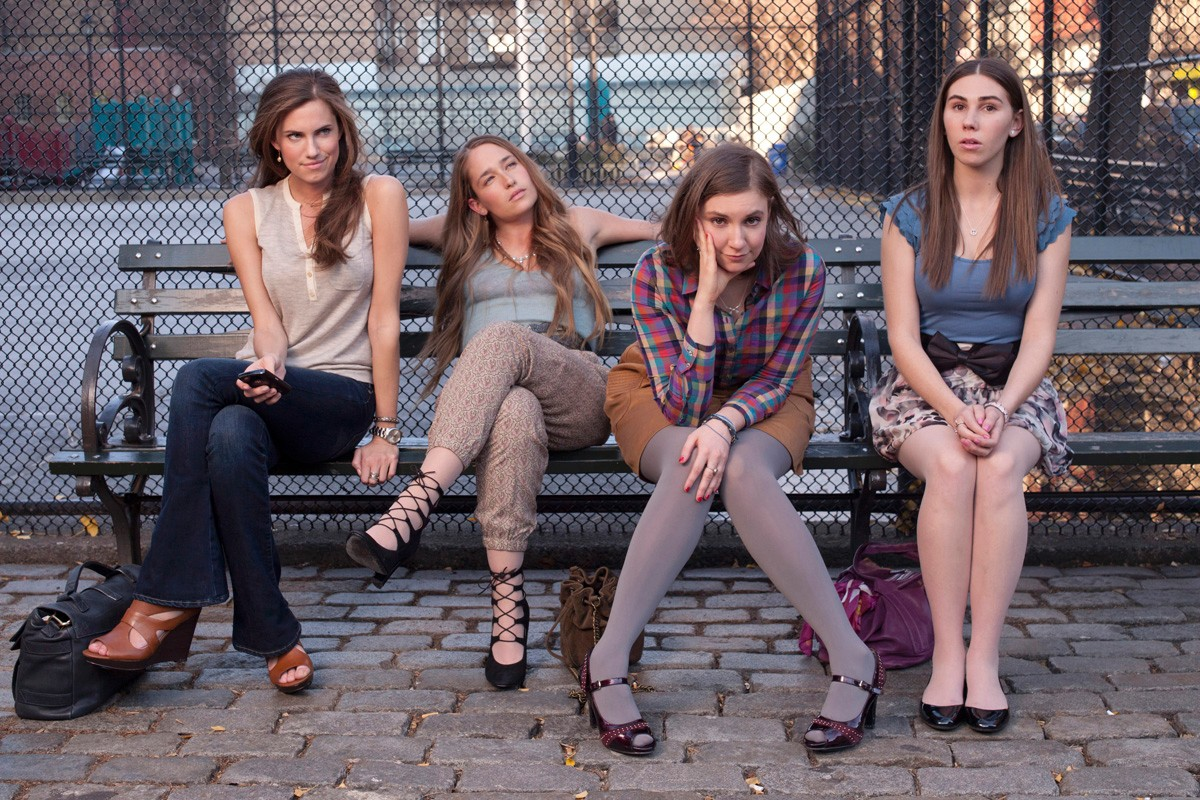
On Girls…

“If it hurts, you’ll always remember…”

After six seasons, sixty-two episodes, one thousand, eight hundred and sixty minutes (give or take), it’s over. Girls is no more. Hannah et al have moved on, to pastures new, not necessarily together but what joy, cynicism and dark, comedic delights they left behind. Also, it’s probably still in Sky box sets too if you just can’t say goodbye yet.

Following on from her success with semi-autobiographical Tiny Furniture (2010), Lena Dunham turned to television and created Girls. It never sat comfortably within a specific genre, part drama, part sitcom, like an anti-Sex and the City despite covering some occasional, similar ground. Realism wasn’t always its strongest suit but the writing always felt authentic even when certain situations seemed implausible. It dealt with the complications of women (those four with the alliterative names mostly) between the ages of 24-27 – that weird age where you never feel fully adult, have left girlhood behind but still need to navigate the choppy waters of self-discovery and finding your place in the world. These were young women who had all the self-confidence but little to no self-worth, they made each other’s problems about themselves and allowed their selfish anxiety to dictate their emotions. They attempted to be independent yet were reluctant to cut the apron strings entirely.

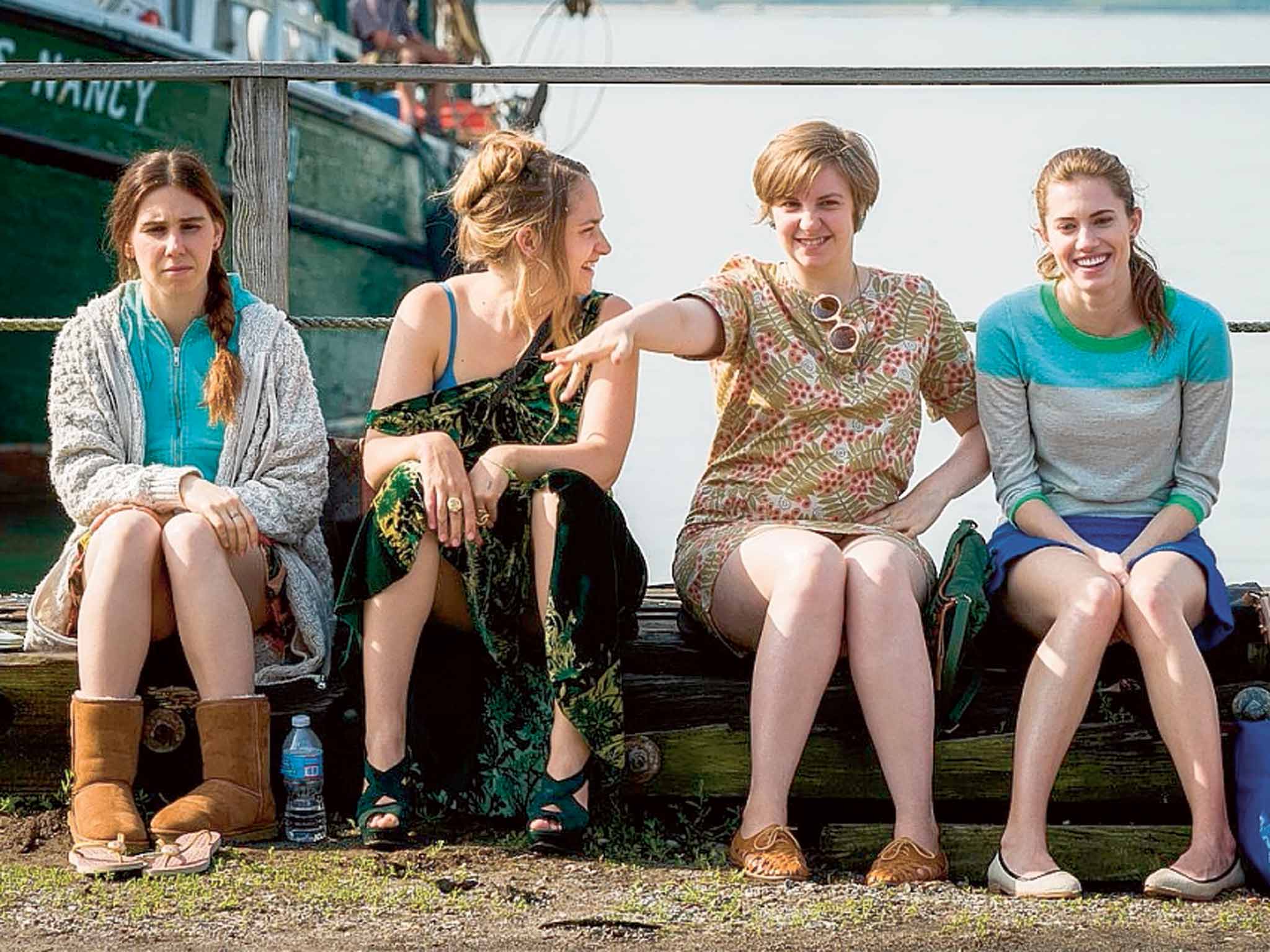
The series covered many topics including drug addiction, STIs, unwanted pregnancy, alcoholism, abortion, motherhood, infidelity, loneliness, death, and mental health. Whilst attempting to combat or even approach some of these issues, they all – Hannah Horvath (Lena Dunham), Marnie Michaels (Allison Williams), Jessa Johansson (Jemima Kirke), and Shoshanna Shapiro (Zosia Mamet) – made mistakes. Sometimes horribly, a lot of the time irreparably but that just made us root for them all all the more. Or many of you bailed on them around season 2/3 and have yet to go back…

Much criticism stemmed from the characters’ likability. That’s women for you. We’re not all sunshine and light, not all of the time, there are multiple facets, complexities that not many shows manage to depict quite so vividly. The girls’ fallibility and often cringeworthy behaviour (sometimes age appropriate, mostly grossly immature) is what made me latch on. Men have been getting away with being unapologetically “men” onscreen since the dawn of time, apparently women pose a greater problem.

Let’s not pull punches; Hannah Horvath was an annoying character, the one based on Dunham, she who often spoke before thinking, she who, nine times out of ten needed that extra bit of attention. We’ve all had at least one friend like her, probably, we’re not even friends anymore. It happens. The others weren’t perfect, not by a long shot, hello Marnie?  but Hannah, for all her flaws and foibles was the heart of the show. She and her friends became a talking point between you and yours – the question of their friendship and why they were friends was never far from our minds, they never did seem completely compatible but something worked. Until they didn’t. Hey ho, that’s life.

Hannah lived outside of her sexual experiences, she saw her ‘job’ to fulfil certain things so she had something to write about; situations with which to glean as much experience from. Her sex scenes were nothing if not honest, hilarious and convincing. She was weird, surrounded by a cast of weirdos; characters we all empathised with time and again. All they ever wanted was to be happy; being loved was a bonus.

For its duration Girls never seemed far from censure – too privileged, too white, too much nudity (specifically Dunham). Most moans seemed to spend a little too much time on Hannah/Lena’s body. Unapologetic in her own skin, and why not, she doesn’t look like your typical TV star, certainly not the kind of woman to shed clothes so regularly and unabashedly. It was refreshing. Finally somebody onscreen who wobbled a bit having a convincing sex life. It made little difference that she was the creator, writer, producer, director and lead actress, she was there to be body-shamed by… well, it was scary how many. Somebody like Patrick Wilson (see, One Man’s Trash S2 E05) wouldn’t f*ck any woman who looked like that, yada yada yada.

It’s a white show. Written by a white woman about four (white) friends; its creator, co-producer, Jenni Konner and executive producer, Judd Apatow are Jewish too if this is something of interest (side note: must research criticism levelled at Knocked Up or latest show LOVE). One of the first things Dunham did, following comments about the lack of diversity on the show, was cast Donald Glover as Sandy in two episodes (It’s About Time S2 E01 and I Get Ideas S2 E02) which depicted Hannah’s ignorance surrounding the issue of race – they also made him a Republican too. While there have been numerous characters of colour albeit, one could argue, clumsily added, and mostly in supporting, non-recurring roles; still, attempts have been made to address the imbalance. Those same critics who describe the show as whitewashing would probably now accuse of tokenism or misrepresentation. The scrutiny with which Girls was subjected to over the last six years, one could surmise, is down to the gender of its creator. I’m sure there are some male-led shows that are held to account, just not quite in the same way as those by/for/with women.

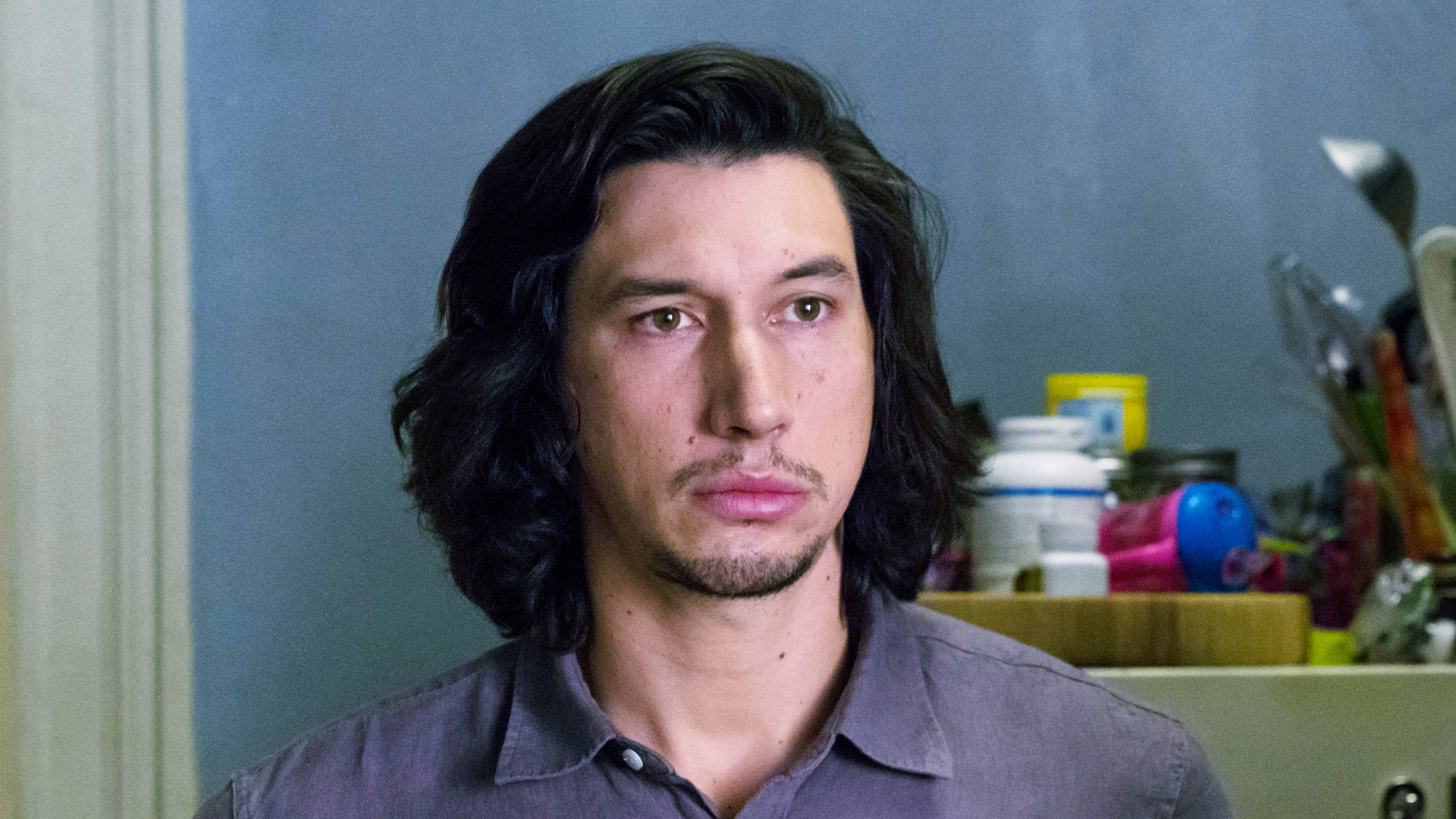
If you’ve never bothered with it, fair enough, I would implore you to check out the bottle-neck episodes for a riveting taste of just how good the show can be, One Man’s Trash, Flo (S3 E09), The Panic in Central Park (S5 E06), American Bitch (S6 E03). Girls showed women in all their complexities, fallibility, humiliations and vulnerabilities. It was dark, cynical and sometimes depressing; not always a comforting watch but funny – I don’t think it’s given enough credit for its humour. Or for its ability to write men. Specifically Adam Sackler. To listen to Dunham, their show was a collaborative effort, replete with improvising so who knows the *true* author of Adam, regardless he remains amazingly written; the epitome of the sensitive, complicated, masculine male. A man in AA; his sobriety sometimes a battle. His dark, sexual, almost deviant behaviour and the temper… oh the temper. That which exploded usually to save him exposing his vulnerability. He was deep, complex and – just like the rest of the show’s characters – grew, evolved, shifted. It was a joy to watch, Adam Driver is a joy to watch. He (Sackler) was, is, for all intents and purposes, Dunham’s finest creation.

So, how to end it all? (Finale review over at TDF: Latching) 

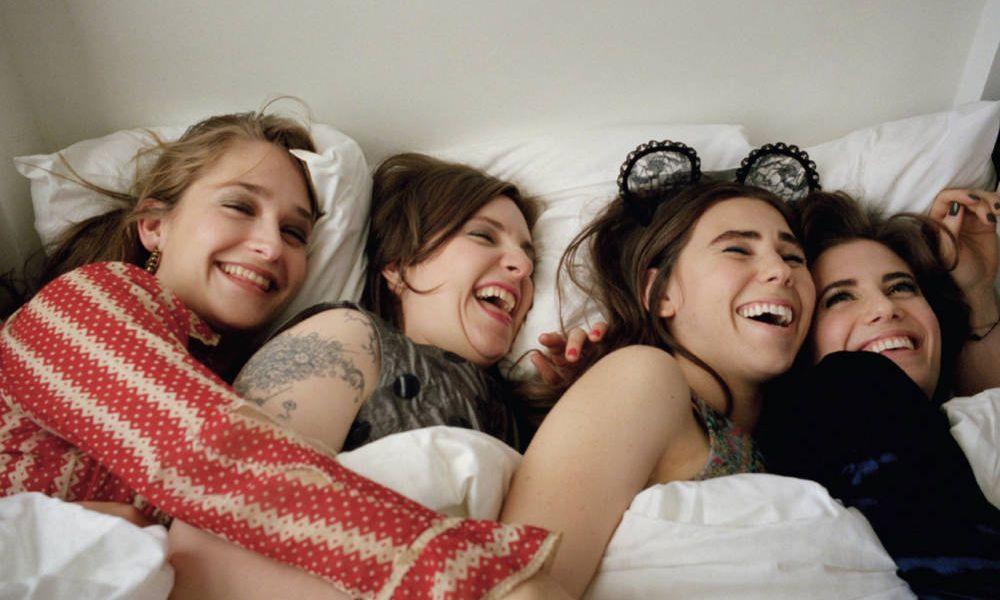
I will miss Hannah and the gang immensely (even Marnie). The girls may have been maddening and mortifying but we loved them; through their imperfections it allowed us to disengage from reality for a bit and embrace our own flaws.

Adulting can be hard. Womaning is harder.

Categories
Retrospective Review

My Favourites of 2013

It has been a ridiculously brilliant year for film and this list made all the more difficult by trips to FrightFest and LFF but I have stuck (as best I can) to 2013 releases. My favourite film of 2014, so far, is The Strange Colour of Your Body’s Tears (dir. Hélène Cattet and Bruno Forzani) and I implore all to see it when it is out in March. Anyway, I digress, in reverse order the films I have enjoyed most this year.

#13 After Lucia (2012, dir. Michel Franco)

afetr lucia

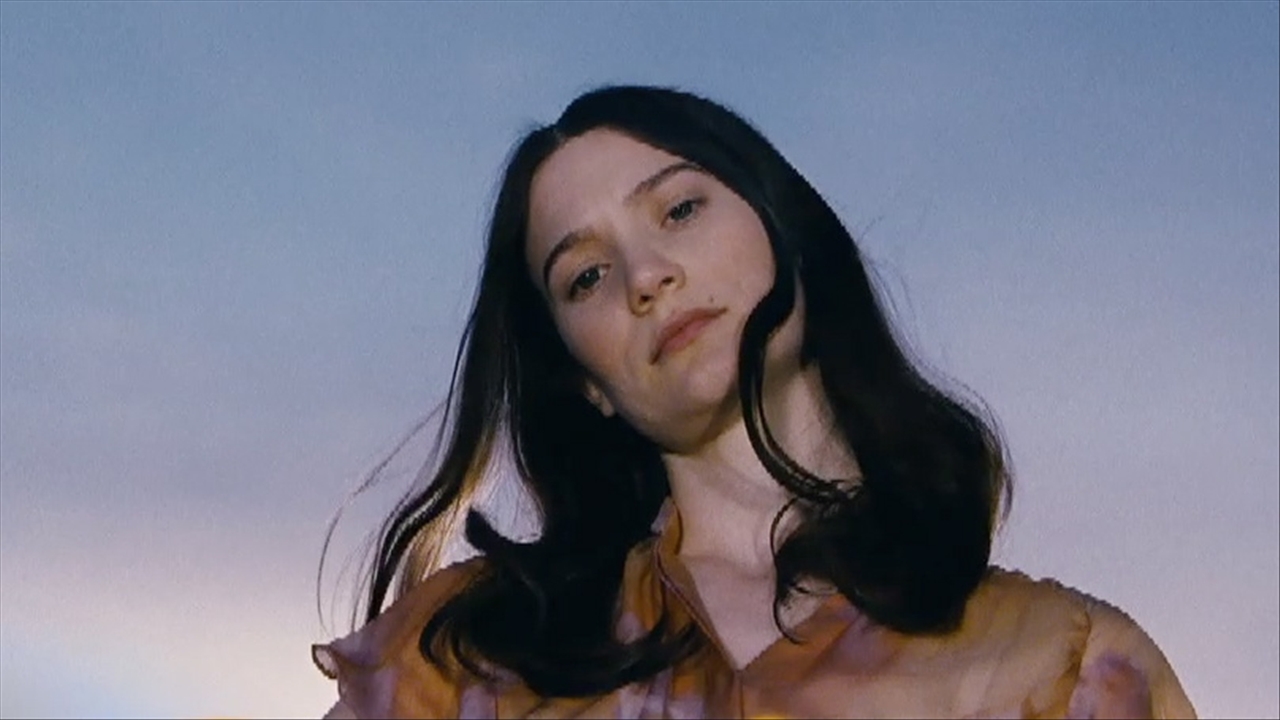
#12 Lore (2012, dir. Cate Shortland)

lore

#11 Laurence Anyways (2012, dir. Xavier Dolan)

Laurence-Anyways1

#10 Stoker (2013, dir. Park Chan-wook)

stoker

#9 Wadjda (2012, dir. Haifaa al-Mansour)

wadjda

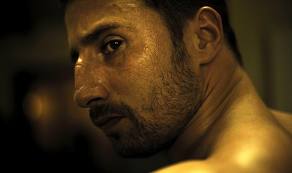
#8 Simon Killer (2012, dir. Antonio Campos)

simon killer

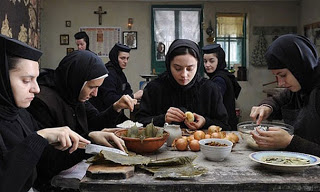
#7 Beyond the Hills (2012, dir. Cristian Mungiu)

beyond_the_hills_1

#6 Bullhead (2012, dir. Michaël R. Roskam)

bullhead

#5 Frances Ha (2012, dir. Noah Baumbach)

frances-ha

#4 Blancanieves (2012, dir. Pablo Berger)

blancanieves

#3 Before Midnight (2013, dir. Richard Linklater)

beforemidnight

#2 Big Bad Wolves (2013, dir. Aharon Keshales & Narot Papushado)

big-bad-wolves-447115

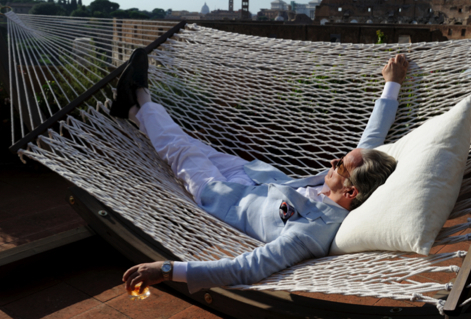
#1 La Grande Bellezza (2013, dir. Paolo Sorrentino)

thegreatbeauty

Special mentions:

  • Django Unchained (2013, dir. Quentin Tarantino)
  • Spider Baby (1968, dir. Jack Hill)
  • Grabbers (2012, dir. Jon Wright)
  • I Wish (2011, dir. Koreeda Hirokazu)
  • Forbidden Games (1952, dir. René Clément)
  • The Hunt (2012, dir. Thomas Vinterberg)
  • Only God Forgives (2013, dir. Nicolas Winding-Refn)
  • A Field in England (2013, dir. Ben Wheatley)
  • Lake Mungo (2008, dir, Joel Anderson)
  • The Act of Killing (2013, dir. Joshua Oppenheimer)
  • Mud (2012, dir. Jeff Nichols)
  • Oslo, 31 August (2011, dir. Joachim Trier)
  • Where Do We Go Now? (2011, dir. Nadine Labaki)
  • Holy Motors (2012, dir. Leos Carax)
  • Blonde Venus (1932, dir. Josef von Sternberg)
  • McCullin (2012, dir. David and Jacqui Morris)
  • What Richard Did (2012, dir. Lenny Abrahamson)
  • The Kings of Summer (2013, dir. Jordan Vogt-Roberts)
  • Head On (2004, dir. Fatih Akin)
  • Bal (2010, dir. Semih Kaplanoğlu)
abbas-kiarostami-05

‘Twas also the year I ‘discovered’ Abbas Kiarostami. The man is, for want of a better word, a genius. I would highly recommend the following:

  • Taste of Cherry (1997)
  • The Wind Will Carry Us (1999)
  • Like Someone in Love (2012)
  • Ten (2002)
  • Close Up (1990)
  • A Certified Copy (2010)
  • Shirin (2008)
Categories
film review Retrospective

Two Decades on… The Piano

It is hard to believe that Palme d’Or winner The Piano is twenty years old this year, specifically given its timelessness, Michael Nyman’s evocative score (The Promise can be sampled here) and the seductive panoramic allure of a Gothic New Zealand. One which remains mesmerising upon a multitude of re-visits; frozen forever on screen.

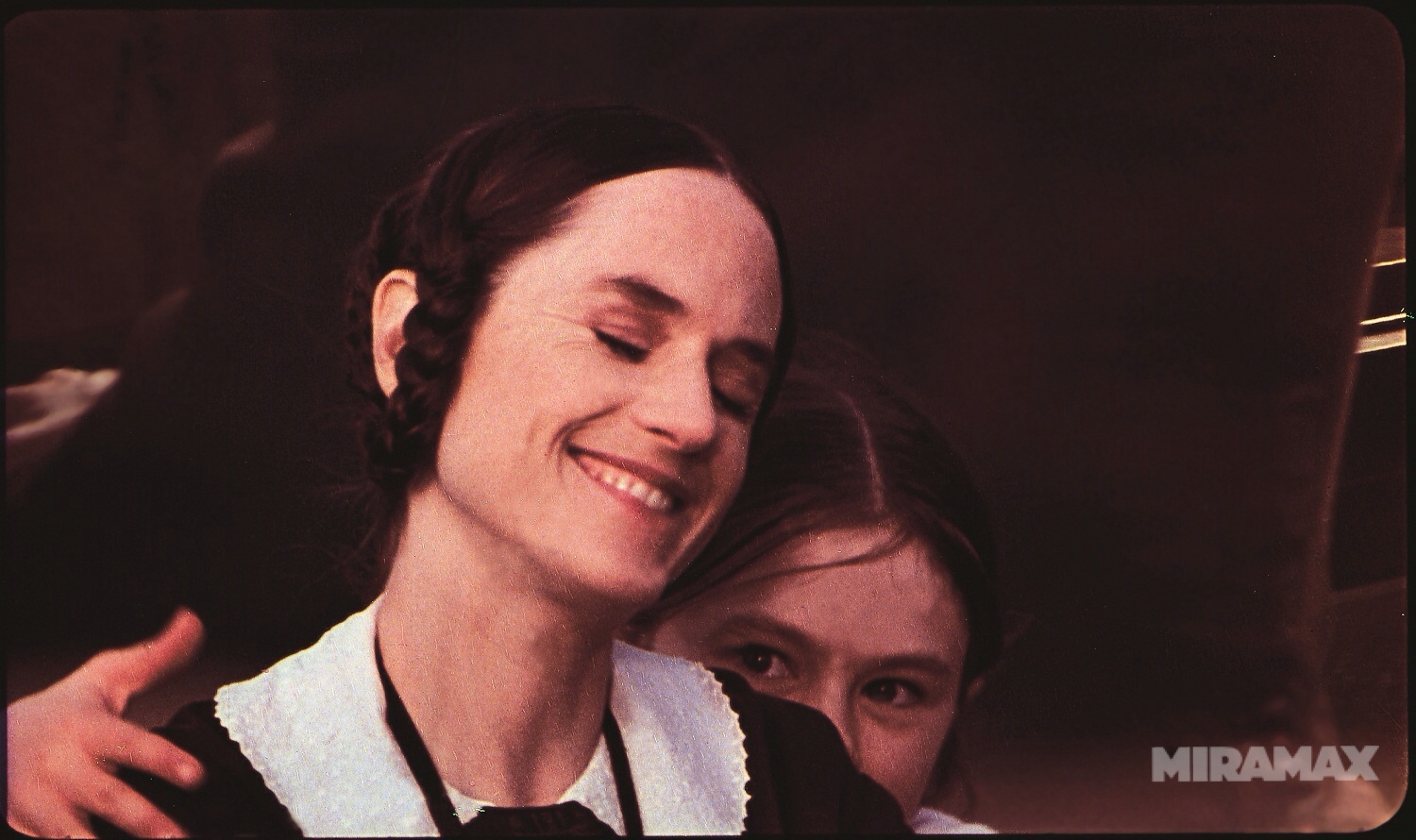
Ada McGrath (Holly Hunter) is sold into marriage by her father and sails from Scotland, across rough waters to New Zealand where she and her young daughter Flora (Anna Paquin) are to begin a new life in the home of new husband (and father) wealthy landowner, Alisdair Stewart (Sam Neill). Ada is mute and relies upon sign language, a small notebook contained in a locket around her neck and, above all else, her piano and music to speak for her. Alisdair, not only, dismisses the importance of the instrument to his new wife but gives it away to employee George Baines (Harvey Keitel) who, upon hearing Ada play, agrees to sell it back to her one key at a time.

piano

Writer/Director Jane Campion presents events in chronological order, much like a piece of music allowing for this story to have an introduction, middle and resolution. Campion, a filmmaker, with a propensity for engaging feminist interest through a female protagonist, desire and gaze does not disappoint with Ada. One would be forgiven for thinking the character is a product of the oppressive, Victorian society she inhabits, after all she is objectified from the start; sold into marriage, left on a beach much like her piano; her silence often mistaken for obedience. One could argue that this is not the case, Ada exists on the fringes of society; her self-assured identity and sheer wilfulness make her one of the most fascinating characters committed to celluloid. Her austere costume (designed and created by Janet Patterson) functions for and against her femininity (Bruzzi, 1997). These items often restrict her movements yet at other times rescue her from unwanted exposure, pawing male hands or indeed provide a place of shelter; a hoop underskirt is utilised as a makeshift tent in the opening sequences. The bonnet is a symbol of submissiveness but tends to be discarded more often than not.

piano

The piano and Ada are inextricably linked and the bound motif represents her voice, sexuality, passion, mood and freedom; a tool that can be, and is, used against her. Power struggle appears to be the main theme of the film displayed through sexual politics, patriarchy and colonialism. Alisdair is the white settler whose link to the Māori people is Baines, a coloniser who has adapted to the ways of the native (he still has tartan items displayed about his home pertaining to his Scottish roots) but has attempted to assimilate into NZ culture with his clothing, wild hair and Māori tattoos which adorn his nose. These markings add a sexual aggressiveness to his ‘othered’ facade; however, one would argue that it is his whiteness and lack of education which makes him belligerent, specifically in relation to the Māori people in this text. Rather ideologically, they display a naïve innocence which encourages the idea of Pākehā as the savage. Neill and Keitel give outstanding performances as the uptight Stewart and outsider Baines, men who conform and subvert type/expectation as much as the females in the diegesis. It is, however, Holly Hunter’s film. An accomplished pianist, she played all musical pieces and, allegedly, insisted upon communicating through sign language on and off set as the film was made. In fact save for Ada and her ‘mind’s voice’ at the film’s commencement and end, one forgets Hunter can really talk at all.

While The Piano can be described as a Gothic melodrama or Art film, at its narrative heart it depicts a mother-daughter relationship, offers up ideas of the absent father and draws parallels not only with the play within it: Bluebeard (Charles Perrault) but Rebecca (Daphne du Maurier) in its portrayal of a female who leaves home and enters a new world dominated by a male figure. It deals with concepts of freedom, affronting destiny, definition of the self, re-birth and the sexual-political appropriation of ambiguities. It showcases the directorial talent of ‘Kiwi’ Campion and her cinematographer Stuart Dryburgh who insist upon giving the audience a distinctive, sexually provocative spectacle; a sumptuous production which depicts the uneasiness of the New Zealand landscape with authenticity and, even occasional, mirth. The Piano remains a gorgeous and enigmatic masterpiece, one which continues to get better with age.

Categories
Retrospective

My Favourites of 2012

The films I enjoyed most this year:

#12

The Kid with a Bike (2011, dir. Jean-Pierre Dardenne)

the_kid_with_a_bike_1

#11

Wild Bill (2011, dir. Dexter Fletcher)

1140885_Wild-Bill

#10

Moonrise Kingdom (2012, dir. Wes Anderson)

moonrise

#9

Rust and Bone (2012, dir. Jacques Audiard)

Rust-Bone1

#8

Hara-kiri: Death of a Samurai (2011, dir. Takashi Miike)

Hara-kiri

#7

Martha Marcy May Marlene (2011, dir. Sean Durkin)

Martha-Marcy-May-Marlene

#6

Michael (2011, dir. Markus Schleinzer)

MICHAEL

#5

Sightseers (2012, dir. Ben Wheatley)

sightseers

#4

The Hunt (2012, dir. Thomas Vinterberg)

The Hunt (Jagten) film still

#3

Excision (2012, dir. Richard Bates Jr)

excision_

#2

Shame (2011, dir. Steve McQueen)

shame

#1

Amour (2012, dir. Michael Haneke)

amour

Some other special mentions…not necessarily released in 2012.

  • Once Upon a Time in Anatolia (2011, dir. Nuri Bilge Ceylan)
  • Ossessione (1943, dir. Luchino Vischonti)
  • Killer Joe (2012, dir. William Friedkin)
  • Berberian Sound Studio (2012, dir. Peter Strickland)
  • A Swedish Love Story (1970, dir. Roy Andersson)
  • Argo (2012, dir. Ben Affleck)
  • Murk (2005, dir. Jannik Johansen)
  • The Dark Knight Rises (2012, dir. Christopher Nolan)
  • Untouchable (2011, dir. Olivier Nakache & Eric Toledano)
  • King of Devil’s Island (2012, dir. Marius Holst)
  • Django (1966, dir. Sergio Corbucci)
  • Beasts of the Southern Wild (2012, dir. Benh Zeitlin)
  • Tony Manero (2008, dir. Pablo Larraín)
  • The Beat That My Heart Skipped (2005, dir. Jacques Audiard)
  • Ex-Drummer (2007, dir. Koen Mortier)
  • The House of the Devil (2005, dir. Ti West)
  • Pontypool (2008, dir. Bruce McDonald)
  • Lust, Caution, (2007, dir. Ang Lee)
  • Cabin in the Woods (2012, dir. Drew Goddard)
  • Turkish Delight (1973, dir. Paul Verhoeven)