Categories
Article film review

The Original Vamp: Theda Bara

theda

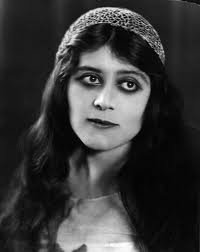
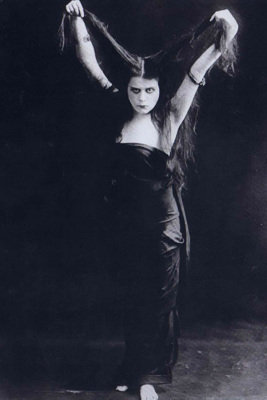
Theodosia Goodman was the eldest of three children born to a Polish father and Swiss mother in Cincinnati. The Goodmans lived in the leafy suburb of Avondale until 1905 when their daughter left for New York to become Theda Bara. The name an anagram of “Arab Death”[1], made Bara the epitome of exotic temptress known as the Vamp. She, at the time, allegedly used her sex appeal to manipulate and embodied voluptuous transgression – the exact attributes that Post-Code Hollywood attempted to make commodity and control. In total, Theda Bara made over forty films between 1914-1919 including Carmen[2], Cleopatra[3] and Salome[4], yet it was her first leading role which cemented her as The Vampire. I propose that it was this dichotomous ambivalence and marginalisation in both characters portrayed and persona[5] which started a promising film career but essentially the ideology could not last and ended it too soon. Taking inspiration from a Philip Burne-Jones painting and Rudyard Kipling poem in 1897, A Fool There Was[6] intercuts verses of Kipling’s poem with scenes which are, it would seem, an introduction to the lead characters. An iris reveals a male, who is later revealed to be Mr John Schuyler (Edward José), shot, sat behind a desk gazing at long stem roses, he looks directly into the camera before picking up the flowers and smelling them. After the second verse of the poem, The Vampire (Bara) stands haughtily next to a vase holding similar flowers and picks one out, smells it and then pulls the bud from its stem crushing the delicate petals between her palm. She is dressed in heavy, dark materials and fur, jewellery adorns every other finger perhaps symbolising living beyond her means, or as Molly Haskell describes them “emblems of her wickedness”.[7] The silent film is set within the melodramatic mode consisting of two dominant styles, as identified, by Roberta Pearson, “the histrionic and the verisimilar”[8]
theda_Bara_2

John Schuyler and his family are white, in not only skin tone but within the mise-en-scène. His wife, Kate (Mabel Fremyear), daughter (Runa Hodges) and sister-in-law (May Allison) are nearly always shot outdoors in natural light and dressed head-to-toe in white costumes. The Schuyler’s daughter, who later is referred to as ‘innocence’, is fair-haired, her blonde ringlets bouncing as she runs. She is, physically, a Mary Pickford/Lillian Gish in miniature, perhaps an indicator of the next generation which will resemble America’s Sweethearts[9] and not the dark, mysterious threat of the Vamp. A dialogue intertitle introduces The Vampire (Bara) so called because she has the sexual prowess and potential occult ability to drain their life source and wealth. The uncanny is aligned with this predator to enhance her otherness in relation to the ‘norm’ – the white, faithful wife and as Sumiko Higashi writes, “implied that her powers were supernatural or that she was, at the very least, inhuman”[10] She is dressed almost exclusively in black, hypnotically so, with an occasional white accessory, as if she were trying to assimilate into “decent” society. The Vampire reads of Schuyler’s trip and Statesman honour while resting at home. She has a black housemaid and an Asian male in attendance and this simultaneously whitens her against their ethnic variations but in the same token reminds the audience that she herself is ‘othered’ when considered alongside the Schuyler family.

As she boards the ship two previous victims (as they are described in the intertitle text) attempt to get her attention; one is a tramp who gets lead away by a police officer, the other, Mr Benoit, pulls out a gun and threatens to shoot her. The Vampire merely laughs and knocks it away with a flower and coaxes Benoit to commit suicide offering him one last kiss; “kiss me, my fool” before he pulls the trigger at his temple. His death fails to move her and she is reported, by the ship’s porter, to have stood over his body “laughing like a she-devil”. When Schuyler first sees this woman she is framed by a porthole powdering her nose which suggests a subtle hint at female consumerism. She has one eye on her own reflection and the other on her “prey”.

Visible through this porthole and clearly comfortable on deck, The Vampire can be read as a symbol of xenophobic (American) fears of immigration. Numbers of immigrants increased dramatically during the years 1899-1910 and while there is an attempt to Americanise The Vampire. Full assimilation fails as her ethnic femininity and,

[the] vamp persona [situates] her at the intersection of two established representative tropes: the predatory female vampire and the immigrant whose assimilation skills and potential for economic and cultural contribution were uncertain[11]

As an ethnic ambivalent, The Vampire may well have been the all-desiring temptress, however, to describe her as the representation of “the [unleashed] male sexual instinct”[12] as Higashi does seem a little extreme. She and, in this instance, his wife personify the polar opposites constructed through Patriarchy with the wife and child further representing social and moral order, and The Vampire revelling in the destruction and exploitative chaos her ability to emasculate exacerbates. In a Post-Code Hollywood future, as the femme fatale[13], she would be contained, however, Pre-Code, in these early films she was a player in the “fallen man genre”[14]

Even when society turns its back on Schuyler, his mistress brazens it out and walks with her head held high. She, much like the name she is given, sucks the wealth and life from her victim gaining more audacity and strength from his, increasingly, alcohol-induced catatonic state. Schuyler’s gait, once upright begins to stoop and his hair whitens: “The Fool was stripped to his foolish hide”. While this representation of woman displays a level of sexual freedom and independence, it can be limiting to female actors merely providing another stereotype to play in a male world. Theda Bara’s enigma was open to many an interpretation was described by James Card in the following way:

Endless lure of pomegranate lips…red enemy of man…the sombre brooding beauty of a thousand Egyptian nights…black-browed and starry-eyed…infinite mystery in their smouldering depths, never to be revealed…Mona Lisa…Cleopatra…child of the Russian countryside…daughter of the new world…peasant…goddess…eternal woman[15]

Her persona was created and cinematically, as The Vamp, was seen to promote a cultural threat; that of female immigrant sexuality and as Diane Negra writes “was an ideal figure to manage cultural anxiety” and reflected a real need to regulate female sexuality (and the growing birth rate).[16] Bara seemed to be at odds with the direction her film career was taking and tried, somewhat unsuccessfully, to diversify the roles she signed up to, including Romeo and Juliet[17]. The virginal Juliet was an unlikely role for The Vamp archetype and some reviews were critical of her acting style. Like most of her contemporaries, Bara was a student of the Delsarte method. François Delsarte (1811-1871) was the founder of an applied aesthetics system which included rhythmic movement, kinesics and semiology.[18] This system would have given film audiences pause for thought as every emotion was rendered through an eye or bodily movement.

The real reasons why Theda Bara’s career failed at longevity are unanswerable. The Vamp and émigré artist still continued to make pictures, names like Naldi, Negri, Valentino, and eventually Garbo and Dietrich cemented their places as household names. Bara appeared to grow tired of the limitations that The Vamp construction placed on the film roles she was offered and often this would be evident in some of the newspaper and magazine interviews that she gave. She made a last short, comedic film in 1926 called Madame Mystery which was co-directed by Richard Wallace and Stan Laurel but then seemingly retired after marrying. Bara died on 7 April 1955, aged sixty-nine from abdominal cancer leaving behind a lasting cinematic legacy as the original screen Vamp.

Theda-Bara-in-Cleopatra---Der-erste-Vamp-des-Films-752253

Watch one the few surviving Bara films: A Fool There Was (1915, dir: Frank Powell)


[1] This anagram was alleged to have been the actresses’ own invention and the studio embraced it wholeheartedly creating a birth in the shadows of the Sphinx, a childhood in Egypt and exotic Parisian-Italian parentage. Tactics which enhanced the allure of the Cincinnati-born girl who wanted Hollywood to sit up and take notice.

[2] Carmen (1915, dir. Raoul, A. Walsh) Fox Film Corporation.

[3] Cleopatra (1917, dir. J. Gordon Edwards) Fox Film Corporation.

[4] Salome (1918, dir. J Gordon Edwards) Fox Film Corporation.

[5] Theda Bara functioned as a star persona serving as a ideological construct as detailed in Richard Dyer, Stars, (London:British Film Institute, 1998).

[6] A Fool There Was (1915, dir. Frank Powell) William Fox Vaudeville Company.

[7] Molly Haskell, From Reverence to Rape: The Treatment of Women in the Movies, (Chicago & London: The University of Chicago Press, [1974] 1987) p103.

[8] Roberta Pearson, “O’er Step Not the Modesty of Nature: A Semiotic Approach to Acting in the Griffith Biographs, in: Zucker, C (ed) Making Visible the Invisible: An Anthology of Original Essays on Film Acting (Metuchen: New Jersey, 1990) pp1-27.

[9] Richard Dyer, White, (London & New York: Routledge, 1997 ) p

[10] Sumiko Higashi, Virgins, Vamps, and Flappers: The American Silent Movie Heroine (Canada: Eden Press, 1978) p58.

[11] Diane Negra “The Fictionalized Ethnic Biography: Nita Naldi and the Crisis of Assimilation” in: Gregg Bachman and Thomas J. Slater (eds) American Silent Film: Discovering Marginalized Voices, (USA: Southern Illinois University Press, 1997) pp 176-200 (179).

[12] Higashi (1978) p59.

[13] Mary Ann Doane, Femmes Fatales: Feminism, Film Theory, Psychoanalysis (London: Routledge, 1991) I.

[14] Janet Staiger, Bad Women: Regulating Sexuality in Early American (Minneapolis: University of Minnesota Press, 1995) p148.

[15] James Card, Seductive Cinema: The Art of the Silent Film (Minneapolis: University of Minnesota) p189.

[16] Diane Negra, “Immigrant Stardom in Imperial Stardom” in: Gregg Bachman and Thomas J. Slater (eds) American Silent Film: Discovering Marginalized Voices, (USA: Southern Illinois University Press, 1997)

[17] Romeo and Juliet (Dir: J. Gordon Edwards, 1916) Fox Film Corporation.

[18] E.T. Kirby, “The Delsarte Method: 3 Frontiers of Actor Training” in The Drama Review: TDR, Vol.16, No1, March 1972 pp55.69. http://www.jstor.org/stable/1144731?seq=1 [accessed 25 May 2012].
Categories
film review

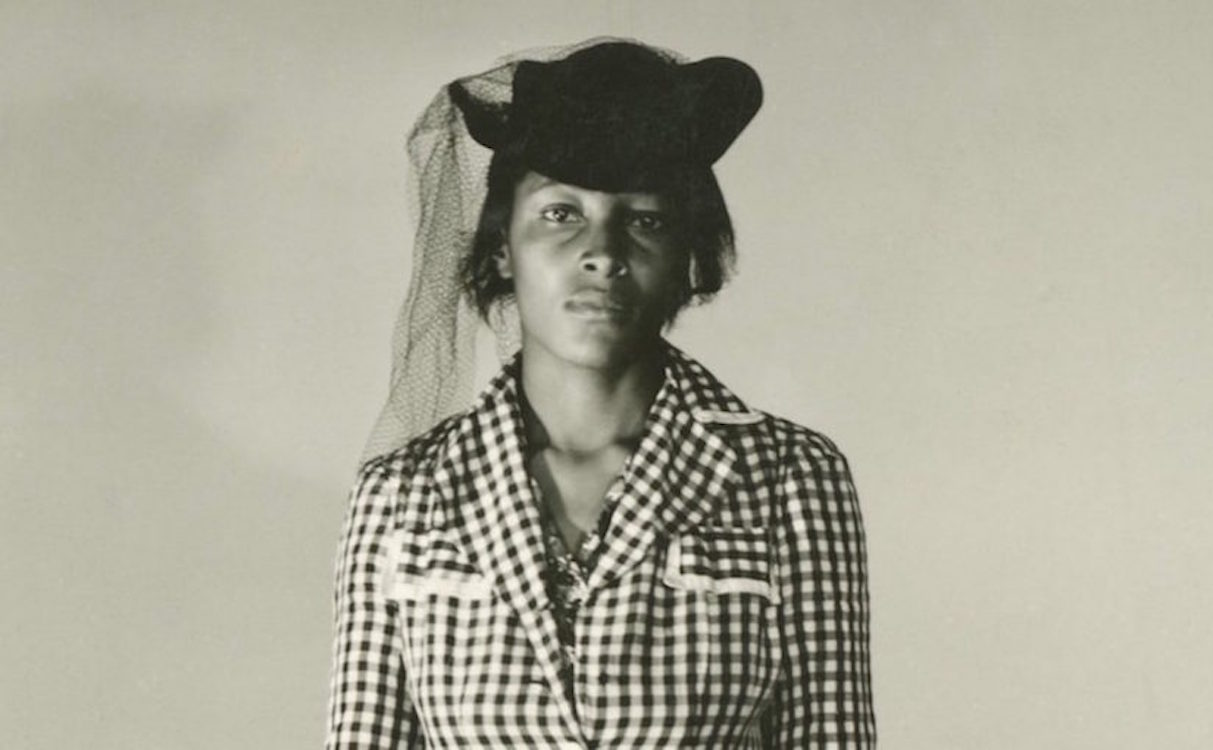
The Rape of Recy Taylor (Dir. Nancy Buirski, 2017)

For many, the first time hearing the name Recy Taylor would have been in January 2018 when Oprah Winfrey paid tribute to the extraordinary woman in her Golden Globe speech, and yet Taylor’s sexual assault would prove to be an organisational spark in the Civil Rights Movement decades before the Women’s Movement and the #MeToo resurgence.

On September 3rd 1944, Recy Taylor neé Corbitt was kidnapped at gunpoint after leaving Church in Abbeville, Alabama by seven young white men. They drove her to a nearby wooded area where six of them – aged between 14-18 – took turns in raping and terrorising the 24-year-old sharecropper, wife and mother, before leaving her blindfolded and stranded at the side of the road. Despite three eye witnesses identifying the driver who would name all of his passengers (none of whom were questioned) an all white, all male jury dismissed the case. Enter the NAACP and their chief investigator, Ms. Rosa Parks who was to conduct a thorough investigation, help defend Taylor and seek punishment for her attackers – some eleven years before the Montgomery Bus Boycott – a dangerous business in Jim Crow-era South.

Writer-Director Nancy Buirski (The Loving Story) uses her film – which had premieres at the Venice Biennale and New York Film Festival – to expose the systematic racism that not only fostered the heinous crime but covered it up. She utilises footage from “race films” and their lack of white gaze to Recy Taylor’s story. These are intercut with gospel music and Church footage – shot by Zora Neale Hurston whose journalistic prose would prove important during another unconscionable and despicably unjust “rape” case in Scottsboro a decade earlier.

While the obvious tone of this documentary is solemnity, some may find its structure superfluous, however, these snippets of human life, art and joy in the face of such adversity are beautiful in an otherwise infuriating film where (yet again) white privilege not only dehumanised this woman but terrorised her family. The full impact of which is discussed in interviews with Taylor’s brother Robert and sister Alma. Hearing them describe how their father slept in a tree overlooking their home (after Recy and husband Willie’s house had been firebombed) with a shotgun as a means to protect his family is particularly hard to hear, made all the more galling when one considers the justification for lynching was the white man “protecting” his wife and daughters. Benny Corbitt was, of course, not afforded that power.

Recy Taylor was just one in a longer tradition of black women who spoke her truth and sought justice, and an aspect the documentary does particularly well is arguing passionately for their place in history – these women were always there. Harriet Tubman, Rosa Parks, Maya Angelou, Ruby Bridges, the afore-mentioned Winfrey – look at the audiences photographed during Martin Luther King’s  numerous rallies, they were there, or look to the backbone of the Black Panther Party, or consider there wouldn’t even be a #MeToo without Tarana Burke.

The Rape of Recy Taylor is urgent and essential viewing. It speaks to the visibility of the African American woman, and the countless women whose voices have failed to be heard. A quietly devastating dedication – get tissues for the last ten minutes – to strength, resilience, resistance and a sustained fight for justice. The name Recy Taylor stands for them all.

The Rape of Recy Taylor is available to stream on Amazon Prime Video and MUBI

Categories
film review

The Perfect Candidate (Dir. Haifaa Al Mansour, 2019)

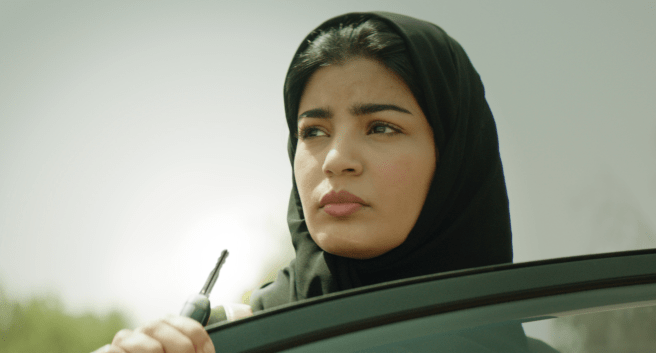
In 2017, the ban preventing Saudi women from driving was lifted and licenses were issued on the 24th June 2018. That same year Haifaa Al Mansour began production on her fourth film The Perfect Candidate (المرشح المثالي). It is no accident that Dr. Maryam Alsafan (Mila Al-Zahrani) drives, immediately placing the film in context and telling us something about the lead protagonist. Just as Wadjda’s (2012) coveted bike was bright green, Maryam’s car is a deep petrol blue in a sea of dirty white dusty vehicles.

The good doctor wears a niqab to drive and leaves it on when doing her rounds in the hospital. There, she has to contend with sick (male) patients shouting their dissent at being examined by a woman, making a difficult job ever harder. They would rather seek treatment from less qualified male nurses than have a woman lay her hands on them. One old man screams “Don’t look into her eyes!” a comment made even more ridiculous by the fact that her eyes are the only visible parts of her face to look at.

Maryam is what her music teacher father Abdulaziz (Khalid Abdulraheem) refers to as “a lion at home and a mouse in public” and serious. Seriously sincere about her patients and the road leading up to the hospital. A burst pipe has rendered it almost impossible for patients to reach their destination and the government refuses to fund the repair. However passionate she is, Maryam is determined not to stay at Al’hana hospital. Her ambitions lie in Riyadh, so when a networking conference taking place in Dubai presents itself, along with the promise of a job opportunity – for which she is the perfect candidate – she must attend.

A problem at the airport, however, prevents her from getting on the plane. Her paperwork has expired and she must seek a male’s signature in her father’s absence (he’s on tour with his band) before being able to travel. Maryam heads straight to her cousin, he has an office in the government and will surely help her. Upon leaving, Maryam instead finds herself heading home and running for local council.

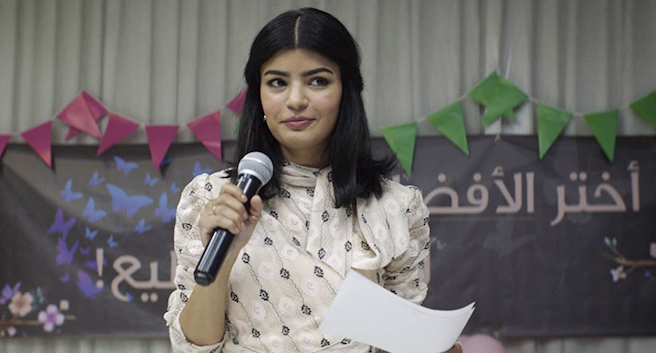
With encouragement from her sisters, Sara (Noura Al Awad) and Selma (Dhay) Maryam pulls together a campaign strategy – her main objective being the road repair, which is apparently not usually high-up on a woman’s list of priorities (we prefer flowers and children-based subjects). While fundraising activities welcome a large body of women, whether they will, or be ‘allowed’ to, vote for her remains to be seen. There’s an unexpected juxtaposing of Maryam and her father’s narrative strand – she’s finding her voice, her public lion, and he’s learning to embrace music again and sing following the death of his wife. While her father is adored for his voice and rewarded, the main goal of Maryam’s (mostly male) constituency is, unsurprisingly, shutting her up.

Maryam’s political career may end as abruptly as it begins but it’s her journey where the interest lies. Just like all the women in Al Mansour’s films – Violet (Nappily Ever After), Mary Shelley, and, of course, Wadjda – transgress societal norms in their own way, and Maryam is no different. Certainly, this film is the by-product when characters like that headstrong 12-year-old and Dr. Maryam – through their determination and intelligence – find their voice and value (beyond what they have been told) in a man’s world, navigating the choppy waters of deep-rooted misogyny and seeing land on the other side.

While a lot of The Perfect Candidate belongs to the political drama – gender politics are certainly at the heart of most films created within a place of female oppression like Saudi Arabia – this film feels more like an ode to the importance of cultural arts, perhaps even a tribute to the filmmaker’s own father, Abdul Rahman Mansour, who is a poet. Whether a conscious decision or due to her co-writer Brad Niemann’s input, the patriarch of this particular family is far gentler and more empathetic than we’re used to seeing onscreen – Maryam is never discouraged at any point by her Abi. As a result the male characters feel a lot more tangible within this narrative, with a variety of masculinities explored. It pulls from Maryam’s arc somewhat but as a result feels a little more balanced, ultimately the film begins and ends with the future. A woman. No longer hidden behind her niqab (if she so chooses).

The film’s colour palette is simple and muted save for the odd flash of tint and tone. Accompanying it, Volker Bertelmann’s string-heavy score is sweeping and rather lovely. The viola, cello and violin notes – and the oud within the diegesis – are beautifully optimistic. Even if the majority of the film doesn’t quite communicate this hope, those last scenes in the hospital certainly do. They signify a slow turning tide coming to Saudi Arabia – one petrol blue car in a sea of dirty white dusty vehicles – and with Haifaa Al Mansour at the wheel, the future of Saudi cinema is in more than capable hands.

Categories
Essay film review

Storytelling and Reality in The Fall and The City of Lost Children

The power of fairy tales and stories in childhood can impact a lifetime not least due to the bedtime story whereby the adult attempts to lull the child to sleep with tales of wonder, and aid in the creation of dreams. Dreams, according to Freud, unconsciously assist with the resolution of a conflict and will be considered later, in greater detail, through an analysis of The City of Lost Children (1995). However, it is the action itself of storytelling which is intriguing, specifically between the adult, the child and the space they commune or what Maria Tatar refers to as a “contact zone”[1], a place of mutual meeting and experience as depicted in a film like The Fall (2006).

By distinguishing between the adult and child Tatar creates ambivalence, how can these two individuals share a mutual experience when she herself sets them apart from each other? Not to mention their individual reader identification and expectation[2]. The contact zone can be said to exist but it is not more likely a mutual meeting of contradictory experience (or even be described as repellent)? A story’s narrative sets both adult and child onto different paths. Adam Gopnik suggests that “the grown up wants a comforting image of childhood”[3] and is driven by nostalgia while the child uses the tales to move beyond childish things, a way of bypassing childhood and venturing out, albeit figuratively, into the world. There is even a suggestion that this contact zone/story space may extend to the dream-world specifically when considering Jeunet & Caro’s The City of Lost Children.

Fairy tales have, over the years, been the cause of much debate. Psychoanalyst Bruno Bettelheim stated that the tales speak directly to children[4] while Danish Folklorist Bengt Holbek maintained that fairy tales were written for an adult audience with children occasionally listening to narratives not meant for their ears[5]. What if they were written with both in mind? After all children are small(er) adults and adults are grown up children. Why should the listener or audience miss out on revisiting an aspect of childhood by vacating the realm of youth? It is the intention of this article to examine two original screen fairy tales in relation to the dual protagonists depicted, the notion of storytelling and the distinction of the ambivalent “contact zone”. The use of this concept, has been renamed the “story space” and may be a basis for the adult/child casting, however, this doubling or duality of character representation offers other possibilities, some of which will be explored.

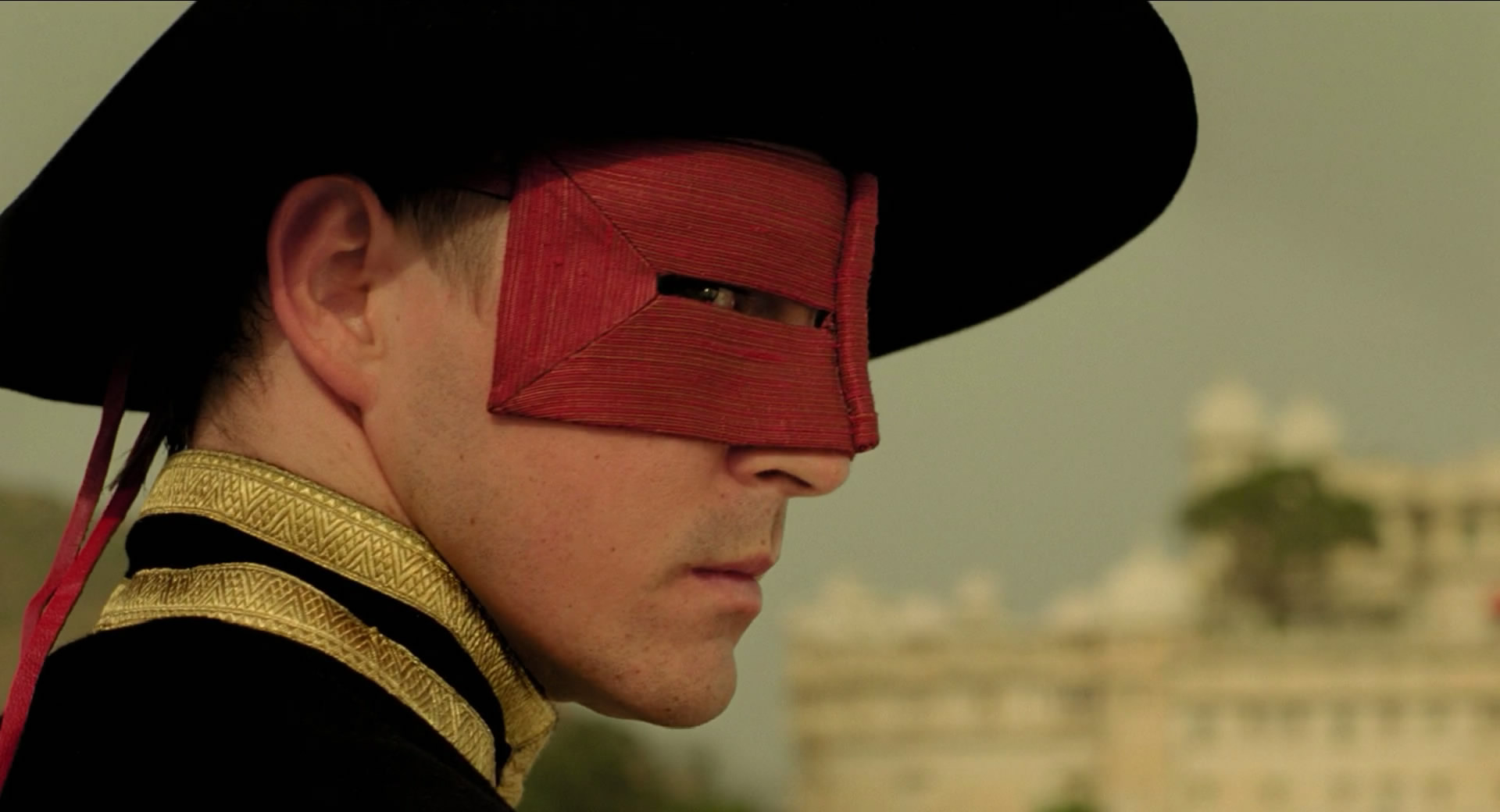
In Tarsem Singh’s The Fall the protagonists consist of an adult and a child, strangers brought together by accidental circumstances. The film opens with an intertitle: “Los Angeles, long long ago” and scenes from the opening sequence quickly establish the setting in circa. 1915 California. Stuntman Roy Walker (Lee Pace) is languishing on the male ward of a picturesque hospital, confined to his bed after a stunt fall ends badly. Walker is a broken man in more ways than one, he has, not only, lost the use of his legs but the love of his life to the film’s leading man. Romanian immigrant Alexandria (Catinca Untaru) is on the other side of the compound in the children’s ward, her left arm in plaster following her fall from the top of a fruit picking ladder. Neither is necessarily destined to meet but both are isolated with few visitors. One day the wind blows Alexandria’s note to Sister Evelyn (Justine Waddell) out of her hands, into an open window and onto Roy’s lap.

So begins two exposition stories, one weighted in reality the other in an alternative world where the outcome is dependent upon how the real infiltrates the imaginary. Roy’s epic tale is a story of six unlikely companions; buccaneer and explosives expert Luigi (Robin Smith), ex-slave Otta Benga (Marcus Wesley), Charles Darwin (Leo Bill), The Indian (Jeetu Verma), a Mystic (Julian Bleach) and The Blue Bandit (Emil Hostina) and follows their quest to defeat the evil Governor Odious (Daniel Caltagirone).
From the start there is an indication that the visuals are formed through Alexandria’s imagination, elements within the fantastical realm are linked to the sights she sees around the hospital. She is providing the pictures while Roy creates the words. For example, much like The Wizard of Oz (1939), characters are drawn from the real world and find their way into the imaginary, Otta Benga is played by the man who delivers ice to the hospital and Odious’ henchman are costumed to closely resemble the Radiographer Alexandria is afraid of. Often the images and description do not correspond with each other, and the Indian of Alexandria’s mind is a man from India who wears a turban and who is mourning the death of his wife while Roy’s, unreliable, narration describes the man living in a wigwam and marrying a squaw[6].

The inclusion of the villainous Odious in the form of Sinclair (Caltagirone) the actor who has stolen the heart of Roy’s actress girlfriend once again confuses the narrative and thus the cinematic narrator[7] has to take over. It is also following this first segment of story that the audience is aware of the real reason behind Roy’s affection of Alexandria’s company. He is using the story space to manipulate the small girl and will only continue the tale after she has located a bottle of morphine for him so he can finally “sleep”.

1.1
1.2

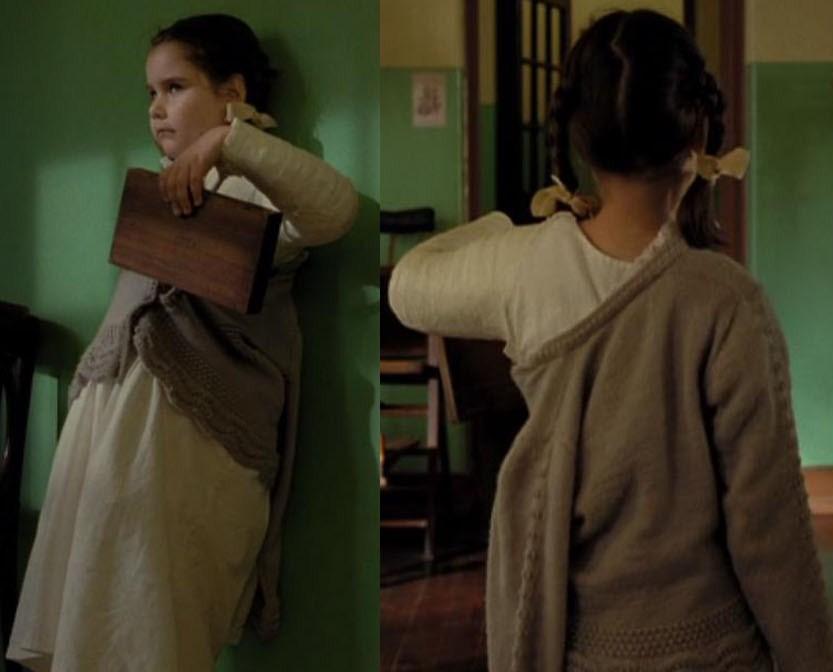
Alexandria is dark-haired and adorably plump and when she is first shot, she is framed within a doorframe, a crucifix mounted on the wall above her thus suggesting that she is inextricably linked with the divine. She has a special relationship with the hospital’s priest and even steals the Eucharist from the chapel and shares it with Roy who asks her if she is trying to save his soul. Her green eyes, missing teeth[8] and stilted English make for an engaging and naturalised performance not least because the audience can occasionally miss snatches of dialogue. Her left arm is perpetually outstretched away from her body for the majority of the film’s runtime and she is almost always dressed in a white nightgown and taupe cardigan which she cannot wear properly due to the frame of the plaster cast. The wooden box she carries, which looks like a book, contains items she “likes”, photographs of her family, a spoon, small toys; a nostalgia box of memories.

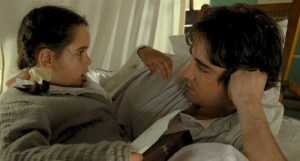
Roy is also a brunette and despite their gender difference they are often clothed the same and often mimic each other’s body language (see images below). This may be an attempt by the adult to place the child at ease or perhaps is the visual depiction of the contact zone / story space previously discussed. Roy and Alexandria’s mutual experience of a fall, hospitalisation and subsequent isolation is the meeting place for them both. The story they both appear to enjoy, whether Roy wishes to return to his childhood or Alexandria wants to surpass hers, as Gopnik ascertains, remains to be seen.

1.5

On the surface, it can be argued that the girl represents the child Roy may never have. He has lost the love of life and the severity of his injury is never fully explored. For Alexandria, he may be a replacement father-figure having lost her father in a house fire. These are easy summations to make, however, another reading may suggest that Alexandria is Roy’s repressed inner child, or as described in Jungian theory, the Divine Child[9] who has manifested through his suicidal despair. This archetype, according to Jung, is weak by design, under developed but one which can bring happiness and instil hope when it has been lost.

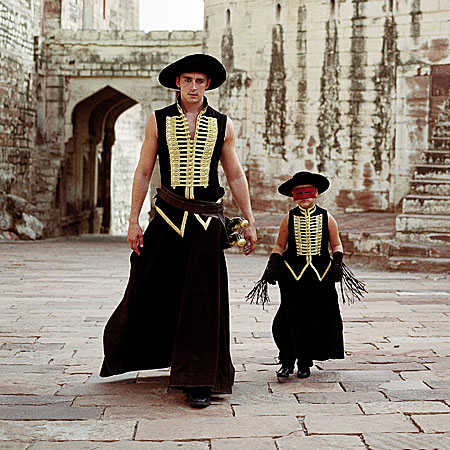
While this, in part, is true, Alexandria is stronger and more mature, even at six, than the infant images which are associated with the Divine Child. She is just as manipulative as Roy and changes the narrative at will, even inserting herself into the story when it looks like the original narrator is close to death. Rather than embodying the child archetype she can be read as Roy’s shadow, quite literally becoming his double once she is a part of the narrative and injects herself into the imaginary world, referring to herself as the Bandit’s daughter, stronger than ever, with two perfectly formed front teeth.

3.1

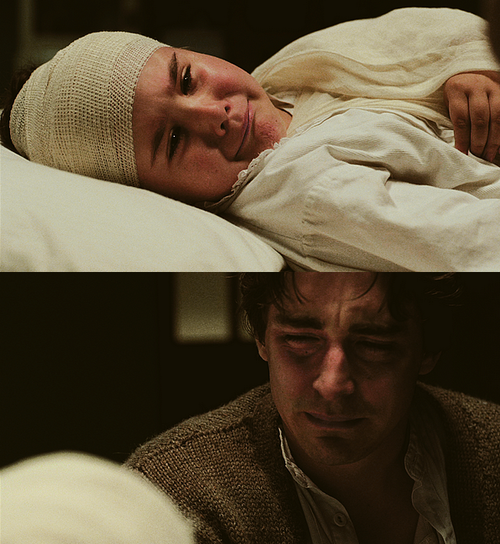
In reality, the roles have reversed in the sense that it is Roy who is now visiting a prostrate Alexandria. She has made a second attempt at getting the bottle of morphine pills, broken into the dispensary and fallen again which has resulted in a serious head injury and Roy is visibly distraught at what he has caused. It is worth noting that after her fall, Alexandria’s recovery is seen through a series of cinematic stills whereby her back-story is shown through live action images and animatronics. Her life literally flashes before her and this sequence is much darker than Roy’s beautifully invented panorama suggesting a real ambivalence between experience and innocence.

Roy admits that the story was a subterfuge to push the girl into assisting his suicide but Alexandria stubbornly refuses to believe this, even after Roy begins murdering the tale’s protagonists one by one. She begs him to stop and he tells her that it is his story, to which she answers “mine too”. Roy, who was also inserted into the fantasy after the death of the Blue Bandit and is now personifying the vengeful Black Bandit, allows Odious to drown him while his double-in-miniature looks on. Back in the hospital, both Alexandria and Roy are in tears and she begs him “Please. Don’t kill him I don’t want him to die. She loves him”.

Alexandria then makes an admission, she has known all along what Roy intended to do with the morphine pills “I don’t want you to die”. In preventing Alexandria’s despair, Roy has to save himself and in the fairy tale world he bursts through the water, re-born, and saved by his blessing in disguise[16]. This confirmation of mortality, as experienced through Alexandria, is further explained by Bettelheim “[the] psychosocial crises of growing up are imaginatively embroidered and symbolically represented in fairy tales […] but the essential humanity of the hero, despite his strange experiences, is affirmed by the reminder that he will have to die like the rest of us”[10].

lp
The-Fall-0661

In The City of Lost Children, one character who is in denial about death is Krank (Daniel Emilfork). He is ageing at a progressive rate because he cannot dream; a lack of imagination is slowly killing him and so, he kidnaps children against the backdrop of a timeless, surrealist, Paris in order to extract their dreams and manipulate them as his own. He does this without realising that in his company they too cannot dream only produce nightmares which terrorise the thief in slumber.

Visually this text is very different from The Fall, where there was a palette abundant in colours and light, here there is limited light and the dominant colours are (as in Jeunet’s later film Amélie [2001]) red and green. This lack of light is metaphorical of the disorientating struggle displayed in the mise-en-scéne; this is a place where babies are left out in rubbish bins and not missed. Krank’s “uncle” Irvin is a disembodied brain which survives in a tank and in the opening twenty minutes serves as the intradiegetic narrator and sets the scene:

brain

“Once upon a time, there lived an inventor with a gift for giving life. […] Having neither wife nor child, he decided to make them himself. His wife’s gift was to be the most beautiful princess in the world. Alas a bad fairy gene cast a spell on the inventor so that when the princess was born, she was only three inches tall. He cloned six children in his own image, so similar you could hardly tell them apart but the bad spell meant that they all had the sleeping sickness. He needed a confidant, so, inside a fish tank, he grew a brain that had many migraines. Finally, he created his masterpiece, a man more intelligent than the most intelligent men. Alas, the inventor also gave him a flaw. He couldn’t dream […] it made him so unhappy that he grew old unimaginably fast [and then] died in dreadful agony, having never had a single dream.”

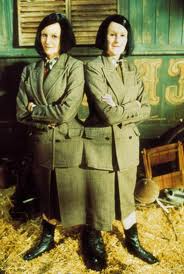
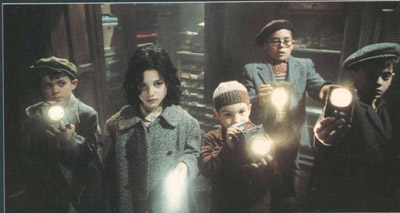
This is hardly the ideological filmic representation of hopes, wishes and desires that Jack Zipes describes when he is discussing the screen fairy tale[11] but a social commentary on the complex use of technology versus religious fundamentalism. The inventor creates his family through technology and essentially ‘plays God’ only to be worshipped by a cult of Cyclops who, in return for their sight, kidnap the children Krank requires for his dream-catching. The messianic figure of One (Ron Perlman) whose back story is linked with other fairy tales (Jonah and the Whale and Pinocchio[12]) enlists the help of an alluded-to Wendy[13], Miette (Judith Vittet) and her gang of Lost Boys/ urchins to rescue One’s little brother Denrée (Joseph Lucien). Miette and her fellow orphans work for The Octopus (Geneviève Brunet and Odile Mallet) identical twin sisters who dress, function, speak and work as one entity, conjoined at the leg.

4.2
4.3

While these dual characters are literally mirrored in their representation there are other characters which are connected subconsciously. Krank is beyond childhood without having actually experienced one and yet acts like a child, prone to tantrums and crying fits. Miette, on the other hand, is still physically in childhood but has the demeanour of an adult. Her orphaned abandonment has enabled her to mature quickly and her instinct for survival has her resorting to any means necessary to live, she is wise and tough far beyond her years. Miette and Krank are, in essence, two facets of the same person.

As described by Gopnik in his 1996 New Yorker article, Krank wants a way back into childhood while Miette wishes to embrace adulthood, even envisioning a relationship with the man-child strongman, One. When Miette and Krank come together in their contact zone/story space it is not through traditional storytelling but a dream in which they get to embrace their shadow selves and share a mutual experience.

dream-device

Jung articulated this exchange in this way, “beneath the social mask we wear every day we have a hidden shadow side, an impulsive, wounded, sad or isolated part that we generally try to ignore. The Shadow can be a source of emotional richness and vitality, and acknowledging it can be a pathway to healing and an authentic life. We meet our dark side, accept it for what it is and we learn to use its powerful energies in productive ways […] By acknowledging and embracing The Shadow as deeper level of consciousness and imagination can be experienced.” [14]

Krank is dispossessed of a soul, an imagination and empathy and upon sharing consciousness with Miette – the girl who does not dream – can finally experience what he has been missing. In the same token, Miette can embrace her youth and rescue the man she loves. The child in the crib is dressed in pyjamas which are the same colour and style and the boy’s hair has been reddened, he resembles a young One, this is evidently how she reconciles the contact zone.

4.1

Interestingly, only when the child starts to morph into Krank does the ageing process begin, the Shadow selves meet. Unlike The Fall, where assumptions are made regarding Alexandria and Roy’s future selves, here Krank accepts his Shadow and so begins his regression. In opposition, Miette begins to wither and age until the demented dream-catcher is a baby. Miette must embrace her biggest fear so she can move forward and that is imagining One dead. This interchange of dreams kills Krank in reality thus substantiating the importance of imagination, use of enchantment and originality.

Fairy tales give the adult reader a re-presented imagination. Understandably, the physical child may have evolved but these screen tales enable the repressed child to re-emerge through viewer identification. Perhaps, just like the children in these texts they enforce a sense of hope, strength and resilience which has long been forgotten.

The inclusion of a child within an adult diegesis serves more than just viewer manipulation[15]. This division of realities and mirroring of locations, narratives and characterisations is an integral part of the postmodern film and more specifically this dual nature is present in screen fairy tales. While the texts that have been considered here have a very distinct separation between the real and imaginary, it would be worth considering the screen fairy tale which is based in reality and consider what purpose they may serve for an adult audience.

Sources

[1] Maria Tatar, Enchanted Hunters: The Power of Stories in Childhood (New York/London: W. W. Norton & Company, 2009). A term borrowed from Mary Louise Pratt. Tatar changes the context of the original contact zone and sets about making her own.

[2] Ibid. p242. “The power of reading together derives in part from the fact that it involves a transaction between more than a single reader and a text. The dialogue that takes place between the [storytelling] partners fuels the transformative power of the story, leaving both the child and adult altered in ways they might never have imagined. [Mary Louise] Pratt found in contact zones a process of transculturation, with colonizer and colonized entering into lively, two-way cultural exchanges”.

[3] Adam Gopnik, “Grim Fairy Tales”, The New Yorker (November 18, 1996) p96. http://www.newyorker.com/archive/1996/11/18/1996_11_18_096_TNY_CARDS_000376397 [accessed 10 January 2012].

[4] Bruno Bettelheim, The Uses of Enchantment: The Meaning and Importance of Fairy Tales, (UK: Penguin, 1991).

[5] Bengt Holbek, Interpretation of Fairy Tales: Danish Folklore – A European Perspective, (Denmark: Suomalainen tiedeakatemia, 1987).

[6] These differences can also be examples of Pratt’s ‘contact zone’ specifically with the cross-cultural experience between American Roy and Romanian Alexandria.

[7] Seymour Chatman, Story and Discourse: Narrative Structure in Fiction and Film, (USA: Cornell University Press, 1980).

[8] Missing teeth as a motif are used throughout the picture. Roy tells Alexandria that power is symbolically associated with teeth and that she is currently “missing some strength”. Upon further investigation, however, teeth can be associated with illness and death and even a lack of faith (Greek) and in Chinese culture missing teeth symbolise telling lies. Some cultures believe that losing teeth can be sign that an individual has placed more faith in the word of man and has lost trust in God.

[9] Carl G. Jung, Essays on a Science of Mythology: The Myth of the Divine Child and the Mysteries of Eleusis, (USA: Princeton University Press, 1969).

[10] The movie’s tagline is quite apt here. Only at Roy’s lowest ebb did she manifest.

[11] Bettelheim, 1978 pp39-40.

[12] Jack Zipes, Happily Ever After: Children and the Culture Industry, (New York/London: Routledge, 1997) p9.

[13] One is an ex-whaler and following the loss of this job is hired by a travelling circus, of sorts, as a strongman. Aside from size he is for all intents and purposes a boy.

[14] J M Barrie, Peter Pan, (UK: Puffin [Re-issue], 2014).

[15] Jung, cited in Connie Zweig and Steve Wolf, Romancing the Shadow: A Guide to Soul Work for a Vital Life, (UK/USA: Random House Publishing 1999) p21.

[16] Karen Lury, The Child in Film: Tears, Fears and Fairy Tales (UK: I B Tauris & Co Ltd, 2010). Lury likens the child to a pet and even refers to both as ‘it’, she ascertains that the inclusion of children within a narrative is merely to serve an emotional purpose for the viewer.

Categories
Blu-ray film review

Under the Shadow (Dir. Babak Anvari, 2016)

In Two & Two (2011) – Babak Anvari’s BAFTA-nominated short allegorical film – a teacher (Bijan Daneshmand) attempts to re-educate his male pupils with some basic arithmetic, claiming that what they have always been taught is no longer true. The writer-director packs quite the punch with very little exposition and a whole lot of nuance when depicting the absurdity of an authoritarian regime/dictatorship. Which all bodes well when your next film – and first feature – is an effective little horror (and would become BAFTA award-winning in its own right). It is also a lovely touch to have that same actor play the University Dean who is responsible for shattering Shideh’s dreams of becoming a Doctor.

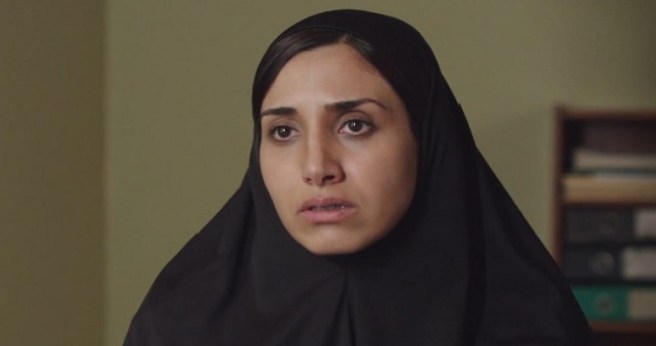
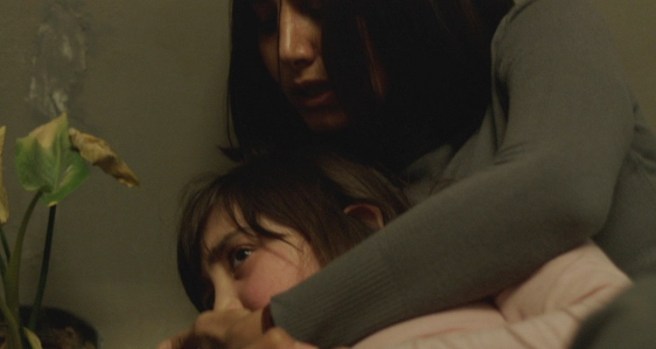
Under the Shadow is set in Tehran during the Iran-Iraq war of the 1980s and Shideh (Narges Rashidi) can no longer study medicine having been removed for her political beliefs. We are never party to what exactly her transgression is but suffice to say with the mention of ‘radical left groups’ she was – and probably still is – against the war that is currently waging in her country.

Once her chador is removed, we can ‘see’ some of her transgressions. Her hair cut (in a bob style), dress (westernised), and her autonomy around her home; the partnership with her husband, exercising to Jane Fonda. she’s also the only woman in the building who drives. This is a ‘modern’ woman, oppressed by external tradition and reduced to the confines of her four walls, and even those are not so secure with the shelling, daily explosions and air raids which can send residents into a panic at any given moment.

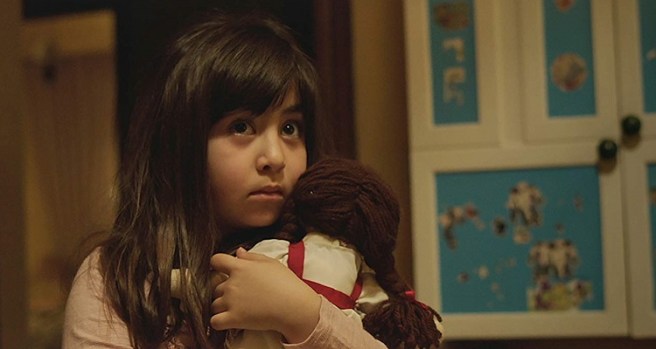
When her husband Iraj (Bobby Naderi) receives his draft notice, Shideh is left with her young daughter Dorsa (Avin Manshadi) as, one by one, all her neighbours pack up and move onto safety. The exacerbating factor a shell crashing through the roof of their building, killing the elderly resident within and leaving a gaping hole. The hole is covered with a sheet which appears to undulate in the wind like a bodily organ, flapping in and out like a heartbeat. A visual metaphor of a damaged culture, while the cracks in the ceiling – it can be argued – relate to Shideh’s psyche. Ever increasingly isolated, Shideh and Dorsa begin to experience things which may be the product of a child’s imagination or something altogether more supernatural.

Djinn is a malevolent spirit which has its history in Early Arabia and then later in Islamic mythology and theology. An entity that travels on the wind until it finds somebody to possess. Often dismissed as a superstitious belief, the spirit is reported to enjoy the souls of children (much like Krampus in European culture, or el Cuco in Latin America). It may explain Dorsa’s fever or not, after all Shideh was also once a child. Evil wants to hurt them alleges one neighbour while another, Mrs. Fakur (Soussan Farrokhnia), attempts to allay her friend’s fear: “people can convince themselves of anything if they want to”.

Tight framing adds to the oppressive atmosphere as mother and daughter’s fear and anxiety builds. Tension is slow-burning, and jump scares are few and far between yet effective when they do occur. There’s no score (music is only played during opening and closing credits) so is reliant upon diegetic noise and whistling winds. We’re never sure of the time of day given the constantly closed curtains and disturbed sleep patterns.

What appears to be mere moments gives the impression of hours. As people leave we can assume the passing of days and weeks yet the costumes of the leads mostly remain the same. Natural and artificial also play havoc with this, along with the production design: one location, open doors, hallways, and reflections in the television mean the constantly moving camera plays tricks with the eyes – was that something moving or not? Shideh’s lip is bruised from the constant biting, insecurity, anxiety, stress. Like all amazing genre films – nothing is ever quite how they appear and this film is all the better for it building beautifully the general sense of unease.

It seems apt that when she is preparing to fight, Shideh’s weapon of choice is a pair of scissors – as if tethered to a more domesticated past, her own mother’s apron strings or the chador in this instance. While the malevolent being appears to be set on persecution – even referring to the character as a ‘whore’ and ‘bad parent’ – it’s important to remember that Djinn is not inherently evil or good, and this entity could, at some point, be Shideh’s mother from beyond the grave.

A matriarch disappointed that her daughter will no longer practice medicine but needs to save her by forcing her to leave the building. Think back to the picture frame which houses Shideh’s mother’s portrait, the fractured glass obscuring the image within, it now laying down on the shelf hidden from view – but before that, the draped material serving as a backdrop in the photo is identical to the chador the entity embodies itself within. This reading further strengthens the mother-daughter links throughout, and the expectations a patriarchy levels at women, generally, but more so during the kind of regime in Tehran of the 80s.

As a first feature, Under the Shadow wears its influences well: Polanski’s apartment trilogy (Repulsion [1965], Rosemary’s Baby [1969], The Tenant [1976]) with a sprinkling of Hideo Nakata’s Dark Water via a domestic social realist drama in the ilk of Abbas Kiarostami and Asghar Farhadi. It’s a rich and visually arresting film which checks all of the above as well as featuring, at its heart, a really affecting horror fable. A 1980s Tehran-set horror film filmed entirely in Farsi – the first of its kind.

Finally, it has been given the kind of release it deserves courtesy of Second Sight that includes plenty of extra features, including five new interviews with the filmmaker, cast and crew, as well as a lively commentary between Director Anvari and film critic Jamie Graham, in which every aspect of the film’s genesis, production and release is covered.

Extras

Two & Two (8:48) – Babak Anvari’s BAFTA-nominated short film shown in its entirety. It’s the one extra which can be watched before the main feature.

Escaping the Shadow (23:53) – A long interview with Anvari who begins with his own childhood nightmares growing up in 80s Iran before his move to Britain. He talks at length about the filmmaking process, his cast, shooting in Jordan and expands upon things mentioned in the commentary. He’s a delightful interviewee, and while it is not the most imaginatively filmed featurette, Anvari’s charisma shines through.

Within the Shadow (12:52) – Star of Under the Shadow, Narges Rashidi discusses her own childhood in Iran and Germany and career now she is LA based. She describes the film as a ‘beautiful gift’, and again, static camera and a by-the-book interview reveals an excitable and rather lovely person.

Forming the Shadow (16:11) – Lucan Toh and Oliver Roskill talk all things ‘producer’, how they met Babak, the script, the film’s potential and their brief disappointment at not having to sell the film when it premiered at Sundance. A lot of their anecdotes are repeated in the commentary track.

Shaping the Shadow (13:29) – Anvari’s close collaborator and DoP Kit Fraser talks about his involvement from before the script was even written.

Limited Edition Contents – This set is limited to just 2000 copies, comes in a rigid slipcase featuring new artwork by Christopher Shy and with a soft cover book with new essays by Jon Tovison and Daniel Bird (unavailable at time of review). Plus behind-the-scenes photos, concept illustrations, and a poster with new artwork.