Categories
Film Festival film review

Make Me Up (Dir. Rachel Maclean, 2018)

LFF 2018

For those unfamiliar with Rachel Maclean’s work, the Edinburgh-born multimedia artist created one of the 50-feet portraits of Billy Connolly which adorned the streets of Glasgow for The Big Yin’s 75th birthday. She also submitted a short: Spite Your Face to last year’s London and Venice film festivals. This piece focussed on a Pinocchio-type character – played by Maclean – who chases the lure of wealth within an abusive patriarchal power. It was made as a response to Britain’s decision to leave the EU and Trump’s presidential campaign. Within the mise-en-scéne its colours of choice were (Tory) blue and (Trump) gold.

The artist’s first full-length feature – included in the BFI’s 2018 festival programme – uses bubble gum pinks, violets and blues in every frame, and like its predecessor zones in on the post-Brexit zeitgeist in a similarly confrontational and acerbic manner. Make Me Up begins with the familiar aural tone and visual most Apple users attribute to the Siri application, when a disembodied male voice asks, “Siri, when is the world going to end?” before a woman screams “I don’t know!” and her cries resonate over the black screen.

Siri (Christina Gordon) in this case is a woman, pink of hair, born of a gelatinous lump of flesh. Unsure of how she ended up in such an inexplicable place, she becomes allies with Alexa (Colette Dalal Tchantcho) and is forced to compete against several other women (there’s even a Cortana too) in a hyper-real game show of sorts. All under watchful Orwellian eye(s) which fall from the ceilings and monitor everything and everyone via facial expressions and status updates.

In charge is the Figurehead (Rachel Maclean). An equally magenta-haired woman who schools her audience on the role of women within civilisation and through the history of art. Like her ‘pupils’ she has no voice of her own but is a conduit for the dulcet tones of historian Kenneth Clark, and specifically his 1969 BBC TV series Civilisation. She has other voices in her arsenal, namely those belonging to Andrew Graham Nixon and critics E.H. Gombrich and Robert Hughes, all stored within a device embedded in her arm. Her mannerisms scream Thatcher as her lips sync to the pomposity of the white, male patriarch. The girls before her know to mind their Ps and Qs and if they don’t? Well, naughty girls are punished, pitted against one another before elimination. The winner gets to eat.

Every inch of the film is aesthetically pleasing – although some may find it on the kitsch-side (when is that ever a bad thing?) – from Maclean’s production and costume design (she is also editor and responsible for the compositing and 2D effects) to Grant Mason’s prosthetics and Scott Twynholm’s score; it is all substance and style. Maclean asks us to consider the toxicity of social media, the depiction of women in politics, art iconography and beauty culture. The use of The Woman of Willendorf and the Venus de Milo is particularly powerful to illustrate the evolution of the female image, with nods to the works of Michelangelo, Botticelli, and Munch later on.

Make Me Up is a biting and thought-provoking satire which could not be more timely, not least in its celebration of the Suffragist Movement. It presents the violent and submissive fears, desires, control and pressures surrounding women. It asks questions of the role of women in contemporary feminism and art, as well as realigning the male gaze albeit sardonically amid Freudian visuals (the breast-shaped door handles and phallic dinner meat are particularly delightful). It has aspects of Alice in Wonderland by way of Sucker Punch via Hartbeat.
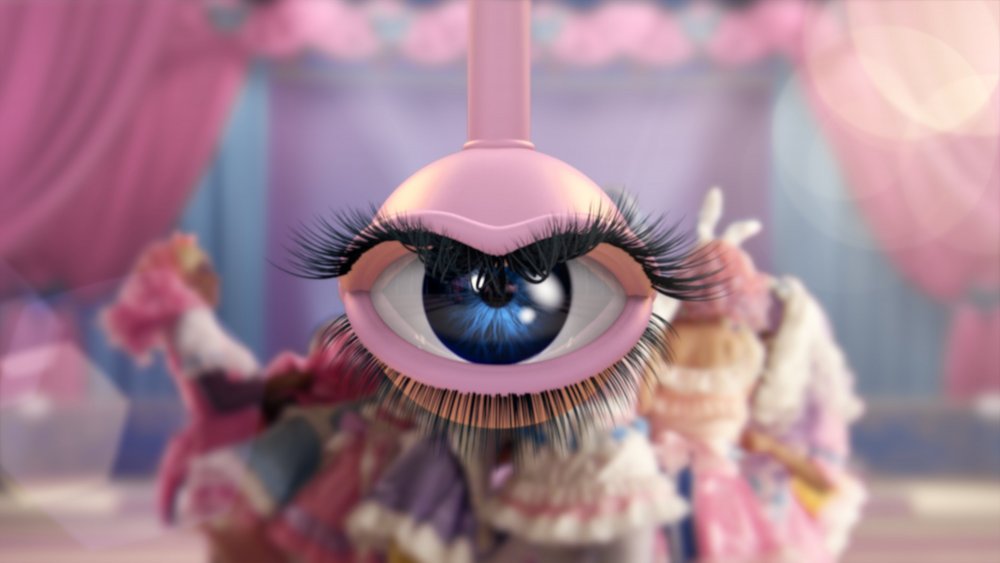
There is, however, no all-encompassing decorative pink bow of a conclusion – as Siri plots her escape thanks to the support of the sisterhood, you will recognise a few – and some may even find the final shot dispiriting but thankfully women persist. Director/Writer/Artist and all-round multitasker Rachel Maclean has put together something highly intelligent and imaginative. It deconstructs the beauty myth (perfection paint, anyone?) and reconsiders art history, criticism and all with a grin on its face and a knowing wink. More please.
Categories
Film Festival film review

Carol (Dir. Todd Haynes, 2015)

LFF 2015

Patricia Highsmith has always written credible males. Her themes of masculinity, love and murder have thrilled audiences for decades both in the literary and filmic world. Carol, (originally published as The Price of Salt under a pseudonym) could not be further from the likes of Strangers on a Train, The Talented Mr. Ripley or The Two Faces of January. Here, protagonists are female and the thrilling cat-and-mouse chase becomes a different kind of pursuit in this superbly told love story.

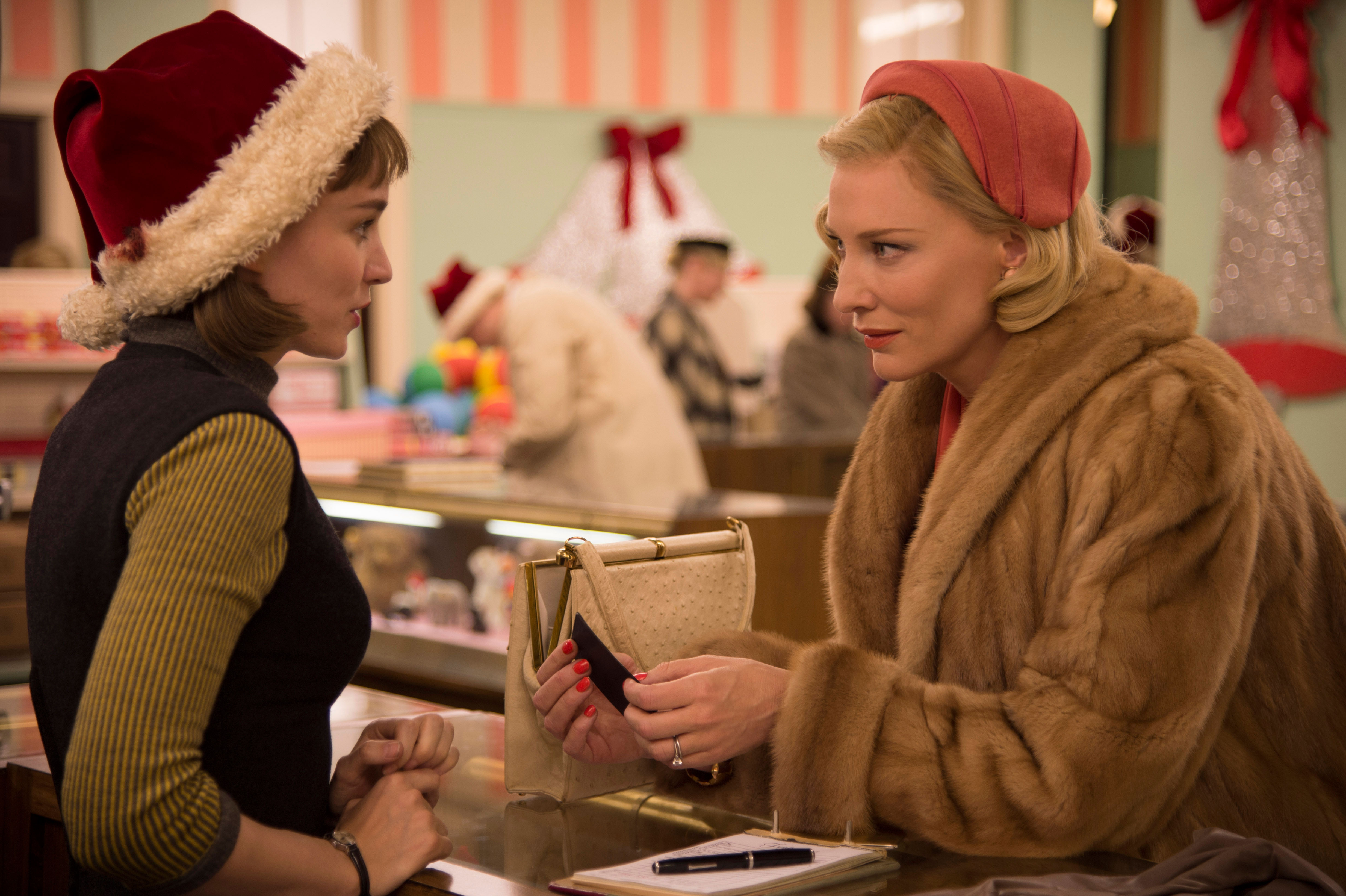
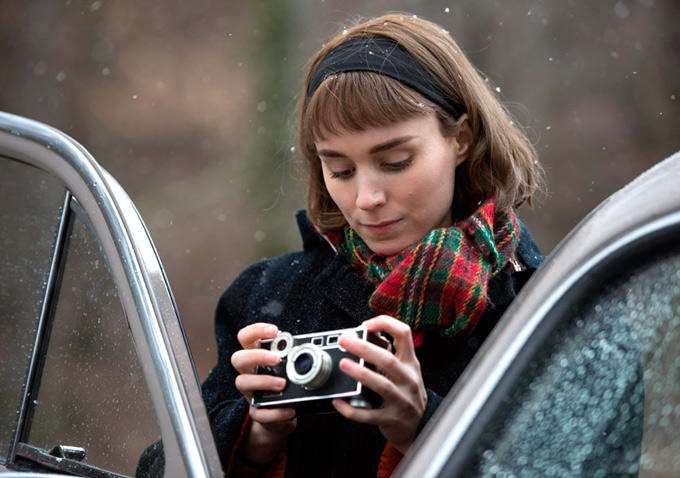
Not only a love story between two women but Carol looks at the heartbreak of a mother separated from her child amid an acrimonious divorce and the sexual politics of the fifties sheds light on the limitations of women and their role in both the home and society. Haynes is a master of the period and shoots women beautifully. He appears to understand them, intuit their strengths, weaknesses, whims and nuances. He is also notorious for getting the finest performances out of his leading ladies – Julianne Moore (Far From Heaven), Kate Winslet (Mildred Pierce) and now Rooney Mara. Make no mistake that while she may play the titular character and gives a stunning performance, Cate Blanchett is out-classed at every turn by Mara.

Much like Haynes’ previous work, there is a reverential Sirkian quality to this drama. The highly stylised mise-en-scène appears as if belonging to a live-action Edward Hopper or Norman Rockwell painting. The attention to detail makes for hazy viewing; the colours are rich, the costumes are resplendent and Carter Burwell’s gorgeous score sets the melancholic yet triumphant tone. Carol is an intricate, heart-swelling amour fou which depicts the mesmeric, insanity and beauty of love.

carol3

Carol is out on UK cinema release on 27th November.

Categories
Film Festival film review

Chevalier (Dir. Athina Rachel Tsangari, 2015)

LFF 2015

chevalier (1)

Economic crisis birthed a Greek New Wave with Athina Rachel Tsangari leading the fore. Historically, she has written, produced and/or directed many of the films associated with the Greek film industry resurgence – Dogtooth, Alps, Attenberg (and acted in Before Midnight too with her lead actor Panos Koronis). She and fellow Greek director Yorgos Lanthimos (The Lobster) screened at this year’s LFF.

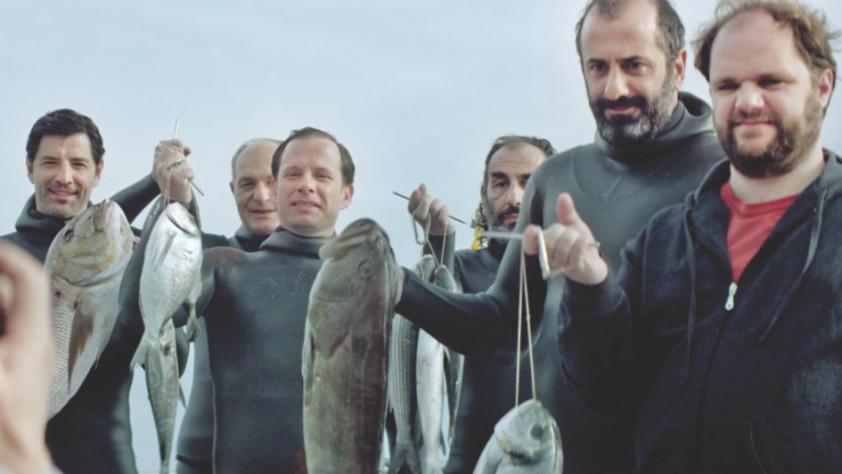
Tsangari’s last cinematic outlets Attenberg (2010) and her 2012 short The Capsule heavily featured females and their place in – and on the periphery of – the world around them; the director’s next concentrates on the adult male. In spite of its gallic sounding name, Chevalier is very much Greek. Set upon a yacht amid the Aegean Sea and a palette of pale greys and marine blues, it is like Attenberg in that the look is minimalist playing against the backdrop of the Aegean and the insular interior of the boat.

Chevalier_PyrpassopoulosPapadimitriou

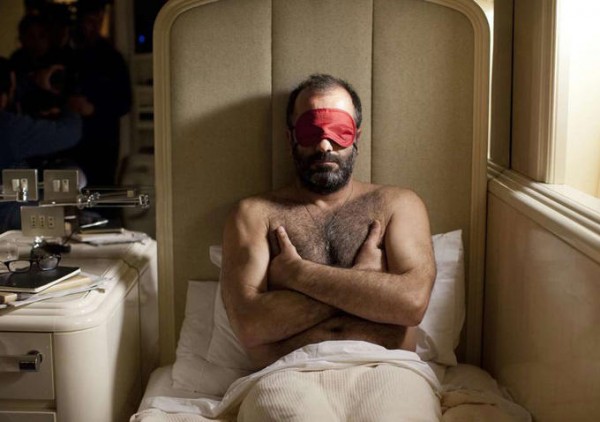
We never find out what brought these men together, or why they decided on a boat-trip. There are indications as to how they know each other: the Doctor and his handsome predecessor, the Insurance salesman nudist son-in-law, and his loner-genius brother who cannot go into the water (although, we never find out why), the one who spends an inordinate amount of time on his hair, and his pal; they are all friends of sorts. Growing tired of the tedium of card playing and incongruity of asking each other what fruit they see each other as, they decide to make things interesting and create a new game – who is the best in general? They start marking each other on everything, from sleeping posture, the ability to make an IKEA shelving unit, to the size and girth of their erections. The Chevalier of the title is referenced by a signet ring, often worn by French nobility and although its meaning varies depending upon which culture it inhabits, it is also a decoration given by a Patriarch of the Orthodox Church/Knight/Nobleman. You get the gist.

Co-written by Efthymis Filippou (Alps, Dogtooth) which may give an indiction the absurdist direction the film will veer. As to the journey, we’re all along for the boat-ride. To see these men primp and preen is a riot and even I relished (and perhaps snorted) at the male insecurity and ludicrous machismo on display as characters start to examine themselves in the mirror and bemoan the size of their thighs; an anxiety usually associated with female culture.

panos

There is little guidance in relation to interpretation; the film can be read in socio-political terms especially when the game catches on with the boat’s chef and porter but Tsangari never leads one way or another.  Friendships will be tested and manipulated, blood bonds broken and formed as the best man overall is discovered.

Chevalier is a rebellious, brilliantly mordant and shrewd satire of the male ego. It is absurdist, surreal in parts, and hilariously droll from start to finish. It takes an astute filmmaker to hold a mirror up to society and provoke laughter and it will make you laugh. A lot.

Categories
Film Festival film review

Listen to Me Marlon (Dir. Stevan Riley, 2015)

LFF 2015

1638832 001
listentomebud

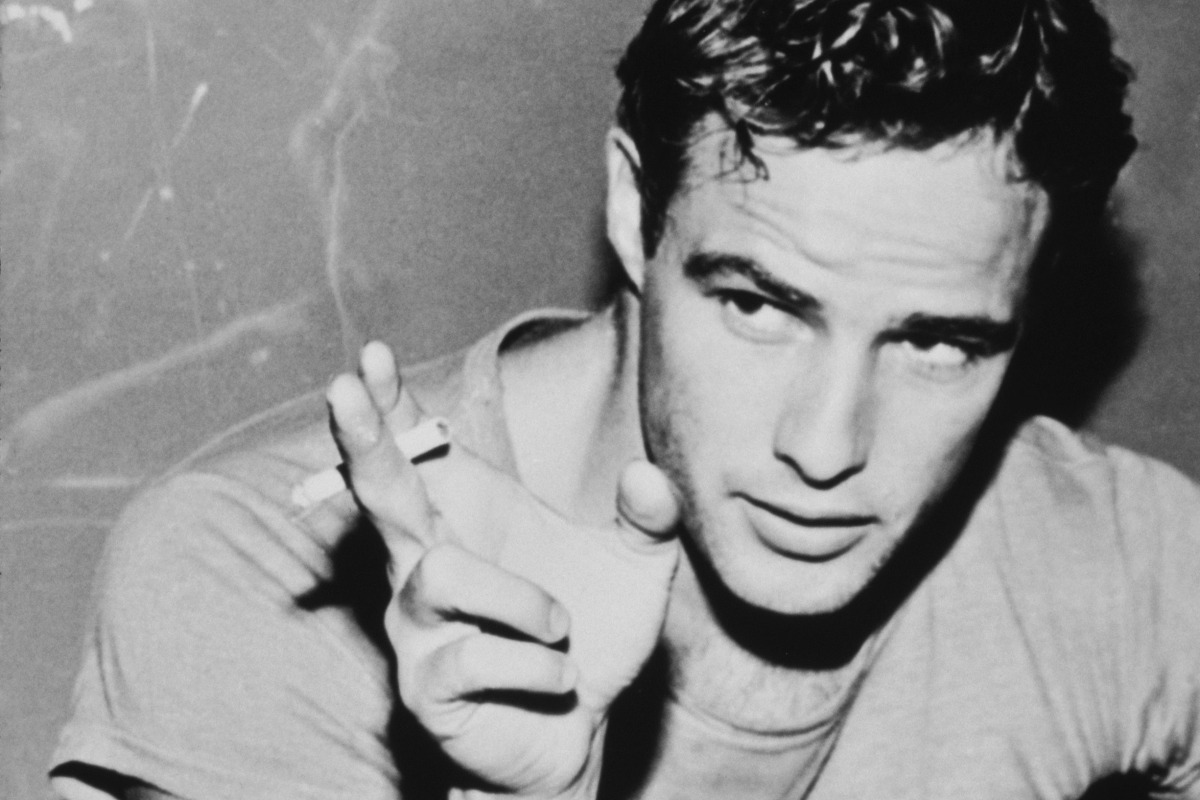
‘Bud’ Brando means a lot to me. He was the subject of my Undergrad dissertation and to this day he fascinates me. Not just a pretty face he appeared to be a mass of ambiguity and encompassed the beautiful; a masculine yet feminine dichotomy, enigma and myth. There was an ambition and an underlying vulnerability I was drawn to, hell, even empathised with but by the end of my research, these ambiguities, half-truths and general lack of consistency allowed me to dissect the actor’s persona and his choice of film roles yet the man remained somewhat of a mystery. 

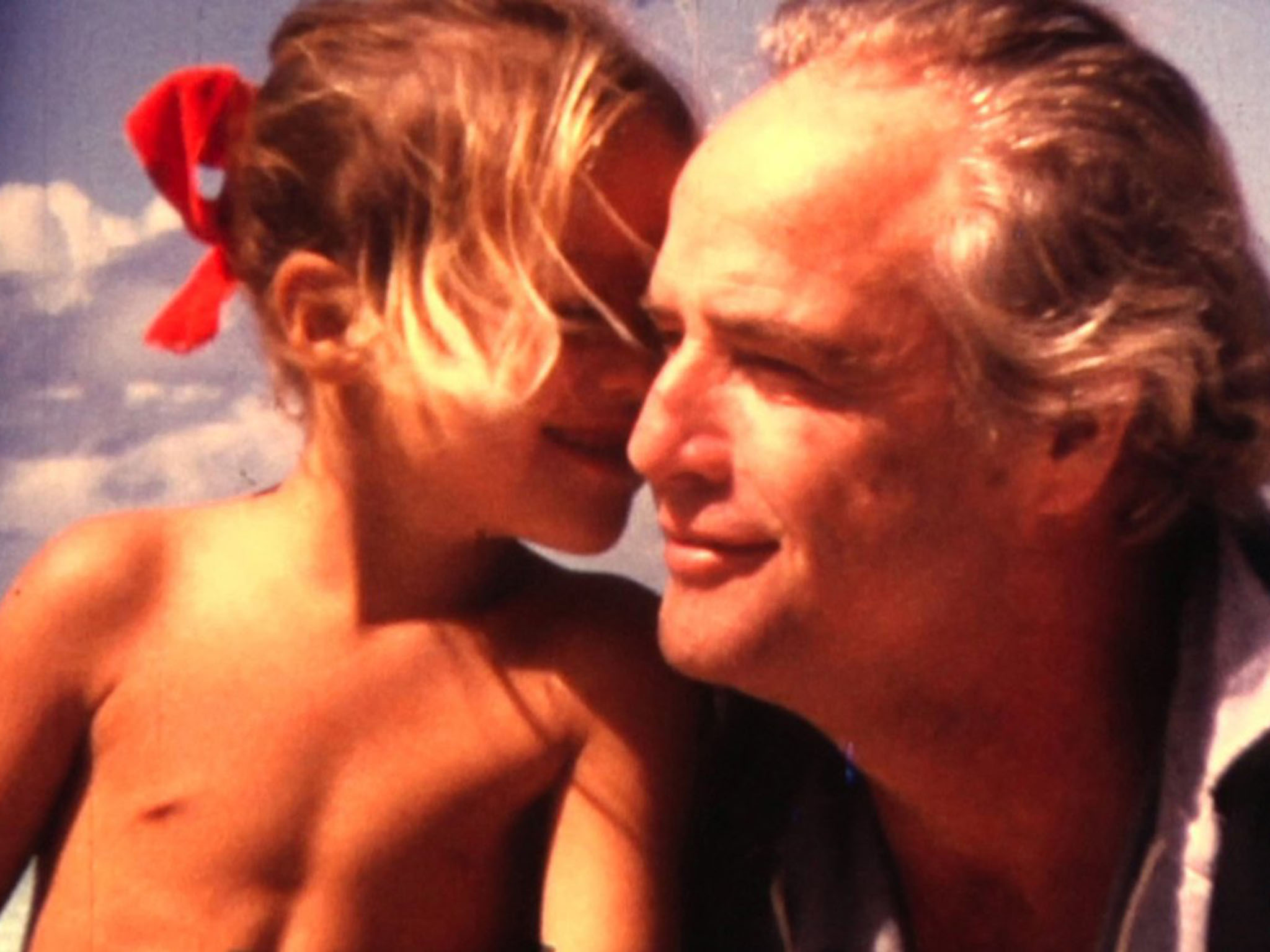
Recently screened at the 59th BFI London Film Festival, Stevan Riley’s film Listen to Me Marlon opens with a digitised print of Brando’s face – one used during his incarnation as Superdad, Jor-El. It’s an eerie image, like a death mask but also rather apt given that fatherhood is such a huge part of this documentary. It/Brando begins to recite a monologue before news coverage takes over, detailing the shooting of Dag Drollet at Brando’s home in 1990. Dag was the boyfriend of Brando’s daughter Cheyenne and father of her son Tuki – he was killed after a struggle with her elder brother Christian. Cheyenne would later commit suicide. It was a tragedy that changed the actor overnight and something he never appeared to get over.

listen-to-me-marlon (1)

Riley edits shots of an empty home against the audio soliloquies and these are intercut with video footage and archival interviews of Brando during his heyday and beyond. He does a tremendous job at giving an audience, unfamiliar with the star, a real glimpse at the man. A lot of the visual segments are not necessarily new but the tapes are revelatory. The actor grew tired of psychoanalysts and began self-hypnosis in an attempt to understand himself. The man depicted throughout this documentary is one with unquenchable curiosity; intelligent, articulate and thoughtful – a shy and sensitive soul determined to have love and freedom. His enigma remains somewhat intact, and thanks to writer/director/editor Riley an audience can experience a real intimacy with a largely misunderstood Marlon.

LISTEN_TO_ME_MARLON_still

Listen to Me Marlon is a beautiful, affectionate gem of a film which perfectly balances the fact with fiction; the philosophical man and myth. To hear the distinctive nasal tone of the much-mimicked actor and to note the change in octave and speed as he gets older is actually very moving. This is a last testament of sorts: Bud in his own words. And what wonderfully warm, sad and amusing words they are.

Categories
Film Festival film review

The Witch (Dir. Robert Eggers, 2015)

LFF 2015

the-witch_trailer_2015

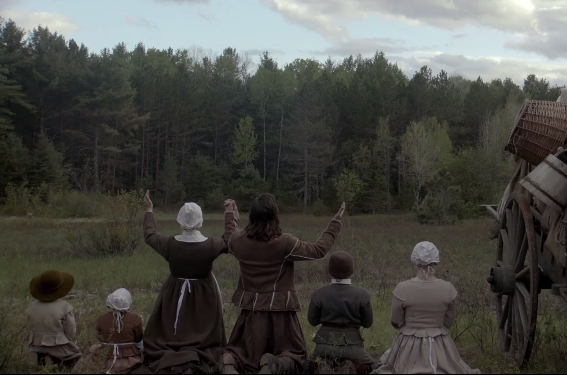
Robert Eggers’ feature debut, The VVitch is a supremely confident and impressive piece of work. It knows exactly what it wants to be (is exactly what this viewer was hoping for) and after five years in the making why expect anything less. The research and production value is astounding given its low budget but then, Eggers is an ex-production and costume designer. There is a specificity and authenticity to his film – which recently won the Sutherland Award (Best First Feature) at the London Film Festival – and this verisimilitude lends itself well to the genre. Although obviously belonging to horror, at the heart of The VVitch is a psychological family drama. 

It is 1630 and Puritan William (Ralph Ineson), his wife Katherine (Kate Dickie) and their children Thomasin (Anya Taylor-Joy), Caleb (Harvey Scrimshaw) and twins Mercy (Ellie Grainger) and Jonas (Lucas Dawson) are banished from their settlement seemingly, one would assume, for religious fanaticism. They make a home in New England, on the edge of a wood and begin to tend the land, grow corn, keep goats and even welcome a new addition in the form of baby Samuel. Life can hardly be described as good but they have their God, faith, and each other. That is until the day Thomasin is playing peek-a-boo with her baby brother, moments later he disappears and the home descends into hysteria.

The film evokes resounding performances from children and adults alike. Ineson and Dickie are consistently outstanding but the family dynamic they purportedly created in pre-production is effecting and wholly convincing on-screen; making several scenes gut-wrenching as palpable tension rises and the isolated house – seemingly without sin (hubris, deceit, guilt, etc. do not appear to countナ) – loses its inhabitants one-by-one. It is a folkloric dream with its attention to detail and there are even references to a red cloak and poisoned apple long before they were recorded in any Grimm fairy tale.

witch2


While this is Eggers’ baby, he owes his composer Mark Korvan, his cinematographer Jarin Blaschke and editor Louise Ford a debt. Collectively; they earn your fear. Everything is stark, long shots for outdoor scenes, natural lighting wherever possible; close-ups and sharp editing as the audience intrudes upon the family’s dwelling. As a side note, how nobody has approached Ineson before for a horror film is a mystery with that resonating, cacophonous Northern growl he has.

maxresdefault

The VVitch conjures on all counts with thematic, visual aesthetic, an actual witch (!) and Black Phillip making up for a slight plot. Non-Brits may struggle with the dialect but it is well worth the skirmish. It is gorgeous, grim and, by ‘eck, bewitching.