Categories
Film Festival film review

Restless (Dir. Jed Hunt, 2024)

There is nothing worse than losing sleep and there is a special place in hell for anybody who comes for it and your peace of mind. This is something that Nicky (Lyndsey Marshal) quickly learns after new neighbour “Deano” (Aston McAuley) arrives in writer-director Jed Hunt’s feature debut Restless.

In an unnamed coastal town, empty-nester Nicky works practically all week in an understaffed and underfunded social care facility. Her days are, admittedly, a little banal but she – like the rest of us – relies on the small joys when she can claim them: listening to the classical music her late father insisted upon at breakfast, cooking dinner, baking to Beethoven, reading a good book and settling in on the sofa unwinding to the televised dulcet tones of Ken Doherty on the snooker (the heart wants what it wants). She lives vicariously through her teen son Liam (Declan Adamson via telephone) who is away at university. She grimaces during their latest chat when he tells her he’s off out to see an original cut of The Exorcist. Little does she know, she’ll perform her own exorcism over the next seven days.

It starts out harmless enough, just a small group unpacking a car. A blur of tracksuits and a fierce looking dog. Then the music starts, the antithesis of Rachmaninov, Vivaldi, Tchaikovsky et al, pound-pound-pounding through the walls. At first, Nicky drives to the waters edge with a pillow and gets some shut-eye before a new day dawns, bumps into Keith (Barry Ward) who invites her out for a drink later in the week (presenting her with a violin because of her love of classical music but that’s another story). He’s as sweet as he is cringeworthy. When deafening dance music keeps her awake a second and third night, she knocks next door and politely asks that Deano turn it down and is met with faux-niceties and “I got yer.” By day five, all out war has been declared as vengeance is vehemently pursued.

The performances – led so ably by Marshal – save Restless from being just another bleak kitchen-sink style British drama, it is actually something else entirely disguised as such and manages to surprise and swerve expectation. Lazy writing could have had these characters teeter and plummet into stereotype territory but a decent script by Hunt manages to always remain believable. The subject matter will be heavy for some – there is plenty of sly commentary on the state of the care and class system in Post-Brexit Britain where the sense of community (unity especially lacking) is null and void in places – and plenty triggering if you have ever lived next door to antisocial idiots who have little respect for others.

There are some memorable moments, Kate Robbins is a particular standout as Jackie who loves a fight – we all know someone like her – the cinematic flourish of the dream sequence is brilliant and the soundscape is fascinating even if the visuals can be a little on the nose at times. Nicky’s loss of reality and descent into mania is relatable (especially for those of us who have had to share a wall with hellish next-door neighbours), tense, uncomfortable and humorous – when she bakes the “special” brownies for Dean, the level of self-satisfaction even smug expression she wears is hilarious.

That’s what makes this debut work the most, the humour, which is why one can forgive the ending. Not sure, the felineicide is really sufficiently punished (#JusticeForReg) but some levity is absolutely needed given how near the knuckle the “reality” at times feels. This is testament to Hunt’s taut script and direction, David Bird’s almost vérité-style camerawork, Anna Meller’s editing, Ines Adriana’s integral and superlative sound design, and as, previously mentioned, lead actor Marshal.

Her nuanced performance carries the film in its entirety and that isn’t to dismiss McAuley’s turn as Deano but often it’s waiting on Nicky’s reaction to him – or something inconsequential his late-night selfishness/shenanigans causes. They become two sides of the same stubbornly-headed coin and even start to dress in similar colours – which keeps the audience invested. Like when she leans against the kitchen sink hate-eating a crunchieâ„¢ or buying expensive headphones and trying meditation apps to lull herself to the land of nod. This brief look of resignation, fury or determination on her emotive face speaks volumes. The irony being that only through the enforced insomnia, is Nicky activated (so-to-speak) and finally fully awake.

Loathe thy neighbour indeed.
Categories
Film Festival film review

The Extraordinary Miss Flower (Dir. Iain Forsyth & Jane Pollard, 2024)

“Letters are more than just words on a page…. they’re a time capsule.” Geraldine Flower (Caroline Catz)

In 2001, 267 tapes were found after composer Delia Derbyshire’s death – best know for her pioneering electronic music and the Doctor Who theme. The precious find eventually led to a documentary of sorts Delia Derbyshire: The Myths and the Legendary Tapes (2020). In it, director/writer/star Caroline Catz sought to inform and re-enact aspects of DD’s life and work aided by a soundtrack by Cosey Fanni Tutti. The Extraordinary Miss Flower similarly stars Catz as the titular “character” and also uses the medium of music to preserve memory and create a visual legacy, of sorts, beyond the written page.

When the subject of this film passed away, her daughter Zoe found a box of photos, telexes and letters; correspondence hidden away and saved from a life well-lived. These letters detail lust and obsession, unrequited loves and spurned lovers, heartbreak and humour, seemingly containing a blueprint of an adventurous and free-spirited rebel, Miss Geraldine Flower. Music producer Simon Byrt and musician Emiliana Torrini, of Icelandic electronic band GusGus, were so inspired by these, often, poetic fragments of affection that they bloomed into lyrics of a ten-track album. Though it took four years to complete Miss Flower – which recently won best record at the recent 2025 Icelandic Music Awards – was the genesis of what would eventually become a fascinating fever dream of a film which is impossible to categorise yet encompasses aspects of music, dance, and the written (and spoken) word.

It is a remarkable life depicted onscreen, one of travel, the occasional arrest for hash possession, even one of espionage (was she a spy? We will never really know) and of course as alluded to, a multitude of love affairs. Miss Flower reportedly had nine marriage proposals yet never married but oh what a life of charm, intrigue and joy and what a woman! Confident in her identity and the choices she made in the time she had.

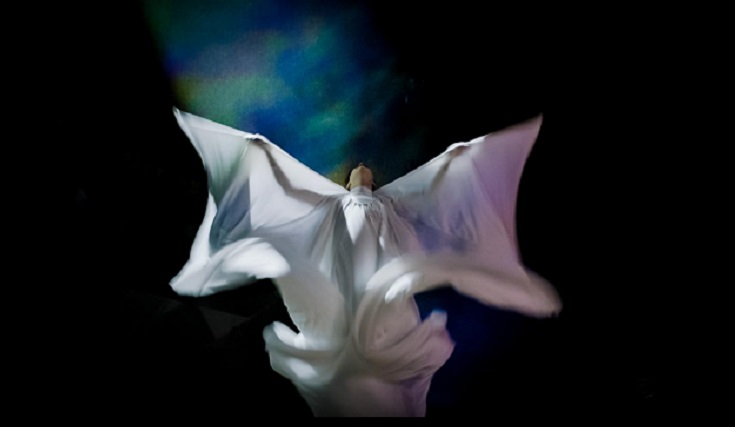
TEMF opens with a close-up of Torrini’s striking face (her eyeliner on point), the black plissé funnel neck making her head bud-like. It pulls live action scenes, documentary-style inserts/images, multiple live studio band session, dance sequences performed by the Carpel (Kate Coyne), Sepal (Saeed Esmaeli), Stamen (Niall Murphy) and Petal (Viva Seifert) – in keeping with the floral theme choreographed by Coyne – visual effects and talking heads reading from said correspondence. Letter readers include Richard Ayoade, Siggi Balursson (The Sugarcubes), Nick Cave, Mark Monero and Angus Sampson while Alice Lowe provides a rundown of Geraldine’s early life and there is even some narration from Sophie Ellis Bextor.

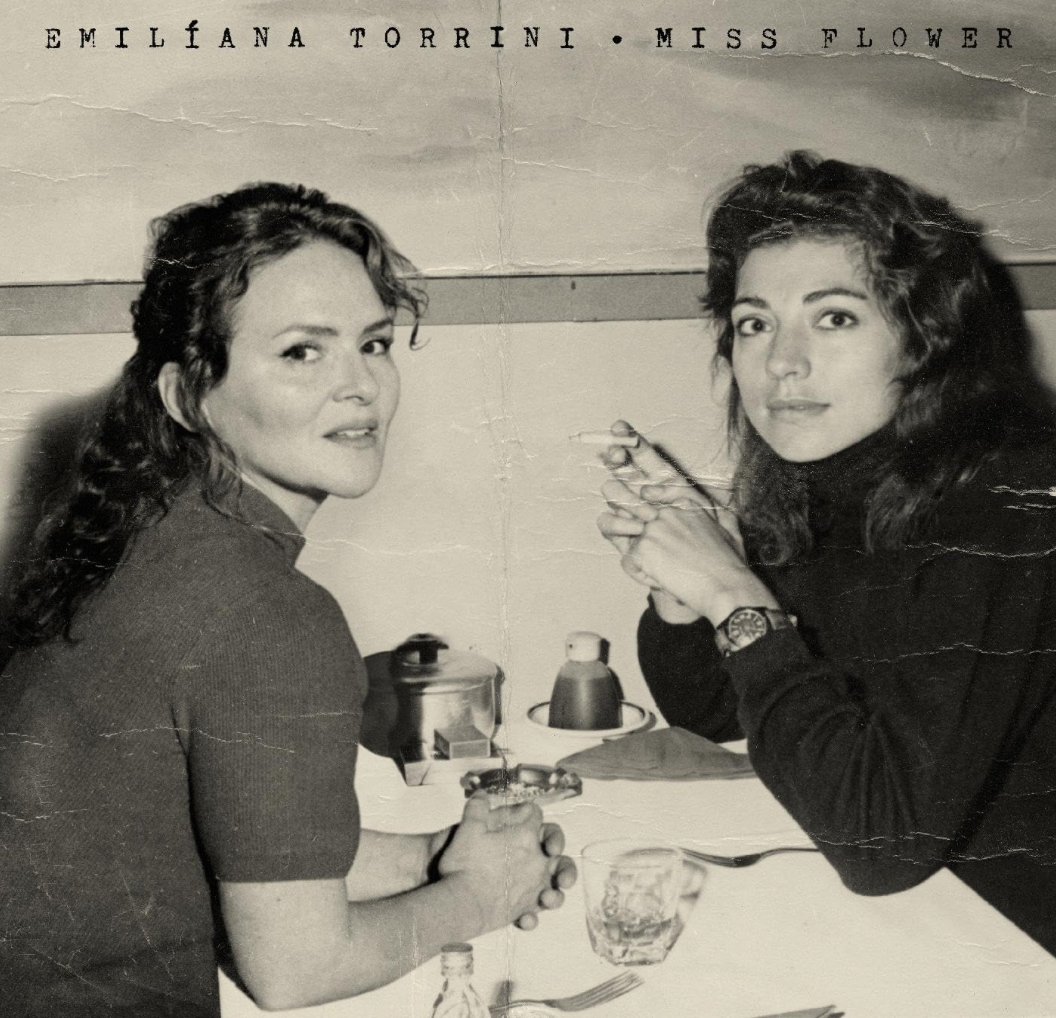
It is a collaboration in every sense of the word as each and all, in their own ways, bring Geraldine Flower back to (extraordinary) life. She is played by Catz and engages in snatches of conversation with Torrini, sat in a studio set mocked-up as a café, papers strewn across the table dotted with glasses of red wine, cigarette smoke billowing. It is in these moments (and during each flower dance) that really make the most of Susie Coulthard beautiful costumes. ‘Geraldine’ may dress in black and pale grey but the outfits are a textural dream, frills, pleats and tactile fabrics made to be touched. Finished by a red lip (the album vinyl is the same colour). These scenes between Torrini and Flower are intimate – almost like a living séance – the meeting of minds, a chat between friends never not believable despite the obvious staging. It’s an image replicated on the album’s front cover. Two women divided by a generation.

The film – directed by Iain Forsyth & Jane Pollard (20,000 Days on Earth) – shot over two days is an experimental and exuberant watch, subverting every possible genre convention. It is an evocative piece of pure performance art, an experience which celebrates creative and physical freedom, adventure and empowerment while skirting around themes of gender, class and societal norms.

Above all, it is a synth love poem to the memory of beloved mum and muse. One that reminds us all to write that letter/e-mail/text, send the flowers, “surround [ourselves] with extraordinary people”, love with abandon, and keep dancing.

Categories
Film Festival film review

Peacock (Dir. Bernhard Wenger, 2024)

©NGFGeyhalterfilm-CALAfilm-AlbinWidner

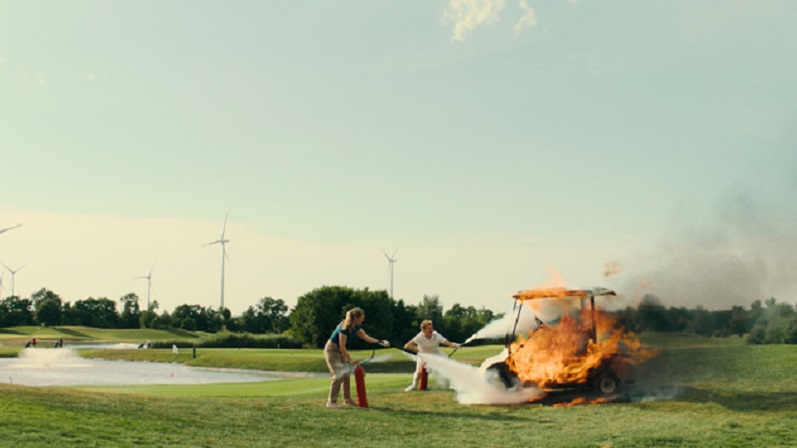
Bernhard Wenger’s feature debut begins completely out of context as a golf cart is engulfed in flames. Two people run into frame unleashing fire extinguishers until the blaze is out and golfers slowly walk over commending the duo on a heroic job well done.

We will soon learn the man is Matthias (Albrecht Schuch, All Quiet on the Western Front, System Crasher) and he works for a company called My Companion, not your regular ‘friend for hire’ agency headed by his boss and friend David (Anton Noori). Matthias fulfils the needs, wants and desires of complete strangers, whether putting out inexplicable golf fires, attending outdoor concerts with older women or posing as the pilot father of a small child, moustachioed Matthias is the star of the company, his success evident in the glowing reviews he receives for his “work” and obvious wealth symbolised by the immaculate house he shares with girlfriend Sophia (Julia Franz Richter).

The problem is Matthias is so good at his job that he ceases to exist beyond a surface level in everyday life, he needs cueing up for everything, when to speak, when to appear sympathetic and when to act. Everything is a construct and performative and Sophia has had enough – “You don’t seem real anymore” – and leaves him. What follows is an existential calamity onscreen. The male in crisis here is handsome, polite, patient, considerate, professionally adept and yet socially inept it is laugh-out-loud hilarious and so cringeworthy, the whole body flinches, also a little heart breaking. Matthias is played to perfection by Schuch whose comic timing is sublime made all the more inviting by Albin Widner’s pristine cinematography, visual humour coolly framed and aesthetically pleasing.

©NGFGeyhalterfilm-CALAfilm-AlbinWidner

Wenger’s assured and absurdist satire takes a swipe at corporation and capitalism. The unpredictability of technology beautifully depicted during the scene when Alexa fails to understand his request for a specific song and declares it will chose a song for him and decides upon ‘Clap Your Hands’ which, of course, interferes with the electricity and clap-activated overhead lights.

Here, the world is a microcosm and life is just one long performance while posing “serious” questions about what constitutes as art – if that happens to be a naked man dousing himself in paint and throwing himself head first into a blank canvas on stage, then fill your boots. To watch the almost-perfect albeit passive man – which in itself is a breath of fresh air from, what feels like, the multitude(s) of male toxicity onscreen – regress and slowly unravel is heart-stinging and, though it’s kind of mean, a laugh-out-loud joy in a film that is tonally perfect from that opening sequence on the green. The dénouement of which is *chef’s kiss*.

Peacock, visually, is reminiscent of Joachim Trier’s work – complete with a Norwegian love interest – shot through with the dead-pan sensibility associated with other Scandi cinema specifically early Östlund or even Lanthimos (when there was a Greek ‘weird’ Wave stirring). Though, by the end, it feels as excruciating (and amusing) as something like Toni Erdmann (2016), whereby the lead is resigned to a specific way of life but then experiences a rebirth, of sorts, which presents a whole new approach to navigating the world.

Matthias can be a your hero, companion, a son, everything for you… but just not as himself.

Categories
Film Festival film review

Bob Trevino Likes it (Dir. Tracie Laymon, 2024)

Lily Trevino (Barbie Ferreira) is an emotionally raw young woman with a beautiful heart who spends her time suppressing her true feelings amid people pleasing and desperately trying to retain a relationship with her father Robert (French Stewart). It’s a hard slog especially given the type of irredeemable narcissistic shit of a patriarch she has been blessed with. When a date with yet another middle-age blonde goes horribly wrong, Robert blames the only person he claims has constantly ruined his life and severs ties with his only daughter, ghosts her – she is even threatened with arrest if she trespasses at his retirement village again.

Bereft at his rejection once again, Lily seeks therapy and a chance to move on. She throws herself into her work as a home-help for Daphne (Lauren ‘Lolo’ Spencer) and tries to forget the only parent she has. It works until she finds herself trawling Facebook and she runs a search on her father’s name and befriends another Bob Trevino (John Leguizamo) and a correspondence ensues. Actually, it’s more than that. It’s a beautiful friendship, a lifeline for both of them. Lily tells random people on the bus that “my new dad is so kind.” He is, although horrible at basketball and for Bob, Lily allows him to take her camping for the first time, open up about his deceased son who he shared with scrap-booker obsessive and champion Jeanie (Rachel Bay Jones), and impart wisdom – “We’re all broken. We all have things we need to heal from.”

For the cynical, this is a ridiculous premise for a film and in anybody else’s hands it may well have been but writer-director Laymon has first-hand experience of such an unlikely act of kindness. She and her Bob – despite never meeting IRL – had nine years of correspondence. Her choice of casting is also perfect. Ferreira and Leguizamo are equally as wonderful as the other, a perfect fit of chaos and calm, and earnest chemistry. Their supporting cast are great and are all provided with their own arcs within the overarching narrative. Stewart is pretty unrecognisable as the bio-dad and while his actions are incomprehensible, it is easy to render him sad too; hurt people hurt people.

Social media gets a bad rep and for all its trolls, toxicity and often ruinous effects on mental health – certainly more so since the M*sk administration of Twitter – however, there are pockets of the internet which are there for good. Think all those people who never fail to share the Tom Holland Lip Synch Challenge video or that woman who accidentally texted a complete stranger about Thanksgiving dinner… that guy is still an annual guest at her table. Tracie Laymon’s Bob Trevino Likes It is up there with putting a positive spin on the worldwide web and its multitude of apps – Natalie Morales’ Language Lessons (2021) also did something similar a few years back.

This film will warm the cockles of your heart and break it into a million pieces before sticking it back together again. There’s something incredibly powerful about a woman finally accessing her rage, asking for help when she needs it and ultimately saving herself albeit with a little help from a chosen family. Kindness costs nothing and this film hammers home the importance of this and the need for human connection, especially in a world which often leaves you disconnected and in the cold. Open your heart to it, it’s so surprisingly wonderful and lovely. Enjoy and proceed with tissues.

Categories
Film Festival film review

Andrea Gets a Divorce (Dir. Josef Hader, 2024)

Policewoman Andrea (Birgit Minichmayr) wants a divorce. Her ex-husband Andi (Thomas Stipsits) is the life and soul of any (birthday) party but they want different things. He wants her back, to continue drinking excessively, embarrassing her in public and she wants a divor… well, you get the picture. A new job awaits her in the capital St Pölten, she’ll be a Detective Inspector interacting with “real criminals” and not wasting time on the side of the road catching speeding violators.

After celebrating partner Georg’s (Thomas Schubert) birthday in which Andi makes yet another desperate attempt at getting her back, this time imploring her to arrest him, revving his car engine while intoxicated. She confiscates his car keys and makes him walk home. Later, while she’s driving home her father calls and she takes her eyes off the road for a second and accidentally mows down Andi. She tries to save him and when it is futile, she gets back in her vehicle and drives off. Only when Georg hammers on the door to tell her that her estranged husband is dead at the wheel of RE teacher and ex-boozer – now an imbiber of black tea and milk only – Franz Leitner (Josef Hader) does Andrea realise that she may just get away with it.

Andrea Gets a Divorce is a quietly charming little film, an Austrian dramedy which actually has much to say beyond its humour (though not quite the biting satire we have come to expect from Austria) and dose of melancholy. Whether commenting on the effects of alcohol – Austria changed its alcohol laws in 2019 – without being judge and jury, casual racism within a rural town, or the sly inherent sexist commentary a woman faces, and a police officer at that. Andrea’s weight, marital status, biological clock are all up for discussion, at one point she is even likened to an SS officer. She’s a single woman bearing the burden of responsibility for everything it seems and not merely straddling her new role as a law-breaker. Finding balance and prioritising themselves is not always the natural way of things for a woman and this film depicts the push, pull and self-doubt beautifully. Or as remarked early on, “the women are moving away and the men are getting weirder.”

Minichmayr is excellent as the closed-off lead, she who rarely smiles while struggling with her guilt and sense of justice. Writer-director Hader follows up his 2017 debut Wild Mouse with this and is delightful in support as forgetful Franz whose ill-gotten culpability threatens to ruin him in a haze of late-night disco dancing and G&Ts. While it could have been easy to write off these people as simpletons from a small town, Hader avoids leaning into clichéd stereotypes. There is some complexity and layering to these characters who are settled in their mundane provincial little lives, somewhat fearful of change which tends to be true of most quaint little places.

All roads are paved with good intentions, or just the one in and out of town which is shot perfectly and bookends a sweet film. Andrea Gets a Divorce is a wonderfully wry and sensitive piece of storytelling about life and friendship, forgiveness and guilt surrounding a divorce and bereavement at losing a whole person or that sense of self. It is woven together with an amusing if deadpan sense of humour, often callous but rarely alienating. The joke punchline being the very film title itself.