Categories
DVD film review

A Wrinkle in Time (Dir. Ava DuVernay)

Word of mouth can make or break a film and (some) reviews have been less than kind about Ava DuVernay’s A Wrinkle in Time. Her earlier work has consisted of documentaries This is the Life (2008), and 13th (2016), indie drama I Will Follow (2010) and romance Middle of Nowhere (2012) before using the historical biopic to really make her mainstream mark with Selma (2014). Her current Netflix smash is the absolutely stunning mini-series When They See Us (2019). Aside from the occasional repeat casting (namely David Oyelowo who voices The It here) the commonality of these films is their setting deep within the African American experience – and this is only set to continue as Hollywood has the overhaul it so desperately needs, and the world gets to embrace the work of Barry Jenkins, Ryan Coogler, Jordan Peele and DuVernay.

Tackling Madeleine L’Engles much loved children’s novel of the same name and deemed unfilmable (though attempted for TV in 2003), DuVernay brings it to the big screen – with a reported $100 million budget – amid fantastical imagery and visual effects (and some occasionally weak CGI), however, the themes it tackles feel particularly relatable and relevant regardless of the fifty-six year old story.

Meg (Storm Reid) is a social outcast at school, made all the weirder by her father’s disappearance four years previously. Dr. Alex Murry (Chris Pine) in his search of travel via a Tessaract vanished without a trace leaving fellow physicist (and wife) Dr. Kate Murry (Gugu Mbatha-Raw) to raise their children – Meg and her brother Charles Wallace (Deric McCabe) – alone. However, upon a visit from Mrs. Whatsit (Reese Witherspoon), encouragement from Mrs. Which (Mindy Kaling) albeit through inspirational guidance from Mrs. Which (Oprah Winfrey), Meg decides to take Charles Wallace and school pal Calvin (Levi Miller) and go look for her Dad and bring him back home if she can. She only needs to journey across time, space and several dimensions, and most importantly believe in herself.

Okay, so there’s little here that you haven’t seen in some form before – not least that television adaptation from 2003. There are some nice touches, Paco Delgados’ costumes for one and it certainly looks pretty, reminiscent of The Wizard of Oz/The Wiz. Definitely a personal preference but André Holland as Principal James Jenkins (a possible reference to activist/writer Baldwin and filmmaker Barry) isn’t in it nearly enough, nor Michael Peña (sporting splendiferous facial hair as Red). For all the lack of subtlety, it wears its heart on its sleeve – a very simple, powerful message at its core.

It seems a shame that Jennifer Lee and Jeff Stockwell’s screenplay includes such heavy handed bombastic dialogue (along with some meandering camera work which can prove distracting), I’m sure its genus has likely come from the pages of the book but one wonders if small children would grasp some of the more complicated terminology. There’s little doubt that its scientifically viable, there was even a scientific advisor – Dr. Stephon Alexander – on set, but the film is so thematically broad that it ambles to a conclusion which feels more like the end of a series of visually impressive vignettes rather than one completed feature.

Much like that other big budget Disney production Black Panther, it takes its cues from the Afro-futurism genre, vibrant in colours and thematic similarities like the absentee father and embracing the warrior within. It is after all a Disney film so there are certain expectations. While it may not be to the taste of the adults, there’s plenty for children to enjoy not least the “greatest mind of our time” belonging to the squeaky voiced six-year-old Charles Wallace. Deep and meaningful monologues seek to empower the tween generation and why not? Love triumphs over evil, facing darkness can bring the light, a young person embraces their inner strength to rescue their missing parent… certainly plenty of films check this list, however, few of these young protagonists look like Storm Reid and Deric McCabe.

A Wrinkle in Time is nowhere near as dire as you may have been made to believe – despite its budget and subsequent box-office loss – the second half improves on the first, just suspend your disbelief a smidge more. A young girl who realises her strength, intellect, courage and beauty, ignores the bullies and believes in herself is to be celebrated.

Be a warrior.

Categories
DVD film review

The Secret of Santa Vittoria (Dir. Stanley Kramer, 1969)

Fermented grape juice is a special kind of elixir, even Shakespeare was a fan of crushing a cup and some, one could argue, might go to extreme lengths for a glass of vino, maybe even a bottle… or million. Stanley Kramer’s The Secret of Santa Vittoria opens with Fabio (Giancarlo Giannini) rushing home to deliver good news, il Duce has been ousted from the NFP. Sadly, the young man’s enthusiasm isn’t met in quite the way he was hoping as most of Santa Vittoria does not understand what the end of Fascism means for them but Mussolini has gone and the Germans are on their way, led by Captain von Prum (Hardy Krüger) and will take whatever they like.

The film is set in a generic wine-producing region of Italy (in approximately 1943 although made some 25 years later) where the men drink and their wives are seen but generally not heard, a real “Boys Club”. Bombolini (Anthony Quinn) is one man whose wife, Rosa (Anna Magnani) insists on being heard. She runs the inn with her husband and is at the end of her rope; she loved him once but cannot remember exactly when. He’s well liked amongst the other hard-drinkers and they encourage him to put “a fist in her mouth” mainly because “it’s a sad house when the cock is silent and the hen does all the crowing.” Ah, domestic violence is hilarious, isn’t it? Especially when a film normalises women hitting men but the threat against women is somehow more shocking. To be fair, in this film, neither gender comes off particularly well. Fragile masculinity is personified in Quinn’s Bombolini, he is – not to put too finer point on it – an idiot and the townspeople make him Mayor *because* he’s a fool which bodes well. Predictably, the title and gold medallion leads the clown to think he’s arrived, and Rosa will suddenly become obedient. Almost immediately, we realise this is not the case but he does cease drinking and successfully hides the bulk of the fruits of their labour/vinification.

There are a couple of subplots which largely deal with the love lives of three female characters: Signora Rosa, Caterina (Virna Lisa) – who returns to the village after the death of her Fascist husband but then falls in love with injured soldier Tufa (Sergio Franchi) who she nurses back to health, and who also happens to be a Fascist. However, as he’s a peasant from Santa Vittoria she’s willing to turn a blind-eye. Rounding off the trio is Rosa and Italo’s daughter, Angela (Patrizia Valturri). She’s in love with Fabio but is only interested in sex, not marriage.

One of the major niggles with The Secret of Santa Vittoria is it hasn’t aged well. Its politics are muddled and archaic, it never leads with a message or knows exactly what it wants to say, it does pick up pace – how the townspeople shift the million bottles of wine is quite something albeit disbelief suspending – and the jaunty and affable score is enjoyable but none of it is affecting, surprising or particularly spontaneous. It functions as a huge Hollywood production, structured to within an inch of its life. It isn’t a musical but would have worked very well as one.

The saving grace is Anna Magnani, in her last English-speaking role. Her powerful demeanour and beautiful imperious face never falters; it’s worth watching all the way through just to see that world-class grimace break into a grin. She was a stunning actress and here makes the most of the material given – by no means a stretch – she’s wonderful as the tough and feisty Rosa, the only downside is she’s not given nearly enough screen-time.

The Secret of Santa Vittoria is a pleasant, mostly entertaining fare; perfect Sunday afternoon viewing, with, of course, a quaffable glass of red.

Categories
DVD Review TV

Channel Zero: Candle Cove

Based upon Kris Straub’s creepypasta short story, Candle Cove was the first anthology in Syfy’s Channel Zero series with the second No End House, Butcher’s Block (S3) and The Dream Door (S4) swiftly following before announcement of its cancellation. Its creator Nick Antosca and producers Don Mancini (Child’s Play) and Harley Peyton (Twin Peaks) brought a unique experience to the small screen, most of which are now available on DVD and Blu-ray.

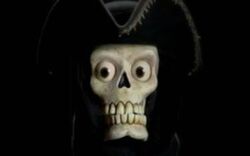
Candle Cove opens during two months in 1988, five children: Jacob Booth, Sadie Williams, Carl Cutter, Gene Hazel and Eddie Painter go missing with four later found murdered. Only one – Eddie – was never returned nor remains discovered for burial. The Iron Hill Murders were never solved and now, 28 years later, Eddie’s identical twin brother Mike (Paul Schneider) a child psychologist is recovering from a breakdown and plagued by nightmares that eventually make him head home to mother Marla (Fiona Shaw) and the childhood home and friends he left behind. Once there, he realises that a TV show has started to air again called Candle Cove, an eerie puppet-led programme that only children seem to be able to see and which brainwashes them into participating in some deeply disturbing antics.

As more children go missing and start acting strangely, losing teeth along the way, Mike, – even finding himself a suspect at one point – must embrace his repressed memories, childhood traumas and nightmares head-on if he is ever going to discover the truth about Eddie. His creepy journey will see him recollect the bullying, the paralysing fear, and meet the mysterious Jawbone, its merry band of shipmates aboard the happy ship on the way to Candle Cove, and prevent history repeating itself.

While some shows tend to tell their stories from the child’s perspective, the world between adults and kids separated, here they interlink; childhood fear enforces adulthood and that trauma never leaves – all those things that grown-ups dismiss as an overactive imagination manifest and are all the more real and frightening. What makes Candle Cove so effective is its thoughtful and understated – even mundane – approach to horror. Yes, it uses tropes familiar in the world of Stephen King but there are also elements of The Twilight ZoneThe X-FilesAmerica Gothic and even Mystic River (2009), with additional (and repetitious) layers of intrigue. The fact that Winnipeg (doubling for Iron Hill) is so green, lush and naturally shot only enhances the supernatural.

There are nods to Treasure Island, The Muppets and an all-too terrifying version of the tooth fairy but not like you’ve ever seen. Childhood fears are its emotional backbone but it uses guilt, grief, dream logic and some surreal and whimsical imagery to really sell the deeply unsettling. The performances particularly those of Schneider, Shaw and two of the children, Abigail Pniowsky (Arrival) as Lily Painter and Luca Villacis, who portrays the Painter twins beautifully and skilfully relays two very separate personalities, elevates the subject matter. The thing about murderous children is that they are utterly terrifying; corrupted innocence disturbs and distresses on such a profound level. The lack of gratuitous violence is refreshing also, it’s not completely absent but tends to be distancing, quick and almost always off-screen.

Told over six episodes this anthology is an atmospheric and quietly unique experience, it builds the dread and truly unsettles staying with you long after the denouement. It’ll haunt your dreams especially the child made entirely of human teeth but never fear, head to bravery cave, all your secrets will be safe in Candle Cove…

Categories
DVD film review

The Ones Below (Dir. David Farr, 2015)

Motherhood is supposed to be an exuberant time; one filled with expectation, apprehension and, above all, joy. Throw in the loneliness of London and the new neighbours who have moved into the downstairs flat and it will fast become something else entirely. Following his recent adaptation of The Night Manager, David Farr not only writes his own screenplay for The Ones Below but makes his directorial debut and no stranger to suspense, he makes a fairly entertaining job of it.

Kate (Cleménce Poésy) and Justin Pollard (Stephen Campbell Moore) met at University and – after (some) reluctance on Kate’s part – are expecting their first child. In fact, Billy is the first character we meet, at least in ultrasound form accompanied by Adem Ilhan’s haunting lullaby. Okay, so it may be a bit of a sledgehammer in terms of freeze-framed set-up and foreboding but Farr has our disconcerted attention.

The Pollards have a substantial income made apparent by their Saab™ and home in North London, everything is very drab and beige in their world, well, until the bright green AstroTurf lawn is laid in the garden below. Their new neighbours arrive; banker John Baker (David Morrissey) and his pretty pregnant Finnish wife Theresa (Laura Birn). Almost immediately, the petite blonde child-bearers bond and are fast becoming firm friends, quite an achievement for the quiet, introverted Kate. However, following an intimate and incredibly awkward dinner, tragedy strikes and relationships unravel.

Taking his visual cues from the likes of Polanski and Hitchcock – there’s even a Haneke starkness to the set design – first-time director Farr creates an interesting film, particularly assisted by the nifty camerawork courtesy of cinematographer, Ed Rutherford. It’s not a wholly original story, and we’re still delivered a female focussed narrative about a gender-specific biology via a male amid very privileged and homogenised surroundings but the differences between the couples and their environments are fascinating. It does try and make a quirk out of people who remove their shoes before walking into a house (hygiene, people!), there’s a brief fumbling over a spare key and why indeed would a wealthy banker move into a one-bedroomed flat? Yet, all-in-all, there is much to admire, not least the detachment and isolation a city scape can project.

The Ones Below covers a lot of hard-hitting themes and subjects, from maternal instinct and domesticity, to the very real issue of postnatal depression and the anxieties surrounding parenthood. Poésy does a particularly convincing job at giving Kate scope beyond the vanilla victim she could have become; her character and Birn’s Theresa are inextricably linked not only by hair colour and circumstance but entwined as if facets of the same person. Any similarity diminishes as the film progresses, culminating in a real distinction between the contrived and the verisimilar. For the most part, it works efficiently as a drama/psychological thriller, even a bloodless horror. That said, nothing quite prepares you for the devastating conclusion and creepy final scene. The grass is definitely not always greener and it appears to be, it’s a trick of lighting or all for show and probably rotten beneath the surface.

Categories
DVD film review

Bait (Dir. Dominic Brunt, 2015)

bait-2015-630

Dominic Brunt’s second feature Bait premiered at FrightFest* 2015 (following his debut Before Dawn in 2012), the tag line for which screams “Hell Hath No Fury”. However, within the first ten/twenty minutes it becomes apparent that there is a lot more going on than just a woman scorned – try a punch square in the face from a shovel-sized fist for starters.

Set in an unnamed Northern town amid financial ruin, poverty lurks on every corner and for single mother Dawn (Joanne Mitchell) and best friend Bex (Victoria Smurfit) life is hard. Their market-based coffee and cake stall needs to survive (and expand) and the only way that will happen is a loan; something the bank and building society are reluctant to accommodate. Enter camel-coated Jeremy (Jonathan Slinger) who is amiable, generous and determined to help the girls out… Yep, you have guessed it, the worm turns and there is more to Jezza than meets the eye, namely psychopathy and the need to bleed trusting, hardworking people dry and then to just, well, make them bleed.

bait-still

Bait is an ambitious, twisted little tale; quintessentially British, highly topical and its subject matter will, no doubt, strike a chord with most. What is particularly interesting is the way in which fear effects people, their decision making and ability to perpetuate violence skewed from terror. The female characters are mostly well-written, although Bex feels a little one-dimensional as the token ‘gobby’ one, which is a real shame as Smurfit tends to be excellent in everything else. Mitchell is great and certainly delivers a credible performance, there is a real vulnerability to Dawn. Slinger, however, is the standout. His Jeremy is a fantastic incarnation, a sociopath prone to snapping, his lack of empathy renders him inhuman and his general sneering nature means he practically slithers off screen and yet remains wholly believable.

The girls’ retribution is slow in coming (although we know it will, given the opening moments of the film), however, when it does, oh boy, it is brutal. Everything is throw in, including the bathroom sink and for such a low-budget the make-up FX are suitably gruesome and gory. The angry spurts of violence throughout the film is somewhat ageless and genderless, often depicted through vignettes and shows the consequences of dealings with the loan shark and his hired muscle (Adam Fogerty) but by the end vengeance is grotesque, bloody and a tad indulgent; it stretches the credulity of even the most committed horror fan. Paul Blondell’s script is taut and Brunt has directed a nasty little monster movie albeit in a social-realist setting but this viewer grows a little weary of bloodied bra-clad women in jeopardy.

bait

*FrightFest = the greatest horror film festival London has to offer.