Categories
Book Review

The City of the Living

In Elena Ferrante’s Frantumaglia: A Writer’s Journey (2015), fellow Italian writer Nicola Lagioia was afforded the opportunity to pose a number of questions, via e-mail, to the inimitable author. This also coincided with the year they were both finalists for the Strega Award (Lagioia eventually won for his first novel in translation, Ferocity). It’s a fascinating repartee and at one point, he states “For me literary needs always take precedence over the journalistic ones.” This is certainly evident in his latest book – a book which states it’s a work of fiction on the verso of the title page but then acknowledges that “the story told in this book is true” AKA “the most vicious crime in modern Roman history”.

In March 2016 in an apartment just outside Rome, the body of twenty-three-year-old Luca Varani was discovered brutally murdered at the hands of Manuel Foffo and Marco Prato. Two seemingly ‘ordinary’ men from ‘decent’ backgrounds. The crime supposedly sent Italy into shockwaves at the time but managed to bypass the UK entirely. The first I heard of it was when I started Nicola Lagioia’s The City of the Living, published by Europa editions UK and translated by Ann Goldstein (Queen of Italian translation and brilliant friend of Ferrante).

This gripping literary work of true crime pulls together months of interviews, courts documentation and correspondence with one of the killers in such a way, it reads like fiction. While the crime itself is stomach-churning and the conclusion of the court-case infuriating, Lagioia never loses empathy in portraying every injured party of this tragedy (and there are many). He seeks to expose Foffo and Prato’s humanity even when actions proved they had, frighteningly, lost it. Painting a truly compelling narrative of class, corruption, drugs and violence, he forefronts class, betrayed expectations, sexual confusion, and the provocative blood ties often unbearable in families.

Lagioia describes The Eternal City as one of absolute freedom but this story shows just how oppressive that liberty can be. The author, who lived in Rome for many years before moving on, pulls no punches in depicting the decay of a city crumbling, not only via its historic ruins but from its rotten core. A metropolis of darkness and an underbelly most tourists are unaware of. So convincing is his prose that it soured my opinion of a place I once adored.

A lot of its publicity has compared The City of the Living to Capote’s In Cold Blood, however, I find it pointless to compare the two. Both are incredible pieces of writing but this, is less dated, more incisive and one tends not to question its veracity (Dave Cullen’s Columbine or Michelle McNamara’s I’ll be Gone in the Dark are probably more appropriate contemporaries). After reluctantly finishing it, the first thing I did was Google the case. I was furious to not only finish the book but also in such a way, where justice failed (yet again!). I had to, if only to see these people whose lives and death(s) had kept me so rapt over three days because at no point does the author give any description of the three men beyond the height of one and the hairpiece of the other.

The City of the Living is a brilliant and disturbing page-turner brimming with tension. The book is a must-read about the reverberation and ruination of lives following a brutal act, in which identity crises, sexual complexities, personal supposition, and the location it all happened in played a part. It bolsters the notion that once again, humans can be atrocious and the belief in/notion of justice is not only blind but, at times, ridiculous.
Categories
Book Review

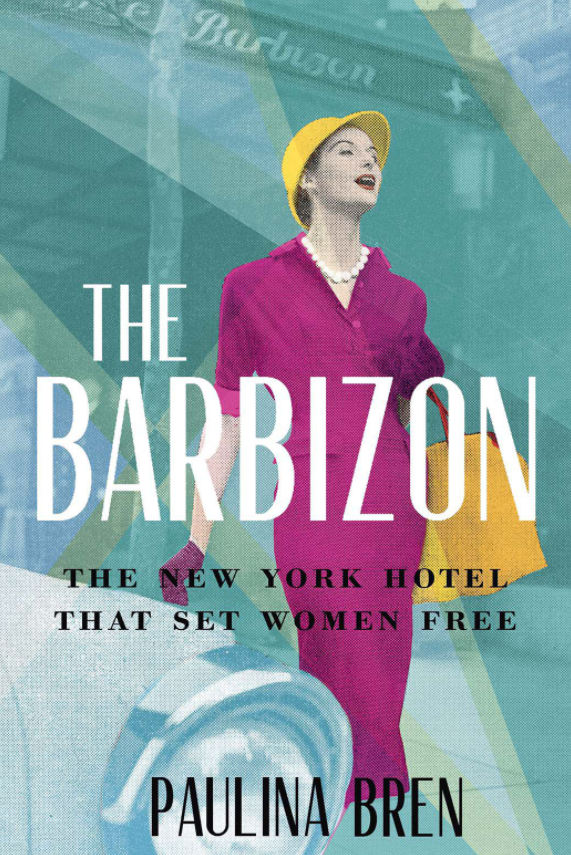
The Barbizon

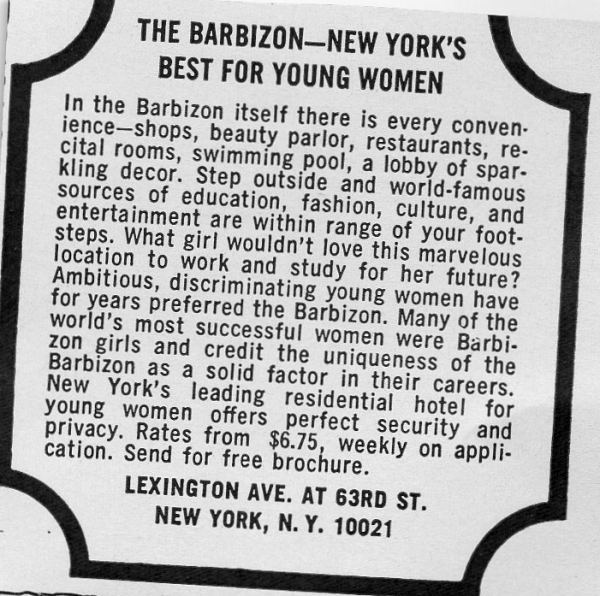
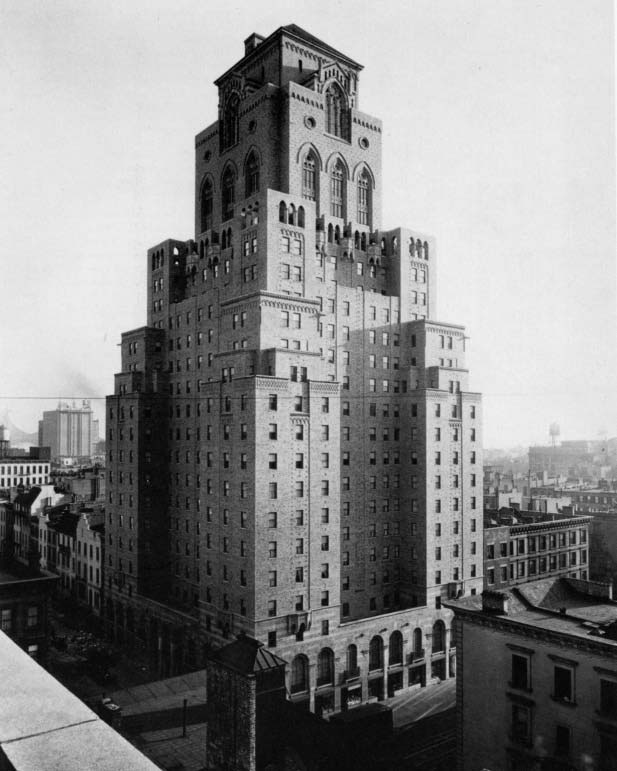
It was the inspiration for The Griffith Hotel in the unfairly axed-too-soon Agent Carter, fictionalised as The Amazon in The Bell Jar not long after the novel’s author Sylvia Plath moved out, and is the focus of Paulina Bren’s new book. The Barbizon: The Hotel That Set Women Free is a fascinating account of the glamorous and not-so-glam social history of the female-only hotel, located at 140 East 63rd Street on the Upper East Side of Manhattan. It was the place newly liberated women stayed whether seeking refuge or providing them with a room of one’s own as they pursued careers in the arts.

Built in 1927, The Barbizon housed thousands of women until 1981 when the first man was checked in, and is credited with granting autonomy to many – including the likes of Joan Crawford, Grace Kelly, Edith Bouvier Beale (that’s Little Edie to you if you’ve seen Grey Gardens), Cloris Leachman, Joan Didion, Ali McGraw, Phylicia Rashad, and even ‘unsinkable’ Molly Brown back in 1931. Its most famous resident was probably Plath who spent her tenure as one of the guest editors* of Mademoiselle magazine (also fictionalised as ‘Ladies Day’ in The Bell Jar). The publication was headed by the imposing Betsy Talbot Blackwell (BTB) who ruled with a fierce head beneath a pillbox hat and within a perpetual cloud of cigarette smoke, granting opportunities for *The Millies each of whom were afforded a tiny boudoir bedecked in chintz and florals, all for a reduced rate per week. Also in residence were girls and women who attended the Katharine Gibbs Secretarial School (they lived on the 16th and 17th floors) and those signed up with Ford or Powers Modelling Agencies. Like one big sorority.

Bren, over nine chapters, breathes life back into the lobby and corridors of the hotel which became a condominium in 2005 (Barbizon 63) and houses Ricky Gervais among others. Her vibrant and evocative prose really gives a sense of the period as these women found financial independence, a place in an ever-changing world or even a bar stool over at Malachy’s bar – which allowed them to drink and eat alone at the bar (unheard of at the time) without hassle from men. God bless Malachy McCourt. Themes touch on surviving Prohibition, the Depression, McCarthyism, and briefly on Civil Rights – Barbara Chase was the first Black woman/resident to intern for Mademoiselle in 1956. Most interestingly is how Bren addresses the loneliness, mental health issues, and suicide attempts (and successes) of some of the residents – through first-person accounts and independent research – which only serve to add poignancy and depth.

By the last chapter, this pain takes on a greater meaning. Once the hotel ceased to exist and work began creating the condos, several of the older women fought to keep their homes, citing their (ancient) leases which allowed them to remain living there amidst the gutting and renovations. Work continued and was completed on all floors except the one where these women resided, everything around them was updated but their doors, walls, rooms and décor were preserved like a time capsule. Although, sadly, there is nowhere near as much detail about these old broads who were determined to stay put.

The Barbizon is a compelling read, beautifully researched and highly recommended to anyone interested in the period or any of the individual women covered in the text. It’s a deeply resonant book which ends with pangs of bitter irony. Once a sanctuary promoted as selling freedom to women, the bricks and mortar ended up imprisoning a fair few. Or in the case of Sylvia Path, it gave a purpose – inspiration for her novel masterpiece – a place to belong for a time or place where the unravelling began before the world became too much.

Categories
Book Review

Studying The Bourne Ultimatum

Studying The Bourne Ultimatum

The term “Blockbuster” is, at times, considered a dirty word in the realm of academia, thanks largely to the images the generic term conjures up: ridiculous budgets, explosions, fast editing, little or no script; all-in-all a passive experience which rarely evokes the old grey matter. The original Bourne trilogy, and specifically Bourne Ultimatum, changed the perception of the Blockbuster. Jason Bourne was younger, fitter, angrier, and wholly more likeable and realistic than the other “J.B” – the 007 one. What is more, women in the Bourne franchise appear to be a big deal and not lost amid misogynistic overtone and clothes-shedding; they are reactive to the active and not hindered by scopophilia. The Craig-starring Bond films try (and fail) to emulate the Bourne action-packed, political seriousness and succeed only in producing a diet-Bourne which never really satisfies.

In his Studying The Bourne Ultimatum, Neil Archer seeks to define the Blockbuster and questions why audiences’ expectations are somewhat pandered by the generic label and challenges the misrepresentative attributes the “Blockbuster” label can produce. The Bourne Ultimatum (2007) is what Archer calls a “serious Blockbuster”; one that critics can like and one which changed the action genre by splitting the entertainment/thought-provoking narrative. He presents a rigorously and meticulously researched critique of a movie which, at its heart, reflects post 9/11 and 7/7 anxieties. Archer’s writing style is highly accessible and does not patronise or attempt to overwhelm with a wordy, dry exposition like some film theorists whose main goal, it would seem, is to alienate and distance the reader completely from the film text. He invites the reader to consider his polemically engaging thesis and, with a summary and question section at the end of each chapter, actively respond to his findings. This is an intellectual and intimate experience which offers insightful acknowledgement and exploration of the political subtexts present in the film(s) not least through Paul Greengrass’ idiosyncratic documentary style of direction.

Despite its thin volume, this book not only manages to combine a full filmic critique but also includes enough of the first two film outings (…Identity, 2002) and (…Supremacy, 2004) in the franchise to help navigate any reader unfamiliar with the Bourne world. A whole chapter is dedicated to its visual style: cinematography, editing, frenetic pacing and the mimetic quality to the visuals which increases viewer exhilaration and enjoyment – “If Bond is golf, Bourne is ice-hockey: pass or get crashed, shoot or be slammed” (p39). Archer takes the reader on a journey and argues for the hybridity of the action thriller/political drama and the success of aligning action with narrative, while offering really fascinating viewpoints of mythology via Oedipus and Frankenstein and a Dickensian comparative amid the representation of American Militarism.

This is a substantial, thought-provoking book for all film-fans, students and laypeople alike; one that celebrates the importance and innovation of The Bourne Ultimatum but also offers up a sound, enriching thesis as to its significance and impact. I did two things after reading this book: firstly, I re-watched …Ultimatum and secondly, I visited Auteur Publishing.

Categories
Book Review

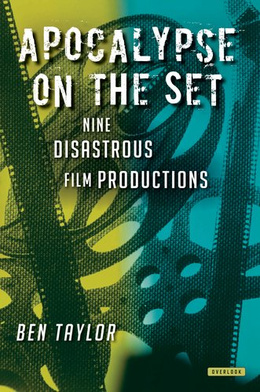
Apocalypse on the Set: Nine Disastrous Film Productions

I, like the average film fan, have spent incalculable hours sat in darkened auditoriums marvelling at the wonder and, at times, sheer brilliance which is on the screen before me. To hear that the production was smooth-sailing is great but has little bearing on the enjoyment of a film text. However, to discover that there were major disasters only increases viewer anticipation; as if, as an audience member we can spot diegetically exactly where it started to go wrong.

What author Ben Taylor has condensed in his Apocalypse on the Set, is the darker, sometimes jaded aspects of the motion picture industry. For all of the magic there is mayhem and this compelling read pulls together nine case studies, detailing the true testament of directors, writers, producers, actors and artists alike, who continue to sweat blood and tears in order to wrap their production; here, in the face of, at times extraordinary, adversity. In the case of the Nine Disastrous Film Productions these problems include: political imprisonment through dictatorship (Pulgasari), overblown budgets/production costs (Waterworld), a series of bizarre, catastrophic events (The Adventures of Baron Munchausen), over-inflated egos (Apocalypse Now) and the tragedy and finality of death (Twilight Zone: The Movie). By today’s Hollywood standards, these dramas are a rarity and usually result in production shut-down and thus Taylor’s factual reminiscences are bathed in a tragi-comedy glow of nostalgia.

This highly engaging and entertaining read is meticulously researched and while one or two incidents – specifically Vic Morrow’s and Brandon Lee’s untimely deaths – may be memorable in the recesses of the film-geek’s mind, there is enough diversity in the chapters to keep the reader absorbed and interested. This book is a must-read for any film fan. The only criticism – nine is such a limiting number; perhaps a second volume?

To Buy