Categories
Blu-ray film review

The Babymakers (Dir. Jay Chandrasekhar, 2012)

The_Babymakers

I generally dislike romantic-comedies. I am not dead inside nor devoid of humour; my aversion stems from the fact that they are rarely romantic or indeed comical. Within the first five minutes the narrative is pre-supposed and plot formation obvious. I despair of the conclusions, of which there are many, that are tied together with a big pink bow (it has to be pink – all girls like pink, right?) The representations of the sexes truly baffle as neither rarely have any redeemable qualities beyond their James Marsden-white teeth or shallow, uninspiring Katherine Heigl-perfected existence thus leaving this viewer with the dilemma as to whether to waste a couple of hours watching spookily-accurate predictions unfold on screen or do something constructive. So an open mind approached The Babymakers which offers the amusing, unassuming and charming Paul Schneider (Lars and the Real Girl, Parks and Recreation), the one-time ubiquitous Olivia Munn (Magic Mike, The Newsroom) and the premise of a rom-com-heist hybrid – how bad can it be?

A promising opening introduces Tommy (Schneider) and wife, Audrey (Munn) celebrating their third wedding anniversary and following some brief, humorous, banter about anal sex they decide to start a family. After nine months of energetically having sex in every place possible, they are still without child and so visit a fertility doctor to see what their problem may be. The reproductive expert confirms that Tommy has “slow-swimmers” and advises the couple seek a sperm donor in order to fulfil their want for a baby. Tommy refuses to believe he has any biological issue, specifically due to the twenty week’s worth of large donations he contributed to the Pasadena Sperm Bank five years earlier. Payment of which was used to buy Audrey’s engagement ring. Not completely sold on the adoption process, Tommy decides to locate the remaining deposit of his sperm and attempts to buy the vial back from a gay couple. When that falls through he and his two best friends; obnoxious Wade (Kevin Hefferman) and stoner, Zig-Zag (Nat Faxon) enlist the help of Ron Jon (the film’s director, Jay Chandrasekhar) to break into the clinic and steal what is rightfully Tommy’s.

Okay, so the film’s premise may have worked if Judd Apatow had have directed or if this one had employed a different cast, or the sperm-bank robbery had been dropped in its entirety from the script. The screenplay, written by Peter Gaulke and Gerry Swallow (I kid you not), is flawed, shoddily written and generally, over-egged. Clearly, given the subject matter there is still a huge stigma surrounding infertility and one that can, allegedly, be made comedic – slow sperm can be the result of testicular trauma – cue a montage of footballs, pool cues and stools smacking into Tommy’s scrotum. According to this film, adopting a baby is as easy as ordering from a take-away menu, as the leading lady crassly describes: “Chinese babies are the easiest to get. American(s) are ridiculously expensive, Russians can turn out a little crazy or we could go Ethiopian.”

The male characters laze about, drinking beer and objectify women; one even carries topless photographs of an ex-girlfriend around in his pocket while the female characters fare no better, they are all depicted as spoilt, passive-aggressive nags who either sit around complaining or shop. Schneider and Munn, who are ordinarily likable in their respective television series’, are mediocre at best and appear to have zero chemistry, unfortunately, they are just not convincing as a couple. She is vapid and a little dull and he, is clearly, not a physical-comedy kind of actor. With the amount of idiocy and deceit perpetuated by the main protagonists, procreation really shouldn’t be the answer and as a side-note: the image of a grown man writhing around on a floor covered with ejaculate is just not amusing.

Why then, did I watch it? Well, I wished to approach a film I would ordinarily turn my nose up at and… honestly, if I had know then what I know now I would not have bothered.
Categories
Blu-ray Review TV

Top of the Lake

sundance-top-of-the-lake

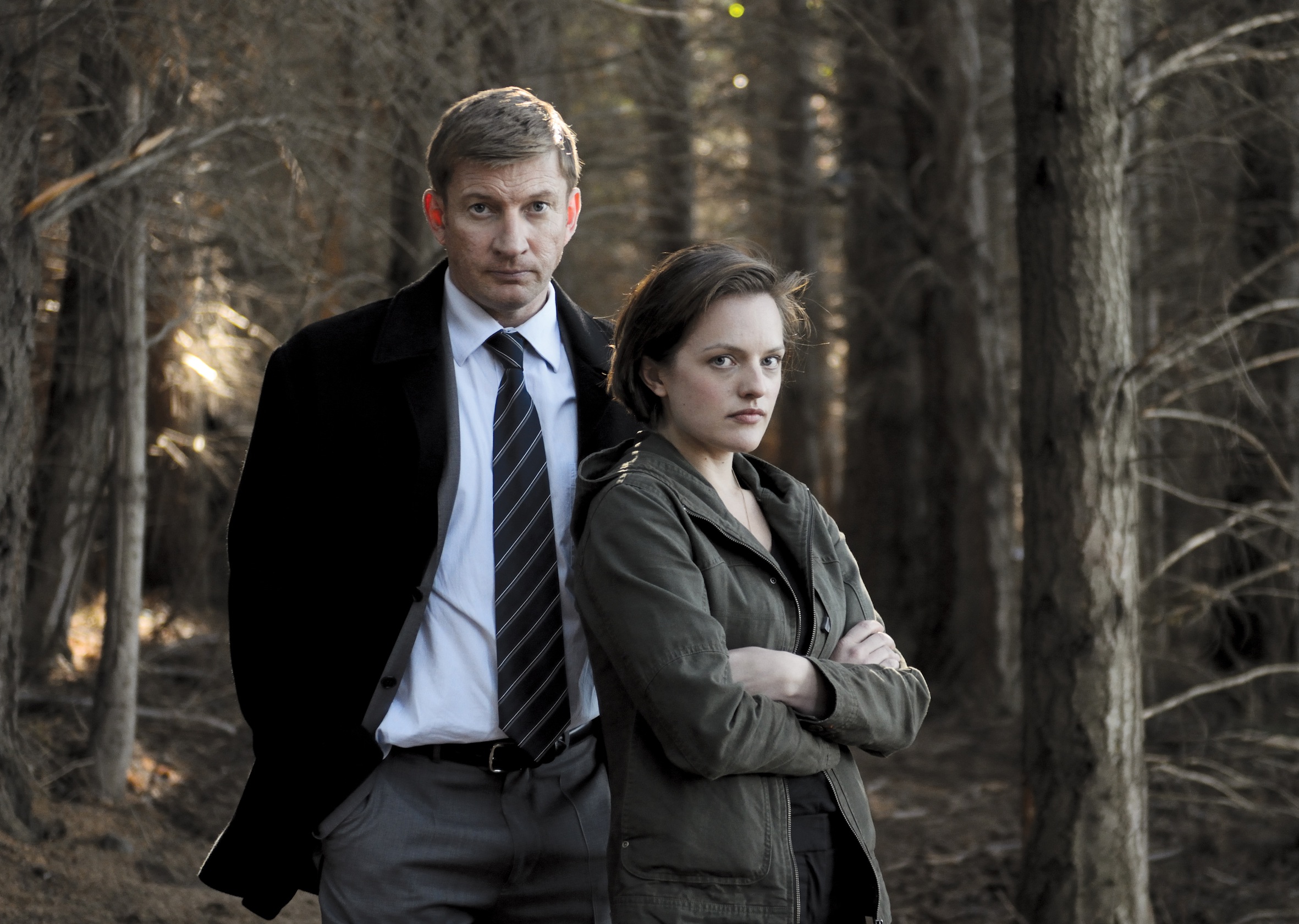
A determining factor, some may argue, at the heart of Campion’s oeuvre is the inclusion of a strong, emotive (and convincing) female protagonist seen in the likes of Sweetie (1981), An Angel At My Table (1990), The Piano (1993) and In the Cut (2003) to name but a few; these women are usually in search of themselves and while their strength and femininity are rarely questioned they tend to be deeply flawed characters. In Campion’s crime mini-series Top of the Lake – which sees her reunited with collaborator and long-time friend Gerard Lee – leading protagonist Robin Griffith (Elisabeth Moss) picks up the baton left by these memorable characters.

top-of-the-lake-14-03

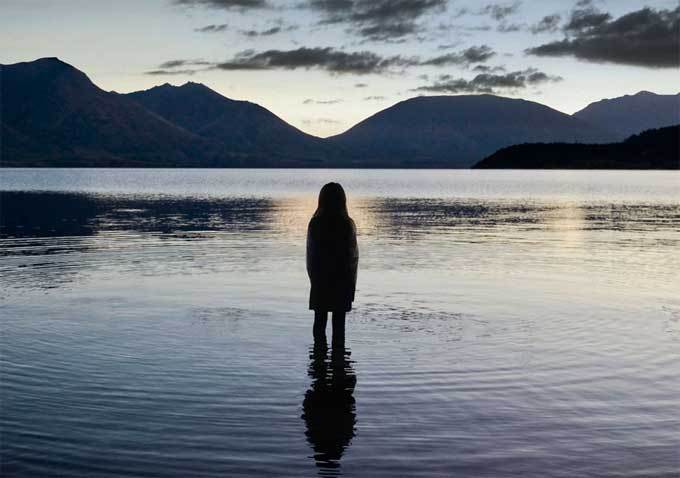
When 12-year-old Tui Mitchum (Jacqueline Joe) is rescued from Lake Top’s freezing stretch of water, her pregnancy is discovered and Detective Robin Griffith – having returned ‘home’ from Sydney – insists on taking the case. Over the course of the six-part drama, she contends with a lot more than just a statutory rape case; namely a dying mother, a long-term engagement she may or may not want, the boy she left behind, and her own demons that she has never fully faced. Throw into the mix, the all-female commune (attempting to take refuge from the debilitating aspects of their respective lives) that has set up home in a field they call Paradise, led by the enigmatic GJ (Holly Hunter). Feeling such a strong personal affiliation with young rape victim Tui, Robin is determined to assist the child; a prospect made all the more difficult when Tui disappears from a dysfunctional community full of secrets, lies, and deception, seemingly led by her father, Matt (Peter Mullan).

TOP OF THE LAKE

Boasting a cast which includes David Wenham (Oranges and Sunshine), Genevieve Lemon (The Piano) and Thomas M. Wright (soon to be seen in the US version of The Bridge) as well as the stellar prowess of Hunter and Mullan, all of whom are superb, this is really Moss’s show. Proving that she can do so much more than Mad Men‘s Peggy Olson, she is, quite simply, brilliant as the psychologically paradoxical Robin. Filmed largely on New Zealand’s South Island (a character in itself), Top of the Lake, is a TV story which unfolds like a novel much like HBO’s Deadwood. Yet amid its style there is a stark hyper-realism and mimetic quality which emerges at its own pace – some may say a snail’s – but this deliberate pacing, silence and haunting cinematography has a purpose and builds upon the thrilling tension.

It is, oddly, reminiscent of Smillas’s Feeling for Snow (1997), yet ups the emotionally raw ante (and provides a much more relatable leading lady). Campion and Lee wrote a script in 2010, a lot of which is improvised around here, and manages to keep audience interest through many-a subject matter including murder, incest, police corruption and gender politics. Misandry and misogyny go hand-in-hand; the invisibility of the older woman is offset by the impotency of the ageing male, here in Lake Top everybody is damaged, vulnerable and/or breaking the law in some capacity. By the last episode, the conclusion of which is grimly satisfying, one realises that there is no actual resolution; there are still unanswered questions which is frustratingly refreshing and not usually expected in crime television of today’s standard, at least not of the English speaking variety anyway. Campion nails it yet again.

Categories
Blu-ray film review

Beyond the Hills (Dir. Cristian Mungiu, 2012)

Damnant quod non intellegunt*

beyondthehills7900x506

Beyond the Hills is Cristian Mungiu’s follow up to 4 Months, 3 Weeks and 2 Days which won the coveted Palme d’Or in 2007 and once again, the director utilises the close friendship of two female protagonists to comment upon gender and politics influenced by Communism and its chokehold on Romanian society. While political and sexual repressions were depicted through the gamut of illegal abortion, here it is commented upon through an organised religious sect.

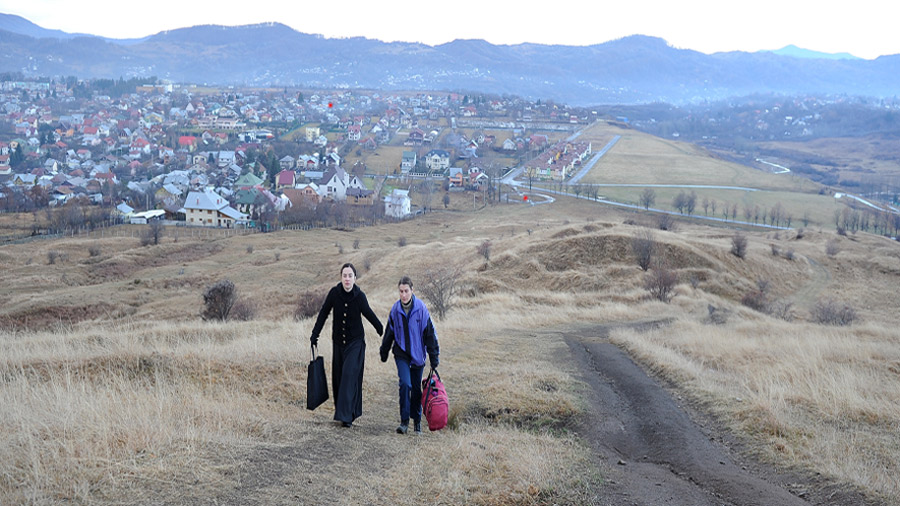
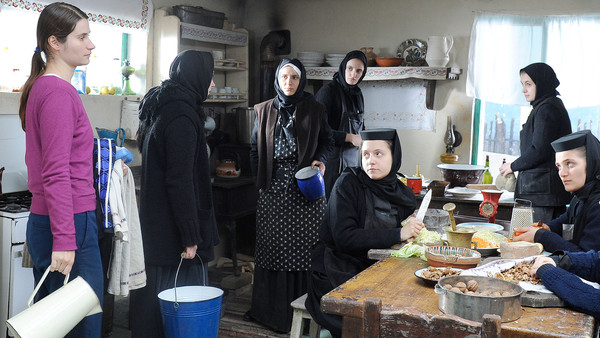
Volchita (Cosmina Stratan) and Alina (Cristina Flutur) are young women in their twenties, having grown up together in an orphanage. They have a familial bond tied by history and circumstance rather than blood; the true nature of their relationship is hinted at yet remains somewhat ambiguous throughout. Alina returns from Germany, where she now works, for a few days – a holiday – expectant that Volchita will return with her. Instead, she finds her friend living in a Monastery deep in the Romanian hills, literally hidden from civilisation embedded in an austere, archaic landscape. Volchita is confined to the bosom of Nuns who cohabit under the strict patriarchal, authoritarian rule of ‘Father’ (Valeriu Anchuta). The devout community stands alone next to an unconsecrated Church which houses a small congregation on a holy day. A sign on the front gate reads, “This is the house of God, forbidden to anybody of a different religion. Believe and don’t doubt”, the irony of which is not lost on the viewer especially once learning of the idolatrous and essentially, sacrilegious existence of this ‘House of God’. It is interesting and somewhat staggering to note that nearly 86% of the Romanian population practises the Orthodox faith, despite the fact that the country has no state religion but then, this film is not preoccupied with religious institution, at least not completely.

beyond

Mungiu’s third feature is a love story of sorts, faith at its very heart; belief in State, family and in a God which remains largely silent. It is a film about exorcism/possession, one situated outside of the confines of genre conventions and misogynistic dictatorship which is set on suppressing sinners who also happen to be women. The population outside is at a distance. You would be forgiven for thinking of it as a historical drama, the community is frozen in time, isolated, amid a lack of running water and electricity, save for Alina and her contemporary clothes. She is often the only splash of colour in an otherwise dark, dismal, and sombre mise-en-scène. She is a symbol of the outside world threatening to upset and challenge the religious conservatism and totalitarianism that appear to have engulfed Volchita.

The film is beautifully shot, blue and grey hued washes are abundant across the breathtaking landscape always captured in long shot, adding, not only, to its beauty but also educing the notion of freedom especially when juxtaposed with the interior medium shots. All employ, long takes, deep focus and are tightly framed which feeds the claustrophobic and repressive nature of the Monastery, exacerbating the tension between the religious and secular dichotomy and, in addition, the verisimilar style of storytelling Mungiu and his Romanian New Wave contemporaries adopt.

Beyond the Hills is deliberately paced to show the mundanity of life and natural flow of time. It is an enthralling and chilling commentary on traditionalism, irrationality of society and humanity at its most flawed. By its conclusion, which takes a jolting twist, all are accountable and yet there is no obvious villain. The final shot will resonate for a long time after the film has finished, once again, proving Mungiu as a director of merit, one who can coax astonishing performances from his leading actors and I know I, for one, will be awaiting his next contribution with bated breath.

*They condemn what they don’t understand

Categories
Blu-ray film review

Sleep Tight (Dir. Jaume Balagueró, 2011)

sleeptight092811

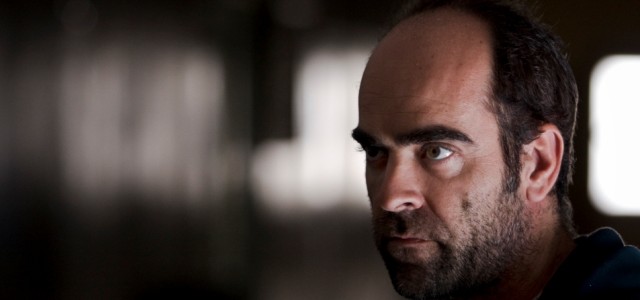
“There is always a way to be happy” declares a radio station caller during the opening of Sleep Tight [Mientras duermes], the intertitle cuts to a shot of César (Luis Tosar) standing on a roof-top seemingly ready to jump, clearly the exception to this declaration. His voiceover confesses that he has no motivation to rise out of bed in the morning, that he is never happy despite the fact that he “tries”. Cut again to him lying in bed next to a sleeping beauty, he awakens and begins a day-shift as an apartment building concierge. He visits his sick mother in hospital and on the surface appears to be an amiable everyman, invisible to some and less so to others.

sleep-tight-movie

Clara (Marta Etura) – the sleeping beauty – is the exact opposite to César in every way possible, not least in her sunny disposition. She is often shot in natural light and her bright, airy apartment and pale coloured summer wardrobe is juxtaposed with the male lead whose affiliation with the darkness becomes more and more apparent as the film progresses. Despite her ray-of-sunshine persona Clara’s life is far from idyllic, she is receiving poison-pen correspondence masquerading as love letters and disturbing text messages. The difference between the two characters? Clara always finds a way to smile, to be happy whether in her day-to-day routine or dancing around her living room. She is seemingly satisfied with her lot in life – little does she know just how unsafe she is in her own home.

SleepTight

Jaume Balagueró’s previous films [Rec] (2007) and [Rec]2 (2009) have been deeply rooted within the horror genre and this, ever-so, slight departure proves that his talent for building tension and unease really is innate. This psychological thriller gets under the skin and is executed perfectly with its canted and panning camerawork and especially with its playful soundtrack which lulls the audience into a false sense of security. Luis Tosar (Mr Nice, Cell 211) gives an outstanding performance, his César is sneering, ice cold and without empathy – a sociopath in every sense of the word. 

This film is a testament to the lengths a person will go to, to destroy another’s spirit and its ending hammers home the true horror and hatred of humanity. There may be a cost to being happy – or perhaps there are more people who take absolute pleasure in inciting hatred and misery than we may think. It is tense, unnerving and delivers a well-plotted narrative which will stay with you long after the credits have rolled. Good luck sleeping tight after this one.

Categories
Blu-ray film review

Dracula (Dir. Terence Fisher, 1958)

DRACULA-C-LEE

It seems somewhat ironic that a country so set on suppression would help instil and depict the inextricable link between sex, horror and death and yet long after the rise of German Expressionist and Universal horror in the States – in which the heimlich and unheimlich were visually portrayed amid ideologies of repression and scepticism – British horror cinema only really emerged in the 1950s following decades of censorship. Among those banned were The Cabinet of Dr. Caligari ( 1920, dir. Robert Wiene), Nosferatu (1922, dir. F.W. Murnau) and Freaks (1932, dir. Tod Browning) and significant cuts were made to Whale’s Frankenstein (1931) and Browning’s Dracula (1931). The British censors appeared to completely overlook the cathartic effect of the horror film until the birth of Hammer (so named after co-founder William Hinds’ stage name). These films were defined by a number of factors including a restrained style and the use of colour, their settings were often historical (cleverly to avoid censorship), with themes of patriarchal authority, class divide and the notion of ‘maleness’ prevalent. These male characters were often given priority within the ideological diegesis and fought emasculation in one form or other. The films, more often than not, also included the inimitable partnership of Peter Cushing and Christopher Lee and for a time Hammer revelled in its elusive quality, screen splendour, and success but by the 1970s the lauded films became a distant memory as each new movie lost vigour, became more derivative and relied upon overt eroticism to maintain its popularity, in a series of films I like to refer to as Carry On…Hammer.

dracula1

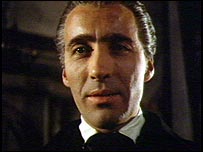
Thankfully Dracula (1958, dir. Terence Fisher) was one made within Hammer’s ‘Golden Age’ (1957-1964) and, since its 2007 restoration by the BFI, is released on 3-disc DVD and Blu-ray on the 18th March 2013 replete with scenes that have been unavailable for decades and a great deal of extras: including a variety of featurettes, commentaries, and interviews with cast members, screenwriter Jimmy Sangster and fans of the film like Sir Christopher Grayling, Kim Newman and Mark Gatiss. The actual print is glorious and beautifully restored showcasing the film’s palette of colour and lush, decadent sets comprising of inviting heavy drapes, dark wood and blazing fires. While audiences are familiar with Stoker’s 1897 tale, there are liberties taken, by Sangster, with the story. Dr. Van Helsing (Peter Cushing) arrives at Castle Dracula to investigate the disappearance of his colleague and protégé Jonathan Harker (John van Eyssen). Jonathan became the librarian to The Count (Christopher Lee) as a cover, while his true intention is “to end Dracula’s reign of terror.” This reign includes the seduction of both his fiancée Lucy Holmwood (Carol Marsh) and her older, married sister, Mina (Melissa Stribling) which builds to a fantastic finale accompanied by James Bernard’s terrifying and haunting score.

If Schreck’s rat-like Nosferatu was a subtext for plague and a ‘fear-of the foreigner’ and Lugosi’s thick Hungarian accent and histrionics made an attempt to aid the supernatural elements of a walking corpse, specifically in his slow pacing and deliberate enunciation of broken English. There was/is an eerie charm to his Count, however, it was not until Christopher Lee’s portrayal was sex so obviously aligned with Dracula and he became the ‘lover’; a sexual and provocative nuance to the role has continued with Frank Langella (1979), Gary Oldman (1992) and, dare I say, Gerard Butler (2000). Lee brings the virile, exotic ‘other’ to sex up the Victorian bourgeoisie; a formidable task given his thirteen lines of dialogue and lots of hissing. Make no mistake, despite its roots within the British stiff-upper lipped realm where evil is pronounced with a hard ‘e’ and ending in ‘ville’, this is a film about sex, marriage, adultery and seduction and well worth a re-visit in its original uncut, splendiferous, form.