Categories
Blu-ray film review

Witness For the Prosecution (Dir. Billy Wilder, 1957)

A year barely passes without an Agatha Christie adaptation hitting the BBC, while they all have their merits they are rarely as enjoyable as Billy Wilder’s version of Witness For the Prosecution. Made in ‘57 and released a year later, it was the first film adaptation based on Christie’s play adapted from her own short story which opened on stage in London during 1953.

The courtroom drama – set mostly in London’s Old Bailey – centres upon Sir Wilfrid Roberts Q.C. (Charles Laughton) who is recovering from a heart attack and vows to avoid (at his Doctor’s behest) criminal cases for the foreseeable. Enter Leonard Vole (Tyrone Power) who stands accused of murdering a Mrs. Emily French (Norma Varden), the older rich widow who had become rather attached to the affable and attractive Vole after their perfect meet-cute via the window of a milliners. She even made the eggbeater inventor (yes, really) the main beneficiary of her will. While everything points to Vole as the killer, Sir Wilfrid believes in the accused’s innocence and takes on his case. First on the agenda is speaking to the man’s alibi, his wife Christine (an impressively stoic Marlene Dietrich).
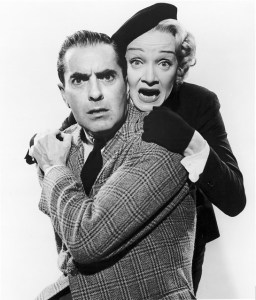
Wilder co-wrote the screenplay, this time with Harry Kurnitz. The director was on a break from a regular collaborator following his acrimonious split with Charles Brackett, and had written only the one screenplay – Love in the Afternoon – with I.A.L. Diamond. Witness For the Prosecution was the last before he and Iz would cement their writing relationship with Some Like it Hot (1959) and The Apartment (1960).
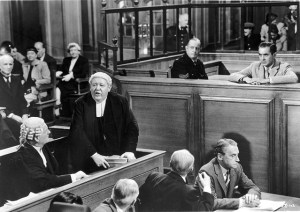
What strikes most about this Witness… is the humour. Unsurprising given the acerbic, wry wit which peppers every Wilder screenplay, however, it would all be nothing without the performances which make this film. Power – in his final film before his death – is solid as prime suspect Vole, prone to histrionics but what man potentially facing the death penalty isn’t? Dietrich gives fine Garboesque support as his secretive wife Christine. The star of this particular show, however, is Laughton.

The British veteran actor clearly had a ball with Sir Wilfrid, producing a playful performance; sympathetic and incredibly funny. Given his history of heavy drama and those darker roles, it really is a joy to see especially in his scenes with nurse Miss Plimsoll (Elsa Lanchester). There is no Plimsoll in the original Christie play\short story, she is the creation of the screenwriters. Although, a safe assumption is that the casting was all Wilder. Choosing Lanchester, given her and Laughton’s working and personal relationship was a genius move and provides more than one deliciously raucous moment between the husband and wife.

Granted, it has been 61 years and few will view this without prior knowledge of the plot and the ending(s) (of which there are several). Despite the imploring voiceover the end credits: “The management of this theatre suggests that for the greater entertainment of your friends who have not yet seen the picture, you will not divulge, to anyone the secret of the ending of Witness For the Prosecution.” It doesn’t hamper the viewing experience of Eureka! Entertainment’s – courtesy of their Masters of Cinema series – lovely package of the film, which is available on Blu-ray for the first time in the UK.

The 1080p presentation (with an uncompressed LPCM mono soundtrack) contains a number of extras which only enhance the main feature. This includes audio commentary provided by critic and Diabolique Editor-in-Chief Kat Ellinger.

Monocles and Cigars: Simon Callow on Charles Laughton (15:48) – Actor\writer Callow discusses WFTP in relation to Laughton, his performance in the film and his career as both an actor and director of stage and screen. He also briefly touches upon Laughton’s closeted love life and relationship with Elsa Lanchester which in itself was an unconventional and enduring love story. This feature is nowhere near long enough, Callow’s such an interesting interviewee and commanding presence who clearly adores his subject matter.

The Interview with Neil Sinyard (24:32) is slightly longer as the Professor of Film Studies discusses Billy Wilder’s career and collaborators. Sinyard focusses on the “lesser-known” films in the émigré writer-director’s oeuvre, like The Spirit of St. Louis (1957), Love in the Afternoon (1957), One, Two, Three (1961) and Hold Back the Dawn (1941), (all highly recommended by this reviewer). He talks specifics and comparisons between the stage play and film versions of WFTP, comedy and character. It’s a must-see for Wilder fans or even if you’re discovering the director for the first time.

Billy Wilder on Witness For the Prosecution (13:40) – This short interview is taken from the three-part 1992 programme, Billy: How Did You Do It? directed by Gisela Grischow and Volka Schlöndorff. It is Schlöndorff in conversation with the charismatic director who was 86 years young at the time of interview.

Within the first two minutes Wilder speaks German, French and English and is interrupted by the telephone in his office. He’s playful and charming, swinging on his chair and interrupting the interviewer (only to correct him, you understand). He only has fond things to say about Dietrich who he worked with twice on A Foreign Affair (1948) and this, praising her intellect, key lighting knowledge and of course “the face”. It’s another welcome extra to the disc but do try and source the original interview in its entirety – all parts are available on the Blu-ray edition of Eureka!’s The Lost Weekend (1945) – you will not regret it.

Also included is a collector’s booklet featuring her essays by film scholar Henry Miller and critic Phillip Kemp, a letter from Agatha Christie to Billy Wilder and rare archival imagery (unavailable for review), and of course, there is also the theatrical trailer and a reversible sleeve.

Witness For the Prosecution may well be regarded as a “lesser known” Wilder, however, it is well worth a punt not only for all the reasons mentioned above but its theatrical pacing, Wilder’s expressionistic mise-en-scène and it would be remiss not to mention that monocle trick. It was reportedly praised by Christie as the best adaptation of her work she had seen, and well, if it’s good enough for Agatha…
Categories
Blu-ray film review

Peppermint Soda (Dir. Diane Kurys, 1977)

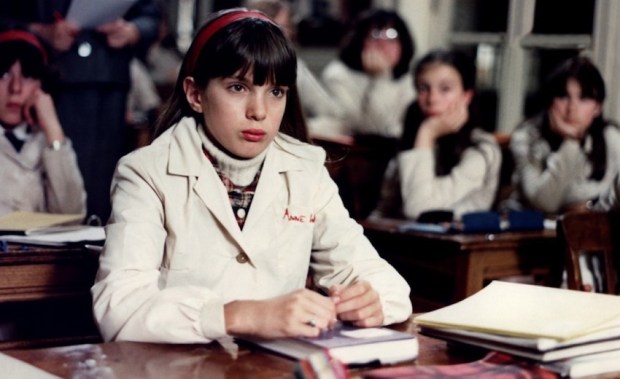
Growing up is never easy and when you’re a girl on the cusp of womanhood, it can be worse (trust me). You fight the naïvety, loneliness and quiet rebellion of adolescence, face the ups and downs of school and try to balance a tumultuous home-life having never really gotten over your parents’ divorce – as is the premise of Peppermint Soda. Everyday battles include struggling to have a relationship with an overwrought mother who, not only, has a radically different one with your sister but seems to have little room for you outside of her new boyfriend and recent Psoriasis diagnosis.

It’s about a year (1963) of stolen kisses, summers on the beaches of Normandy and winter skiing trips, the loss of innocence, first love, as that awkward boy pays attention, and you finally get your first period. Music punctuates your daily life. Being curious and suspicious of sex is a given and rebelling in any small nylon way you can, desperately vying for the attention and affection of said older sister who must see how fragile you are; how angry and frustrated you are by everything, your altogether sullen nature when not bursting into tears but then, she has her own issues to deal with…

Peppermint Soda [Diabolo menthe] is arguably the first of its kind – a female-helmed and led film which deals explicitly with girls and growing pains, sisterhood, and its unbreakable bond. There have been many male-led dramas, not least The 400 Blows (1959), to which this film owes its final shot yet films such as this and À ma soeur [Fat Girl] (2001), Tomboy (2011), The Wonders (2015), Mustang (2015 and Divines (2016) are particularly important because they are framed and written by women and depict how girls see themselves, and not only validate their existence in a largely non-sexualised way but tend to encapsulate beautiful storytelling within a very small window of adolescence and puberty.

Based upon director Diane Kurys’ own youth, this delightful film largely takes place within the classrooms and corridors of the Lycée Jules-Ferry. The teachers at which are sarcastic, cruel, sadistic and mean-spirited or a laughing stock held together by frayed nerves. The whole place has a surreal edge to it, and its characters. Keep an eye out for Mme. Clou (Dora Doll) the gym teacher who dresses in an Adidas tracksuit, neck towel, full face of make-up, fur coat and hair turban.

For all of its lighter moments, there are heartbreaking ones – played out against elements of the political climate in 60s France – few of which are resolved. Peppermint Soda is light on plot and is edited together like several vignettes, and while Anne (Eléonore Klarwein) is very much the main character, there are moments which veer into Frédérique’s (Odile Michel) subjectivity and it’s seamless. Both sisters exhibit a maturity which can dissolve, more noticeably by the former, into a petulant childishness which strikes a chord, we’ve all been there, and it’s what makes this story so universal and timeless. The siblings are together and yet totally separate as they advance into adulthood and realise that it’s not all it’s cracked up to be. Friendships are forged, broken and lost in an instant.

Frank, funny and painfully realistic, Peppermint Soda is deftly directed, charmingly written, and a triumphant portrayal of the edge of adolescence, and who doesn’t love to be reminded of that time. Merde!

Categories
Blu-ray film review

Moana (Dir. Ron Clements and Ron Musker, 2016)

In the beginning there was only ocean…

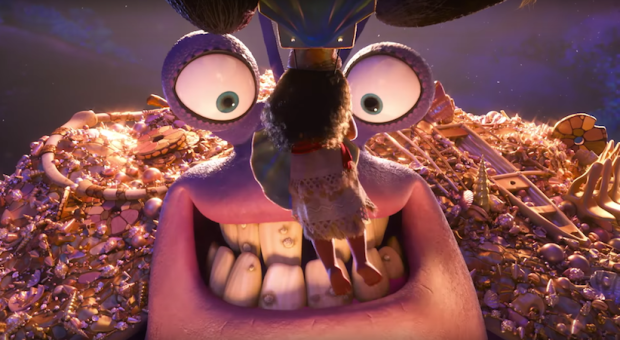
For the inhabitants of Motunui, that ocean is vast, and while once conquerable, it now serves to separate rather than unite, and to provide food. For Moana (Auli’i Cravalho), daughter of Chief Tui (Temuera Morrison), it calls to her. From infancy, she has a special relationship with it, hell, it’s even the translation of her name. Her beloved Gramma Tala (Rachel House) regales her with tales of myths and legends; amongst them, that of Te Fiti, Te Kā, and Maui.

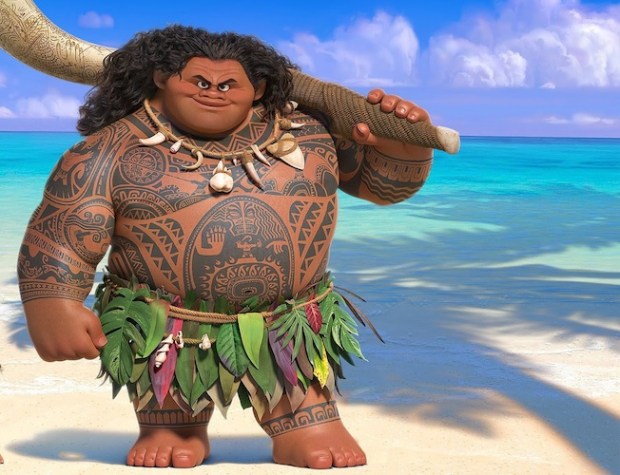
Moana is fearless and yet torn – as she matures – between her birthright, of becoming Chief or giving in to the niggling voice within and setting sail beyond the reef. She’s at odds with who she is and who her people need her to be. When circumstances change and her village starts to suffer, she summons her courage and determination, along with hapless stowaway Hei Hei (Alan Tudyk), and restore the heart of Te Fiti. Her heart previously stolen by Maui (Dwayne Johnson) – chump, braggart, all hubris and hair (and moko). Moana must persuade the demigod to help her reverse the damage he has caused.

Disney’s last dabble with Polynesian culture was in 2002 with the Hawaii-set Lilo and StitchMoana – although the period of time is never established – is most definitely the pre-cursor to Lilo… – the island of Hawaii still to be discovered by the voyaging canoes of the master navigators using star constellations to guide them to lands old and new.

A non-white cast certainly makes a refreshing change. In fact, only the gormless chicken is voiced by a non-Polynesian with the remainder of the cast made up of Hawaiian, Samoan, Māori, and Tahitian natives, this authenticity makes all the difference. Yes, it’s a Disney-fied version of history but oh what a beautiful one with the music making it. Moana’s songs are written and composed by the trifecta that is Opetaia Foa’i, Lin-Manuel Miranda, and Mark Mancina. They are heartfelt, incredibly catchy and above all memorable with highlights including ‘Where You Are’, ‘How Far I’ll Go’, ‘We Know the Way’, ‘You’re Welcome’ and the Bowie-inspired, Jemaine Clement solo, ‘Shiny’. This soundtrack is up there with Beauty and the Beast (1991) and The Lion King (1994) for standard, originality, and (eventual) longevity.

In keeping with the recent trend, there isn’t a romantic slant to the narrative. Just like Merida in Brave and Elsa in Frozen, the love story element is reframed within a pre-existing relationship, i.e. Merida and her mother, Elsa and her sister, and their respective narrative drives stem from finding their place in the world. By comparison, Moana is about a girl and her grandmother and celebrating tradition, embracing heritage, and restoring balance. Like an animated, musical, slant on Niki Caro’s Whale Rider (2002).

Directors John Musker and Ron Clements having previously helmed The Little Mermaid (1989), Aladdin (1992), and The Princess and the Frog (2009) have, with Moana, created an incredibly respectful window into a previously untouched culture, certainly by Disney standards. This not only gives young vahines a voice but recognisable onscreen figures to identify with. Moana embraces her independence to venture and veer from her expected path, assert herself and listen to that voice within. What’s not to love about that?

The film is a sheer joy from beginning to end; 113 glorious minutes in which to be engulfed, immersed, and swallowed by an entire oceanic culture.

Bonus Features

The disc doesn’t scrimp on extras either and these are well worth exploring. Gone Fishing (2 mins) is a short film in which, once again, Moana and, her namesake, the ocean get the better of demigod Maui. The real gem of all the extras is the documentary Voice of the Islands (31 mins) which follows the two Midwestern directors in their research for Moana and documents their visits to the Pacific islands, which included Fiji, Samoa, Tahiti, Mo’orea; ending their journey in New Zealand. It’s an incredibly fascinating short doc, and depicts this latest animated outing as a real labour of love on all counts. Working alongside the Oceanic Story Trust, Moana was a wholly inclusive project in which Pacific choreographers, linguists, anthropologists, fishermen, tattoo artists are interviewed and encouraged, at every turn, to contribute. It is an emotional, informative and highly interesting watch. This is followed by Things You Didn’t Know About… (5 mins) delivered in one minute segments in which the directors, Dwayne Johnson, Auli’i Cravalho, Lin-Manuel Miranda, Mark Mancina and Opetaia Foa’i are asked to answer fun, quick fire questions.


Island Fashion (5 mins) is an informative, if slight, addition to the extras menu in which costume design is examined, complete with storyboards and accessories. The Elements of… (13 mins) looks, in minute detail, (despite its short run time) at the more technical elements of Moana including Mini-Maui – a 2D integration within a 3D animation, drawn by Eric Goldberg. Further segments include water, lava, and hair, all explained by the visual effects supervisors and provide real insight into the extent and painstaking processes required to produce, say, responsive waves, smoke, fire and realistic hair.

They Know the Way: The Making of the Music Moana (12 mins). Again, Disney sure know how to pack a lot of information into a short duration. This covers the process by all three writers/composers/singers Mancina, Miranda, Foa’i and despite the fact that they are from the east coast, west coast and south pacific respectively, their cultural and musical difference worked so well as a collaboration. The Igelese Ete & Pasifika Voices choral clips are beautiful. Although, included on the soundtrack, another bonus feature is outtake ‘Warrior Face’ was deleted from the final film. It was inspired by the haka and is played in a three minute video against storyboards of the scene it would have accompanied. Fishing For Easter Eggs (3 mins) reveals hidden treasures from FrozenAladdinZootopiaLittle MermaidTangled and other Disney iconography which is dotted throughout Moana which even eagle-eyed viewers may have missed the first time.

Both directors introduce the Deleted Scenes (25 mins). These are in storyboard form and depict Moana as an eight year old, with her sibling, and definitely expand on a backstory which failed to make the final film. One feature, perhaps, for older children interested in the process but it’s very repetitive and younger audience members may lose interest. The disc extras are rounded off with the video for the Alessia Cara version of ‘How Far I’ll Go’ followed by the whole song translated into twenty-four languages.

Moana in home release is a worthy addition to the Disney family; full of magic and mana.

Categories
Blu-ray film review

My Life as a Dog (Dir. Lasse Hallström, 1985)

Lasse Hallström seems to have an affinity with pups, recently in cinemas with A Dog’s Purpose and before that, there was the utterly heartbreaking Hachi: A Dog’s Tale (2009). It all began, however, with his first feature 1985’s My Life as a Dog (Mitt liv som hund) which has now been transferred from original film to High Definition Blu-ray by Arrow Academy.

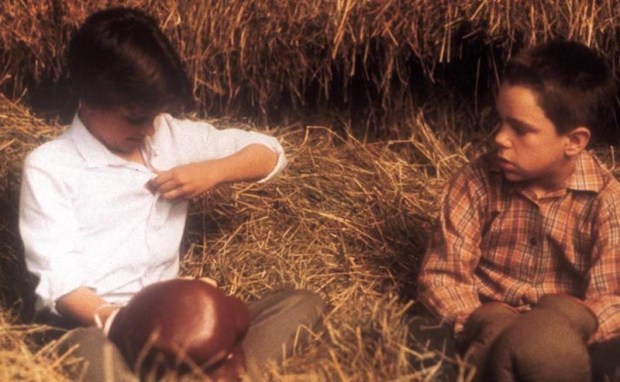
Based on Reidar Jönsson’s autobiographical novel, the film is set in late fifties Sweden and centres upon Ingemar (Anton Glanzelius); a gentle soul, if a little eccentric. He’s ‘married’ to a local girl (by cutting his thumb and having her suck the blood), gets his penis stuck in a bottle during a sex education class, and displays a slight tremor when drinking. Ingemar is twelve. He’s also attempting to live life as normally as possible while his terminally ill mother (Anki Lidén) screams bloody murder at her two sons, and fades slowly awaiting her final days.

Ingemar likens himself to Laika – the Soviet dog that was sent up into space, launched on a one-way trip aboard Sputnik 2, and ultimately left to die. Big feelings for a child who’s convinced things could be worse and one day he’ll be happy as he is packed off to spend the summer with Uncle Gunnar (Tomas von Brömssen) and Aunt Ulla (Kicki Rundgren), and the wonderfully unconventional cast of characters who inhabit Småland. There’s Manne (Jan-Philip Hollström), the boy with green hair, Saga (Melinda Kinnaman) the girl obsessed with boxing and football whose burgeoning breasts are tightly bound so she can stay on the team. Ailing Mr Arvidsson (Didrik Gustavsson) who lives in the basement of Gunnar’s house and likes to be read the lingerie catalogue, in order to silence the persistent roof-hammering of Fransson (Magnus Rask). He’s convinced the noisy neighbour wants to finish him off via the knock-knock-knocking of the metal head against wood. Even Uncle Gunnar with his cleavage obsession and his old vinyl copy of ‘I’ve Got a Lovely Bunch of Coconuts’ (which he plays on repeat) is a tad awkward and sweetly peculiar.

Regardless of their character traits there’s warmth and sincerity and real affection for our young protagonist despite being left at kennel after kennel, never completely wanted by anybody. It’s a remarkable performance by Anton Glanzelius) whose range, sensitivity and affecting depth belies his age and impish grin. While not as dark a piece as Cría Cuervos (1976), it does deal with a lot of the same issues and rests on the young shoulders of its lead(s), as the loss of innocence hits profoundly and they find themselves thrust somewhat prematurely into adulthood. Cinema Paradiso (1988) would follow – and would nicely round off this highly recommended triple-bill – even the US-produced October Sky (1999), clearly took some of its cues and hues from this Academy Award nominated Swedish film.

Hallström has made many pictures since 1985 and there has always been a gentility to his oeuvre, whether he’s dealing with ABBA, cider, chocolate, or Grapes and this bittersweet film extolling the virtues of rural communities and growing pains is no different. This is a warm, whimsical, funny and moving tale of a boy and his search for family; a place he can call home. Canines aside, My Life as a Dog is Lasse’s masterpiece.

Categories
Blu-ray film review

Only Angels Have Wings (Dir. Howard Hawks, 1939)

Bonnie Lee (Jean Arthur) disembarks the San Luis after it docks in the small South American port of Barranca. An unemployed showgirl and looking for company, she falls in with two fellow countrymen, Les Peteres (Allyn Joslyn) and Joe Souther (Noah Berry Jr) – American airmail fliers who frequent the, seemingly, only bar in town. Ran by ‘Dutchy’ (Sig Rumann), the bar/restaurant/general store/hotel/gathering place and headquarters of Barranca Airways is the place to be, where a toss-of-a-coin can get you a steak or the chance to be in the air.

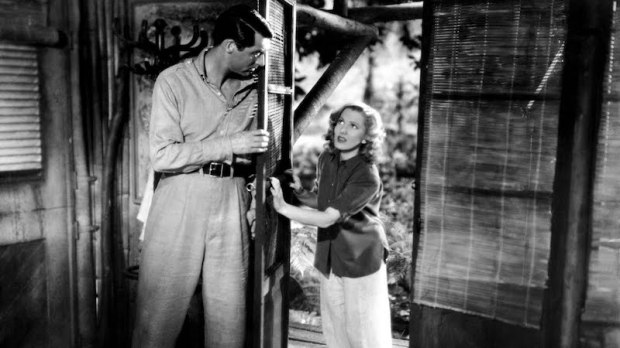
Geoff Carter (Cary Grant), steely boss and general chauvinist makes his presence heard and seen; dressed flamboyantly in high waisted trousers, a gun belt and a large Panama hat worn on a jaunty angle, think saloon-dwelling Indiana Jones type. It is a quintessentially glamorous and sensitive Grant, however; there is an underlying darkness which is rare. A man, as the film’s original trailer declares, who has a “propeller blade for a heart and an eye for a pretty girl.” The pretty girls in question, although as per the Hawks way far are from just that, are Arthur and Rita Hayworth (looking far less Spanish than she had previously) and they are ably supported by Thomas Mitchell (Gone With the Wind, It’s a Wonderful Life) and Richard Barthelmess (Broken Blossoms, The Dawn Patrol).

If anybody can make an aviation adventure-dramedy with real levity and musical numbers blend in such a way it is Howard Hawks. The plot is slight but the dialogue; pacing and verbal wit, superb special FX and lighting (oh how Hawks could light a movie) flesh out the otherwise simple story, accompanied by a wonderful score by Dmitri Tiomkin. What carries it is the maverick machismo of these high flying men, their friendships, loneliness, camaraderie and even love. Love for each other and love for the air, there is little glory in what they do and certainly no flag flying but they are there day-in-day-out regardless of the peril. Not unlike all of those other men preparing to forge their own close barracked friendships following the Only Angels Have Wings release in 1939. 

The Criterion Collection launched in the UK on April 18th 2016 with a small, yet defined, assortment of filmic goodies on Blu-ray for the discerning cinephile – this film included – and has continued to grow. Only Angels Have Wings is the Hawks not often discussed; a hidden treasure made all the more valuable by the love and attention shown by Criterion’s beautiful restoration. The crisp sound and perfect transfer/picture quality will make an audience believe they are in that South American Port of Barranca.