Categories
Blu-ray film review

Grey Gardens (Dir. Albert and David Maysles, Ellen Hovde and Muffie Meyer, 1976)

The mother/daughter relationship is a profound one and not often placed under the microscope. In 1976, two filmmaker brothers Albert and David Maysles (co-directed by Ellen Hovde and Muffie Meyer) chose to do just that with their documentary, Grey Gardens, which the Criterion Collection restored a few years back, and released on Blu-ray for the first time in the UK.
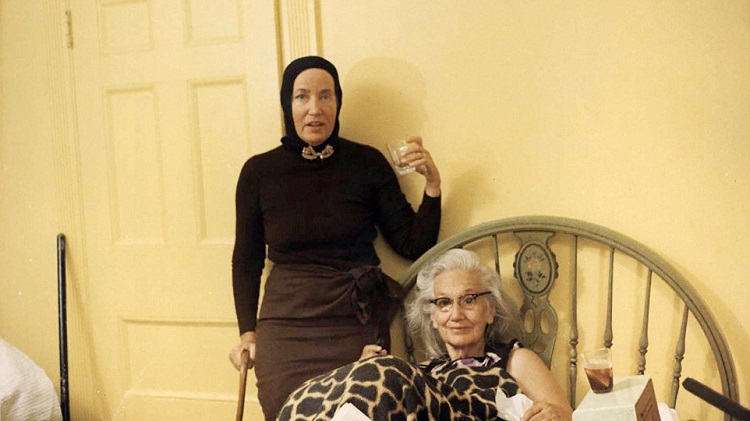
The Grey Gardens of the title is a 14-room house in the Georgica Pond neighbourhood of East Hampton, owned by Edith Ewing Bouvier Beale and her then-husband Phelan. Upon divorce, Phelan provided his wife, Big Edie and their daughter Little Edie with living costs. Once those funds had dried up, the house fell into disrepair and in ’72 the Suffolk County attempted to evict the two women and demolish the property. The press’ interest lay in whom the Beale’s were related to, one-time First Lady, Jacqueline Bouvier Kennedy.

Like with all documentaries, there is a level of manipulation, almost certainly, voyeurism and a vested interest in the subjects viewed. This is one of the few that appears to have no ulterior motive other than depicting Big Edie and Little Edie just as they are/were. It is a wonderfully weird piece of work; a character study of almost morbid fascination about privilege, crumbling Patriotism, and those two extraordinary women who thrived amongst reclusive squalor and the crumbling detritus of their lives.
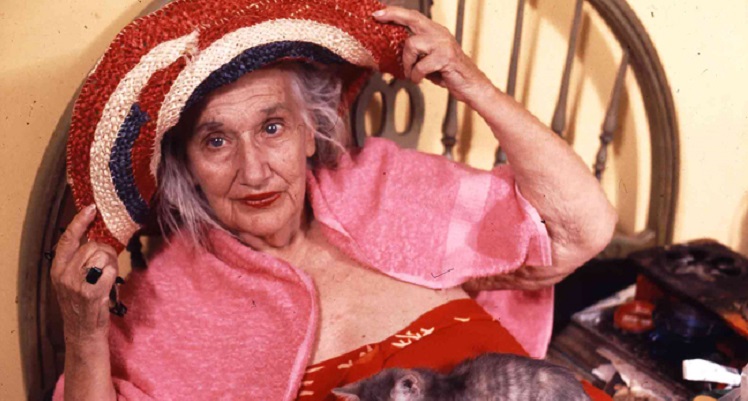
There is a home-video quality to Grey Gardens which although beautifully restored still contains a graininess which adds to its authenticity and intimacy. Often filmed outside, the natural lighting means that colours within the frame are stunning as Little Edie takes centre stage in her colourful ensembles and jewellery adorned headscarves. At times, it is hard to avert one’s eyes from what is onscreen, their eccentricities are, initially, hard to comprehend but both women have such warmth and veracity that the audience is soon taken in. One of the most beautiful aspects of the film is the lack of narrative time – the only indication is the dilapidated wall within the large expanse of foyer in the house and the noticeable hole in the wall gets bigger as the raccoon they share the house with (along with some 52 feral cats) makes itself a home.

Observing these two amazing women are the Maysles brothers who strike up such a seemingly genuine rapport with our main ‘characters’ that it is truly a joy to experience. In one of the disc extras, within the confines of the
scrapbook, it is stated that: “A few years ago, two brothers fell in love with a mother and her daughter.” Thanks to Criterion’s 4K restoration of the original negative we get to experience this visually beautiful love story first hand, sound quality is sublime and the mono track reproduces Little Edie and her mater’s dulcet singing voice to perfection.

Grey Gardens shows us a tender, loving and, at times argumentative, mother-daughter relationship; full of ups and downs and yet their commitment to each other and their way of life never faltered. Both are unapologetically wonderful and weird in equal measure. We should all embrace a Little Edie.

Categories
Blu-ray film review

Suntan (Dir. Argyris Papadimitropoulos, 2017)

In keeping with 2015’s Chevalier and The Lobster, Argyris Papadimitropoulos’ Suntan also places masculinity and middle-age under the microscope, it also happens to be Greek. Billed as a “coming of middle-age story”, it focusses upon Kostis (Maki Papadimitriou) who arrives on the island of Antiparos to take over as the new Doctor. As his new found friend Takis (Yannis Tsortekis) – think Chet Pussy (Cheech Marin) in From Dusk Till Dawn – explains only during the summer months does the island come to life and teems with tourists who inhabit the camping site just outside of the small city centre.

suntan_02

This summer brings with it, Anna (Elli Tringou), Jason (Dini Hart), Alin (Hara Kotsali), Mila (Milou Van Groesen) and Morten (Marcus Collen); an obnoxious bunch of youths who are determined to enjoy their holiday to the nth degree. They soon find themselves in Kostis’ examination room when Anna falls off her bike and upon treating her, the good doctor’s heart begins to flutter.

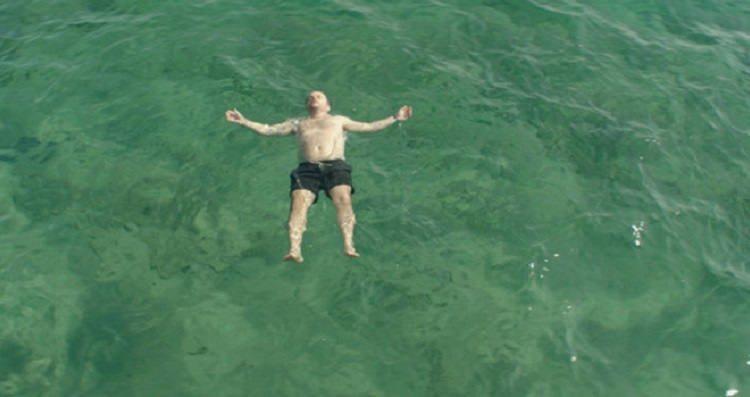
The sun, sea, and sand serves as a glorious backdrop, making sufficient use of lens flare as Kostis starts to “accidentally” run into the group who all seem intent on encouraging him and using him to amuse, abuse and buy them beer. They are sexually liberated spoilt brats whose nubile tanned taut flesh is often shot juxtaposing the Doc’s pale, hairy middle-aged paunch – the camera shames him and objectifies them, especially Anna.

His overeagerness is sweet yet cringeworthy and his lack of self-awareness overwhelming. We are initially invited, perhaps even encouraged to feel for him, he’s lonely, he missed the boat in some areas of life, he has regrets of youth, it’s easy enough but then, things take a turn.  His unlikely friendship with the woman half his age becomes an obsession, and his entitlement and aggressive behaviour gives way to darkness and a misogyny that is breathtaking.

4489_suntan

Papadimitriou embodies the sad-sack Kostis beautifully and while the ending comes as a bit of a shock, the lead up to the breakdown is heartbreaking and difficult to watch. Call it a cautionary tale or a painful parable yet Suntan is a solidly directed and acted Greek (New Wave) tragedy, however, where The Lobster and Chevalier relied upon biting satire within its drama, this falls short of humour and just plays out as dark, upsetting, and all a bit mean.

EXTRAS

Interview with director Argyris Papadimitropoulos (26 mins) –  Delivered in segments the director discusses the origins of the film, script, casting, and filming. Papadimitropoulos has a long standing history with the island of Antiparos, having began visiting at aged 16, he never wanted to recreate on film but depict it as it truly is. He talks about where the idea for the script came from (actually following his reading of Michel Houellebecq’s Whatever) which made him think of those who have access to pleasure and those who don’t. Thinking on the dichotomies in the film, it makes sense even down to the casting of the non-professional and inexperienced Elli Tringou opposite the “genius” of Makis Papadimitriou. This in depth sit-down with Suntan‘s filmmaker is really interesting and well worth watching after the main feature.

The Making of Suntan (15 mins) – A run-of-the-mill behind the scenes documentary-style featurette with a seriously good soundtrack, very Club La Luna, and in complete contrast to the previous extra.

Deleted Scenes – These include ‘Boogaloo’, ‘Downhill’, ‘Kalargyros’, ‘Milu Pees’ and ‘Camping’.

Theatrical Trailer

1080p Presentation on the Blu-ray|Progressive encode on the DVD|5.1 Surround and Stereo soundtrack options|Optional English subtitles (containing 1 or 2 errors)

Categories
Blu-ray film review

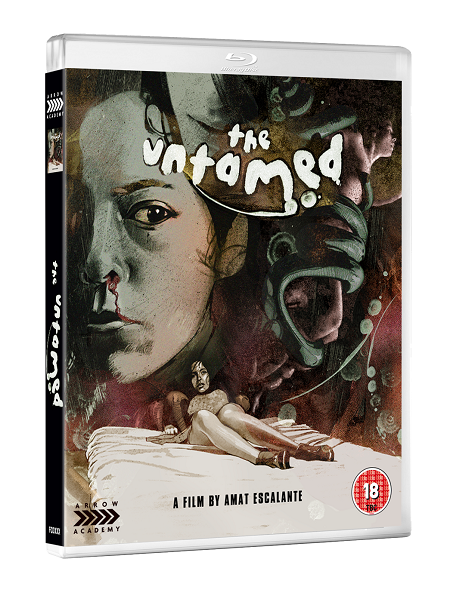
The Untamed (Dir. Amat Escalante, 2018)

Never one to shy away from the confrontational, Amat Escalante’s follow up to the unflinchingly brutal Heli (2012) is available now on DVD and Blu-ray courtesy of Arrow Films and its Arrow Academy label.

Straddling science fiction, horror and a Mexican kitchen sink drama, The Untamed, begins with a lingering shot of a meteor hovering in space. Its crash to Earth occurs off-camera but leaves a large crater in its wake and t brought something with it. That ‘something’ has tentacles, presumably a respiratory system of sorts, despite having no visible organs or features, and has taken up residency in the barn of an ageing couple (played by Oscar Escalante and Bernarda Trueba). It has a regular visitor in the form of Verónica (Simone Bucio) who, well it’s never made implicit what or how she serves the alien form despite strong indications; only that on this occasion, she is injured and forced to leave and find aid.

Shocked and bleeding, she seeks refuge in a local hospital where her wound is treated by Fabián (Edén Villavicencio) and one thing leads to another and the lonely and somewhat mysterious Verónica inserts herself into the gay nurse’s life and by extension his sister Ale (Ruth Ramos) and her less-than-blissful domestic set-up with cheating, bullish homophobe husband Ángel (Jesús Meza) and their two small boys. The stranger convinces them that the life form which resides in that barn is the answer to their problems just prior to and even after devastating, irreparable tragedy.

Apparently made as a direct response to chauvinism, mainstream homophobia and the moral perception of tragedy, this fantastical allegory builds atmosphere with a literal humming buzz in the diegesis and taps into our basest primitive state, and the relationship between pain and pleasure. This dichotomy is beautifully depicted through Ale and Angel’s youngest son and his love of chocolate, he knows he’s allergic but can’t resist. Those moments of gratification are worth it, even if it means an angry-looking itchy red rash and a prodding injection. Seemingly, for the adults, pain and pleasure mature through sex and violence, however, this is never fully connected within the film’s narrative, the strange alien life force or the human subjects.

The Untamed deals with hefty subject matters and is a human drama within a sci-fi-erotic-horror film. Several scenes are clearly influenced by Andrzej Žulawski (the late filmmaker is even acknowledged in the closing credits), there are moments which feel Cronenbergian, and even includes a scene which reminded of von Trier’s Antichrist (2009). The horror aspects never feel forced and are fascinating, specifically the creature, one is drawn to it much like the lost souls in the film yet it’s not given that much screen time. Sadly, it is in the human drama aspect that the film falls down. There was an intensity, rage and heft to Heli and even Žulawski’s Possession (1981) (if we’re to take that as the main text of inspiration) which feels missing here; yes it’s subversive, intelligent, and well put together but overall muted and a little disappointing.

DISC EXTRAS

The Making of The Untamed (84 mins) – this in-depth footage takes us behind the scenes with the cast and crew of the film, shot by one the film’s composers and the director’s brother, Martín Escalante. There are fascinating moments, warm interludes between filmmaker and his collaborators – who seem to compromise of some long-term friends and family members – and laborious retakes in shooting. Amat Escalante is a perfectionist, that much is clear.

Amarrados (Tied Up) (15 mins) –  Escalante’s first short which took first prize at the 2002 Voladero International Film Festival in Mexico and won him Best Short and Best Director at the Newport Beach International Film festival in 2003. Shot in black and white, the film centres around Niño (Abel Diaz), a young homeless boy who’s stuck in a vicious cycle of sexual abuse and glue-sniffing. There’s a beauty amid the misery in this short, in which class, race and religion are alluded to and Escalante’s follow-shot is included: a great edition to the disc.

First Pressing Only – Booklet featuring new writing on the film by critic and author Alexandra Heller-Nicholas, writing by critic Jonathan Romney, the director’s statement and extracts from the press book, illustrated with original stills (unavailable at the time of review).

Region: B/2|Rating 18|Language: Spanish|Subtitles: English/English SDH|Aspect Ratio: 1.66:1|Audio: Mono|Colour|Discs: 1

Categories
Blu-ray film review

Don’t Torture a Duckling (Dir. Lucio Fulci, 1972)

Of the three main maestros of Italian horror, it is Lucio Fulci who is regarded the most lurid, gory, even the trashiest of the trio, or at least he might have been once upon a time. Following many of the tropes associated with the genre, this Giallo also touches on prostitution, child murder, paedophilia, religion, truth, loss, and motherhood, Don’t Torture a Duckling is replete with symbolism and depth, the term ‘masterpiece’ has been somewhat cheapened over the years but this could well be Fulci’s.

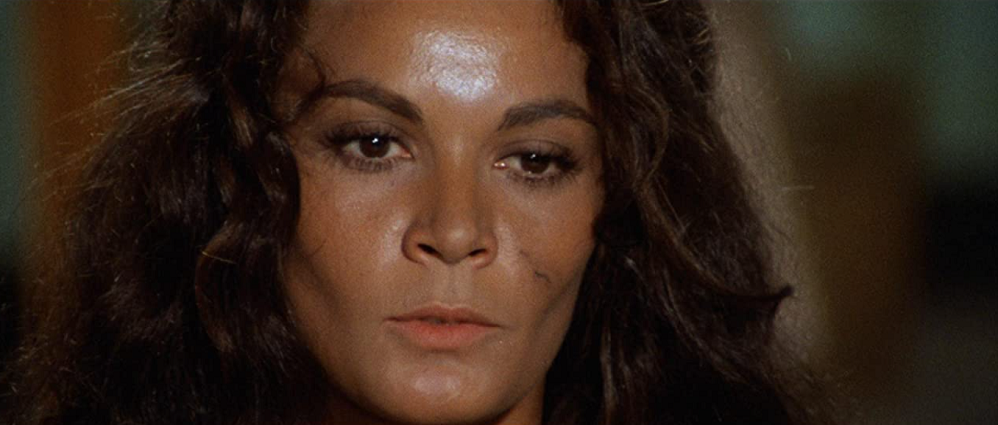
Opening in rural Southern Italy, the landscape is split by an ugly concrete motorway bringing with it a bit of modernity; prostitutes, and the ‘outsiders’ (following the first of the murders) in the form of rich ex-drug addict Patrizia (Barbara Bouchet) and city journalist Andrea (Tomas Milian). The idyll of the small village is rocked when the first of the boys, Bruno, goes missing. His brutal murder is quickly followed by the senseless deaths of his friends Michele, and Tonino. Suspicions soon lead to a local ‘witch’ Magiara (Florinda Bolkan), one-time student of eccentric black magic-practitioner Francesco (George Wilson), and of course because of her difference – even after she is exonerated – some local men take the law into their own torturous and contemptible hands, little do they know that the real culprit is much closer to home. It is down to Patrizia and Andrea to work together and expose the killer before he/she strikes again.

Mixing the thematic and stylistic tropes of the giallo with Gothic horror, Fulci makes women the interesting subjects in the narrative, especially Bolkan who is not only the most sympathetic character but whose performance is exceptional. In a film about the destruction of innocence and child murder, it isn’t actually their disturbing deaths that are the most shocking. Fulci builds the superstition and style, mood, tone and atmosphere with light and  bright wide exterior shots and juxtaposes them with claustrophobic dark interiors and yet subversively, just as the killer comes from within the community so, too, are these children killed outdoors.

Violence is, as one can expect, never shied away from and a truly gripping story intensifies to an emotional and visceral crescendo which is unforgettable thanks mainly to the editing and that slightly grating piece of pop music used to accompany the brutality. Yes, the effects are a little dated and the acting, a tad histrionic but it’s in keeping with the genre and boy, what a social commentary it provides. Traditional, old-fashioned values and small-town mentality are pulled apart and what goes hand-in-hand with that? Religion. Understandably, this film courted controversy in the eyes of the Catholic Church especially given the film’s ending, which is almost gleeful in its transgression (the director’s own Catholicism making it all the more delicious and rebellious) especially considering it’s length, audacity and those gratuitous close-ups.

While Lucio Fulci never seemed to have the sumptuous production value of Mario Bava or the operatic visual mania of Dario Argento, he’s integral to the period, Gialli, and Italian horror – Don’t Torture a Duckling more than proves that and now, thanks to Arrow Video you can view it in all its lurid high definition gory glory.

DISC EXTRAS

The Blood of Innocents (30 mins) – This video essay is delivered by Dr. Mikel J. Koven from the University of Worcester and author of La Dolce Morte: Vernacular Cinema and the Italian Giallo Film. He discusses the concept of ‘vernacular cinema’ (those films which tend to avoid the bourgeoise mainstream audience) with enthusiasm and makes this a fascinating lecture. While it is ultimately a bloke behind a desk, the essay is intercut with many clips of multiple film texts which fall under the Giallo umbrella including work from Sergio Martino, Dario Argento, Pupi Avati, and Antonio Bido.

Hell is Already in Us (20 mins) – Written and narrated by Kat Ellinger, this audio essay focusses on violence and gender with Ellinger defending the claim that Lucio Fulci was a misogynist filmmaker. She refers specifically to his 1982 New York Ripper and Don’t Torture a Duckling to state her case; that Fulci confronts the taboo and uses his art-form to comment upon civilisation and depicting oppressive patriarchal society in all its evil glory.

Audio Interview (Part 1: 20 mins/Part 2: 15 mins) – In August 1988, journalist Gaetano Mistretta sent a letter with a list of questions to the filmmaker and Fulci recorded an audio tape complete with all his answers and sent it back to Mistretta. It’s a great listen full of personal anecdotes about his process, his grandchildren even though we all know, he adds with a chuckle, that “children are monsters”, his favourite filmmakers (Argento, Cronenberg, Kubrick and Bava) and the correct length of a horror film (it’s 80 mins btw).

Interview with Florinda Bolkan (27 mins) – Filmed for Freak-O-Rama in 2016, one of Don’t Torture a Duckling‘s leading ladies chats about her experiences on set with Fulci (having completed A Lizard in a Woman’s Skin the previous year with him), whom she deemed a gentle man and genius. Discussion turns to that scene and despite never viewing it in its entirety, she agrees to watch it for the first time in 44 years, and is understandably horrified by it. Additional segments from this 2016 programme are also contained in the special edition content , all include those involved with Duckling including: The DP’s Eye (45 mins) – time spent with cinematographer Sergio D’Offizi, From the Cutting Table (25 mins) – assistant editor Bruno Micheli takes us through his process and in Endless Torture (15 mins) make-up artist Maurizio Trani talks his history with make-up, Fulci and the special effects used during the Bolkan scenes.

Audio Commentary provided by Troy Howarth, author of So Deadly, So Perverse: 50 Years of Italian Giallo Films.

Reverse sleeve featuring original and newly commissioned artwork by Timothy Pittides.

First pressing only: collector’s booklet with new writing on the film by Barry Forshaw and Howard Hughes (not available for review).

Region: AB 1/2|Rating 18|Language: Italian/English|Subtitles: English|Aspect Ratio: 2.35:1|Audio: Mono|Colour|Discs: 2

Categories
Blu-ray film review

Kill, Baby… Kill! (Dir. Mario Bava, 1966)

Dr Paul Eswai (Giacomo Rossi Stuart, papa of Kim) arrives somewhere in Eastern Europe at the behest of Inspector Kruger (Piero Lulli) to perform the autopsy of Irene Hollander (Mirella Pamphili) whose death is burnt on our retinas during the opening credits. She is the latest in a long line of residents who die, all seemingly at their own hand, and yet something is nagging at the Inspector. The villagers themselves are suspicious of the medical outsider and do everything in their power to prevent a postmortem even enlisting the help of local witch Ruth (Fabienne Dali) to make the reparations for a peaceful afterlife and to counteract “the curse” inflicted by the creepy blonde child in white who likes to peer into windows. For the stoic and steadfast Doctor who is so initiated in the world of science, it becomes increasingly difficult for him to reconcile the rational amidst the supernatural, old superstitions, and his own eyes. He, along with Nurse Monica Schuftan (Erika Blanc) work together to unlock the secrets of the village, the eerie goings-on in the crumbling Villa Graps, and the history behind the reclusive Baroness (Giovanna Galletti) and her little girl Melissa (Valerio Valeri).

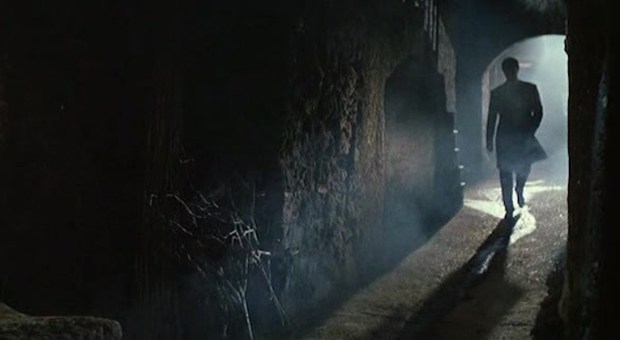
Mario Bava was a genius when it came to horror and the Gothic. He was a master of avoiding blood and gore, when needed, and often instead concentrated on building mood and atmosphere, through music, cinematography, special effects, and diegetic sound: echoing footsteps, squealing cats, and creaking doors were among his specialities, as well as the sublime use of lighting and coloured gels. He depicted fear and the emotional experience of it through an artistic subtlety few have been able to replicate. Bava transgressed the medium which left him unappreciated in his time, and his body of work often overlooked. Operazione paura or the US-monikered Kill, Baby… Kill! is a beautiful and enchanting piece of supernatural horror, atmospheric and credible in its Gothic tropes. Under the threat of death or no, Villa Graps is well worth the visit.

The Arrow Video label of Arrow Films has put together a great package celebrating this Gothic gem, one of a slew of Bava’s oeuvre which have been restored and made available to own including Black Sunday, The Girl Who Knew Too Much, Black Sabbath, and Blood and Black Lace. Aside from the 2K restoration HD digital transfer, there is, as one has come to expect a whole host of additional treats besides.

The Devil’s Daughter: Bava and the Gothic Child (21 mins) – This in-depth audio essay written and narrated by Kat Ellinger is brilliant. She discusses Bava’s influence on contemporary filmmakers, specifically citing Guillermo del Toro’s Crimson Peak. In addition, she works her way through examples of Gothic literature and cinema, paying particular attention to the Gothic family, monstrous mother, and demonic child in relation to KBK as well as other films which followed and those which are indebted to Mario Bava and the character of Melissa Graps. A 2007 interview with Bava’s AD and son, Lamberto is the subject of Kill Baby Kill (25 mins) during which Bava Jr talks about working with his father and grandfather (Eugenio was also a special effects technician and cinematographer) and their collective interest and pursuit of the supernatural.

The whole documentary-style interview takes place in Calcata, Italy as Bava takes us on a tour of the village which was used as the location for KBK, through Villa Frascati which doubled for Villa Graps and discusses the fun they had recreating the cemetery (amongst other interiors and exteriors) on a sound stage. Erika in Fear (10 mins) – After introducing the main feature, Erika Blanc gives this lighthearted interview during which she describes her experiences on set and what it was like working with her director. Affectionate reminisces are abound as Blanc denounces cinema of today as being flat which is one of the reasons why audiences are only discovering Bava’s technically precise and professionally perfect films now; they’re not used to such vibrant colour.

Yellow (2006) (6 mins) – Semih Tareen’s short film and beautifully-hued love letter to the cinema of Mario Bava.

German Opening Titles (3:25) – in which orange text declares the title of the film Die toten Augen des Dr. Dracula – odd, given Dracula’s nowhere to be found.

International Trailer (2:32)

Photocomic – 68 slides break down the vintage photocomic book, in which every frame is depicted in comic book cells. This was originally published in Film Horreur in 1976 and provided by Uwe Huber.

Image Gallery – 28 slides show the German posters and lobby cards – which Erika Blanc works her way through in her interview – again provided by Uwe Huber.

New audio commentary – provided by Tim Lucas, author of Mario Bava: All the Colors of the Dark.

Reversible sleeve featuring original and newly commissioned artwork by Graham Humphreys.

First pressing only: Collector’s booklet featuring new writing by critic Travis Crawford.

Region: B/2|Rating 15|Language: Italian/English|Subtitles: English/English SDH|Aspect Ratio: 1.85:1|Audio: Mono|Colour|Discs: 2