Categories
Article

Open Letter to DC

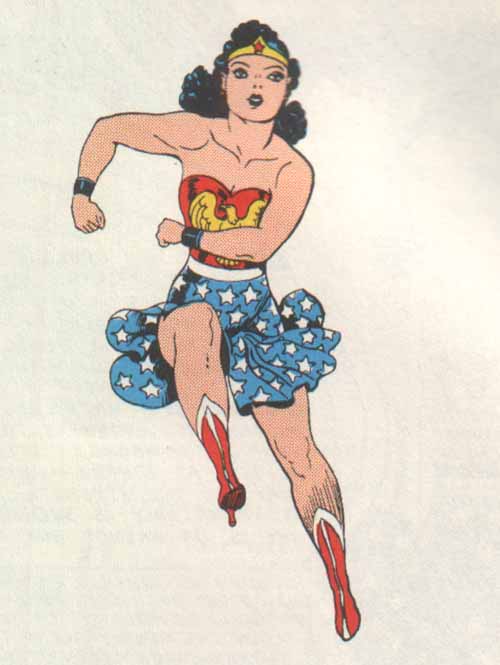
WW by Darwyn Cooke '08

In case anybody missed it, I adore Wonder Woman. I love what she stands for and let’s face it female superheroes are pretty rare not least because they tend not to get a shot at the big screen. Times be a’changing with the pencilled-in film releases of WW, Captain Marvel, and Supergirl on the small screen. I wrote to DC (in one of those attention-seeking, open letter type things) outlining why Wonder Woman is integral to DC but also, more importantly, why the film needs to be done right…

Dear DC,

It is only logical (and fair) that the third major player in the League and indeed the DC Universe gets their standalone origin film. I am, of course, referring to Wonder Woman and now, it appears I am getting my wish albeit in the most bizarre order imaginably. It has been 74 years without so much as an attempt and yet we have had a substantial tally of Superman (6) and Batman (7) films. So, forgive me for being somewhat pessimistic. A Wonder Woman genesis film has been expected nay deserved for a very long time but she gets described as “controversial” and “complicated”. And? Show me a woman who is not.

Created in 1941 (following appearances by Superman in ’38 and Batman in ’39) by William Moulton Marston; I know, I know A MAN but a progressive feminist who created the character as “psychological propaganda for the new type of woman”. A woman who he believed should rule the world. He saw a great deal of potential in the women’s movement, surrounded himself with strong, intelligent women, hell, he even believed that by 2037 the world would be governed by a Matriarchy. He reckoned that while the feminine archetype lacked “force, strength and power” girls wouldn’t want to be girls or submissive. “The obvious remedy [was] to create a feminine character with the strength of Superman plus all the allure of a good and beautiful woman.” (WMM, 1943)

One can argue that the man was wrong, although it is 2015 and do we not have the same issues surrounding gender on film? I could argue that he had a slight preoccupation with bondage (he was also a huge fan of the truth too). This was an academic who shared his marital home and life with a MA graduate wife and PhD educated mistress, transgressive sexuality pervaded his personal life, why not his work? Patriarchy is the oppressor to which Wonder Woman is enslaved after leaving Themyscira and is often bound – sometimes figuratively – nearly always literally, forced into passivity by the ties/rope/chain that binds before breaking loose and reciprocating with her lasso. Yes, Moulton Marston’s idealistic feminism is problematic, he believed in domination and sexual enslavement but I digress, I’m sure you’re not even considering *that* type of storyline…

Word on the grapevine is that a big action film is not on the cards, you want a more character-driven piece and the search for a male lead/love interest is currently taking place. Rumours have it that you don’t want a strong feminist message…erm, an Amazonian woman-of-steel born from clay outside of the restrictive realms of patriarchy who lived, for most of her life, on a Utopian island devoid of men. You don’t see this as problematic? Hold on. Forgive me. I forget, you are using the New 52 storyline so her origins have been revised so she is now the daughter of Zeus (ugh). I remember that time when Superman and Batman’s origin story was revised and changed. Oh no wait…

I often get asked why. Why do I idolise her, why her above the others? For the record, I love all those other guys too but there will always be a special place in my heart for Wonder Woman. I like what she stands for: strength, intelligence, capability, kindness, wisdom, confidence, courage, sisterhood. Plus, her costume’s really cool; dressed in the red, white and blue standard of freedom and democracy. Batman isn’t the only one with an arsenal of goodies, she wears a tiara which is razor-sharp and can be hurled like a boomerang, the bracelets at the wrist can deflect bullets and serve as a reminder of the shackles once worn when the Amazons were the prisoners of Ares. She carries Hestia’s golden Lasso of Truth; tiny chain-links with limitless length, indestructibility and of course, anybody bound in it are compelled to tell the truth. The lady has the ability to fly (although not soar high), can spin at blurring speed – usually to shed her civvies – is able to communicate with most animals and beasts and has numerous vehicles at her disposal, all invisible.

Not to mention that fact that she is just as physically strong and special as Supes. Their similarities are actually hard to ignore. They are both on Earth separated from their familial roots both have an alias to protect and while they don’t fully comprehend the planet they inhabit they wish to shield and, wherever possible, protect the humans living on it. Yet still she has not been immortalised on the big screen but Superman’s genesis gets regurgitated every decade or so. Why am I telling you all of this when you gave her a home in 1941? Because I don’t want you to forget that there is more to her than just a pretty face.

She will, as it has been made very apparent, make an appearance in Dawn of Justice in the form of Fast and Furious alum Gal Gadot (I’m still in denial about that) before FINALLY getting her own film. The pre-production of which has been hmm, interesting to say the least; female director, no script, creative differences, new female director, six scripts…Why does it need a female director? Well, why not? And hey, DC, if you’re struggling with the script, why not ask Dr. George Miller, he could teach all of you a thing or two about writing a woman. Just don’t fall into the trap Marvel did with Elektra. Good grief that film sucked.

We all know female heroes (some super, some not) are not quite as scarce as they once were; however, they still get a raw-deal. The Age of Ultron / Black Widow storyline furore will attest to this or the severe lack of female-led merchandise which fails to adorn toyshop shelves and don’t get me started on the slut-shaming or name-calling on/offscreen. Supergirl’s even getting in on the (TV) action albeit in a seemingly cutesy way. I get it. I do. Too many females transgressing the boundaries of the norm have and will continue to cause issues for some. It will encourage women wanting to be women and expecting the world, just as Gloria Steinem said, to change for them.

Perhaps, a decent depiction of the Amazonian attesting to the strength and influence of the feminine archetype will be a huge commercial success? Or perhaps, in spite of Joss Whedon’s utter condemnation of the notion that (some) men aren’t interested in the exploits of female she-roes, there is actually some truth in it? No, that can’t be right, not given the popularity of the likes of BuffyAlien and Terminator franchises and HAVE YOU SEEN Max Mad: Fury Road? Furiosa (Charlize Theron) proves that she can fight toe-to-toe with any man and still be hard, vulnerable and feminine.

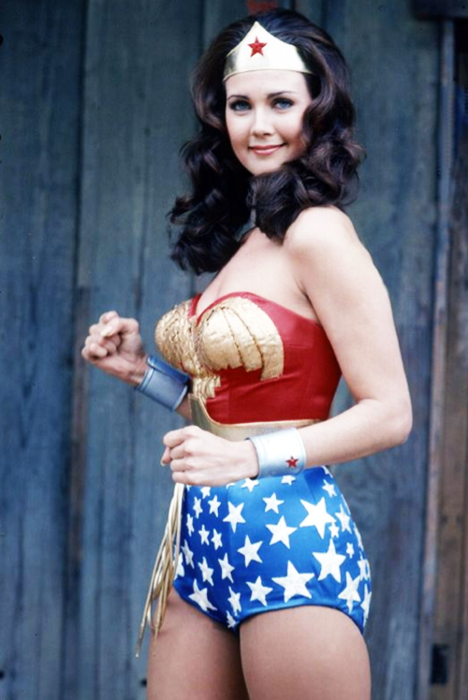
Anyway, back to the subject at hand. As you will know Wonder Woman’s current filmic/televisual legacy is largely fan-made. There is that animated film from 2009 which is really rather good and the (now) kitsch and fabulously camp television series made in the 70s which ran for three seasons and saw former Miss USA, Lynda Carter, don the girdle and fight for our rights in satin tights. She was wonderful in it; strong, fearless, savvy, intelligent and beautiful, a Goddess on Earth instilling hope and convincing the world of compassion, humility and generosity – all the while kicking ass. Carter is 63 now and will forever be a wonder woman but it’s time for a change, the character needs to be brought into the twenty-first century while still retaining her roots. David E. Kelley did attempt it in 2011 with Adrianne Palicki in the titular role. Elizabeth Hurley was the villain along with a supporting cast that included Cary Elwes and Tracie Thoms. His pilot was never optioned probably due to the hideous SFX, tacky PVC-costume, or the fact that he portrayed the peace-loving princess as a sexually frustrated spinster who curls up in front of The Notebook and obsesses over her Facebook profile when she’s not ripping out people’s throats. As soon as Diana pulls out the merchandise and dolls at a board meeting, it all gets a little too meta.

I think the point I’m trying to make is I really love Wonder Woman. I have seen a billionaire playboy take to the sky dressed as a giant bat, I’ve witnessed a super alien male don a red cape and protect a city and now I want to see an Amazonian, wearing a tiara attempting to educate mankind. It is time for her to have a go at saving the world.

Please DC, don’t eff it up.

Yours,

A Fan

Categories
Article

(Wo)man of Steel

wwface
carcassonne_by_yalestewart-d5myftz

The much anticipated Superman reboot has opened in cinemas (last week for those of you holidaying on Krypton) and yes, for the most part, it is pretty good and yes, it is all the Twitterverse can tweet about or so it has seemed since opening weekend. It is now time to move on and consider DC’s next move. Man of Steel’s success, hot on the heels of The Dark Knight, has meant talks of a Justice League of America movie, for those of you not in the know The JLA is to DC what The Avengers are to Marvel. It is only logical (and fair) that the third major player in the League, and indeed the DC Universe, gets their stand alone origin film. I am, of course referring to Wonder Woman.

ww-40s

Created in 1941 – following Superman in ’38 and Batman in ’39 – by William Moulton Marston, in part, for the following reason:

“Not even girls want to be girls so long as our feminine archetype lacks force, strength, and power […] they don’t want to be tender, submissive, peace-loving as good women are. Women’s strong qualities have become despised because of their weaknesses. The obvious remedy [was] to create a feminine character with the strength of Superman plus all the allure of a good and beautiful woman.” (WMM, 1943)

Erm, okay William…”tender, submissive, peace-loving [weak] as good women are…” . I will, however, on this occasion ignore the slight stench of misogyny and gross misrepresentation of women in this reasoning, on the basis that you created my favourite superhero (I idolise all the other guys too but there is a special place in my heart for WW) and I think the important sentence in this statement is “with the strength of Superman” because she is just as tough; the woman of steel.

wonderwoman3

We all know female superheroes are somewhat scarce, not necessarily on the comic-book page but certainly onscreen (and no, Jean Grey and a foul-mouthed eleven year old do not count, at least not for me), conceivably, a product of their time or maybe too many females transgressing the boundaries of the norm would encourage women wanting to be women – Gloria Steinem has written several essays on the Amazonian, attesting to the strength and influence of the feminine archetype. Perhaps, in spite of Joss Whedon’s utter condemnation of the notion that men aren’t interested in the exploits of female she-roes, there is actually some truth in it. Who wouldn’t want to see the strength and power of Gaea, the hunting skills of Artemis, the wisdom of Athena, the speed of Hermes and the beauty of Aphrodite personified in the intelligent, honest and disarming charm of Diana Prince?

doranww - Copy

Dressed in the red, white and blue standard of freedom and democracy – Batman isn’t the only one with an arsenal of goodies – she wears a tiara which is razor-sharp and can be hurled like a boomerang, her bracelets worn at the wrist can deflect bullets and serve as a reminder of the shackles once worn when the Amazons were the prisoners of Ares. She carries Hestia’s golden Lasso of Truth; tiny chain-links with limitless length, indestructibility and of course, anybody bound in it are compelled to tell the truth. Wonder Woman does have the ability to fly (although not soar high), can spin at blurring speed, usually to shed her civvies, is able to communicate with most animals and beasts and has numerous vehicles at her disposal, all invisible. Like I said, she’s just as physically strong and special as Supes. Their similarities are actually hard to ignore: they are both on Earth, separated from their familial roots, both have an alias to protect and while they don’t fully comprehend the planet they inhabit they wish to shield and, wherever possible, save the humans living on it, and still she has not been immortalised on the big screen, yet Superman’s genesis gets regurgitated every decade or so.

There is the (now) kitsch and fabulously camp television series made in the 70s which ran for three seasons and saw former Miss USA, Lynda Carter don the girdle and fight for our rights in satin tights. She was wonderful in it; strong, fearless, savvy, intelligent and beautiful, a Goddess on Earth instilling hope and convincing the world of compassion, humility and generosity – all the while kicking ass. Carter is 61 now and will forever be a Wonder Woman but it’s time for a change, the character needs to be brought into the twenty-first century. David E. Kelley did attempt it in 2011 with Adrianne Palicki in the titular role, Elizabeth Hurley as the villain, along with a supporting cast that included Cary Elwes and Tracie Thoms. His pilot was never optioned probably down to the horrible SFX and the fact that he portrayed the beautiful peace-loving princess as a sexually frustrated spinster who curls up in front of The Notebook, or obsesses over a Facebook page when she’s not ripping out people’s throats – as soon as Diana pulls out the merchandise and dolls, it all gets a little too meta.

Wonder Woman2

Wonder Woman is, in the words of Lynda Carter, “the beautiful, unafraid, tenacious and powerful woman we know resides within us [even you boys], the antithesis of victim […] a symbol of extraordinary possibilities that inhabits us, hidden though they may be.” Last year, I saw a billionaire playboy take to the sky dressed as a giant bat, last week I witnessed a super alien male don a red cape and protect a city. I don’t see how watching an Amazonian Warrior wearing a tiara, star-spangled shorts and attempting to educate mankind is any different. It is time for the Wonder Woman to have a go at saving the world.

Categories
Article

The Great Remake Debate

A one-off battle.

In the blue corner, Hel (TFD) and in the red corner, The Littlest Picture Show (LPS). Here they examine the contemporary and classic reimagining and verbally duke-out the pros and cons.

This bout…

Infernal Affairs (Alan Mak & Wai-Keung Lau, 2002) vs. The Departed (Martin Scorsese, 2006)

Synopsis.

Infernal Affairs (Mon gaan dou) opens with Ming (Andy Lau) and Yan (Tony Leung) drafted into the police force, as eighteen year old cadets. One, Yan, goes undercover to infiltrate Triad organisation headed by Hon Sam (Eric Tsung), while the other, Ming, works as a his mole inside the department. They soon discover the other’s existence and set about exposing their true identities. The Departed fast forwards four years and in Boston, Massachusetts. Colin Sullivan (Matt Damon) and Billy Costigan (Leonardo DiCaprio) find themselves in a similar predicament as State Policemen working for Irish mob boss Frank Costello (Jack Nicholson).

1. Narrative/Plot

LPS: Whilst you can see the similarities to an overall story, it’s really only obvious in certain key scenes. However, The Departed conveys the story a lot clearer, with more fluidity to the narrative progression and fleshes it all out so it felt more accomplished and comprehensive. It also weaves the subplots and supporting roles into the essence of the main story. Infernal Affairs had flimsy sub-plotting almost to the point of it being redundant (the ex partner and daughter, anyone?).

TBT: The slow –burn narrative of IA subverts expectations and the subtlety of the sub-plot is not necessarily flimsy but more to develop character. Yan’s ex-partner and daughter signify what he has sacrificed. I agree with comprehensive but to the point of too much! Spoon-feeding the audience can have a detrimental effect.

Round 1: LPS

2. Casting, cinematography, generic traits, themes

LPS: Casting for TD far outweighs IA in terms of quality and prowess. Nicholson is a more menacing, maniacal bad guy, and Leo is a likeable protagonist. It’s easier to follow as a story as you have recognisable faces such as Damon and DiCaprio, as well as the supporting cast that drift in and out of the film effortlessly. The clear difference is the settings (Hong Kong and Boston) and I think it really alters the perception and tone of each. Because of budgetary constraints, TD clearly wins here as it looks far more atmospheric and convincing. Plus, even though IA has some nice locales, TD overall appears a lot more polished, throughout and impressive.

TBT: Lau and Leung are the most commercially successful actors in their native Hong Kong and have been since the mid-80s. IA is a stripped down noir thriller that differs from the usual style of Hong Kong filmmaking and chooses to avoid overt violence. Instead, it builds upon the quiet desperation and elusive complexity of its leading characters. Rather than cram into its 101 minutes, directors Mak and Lau choose the use of montage and flashback sequences to ground the history of their characters. When Lau and Leung do eventually face-off near the film’s dénouement it is reminiscent of Pacino and De Niro in Michael Mann’s Heat; less is most definitely more and makes for a more nuanced and engaging film. Plus, they’re physically different (Lau has hardened features while Leung is more boyish and sensitive looking) and yet both are likable. TD’s leads are very similar; Damon, although we’re meant to care (seeing him as child, etc) is vile, DiCaprio does, well, DiCaprio…

Round 2: TBT

3. Originality – does the remake capture the original’s essence? Is it different enough to be a stand-alone film?

LPS: TD does indeed capture the essence of the original, but brings so much more to the table – meatier exposition, a clearer coherency for story, structure and subplots. What’s more, TD trounces IA in terms of the script, notably for its superb dialogue.

TBT: TD takes the themes of organised crime, religion and the mirroring duality of its leading protagonists and ups the ante with ideas of masculinity and misogyny. Scorsese throws everything at this film; over-elaborate cinematography, multi-layered sub-plots which can lead to a feeling of over-egging. The gangster-genre is Scorsese’s domain and here he makes his normative Italian gangsters Irish and replaces De Niro for DiCaprio who, along with Jack Nicholson and Matt Damon, delivers an over-amplified performance. TD has more potential as 21st century remake of Goodfellas, via Hong Kong.

Round 3:  TBT & LPS

4. The re-imagining – changes/alterations.

LPS: TD adds to all of IA’s basic elements. Sure, the original is an interesting idea, but I feel TD really builds upon the existing foundations. It obviously helps that Scorsese directs, and is accompanied by a big budget and excellent ensemble, too. The changes are for the better, as I found the original very vague in places and hard to follow. If I hadn’t had seen TD several times before IA, then I’d have had no idea what was going on in it and would’ve been rather lost early on because of the manner in how the story is told.

TBT: See, I watched IA before TD and found that there are some subtle and some not-so-subtle nods to the original, specifically within the mise-en-scène but, yes, essentially this is a Scorsese feature – and his name carries severe weight in Hollywood. The inclusion of the love story is radically different from IA and Vera Farmiga is a great addition, however, her potential falls by the wayside as she becomes the only object of connection between Costigan and Sullivan; a ‘pretty little lady’ in a man’s world.

Round 4: LPS & TBT

Final comment

LPS: Overall, TD is far more accessible due to its westernisation. It all works so nicely and forms a brilliant movie, whereas IA feels a little sporadic in its moments of quality and class. The dynamics of both are quite different, and having seen TD before IA, the latter almost feels like a rushed version of what I’ve become so accustomed to.

TBT: TD takes visceral violence, realism, Catholic reverence amid phallic allusions and mummy-complexes and subjugates the spirituality and the slow building burn of tension of IA. I can see why an audience would enjoy it; however, Scorsese takes sufficient time to establish characters and fabricate back stories and then rushes the final thirty minutes of the film which is unfortunate. Can we really suggest that the use of subtitles alienates the Western audience from the original?  I loved the edifice of tension in both, however, felt nothing when Damon and DiCaprio eventually did come face-to-face – now THAT was rushed.

Verdict: Tie

Check out Hel’s sparring partner here: Littlest Picture Show

Categories
Article film review

Viggo is King

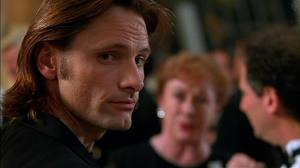
It was announced in early October that Viggo Mortensen would be delivering the final Screen Talk at the 56th BFI London Film Festival, in part, to discuss his new film Everybody Has a Plan (2012, dir. Ana Piterbarg), while also revisiting his time in the film industry and on his birthday no less. Some will know him as Aragorn from The Lord of the Rings; a testament to his memorable turn – thanks to a last minute casting decision – in Peter Jackson’s Middle-Earth saga, while most will recognise him from his recent David Cronenberg collaboration, A History of Violence (2005), Eastern Promises (2007) and A Dangerous Method (2011). Throughout a twenty-eight year career, his first film role was as blink-and-you-miss-him Moses Hochleitner in Peter Weir’s Witness (1985); Mortensen, who appears more youthful than his fifty-four years, has been far from predictable with his film choices. This is an actor who has numerous award nominations and wins under his belt including Oscars, BAFTAs, Golden Globes, even a Goya and was inducted into the Empire Icon Hall-of-Fame years before the acting powerhouse that is Gary Oldman.

Born to a Danish father and American mother in Manhattan, New York Viggo Jr. spent several years in South America and, then later, Denmark culminating in a degree in Government and Spanish and linguistic fluency in the Danish, Spanish and French language. A man of many talents he owns Perceval Press, writes poetry, is a celebrated artist/photographer and an accomplished musician. Everybody Has a Plan is his second starring role in a Spanish-speaking film following 2006’s Alatriste (and fourth to date); his enigmatic and introspective performances are inherent with the hope that his pensive, dimple-chinned, splendour continues to grace the big screen for the foreseeable future. Certainly, with releases of On the Road (2012, dir. Walter Salles) and The Two Faces of January (2013, dir. Hossein Amini) to come that will surely be the case. Mortensen has worked with directors of every genre, from Jane Campion to the late Tony Scott and he is responsible for some truly memorable performances:

The Indian Runner (1991, dir. Sean Penn)

As black sheep Frank Roberts in Sean Penn’s directorial debut, Mortensen exudes danger, melancholic misunderstanding and self destruction in equal measure in this accomplished and brooding, if overwrought, commentary on the Vietnam War.

 Carlito’s Way (1993, dir. Brian De Palma)

On screen for barely four minutes and looking a little rough around the edges as former playboy now paraplegic Lalin; it is an affecting cameo, in a critically acclaimed Hitchcockian-Gangster film, made unforgettable for the delivery of the ‘cocksucker’ line.

The Prophecy (1995, dir. Gregory Widen)

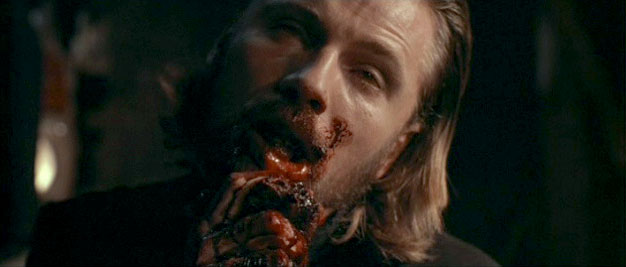
Again, an incredibly short time on screen – here Mortensen is a deliciously camp Lucifer with   a  penchant for dip-dye hair and taste for human hearts in this average sci- fi/religious thriller  hybrid where angels wage war on “God’s favourite” humans.

G I Jane (1997, dir. Ridley Scott)

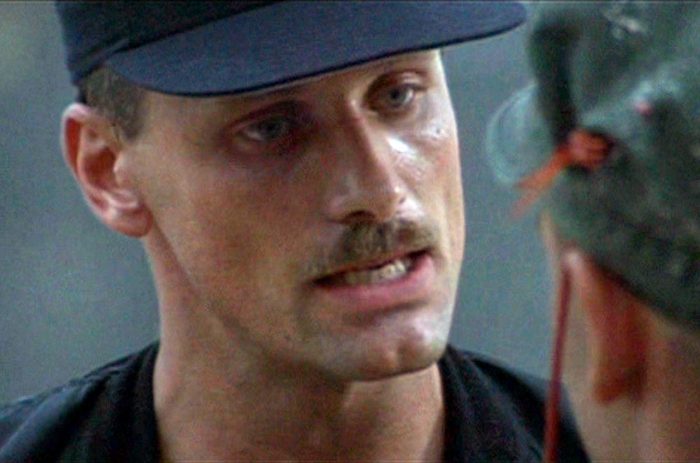
Few remember this flawed film save for Demi Moore’s head-shaving and one-armed push-ups but Mortensen delivers a solid, and largely overlooked, performance as Master Chief John James Urgayle. A beguiling bastard who recites Walt Whitman, teaches that “pain is [ones] friend” and gets the best Navy Seal out of Lt. Jordan O’Neill (Moore) irrespective of gender or political ideology.

A Perfect Murder (1998, dir. Andrew Davis)

The second Hitchcock remake to bear the Mortensen name (best we forget the other one). He plays struggling artist David Shaw enjoying an extra-marital affair with millionaire’s wife and U.N. alum Emily (Gwyneth Paltrow). Torn between blackmail, lust and greed Viggo’s David could have been lacking and tawdry in the hands of another actor but he brings a real depth to ‘the other man’. And yes, we would want to leave Michael Douglas for him too…

LOTR: The Two Towers (2002, dir. Peter Jackson)

Difficult to choose from this trilogy given that he is the titular King of the third instalment, however, it is in this film that Aragorn truly comes into his own as warrior and leader of the Rohirrim and Fairies alike, during the epic battle of Helm’s Deep. It is also the text which cements Mortensen has a honest-to-goodness action hero; combat ready whilst never losing the emotional gravitas of the character despite being knee deep in mud and soaked in rain.

A History of Violence (2005, dir. David Cronenberg)

Based upon the John Wagner and Vince Locke graphic novel of the same name, this film saw the first teaming of Cronenberg and Mortensen and surprisingly the first real leading role for the now well-known Danish-American. He plays Tom Stall, a small town diner owner who is hailed a local hero when he kills two armed thugs in self defence. After playing such a recognisable character of literature Mortensen proves that he can play average-Joe-Bloggs-with-a-past with equal vigour. His performance is excellent in a thrilling film which boasts the most convincing marital chemistry since Sutherland and Christie in Don’t Look Now (1973, dir. Nicholas Roeg).

Eastern Promises (2007, dir. David Cronenberg)

As Nikolai, the driver and surrogate son to Russian Semyon (Armin Mueller-Stahl) who may or may not have links to the Vory v Zakone, Mortensen plays it mysterious and alarmingly charming as the fetishised tattooed driver who first dominates the screen by cutting the fingertips off a corpse and stubbing out a cigarette on his tongue.

The Road (2009, dir. John Hillcoat)

Whilst it could never match the sheer brilliance of Cormac McCarthy’s Pulitzer-Prize winning novel upon which it is based, this faithful adaptation comes very close. Mortensen delivers a haunting and devastating performance as The Man facing a post-apocalyptic world determined to keep his son alive. It is a harrowing and, at times, traumatic watch made all the more emotive by the beautifully portrayed relationship between Mortensen’s father and Kodi Smit-McPhee’s son.

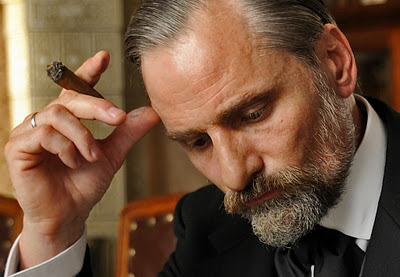
A Dangerous Method (2011, dir. David Cronenberg)

In his third outing with director Cronenberg, Mortensen adorns a prosthetic nose and brown contact lenses to play the founding father of Psychoanalysis and purveyor of repressive sexuality Sigmund Freud; acerbic and utterly charismatic as the elder statesman to Fassbender’s youthful Carl Jung in this intellectual costume-drama romp tinged with black comedy.