Categories
film review

Sightseers (Dir. Ben Wheatley, 2012)

sightseers

Redundancy, oppressive living environment thanks mainly to a passive-aggressive matriarch, canine-icide and all those little annoying habits of others, like littering, personal success and the class-divide which make one want to pummel in somebody’s skull – desires which social convention and psychological adjustment prevent – are the main themes of Ben Wheatley’s third directorial outing Sightseers following Down Terrace (2009) and Kill List (2011).

The main protagonists Chris (Steve Oram) and Tina (Alice Lowe) are lucky to find each other in this cynical age of romance and chance (plus it reaffirms the old adage that there is indeed someone for everyone however angry or homicidal you may be). He wants to show his new girlfriend “his world” which involves a caravan, a large bag of extra strong mints and excursions to some of the country’s leading, albeit, obscure heritage sites. Tina intends to let him and rock his (world) in her, wholly fetching, knitted bra and crotch-less, big knickers. Following an accident at their first stop (the tram museum) things take a sinister turn and their holiday tests them both and the strength of their relationship.

alice

Chris refers to Tina as “his muse”, however, she is more of an unconventional femme fatale throughout a series of transgressions and while Sightseers’ pitch black context is, inadvertently, played for laughs, it is Tina’s story arc which is the most evolutionary. She embodies the two binaries of women which are often indicative of the noir: the dependable, domesticated and safe in addition to the alluring, sexual (the lingerie really has to be seen to be believed) and dangerous female. Chris is the male in crisis and she, on occasion, a function of his dilemma and powerlessness. Interestingly, the time she rebels against her own passivity and becomes the idealised version, she believes, Chris wants her to be is the moment when she is dressed at her most feminine, in a dress, completed with lipstick. The scene in which she exerts her first real sign of independence is also the scene in which she, it can be argued, seizes phallic power, here, signified as a very large writing pencil. Certainly, the last sequence does suggest that Tina is the one in control and has, perhaps, precipitated the whole journey and its outcome – “witch!”

movies_sightseers_still_6

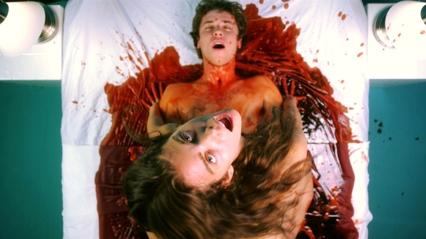
This film really showcases Wheatley’s direction given his lack of involvement with the story and there will be comparisons made between this and Mike Leigh’s Nuts in May (1976) and like last year’s Kill List this film also owes a debt of gratitude to Hammer horror. Essentially, the fact that he did not write it makes this a radically different film from his previous, and yet still retains elements of the Wheatley style . Screenplay praise, of which there should be much heaping, falls to the writers and lead actors. Oram and Lowe who both had small parts in Kill List, are better known for their television roles in comedy series Tittybangbang and Garth Marenghi’s Dark Place respectively, as well as dual appearances in The Mighty Boosh and Channel 4’s Comedy Lab. Here, they are a match made in heaven as “a ginger faced man and an angry woman.”

Forget what has gone before, this is the comedy of the year. Caravanning is the deadliest and sexiest way to holiday.

Categories
Article

The Great Remake Debate

A one-off battle.

In the blue corner, Hel (TFD) and in the red corner, The Littlest Picture Show (LPS). Here they examine the contemporary and classic reimagining and verbally duke-out the pros and cons.

This bout…

Infernal Affairs (Alan Mak & Wai-Keung Lau, 2002) vs. The Departed (Martin Scorsese, 2006)

Synopsis.

Infernal Affairs (Mon gaan dou) opens with Ming (Andy Lau) and Yan (Tony Leung) drafted into the police force, as eighteen year old cadets. One, Yan, goes undercover to infiltrate Triad organisation headed by Hon Sam (Eric Tsung), while the other, Ming, works as a his mole inside the department. They soon discover the other’s existence and set about exposing their true identities. The Departed fast forwards four years and in Boston, Massachusetts. Colin Sullivan (Matt Damon) and Billy Costigan (Leonardo DiCaprio) find themselves in a similar predicament as State Policemen working for Irish mob boss Frank Costello (Jack Nicholson).

1. Narrative/Plot

LPS: Whilst you can see the similarities to an overall story, it’s really only obvious in certain key scenes. However, The Departed conveys the story a lot clearer, with more fluidity to the narrative progression and fleshes it all out so it felt more accomplished and comprehensive. It also weaves the subplots and supporting roles into the essence of the main story. Infernal Affairs had flimsy sub-plotting almost to the point of it being redundant (the ex partner and daughter, anyone?).

TBT: The slow –burn narrative of IA subverts expectations and the subtlety of the sub-plot is not necessarily flimsy but more to develop character. Yan’s ex-partner and daughter signify what he has sacrificed. I agree with comprehensive but to the point of too much! Spoon-feeding the audience can have a detrimental effect.

Round 1: LPS

2. Casting, cinematography, generic traits, themes

LPS: Casting for TD far outweighs IA in terms of quality and prowess. Nicholson is a more menacing, maniacal bad guy, and Leo is a likeable protagonist. It’s easier to follow as a story as you have recognisable faces such as Damon and DiCaprio, as well as the supporting cast that drift in and out of the film effortlessly. The clear difference is the settings (Hong Kong and Boston) and I think it really alters the perception and tone of each. Because of budgetary constraints, TD clearly wins here as it looks far more atmospheric and convincing. Plus, even though IA has some nice locales, TD overall appears a lot more polished, throughout and impressive.

TBT: Lau and Leung are the most commercially successful actors in their native Hong Kong and have been since the mid-80s. IA is a stripped down noir thriller that differs from the usual style of Hong Kong filmmaking and chooses to avoid overt violence. Instead, it builds upon the quiet desperation and elusive complexity of its leading characters. Rather than cram into its 101 minutes, directors Mak and Lau choose the use of montage and flashback sequences to ground the history of their characters. When Lau and Leung do eventually face-off near the film’s dénouement it is reminiscent of Pacino and De Niro in Michael Mann’s Heat; less is most definitely more and makes for a more nuanced and engaging film. Plus, they’re physically different (Lau has hardened features while Leung is more boyish and sensitive looking) and yet both are likable. TD’s leads are very similar; Damon, although we’re meant to care (seeing him as child, etc) is vile, DiCaprio does, well, DiCaprio…

Round 2: TBT

3. Originality – does the remake capture the original’s essence? Is it different enough to be a stand-alone film?

LPS: TD does indeed capture the essence of the original, but brings so much more to the table – meatier exposition, a clearer coherency for story, structure and subplots. What’s more, TD trounces IA in terms of the script, notably for its superb dialogue.

TBT: TD takes the themes of organised crime, religion and the mirroring duality of its leading protagonists and ups the ante with ideas of masculinity and misogyny. Scorsese throws everything at this film; over-elaborate cinematography, multi-layered sub-plots which can lead to a feeling of over-egging. The gangster-genre is Scorsese’s domain and here he makes his normative Italian gangsters Irish and replaces De Niro for DiCaprio who, along with Jack Nicholson and Matt Damon, delivers an over-amplified performance. TD has more potential as 21st century remake of Goodfellas, via Hong Kong.

Round 3:  TBT & LPS

4. The re-imagining – changes/alterations.

LPS: TD adds to all of IA’s basic elements. Sure, the original is an interesting idea, but I feel TD really builds upon the existing foundations. It obviously helps that Scorsese directs, and is accompanied by a big budget and excellent ensemble, too. The changes are for the better, as I found the original very vague in places and hard to follow. If I hadn’t had seen TD several times before IA, then I’d have had no idea what was going on in it and would’ve been rather lost early on because of the manner in how the story is told.

TBT: See, I watched IA before TD and found that there are some subtle and some not-so-subtle nods to the original, specifically within the mise-en-scène but, yes, essentially this is a Scorsese feature – and his name carries severe weight in Hollywood. The inclusion of the love story is radically different from IA and Vera Farmiga is a great addition, however, her potential falls by the wayside as she becomes the only object of connection between Costigan and Sullivan; a ‘pretty little lady’ in a man’s world.

Round 4: LPS & TBT

Final comment

LPS: Overall, TD is far more accessible due to its westernisation. It all works so nicely and forms a brilliant movie, whereas IA feels a little sporadic in its moments of quality and class. The dynamics of both are quite different, and having seen TD before IA, the latter almost feels like a rushed version of what I’ve become so accustomed to.

TBT: TD takes visceral violence, realism, Catholic reverence amid phallic allusions and mummy-complexes and subjugates the spirituality and the slow building burn of tension of IA. I can see why an audience would enjoy it; however, Scorsese takes sufficient time to establish characters and fabricate back stories and then rushes the final thirty minutes of the film which is unfortunate. Can we really suggest that the use of subtitles alienates the Western audience from the original?  I loved the edifice of tension in both, however, felt nothing when Damon and DiCaprio eventually did come face-to-face – now THAT was rushed.

Verdict: Tie

Check out Hel’s sparring partner here: Littlest Picture Show

Categories
Book Review

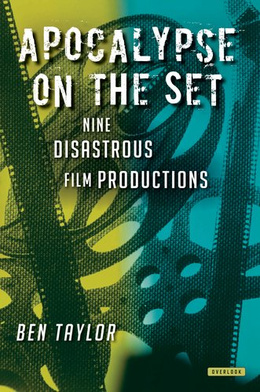
Apocalypse on the Set: Nine Disastrous Film Productions

I, like the average film fan, have spent incalculable hours sat in darkened auditoriums marvelling at the wonder and, at times, sheer brilliance which is on the screen before me. To hear that the production was smooth-sailing is great but has little bearing on the enjoyment of a film text. However, to discover that there were major disasters only increases viewer anticipation; as if, as an audience member we can spot diegetically exactly where it started to go wrong.

What author Ben Taylor has condensed in his Apocalypse on the Set, is the darker, sometimes jaded aspects of the motion picture industry. For all of the magic there is mayhem and this compelling read pulls together nine case studies, detailing the true testament of directors, writers, producers, actors and artists alike, who continue to sweat blood and tears in order to wrap their production; here, in the face of, at times extraordinary, adversity. In the case of the Nine Disastrous Film Productions these problems include: political imprisonment through dictatorship (Pulgasari), overblown budgets/production costs (Waterworld), a series of bizarre, catastrophic events (The Adventures of Baron Munchausen), over-inflated egos (Apocalypse Now) and the tragedy and finality of death (Twilight Zone: The Movie). By today’s Hollywood standards, these dramas are a rarity and usually result in production shut-down and thus Taylor’s factual reminiscences are bathed in a tragi-comedy glow of nostalgia.

This highly engaging and entertaining read is meticulously researched and while one or two incidents – specifically Vic Morrow’s and Brandon Lee’s untimely deaths – may be memorable in the recesses of the film-geek’s mind, there is enough diversity in the chapters to keep the reader absorbed and interested. This book is a must-read for any film fan. The only criticism – nine is such a limiting number; perhaps a second volume?

To Buy

Categories
film review

Excision (Dir. Richard Bates Jr., 2012)

Being a teenage girl can, for want of a better word, suck. Fighting against changes you cannot control, whether they be bodily, emotional, and/or familial; attempting to force yourself to fit into whichever societal mould proves popular can be exhausting, often heartbreaking and wholly unnecessary (survival and hindsight can be a wonderful thing). Within the horror genre, females are often victimised, punished for sexual transgression, through the finality of death, as per the ‘slasher’ movie or can be depicted as teenagers and aligned with the abject. This abjection can be in the form of literal law-breaking, often by committing murder, seeking pleasure through the perverse and/or the secretion of bodily fluids, most often menstrual blood. While some female critics/theorists have read these texts as a further attack of their gender by patriarchy, these “monstrous femmes” have rendered some of the most memorable female protagonists recorded on celluloid. These include cult favourites Sissy Spacek as Carrie (1976, dir. Brian De Palma), Katharine Isabelle in Ginger Snaps (2000, dir. John Fawcett) and now AnnaLynne McCord’s astonishing portrayal in Richard Bates Jr’s Excision (2012).

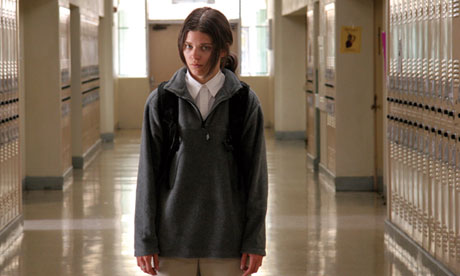
McCord, best known as a spoiled, rich blonde in the re-vamped 90210 delivers an, in any other generic movie, award-winning performance as socially awkward Pauline. Physically, she is unrecognisable with lank, greasy brunette hair, acne strewn blemishes and hunched stance. She embodies a complete smorgasbord of emotions and characteristics and goes against the ‘norms’ of the female in horror, specifically in her lack of sexual reluctance, aspirations to be a surgeon and the oblivious way in which she approaches life. Most significantly, she is no passive victim. Pauline lives in picket-fenced suburbia in a repressive family unit headed by her castrating mother Phyllis (Traci Lords), emasculated father Bob (Roger Bart) and ailing little sister Grace (Ariel Winter). Phyllis exerts her maternal authority over the whole household and is determined to raise her daughters through the Church and the formality and etiquette of cotillion. At the crux of the difficult, terse and often cruel mother-daughter relationship is the ferocious need for the other’s love and acceptance.

 Pauline is a sociopath but manages to convey levels of real empathy.   She is gauche, fiercely intelligent, obsessive and delusional and suffers vivid dreams, of which only the audience is party; these are often sexually indulgent and display necrophiliac fetishes.  For all of the blood, gore and toe-curling masturbatory fantasies, at Excision’s heart is pitch black, offbeat, comedy. These comedic moments are most evidently displayed in the ingenuity of the casting: John Waters as Pauline’s Preacher-cum-psychiatrist, Malcolm McDowell as her maths teacher and former adult film star Lords as her mother, plus losing her virginity to Peter Pan (Jeremy Sumpter) rounds things off nicely. Bates’ directorial debut is truly impressive, made with deliciously demented precision, a fierce sense of humour and, as its title suggests, is incredibly cathartic.

Categories
film review

Rust and Bone (Dir. Jacques Audiard, 2012)

It is becoming increasingly difficult to approach a Jacques Audiard film without a high level of expectation, specifically, after the commercial success of his last cinematic effort, A Prophet (2009). One aspect which can be attributed to Audiard is that he knows men, or at least has the ability to write and cast them particularly well. His films have boasted memorable male protagonists played, with aplomb, by the likes of Mathieu Kassovitz (A Self Made Hero), Vincent Cassel (Read My Lips), Romain Duris (The Beat That My Heart Skipped) and of course A Prophet‘s Tahar Rahim. Rust and Bone, similarly, can also offer a critique in performative masculinity with stellar work by Matthias Schoenaerts (Bullhead). The difference here is that this film also glorifies the acting prowess of Marion Cotillard, thankfully back to La Vie en Rose (2007) and Little White Lies (2010) quality after a few, dubious, sub-standard English-speaking roles.

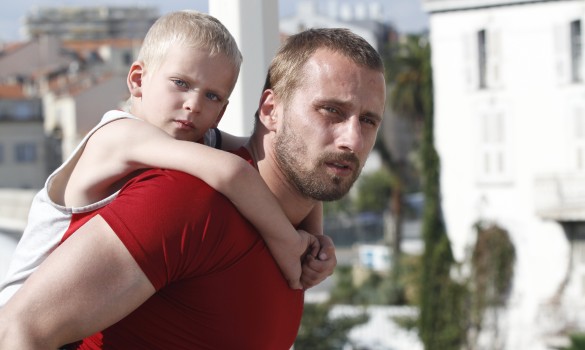
Ali (Schoenaerts) and his five-year old son Sam (Armand Verdure) drift from place to place, stealing to survive, until they leave Belgium and move to Antibes to live with his sister Anna (Corinne Masiero) and her husband Foued (Mourad Frarema). Ali begins work as a nightclub bouncer when he meets Stephanie (Cotillard) a discontent Orca trainer whose life leaves her cold. The circumstances of their chance meeting find her in the unlikely position of damsel-in-distress with Ali jeopardising his job in order to help her, however, devastating destiny reunites their respective damaged souls when Stephanie suffers a horrific accident and friendship flourishes.

This film falls into the melodramatic genre; a love story between two dislikeable, yet at times relatable, characters whose life adversity throws them together to forge remnants of a relationship. Audiard communicates, beautifully, the sheer messiness of love and delivers a dramatic narrative which remains (for the most part) unsentimental but completely empathetic. After the accident, Cotillard’s Stephanie faces life with emotional determination  and independent dignity wherever she can but it is Ali who reawakens her sexuality and desire for life. It is through these raw acts of passion that the viewer  sees Ali’s softer side.

While Cotillard may be showered with acting plaudits following the film’s cinematic release, it is the male protagonist who is the most interesting to read. Ali is animalistic in his gait; father and lover are not roles that fit comfortably and when he loses his temper with Sam it is hard to empathise or identify. He is a fighter, and it is through the bare-knuckle boxing sequences that the viewer not only sees the man in his “natural” state but starts to gain an insight into Stephanie’s lust. There is, thankfully, more to him than violent outbursts, there has to be to warrant anybody loving him. It is his clumsiness, pragmatism and simplistic way of viewing the world which make him almost childlike and therefore more relatable; he is literally the tower of strength, when present, of the picture, carrying Sam and Stephanie on his shoulders.

There is a cool detachment to Rust and Bone which is, ultimately, why it is so successful as a piece of drama. Cotillard and Schoenaerts are outstanding in their respective roles and their magnetism both attracts and repels them as Stephanie and Ali. That said, there is one small criticism in relation to the end sequence, following the fade. It felt excessively sentimental, predictably unwarranted and resolutely manipulative. The emotional intensity which has the viewer captivated from the start ceases rather suddenly and, somewhat, spoils what had been leading up to be a truly accomplished piece of cinema.