I generally dislike romantic-comedies. I am not dead inside nor devoid of humour; my aversion stems from the fact that they are rarely romantic or indeed comical. Within the first five minutes the narrative is pre-supposed and plot formation obvious. I despair of the conclusions, of which there are many, that are tied together with a big pink bow (it has to be pink – all girls like pink, right?) The representations of the sexes truly baffle as neither rarely have any redeemable qualities beyond their James Marsden-white teeth or shallow, uninspiring Katherine Heigl-perfected existence thus leaving this viewer with the dilemma as to whether to waste a couple of hours watching spookily-accurate predictions unfold on screen or do something constructive. So an open mind approached The Babymakers which offers the amusing, unassuming and charming Paul Schneider (Lars and the Real Girl, Parks and Recreation), the one-time ubiquitous Olivia Munn (Magic Mike, The Newsroom) and the premise of a rom-com-heist hybrid – how bad can it be?
A promising opening introduces Tommy (Schneider) and wife, Audrey (Munn) celebrating their third wedding anniversary and following some brief, humorous, banter about anal sex they decide to start a family. After nine months of energetically having sex in every place possible, they are still without child and so visit a fertility doctor to see what their problem may be. The reproductive expert confirms that Tommy has “slow-swimmers” and advises the couple seek a sperm donor in order to fulfil their want for a baby. Tommy refuses to believe he has any biological issue, specifically due to the twenty week’s worth of large donations he contributed to the Pasadena Sperm Bank five years earlier. Payment of which was used to buy Audrey’s engagement ring. Not completely sold on the adoption process, Tommy decides to locate the remaining deposit of his sperm and attempts to buy the vial back from a gay couple. When that falls through he and his two best friends; obnoxious Wade (Kevin Hefferman) and stoner, Zig-Zag (Nat Faxon) enlist the help of Ron Jon (the film’s director, Jay Chandrasekhar) to break into the clinic and steal what is rightfully Tommy’s.
Okay, so the film’s premise may have worked if Judd Apatow had have directed or if this one had employed a different cast, or the sperm-bank robbery had been dropped in its entirety from the script. The screenplay, written by Peter Gaulke and Gerry Swallow (I kid you not), is flawed, shoddily written and generally, over-egged. Clearly, given the subject matter there is still a huge stigma surrounding infertility and one that can, allegedly, be made comedic – slow sperm can be the result of testicular trauma – cue a montage of footballs, pool cues and stools smacking into Tommy’s scrotum. According to this film, adopting a baby is as easy as ordering from a take-away menu, as the leading lady crassly describes: “Chinese babies are the easiest to get. American(s) are ridiculously expensive, Russians can turn out a little crazy or we could go Ethiopian.”
The male characters laze about, drinking beer and objectify women; one even carries topless photographs of an ex-girlfriend around in his pocket while the female characters fare no better, they are all depicted as spoilt, passive-aggressive nags who either sit around complaining or shop. Schneider and Munn, who are ordinarily likable in their respective television series’, are mediocre at best and appear to have zero chemistry, unfortunately, they are just not convincing as a couple. She is vapid and a little dull and he, is clearly, not a physical-comedy kind of actor. With the amount of idiocy and deceit perpetuated by the main protagonists, procreation really shouldn’t be the answer and as a side-note: the image of a grown man writhing around on a floor covered with ejaculate is just not amusing.
Why then, did I watch it? Well, I wished to approach a film I would ordinarily turn my nose up at and… honestly, if I had know then what I know now I would not have bothered.
*SPOILER* This is a non-film post (although it was inspired by The Guardian piece ‘What I See When I Look in the Mirror’)
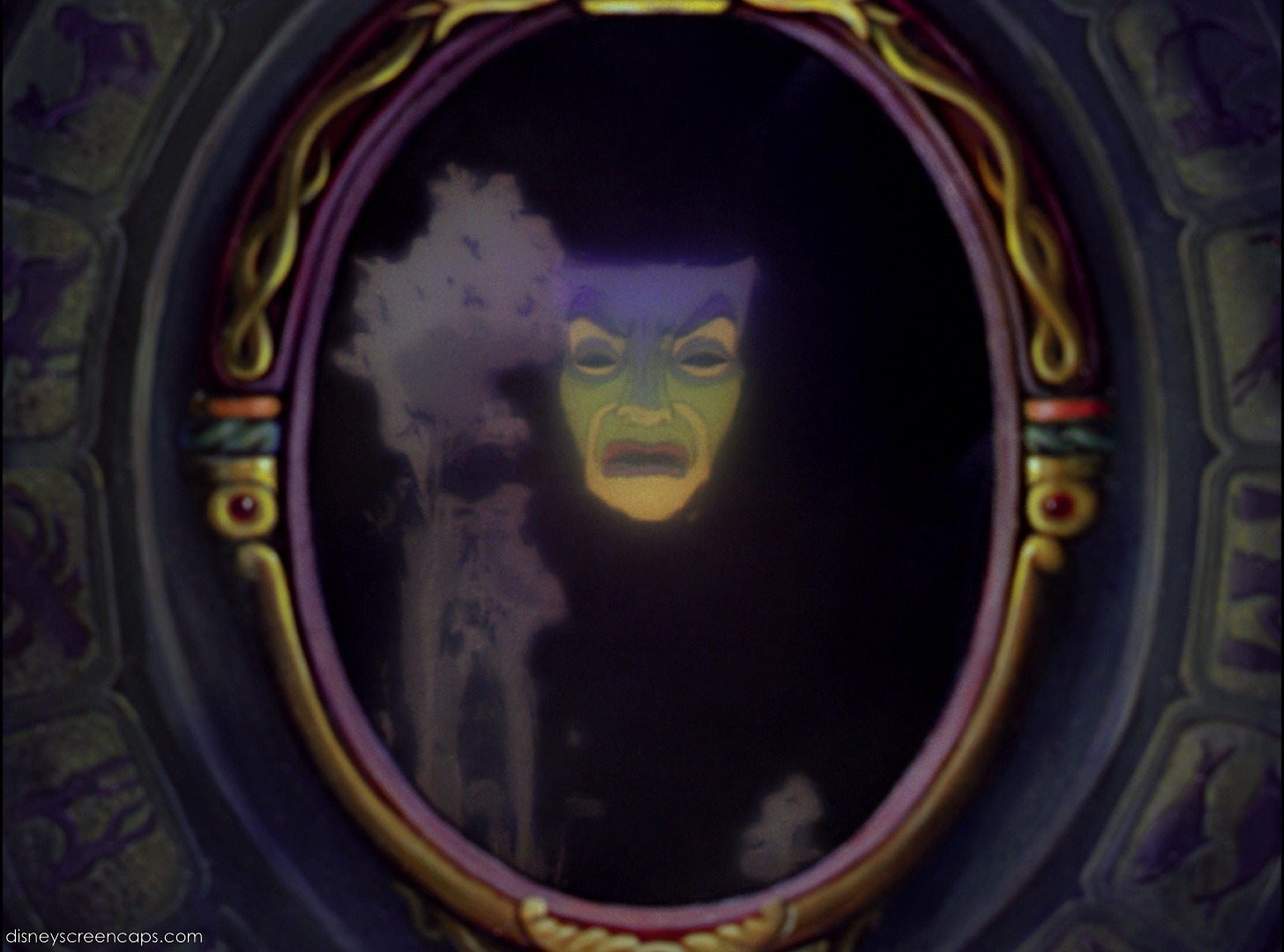
A popular broadsheet newspaper runs a very similar feature but their subjects only appear to be the rich and famous who have made a career implicit on the way they look; I am neither. When I look in the mirror, I see an olive-skinned, blue-eyed child, or teenager at the very least, because that’s the way I feel. Clearly I am not a child, haven’t been for quite some time and as I screw up my eyes and revel in the slight appearance of a burgeoning crow’s foot, I am thrilled. I don’t wish to grow old by any means, and the fact that people rarely guess my age, some would think, is great; that I’m lucky. At least that’s what my older relatives and their friends think. One in particular at the last family function stared at me for most of the evening repeatedly, even incredulously, asking why I had not aged. Most of the time I grin and shrug, other times I laugh and say it is because I am child-free and (more importantly) husband-free. Truth is it’s not great, I feel sort of stuck, forever associated with youth, rarely taken seriously almost patronisingly so. I looked mature for my age at 16 and now baby-faced at 33, a girl can’t win!
The face is heart-shaped, blessed or cursed with a widow’s peak. I had no hair until I was three years old so have always worn it long or as it is now shoulder-length, covering petite ears. The heavy trademark fringe has grown out due to the uncharacteristically warm summer we are enjoying at the moment; my usual dark, dark brunette hue lightened by the sun. A small forehead gives way to eyebrows tweezed and pencilled into shape, I’ve never worn foundation so the skin is usually blemish-free and dotted with a smattering of freckles across the bridge of my nose and over my cheekbones. The fact that I worship the sun (safely) and apparently haven’t really aged is an irony not lost on me, I have moisturised and cared for my skin since I was 14 so maybe that’s it? I am also mindful of how badly I scar and thus a chemical peel in the dim and distant future is just not feasible for me. The eyes are a pale Prussian blue and large, more round than oval in shape and framed with long dark lashes. I like them, They are the windows to my soul, smile even when I do not, and are violet and rather dramatic when I cry. I wish I had more of a defined cheekbone but alas, nature’s collagen means the apples of my cheeks are full, usually a little rosy, and pinchable but I’d rather you didn’t.
The nose is nondescript, smaller than it photographs with wide nostrils, the philtrum is only slightly defined and bridges the gap between the nose and the Cupid’s bow of the top lip. It’s a full mouth which pouts more than it does not, or so I’ve been told, I don’t even realise I’m doing it anymore. The teeth are identical to my father’s, ever-so-slightly crossed at the front and imperfect. I hate to show them but the Dentist tells me they’re fine, imperfection is attractive, plus, no fillings!
All-in-all it’s an alright visage as far as they go; regular, mundane, the usual – two eyes, nose, mouth, etcetera. It’s only regarded as something special to a beholder anyway isn’t it? I have been told my whole life that I look like my father, or my mother or some Hollywood actress (Nana thinks Hedy Lamarr, Mum, Liz Taylor, more recently Lana Wood), even Wonder Woman herself, Lynda Carter – God bless, my Dad. It is all very flattering, who doesn’t like a lovely compliment, and I smile graciously as you do but you know, I disagree vehemently. Even if I never say it out loud, inside I’m screaming “I look like ME!”
Cinematic audiences have been very used to cis men ‘donning a dress’ in order to hide or covet something over the decades. In Some Like it Hot (1959), Gerry and Joe (Jack Lemmon and Tony Curtis) needed to flee the city after witnessing a Mob hit. Michael Dorsey (Dustin Hoffman) became Dorothy Michaels to secure a recurring role on a soap opera in Tootsie (1982) boys dressing as girls have caused mayhem in horror films; the definitive, of course, being proto-slasher, Psycho (1960). There have been road movies with drag-artists aiming for acceptance – self as well as societal – and life contentment amid lipstick, chicken fillets, and feather boas like in The Adventures of Priscilla: Queen of the Desert (1994) and To Wong Foo Thanks For Everything, Julie Newmar (1995). Plus, there are men (homosexual, heterosexual, cis…) wishing to extrapolate the maternal realm with the help of prosthetics and spirit gum like Albin/Albert (Michel Serrault and Nathan Lane respectively) in La cage aux folles/The Birdcage (1978/1996) or Daniel Hillard and Euphegenia Doubtfire. The genre, if one can suggest there is one, straddles comedy and tragedy and rarely offers anything in between.
When Harris Glenn Milstead shimmied and sashayed in his little (operative word being ‘little’) numbers, people took notice. Wearing a dress seemingly freed him and enabled him the life he coveted, he unapologetically introduced the world to his alter-ego: Divine. And oh, what a woman – loud, brash, crude, angry and trashy (often by her own admission). Lady Divine didn’t give two flying kitten-heels what people thought of her and with the help of childhood friend, John Waters, and make-up artist/costume designer extraordinaire Van Smith, they not only set out to prove that she was, not only, the most beautiful woman in the world but the filthiest.
Jeffrey Schwarz’s I am Divine is a labour of love, mixing contemporary interviews with archival footage, the documentary is warm, affectionate, and presents a touching portrayal of a larger-than-life transgressive – yet defining – drag artist and actor who was deeply loved by his friends, family and contemporaries. While Milstead’s story is far from unusual: ‘Glenny’ was chubby and bullied for his effeminate nature, his mother even took him to the Doctor who confirmed (!) that there was more femininity lurking beneath the surface of the masculine Milstead child. At 17, he met John Waters and the rest, as they say, is history. Divine was determined to be a star and, wherever possible, look exactly like Elizabeth Taylor while doing it.
Schwarz paints a riotous, compelling, and wonderfully edited documentary celebrating the generous, sweet-natured, and fearless cult icon without ever resorting to the overtly camp or sugary twee. There is some darkness – the drug-taking, the food addiction that more than likely contributed to Milstead’s untimely death but Divine made the most of her time in the world, as one time member of theatre troupe The Cockettes, a solo recording artist, stand-up comedian, and as an actor. Not just any old actor either, an evolving and defining one – she was trash-talking Babs Johnson (Pink Flamingos) and Dawn Davenport (Female Trouble), frumpy and unfulfilled housewives Francine Fishpaw (Polyester) and Edna Turnblad (Hairspray), hot-blooded Rosie Velez in Comedy/Western Lust in the Dust. Therewere male counterparts too (like Earl Peterson and Arvin Hodgepile). She was in her element in Polyester, enjoying on-screen clinches and kisses with childhood-crush, Tab Hunter.
Sadly, Divine passed away in his sleep the night before he was due to start filming as a series regular on Married With Children, and as this documentary states unequivocally; he was adored. A divine man who had a heart as big as his body, an icon to many but especially those who have ever felt different.
The Coens have, since their feature debut Blood Simple in 1984, been blessing audiences with their onscreen Americana-drama amid whimsy and quirk for the past three decades. Their latest offering Inside Llewyn Davis expands upon the musical odyssey started in O Brother Where Art Thou? What began with 1930s Bluegrass ends with the Greenwich Village folk scene of the sixties.
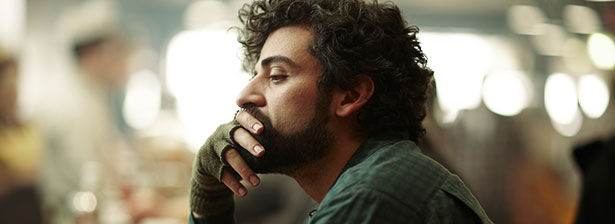
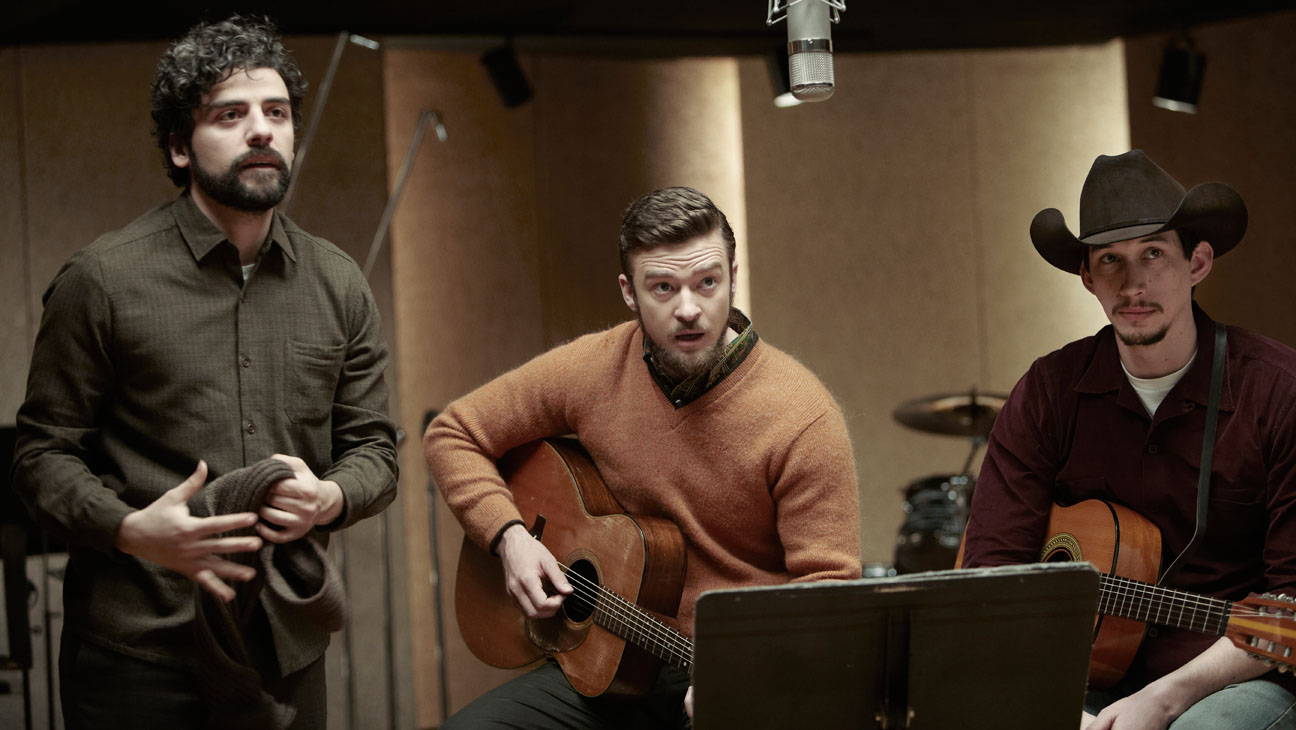
Llewyn, a blue-collar ex-Marine – a dead-pan, sardonic Oscar Isaac – is attempting to carve out a decent solo musical career (following the death of his singing partner) whilst living hand-to-mouth, surviving dangerously close to the bread line. He relies upon friends and acquaintances to provide him with a place to rest his head in between gigging and navigating a semblance of a career. He is supported by a cast of memorable characters including Jean and Jim, played by a less insipid Carey Mulligan who is extraordinary as the epitome of the angry young woman alongside her apple-pie husband Jim (Justin Timberlake); The Gorfeins: Lillian and Mitch (Robin Bartlett and Ethan Phillips), Al Cody (Adam Driver), Troy Nelson (Stark Sands), Roland Turner (John Goodman) and Johnny Five (Garrett Hedlund) – all wonderfully weird in their own way and beautifully rendered, only Sands’ Troy stumbles into caricature territory with his cardboard portrayal.
…Llewyn is Oscar Isaac’s first leading role and one the Julliard-educated actor was destined to play, his vocals are phenomenal. Although a collaborative effort by T-Bone Burnett, Marcus Mumford, and the supporting cast, all of whom sing their own song too, it is Isaac who shines; Llewyn is unlucky and not particularly likeable but as soon as he opens his mouth, (almost) all is forgiven. There is so much empathy to be felt for the character and the moment he utters the line, “I’m so fucking tired. I thought I just needed a goodnight’s sleep but it’s more than that.” Well, I challenge anybody who claims to have never felt that before.
While O Brother… was sepia in visuals, Inside Llewyn Davis’ palette is greys and greens offsetting a snow-kissed Greenwich Village, New Jersey, and Chicago. There is a melancholy to the visual aesthetic, thanks to Bruno Delbonnel’s cinematography who replaces Coen regular Roger Deakins. Although, an original screenplay, it is clear that inspiration was taken from the story of Dave Van Ronk, a struggling musician around the same time as the setting of the film, and his 2005 biography The Mayor of MacDougal Street, even down to the inclusion of the cat (see album cover above).
Ah, the cat. *Everybody* has a theory about the domesticated mammal. The Gorfein’s ginger tabby, Ulysses (*other Homeric signifiers include: Troy, the gate of [the polished] horn, the fact that Llewyn is a sailor and on an existential odyssey and also the notion of music and muses. There were nine muses and coincidentally, a cat is said to have nine lives) escapes the apartment while under Llewyn’s watch and much of the film is spent searching for the escapee. What the feline symbolises is open to conjecture with only the filmmakers knowing the real answer and refusing to share. At one point a disembodied character mishears dialogue and declares, “Llewyn is the cat.” Personally, I interpreted the cat as an extension of Llewyn’s heart – missing-in-action a lot of the time -and the plot as depicting a lost soul in purgatory; stuck in limbo, fighting to make amends and yet forever doomed to remake the same mistakes, perform at the same dives, etcetera.
Following a beating after playing Pappi Corsicato’s ‘joint’, Llewyn awakens in a blindingly white apartment (the Gorfein’s) and eats eggs whilst perusing their record collection. He is head-to-toe in white and pulls out a copy of If I Had Wings, his duet with Mike, there is an ethereal quality to the image. Later, his car journey with Johnny and Roland can be read as on the Road to Hell; underworld bound, with the final destination: The Gate of Horn a further allusion, Bud Grossman (F. Murray Abraham) can be seen as a St. Peter figure that will either welcome or refuse a entry into ‘heaven’. Redemption is often referred to as the ‘bosom of Abraham’ and the casting of an Abraham in this instance, in the form of F. Murray cannot be an accident. The Coen’s Jewish farce, A Serious Man (2009) deals with the crumbling life, both personally and professionally, of the title character leading him to question his faith. Llewyn Davis is of Welsh/Italian parentage, it is not too much of a stretch of to suggest Catholicism, however here, rather than question his faith, he merely ponders the transitional (and possibly the transcendental) aspect of his life.
It is interesting to further note that a lot of the songs used in the film, for example, Hang Me (Oh Hang Me),Fare Thee Well (Dink’s Song), The Death of Queen Jane, Five Hundred Miles all deal with themes of journey; of departure and/or death, and the fact that the last words of the film are au revoir as Llewyn lies in an alley having been beaten by a Grim Reaper-like figure (who also sounds suspiciously like Coen regular Sam Elliott) adds weight to the argument. Or perhaps, these words bid a final farewell to Van Ronk who died in 2002.
Whatever your interpretation, Inside Llewyn Davis is a wonderful homage to a bygone era, and a musical scene which not only continued long after 1961 but one that has seen somewhat of a resurgence over the last few years. It depicts the harshness and loneliness reality can have on your dreams and aspirations; for me one of the Coen’s finest.
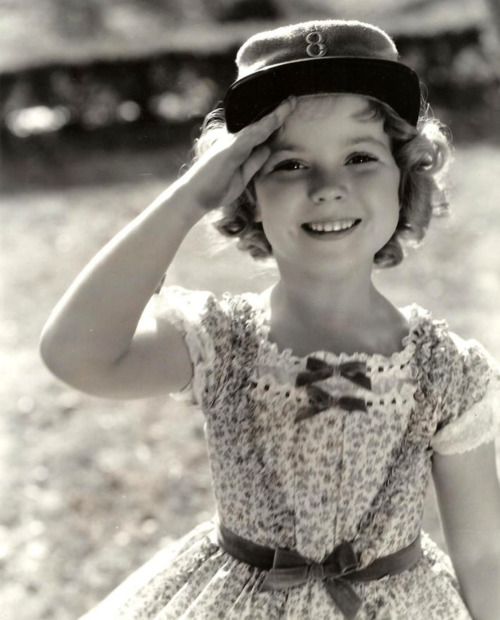
I critique The Littlest Rebel in relation to the ideological ancestor of the American Civil War on film. This is, for me, one of Shirley Temple’s most memorable performances.
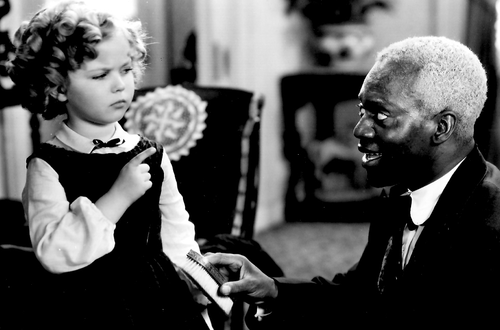
Described by the New York Times in 1935 as “an eventful slice of meringue and quite the most palatable item in which the baby has appeared recently [while continuing] to be the most improbable child.”[1]The Littlest Rebel (David Butler, 1935) is a rather unusual Civil War film as one often thinks of men in boots and beards rather than six year old girls with perfectly formed ringlets and dimples. To utilise a phrase by Will Kaufman, it can be described as a film which “regenders”[2] the Civil War. Like So Red the Rose (King Vidor, 1935) and Gone With the Wind (Victor Fleming, 1939) Rebel initially takes place on a Southern plantation and also has a family at the forefront of its narrative. Mrs (Karen Morley) and Captain Cary (John Boles) idolise their daughter Virginia ‘Virgie’ (Shirley Temple) and the film opens with a dinner party all guests adorned in fine dresses and dinner jackets. It is only upon closer inspection when the camera moves in for a medium shot does the viewer realise that these are children; extremely civilised and polite adolescents uttering ‘please’ and ‘thank you’ to their gracious hostess. Virgie is tenacious and independent, sacrificing her own ice-cream in order to ensure that her guests are content and full – she is also white. The Cary’s own slaves, each defined by a stereotype included in Donald Bogle’s pantheon[3]; Uncle Billy (Bill Robinson) is the “Uncle Tom”[4] amiable and protective of his ‘honey-child’ ward. James Henry (Willie Best) is evidently the “Coon”[5], his lack of intelligence and naivety used for comic effect and to incite irritability in Miss Virgie, who at six is his intellectual superior. A secondary character can also be clearly defined as the “Mammy”[6] a robust woman complete with an Aunt Jemima handkerchief around her head.
The news that there have been shots fired at Fort Sumter breaks up the party and sends families back to their homes, Captain Cary must report for duty as rebel scout for the Confederate army and leaves his family. This is a prospect Virgie seemingly relishes as she declares that her “daddy is the best soldier in the whole army”, however, her views change when she realises that her father will be kept away from the plantation for long periods of time. The fighting escalates and the Union army take the Cary land for their own, looting the property under the supervision of Sergeant Dudley (Guinn Williams) who is searching for absent patriarch Cary. Fearing for Virgie’s safety, Uncle Billy hides the little girl away in a secret wall space while the aggressive ‘Yankees’ ransack the house. When Virgie is found she is mistaken for a slave child as she has painted her face and hands with black boot polish in an attempt to conceal her whiteness and remain safe. This ‘blackening’ of Temple’s skin is also repeated in The Little Colonel (David Butler, 1935) when her character recreates a black riverside baptism in a muddy puddle. Lori Merish in her “Cuteness and Commodity Aesthetics” article states that Temple “purge[s] the cute of its unsettling racial resonances, performing an absorption and domestication of comic styles associated with blackness”[7], a term Richard Dyer describes as “binarism”[8]. She further describes Temple’s temporary ‘blackness’ as “racial hybridisation”[9] which forces the audience to view Temple and Robinson as the visual equivalents of each other. I would disagree; despite concealment beneath mud or boot polish the star persona and ‘whiteness’ is reinforced, there is no ambiguity. Virgie and Uncle Billy are not equivalents of each other but binary opposites: female/male, mature/adolescent, white/black and free/enslaved, a relationship that is described as “safe” by Benshoff and Griffin[10]. Certainly, the two are rarely seen embracing or are physically close with one another and it is Virgie’s relationships with the other male characters that are more compelling. She appears to be somewhat manipulative, particularly, with her affection and happily kisses men on the mouth and climbs into their lap; Virgie lacks no confidence in standing up for her beliefs.
A few weeks (this is a presumed timeframe as the viewer is never aware of days and dates) after her father’s departure, Virgie is playing ‘soldiers’ with a group of slave children and James Henry; leading the way wearing a Confederacy cap while they wear white hats reminiscent of Klu Klux Klan hoods. A Union soldier rides onto the land and the other children run away but Virgie stands her ground and fires a slingshot at Colonel Morrison (Jack Holt), marching in front of him singing ‘Dixie’ and declaring proudly “I’m a Confederate”. The Colonel likes her honesty and finds the ‘little rebel’ amusing. Not long after, following the death of his wife Captain Cary attempts to cross enemy-lines to get his daughter to safety in Richmond and with the assistance of Colonel Morrison he almost makes the journey, unfortunately they are both captured and sentenced to death by firing squad. Virgie comes to the rescue when she is granted an audience with President Lincoln to beg for clemency for the two men she considers her ‘daddies’.
The Littlest Rebel presents itself as a generic hybrid, while it has clear melodramatic indicators not least in the acting styles within the mise-en-scène. Virgie/Temple is often displaying facial expressions of an over-exaggerated nature and, at times, when emphasising her point out tends to pout and put her hands on her hips. When she cries, she has to point out the tears in an effort to reiterate the emotion of the scene, Molly Haskell describes her as the following:
[Virgie’s] flirtatiousness with her daddy [is] outdone, in precociousness, only by the patronizing way in which she [treats] her contemporaries. She [is] not only a little lady, advanced in social etiquette beyond her years, but a little mother, assuming the maternal role with [the] older men [in the movie][11]
Morley’s Mrs Cary delivers a more-understated performance; however, her death allows Virgie to usurp her in the family unit becoming a little mother/housewife and child all the while reinforcing Temple as the star of the show. A non-diegetic score, usually found in the melodrama is seconded to diegetic music in the form of songs sung by Virgie to her father at the film’s conclusion. The musical scene between Virgie and her father also reiterates the North/South dichotomy and in particular the masculine Northerner and the effete Southerner, here personified by Colonel Holt and Captain Cary; their star personas played up to maximum effect; John Boles was a silent star who became a Broadway regular and Jack Holt was a stalwart of the Western genre and favourite of John Ford. This information is not meant to imply that Boles any ‘less masculine’ than Holt, however, Boles’ visage is certainly softer, complete with long eyelashes and dimpled chin, he is often filmed in close up or medium shot and clinched in an embrace with his daughter. Holt on the other hand, much like Rhett Butler, is more stoic with his prominent jaw and monotone drawl.
As with other Civil War melodrama there are ideological messages which are present in Rebel. These suggest that it right to protect your kin – dishonesty is acceptable when for an honourable cause – embrace the beauty in death and show mercy to oppressors. In addition to ideological messages, Jenny Barrett suggests that protagonists within the Civil War melodrama complete three stages: old morality, transformation and new morality with “the civil war thus operat[ing] as a tool for the narrative structure, allowing the moral development of the central characters”[12]. Whether Virgie completes this moral journey is open to conjecture, she starts and ends the film as a six year old, yet in between loses her family home and mother. She is a child who does not know war but learns tolerance of her Northern Oppressors, gains a little independence while trying to save her father’s life and to reiterate Sennwald – an improbable child indeed. Rebel is similar to The Drummer of the 8th (Thomas H. Ince, 1913) in its generic hybridity and child-as-protagonist attempting to reconcile the turmoil of war with family life, however, while Virgie never sees any action (unlike Billy) she knows death.
Historically, The Littlest Rebel was released at Christmas, 1935 to a country in the middle of the Great Depression (1933-1940) two years after the commencement of President Roosevelt’s New Deal[13]. After the release of Rebel Roosevelt made the following statement “when the spirit of the people is lower than at any other time during this Depression, it is splendid thing that for just fifteen cents an American can go to a movie and look at the smiling face of a baby and forget his troubles”[14]. It shows the power of cinema if a film trying to depict the ‘lighter’ side of a war can make an audience forget poverty, mass unemployment and the worst economic crash of the decade. Little change was made to Civil Rights[15] so one has to wonder whether the black community were able to ‘forget their troubles’ by watching their ancestors on screen or whether the ideological white, patriarchal antecedent, evidently celebrated, is nearer to the ‘he’ that Roosevelt is addressing.[16]
Robert Brent Toplin has argued that cinematic history is also a generic category and that an audience is able to recognise the historical genre by the casting of certain actors[17]. However, I would suggest that by default all cinema, by production alone, has a history and to describe ‘cinematic history’ as a generic category is problematic; more viewers are likely to recognise the historical context of films through more obvious indicators like the biopic, war film, Western, etcetera. To think that viewers freely associate actors with a history film in this modern age is somewhat naïve, specifically the actors he uses as examples[18], not to mention highly subjective – one person’s President Roosevelt may be another’s Midnight Cowboy (John Schlesinger, 1969)[19]. Shirley Temple is not usually an actress associated with historical films, her oeuvre consists of more generic recognisable labels like the musical, and is not therefore a principal characteristic by Toplin’s theory. The fact that Abraham Lincoln is present within the diegesis would suggest that Rebel is allied, with cinematic history along side the melodrama and musical.
It would be imprudent to accept The Littlest Rebel as an interpretation of historical fact and would be more appropriate to describe it as an interpretation of historical truth. Fort Sumter was, indeed, fired open and is widely regarded as the place where the war began and not, as suggested by this picture as the North attacking the South, nor did the fighting cease after two soldiers are granted clemency as depicted at the film’s conclusion. Certain artistic liberties have been taken as with the majority of motion pictures, just as Toplin freely admits in his thesis[20], not least in the depiction and representation of the African American male(s) featured, however minimally. They are all slaves and not soldiers which history informs us was not the case. Rebel states, quite categorically, within the opening sequences that the cause of the Civil War was the emancipation of slavery, Virgie asks Uncle Billy what a war is and after he tells her about men killing each other he adds, “A white man says that there is a gentleman up North who wants to free the slaves”.
The ‘man’ he refers to is, of course, Abraham Lincoln and I would suggest that it is through his presence that may shape a historical truth certainly surrounding his Presidency and the time of war. This would substantiate Toplin’s statement that “Hollywood’s interpretations of American history can make a significant impact on the public’s thinking about the past[21], Lincoln’s mythology lend itself to TheBirth of a Nation, Young Mr Lincoln (John Ford, 1939) and Rebel amongst others. All attempt to depict the sixteenth President of the United States as the father of the nation – specifically in the latter picture where fatherhood is a metaphor heavily relied upon throughout – a man who was a friend of the people, as wholesome as the apple shared and eaten with Virgie (or the pie judged at competition in Young Mr Lincoln). A confidant who shows clemency to a chosen few – the issue of the 620,000 deaths he helped contribute to with his political decisions is rarely commented upon – instead he is martyred on screen and his antebellum memory is romanticised thereby allowing both filmmakers and audiences alike to avoid serious questions about Lincoln’s character and legacy. This is not a man torn by real indecision (peach or apple pie preference not included[22]), as suggested in the letter to Horace Greeley in 1862[23], but a gentleman who exuded confidence and was fair to the Southern people and indifferent to race – he shakes both Virgie and Uncle Billy’s hand without hesitation and it would seem that the mythology of Mr Lincoln informs both the historical truth and interpretations of the past on the present.
The Littlest Rebel attempts to correct the ruin, death and unhappiness[24] of Sothe Red the Rose and Gone With the Wind with its romanticised innocence, musical melodrama and racist undertones. The film depicts (circa) 1861 as a time of continuing racism and poverty during war. Its production in 1935 (also a time of continuing racism and poverty[25]) suggests that the historical context of production and finished aesthetics add authenticity to the Hollywood version of history. Shirley Temple coquettishly straddles childhood and adulthood like the improbable child described in Sennwald’s 1935 review. She does, however, surrender her active independence to the hegemonic white, patriarch who continues to inform the ideological American ancestor.
[1] Andre Sennwald, New York Times Reviews The Littlest Rebel, 20 December 1935.
[2] Will Kaufman, The Civil War in American Culture, UK: Edinburgh University Press (2006) pp92-109.
[3] Donald Bogle, Toms, Coons, Mulattoes, Mammies and Bucks: An Interpretive History of Blacks in American Films USA: Continuum (1991).
[7] Lori Merish, “Cuteness and Commodity Aesthetics” in Rosemarie garland Thomson (ed) Freakery: Cultural Spectacles of the Extraordinary Body, New York: New York University Press (1996) p198.
[8] Richard Dyer, The Matter of Images: Essays on Representation, London & New York: Routledge (1993) p133.
[10] Harry M. Benshoff and Sean Griffin, America on Film:Representing Race, Class, Gender, and Sexuality at the Movies, UK: Blackwell Publishing (2004) p81.
[11] Molly Haskell, From Reverence to Rape: The Treatment of Women in the Movies 2nd Edition, Chicago: The University of Chicago Press (1987) p123.
[13] Roosevelt created the New Deal and the 3 Rs – relief, reform and recovery in order to bring the USA through the greatest economic crash of the decade.
[14] Shirley Temple, Child Star, New York: McGraw (1988) p59.
[15] Anthony J. Badger, The New Deal: The Depression Years, 1933-1940, London: Macmillan (1989) p252.
[16] Anne Edwards, Shirley Temple: American Princess, New York: William Morrow (1988) p85 – in 1935 black men were still not treated as equals to the white man and Bill Robinson, reportedly, had to enter by the rear of the studio lot, could not share his meals with white cast members or use the same bathroom facilities.
[19] Jon Voight played Roosevelt in Pearl Harbor (Michael Bay, 2001) and Joe Buck in Midnight Cowboy – two roles which are widely diverse. One would not necessarily associate him with a history picture with these multi-faceted performances.







 The Framing Device